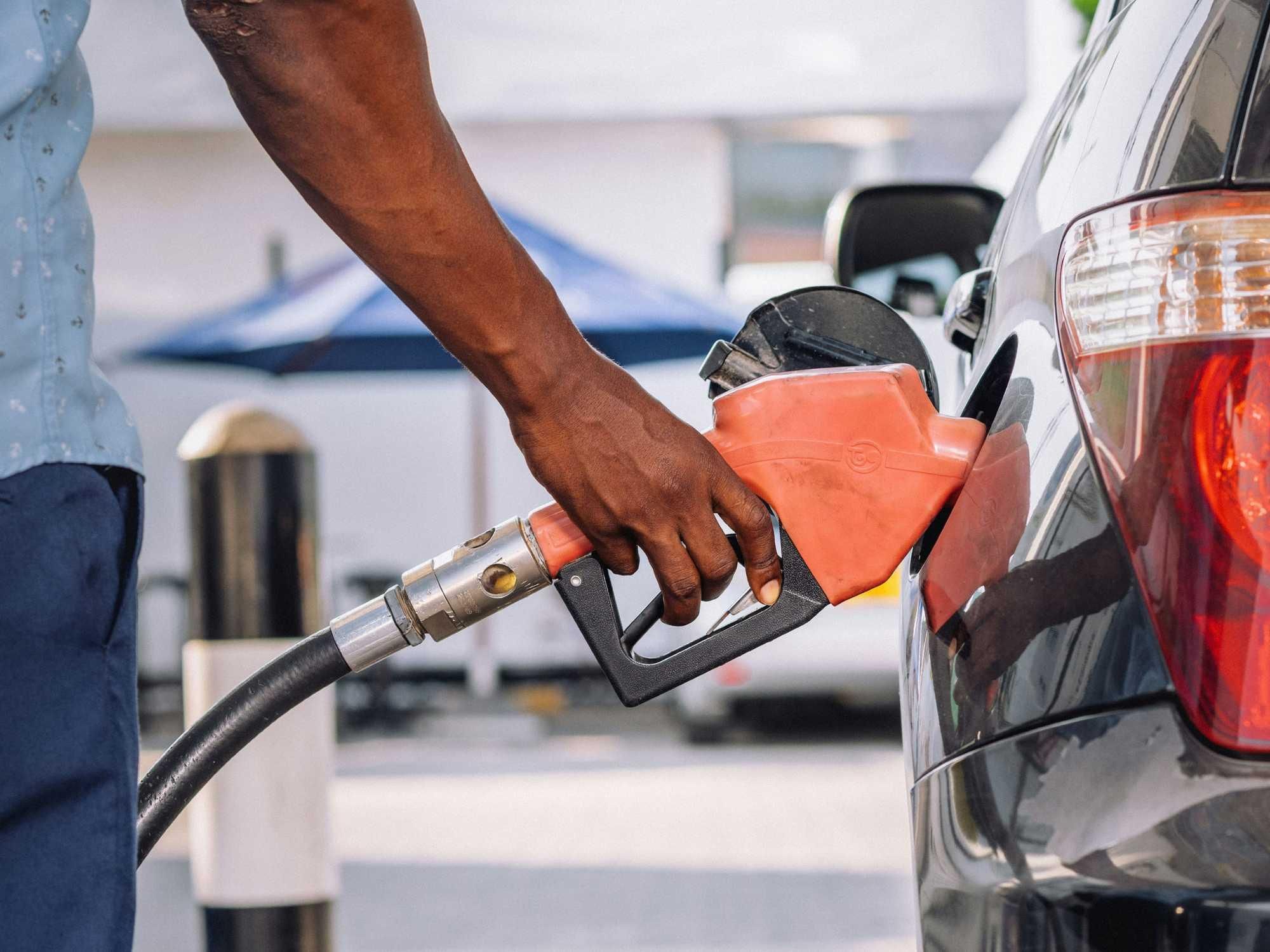
Pumping gas is one of the most routine chores in American life. You park, pay, squeeze the handle, and drive off. That ease is why people get careless.
Gasoline is not a gentle liquid. It gives off vapor at temperatures far below freezing. That vapor needs only a tiny spark to ignite. The Petroleum Equipment Institute has tracked fuel-pump fires for years. Many of them started with ordinary habits, not freak accidents. Some had nothing to do with fire at all.
Other mistakes hit your wallet instead. Pump skimmers, ruined emissions systems, and wrong-fuel tow bills add up fast. None of these are rare. I checked each point below against what fire safety groups, regulators, and vehicle makers say.
Where a popular belief turned out to be a myth, I say so. Where the risk is real, I explain why. These are seven things to never do at the pump in the US. Some will surprise you. All of them are easy to avoid once you know.
1. Never Get Back Into Your Car While the Nozzle Is Pumping
This is the mistake fire experts worry about most. It looks harmless. You are cold, bored, or in a hurry. You slide into the seat while the tank fills. Then you step out and grab the nozzle again. That is the moment of danger.
Your body builds up static electricity while you sit. Car seats, synthetic clothing, and rubber soles all add to it. The charge stays on you when you stand.
Touching the metal nozzle can release it as a spark. Fuel vapor is right there at the filler neck. A spark in that spot can ignite it. The Petroleum Equipment Institute has documented well over 150 such incidents. Most followed the same pattern. The person re-entered the car during fueling.
Cold, dry weather makes it worse. Low humidity lets static build up faster. Winter is the peak season for these fires. Many people assume the car’s metal body protects them. It does not help once you leave the seat. The charge lives on your clothes and skin.
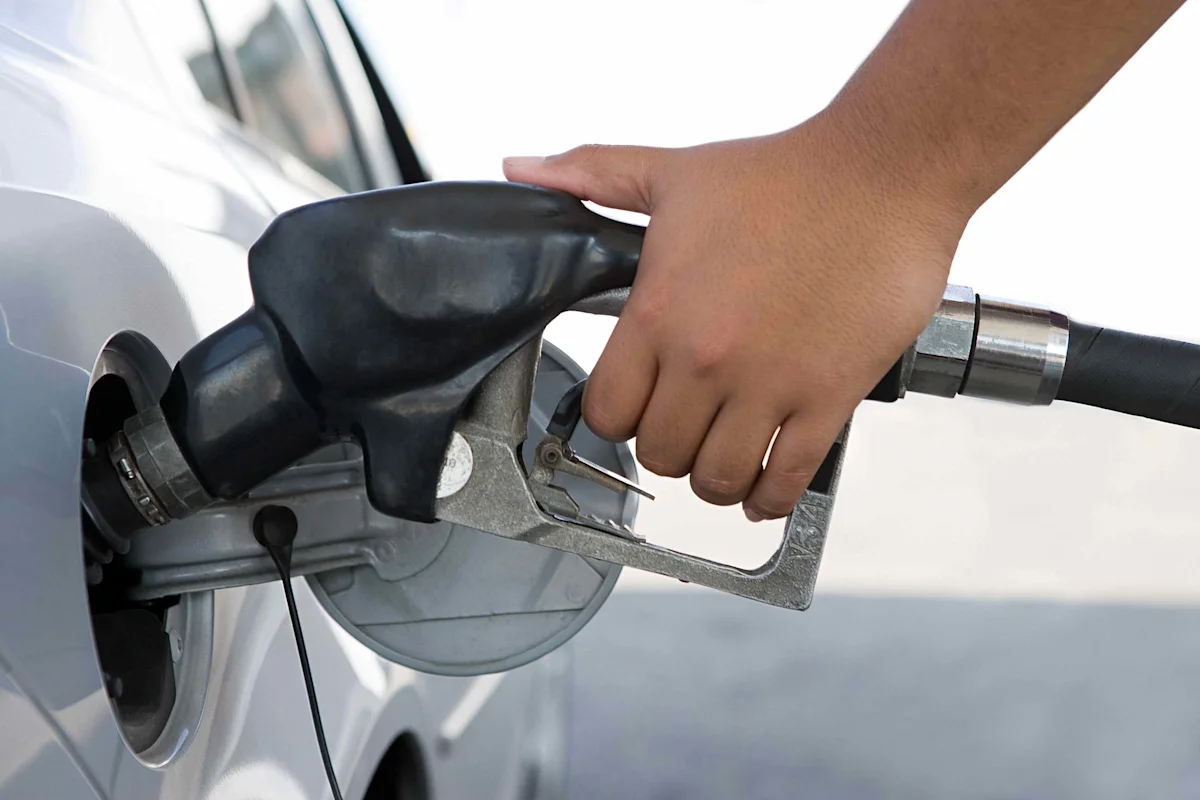
The fix is simple. Stay outside the car for the whole fill. If you must get in, get out and touch bare metal before you touch the nozzle again. Touch a door frame or the roof away from the filler. Do it with your bare hand. That safely drains the charge.
Never do this while holding the nozzle. Put a hand on the car first. Then handle the pump. If a fire does start at the nozzle, do not pull the nozzle out. Leave it in the tank. Back away and tell the attendant to hit the emergency shutoff.
Pulling the nozzle out can spray burning fuel. That makes things far worse. Station staff are trained to use the shutoff switch. Most stations have a red emergency button near the entrance or by the pumps. Look for it when you arrive. It takes two seconds and could matter someday.
This habit costs you nothing to fix. Stand by the pump and wait. Under two minutes of patience removes one of the most common causes of fuel-pump fires.
2. Never Smoke, Vape, or Use an Open Flame Near the Pump
This rule is so basic that it is easy to dismiss. But the science behind it is sobering. Gasoline is more dangerous than most people think. Its flash point is far below zero Fahrenheit. That means it gives off ignitable vapor even on freezing days. You do not need heat for it to be dangerous.
Gasoline vapor is also heavier than air. It sinks and spreads along the ground. It can drift several feet from the pump. A cigarette in your hand may be far from the nozzle. But the vapor around your feet may not be. A lit end can reach it.
Gasoline vapor burns across a narrow band of concentration in air. It is roughly between 1.4 and 7.6 percent. Near a fuel pump, those levels are easy to reach.
Many drivers think only a flame matters. Lighters and matches are the obvious risk. But hot embers and even sparks count too. Vaping is not a safe workaround. E-cigarettes use a heating coil that gets very hot. Fire officials warn against using them at pumps.
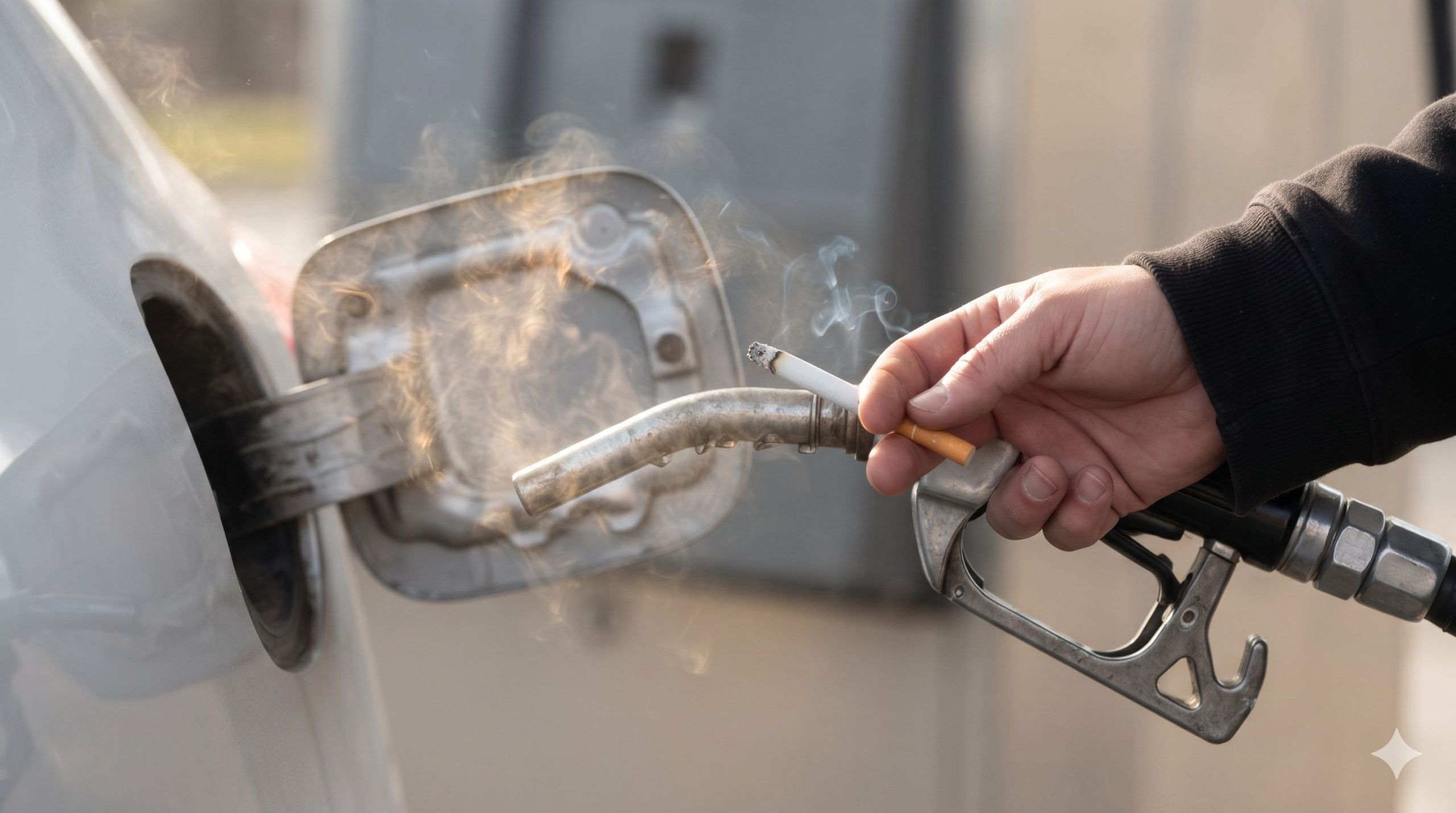
Some people also toss a cigarette butt near the pump island. A dropped butt can land near spilled fuel. That is a classic cause of small station fires.
Every pump carries a no-smoking warning for good reason. State fire codes back it up. Stations can ban you for ignoring it. Now, a myth worth clearing up. Many people believe a cell phone can ignite gas fumes. Investigators have found no confirmed case of that happening.
The Petroleum Equipment Institute says it has no record of a phone starting a pump fire. Still, many stations post warnings. Fire codes often treat phones as a distraction.
Distraction is the real concern. Texting at the pump pulls your eyes from the nozzle. You may miss a spill or a loose hose. So here is a sensible rule. Put the phone away while you fuel. Not because it will explode, but because you should watch the pump.
Keep lighters and matches in your pocket. Finish any cigarette well before you pull in. Walk away from the pump area if you need to smoke. This one rule has no real exceptions. The risk is tiny each time. But the damage when it goes wrong is severe.
3. Never Leave Your Engine Running
Every pump has a sign telling you to turn off the engine. Plenty of people ignore it. They think it saves time or keeps the heat on. Here is why that is a bad idea. A running engine is full of heat and sparks. The exhaust system can get extremely hot.
Fuel vapor is released at the filler neck during fueling. Some of it drifts toward the car’s underside. A hot exhaust part could ignite it. The electrical system adds another risk. A running car has live circuits all over. A tiny arc is enough in the wrong place.
Fire codes in the US generally require engines to be off during fueling. Many states enforce it. The rule appears on nearly every pump decal. There is also a very practical risk. A car left running can move. If it is in gear or the brake slips, it may roll.
A rolling car at a pump can tear the hose away. It can also hit you or another driver. That is a serious accident waiting to happen. Modern cars create new wrinkles. Keyless ignition makes it easy to think the car is off. The engine may still be running quietly.
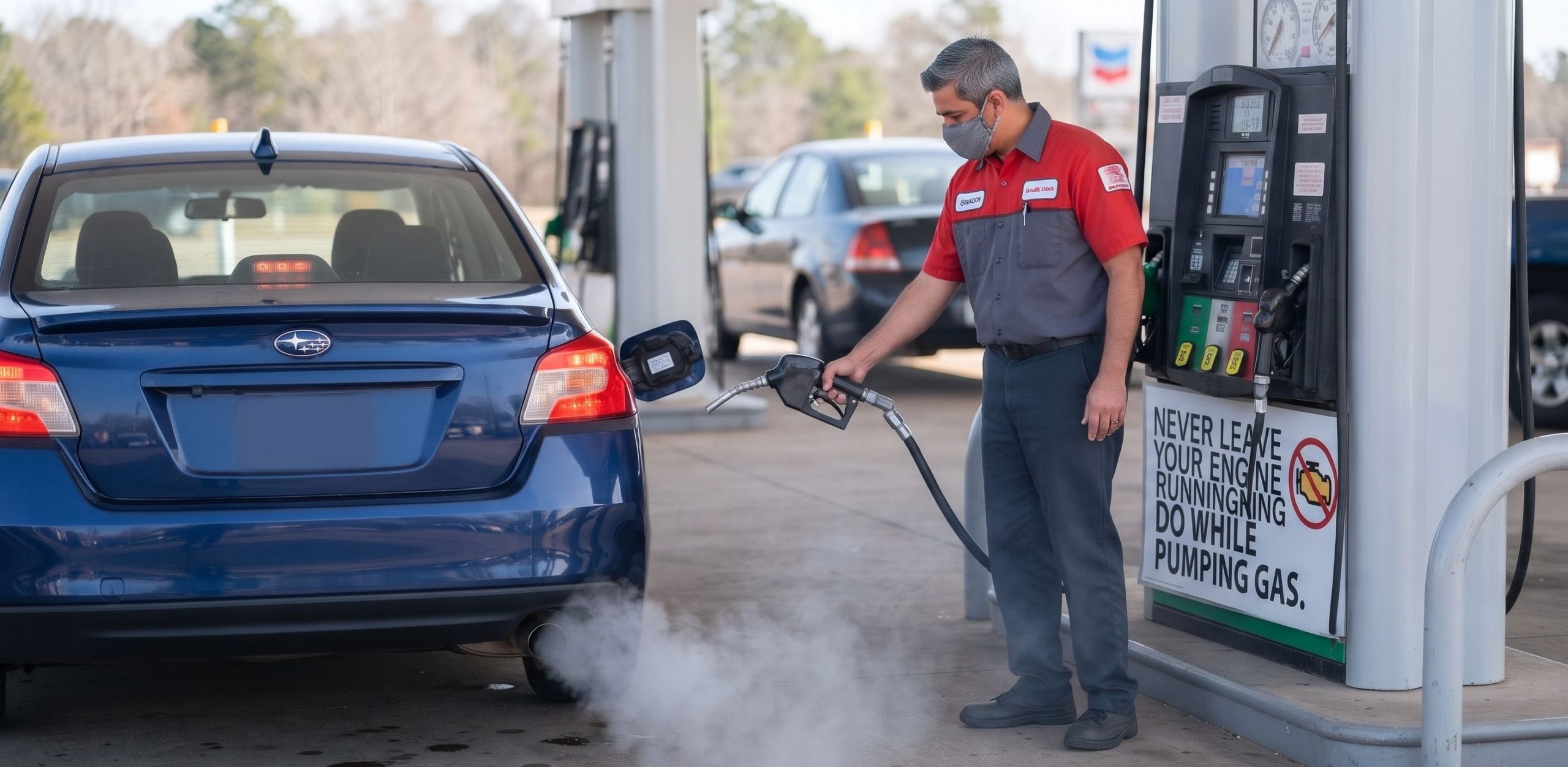
Push-button cars can stay on after you leave them. Check that the dashboard is dark. Make sure the engine is really off. Hybrids need extra care. The gas engine can start on its own at any time. It may do so even when the car seems idle.
If you drive a hybrid, turn the car fully off. Do not rely on the “Ready” light to tell you. Switch the power off before you fuel. Idling also wastes fuel and spews emissions. A cold car may seem to need heat. But the minute or two of fueling will not freeze you.
Leaving the car on also raises a theft risk. Thieves target running vehicles at gas stations. Pull the key, or take the fob with you. Take your keys when you walk inside to pay.
Never leave a running car unattended. It takes only a moment for it to vanish. Turn the engine off, set the parking brake, and fuel. It is a small habit with real safety payoff. And it keeps your car where you left it.
4. Never Top Off the Tank After the Pump Clicks Off
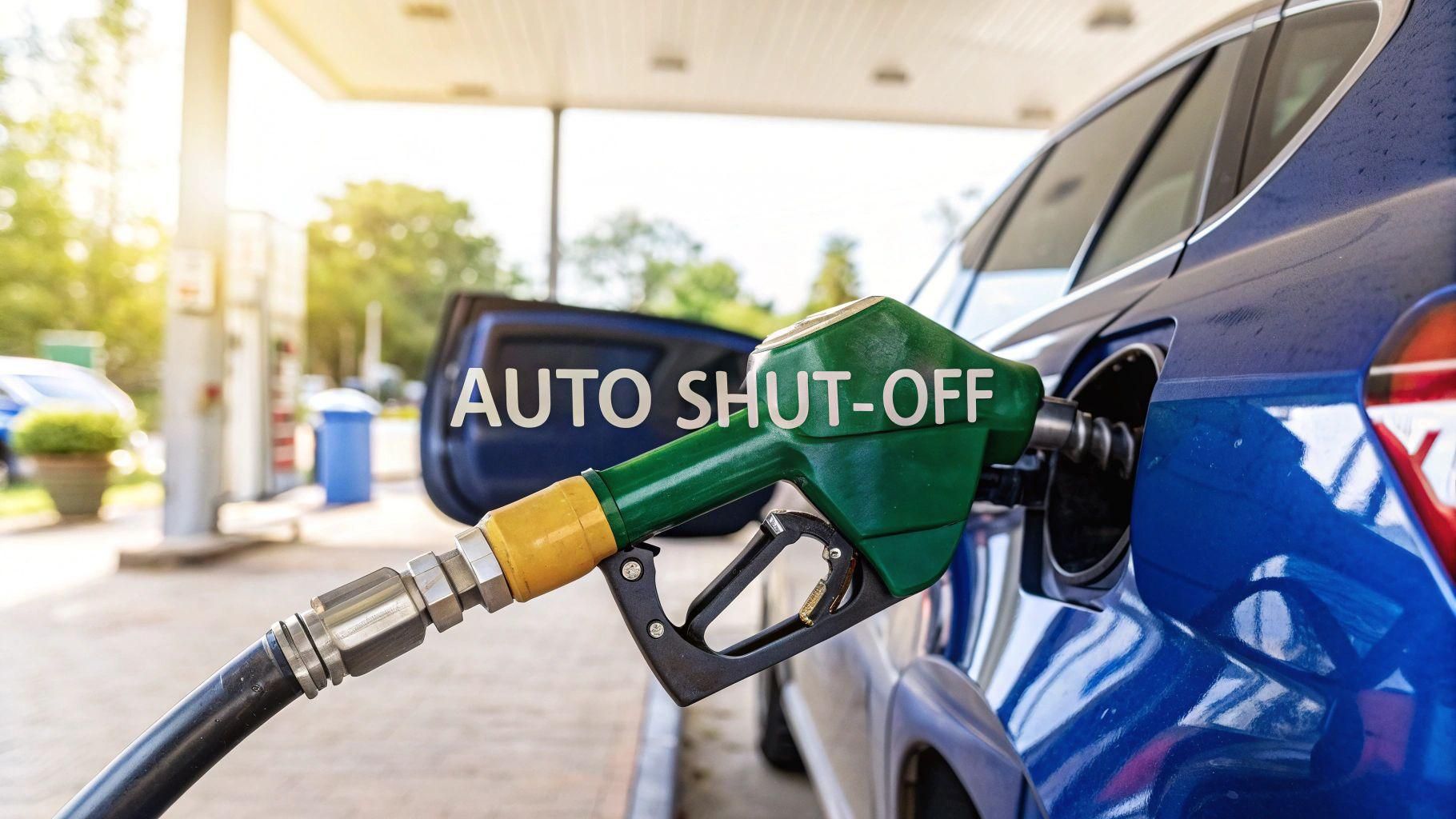
Many drivers squeeze a little extra in after the first click. They want to round up to a clean number. It feels thrifty, but it can cost you. The click means the tank is full. It is triggered when fuel backs up into the nozzle’s sensor tube. That is how the pump knows to stop.
Squeezing in more forces fuel into places it should not go. Modern cars have a vapor-capture system. It is called onboard refueling vapor recovery.
That system has been standard on US cars for decades. The EPA phased it in starting in the late 1990s. It uses a carbon canister to trap fuel vapor.
The canister is designed to hold vapor, not liquid. Topping off can push raw gas into it. That can saturate the carbon and damage it. A flooded canister can trigger the check engine light. It can also cause rough idling or hard starts. Repairs often run into hundreds of dollars.
Some people also report a strong gas smell afterward. That is a sign vapor is escaping. It means the system is not working as intended. Topping off also invites spills. Extra fuel can splash back out of the filler neck. It can run down the side of your car.
Gasoline can damage paint over time. It also creates a slip hazard on the ground. And it adds to the fumes around you. There is an environmental cost too. Spilled fuel evaporates into the air. It adds to smog and air pollution.
Tanks need room to breathe. As fuel warms, it expands. A tank filled to the very top has nowhere for that to go. The pump’s auto shutoff exists for a reason. It is calibrated to stop at the right level. Trusting it is the safest move.
Another habit to drop is using the hold-open latch and walking away. Never leave the nozzle unattended. Stay with it until the pump stops. When the pump clicks, stop. Remove the nozzle slowly. Let the last drips fall back into the tank.
Then seat the nozzle back in its holder. Screw the gas cap on until it clicks. A loose cap can also trigger the check engine light. That extra half gallon is not worth it. You will not gain real mileage. You risk a repair bill that dwarfs any savings.
5. Never Fill a Portable Gas Can While It Sits in Your Car or Truck Bed
This mistake is less obvious. But it causes real fires every year. It involves static electricity again. A portable gas can needs to be grounded while filling. That means it must sit on bare ground. It should not sit in a trunk or truck bed.
Plastic bedliners and carpeted trunks block grounding. They insulate the container. Static can build up as fuel flows in. Fuel flowing through a hose creates static charge. On the ground, that charge drains away safely. In a vehicle, it has nowhere to go.
A spark can jump from the can to the nozzle. Vapor sits right at the opening. That is how truck-bed fires start. Fire marshals across the US warn about this specifically. They say to place the can on the ground, away from the vehicle. They also say to keep it away from other cars.
Keep the nozzle touching the can’s opening while filling. That keeps both at the same electrical potential. It prevents a spark between them. Do not use a locked-open nozzle for a can. Hold it by hand the whole time. Stop before it gets too full.
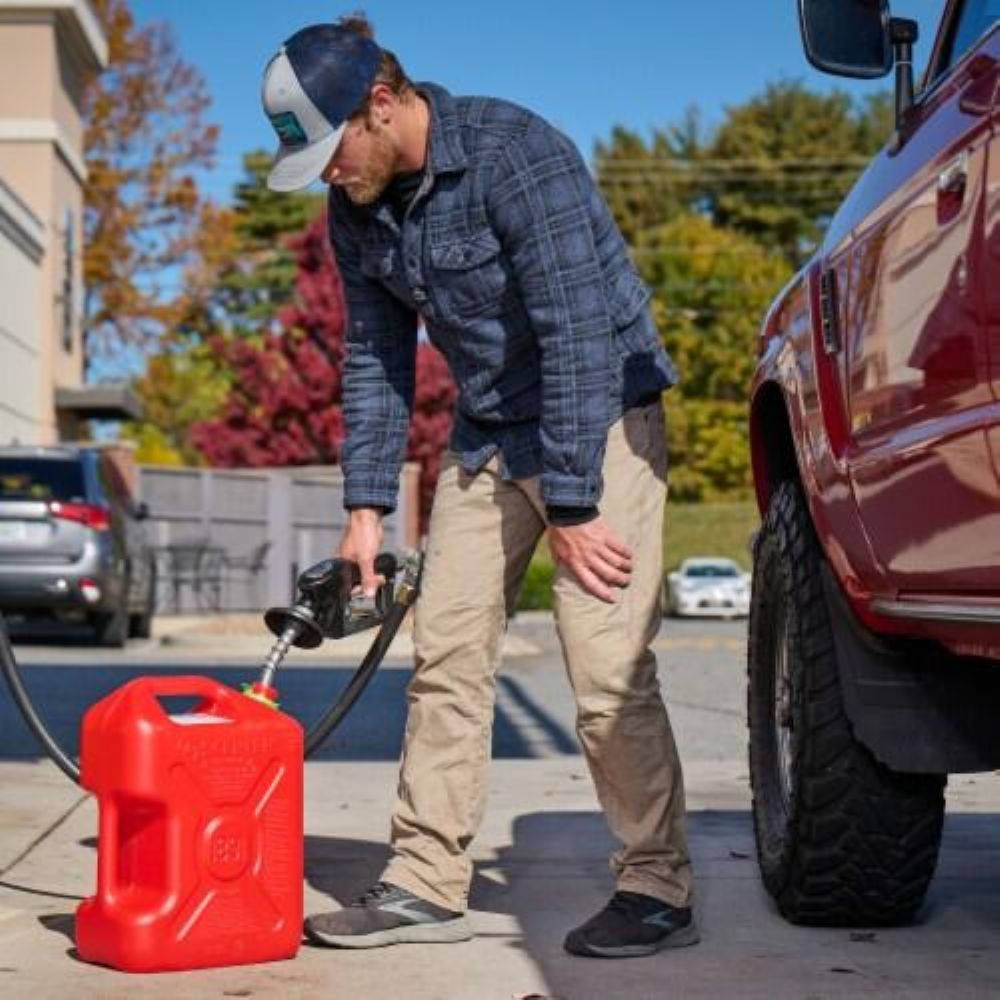
Fill only to about 95 percent. Gasoline expands as it warms. Leave a little room for that. Use only approved containers. Gasoline cans are traditionally red. Diesel cans are yellow, and kerosene cans are blue.
Never use milk jugs, water bottles, or buckets. They are not made for fuel. They can crack, leak, or build static. Federal rules now require newer portable fuel containers to be child-resistant. That cuts down on accidental poisonings and spills. Look for those features when you buy.
Many stations refuse to fill unapproved containers. Staff may stop you if they see a bad can. It is not a hassle; it protects you. Once filled, keep the can out of your cabin. Do not carry it in the passenger area. Fumes can build up fast in a closed space.
Transport it upright in a ventilated spot. A truck bed works once the can is full and sealed. Secure it so it cannot tip. Store cans away from heat and pilot lights.
A garage with a water heater is a poor spot. A detached shed is safer. A few minutes of care here prevents a lot of harm. Place the can on the ground. Hold the nozzle against it. Fill slowly.
6. Never Put the Wrong Fuel in Your Vehicle
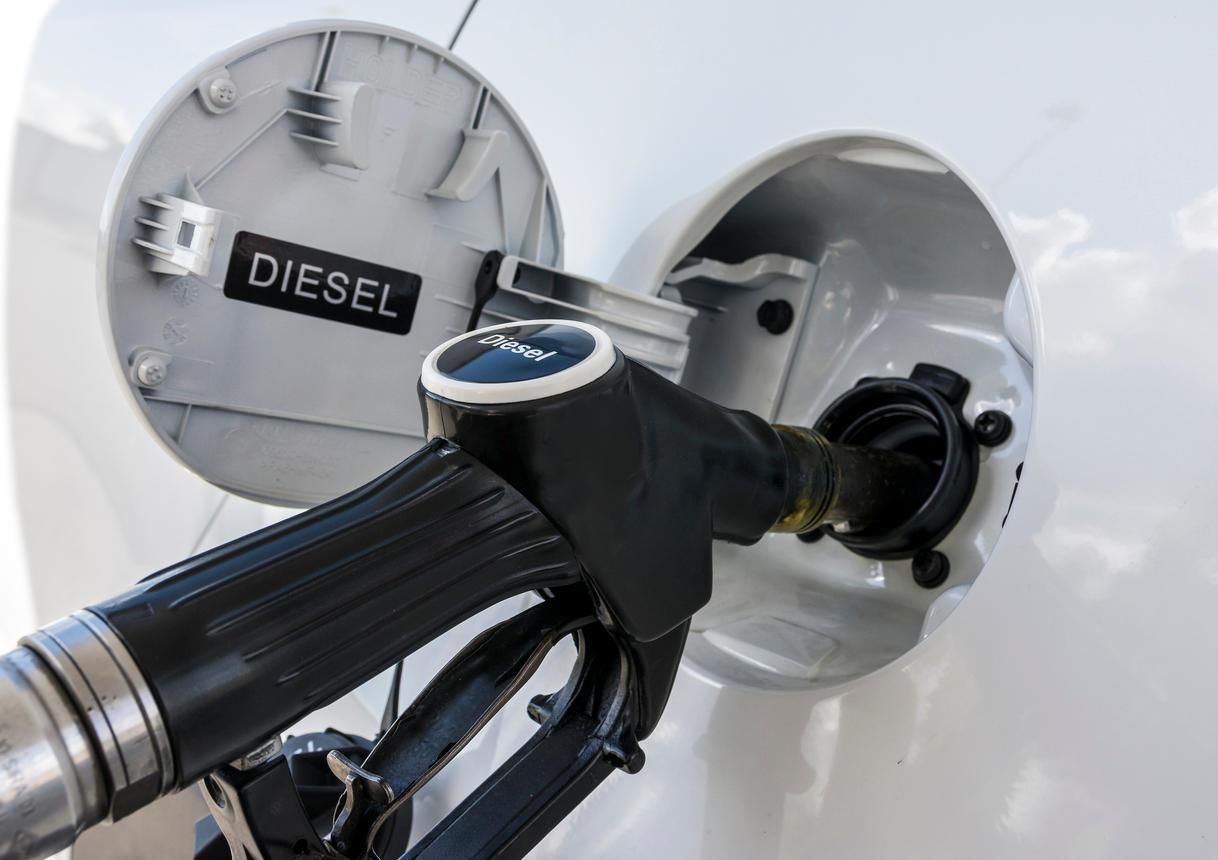
Misfueling happens more than you would think. Tired drivers and rental cars set the stage. A single moment of distraction is enough. Putting diesel into a gasoline car is the less common error. The diesel nozzle is usually larger. It often will not fit into a modern gas filler neck.
The worse mistake is gasoline in a diesel car. Gas nozzles fit into diesel tanks easily. That is how it happens. Diesel engines rely on fuel for lubrication. Gasoline does not lubricate the way diesel does. It can wear out the high-pressure fuel pump fast.
Modern diesel injection systems are very precise. Contaminated fuel can destroy them. Repair bills can climb into the thousands. If you realize your mistake at the pump, stop. Do not start the engine. Do not even turn the key to the “on” position.
Turning the ignition on can prime the fuel pump. That circulates bad fuel through the system. Keep it off and push the car away from the pump. Call roadside assistance for a tow. The tank usually needs to be drained. Most shops can do this the same day.
If you drove off before noticing, pull over safely. Turn the engine off as soon as you can. Smoke, stalling, or knocking are warning signs. Then there is the question of octane. Using higher octane than your car needs wastes money. It gives most engines no benefit.
Using lower octane than required is a different issue. Check your owner’s manual. If it says premium is required, follow it. Ethanol blends add another layer. E10 is the standard blend at most US pumps. The EPA has approved E15 for cars from model year 2001 and newer.
E15 is not safe for everything. Motorcycles, boats, and small engines should avoid it. Many lawn tools are also not rated for it. Pumps selling E15 carry a warning label. Read it before you squeeze the handle. Do not assume it matches your car.
E85 is only for flex-fuel vehicles. It often has a yellow cap on those cars. Putting it in a regular car can cause real damage. The cure is simple. Read the pump handle and the label.
Check your fuel door, which usually lists the right fuel. If you rent a car, ask what it takes. Do not guess. A quick check at the filler door can save a day and a lot of money.
7. Never Ignore the Card Reader Before You Pay
Fire is not the only risk at the pump. Fraud is another. Gas stations are a favorite target for card skimmers. A skimmer is a device that steals card data. Thieves hide it inside or over the card reader. Victims often do not know until their bank calls.
Pumps are easy targets for several reasons. They sit outside, often unattended. Many use older magnetic-stripe readers. The upgrade to chip readers lagged at pumps. Card networks pushed the deadline back more than once. It finally landed in 2021 for fuel pumps.
Even after that, many stations were slow to upgrade. Older pumps still take swipes. Those are the easiest to skim. Thieves have also been known to open pump cabinets. Some stations use generic locks. A single key can open many pumps.
Inside, they install a skimmer wired to the pump’s own electronics. You would never see it from the outside. That makes it hard to spot. Some skimmers send data wirelessly. Thieves can pick it up from a nearby car. They do not have to return to the pump.
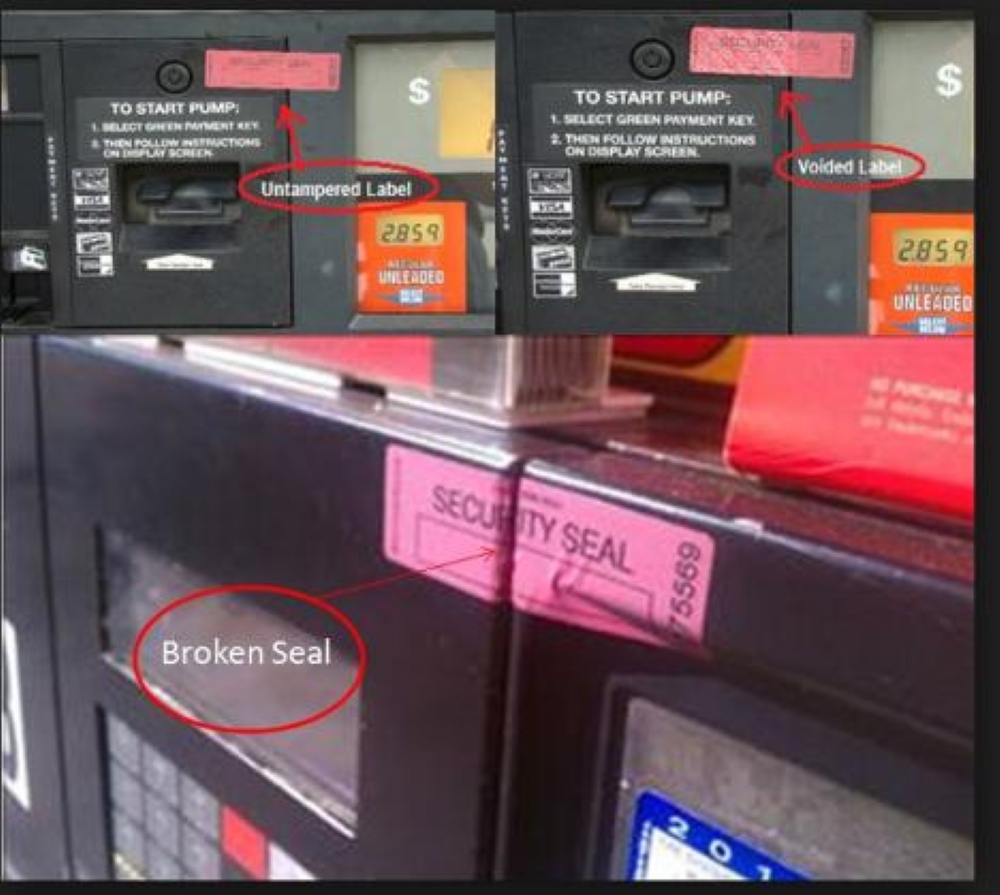
So what can you do? Start by looking at the reader. If it looks loose, bulky, or mismatched, walk away. Wiggle the card slot gently. A real reader sits firmly in place. A fake one may shift or pop off.
Check for tamper seals. Many stations put a security sticker on the pump door. If it is torn or says “void,” do not use that pump. Pick a pump close to the attendant’s view. Thieves prefer ones out of sight. Those at the far edge are riskier.
Better still, avoid swiping altogether. Use tap-to-pay or a mobile wallet. They send a one-time code, not your card number. You can also pay inside. A cashier-run terminal is harder to tamper with. It takes a minute but removes the risk.
Use a credit card rather than a debit card at the pump. Credit cards offer stronger fraud protection. A debit skim can drain your bank account directly.
Check your statements often. Watch for small test charges. Thieves sometimes try tiny amounts first. If you spot something odd at a pump, tell the attendant.
Report it to the station manager as well. If your card is hit, call your bank at once. A few seconds of caution at checkout protects far more than your tank. It protects your whole account.