
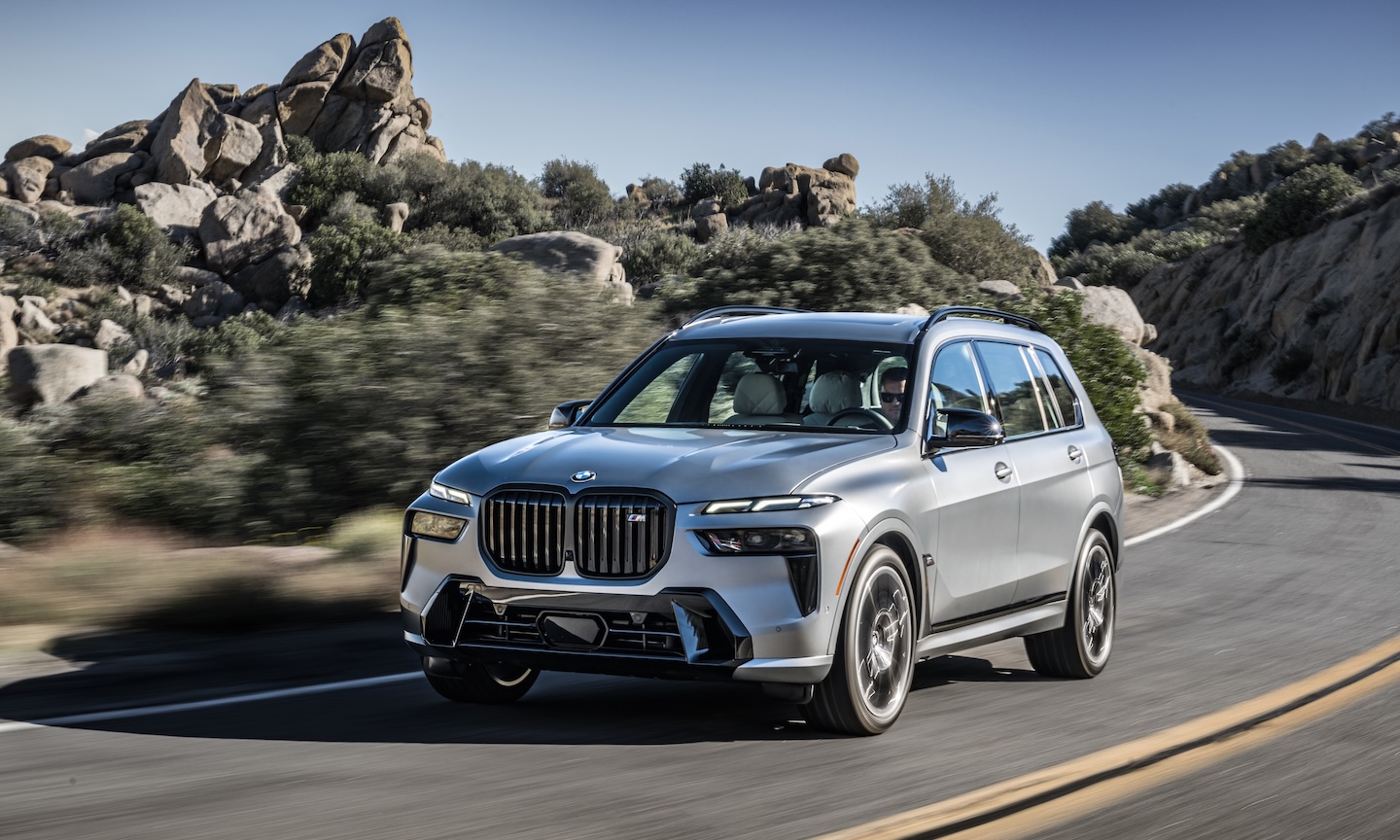
Buying an expensive SUV can mean paying more than its purchase price in insurance and fuel costs. In several U.S. states, vehicle ownership taxes or annual personal property taxes are calculated using the vehicle’s value, making expensive SUVs particularly costly to keep registered.
States such as Colorado, Virginia, Missouri, and Connecticut use value-based vehicle taxation systems, although their formulas differ considerably.
A luxury SUV worth $100,000 can therefore generate a much larger annual tax bill than an ordinary family vehicle. These eight SUVs illustrate why buyers should investigate local vehicle taxes before choosing an expensive model.
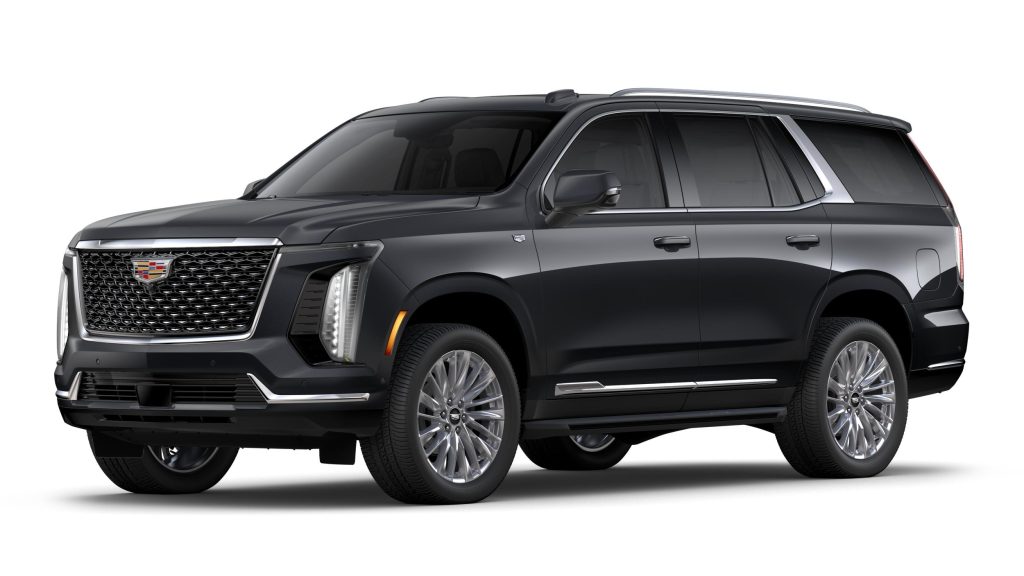
1. Cadillac Escalade (2025)
The Cadillac Escalade is a particularly important example for buyers living in states that calculate vehicle ownership taxes using value. Its large dimensions, luxury equipment, and premium starting price put it in a higher valuation category than conventional family SUVs.
The 2025 Escalade Luxury started at approximately $89,590, while higher trims could exceed $118,000 before additional options.
Colorado provides a useful illustration of how that purchase price can affect annual ownership expenses. The state charges a Specific Ownership Tax (SOT), which functions as an annual vehicle ownership tax collected during registration.
For most passenger vehicles, the taxable value is calculated as 85% of the original MSRP. During the first year, the tax rate is 2.1% of that taxable value.
Using the $89,590 starting price, the first-year SOT would be approximately $1,599. This is only the ownership-tax component, not the complete registration bill. License fees, weight-based charges, county fees, and other applicable costs can increase the final amount.
Virginia uses a different approach. In Fairfax County, the 2026 personal property tax rate is $4.57 per $100 of assessed value. The county uses vehicle valuation guides rather than automatically taxing the original purchase price. Eligible personal-use vehicles also receive state tax relief on the first $20,000 of assessed value.
For Escalade buyers, the important point is that a high-value luxury SUV can create substantial recurring ownership expenses even after the purchase has been completed.
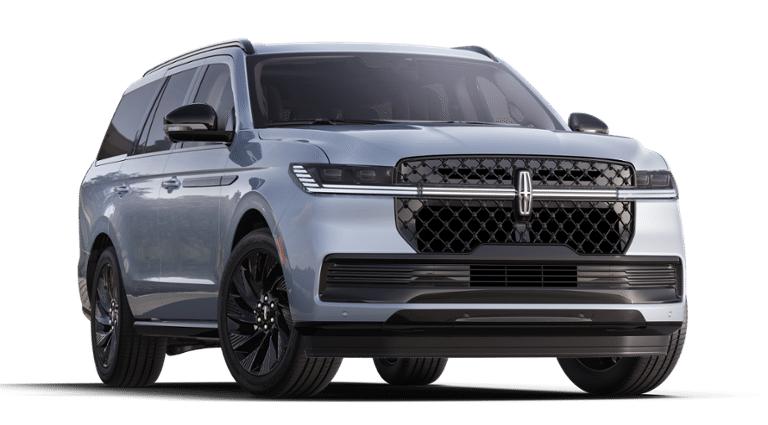
2. Lincoln Navigator (2025)
The Lincoln Navigator is another full-size luxury SUV that deserves attention when comparing registration expenses across value-tax states. Its substantial purchase price makes it more exposed to valuation-based ownership taxes than smaller, less expensive crossovers.
The redesigned 2025 Navigator started at $101,990 in the United States, placing its entry-level version above the $100,000 mark before options and applicable charges.
Colorado’s Specific Ownership Tax demonstrates why that matters. The state calculates this annual tax using a vehicle’s original taxable value, which is 85% of its original MSRP for most passenger vehicles. The first-year rate is 2.1%, followed by 1.5% in the second year and 1.2% in the third year. The rate gradually declines as the vehicle ages.
Using the Navigator’s $101,990 starting MSRP, its estimated first-year ownership tax in Colorado would be approximately $1,821. That amount does not include the other registration charges, county fees, or applicable surcharges.
Missouri presents a different situation. Motor vehicles are generally assessed at 33⅓% of their market value, with local tax levies then applied to the assessed amount. The Missouri State Tax Commission explains that vehicle values are determined using published valuation information and that the tax bill depends on the applicable local levy.
Consequently, a Navigator with a higher assessed value can produce a larger annual personal property tax bill than a less expensive SUV registered in the same locality.
Buyers should remember that depreciation can reduce the tax burden in market-value-based systems, while Colorado’s original-MSRP formula follows its own age-based schedule.
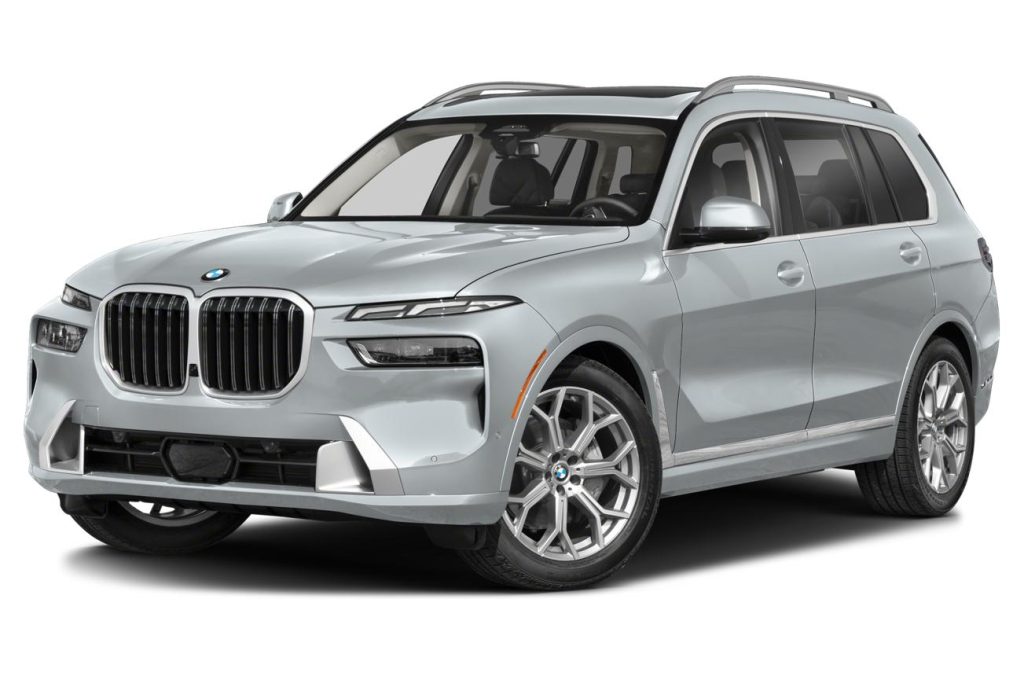
3. BMW X7 (2025)
The BMW X7 combines three-row seating with premium engineering, but its relatively high purchase price can create additional ownership expenses in states that tax vehicles according to their value.
The 2025 X7 xDrive40i had a starting MSRP of approximately $85,475, while the more powerful M60i started at $113,075. The range-topping Alpina XB7 was considerably more expensive, starting at $153,575.
Colorado provides a straightforward example of how the vehicle’s original price affects registration expenses. The state calculates its Specific Ownership Tax using 85% of the original MSRP for most passenger vehicles. During the first year, the applicable rate is 2.1% of that taxable value.
Using the $85,475 starting MSRP, the estimated first-year ownership tax for an X7 xDrive40i would be approximately $1,526. Choosing the M60i would increase the illustrative amount to approximately $2,019, while the Alpina XB7 could generate approximately $2,329. These figures represent the ownership-tax component only, excluding other registration charges.
Virginia creates a different calculation. In Prince William County, the 2026 personal property tax rate for vehicles is $3.50 per $100 of valuation. Qualifying personal-use vehicles receive state tax relief on the first $20,000 of assessed value, subject to the applicable relief percentage.
This means two X7 owners in different counties can receive different annual tax bills even when their vehicles have identical specifications.
For buyers considering the X7, the important financial detail is the selected trim. Higher-performance versions can substantially increase the taxable value, making the initial purchase decision relevant to future registration expenses.
4. Mercedes-Benz GLS (2025)
The Mercedes-Benz GLS is positioned as a flagship three-row luxury SUV, and its price reflects that position. For the 2025 model year, Mercedes listed the GLS 450 4MATIC at $89,200, while the GLS 580 4MATIC started at $114,800.
Buyers choosing the AMG GLS 63 or Maybach GLS 600 entered considerably higher price brackets, with starting prices of $149,500 and $178,450, respectively.
These differences matter in states where annual vehicle taxes depend on original purchase value or assessed market value. In Colorado, the first-year Specific Ownership Tax for most passenger vehicles is calculated using 85% of the original MSRP and a 2.1% rate.
Based on the GLS 450’s $89,200 starting price, the estimated first-year Colorado ownership tax would be approximately $1,592. For the GLS 580, that figure rises to approximately $2,050.
A Maybach GLS 600 starting at $178,450 could produce an estimated first-year ownership tax of approximately $3,184. These are illustrative calculations, not complete registration quotes.
Connecticut uses another valuation-based approach. Under its motor vehicle property-tax framework, vehicles are assessed using a statutory valuation method, with the assessed value generally representing 70% of the applicable vehicle value. Municipalities establish their own tax rates within state limits.
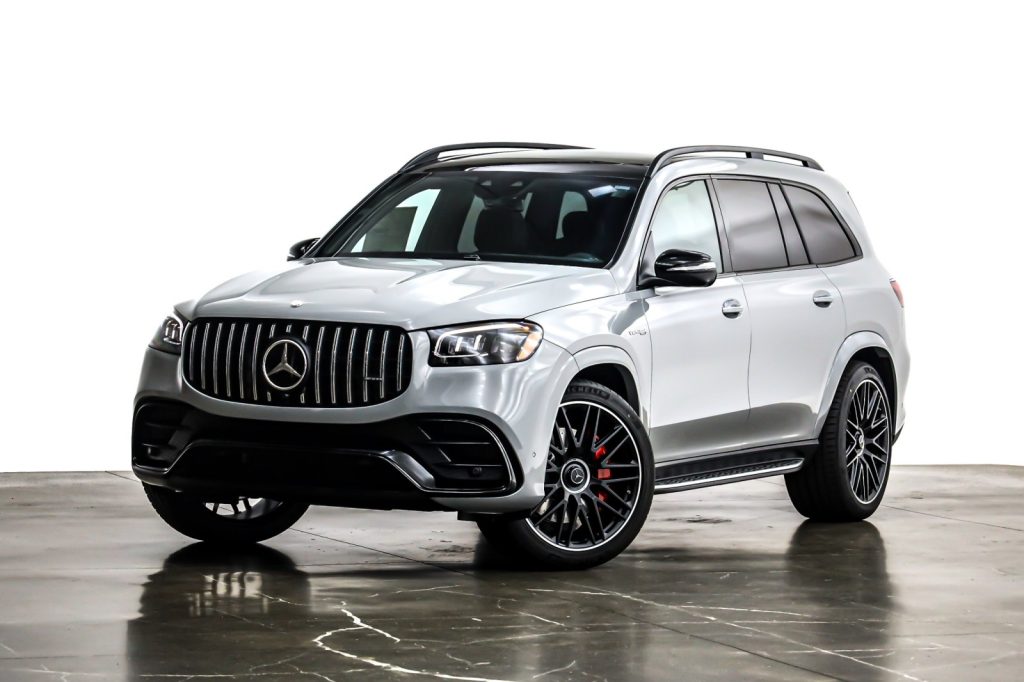
The GLS therefore presents an interesting ownership-cost consideration beyond its financing and insurance. Selecting a more expensive powertrain or luxury trim can increase the taxable amount.
Before purchasing one, buyers should obtain a local registration estimate using the exact trim and model year rather than relying on a general statewide average.
5. Lexus LX 600 (2025)
The Lexus LX 600 occupies the expensive end of the full-size SUV market, combining a twin-turbocharged V6, four-wheel drive, and a premium interior.
Its 2025 Premium trim carried a starting MSRP of approximately $106,850, while higher versions climbed beyond $115,000. The LX 700h hybrid range added even more expensive configurations.
For buyers in Colorado, that price creates a measurable annual ownership-tax obligation. The state’s Specific Ownership Tax uses 85% of the original MSRP as the taxable value for most passenger vehicles. The first-year rate is 2.1%, with lower percentages applying as the vehicle ages.
Using the $106,850 starting price, an LX 600 Premium would generate an estimated first-year Specific Ownership Tax of approximately $1,907. This is separate from ordinary registration charges, license fees, and any applicable local costs. A higher-priced LX configuration would produce a larger amount under the same formula.
Missouri offers another example of why an expensive SUV can carry a recurring tax burden. The state assesses personal property at 33⅓% of its true value in money. Local tax levies are then applied to the assessed amount.
Consequently, an LX with a higher market valuation can produce a larger personal property tax bill than a less expensive vehicle registered in the same locality.
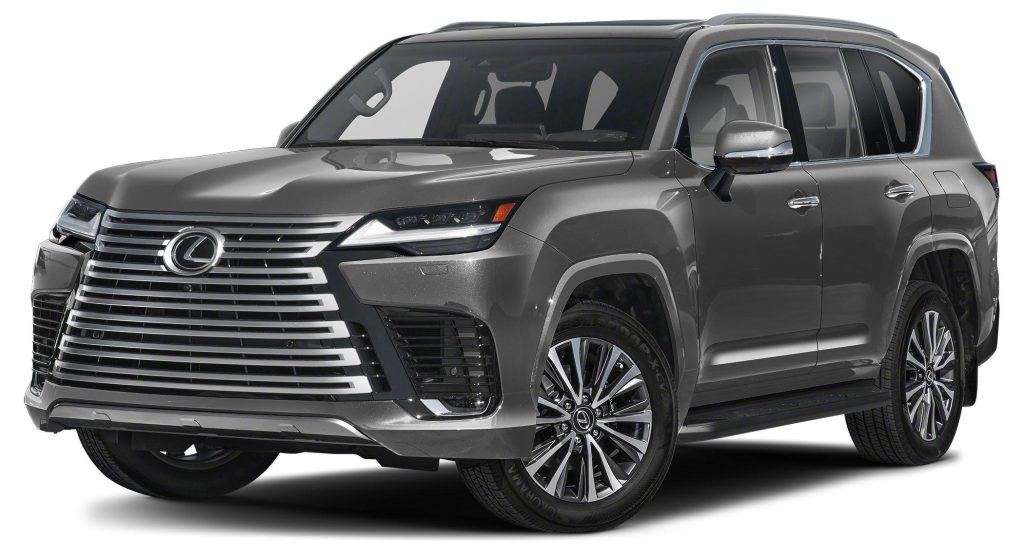
Depreciation is relevant in Missouri because the assessment is connected to the vehicle’s value rather than simply its original MSRP. The actual valuation must follow the applicable assessment rules.
For prospective LX buyers, the distinction between the 600 and 700h versions is worth considering. The more expensive configuration can mean a higher initial tax burden in states using value-based formulas. Obtaining a local estimate before signing the purchase agreement can prevent an unexpected annual expense.
6. Land Rover Range Rover (2025)
The Range Rover is among the most expensive mainstream luxury SUVs sold in the United States, and its purchase price can translate into a substantial annual vehicle tax bill.
The 2025 lineup started at approximately $109,375 for the P400 SE, while higher specifications such as the P530 Autobiography and P615 SV pushed prices considerably further. The top SV long-wheelbase configuration reached approximately $235,475 before additional charges.
Colorado’s Specific Ownership Tax makes the difference between these versions particularly clear. Most passenger vehicles are assigned a taxable value equal to 85% of the original MSRP. The first-year rate is 2.1% of that amount.
Using the P400 SE’s starting MSRP, the estimated first-year ownership tax would be approximately $1,952. By comparison, a $235,475 P615 SV long-wheelbase model would generate approximately $4,204 under the same calculation. These estimates exclude other registration expenses and assume the listed MSRP is the applicable original value.
Connecticut can also create significant ownership costs for expensive vehicles. Its motor vehicle property-tax system generally assesses vehicles at 70% of the applicable value, with municipalities applying their respective mill rates. The exact bill therefore depends on where the Range Rover is registered.

One important consideration is that luxury options can increase the vehicle’s original sticker price. Depending on the state’s valuation rules, expensive factory equipment may therefore affect the taxable amount.
For Range Rover buyers, choosing between the standard SE and a high-end SV is not merely a question of luxury equipment. The difference in original value can influence annual ownership taxes for years, particularly in Colorado, where the calculation uses the original MSRP rather than current resale value.
7. Porsche Cayenne (2025)
The Porsche Cayenne may be smaller than some full-size luxury SUVs, but its high-performance versions can carry substantial purchase prices. The 2025 base Cayenne started at $84,700, while the Cayenne S began at $101,600. At the expensive end, the Turbo E-Hybrid started at $157,000, and the Turbo GT Coupe reached $203,800.
This wide price difference is important in states that use vehicle value to calculate annual ownership taxes. Colorado’s Specific Ownership Tax is based on 85% of original MSRP for most passenger vehicles. During the first year, the rate is 2.1% of the taxable value.
Based on the $84,700 starting price, a new base Cayenne would generate an estimated first-year Colorado ownership tax of approximately $1,512. The $157,000 Turbo E-Hybrid would produce approximately $2,804 under the same formula. A $203,800 Turbo GT Coupe would reach approximately $3,852.
The actual registration bill would be higher because these calculations exclude standard registration fees, license charges, and other applicable costs.
Missouri provides another example. The state assesses personal property at 33⅓% of its true value in money, with local tax rates applied afterwards. A Cayenne’s assessed value can therefore affect the annual amount owed, although depreciation and the relevant valuation rules influence the final calculation.
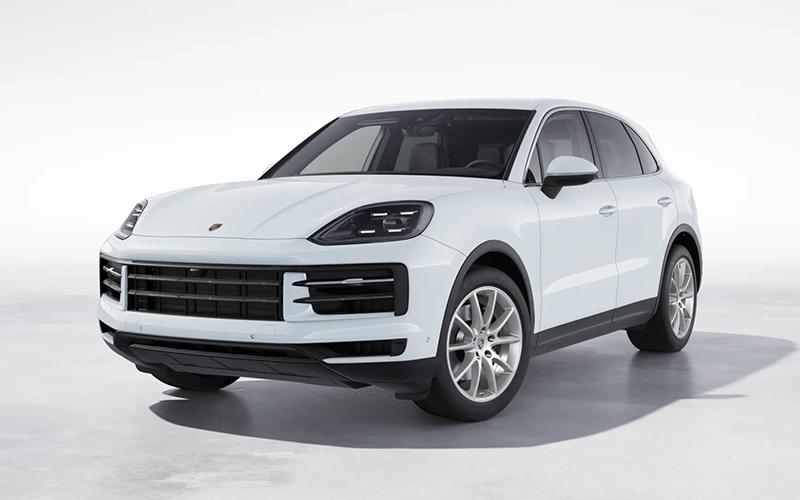
For Porsche buyers, the selected powertrain and trim make a considerable difference. A base Cayenne and a Turbo GT may share the same model name, but their purchase prices are separated by more than $100,000.
Before choosing a high-performance version, request a local tax estimate. This is especially worthwhile for buyers who plan to register the vehicle in a state where ownership taxes are calculated using its original value or assessed market value.
8. Jeep Grand Wagoneer (2025)
The Jeep Grand Wagoneer is an expensive full-size SUV that can generate surprisingly high annual registration-related taxes in value-based jurisdictions. Its 2025 lineup started at approximately $87,040, while the Series III and Series III Obsidian versions reached $110,040 and $111,63,5 respectively.
The Grand Wagoneer’s price becomes particularly relevant in Colorado, where the Specific Ownership Tax is calculated using the original MSRP rather than the vehicle’s current resale value. Most passenger vehicles have a taxable value equal to 85% of their original sticker price, with a first-year tax rate of 2.1%.
Using the base Grand Wagoneer’s $87,040 starting price, the estimated first-year ownership tax would be approximately $1,554. For a Series III Obsidian starting at $111,635, the same calculation produces approximately $1,993. These figures exclude other registration charges and are not complete DMV quotes.
Virginia offers a different example of value-based taxation. In Prince William County, the 2026 vehicle personal property tax rate is $3.50 per $100 of valuation. Qualifying personal-use vehicles receive state tax relief on the first $20,000 of assessed value, subject to the applicable relief percentage.
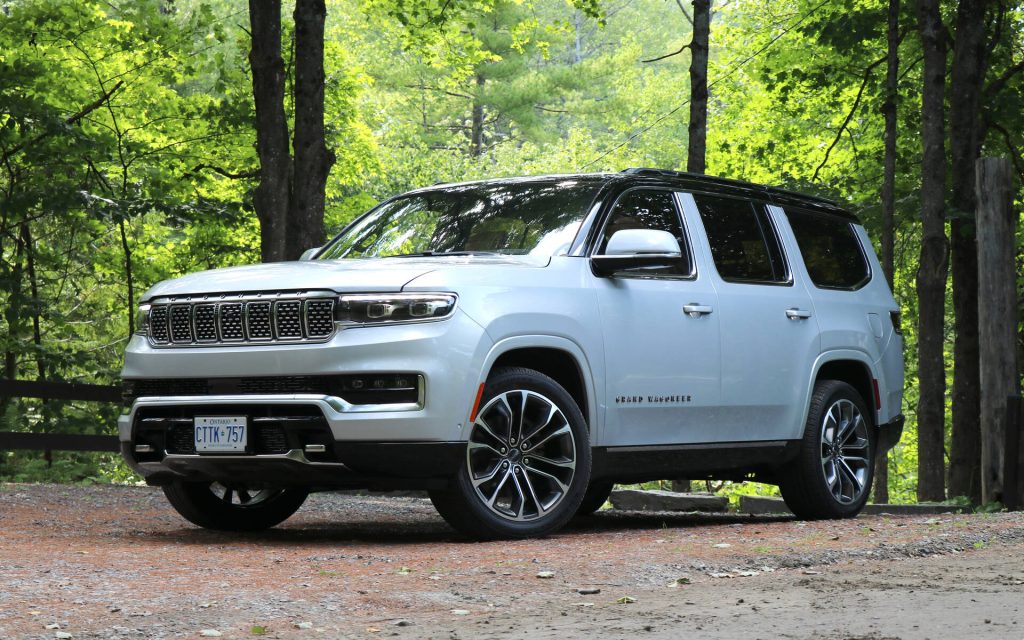
This distinction is important because two Grand Wagoneer owners can face different annual bills depending on their county, vehicle valuation, and eligibility for tax relief.
The SUV’s equipment levels also matter. A higher-priced Obsidian model can carry a larger taxable value than the entry-level version, even though both share the same basic vehicle platform.
For buyers considering this Jeep, checking local personal property tax rules before selecting a trim can help avoid an expensive surprise after registration.