
Buying a used SUV at an attractive price can become an expensive decision when its engine starts consuming oil between scheduled changes. Some engines are known for problems involving piston rings, valve stem seals, PCV systems, or other components that allow oil to enter the combustion chamber.
The warning signs are not always obvious at first. A vehicle may run smoothly while its oil level gradually drops, leaving the owner facing repeated top-ups or potentially major engine repairs.
Before purchasing a used SUV, it is worth knowing which models have documented oil consumption concerns, what causes them, and what buyers should inspect.
1. 2011-2014 Subaru Forester
The fourth-generation Subaru Forester is popular among used SUV shoppers because of its standard all-wheel drive, practical cabin, and relatively compact dimensions.
However, certain examples equipped with the naturally aspirated 2.5-liter FB25 four-cylinder engine developed excessive oil consumption, making maintenance history particularly important when shopping for a used model.
Subaru officially acknowledged the problem through service bulletin 02-157-14R, which specifically covered 2011-2014 Forester models equipped with the 2.5-liter FB engine.
The manufacturer introduced an extended powertrain warranty covering verified excessive oil consumption for eligible vehicles, extending coverage to eight years or 100,000 miles from the original warranty start date. Not every vehicle within those model years automatically qualified, as production dates and VIN eligibility mattered.
The financial concern comes from what happens when an engine repeatedly burns more oil than expected. Owners may need to check the dipstick frequently and add oil between scheduled changes.
Ignoring the problem can allow the oil level to fall dangerously low, increasing the possibility of lubrication-related engine damage. Depending on the condition, repairs may involve substantial internal engine work rather than an inexpensive routine service.

Before purchasing one, ask whether the previous owner experienced frequent oil top-ups and whether Subaru performed an official oil consumption test. Request documentation of any warranty repair or engine work, rather than relying on verbal assurances. Check for blue exhaust smoke and inspect the maintenance records carefully.
A Forester with documented repairs may still be worth considering, but an example with unexplained oil loss deserves a professional inspection before money changes hands.
2. 2010-2013 Acura MDX
The Acura MDX offers three-row seating, a powerful V6 engine, and a more premium experience than many mainstream used SUVs. Unfortunately, certain 2010-2013 examples developed excessive engine oil consumption caused by problems involving the piston oil control rings.
This issue was not limited to individual owner reports, as Acura also released official service bulletins addressing the problem.
According to Acura service bulletin 19-006, applicable 2010-2013 MDX vehicles could experience excessive oil consumption because carbon deposits accumulated around the oil control rings.
These deposits restricted the rings’ ability to remove oil from cylinder walls and return it to the crankcase. Consequently, engine oil could enter the combustion chambers and burn during normal operation.
The repair was potentially expensive because addressing the underlying problem could require replacing pistons and piston rings. Acura’s technical guidance instructed dealerships to perform an oil consumption test before proceeding with internal engine repairs.
The manufacturer also issued warranty-related assistance for eligible vehicles, although coverage depended on the specific campaign and VIN status.
What makes this SUV particularly important to inspect is that a clean exterior and smooth test drive do not necessarily reveal the problem.

An engine can continue running normally while gradually consuming excessive oil. Buyers should therefore check the dipstick, examine service invoices, and ask whether the engine has undergone the prescribed oil consumption test.
If the previous owner regularly added oil between services, investigate why before considering the purchase.
Also request proof of any completed piston and ring replacement. An MDX with properly documented repairs is a different proposition from one showing unexplained oil loss. Do not assume that every 2010-2013 example qualifies for warranty assistance today.
3. 2010-2013 Chevrolet Equinox
A used Chevrolet Equinox can look like an attractive family SUV, particularly because of its comfortable interior, generous cargo space, and relatively affordable secondhand pricing.
However, buyers considering the 2010-2013 models equipped with the 2.4-liter four-cylinder engine should investigate its documented excessive oil consumption problem before making a purchase.
General Motors issued technical service bulletin 13-06-01-003 addressing excessive oil consumption in 2010-2013 Equinox models equipped with the LAF and LEA versions of the 2.4-liter engine.
The manufacturer identified piston ring problems as a potential cause, allowing engine oil to pass into the combustion chambers and burn during operation.
The consequences could become expensive when the condition went untreated. GM’s repair procedure called for an oil consumption test, inspection for external leaks, and, when the diagnosis confirmed the problem, replacement of the affected pistons and piston rings.
This is substantially more involved than replacing a valve cover gasket or performing an ordinary oil change.
GM also issued special coverage bulletin 14159 for certain 2010 Equinox vehicles with the 2.4-liter LAF engine. It addressed consumption exceeding one quart per 2,000 miles and provided coverage for eligible vehicles for 10 years or 120,000 miles from their original in-service date. That coverage period has now expired for these vehicles.

When inspecting a used Equinox, request oil change invoices and ask how frequently the previous owner added oil.
A vehicle that has already received documented piston and ring repairs deserves a different assessment from one with an unresolved consumption problem. Have a mechanic inspect the engine and check its oil level before purchase.
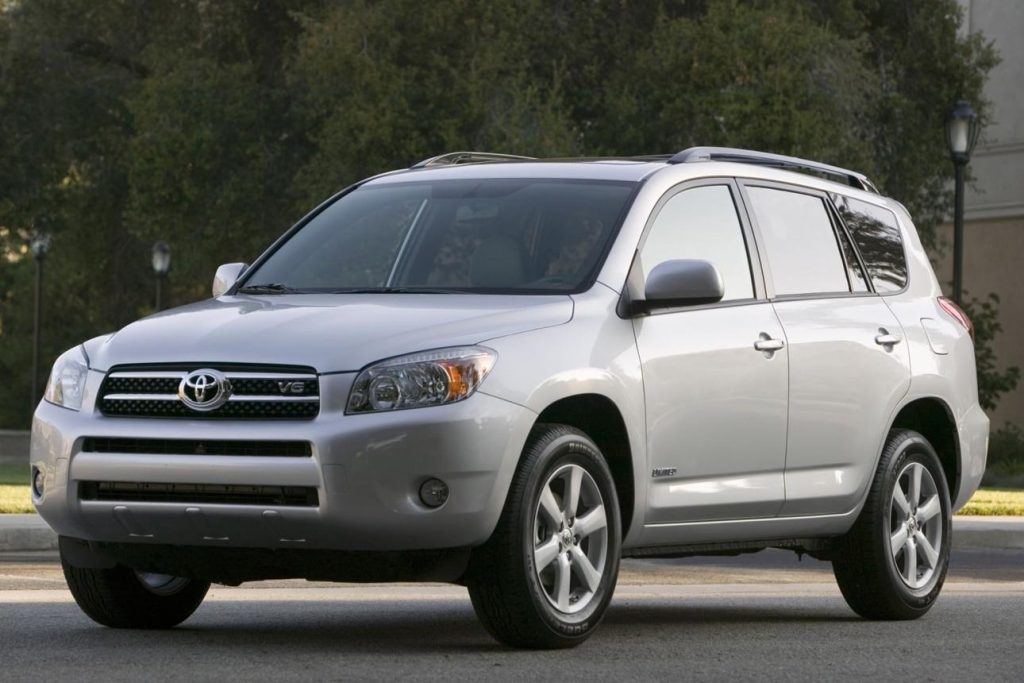
4. 2006-2008 Toyota RAV4
Toyota’s reputation for building dependable vehicles makes the second-generation RAV4 an appealing option in the used SUV market.
Its practical dimensions, available all-wheel drive, and relatively straightforward design attract buyers looking for an affordable daily driver. Nevertheless, certain 2006-2008 examples equipped with the 2.4-liter 2AZ-FE four-cylinder engine have a documented oil consumption concern.
Toyota acknowledged the issue through technical service bulletin T-SB-0158-14, titled 2AZ Engine Oil Consumption Inspection Procedure. The US-market bulletin specifically listed the 2006-2008 RAV4 among the affected applications.
Toyota explained that certain vehicles equipped with the 2AZ engine could consume engine oil and that a revised piston assembly had been introduced to minimize the problem.
The underlying concern involves the piston assembly and oil control rings. When the rings fail to control the oil film properly on cylinder walls, some engine oil can enter the combustion chambers and burn. Drivers may consequently find that the dipstick shows a falling oil level even though there are no obvious leaks beneath the vehicle.
This problem deserves attention because the RAV4’s dependable reputation can encourage buyers to overlook maintenance records. An engine that regularly requires additional oil is not necessarily healthy simply because it starts easily and produces no unusual noises.
Toyota’s bulletin provided an inspection procedure to determine whether the engine met the specified oil consumption criteria. Buyers should ask whether the vehicle underwent that inspection and whether the updated piston assembly was installed. Obtain repair invoices whenever possible.
A pre-purchase inspection should include checking the oil level, examining the exhaust for abnormal smoke, and reviewing maintenance history. Avoid assuming that every RAV4 from these years suffers from the problem, but do not purchase one with unexplained oil loss without a proper mechanical assessment.
5. 2009-2014 Audi Q5
The first-generation Audi Q5 combines luxury appointments, a comfortable ride, and the convenience of a compact SUV. On the used market, its relatively attractive pricing can make it tempting for buyers who want a premium vehicle without paying new-car prices.
However, certain examples equipped with the 2.0-liter TFSI turbocharged engine have documented excessive oil consumption problems that deserve serious attention.
Audi addressed the issue through technical service bulletin 2027731, which covered the 2009-2011 2.0 TFSI engine applications, including the 2011 Q5. The manufacturer explained that internal pressure conditions could negatively influence oil consumption, particularly during stop-and-go driving with extended idling.
Its recommended service procedure included replacing the crankcase pressure regulating valve, installing an updated front crankshaft seal, and updating engine control module software.
The concern did not end with those earlier models. Audi’s US warranty bulletin AWA-24-01, issued in February 2024, included certain 2012-2014 Q5 vehicles among models eligible for an oil consumption warranty extension.
For eligible vehicles, the extension covered 75% of the authorized dealer repair cost for diagnosed excessive oil consumption, subject to a limit of nine years or 90,000 miles from the original in-service date.

For a used Q5 buyer, this makes the engine code and repair history especially important. Ask whether the PCV system, crankshaft seal, or internal engine components have received previous attention. Check for frequent oil top-ups, exhaust smoke, and warning messages.
Do not assume every Q5 from these years has the same problem. A documented oil consumption test and professional inspection can help establish whether a particular example is worth considering.
6. 2010-2013 BMW X5 xDrive50i
A used BMW X5 xDrive50i offers the performance of a twin-turbocharged V8 in a luxury SUV package. Its acceleration and premium driving experience remain appealing, but buying an older example without investigating its engine condition can create substantial repair expenses.
The 2010-2013 models equipped with BMW’s N63 4.4-liter V8 deserve particular attention because of documented oil consumption and valve stem seal concerns.
BMW issued service information covering N63 engine oil consumption and valve seal replacement. Its technical guidance identified excessive oil consumption, blue smoke from the exhaust, and oil-fouled spark plugs as symptoms that could indicate leaking valve stem seals. The documentation specifically included the E70 X5 among the affected vehicle applications.
Valve stem seals are responsible for controlling the amount of oil passing along the valve stems. When they deteriorate, engine oil can enter the combustion chambers, particularly during certain operating conditions. The result may be visible exhaust smoke, increased oil consumption, and deposits inside the engine.
Repairing this condition is not a small maintenance job. Accessing and replacing the valve stem seals requires considerable labor, making it important to establish whether the previous owner has already addressed the issue. BMW’s guidance also called for a proper oil consumption test before replacing seals when excessive consumption was the only complaint.

A prospective buyer should pay attention during cold starts and after the vehicle has spent time idling. Blue smoke, oil-related warning messages, and inconsistent maintenance records deserve further investigation. However, these symptoms alone do not confirm defective valve stem seals.
Request invoices for previous engine repairs and have a BMW specialist inspect the vehicle. The N63-powered X5 can deliver impressive performance, but an unresolved oil consumption problem can quickly undermine the financial appeal of an inexpensive used luxury SUV.
7. 2011-2020 Kia Sorento
The Kia Sorento became a popular choice among American families because it offered practical seating, useful cargo capacity, and a long list of features at competitive prices.
However, certain gasoline-powered versions have documented excessive oil consumption concerns, making engine identification and maintenance records essential when shopping for an older example.
Kia’s technical service bulletin issued in 2025 specifically addressed excessive oil consumption involving its Nu, Gamma, Theta, and Kappa engine families.
The document listed 2011-2020 Sorento models equipped with Theta 2.0-liter turbocharged and 2.4-liter GDI engines among the applications requiring attention. It also identified certain 2011-2016 Sorento examples with the 2.4-liter MPI engine.
The concern is significant because excessive oil consumption can indicate internal engine problems rather than ordinary maintenance requirements. Depending on the engine and diagnosis, the repair procedure can involve substantial internal work.
Kia’s technical documentation identifies long-block replacement as the prescribed repair category for the listed Sorento engine applications, rather than treating every case as a simple oil top-up issue.

Buyers should not interpret this bulletin as proof that every Sorento from 2011 through 2020 has defective piston rings or requires an engine replacement. The applicable engine, vehicle identification number, symptoms, and diagnostic findings determine the appropriate repair.
Before purchasing one, check the engine identification and obtain the vehicle’s complete service history. Ask whether the previous owner reported frequent oil top-ups, whether Kia performed an oil consumption inspection, and whether any engine replacement was completed under an applicable warranty or service program.
A mechanic should inspect the dipstick level, look for external leaks, and check for exhaust smoke or engine noises. A Sorento with documented repairs may still be a practical used SUV, but an unexplained history of oil loss should never be ignored.