Turbocharged truck engines deliver the pulling power and torque that make modern pickups useful for towing, hauling, and demanding work. However, when a turbocharger or its control system develops a problem, the repair can become considerably more expensive than a routine maintenance job.
Damaged turbine wheels, failed actuators, restricted intake passages, and lubrication problems can affect engine performance and place additional stress on surrounding components.
Some manufacturers have even issued technical service bulletins addressing specific turbocharger defects in particular model years. Here are seven trucks with documented turbocharger-related problems that used buyers should investigate carefully.
1. Ford F-150 (2023, 3.5L EcoBoost)
A turbocharger problem can become particularly expensive when the damage originates inside the turbo assembly rather than from a replaceable external component.
Certain 2023 Ford F-150 pickups equipped with the 3.5-liter engine were included in Ford’s Customer Satisfaction Program 23B65, which addressed a specific right-hand turbocharger manufacturing defect.
According to Ford’s December 2023 communication submitted to the National Highway Traffic Safety Administration (NHTSA), the turbine wheel was not properly attached to the turbocharger shaft in certain affected vehicles.
This could cause reduced engine performance, an illuminated malfunction indicator lamp, and a rattling noise from the engine compartment.
The scope was relatively limited. Ford identified 218 potentially affected vehicles in the United States across the 2023 F-150, Expedition, and Lincoln Navigator. For the F-150, the affected production periods included April 18 through May 5, 2023, at Dearborn and April 25 through May 9, 2023, at Kansas City.
Why does this deserve attention? A turbine wheel that is improperly attached can compromise the turbocharger’s ability to generate boost. Once the assembly is damaged, replacing the affected turbocharger becomes a much larger job than simply addressing a loose intake connection or faulty sensor.

Ford’s program called for right-hand turbocharger replacement on qualifying vehicles. It was a customer satisfaction program, not a general recall covering every 2023 F-150. The published program also had a December 31, 2024 expiration date, so current owners should check their VIN and repair history rather than assume coverage remains available.
Anyone considering a used 2023 F-150 should ask whether the applicable repair was completed and inspect for previous turbocharger-related warning lights or unexplained engine rattling.
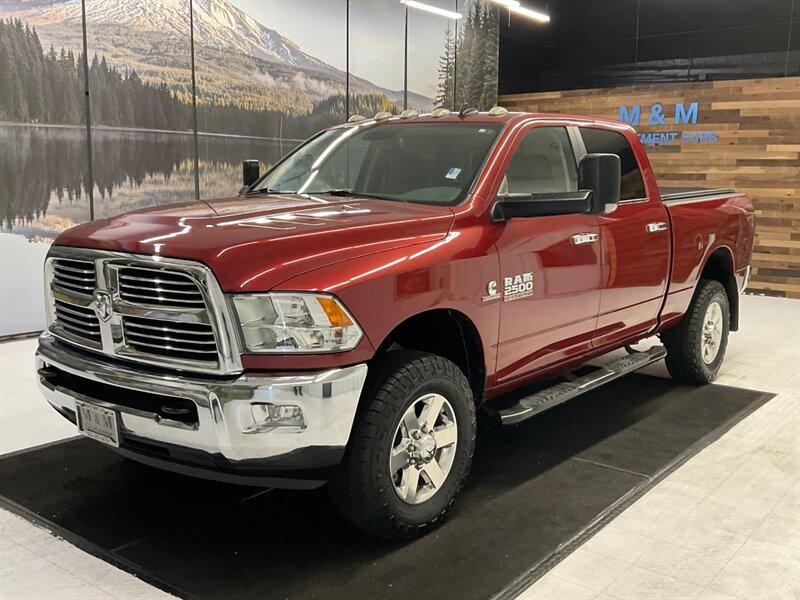
2. Ram 2500 (2015, 6.7L Cummins)
The 6.7-liter Cummins diesel is a major reason many buyers choose the Ram 2500 for demanding towing and hauling duties. However, the turbocharger’s electronic actuator deserves attention when evaluating certain 2015 trucks.
Ram issued Technical Service Bulletin 09-005-22 REV. Addressing a specific actuator problem and establishing an X99 warranty extension for qualifying vehicles.
The bulletin applies to 2015 Ram 2500 and 3500 pickups equipped with the 6.7-liter Cummins turbo-diesel engine. Owners could experience an illuminated malfunction indicator lamp, while diagnostic testing could reveal codes such as P003A, P00AF, P0046, or U010C.
These codes relate to turbocharger boost-control performance, actuator positioning, or communication with the control module.
The distinction between an actuator failure and a complete turbocharger failure is important. The actuator controls the variable geometry mechanism that adjusts turbocharger operation.
When it stops functioning correctly, boost control can become unreliable, potentially producing reduced power or an engine warning light. Replacing the actuator does not necessarily require replacing the entire turbocharger assembly.
Ram’s bulletin specifically involves actuator replacement rather than automatically authorizing a complete turbocharger replacement. That can make a significant difference to the repair bill. However, ignoring persistent boost-control problems can leave the truck operating with reduced performance and unresolved engine-management faults.
The manufacturer also established an X99 warranty extension for the affected 2015 pickups. Owners should have a Ram dealership check the VIN and determine whether the truck qualifies and whether the repair has already been performed.
For used-truck buyers, the service history is particularly valuable. Ask for documentation of previous actuator replacement, scan the engine computer for stored trouble codes, and pay attention to unusual turbocharger noises during a test drive. A relatively small control-system problem is much easier to address before it develops into a more expensive repair situation.
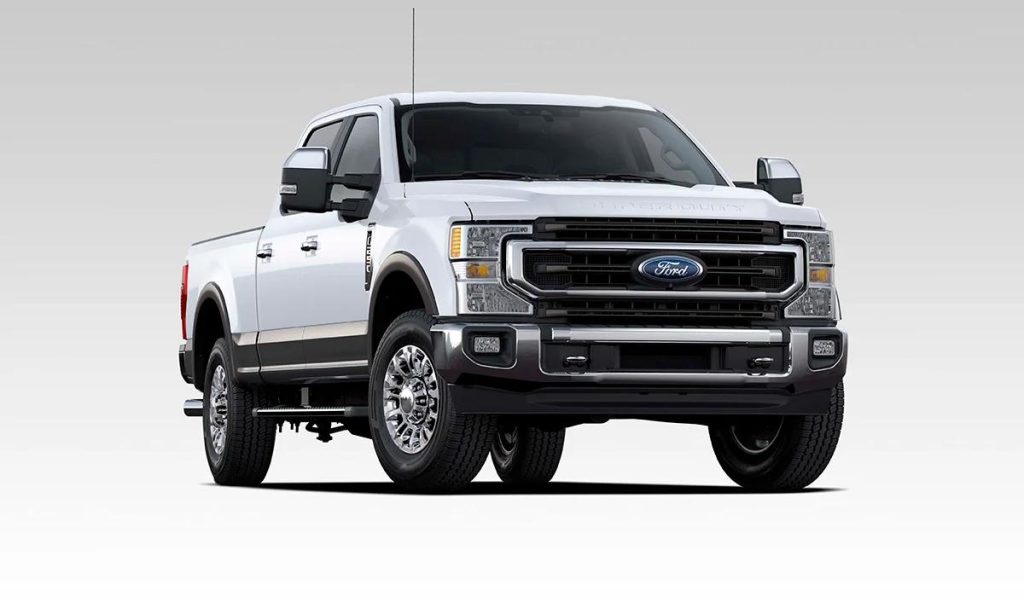
3. Ford F-250 Super Duty (2020-2022, 6.7L Power Stroke)
The 6.7-liter Power Stroke diesel gives the Ford F-250 Super Duty substantial towing capability, but its variable-geometry turbocharger system contains components that can develop problems.
Ford addressed one specific concern through Special Service Message 51150, covering certain 2020-2022 F-Super Duty vehicles equipped with the 6.7-liter engine.
The bulletin identifies several possible symptoms, including an illuminated malfunction indicator light, reduced engine power, and excessive turbocharger noise.
Technicians may also discover diagnostic trouble codes such as P003A, P0046, P0234, P2564, and P2598. These codes can indicate problems involving variable-vane positioning, boost pressure, or actuator operation.
The important detail is that Ford identified the variable-vane actuator as a separately serviceable component. Earlier repair assumptions could lead technicians toward replacing the complete turbocharger assembly.
Ford subsequently released service part LC3Z-9G488-B, allowing the actuator to be replaced when workshop diagnostics confirm that it is the faulty component.
That distinction can make a substantial difference to repair costs. A complete turbocharger replacement involves more components and labor than an actuator-only repair. However, continuing to operate a truck with unresolved boost-control problems can affect engine performance and make diagnosis more complicated.
Ford also specified a particular procedure for resetting the variable-geometry turbocharger system. Engine coolant temperature must reach at least 158 degrees Fahrenheit before the relevant reset procedure is performed.
Used-truck buyers should pay attention to unusual turbo noise, reduced acceleration, and warning lights. A diagnostic scan can reveal stored codes even when the malfunction indicator light is not currently illuminated.
This bulletin does not establish that every 2020-2022 F-250 will experience turbocharger failure. It identifies a documented repair concern affecting certain vehicles and provides a specific service solution. Checking the repair history is particularly worthwhile before purchasing a high-mileage diesel pickup.
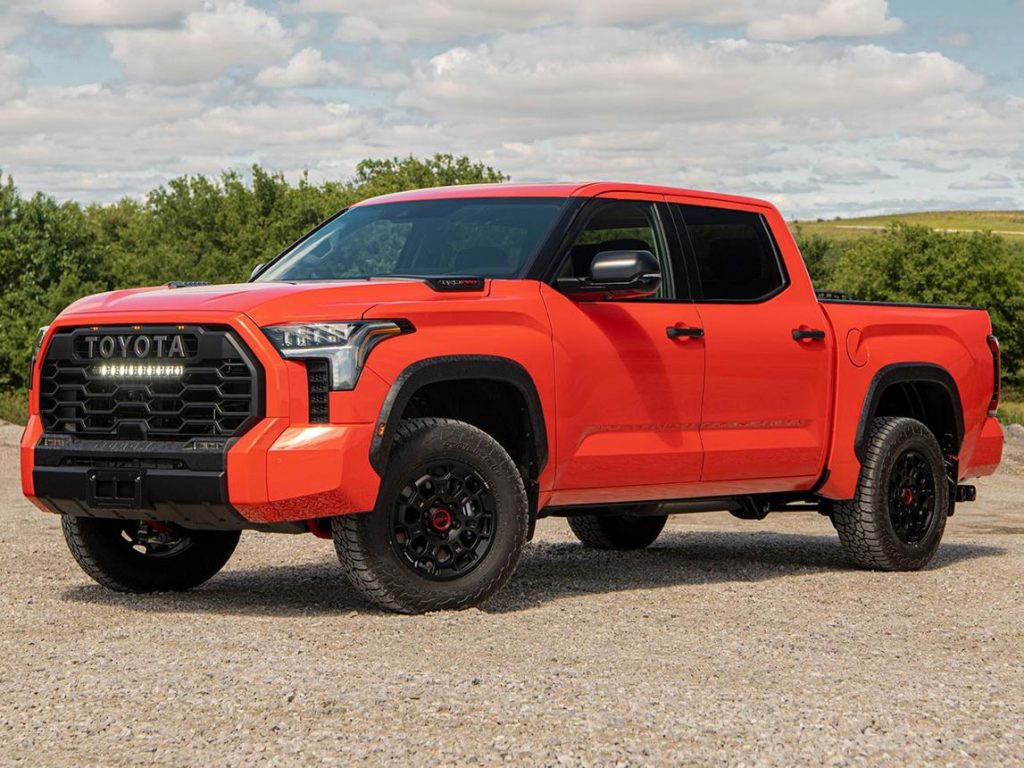
4. Toyota Tundra (2022-2025, 3.5L Twin-Turbo V6)
Toyota’s third-generation Tundra introduced a 3.5-liter twin-turbocharged V6, replacing the previous generation’s naturally aspirated V8. While the newer powertrain delivers strong performance, Toyota has documented a turbocharger-related problem involving corrosion around the wastegate mechanism.
In October 2026, Toyota announced Customer Support Program 26TE04, covering certain 2022-2025 Tundra and Tundra Hybrid models. The program also covers certain 2023-2025 Sequoia vehicles, although this article focuses on the pickup.
The identified problem involves corrosion affecting the turbocharger assembly’s wastegate bushing and pin. These components help control exhaust flow through the turbocharger. When corrosion interferes with their movement, the wastegate actuator may become stuck open or closed.
Drivers could notice an illuminated engine warning light and reduced acceleration performance. Toyota’s documentation identifies several related diagnostic trouble codes, including P25B372, P25B473, P25B572, and P25B673. These codes indicate that one or both wastegate actuators may be stuck in an incorrect position.
The repair deserves attention because the issue involves the turbocharger assembly itself, rather than simply an unrelated sensor warning. Toyota’s support program provides improved turbocharger assemblies when the condition is verified under the program’s terms.
The published program identifies approximately 329,000 Tundra vehicles, including standard and hybrid versions, within the listed production populations. This does not mean every vehicle will develop corrosion or require replacement.
For used-truck buyers, checking the VIN with Toyota is essential. Ask whether the vehicle qualifies for the support program and whether any previous turbocharger work has been completed. A pre-purchase inspection should also include a diagnostic scan and examination of stored wastegate-related fault codes.
The Tundra is particularly relevant because Toyota has formally acknowledged this turbocharger corrosion concern and established a specific customer support remedy.
5. Nissan Titan XD (2016, 5.0L Cummins V8)
The Nissan Titan XD diesel stands out because its 5.0-liter Cummins V8 uses a two-stage turbocharging arrangement. Rather than relying on one conventional turbocharger, the engine uses high-pressure and low-pressure turbochargers to deliver the required boost across different operating conditions.
This arrangement offers useful performance, but it also means there are multiple turbocharger components to diagnose and maintain.
Nissan documented turbocharger-related concerns involving certain 2016 Titan XD diesel pickups. In November 2022, the manufacturer announced an emission warranty extension covering the turbo actuator and high-pressure turbocharger on eligible 2016 models.
The extended coverage was set at 10 years or 150,000 miles, whichever occurred first. Nissan identified a potentially affected population of 14,269 vehicles in its campaign documentation.
This is particularly significant because the actuator and high-pressure turbocharger are not inexpensive components. If the actuator develops a fault, the engine may struggle to regulate boost properly. If the high-pressure turbocharger itself is damaged, the repair can involve considerably more labor and replacement parts.
Nissan also published technical service information in October 2020 explaining that the high-pressure and low-pressure turbochargers were available as separate service parts. This matters because technicians do not automatically need to replace both units whenever one develops a problem.
For buyers, the warranty-extension history is worth investigating before purchasing a used diesel Titan XD. A vehicle that has already received the necessary repairs may be a more reassuring purchase than one with an undocumented history of boost-related warning lights.
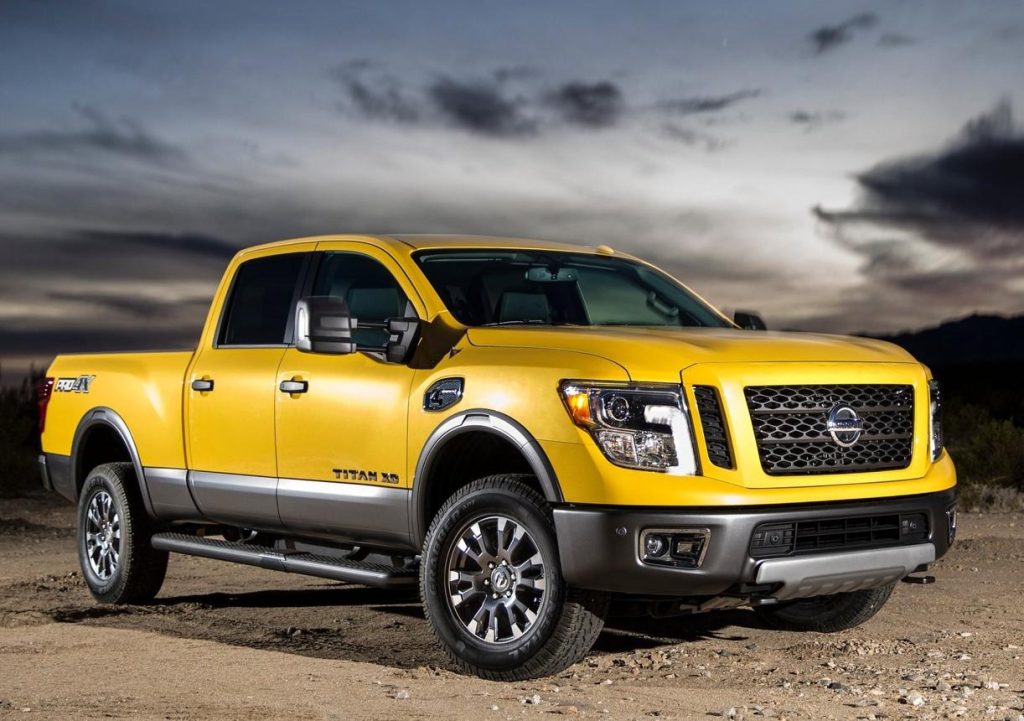
Listen for unusual turbocharger noises, watch for reduced acceleration, and request a diagnostic scan. Also, do not assume that a 2016 model automatically qualifies for free repairs today. The original coverage period and eligibility conditions must be checked against its in-service date and VIN.
The Titan XD illustrates how a complicated twin-turbo diesel system can turn a relatively small actuator concern into a more involved repair if the underlying problem is not diagnosed correctly.
6. Chevrolet Silverado 2500HD (2024, 6.6L Duramax)
A turbocharger actuator may appear to be a relatively small component, but its failure can interfere with the operation of an entire diesel powertrain. Chevrolet documented one such issue involving certain 2024 Silverado 2500HD and 3500HD trucks equipped with the 6.6-liter L5P Duramax diesel engine.
Technical Service Bulletin 23-NA-116, published in July 2023, addresses an illuminated malfunction indicator lamp accompanied by diagnostic trouble codes P003A and/or P100B. According to the manufacturer, the condition could result from a broken weld on the turbocharger actuator arm.
This is an important distinction because the problem is not necessarily caused by a damaged turbine wheel or a completely failed turbocharger. The actuator arm plays a role in controlling the turbocharger’s variable-geometry mechanism. If its weld breaks, the system may struggle to regulate boost pressure correctly.
A faulty actuator arm can result in reduced engine performance and persistent warning lights. Depending on the condition, technicians may need to replace the affected turbocharger assembly rather than simply clear the stored diagnostic codes.
That is where repair expenses can increase. Accessing and replacing turbocharger components on a heavy-duty diesel engine involves more labor than addressing many ordinary engine-management issues.
The bulletin also applies to the mechanically related 2024 GMC Sierra 2500HD and 3500HD equipped with the same L5P engine. However, this entry focuses on the Chevrolet pickup.
Buyers should not interpret the bulletin as proof that every 2024 Silverado HD has a defective turbocharger. It addresses a specific condition and provides technicians with a repair procedure when the fault is confirmed.
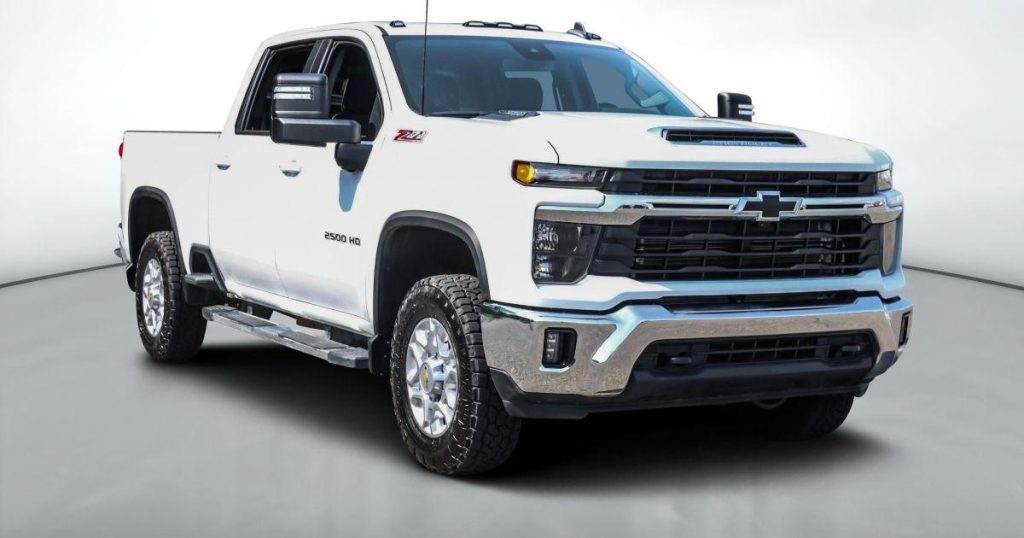
Before purchasing a used example, check for previous actuator or turbocharger replacement, scan for P003A and P100B codes, and request documented service records.
For owners who tow regularly, addressing unusual boost behavior early is particularly important because reduced turbocharger performance can affect the truck’s ability to deliver consistent pulling power.
7. Ram 3500 Cab Chassis (2019, 6.7L Cummins)
Commercial truck operators depend on consistent engine performance, particularly when their vehicles are configured for service bodies, equipment transport, and other demanding applications.
The 2019 Ram 3500 Cab Chassis with the 6.7-liter Cummins diesel deserves attention because Stellantis documented several engine-management concerns involving turbocharger boost control.
Technical Service Bulletin 18-007-24, published in January 2024, covers certain 2019 Ram 3500 Cab Chassis and 4500/5500 Cab Chassis vehicles equipped with the 6.7-liter Cummins engine.
The bulletin addresses powertrain control module software updates and a range of diagnostic trouble codes that technicians may encounter.
Among the listed codes are P0299, indicating turbocharger underboost, and P226C, associated with slow turbocharger boost-control response under extreme cold ambient conditions. These codes are particularly relevant because they can indicate that the engine is not producing the expected boost pressure.
It is important to clarify that the bulletin does not mean every affected truck has a defective turbocharger. Depending on the symptoms and diagnostic trouble codes, the issue may instead require a software update or additional troubleshooting before any mechanical repairs are considered.
Ignoring persistent underboost warnings is still a poor decision. A truck operating with insufficient boost can experience reduced pulling performance, and an unresolved problem may involve additional intake, exhaust, sensor, or turbocharger-control components.
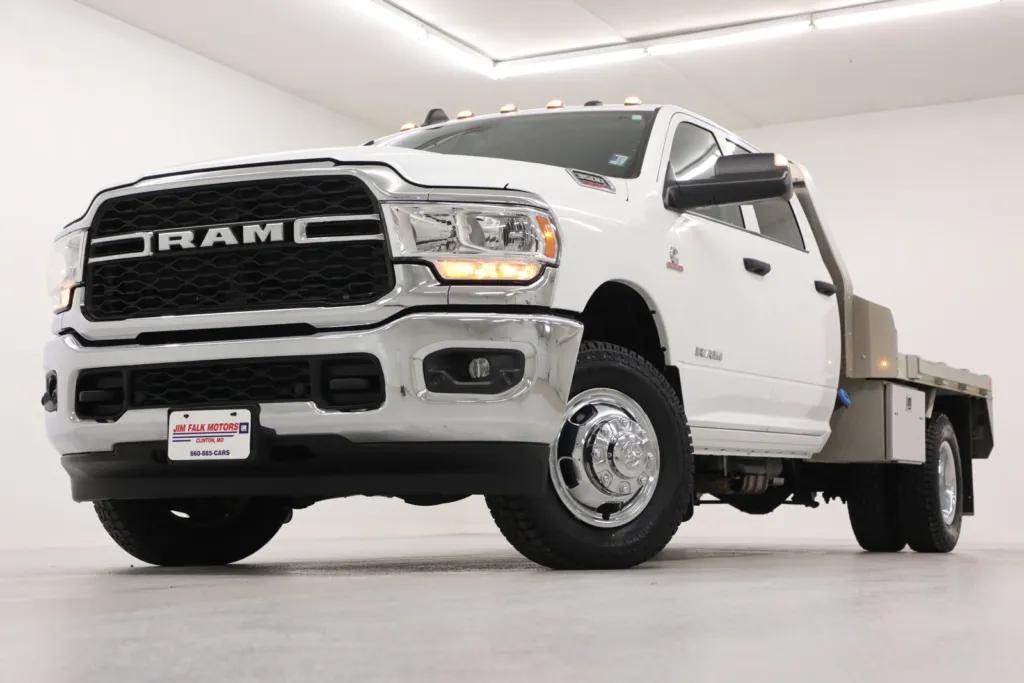
For commercial buyers, this makes a proper pre-purchase inspection essential. Ask the seller for maintenance records, check for stored diagnostic codes, and have a diesel specialist examine the turbocharger system before committing to a purchase.
Pay particular attention to performance under load. An engine that idles smoothly may still reveal boost-related problems when accelerating or carrying equipment.
The Ram 3500 Cab Chassis is included here because its manufacturer documentation identifies specific turbocharger-control diagnostic concerns. It should not be treated as evidence of a widespread mechanical turbocharger defect across every 2019 truck.