
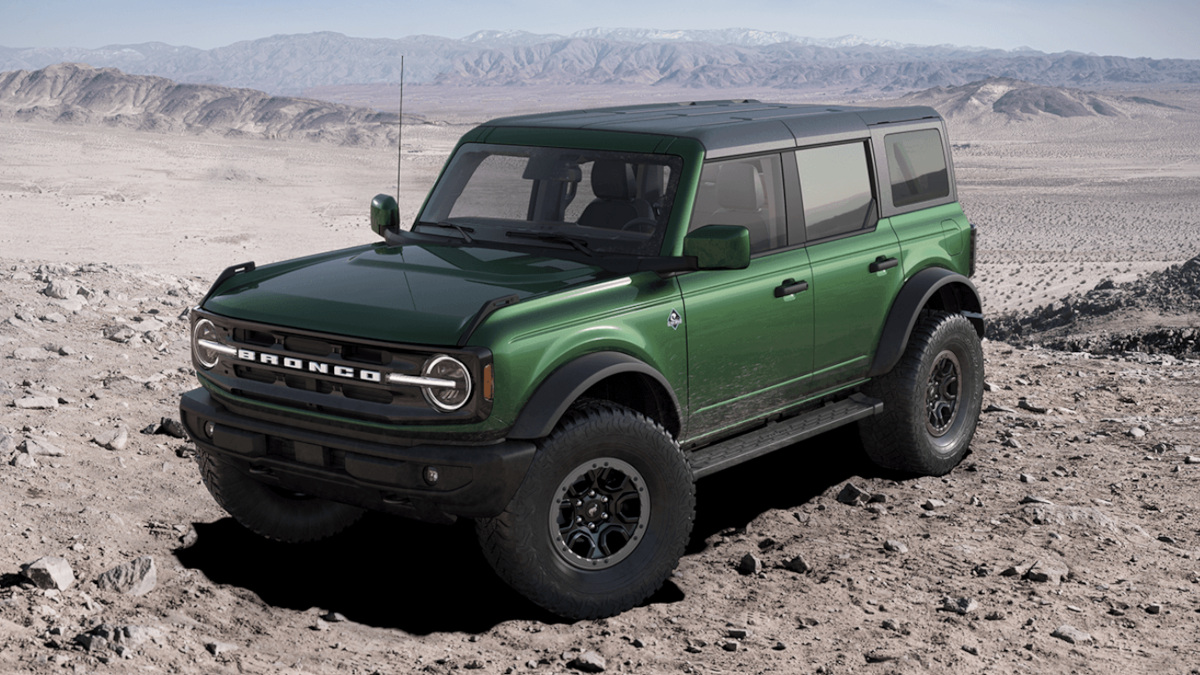
The Ford Bronco occupies a special place in American automotive history. Few SUVs managed to balance rugged off-road capability, everyday practicality, and cultural influence quite like Ford’s legendary utility vehicle.
Introduced in the 1960s as a direct competitor to the Jeep CJ and International Harvester Scout, the Bronco gradually evolved through multiple generations, each reflecting changing trends in truck and SUV design.
Some Bronco generations focused heavily on raw off-road performance with compact dimensions and simple mechanical construction.
Others became larger and more comfortable, targeting families looking for spacious full-size SUVs capable of towing and highway cruising. This constant evolution helped the Bronco survive shifting consumer demands for decades, even though certain generations proved more successful than others.
Not every version of the Bronco received equal praise. Some generations suffered from awkward timing, controversial styling changes, or increased competition. Others became icons thanks to durability, distinctive looks, and genuine off-road talent.
A few models earned legendary reputations among collectors and enthusiasts because they perfectly captured the adventurous personality that defined the Bronco name.
The return of the Bronco in modern form also reignited interest in older generations. Enthusiasts began revisiting classic models to compare which versions truly represented the best of Ford’s off-road heritage.
While personal preferences vary depending on intended use, certain generations consistently stand out for their impact, engineering, and long-term reputation.
This ranking looks at all seven main Ford Bronco generations from worst to best. The order considers styling, capability, reliability, innovation, market influence, and how well each generation preserved the spirit of the Bronco identity.
Even the lower-ranked versions still contributed something important to the Bronco story, but a few generations clearly rose above the rest and became defining chapters in the history of one of America’s most recognizable SUVs.
Also Read: 10 Forgotten Safety Features That No Longer Exist
1. Seventh Generation Ford Bronco (2021-Present)
The modern seventh-generation Ford Bronco arrived with enormous expectations after a 25-year absence. Ford faced the difficult challenge of reviving a legendary nameplate while competing directly against the Jeep Wrangler, a vehicle that had dominated the rugged SUV market for decades.
Although the new Bronco succeeded in many ways, it lands at the bottom of this ranking because of quality concerns, early production issues, and the overwhelming pressure attached to its launch.
Visually, the new Bronco captured the spirit of earlier generations remarkably well. Retro-inspired styling, removable doors, round headlights, and boxy proportions immediately connected the SUV with its heritage. Buyers appreciated the return of serious off-road engineering instead of another soft crossover pretending to be rugged.
Underneath, the Bronco offered impressive capability. Independent front suspension improved on-road comfort without completely sacrificing off-road talent. Trim levels like the Badlands, Wildtrak, and Raptor delivered genuine trail performance capable of challenging highly modified competitors straight from the factory.
The problems mainly involved execution rather than concept. Early production models experienced roof issues, software glitches, quality-control complaints, and supply shortages. Some owners also criticized inconsistent interior material, considering the vehicle’s pricing.
Demand far exceeded production capacity during launch years, creating dealer markups that frustrated many loyal enthusiasts.
Another challenge involved identity. While highly capable, the modern Bronco sometimes feels designed more for lifestyle branding than the raw simplicity that made early generations beloved. Advanced electronics, complex driver-assistance systems, and luxury-oriented trims shifted the Bronco toward modern consumer expectations instead of pure rugged utility.
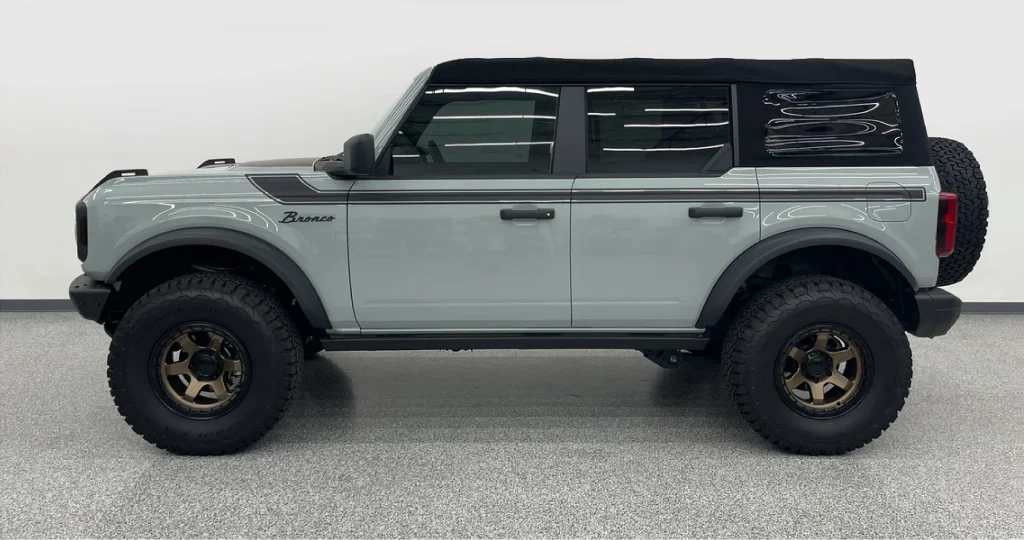
The SUV still deserves credit for bringing excitement back into Ford’s off-road lineup. Few modern vehicles generated this much enthusiasm before reaching dealerships. Yet compared with earlier Bronco generations that defined entire eras of SUV culture, the newest version still needs more time to establish its long-term legacy.
- Engine: 2.7L Twin Turbo V6
- Torque: 415 lb-ft
- Horsepower: 330 HP
- Length/Width: 189.4 inches / 75.9 inches
2. Fifth Generation Ford Bronco (1992 to 1996)
The fifth-generation Bronco occupies one of the strangest positions in the model’s history. On one hand, it represented the final chapter of the classic full-size Bronco era.
On the other hand, it struggled to stand out because it looked extremely similar to the fourth generation while arriving during a time when consumer tastes were shifting rapidly toward more refined SUVs.
Ford updated the Bronco with improved safety features, a redesigned front end, and a more aerodynamic shape. Drivers benefited from better interior comfort, modernized electronics, and improved road manners compared to earlier versions. The SUV remained highly capable off-road thanks to body-on-frame construction and available four-wheel drive systems.
Unfortunately, the fifth generation arrived at the peak of the family SUV boom when buyers increasingly wanted four doors and greater passenger practicality.
The Bronco continued using a two-door layout, making it less versatile than newer competitors entering the market. Ford’s own Explorer quickly became more popular because it offered similar utility with greater everyday usability.
Public image also affected this generation heavily. The infamous 1994 O.J. Simpson freeway chase permanently attached the white Bronco to American pop culture in a way Ford never intended. While the event made the vehicle instantly recognizable worldwide, it overshadowed many of the SUV’s actual strengths.
Mechanically, the Bronco remained durable and dependable, especially with the 5.8-liter V8 option. Enthusiasts still appreciate these trucks today because they combine classic ruggedness with relatively modern drivability. Removable rear tops and simple mechanical layouts also helped preserve the adventurous Bronco character.
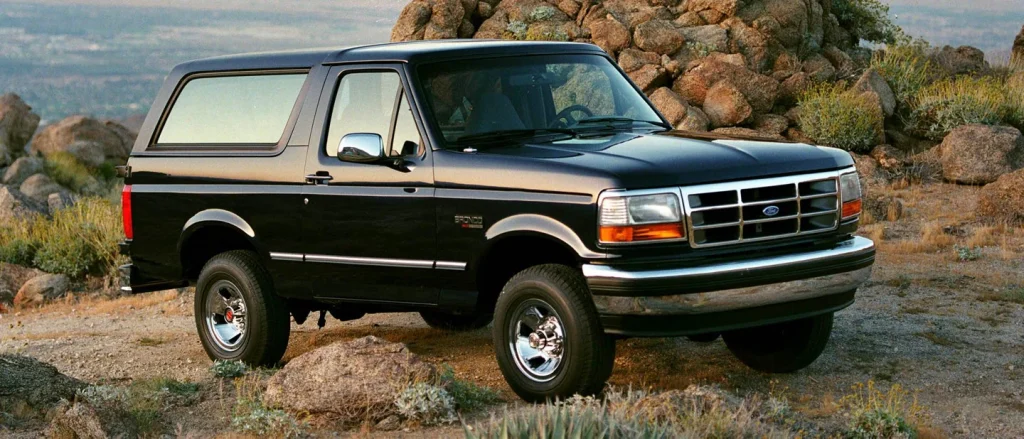
Despite those strengths, the fifth generation lacked the groundbreaking influence of earlier models. It felt more like a continuation of existing ideas rather than a bold step forward. Production ended in 1996 as Ford shifted attention toward family-oriented SUVs, temporarily closing the Bronco chapter for nearly three decades.
- Engine: 5.8L V8
- Torque: 325 lb-ft
- Horsepower: 210 HP
- Length/Width: 183.6 inches / 79 inches
3. Fourth-Generation Ford Bronco (1987 to 1991)
Ford entered the late 1980s facing major changes in the SUV market. Buyers still wanted rugged utility vehicles, but expectations regarding comfort, technology, and daily usability were increasing quickly.
The fourth-generation Bronco attempted to balance traditional off-road toughness with more civilized road behavior, creating a model that quietly improved the formula without radically changing the vehicle’s personality.
At first glance, the design looked evolutionary rather than revolutionary. Ford softened some of the sharp edges from the previous generation and introduced a more aerodynamic front end.
Flush-mounted headlights modernized the appearance, while revised body panels helped the Bronco look less like a purely utilitarian truck. Even with the styling changes, the SUV retained its commanding stance and removable rear roof section that remained central to the Bronco identity.
Inside the cabin, Ford focused heavily on refinement. Earlier Broncos sometimes felt crude during long highway trips, but the fourth generation improved seating comfort, dashboard layout, and noise insulation.
Buyers could order increasingly upscale trims with premium sound systems, power accessories, and upgraded upholstery. These additions helped broaden the Bronco’s appeal beyond hardcore off-road enthusiasts.
Mechanically, the SUV remained dependable and capable. The available V8 engines delivered strong low-end torque, making towing and trail driving easier. Electronic fuel injection improved reliability and drivability compared to older carbureted setups.
Suspension tuning also became more balanced, allowing the Bronco to handle daily commuting with greater confidence.
One reason this generation ranks lower than some earlier Broncos involves timing. The SUV market was beginning to transition toward four-door practicality, and the Bronco’s large two-door layout started feeling less versatile compared to emerging competitors. Ford’s own Explorer would soon capitalize on that growing family-oriented demand.
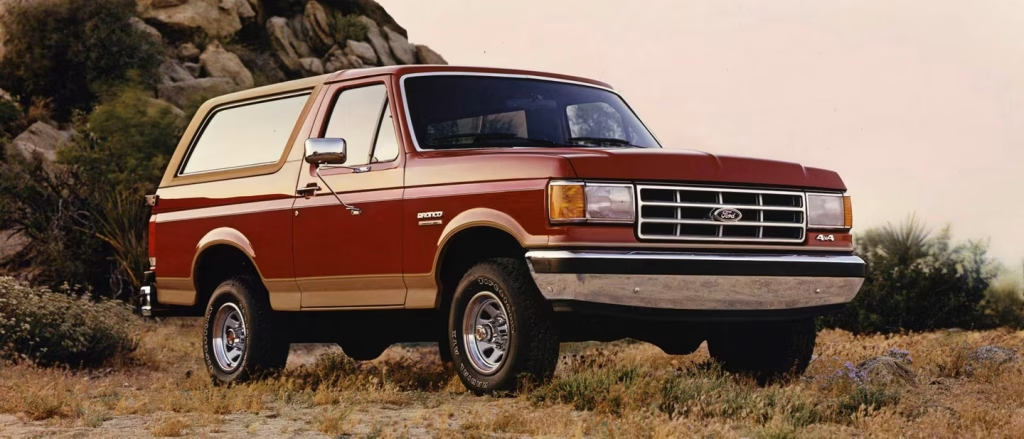
Still, the fourth generation deserves respect because it refined the Bronco formula successfully without abandoning the rugged characteristics that defined the nameplate. Many enthusiasts today appreciate these trucks for their blend of classic truck toughness and relatively modern drivability.
They remain highly usable vintage SUVs that can still handle trails, road trips, and everyday driving surprisingly well decades after production ended.
- Engine: 5.0L V8
- Torque: 270 lb-ft
- Horsepower: 185 HP
- Length/Width: 183.6 inches / 79 inches
4. Sixth Generation Ford Bronco (1978 to 1979)
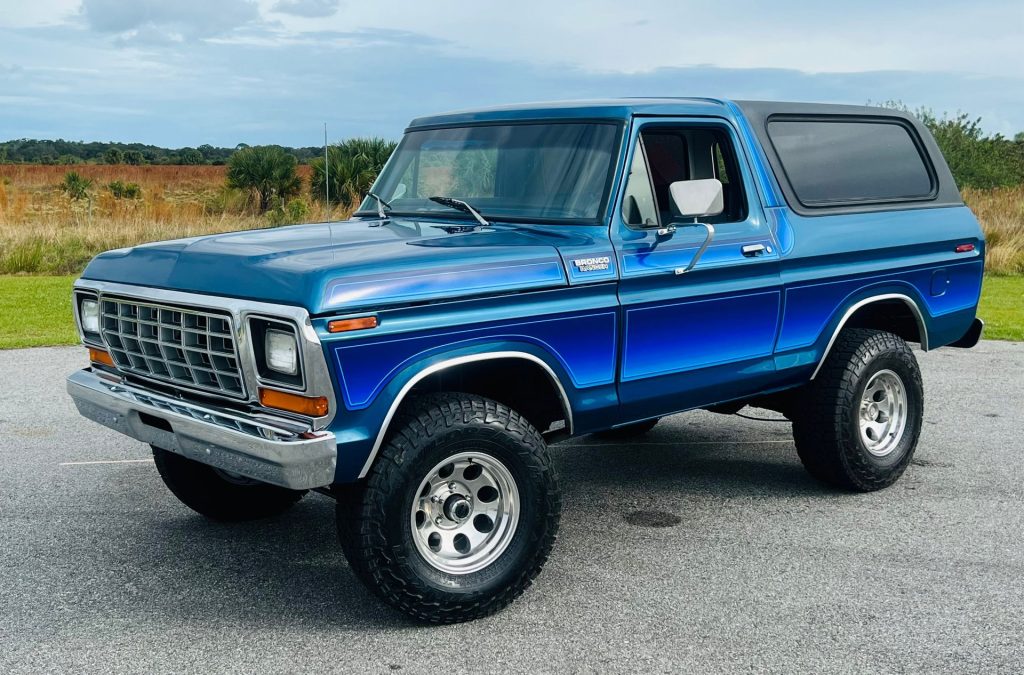
The sixth spot in this ranking actually belongs to one of the shortest-lived Bronco generations ever produced. Ford introduced the 1978 Bronco after a major redesign that transformed the vehicle completely. Instead of remaining a compact off-roader, the Bronco grew into a massive full-size SUV based heavily on the F-Series pickup platform.
This dramatic size increase changed the Bronco’s identity permanently. Earlier generations focused on maneuverability and simplicity, but the 1978 model embraced power, comfort, and highway capability.
The larger dimensions gave passengers significantly more interior room while improving towing and hauling performance. Buyers looking for rugged family transportation suddenly viewed the Bronco very differently.
Styling played a huge role in the generation’s popularity. The broad grille, wide stance, and removable fiberglass rear roof created an unmistakably muscular appearance. Even parked, the Bronco looked imposing. It captured the spirit of late-1970s American truck design perfectly, combining chrome-heavy styling with genuine utility.
Off-road capability remained respectable despite the larger body. Solid axles, available V8 engines, and durable four-wheel-drive systems helped the Bronco perform confidently on rough terrain. At the same time, the longer wheelbase improved ride quality substantially compared to earlier compact models.
The biggest drawback involved fuel economy and maneuverability. These Broncos became enormous by the standards of the era, making urban driving and tight trail navigation more challenging. Rising fuel prices during the late 1970s also hurt the appeal of large V8-powered SUVs.
Production lasted only two model years before Ford redesigned the Bronco again for 1980. Because of this short lifespan, the 1978 and 1979 versions developed a strong following among collectors. Many enthusiasts consider them the perfect representation of classic American full-size SUV culture.
This generation may not rank among the absolute best Broncos ever made, but it deserves credit for reinventing the vehicle successfully during a period when consumer preferences were changing rapidly.
Ford took a major risk by transforming the Bronco into a full-size machine, and the gamble helped keep the nameplate relevant for years afterward.
- Engine: 6.6L V8
- Torque: 315 lb-ft
- Horsepower: 220 HP
- Length/Width: 183.2 inches / 79.3 inches
5. Third Generation Ford Bronco (1980 to 1986)
The third-generation Ford Bronco arrived during a difficult period for the American automotive industry. Fuel prices had increased dramatically, emissions regulations were tightening, and consumers were beginning to reconsider the enormous vehicles that dominated the previous decade.
Ford responded by redesigning the Bronco for 1980, creating a lighter and more efficient SUV while still preserving the rugged character buyers expected.
Compared to the bulky 1978 and 1979 models, the new Bronco looked noticeably cleaner and more modern. Ford sharpened the body lines, reduced excess chrome, and introduced a more aerodynamic front end.
The truck still shared much of its structure with the F-Series pickup, but it carried a more refined appearance suited to the changing 1980s market. The design struck a careful balance between toughness and practicality.
One of the most important improvements involved weight reduction. Ford engineers worked extensively to trim unnecessary mass from the vehicle, helping improve fuel economy without completely sacrificing capability. While the Bronco remained a large body-on-frame SUV, it felt more manageable than the outgoing generation both on and off the road.
The third generation also introduced Ford’s Twin Traction Beam front suspension system. This setup improved ride comfort significantly compared to earlier solid front axles, especially during highway driving.
Some hardcore off-road enthusiasts preferred older suspension layouts for extreme terrain use, but everyday drivers appreciated the smoother handling and improved stability.
Engine choices ranged from practical inline-six options to larger V8s that delivered respectable towing and low-speed performance.
Electronic fuel injection gradually improved drivability and reliability throughout the generation’s production run. These updates helped the Bronco feel more modern during an era when automotive technology was advancing rapidly.
Inside the cabin, Ford paid greater attention to comfort and usability. Seating improved, controls became easier to operate, and available trim levels allowed buyers to choose anything from basic utility to relatively upscale interiors.
The Bronco was slowly transitioning from a pure off-road machine into a vehicle capable of handling family trips and daily commuting comfortably.
Another reason this generation remains respected today involves durability. These Broncos developed a reputation for toughness, especially in rural areas where owners depended on them for work, towing, and rough-weather transportation.
Many examples survived decades of heavy use thanks to simple mechanical construction and strong truck-based underpinnings.
The third-generation Bronco may not receive the same nostalgic attention as the original compact models or the modern revival, but it played a critical role in the nameplate’s survival.
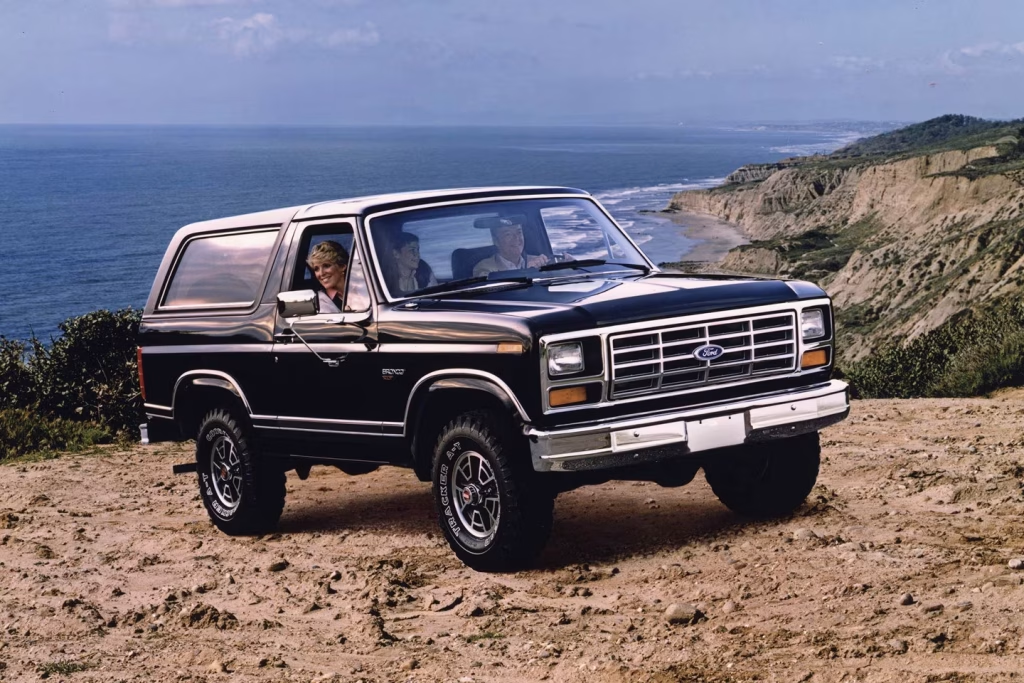
Ford successfully adapted the Bronco to a changing market without abandoning its rugged personality, making this generation one of the most important chapters in the vehicle’s history.
- Engine: 5.8L V8
- Torque: 315 lb-ft
- Horsepower: 210 HP
- Length/Width: 184.3 inches / 79 inches
6. Second Generation Ford Bronco (1978 to 1979)
The second-generation Ford Bronco completely transformed the vehicle’s identity and established many of the traits people still associate with classic Broncos today.
After more than a decade as a compact off-roader, Ford decided the market demanded something larger, more powerful, and more comfortable. The result was a dramatic redesign that turned the Bronco into a full-size SUV built directly from the F-Series truck platform.
This generation arrived at exactly the right moment. American buyers during the late 1970s increasingly wanted vehicles capable of combining utility, towing strength, passenger comfort, and outdoor capability in one package. Ford recognized this shift early and repositioned the Bronco accordingly.
Visually, the redesign looked bold and commanding. The tall stance, wide grille, large wheel arches, and removable fiberglass rear roof gave the Bronco an unmistakable presence. It looked substantial from every angle, embodying the oversized American truck culture that defined the era.
The increase in size dramatically improved interior practicality. Earlier Broncos sometimes felt cramped, especially during long road trips. The second generation solved that issue with far more passenger space, larger cargo capacity, and better highway comfort. Families suddenly saw the Bronco as a realistic alternative to station wagons and traditional pickup trucks.
Underneath the body, Ford retained genuine truck durability. Solid axles, strong four-wheel-drive systems, and available V8 engines made the Bronco highly capable both on rough terrain and during towing duties.
Even though the SUV became significantly larger, it still performed well off-road thanks to excellent ground clearance and durable mechanical components.
One of the most interesting aspects of this generation involves its short production run. Ford produced the 1978 and 1979 Broncos for only two model years before redesigning the vehicle again for 1980. Despite the limited production window, these models left an enormous impact on SUV culture and collector enthusiasm.
The timing of the oil crisis created challenges, however. Rising fuel prices hurt demand for large V8-powered vehicles, especially as consumers became more conscious about efficiency. Even so, the Bronco maintained a loyal following because few competitors matched its blend of ruggedness and comfort.
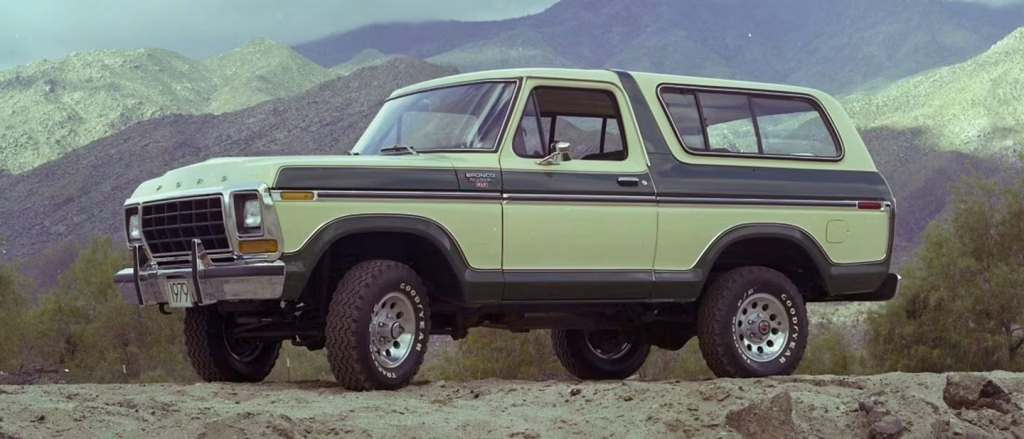
Today, second-generation Broncos remain highly collectible. Enthusiasts appreciate their classic styling, mechanical simplicity, and unmistakable road presence. They represent an era when SUVs were unapologetically large and designed primarily around durability rather than efficiency or luxury trends.
Ford’s decision to reinvent the Bronco as a full-size SUV carried significant risk, but the gamble paid off. This generation proved the Bronco could evolve with changing consumer demands while still preserving its adventurous spirit and truck-based toughness.
- Engine: 5.8L V8
- Torque: 315 lb-ft
- Horsepower: 210 HP
- Length/Width: 183.2 inches / 79.3 inches
7. First Generation Ford Bronco (1966 to 1977)
The first-generation Ford Bronco stands at the top of this ranking because it established everything the Bronco name would eventually represent.
Introduced in 1966, the original Bronco arrived during a period when compact off-road vehicles were gaining popularity among drivers who wanted something tougher and more versatile than a standard passenger car.
Ford’s answer was a simple, durable, and highly capable machine that immediately carved out its own identity.
Unlike many SUVs that evolved gradually from pickup trucks, the first Bronco was designed specifically as a dedicated utility vehicle from the beginning.
Ford engineers created a compact chassis intended to compete directly with the Jeep CJ-5 and International Harvester Scout. The result was a vehicle smaller and more maneuverable than later Broncos, giving it excellent agility on rough trails and narrow terrain.
Styling played a huge role in the original Bronco’s long-term appeal. The clean boxy body, round headlights, flat panels, and upright proportions created a timeless look that still feels authentic decades later.
Modern retro SUVs continue borrowing design themes first popularized by this generation because the proportions remain so visually balanced and purposeful.
Ford also offered an impressive variety during the Bronco’s early years. Buyers could choose from wagon, pickup, and roadster body styles depending on their intended use. This flexibility helped the Bronco appeal to ranchers, outdoor enthusiasts, surfers, hunters, and daily drivers alike. Few utility vehicles of the era matched its versatility.
Off-road capability became one of the Bronco’s defining strengths. Short overhangs, solid axles, lightweight construction, and strong four-wheel-drive systems made the vehicle extremely capable in difficult terrain.
Enthusiasts appreciated the Bronco’s toughness and mechanical simplicity, which allowed owners to repair and modify the trucks relatively easily.
The compact dimensions also gave the Bronco a unique personality absent from later full-size generations. It felt nimble, direct, and playful in ways large SUVs rarely manage. Drivers could confidently navigate trails, mud, snow, and rocky terrain without feeling overwhelmed by excessive size or weight.
As production continued through the 1970s, Ford gradually refined the Bronco with stronger engines, better interiors, and improved drivability. The introduction of the V8 option gave the SUV additional performance while preserving its rugged nature. Yet even with these improvements, the Bronco never lost the raw simplicity that made it special.
Collectors now consider first-generation Broncos among the most desirable classic SUVs ever built. Restored examples regularly command enormous prices because demand remains incredibly strong. The vehicle represents not only Ford’s off-road heritage but also the early roots of the modern SUV movement itself.
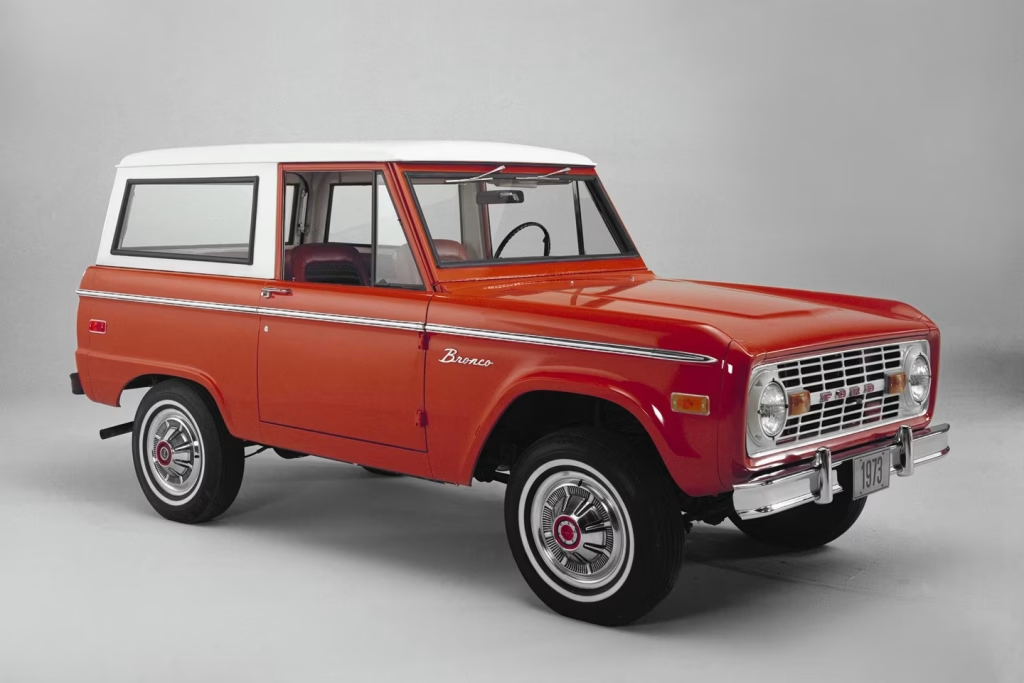
More importantly, the original Bronco captured a sense of adventure and freedom that later generations sometimes struggled to match completely. It was rugged without feeling oversized, practical without becoming dull, and capable without relying on complicated technology.
Those qualities continue making the first-generation Bronco the purest and most iconic version ever produced.
- Engine: 302 cubic-inch V8
- Torque: 282 lb-ft
- Horsepower: 205 HP
- Length/Width: 152.1 inches / 68.5 inches
Also Read: 10 Fastest Hennessey-Tuned Models – Ranked by Top Speed
