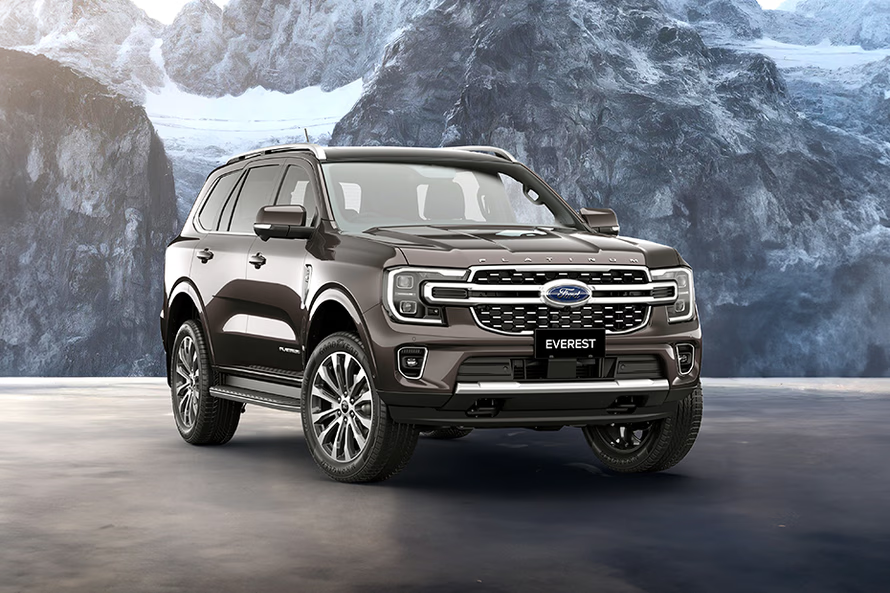
Owning a full-size body-on-frame SUV is about much more than the purchase price. Vehicles like the Ford Endeavour are built to handle long highway journeys, rough terrain, towing, and family duties with ease, but that capability comes with ownership costs that buyers should understand before signing the paperwork.
Fuel, insurance, scheduled servicing, tires, depreciation, and occasional repairs all contribute to the total amount you’ll spend over the years.
Although Ford ceased manufacturing passenger vehicles in India in 2021, the Endeavour has remained one of the country’s most desirable used premium SUVs. Strong reliability, excellent highway comfort, capable four-wheel-drive systems, and continued service support from Ford have helped preserve its reputation.
Unlike many discontinued vehicles that suffer steep depreciation because of uncertain parts availability, the Endeavour continues to command healthy resale values thanks to Ford India’s commitment to supplying genuine spare parts and maintaining its dealer service network.
According to Ford India, the company continues to provide after-sales service, warranty support, and genuine replacement parts through its authorized dealerships.
For this ownership analysis, we’ll use a realistic example based on a buyer purchasing a late-model used Ford Endeavour equipped with the 2.0-liter EcoBlue diesel engine and driving approximately 15,000 kilometers (9,300 miles) annually, or 75,000 kilometers (46,600 miles) over five years.
Actual costs vary by driving habits, insurance provider, fuel prices, and maintenance history, but this provides an accurate picture of what most owners can expect.
Also Read: What It Really Costs to Own a Jeep Rubicon for Five Years
Fuel and Routine Maintenance Form the Foundation of Ownership Costs
Fuel remains the largest recurring expense throughout the ownership period. The final-generation Endeavour sold in India featured Ford’s advanced 2.0-liter EcoBlue diesel engine, available in single-turbo and bi-turbo configurations paired with a 10-speed automatic transmission.
According to ARAI certification, fuel efficiency ranges between 12.4 and 14.2 km/l, depending on drivetrain and variant. However, real-world testing by publications including Autocar India and CarWale and owner-reported figures consistently place average fuel economy closer to 10 to 12 km/l, especially in mixed city and highway driving.
Using an average consumption of 11 km/l, an owner covering 15,000 kilometers each year will use roughly 1,360 liters of diesel annually.
Over five years, that adds up to approximately 6,800 liters. While diesel prices fluctuate throughout the year, fuel alone represents the single largest operating expense, particularly for owners who regularly undertake long-distance travel.
The Endeavour’s diesel powertrain was built with long-term durability in mind. Its EcoBlue engine features advanced fuel injection, efficient combustion technology, and a strengthened cooling system, all of which contribute to better fuel economy and lower running costs compared with older, less refined diesel engines.
Scheduled maintenance is the second major ownership expense. Ford recommends servicing the Endeavour at prescribed mileage intervals, including engine oil changes, oil filter replacement, fuel filters, air filters, cabin filters, brake inspections, coolant checks, and comprehensive vehicle diagnostics.
According to Ford’s official maintenance schedules, regular servicing helps preserve fuel efficiency, extend drivetrain life, and reduce the likelihood of expensive repairs later.
Routine annual servicing generally remains competitive compared with similarly sized premium SUVs. Owners commonly report that standard maintenance costs are noticeably lower than European luxury SUVs while being broadly comparable with rivals such as the Toyota Fortuner.
As mileage increases, additional maintenance becomes necessary. Around 40,000 to 60,000 kilometers, brake pads often require replacement depending on driving style. Suspension inspections become increasingly important because heavy SUVs place greater loads on bushings and shock absorbers.
By 60,000 to 80,000 kilometers, transmission fluid replacement, differential oil changes for four-wheel-drive models, and transfer case servicing become advisable under severe operating conditions.
The Endeavour’s 10-speed automatic transmission, jointly developed by Ford and General Motors, has generally demonstrated strong durability when maintained properly. Automotive service specialists emphasize that periodic fluid replacement is essential despite some owners assuming modern transmissions require little attention.
Another unavoidable ownership expense is tires. Depending on trim level, the Endeavour rides on 18-inch or 20-inch alloy wheels.
Original equipment tires typically last between 40,000 and 60,000 kilometers, meaning most five-year owners should expect to purchase one complete replacement set. Buyers choosing premium all-terrain tires for frequent off-road driving may pay more initially but often benefit from improved durability and traction.
Battery replacement is another predictable expense. Under typical Indian climate conditions, modern SUV batteries usually last three to five years, meaning many owners replace the original battery once during a five-year ownership cycle.
Insurance, Repairs, and Depreciation Shape the Long-Term Financial Picture
Insurance costs vary considerably depending on the vehicle’s insured declared value (IDV), location, claim history, and insurer. Because the Endeavour occupies the premium SUV segment, comprehensive insurance premiums naturally exceed those of compact SUVs. However, its strong safety credentials help offset some risk.
The final-generation Endeavour includes multiple airbags, Electronic Stability Program (ESP), roll stability control, hill descent control, trailer sway control, ABS with electronic brake force distribution, traction control, and advanced braking systems.
According to Ford, these technologies were developed to improve occupant protection both on and off the road.
Buyers should also account for the possibility of unexpected maintenance costs over time. That said, the Endeavour has developed a reputation as a dependable SUV with strong durability. Many owners and enthusiast groups report that major mechanical problems are uncommon, especially among vehicles that have received consistent and timely servicing.
Like any modern diesel SUV, however, age eventually introduces wear. Suspension bushings, wheel bearings, alternators, batteries, air-conditioning compressors, electronic sensors, and steering components may require replacement as mileage approaches or exceeds 100,000 kilometers.
Long-term ownership costs can remain manageable thanks to the availability of independent Ford specialists. Once factory warranty coverage ends, these experienced workshops give owners more affordable alternatives for repairs and routine maintenance without relying solely on dealership service.
The availability of genuine parts has also remained stronger than many initially feared after Ford’s manufacturing exit from India. Ford publicly committed to maintaining after-sales support, and today most commonly replaced service components remain readily available through authorized dealerships and established aftermarket suppliers.
Depreciation remains the single largest hidden ownership cost.
One of the biggest factors affecting the true cost of ownership is how well a vehicle holds its value over time. While fuel and insurance create regular expenses, depreciation quietly reduces the vehicle’s worth and only becomes apparent at resale. In the case of the Endeavour, owners have benefited from stronger-than-average value retention.
According to valuation trends tracked by used vehicle marketplaces such as Cars24, Spinny, OLX Autos, and CarDekho, well-maintained Endeavours have retained value significantly better than many competing premium SUVs after Ford exited local manufacturing. Reduced supply combined with sustained buyer demand has created an unusually stable resale market.
Higher-end variants such as the Titanium+, Sport, and four-wheel-drive models typically command stronger resale values because buyers actively seek their premium equipment and advanced off-road capability.
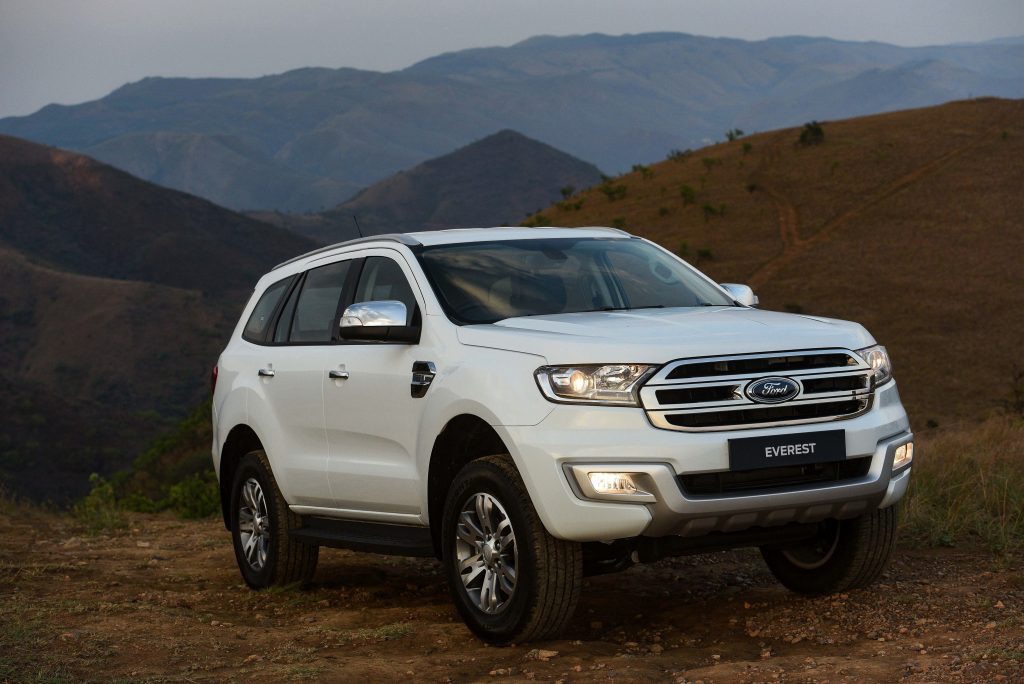
Service history plays an especially important role in resale pricing. Vehicles with complete dealer records, original paint, accident-free history, and documented maintenance consistently sell faster and at higher prices than poorly maintained examples.
Another ownership advantage comes from reliability itself. According to long-term owner feedback collected by automotive publications including Autocar India, many Endeavour owners routinely exceed 200,000 kilometers with relatively few major engine or transmission issues.
That reputation significantly improves buyer confidence in the used market and helps protect resale values.
Does the Five-Year Cost Justify Buying an Endeavour?
When every ownership expense is combined, the Ford Endeavour remains surprisingly competitive despite its size.
Fuel will account for the largest share of operating expenses, followed by depreciation, insurance, scheduled servicing, tires, and occasional repairs. Buyers should also budget for consumables such as brake pads, batteries, windshield wipers, and fluids, all of which naturally require replacement during extended ownership.
Yet the Endeavour offers considerable value in return. Its spacious seven-seat cabin comfortably accommodates families and long-distance travelers. The diesel engine delivers abundant torque for towing and highway cruising while maintaining respectable fuel economy for a vehicle weighing well over two tonnes.
Its ladder-frame construction, Terrain Management System, electronic locking rear differential on selected variants, water-wading capability, and sophisticated four-wheel-drive system provide genuine off-road ability that many crossover SUVs simply cannot match.
Comfort is another strength. Independent road tests from Autocar India, CarWale, and Team-BHP consistently praise the Endeavour for its excellent ride quality, quiet cabin, supportive seating, and long-distance touring capability.
Those qualities contribute significantly to owner satisfaction and help justify the higher operating costs compared with smaller SUVs.
Compared with rivals like the Toyota Fortuner and Isuzu MU-X, ownership costs remain broadly similar.
The Fortuner enjoys a slight advantage in resale value and long-term parts availability, while the Endeavour often earns praise for superior ride comfort, more refined diesel engines, and better highway manners. Buyers ultimately benefit from owning one of the most balanced full-size SUVs ever sold in India.
For drivers who need genuine capability rather than simply the appearance of an SUV, the Endeavour continues to make financial sense. It is not inexpensive to own, but neither is it excessively costly when viewed against competitors offering comparable size, towing capacity, passenger comfort, and off-road performance.
Five years of ownership require a meaningful financial commitment, but proper maintenance, careful servicing, and responsible driving can significantly reduce unexpected expenses while preserving resale value.
That combination of durability, capability, and strong demand in the used market explains why the Ford Endeavour remains one of India’s most respected premium SUVs years after production ended.
Also Read: 10 Base Models Now More Collectible Than Their Top Trims