A test drive gives buyers a quick sense of a pickup truck’s practicality. They can evaluate its dimensions, cargo bed, towing features, and driving comfort in just a few minutes. However, its long-term value is not as easy to predict. Depreciation can have a major impact on ownership expenses and how much money buyers recover when they eventually sell or trade in the truck.
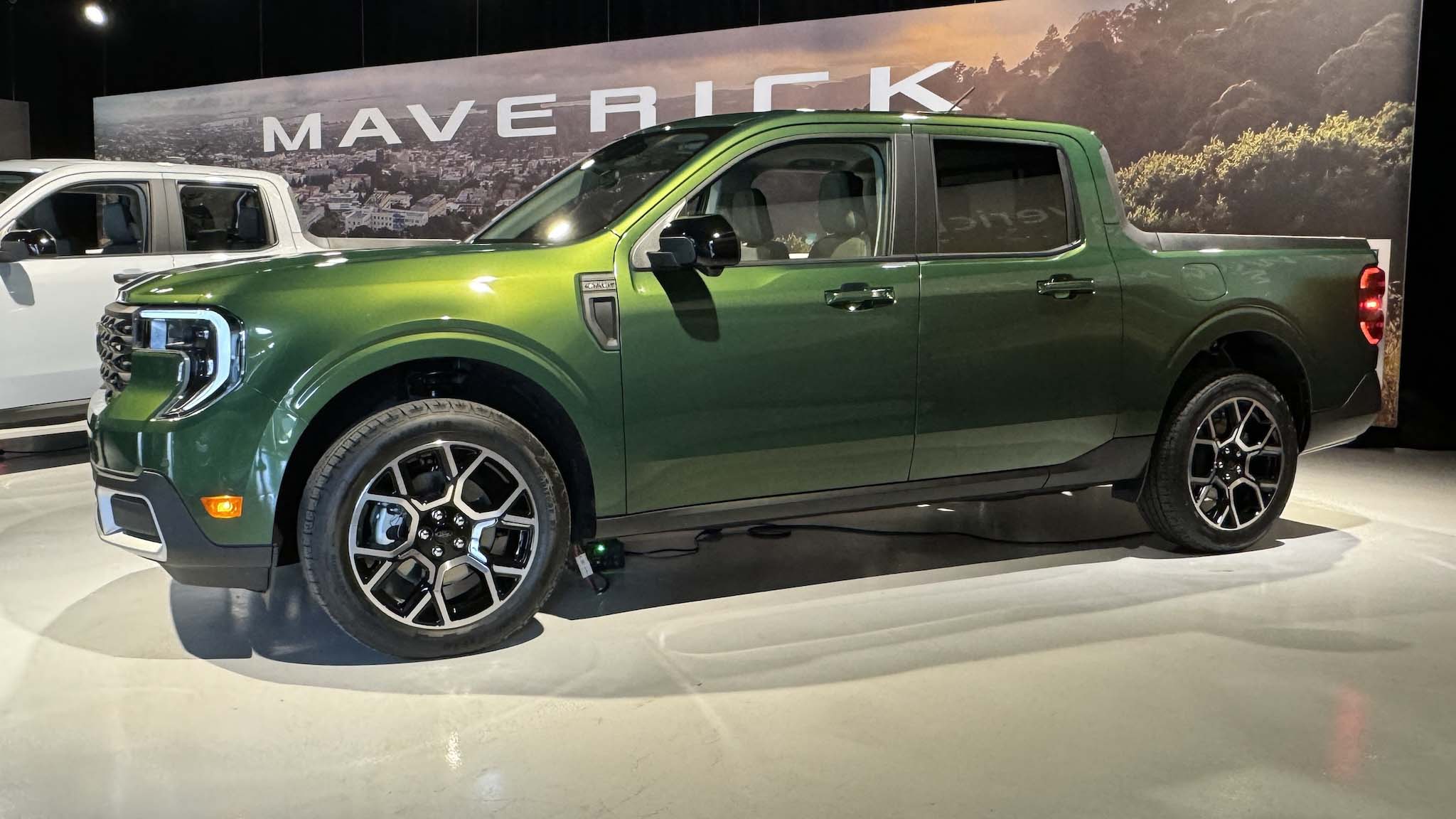
The 2026 Ford Maverick has earned recognition in that less visible part of the equation, winning the compact pickup category in Kelley Blue Book’s 2026 Best Resale Value Awards. KBB projects that the Maverick will retain 54.1% of its original manufacturer’s suggested retail price after five years, placing it seventh among all vehicles in the awards’ top 10.
The result gives Ford’s smallest pickup a notable distinction in a market where trucks have traditionally held strong resale appeal.
Maverick Takes the Compact Pickup Category in KBB’s 2026 Awards
Kelley Blue Book announced its 2026 Best Resale Value Awards on March 19, recognizing vehicles expected to retain the greatest share of their original MSRP during the first five years of ownership.
The Ford Maverick won the compact pickup truck category. This is a segment award, separate from the program’s top-10 ranking, although the Maverick also earned a place on that list.
KBB gives the 2026 Maverick a projected five-year residual value of 54.1%, putting it seventh among all vehicles in the top 10.
It ranks behind the Toyota Tacoma at 63%, the Toyota Tundra at 59.9%, the Toyota 4Runner at 58%, the Toyota GR Supra at 56%, the Mercedes-Benz G-Class at 55%, and the Toyota Sienna at 54.3%. It places ahead of the Chevrolet Corvette at 54%, the Porsche 911 at 53.9%, and the Ford Ranger at 53.4%.
The ranking measures the percentage of original MSRP retained, not the number of dollars a vehicle will be worth.
KBB says its awards use projections from the Kelley Blue Book Official Residual Value Guide. Analysts review statistical models built from millions of transactions, considering vehicle specifications, trim levels, sales volume, economic conditions, and auction results.
The 2026 awards use residual values for 2026 model-year vehicles in the January/February 2026 guide. These are forecasts, not guaranteed future selling prices or a promise that every Maverick will retain exactly 54.1%.
The award follows another KBB recognition: the Maverick was named its 2026 Compact Truck Best Buy, its fifth consecutive year receiving that separate title. The Best Buy award considers a wider mix of factors, while the resale award focuses on projected retained value.
Practical Size, Hybrid Availability, and Everyday Truck Utility
The Maverick’s appeal begins with its format. Ford designed it for buyers who need a pickup bed but do not necessarily need a traditional body-on-frame truck.
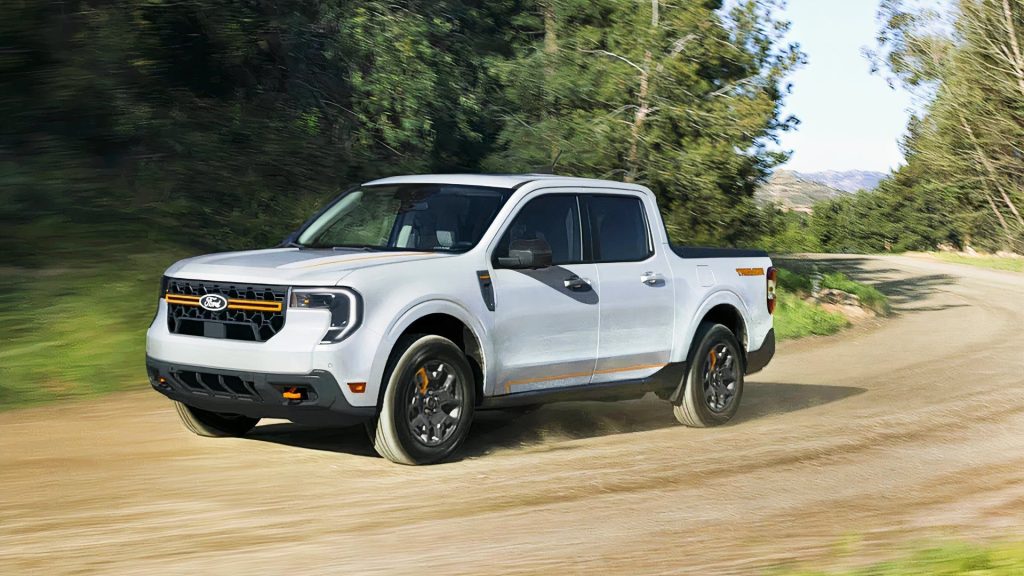
Its compact footprint makes it easier to maneuver and park in urban and suburban settings, while the cabin seats five. The 4.5-foot FLEXBED cargo box offers 33.3 cubic feet of cargo volume, with a 53.3-inch total bed width and 42.6 inches between the wheel wells.
For 2026, Ford makes a 2.5-liter full-hybrid powertrain standard on XL, XLT, and Lariat trims. The hybrid pairs a gasoline engine with an electric motor and uses a power-split electronically controlled continuously variable transmission.
Front-wheel drive is standard, while all-wheel drive is available on selected versions. Ford advertises an EPA-estimated 42 mpg city rating for front-wheel-drive hybrid models. That is a city estimate, not a combined rating, and actual fuel economy varies with driving conditions.
The range also includes versions with a 2.0-liter EcoBoost turbocharged four-cylinder. Ford lists 250 horsepower and 280 lb-ft of torque for this engine, with an eight-speed automatic on the regular EcoBoost configuration. The Lobo uses a seven-speed quick-shift transmission, while the Tremor is oriented toward off-road use.
Utility remains central to the Maverick’s case. Ford lists a maximum payload of up to 1,500 pounds, although the actual rating depends on equipment and configuration.
Standard towing capacity is 2,000 pounds, rising to 4,000 pounds with the available 4K Tow Package on eligible models. Those limits suit small trailers, recreational equipment, and household jobs, but buyers who regularly tow heavier loads should consider a larger pickup.
The FLEXBED system includes slots and tie-down points that let owners organize cargo and create dividers. Selected configurations offer a 110-volt outlet and Pro Power Onboard. Inside, the Maverick has a 13.2-inch center display with SYNC 4 and storage areas intended to support daily work and family duties.
The comparison with the Ranger is interesting, but both trucks are designed for different types of buyers. The Maverick is a smaller, more affordable option, while the Ranger offers the added size and capabilities of a midsize pickup.
Kelley Blue Book’s resale value percentages should be viewed as estimates of how well each vehicle is expected to retain its value based on the guide’s assumptions. They do not necessarily mean one truck is a better investment or a smarter purchase than the other.
What 54.1% Retention Means for Buyers and the Used-Truck Market
A projected 54.1% five-year residual value means KBB expects the 2026 Maverick to be worth just over half its original MSRP after 60 months under the assumptions in its valuation guide. It does not mean an owner will recover 54.1% of the total amount paid after taxes, interest, accessories, and dealer charges.
The calculation uses the original MSRP as its reference point, so discounts, markups, and optional equipment can affect an individual owner’s result.
The wider market comparison provides context. KBB estimates that an average 2026 model-year vehicle will retain about 44.7% of its original sticker price after five years. The vehicles in its top-10 resale-value list average 56.2%.
At 54.1%, the Maverick sits well above the projected average, although it is not the list’s leader. The Toyota Tacoma tops the ranking at 63%, showing that several trucks and specialist models remain particularly strong in KBB’s projections.
The Maverick’s smaller size and accessible positioning may broaden its audience in the used market. Someone who wants a pickup for commuting, weekend projects, or light recreation may not need the towing capacity or physical scale of an F-150.
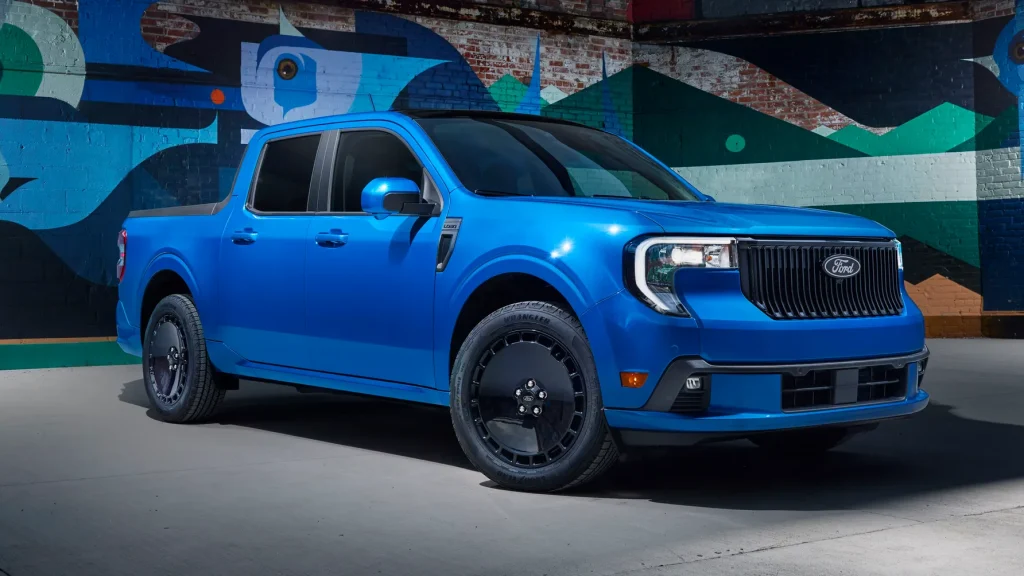
The hybrid option can also attract shoppers seeking lower fuel consumption without moving to an electric vehicle or giving up a cargo bed.
Resale value depends heavily on an individual truck’s condition and history. Mileage, accident records, maintenance, tire and body condition, regional demand, fuel prices, and the supply of new vehicles can all influence its eventual selling price. A heavily used work truck may not achieve the same value as a carefully maintained example with average mileage.
The award is therefore a benchmark, not a buying guarantee. Shoppers should compare the Maverick’s transaction price with competing compact and midsize pickups, estimate their annual mileage, and decide whether the hybrid or turbocharged powertrain better suits their needs. Insurance, financing, maintenance, and fuel costs also belong in the calculation.
For Ford, the category win gives the Maverick a strong talking point in a segment where it has built a distinct identity. For buyers, the takeaway is that a compact pickup does not necessarily have to surrender resale strength simply because it is smaller than traditional trucks.
KBB’s 2026 projection places the Maverick among the ten strongest vehicles for retained value and identifies it as the compact pickup category leader. The forecast can change as market conditions evolve, but it gives shoppers another reason to consider Ford’s small truck.