
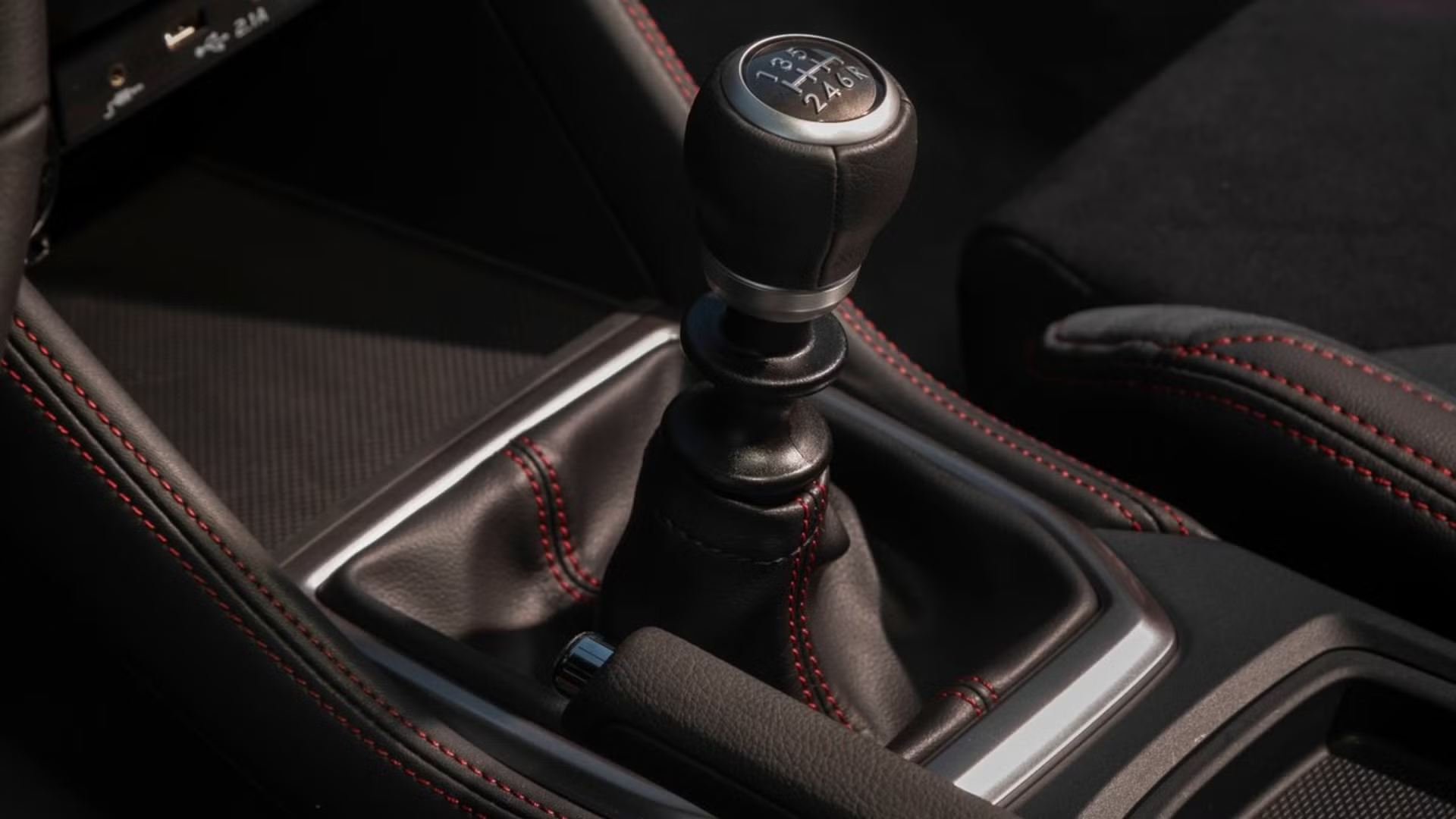
For decades, manual transmissions earned a reputation for being the simple, affordable choice for drivers who wanted lower ownership costs.
With fewer moving parts than traditional automatic transmissions and no torque converter or complex hydraulic control system, manual gearboxes were often considered easier and less expensive to maintain. Even today, many enthusiasts argue that a manual transmission can save thousands of dollars over the life of a vehicle.
The reality, however, is more nuanced. Whether a manual transmission is cheaper to maintain depends on several factors, including how the vehicle is driven, how long it is kept, and what type of automatic transmission it is being compared with.
Modern automatics, including eight-speed, ten-speed, continuously variable transmissions (CVTs), and dual-clutch transmissions (DCTs), have become far more sophisticated than earlier designs. While these transmissions can offer smoother shifting and better fuel economy, they are also more complex and often more expensive to repair if something goes wrong.
On the other hand, manual transmissions come with one major wear item that automatics do not: the clutch. Depending on driving habits, clutch replacement can become a significant maintenance expense, particularly for drivers who spend a great deal of time in stop-and-go traffic.
Consumer Reports notes that transmission maintenance costs vary widely depending on the transmission type, required fluid, and service procedure, with some modern automatic transmissions requiring specialized equipment for proper servicing. That complexity has helped preserve one of the manual transmission’s biggest advantages: mechanical simplicity.
So, is a manual transmission really cheaper to maintain? For most owners, the answer is yes, but only under the right circumstances.
Also Read: 10 Fastest Family Sedans You Can Buy for Under $40,000
Manual Transmissions Have Simpler Mechanical Designs
One of the biggest reasons manual transmissions generally cost less to maintain is their simpler construction.
A conventional manual transmission primarily consists of:
- Gear sets
- Synchronizers
- Bearings
- Shift forks
- Input and output shafts
- A mechanical clutch assembly
By comparison, a traditional automatic transmission typically includes:
- A torque converter
- Hydraulic pumps
- Planetary gearsets
- Valve bodies
- Multiple clutch packs
- Solenoids
- Electronic control modules
Every additional component introduces another potential failure point. Because manual transmissions rely more on direct mechanical operation and less on hydraulic and electronic controls, there are simply fewer systems that require servicing or can fail over time.
This simpler design also makes diagnosing problems more straightforward, reducing labor time for many repairs.
Routine Maintenance Is Usually Less Expensive
Routine service for a manual transmission is relatively simple. Most manufacturers recommend inspecting or replacing manual transmission gear oil at specified mileage intervals, although some transmissions are marketed as “filled for life.”
Even when fluid changes are recommended, manual transmissions typically require less fluid than many automatics, and the service procedure is generally less complicated.
Automatic transmissions often require the following:
- Specialized transmission fluid
- Precise fluid temperature monitoring
- Electronic calibration after servicing
- Filter replacement on some models
- Manufacturer-specific filling procedures
Consumer Reports notes that servicing certain automatic transmissions may require specialized scan tools and manufacturer-specific procedures, increasing maintenance costs compared with many manual gearboxes. As a result, routine maintenance bills for manual transmissions are often lower.
The Clutch Is the Biggest Maintenance Expense
The biggest exception to the manual transmission’s lower maintenance costs is the clutch. Unlike an automatic transmission, every manual vehicle relies on a friction clutch that gradually wears as the driver shifts gears.
A clutch assembly typically includes the following:
- Clutch disc
- Pressure plate
- Release bearing
- Pilot bearing on applicable vehicles
Eventually, these components wear out and require replacement. How long a clutch lasts depends heavily on driving habits.
Drivers who regularly:
- Ride the clutch pedal
- Launch aggressively
- Tow heavy loads
- Spend hours in city traffic
may wear out a clutch significantly sooner than drivers who spend most of their time on the highway.
Many properly driven clutches last well beyond 100,000 miles, while poorly treated clutches can require replacement much earlier.
Clutch replacement is one of the largest maintenance expenses unique to manual transmissions.
Automatic Repairs Can Be Much More Expensive
Although manual transmissions require occasional clutch replacement, automatic transmission failures often carry much higher repair costs.

Traditional automatic transmissions contain numerous hydraulic and electronic components that can fail independently.
Examples include:
- Valve body problems
- Solenoid failures
- Torque converter issues
- Internal clutch pack wear
- Hydraulic pressure loss
- Electronic control failures
Repairing these components frequently requires extensive disassembly. According to J.D. Power, manual transmissions may require clutch-related service over time, but major automatic transmission repairs are often more expensive because of the transmission’s greater complexity and the number of internal components involved.
Complete automatic transmission replacements can cost several thousand dollars, especially on modern vehicles equipped with advanced multi-speed transmissions.
Driver Skill Makes a Big Difference
Unlike automatics, manual transmissions depend heavily on driver technique. Two identical vehicles can experience dramatically different maintenance costs simply because they are driven differently.
Good driving habits include:
- Smooth clutch engagement
- Avoiding unnecessary slipping
- Using the parking brake on steep hills
- Not resting a foot on the clutch pedal
- Matching engine speed during downshifts when appropriate
Poor habits accelerate wear on:
- The clutch
- Synchronizers
- Shift linkage
- Transmission mounts
An experienced manual driver may never need a clutch replacement during the first 150,000 miles, while an inexperienced driver may require one much sooner.
This wide variation makes it difficult to assign a single maintenance cost to all manual transmissions.
Reliability Often Favors Manuals
Manual gearboxes have earned a reputation for long-term durability. Without hydraulic pumps, valve bodies, or complex electronic controls, fewer major components typically fail as mileage increases.
When manual transmission problems do occur, they often involve:
- Worn synchronizers
- Input shaft bearings
- Output shaft seals
- Shift linkage components
Many of these repairs are less complicated than rebuilding an automatic transmission. That does not mean manual transmissions are immune to failure, but their simpler mechanical layout generally reduces the number of expensive repairs owners encounter over the life of the vehicle.
Modern Automatics Have Narrowed the Gap
While manuals historically offered clear financial advantages, today’s automatics are more reliable than many older designs.
Many manufacturers now produce automatic transmissions capable of lasting well beyond 150,000 miles when properly maintained.
In addition, modern automatics frequently outperform manuals in fuel economy because additional gear ratios and sophisticated electronic controls allow engines to operate more efficiently.
Consumer Reports previously found that in some vehicles, manual transmissions could improve fuel economy and lower the purchase price. However, advances in automatic transmission technology have reduced or even eliminated those advantages in many newer models.
As a result, maintenance savings alone may not fully offset the convenience and efficiency offered by today’s automatics.
Availability of Repairs Also Matters
Another factor affecting long-term costs is repair availability. Manual transmissions have become increasingly rare in the United States, accounting for only a small percentage of new vehicle sales.
Although experienced transmission specialists can still repair manual gearboxes, some dealerships and independent repair shops perform far more automatic transmission work simply because demand is higher.
Replacement clutch components remain widely available for most popular manual vehicles, but sourcing internal transmission parts for discontinued models may become more difficult as manual-equipped vehicles continue to disappear from the new-car market.
For mainstream models, however, parts availability generally remains good.
So, Is a Manual Transmission Cheaper to Maintain?
For most owners, a manual transmission is still less expensive to maintain over the long term, but that advantage comes with one important condition: the driver must know how to operate it properly.
Routine maintenance is usually simpler, fluid services are often less expensive, and the transmission itself contains fewer components that can fail. While clutch replacement is an unavoidable maintenance item, it is often less costly than rebuilding or replacing a modern automatic transmission, particularly one with sophisticated hydraulic and electronic controls.
That said, the financial gap between manuals and automatics has narrowed. Modern automatic transmissions have become significantly more reliable than earlier generations, and many now deliver better fuel economy and smoother everyday driving.
For drivers who spend most of their time in heavy traffic, the convenience of an automatic may outweigh the modest maintenance savings of a manual.
In the end, a manual transmission generally costs less to maintain because of its simpler design and lower repair complexity. However, the actual savings depend on driving habits, vehicle maintenance, and how long the vehicle is kept.
A well-maintained manual transmission can provide hundreds of thousands of miles of dependable service, making it one of the most durable and cost-effective drivetrain choices still available for drivers who enjoy shifting their own gears.
Also Read: 8 Hidden Features in the Kia Sorento
