
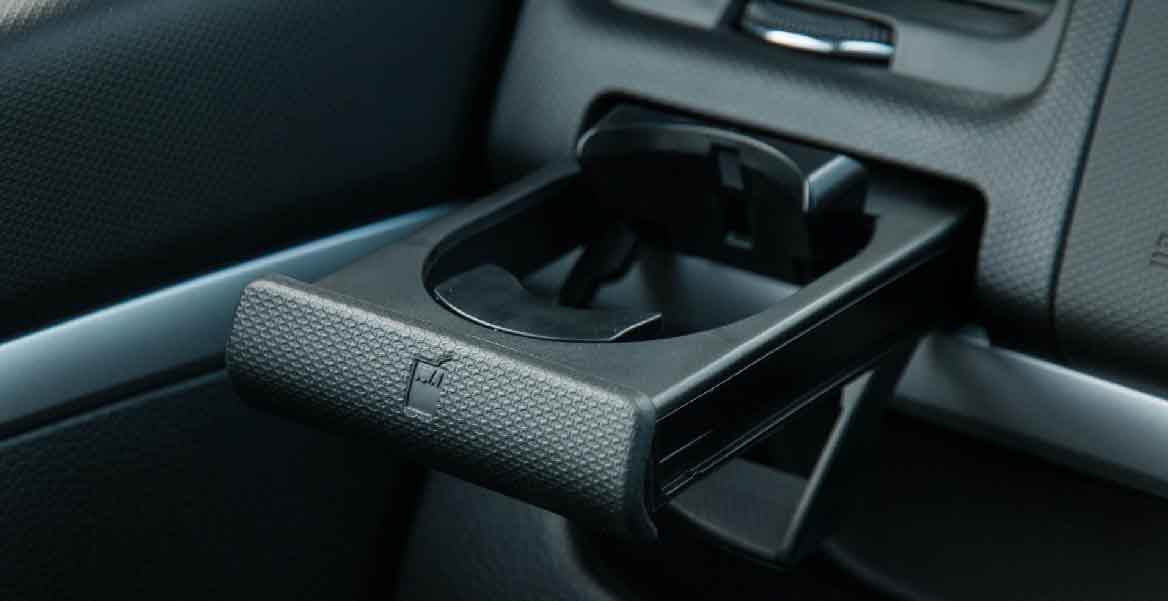
Today, cupholders are so common that most drivers barely notice them. Nearly every new vehicle sold in the United States includes multiple cupholders for front and rear passengers, along with spaces designed to accommodate everything from coffee cups to oversized insulated bottles.
Yet for much of automotive history, cars had no dedicated place to hold a drink. Early automobiles prioritized mechanical reliability and passenger seating, while beverages were rarely considered part of the driving experience.
That changed as American lifestyles evolved. Longer commutes, the rise of drive-through restaurants, and the explosive growth of convenience stores transformed cars into extensions of daily life rather than simple transportation.
Automakers responded by redesigning interiors around the needs of drivers who increasingly ate and drank on the road. What began as a small convenience feature eventually became an essential part of vehicle design, influencing center consoles, dashboard layouts, storage solutions, and even crash safety engineering.
Modern vehicles now devote significant engineering resources to cupholder design. Manufacturers study container sizes, vibration, ergonomics, and spill prevention to ensure drinks remain secure during everyday driving.
The humble cupholder has become one of the most carefully developed components inside the cabin, reflecting decades of changing consumer expectations and automotive innovation.
Also Read: Top 10 Brands & What Their Certified Pre-Owned Actually Guarantees.
Early Cars Were Never Designed for Drinks
Automobiles built during the first half of the twentieth century offered little consideration for beverages. Drivers were expected to focus entirely on operating the vehicle, and long-distance travel often involved stopping at roadside diners rather than eating or drinking behind the wheel.
Luxury cars occasionally included accessories such as picnic baskets or folding trays for passengers, but these were intended for use while parked rather than during travel. Dashboard layouts were simple, leaving little room for additional storage beyond a glove compartment or small door pockets.
By the 1950s and 1960s, American highways expanded rapidly, encouraging longer road trips and family vacations. Even then, factory-installed cupholders remained almost nonexistent. Drivers who wanted somewhere to place a drink often relied on aftermarket accessories that clipped onto windows, attached beneath dashboards, or hung from seat frames.
These products were frequently unstable and could easily spill beverages during braking or cornering.
The real shift began in the 1970s and accelerated throughout the 1980s. Fast-food chains expanded nationwide, convenience stores became more common, and disposable beverage cups grew larger. Americans increasingly purchased coffee, soft drinks, and fountain beverages intended to be consumed while driving.
Automakers recognized that customers wanted a safer, cleaner way to transport drinks. Early factory solutions were modest, including small molded recesses in center consoles or simple retractable trays. While these designs were often limited in size, they represented the beginning of a feature that would soon become indispensable.
The Cupholder Became a Major Selling Point
During the 1990s, cupholders evolved from optional conveniences into expected equipment. Minivans and sport utility vehicles played a major role in this transformation.
Families traveling with children needed space for multiple drinks, and manufacturers began advertising the growing number of cupholders available inside their vehicles. Some models featured six, eight, or even more beverage holders spread across all seating rows.
Interior designers soon realized that cupholders affected far more than beverage storage. Center consoles became larger and more versatile, combining drink holders with storage compartments, charging ports, and armrests. Engineers also redesigned dashboards and door panels to maximize usable cabin space without sacrificing comfort.
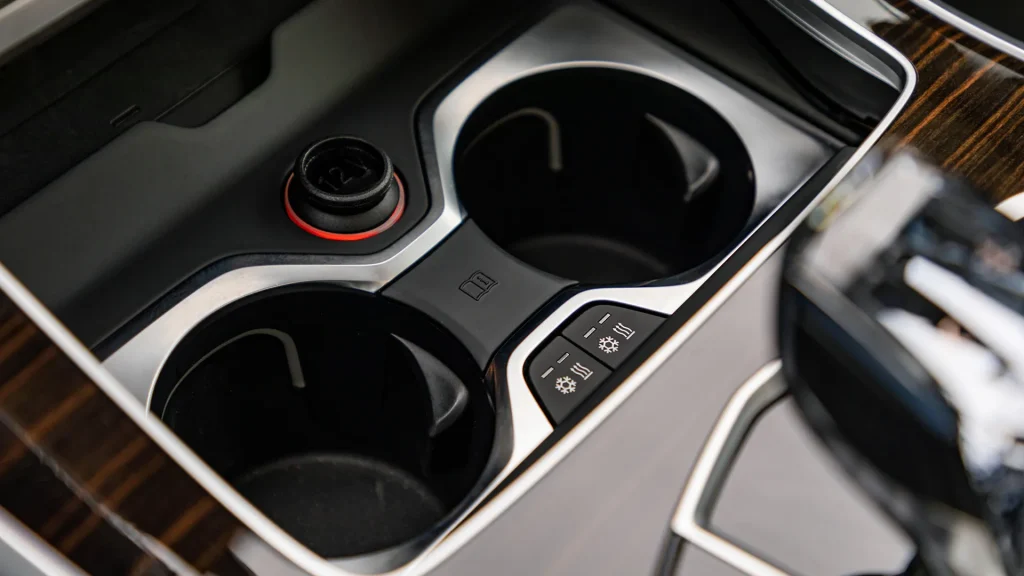
Consumer expectations continued rising as beverage containers became larger. Coffee chains introduced oversized cups, reusable bottles gained popularity, and insulated tumblers often exceeded the dimensions of traditional soft drink containers.
Manufacturers responded by designing adjustable cupholders with spring-loaded grips, flexible inserts, and removable dividers capable of securing containers of various shapes and sizes.
Testing procedures became increasingly sophisticated. Engineers evaluated cupholders using different road surfaces, rapid lane changes, emergency braking, and varying container weights. The goal was not simply to prevent spills but also to ensure drinks remained secure without distracting the driver.
Some automakers even patented unique cupholder mechanisms. Sliding, folding, rotating, and hidden designs appeared across different vehicle segments as companies searched for ways to maximize interior flexibility while maintaining attractive cabin styling.
Modern Cupholders Reflect Changing Driver Expectations
Today’s cupholders are the result of decades of refinement driven by changing consumer habits.
Many premium vehicles now include heated and cooled cupholders that help maintain beverage temperature during long trips. Others feature rubberized inserts, adjustable clamps, ambient lighting, and oversized compartments designed specifically for large reusable bottles that have become increasingly popular.
The growing number of electronic devices has also influenced cupholder placement. Designers must balance space for beverages with wireless charging pads, USB ports, gear selectors, storage bins, and increasingly complex infotainment controls. Every inch of center console space is carefully planned to improve usability without creating clutter.
Safety remains another important consideration. Loose beverage containers can become projectiles during a collision or distract drivers if they tip over while the vehicle is moving. Properly designed cupholders help minimize these risks by securely holding drinks under a wide range of driving conditions.
Regional preferences continue shaping vehicle interiors as well. North American buyers generally expect larger and more numerous cupholders than consumers in many European markets, reflecting differences in commuting patterns and beverage sizes.
Global automakers often adapt interior layouts accordingly when developing vehicles for different markets.
What started as a simple convenience feature has become a defining element of modern automotive design. Cupholders influence center console architecture, storage capacity, passenger comfort, and even purchasing decisions for many buyers.
Their evolution mirrors broader changes in how people use their vehicles, transforming cars from machines built solely for transportation into mobile living spaces that accommodate work, meals, entertainment, and everyday life.
The history of the cupholder demonstrates that some of the most influential automotive innovations are not always the most technologically advanced. Sometimes, a seemingly small feature can fundamentally change how drivers interact with their vehicles.
As consumer habits continue evolving, cupholders will likely keep adapting alongside them, proving that even the simplest interior components can play an important role in modern car design.
