
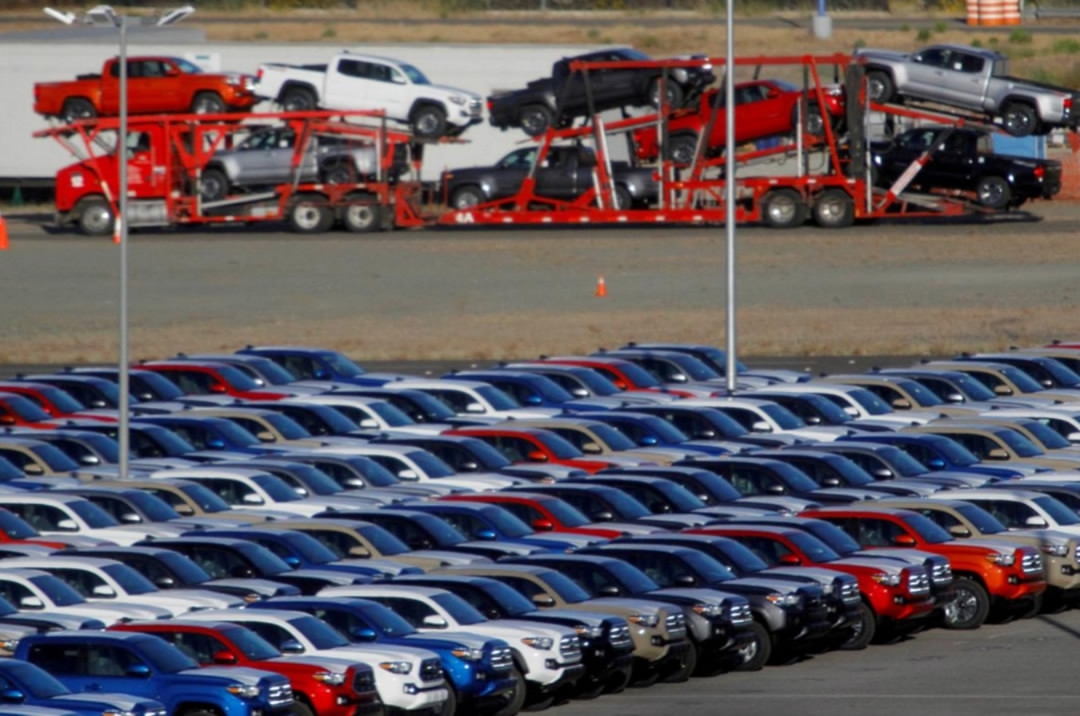
For decades, buying a vehicle was largely about price, reliability, fuel economy, and brand loyalty. While those factors still dominate purchasing decisions, another consideration has become increasingly important for many Americans: where the vehicle is built and how many U.S. jobs it supports.
Recent consumer research suggests that a growing number of shoppers are willing to spend extra if they believe their purchase helps American manufacturing workers. According to survey data highlighted by The Auto Channel from Cars.com research, 57% of shoppers said they would pay more to support American jobs when purchasing a vehicle.
The findings reflect a broader shift in consumer attitudes as manufacturing, supply chains, and domestic production have become major economic and political issues.
The trend also highlights a common misconception. Supporting American auto jobs is no longer limited to buying a vehicle from Detroit’s traditional automakers. Many foreign brands now employ thousands of American workers by assembling vehicles in U.S. factories and sourcing components from domestic suppliers.
Also Read: 10 Motorcycles With Highest Horsepower, Ranked
Buyers Are Looking Beyond the Badge
The modern automotive industry is far more global than many shoppers realize. A vehicle wearing a familiar American badge may contain engines, transmissions, or electronic components sourced from multiple countries.
Likewise, a Japanese, Korean, or German brand may assemble its vehicles in Kentucky, Alabama, Tennessee, Indiana, or South Carolina using thousands of American workers. That complexity explains why many consumers now focus less on the brand name and more on where the vehicle is actually built.
Cars.com’s annual American-Made research has tracked this trend for years by evaluating vehicles based on factors such as final assembly location, U.S. and Canadian parts content, engine and transmission sourcing, and the size of each automaker’s American manufacturing workforce.
According to Cars.com’s consumer research highlighted by The Auto Channel, 57% of shoppers said they would pay more to support American jobs, demonstrating that domestic employment has become a meaningful consideration during the buying process.
Earlier consumer studies reached similar conclusions. AutoTrader found that protecting American jobs and supporting the U.S. economy ranked among the strongest reasons buyers considered a vehicle “American-made,” regardless of whether the manufacturer was headquartered in the United States or overseas.
This helps explain why companies such as Toyota, Honda, BMW, Mercedes-Benz, Hyundai, and Kia have invested billions of dollars in American assembly plants over the past several decades.
These companies compete directly for buyers who value domestic manufacturing and produce vehicles in the United States.
The distinction between “American brand” and “American-built vehicle” has therefore become increasingly blurred.
For many shoppers, the factory where the vehicle is assembled matters more than the nationality of the parent company.
U.S. Manufacturing Creates Millions of Jobs
Automobile manufacturing supports far more workers than those assembling vehicles on production lines.
Every assembly plant creates demand for steel producers, electronics suppliers, logistics companies, dealerships, transportation firms, engineering companies, and thousands of parts manufacturers spread across multiple states.
Autos Drive America reports that international automakers alone directly employ more than 156,000 American workers while supporting more than 2.3 million U.S. jobs through manufacturing, dealerships, suppliers, and related industries. Those companies have invested more than $107 billion in U.S. operations.
When consumers purchase vehicles assembled in American factories, the economic impact extends well beyond the final assembly line.
A modern vehicle contains thousands of individual components produced by hundreds of suppliers. Many of those suppliers operate facilities across the Midwest, South, and other manufacturing regions, creating employment that depends on continued vehicle production.
Gallup research also shows that employment remains one of the strongest motivations behind buying American-made products. Among Americans who intentionally seek domestically produced goods, 71% say they do so primarily to support American jobs and workers, while 57% say strengthening the U.S. economy is another major reason.
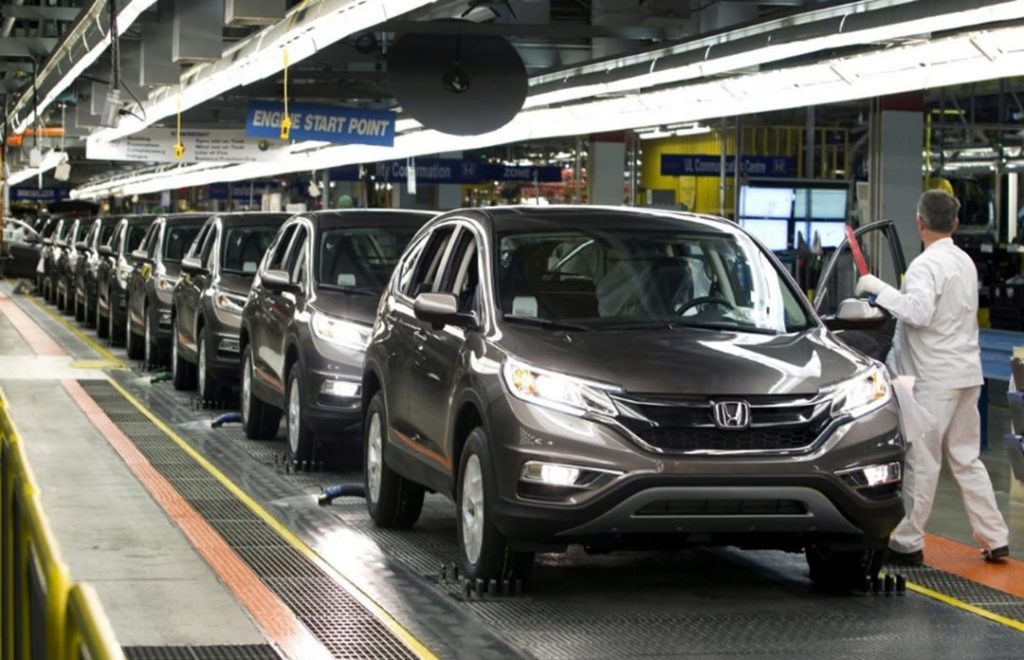
Those attitudes increasingly influence automotive purchasing decisions. The industry has experienced significant disruptions over the past several years, including semiconductor shortages, supply chain disruptions, labor negotiations, and major investments in electric vehicle manufacturing.
As a result, consumers have become more aware of where vehicles are produced and how manufacturing decisions affect local communities.
Price Still Matters Most
Although many shoppers express support for American manufacturing, cost remains a major factor.
Cars.com research cited by The Auto Channel found that many buyers are willing to pay more for vehicles supporting U.S. jobs, but affordability continues to shape purchasing decisions. Rising vehicle prices, higher interest rates, and tighter household budgets mean buyers must often balance patriotic preferences with financial realities.
This explains why the willingness to pay more does not necessarily mean consumers will choose the most expensive vehicle assembled in America. Instead, many shoppers compare similarly priced models and may favor the one with greater domestic manufacturing content.
The annual American-Made Index illustrates this changing landscape. In recent years, vehicles from Tesla, Honda, Toyota, Volkswagen, and several other manufacturers have ranked alongside traditional Detroit brands because they contribute significantly to American production through U.S. assembly plants and domestic employment.
For buyers, that means supporting American jobs is no longer as simple as choosing a Ford, Chevrolet, or Jeep. A Honda Accord built in Ohio or a Toyota Camry assembled in Kentucky may contribute just as much, or in some cases more, to American manufacturing employment than another vehicle carrying a domestic badge but imported from overseas.
The modern automotive industry has transformed the meaning of “buying American.” Consumers increasingly recognize that domestic job creation depends on where vehicles are engineered, assembled, and supplied rather than solely on the company’s headquarters.
That changing understanding helps explain why 57% of shoppers say they are willing to spend more to support U.S. auto jobs.
While price, reliability, and quality remain the biggest influences on purchasing decisions, many Americans also view their next vehicle as an opportunity to support domestic workers, strengthen local manufacturing, and contribute to the broader U.S. economy.
As automakers continue expanding production across American factories, the connection between car buying and job creation is likely to remain an important consideration for millions of consumers.
Domestic Production Is Becoming a Stronger Marketing Tool
Automakers have also recognized that American manufacturing has become a selling point. Television commercials, dealership advertisements, and company websites increasingly highlight where vehicles are assembled, how many workers are employed at U.S. plants, and the amount invested in domestic manufacturing.
During periods of economic uncertainty, companies often emphasize new factory expansions and job announcements because they resonate with consumers who want their purchases to support local communities.
This marketing approach is backed by real investments. Over the past decade, virtually every major automaker selling vehicles in the United States has expanded or modernized American production facilities.
Ford, General Motors, and Stellantis have announced multi-billion-dollar investments in both traditional vehicle production and electric vehicle manufacturing, while companies such as Toyota, Honda, Hyundai, Kia, BMW, and Mercedes-Benz have continued expanding their U.S. operations.
These projects create not only assembly-line jobs but also engineering, research, logistics, and supplier positions that support regional economies for years after a factory opens.
Government incentives have further accelerated domestic manufacturing. Recent federal legislation has encouraged companies to increase North American production of batteries, electric vehicles, and critical automotive components.
Several automakers and battery manufacturers have responded by announcing new factories across states including Kentucky, Tennessee, Georgia, Michigan, North Carolina, and South Carolina. These investments are expected to employ tens of thousands of workers directly while supporting many additional jobs through supplier networks.
For shoppers, this means a vehicle purchase today often supports a much larger manufacturing ecosystem than many realize. Every assembly plant depends on hundreds of suppliers producing everything from steel stampings and seats to semiconductors and advanced electronics.
Transportation companies, dealerships, maintenance providers, and local businesses also benefit from strong automotive production.
As a result, consumers who prioritize American jobs increasingly look beyond the badge on the hood and instead consider the broader economic impact of where a vehicle is built and how much of its production takes place within the United States.
Also Read: 10 Cars That Are Getting A Complete Redesign for 2027
