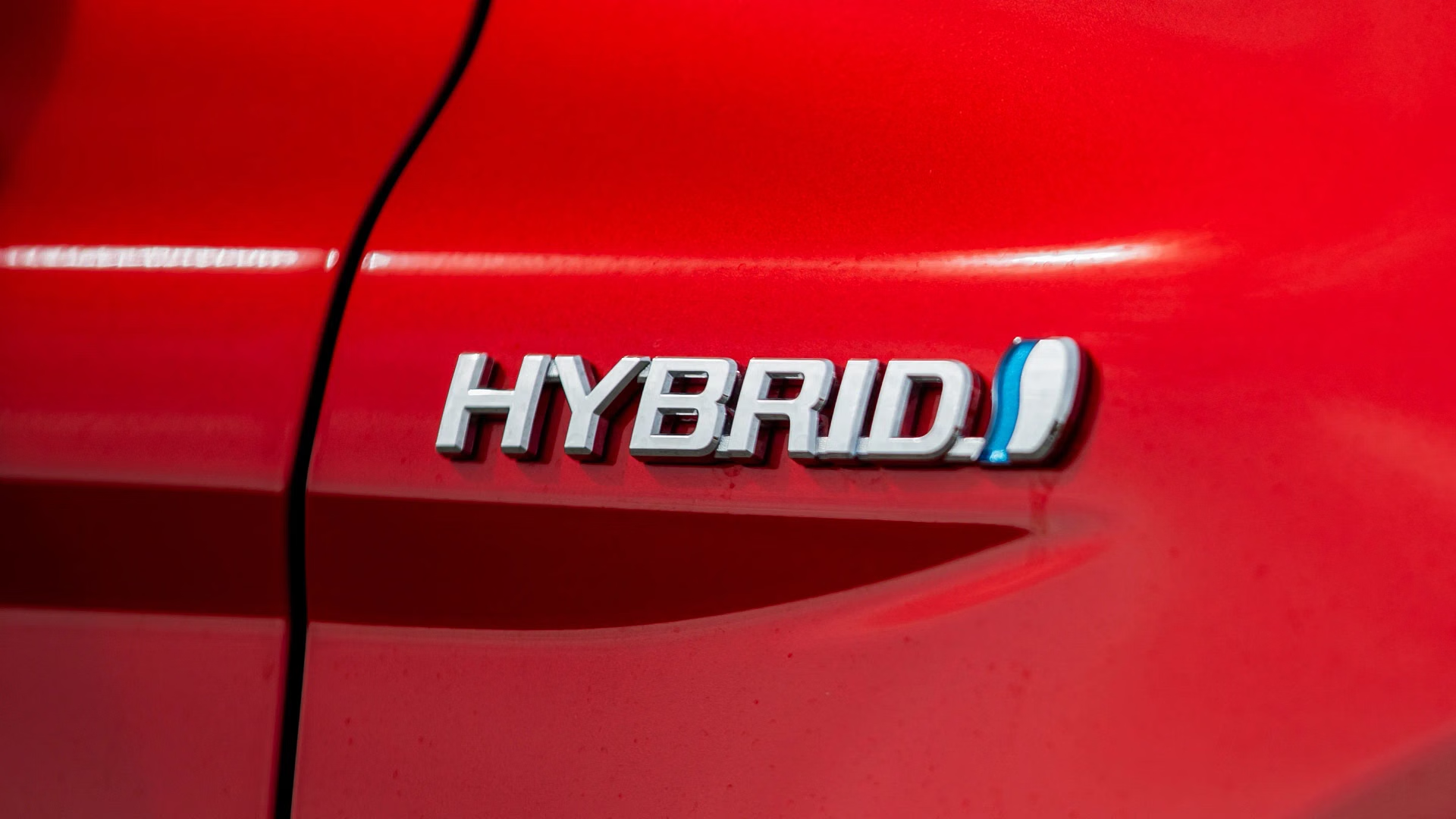
Hybrid vehicles have steadily gained popularity in the United States as more consumers look for better fuel economy without changing the way they drive. Unlike battery-electric vehicles, hybrids combine a gasoline engine with an electric motor, allowing drivers to reduce fuel consumption without relying on public charging stations.
As automakers expand their hybrid lineups and electric vehicle adoption grows more slowly than many expected, consumer preferences appear to be shifting toward powertrains that balance efficiency with familiarity.
A new Pew Research Center survey, conducted among 3,524 U.S. adults in March 2026, highlights this trend. According to the study, 44% of Americans say they would be very or somewhat likely to consider purchasing a hybrid vehicle, compared with 32% who would consider buying a fully electric vehicle (EV).
Pew also found that interest in EVs has remained essentially unchanged from 2025 but has declined from its 2022 peak, suggesting that enthusiasm for fully electric vehicles has leveled off.
The findings indicate that while Americans continue to value improved fuel efficiency and lower operating costs, many see hybrids as a more practical alternative to fully electric vehicles.
The results arrive as several automakers expand hybrid production to meet rising demand while continuing to invest in long-term electric vehicle development.
Also Read: 10 Popular Cars With Surprisingly High Insurance Premiums
Why Hybrids Are Becoming the Preferred Choice for Many Americans
The Pew Research Center survey suggests that American consumers increasingly view hybrid vehicles as the best compromise between traditional gasoline-powered cars and fully electric vehicles.
By combining a conventional internal combustion engine with an electric motor, hybrids deliver improved fuel economy while eliminating many of the concerns that continue to slow EV adoption.
One of the biggest advantages is convenience. Hybrid owners can refuel at any gasoline station without depending on home charging equipment or public fast chargers. This makes hybrids especially attractive to drivers who live in apartments, frequently travel long distances, or live in areas where charging infrastructure remains limited.
Purchase price is another important factor. Although some hybrid models cost more than comparable gasoline vehicles, they are often less expensive than many battery-electric vehicles.
Lower purchase prices, combined with improved fuel economy, allow buyers to reduce fuel costs without making the larger financial commitment typically associated with a fully electric vehicle.
Range anxiety also plays a major role. While many modern EVs now offer more than 300 miles of EPA-estimated range, some consumers remain concerned about charging availability during road trips or in rural areas.
Hybrids remove this concern entirely because the gasoline engine continues powering the vehicle whenever additional range is needed.
The survey also reflects changing consumer priorities. Inflation, higher interest rates, and economic uncertainty have encouraged many buyers to prioritize affordability, reliability, and flexibility over adopting new technology. For buyers, hybrids represent a lower-risk investment that still delivers meaningful fuel savings.
Automakers have responded by expanding hybrid production across sedans, SUVs, and pickup trucks. Several manufacturers that had previously emphasized rapid EV expansion are now increasing investment in hybrid technology after seeing stronger-than-expected consumer demand.
Pew’s findings also indicate that interest in fully electric vehicles has stabilized after declining from its 2022 high point.
While EV adoption continues to grow, the survey suggests that many Americans are choosing a gradual transition through hybrid technology rather than moving directly from gasoline-powered vehicles to fully electric models.
Why Interest in Fully Electric Vehicles Has Leveled Off
The Pew Research Center survey shows that while Americans remain interested in cleaner and more efficient transportation, enthusiasm for fully electric vehicles has stopped growing at the pace seen just a few years ago.
Among the 3,524 U.S. adults surveyed in March 2026, 32% said they would be very or somewhat likely to purchase an electric vehicle, essentially unchanged from 2025 but lower than the level recorded in 2022.
The results suggest that early adopters have largely embraced EVs, while convincing mainstream buyers has become a greater challenge.
One of the biggest reasons is affordability. Although EV prices have gradually declined and more entry-level models have entered the market, many electric vehicles still carry higher average transaction prices than comparable gasoline or hybrid models.
With higher interest rates and continued inflation affecting household budgets, many consumers are placing greater emphasis on upfront purchase costs.
Charging infrastructure also continues to influence purchasing decisions. While public charging networks have expanded significantly across the United States, availability remains uneven.
Drivers living in apartments or homes without dedicated parking may not have convenient access to overnight charging, making EV ownership less practical than owning a hybrid or gasoline-powered vehicle.
Road-trip convenience remains another factor. Refueling a gasoline or hybrid vehicle typically takes only a few minutes, while even the fastest DC chargers require considerably longer. For families who frequently travel long distances, this difference continues to affect purchasing decisions despite improvements in battery range.
Consumer uncertainty also plays a role. Questions surrounding battery longevity, resale values, and future charging standards have made some buyers hesitant to commit to a fully electric vehicle.
Although manufacturers offer lengthy battery warranties and battery technology continues improving, many consumers prefer waiting until the technology becomes even more established.
Government incentives have also influenced demand. Federal and state tax credits helped accelerate EV adoption in recent years, but changing eligibility requirements and policy uncertainty have made some buyers less confident about the financial benefits of purchasing an electric vehicle.
Without guaranteed incentives, buyers often compare vehicles based primarily on purchase price and everyday practicality.
Another trend highlighted by the survey is that many consumers no longer see electrification as an all-or-nothing decision. Instead of choosing between a gasoline vehicle and a fully electric model, they increasingly view hybrids as a practical middle ground.
Hybrids provide lower fuel consumption, reduced emissions, and familiar refueling habits, allowing drivers to experience some benefits of electrification without changing their daily routines.
As a result, automakers are adjusting their product strategies. Rather than focusing exclusively on battery-electric vehicles, many manufacturers are expanding hybrid offerings alongside EVs.
This broader approach gives consumers more choices while allowing companies to respond to current market demand instead of relying on a single powertrain technology.
Why Interest in Fully Electric Vehicles Has Leveled Off
The latest Pew Research Center survey, conducted among 3,524 U.S. adults in March 2026, suggests that consumer interest in fully electric vehicles has reached a plateau after several years of rapid growth.
According to the survey, 32% of Americans say they would be very or somewhat likely to purchase a fully electric vehicle, virtually unchanged from the previous year but lower than the level recorded in 2022.
While this indicates that millions of Americans remain open to EV ownership, it also shows that enthusiasm has cooled compared with the surge seen just a few years ago.
The findings reflect a market that is moving from early adopters to more cautious mainstream buyers, many of whom are weighing cost, convenience, and practicality before making their next vehicle purchase.
Affordability remains one of the biggest obstacles. Although manufacturers have introduced more affordable electric models and battery costs have gradually declined, many EVs still carry higher average transaction prices than comparable gasoline or hybrid vehicles.
Higher interest rates have further increased monthly loan payments, making affordability an even greater concern for households shopping on a budget.
Consumers who may have considered an EV during periods of generous incentives and lower borrowing costs are now comparing monthly payments more carefully, and many find hybrids to be the more economical option.
Charging infrastructure also continues to influence buying decisions. Public charging networks have expanded across the United States, with thousands of additional Level 2 and DC fast chargers installed over the past several years.
However, access remains uneven, particularly in rural communities and smaller towns. Drivers who live in apartments, condominiums, or homes without dedicated parking may have limited access to overnight charging, making daily ownership less convenient than simply refueling a gasoline or hybrid vehicle.
Even in urban areas, public chargers may occasionally be occupied or unavailable, adding another layer of uncertainty for prospective buyers.
Long-distance travel remains another consideration. Modern electric vehicles now offer significantly longer driving ranges than earlier models, with many exceeding 300 miles on a full charge.
Even so, many Americans continue to value the convenience of stopping at a gas station for just a few minutes before continuing their journey.
Fast-charging technology has improved considerably, but charging still requires more time than filling a gasoline tank, particularly during busy travel periods when charging stations may experience higher demand.
Consumer confidence is another important factor. While battery technology has become more reliable and manufacturers typically provide battery warranties lasting eight years or longer, some buyers remain uncertain about long-term battery replacement costs, resale values, and future technological changes.
Rapid improvements in battery chemistry and charging capability have also led some consumers to delay purchasing an EV in anticipation of better technology becoming available in the coming years.
Government policies have also affected purchasing behavior. Federal tax credits and state incentives helped encourage EV adoption during the past several years, but changing eligibility rules and policy uncertainty have made some buyers less certain about the financial benefits of purchasing an electric vehicle.
Without guaranteed incentives, consumers often focus more heavily on purchase price, financing costs, and everyday convenience when comparing different powertrains.
The survey also indicates that many Americans no longer see electrification as a choice between gasoline vehicles and fully electric vehicles alone. Instead, hybrids have emerged as an attractive middle ground.
Hybrid vehicles provide improved fuel economy, lower emissions, and familiar refueling habits without requiring drivers to change their daily routines or depend on public charging infrastructure.
This combination of efficiency and convenience explains why 44% of respondents said they would consider buying a hybrid, compared with 32% who expressed interest in a fully electric vehicle.
Automakers are responding by adjusting their product strategies. Rather than focusing exclusively on battery-electric vehicles, many manufacturers are expanding hybrid lineups while continuing long-term investments in EV technology.
Companies including Toyota, Honda, Ford, Hyundai and others have announced increased hybrid production or broader hybrid availability across their model ranges.
This balanced approach allows manufacturers to meet current consumer demand while continuing to prepare for a future in which electric vehicles are expected to play an increasingly important role.
The Pew findings do not suggest that electric vehicles are losing relevance. Instead, they indicate that the transition is occurring more gradually than many industry observers expected.
As charging infrastructure expands, battery costs decline, and technology continues improving, consumer interest in EVs may increase again.
For now, however, many Americans appear to view hybrids as the most practical path toward improved fuel efficiency, explaining why they currently enjoy a clear advantage in consumer preference over fully electric vehicles.
Also Read: 10 Hyundai Tucson Model Years That Tell the Whole Story