
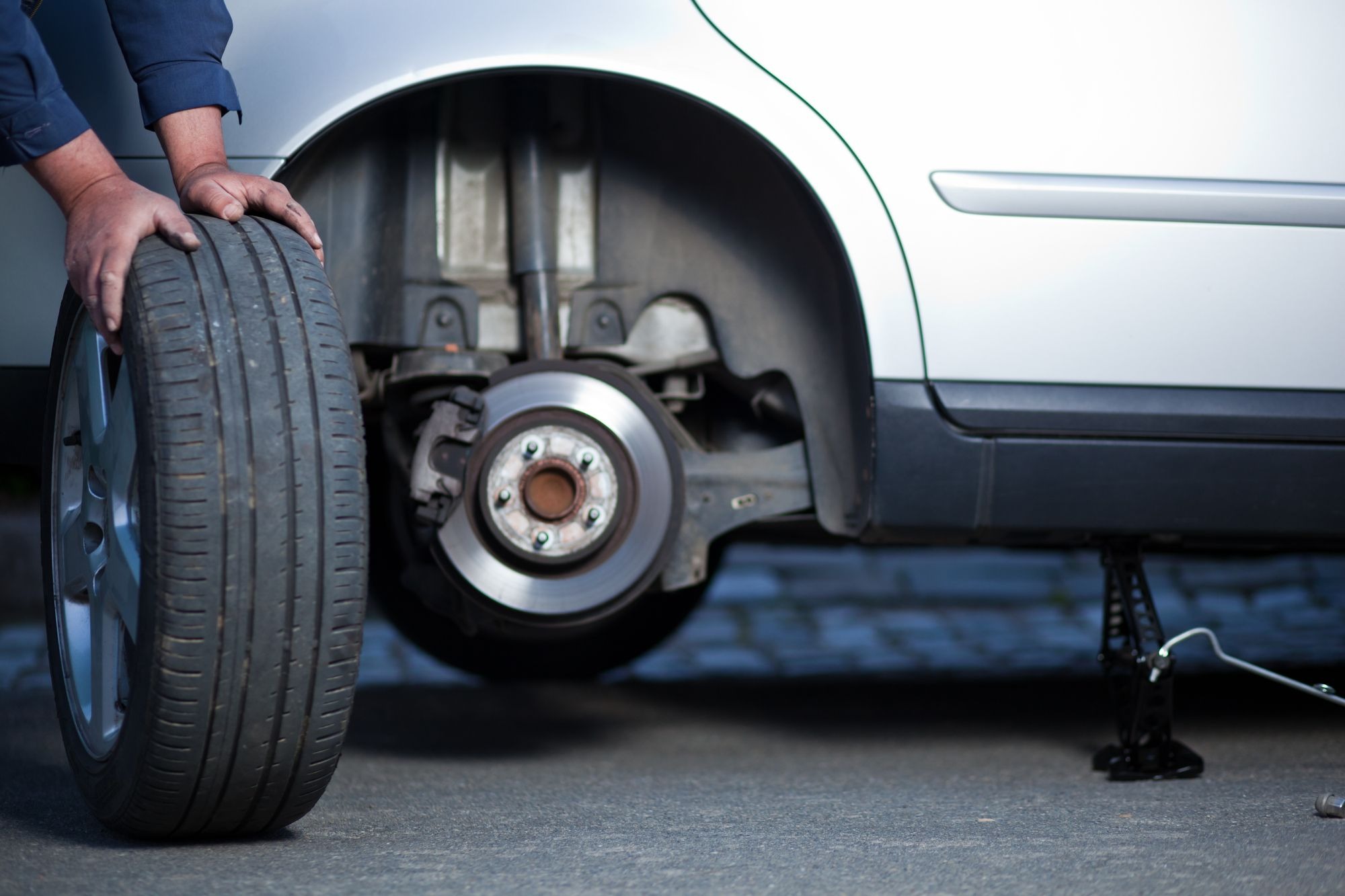
Replacing all four tires can cost around $500 on one vehicle and more than $1,300 on another. The difference is not simply a matter of brand. Vehicle class, tire size, speed rating, load rating, tread design, original-equipment fitment, and installation costs can all affect the final bill.
Current Tire Rack listings show how wide the price range can be. A set of 215/55R17 tires can cost less than $800, while a 19-inch performance set can exceed $1,200 before installation.
Here is a practical guide to what drivers can expect to pay across common vehicle classes, with current Tire Rack examples and manufacturer-fitment considerations.

Sedan, Hatchback, and Compact Cars
Smaller vehicles tend to be the most forgiving when it comes to tire pricing, and that’s mostly a function of size. Sedans and hatchbacks typically ride on 15 to 18-inch wheels, and standard all-season tires built for that range generally cost between $90 and $150 per tire.
A complete set of four usually lands somewhere between $360 and $700 before installation, and adding mounting, balancing, and disposal fees adds another $60 to $200 depending on the shop.
Popular models like the Toyota Camry or Honda Accord tend to fall on the lower end of that range, with drivers commonly reporting per-tire costs closer to $130 to $180 for quality all-season rubber.
Hatchbacks follow a similar pattern, often running slightly cheaper given their smaller stance and lighter weight. Where costs climb is when a sedan owner opts for performance tires instead of standard all-season ones, since sportier compounds designed for better grip and handling can push per-tire pricing up to $150 to $300, nearly doubling the total for a full set.
Brand choice matters plenty here too. Budget brands can keep a full set under $400, while premium names like Michelin or Bridgestone often add $100 or more to the total bill in exchange for longer tread life and better warranty coverage.
For most sedan and hatchback owners, sticking with a mid-range all-season tire strikes the most reasonable balance between upfront cost and how many miles that set will actually deliver.

Coupe, Sports Car, and Performance Models
Coupe owners often pay more because these vehicles frequently use wider tires, larger wheels, lower-profile sidewalls, or staggered front-and-rear fitments.
The purchase can also involve ultra-high-performance or max-performance summer tires designed around handling rather than low purchase price.
Take a 245/40R19 setup as an example. Tire Rack currently lists the Pirelli P Zero AS Plus 3 at $289.23 per tire, or $1,156.92 for four. A Michelin Pilot Sport 4S in the same size is listed at $324.99 each, producing a four-tire price of $1,299.96 before installation.
There is a less expensive path. Tire Rack also lists the Kumho Majesty 9 Solus TA91 in 245/40R19 at $149.92 each, or $599.68 for four. That illustrates why vehicle class alone cannot determine the final bill.
Staggered fitments deserve special attention. A performance coupe may use one tire size on the front axle and another on the rear. One Tire Rack example uses 245/40R19 in front and 255/40R19 in back, with a four-tire set priced at $907.96 for the listed Yokohama model. For these vehicles, expect roughly $600 to $1,400 or more for four tires, depending heavily on brand and specification.

SUV, Crossover, and Minivan
SUVs and crossovers cover a wide pricing range because the category includes everything from compact family vehicles to large three-row models. A 19-inch crossover tire can already push the four-tire purchase above $1,000.
For example, Tire Rack currently lists a Bridgestone Alenza Sport A/S in 235/55R19 at $285.99 per tire, or $1,143.96 for four. A Goodyear Assurance ComfortDrive in that same size is listed at $219.99 per tire, bringing four to $879.96.
That price gap shows why shopping by vehicle class alone is not enough. Two SUVs with similar dimensions can require different sizes, load ratings, and tread designs.
A compact crossover might use 17-inch tires costing $120 to $200 each, while a larger SUV with 20-inch wheels can require $200 to $350 or more per tire.
Minivans tend to follow the passenger-vehicle side of the market, although larger wheel packages can raise the bill. A reasonable planning range is $600 to $1,200 for four tires, with premium or larger-wheel SUVs potentially reaching $1,400 or more.
Check the placard inside the driver’s door and the owner’s manual before ordering. Those sources identify the approved size and load information for your specific vehicle.
Pickup Truck and Heavy-Duty Truck
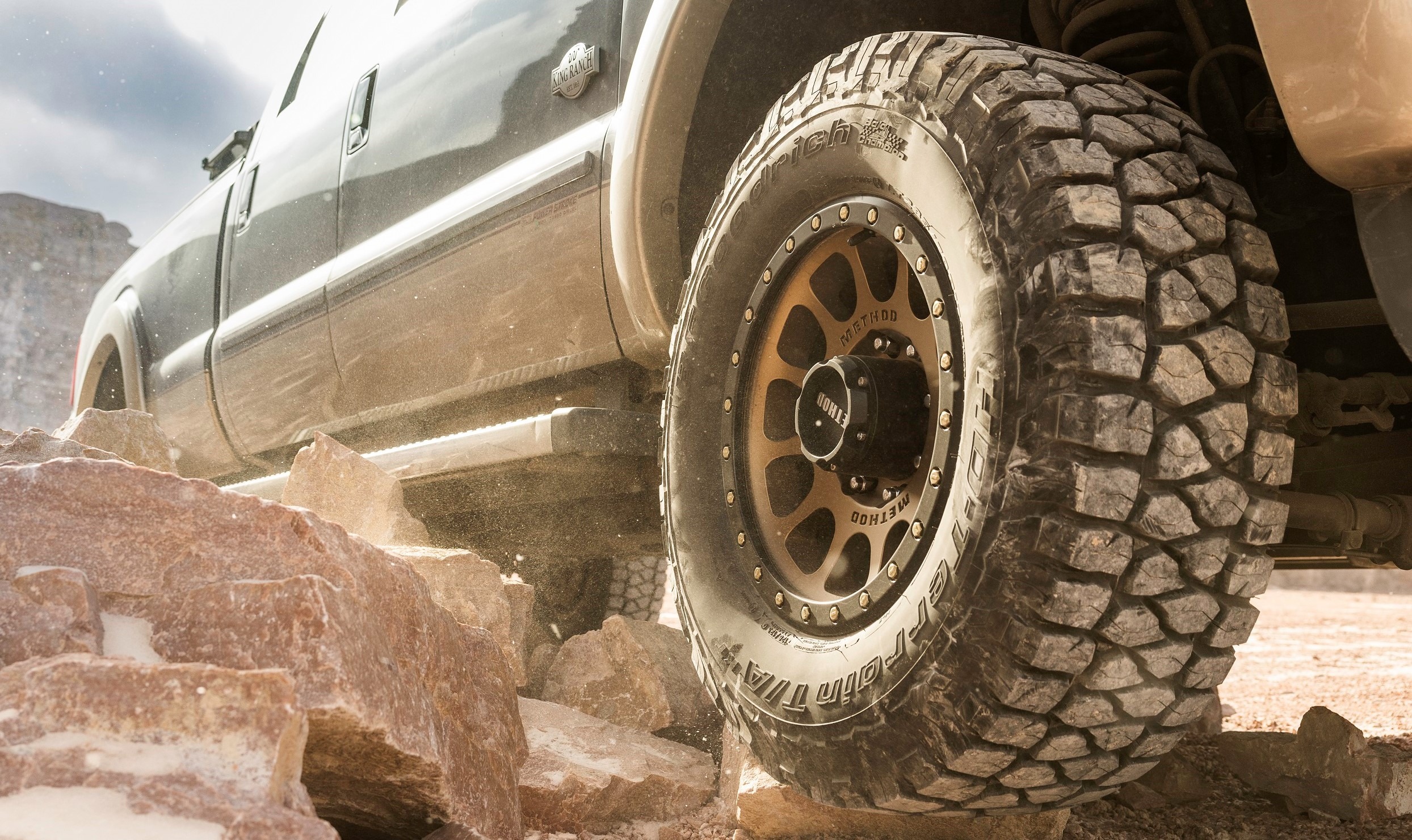
Truck tires bring another set of considerations because the tire may need to support greater vehicle weight, cargo, towing demands, or off-pavement use. All-terrain and mud-terrain designs can also cost more than highway-focused tires.
A current Tire Rack example makes the pricing easy to see. In the popular 275/60R20 size used on trucks such as the Chevrolet Silverado 1500, Ford F-150, and Ram 1500, one listed tire costs $287.99, producing a four-tire total of $1,151.96. Another Bridgestone option in that size is listed at $309.99 each, or $1,239.96 before applicable savings.
A lighter-duty pickup with 17-inch wheels may cost less, while a heavy-duty truck with larger wheels, high load ratings, or specialized off-road tires can move well past $1,300 for four.
A useful budget range for four standard pickup tires is about $700 to $1,300. Heavy-duty tires, premium all-terrain and mud-terrain models, and specialty applications can push the total to $1,500 or more.
The fitment cannot be guessed from wheel diameter alone. Load range, service description, tire construction, and the truck’s required capacity all matter. Choosing a tire that does not meet the manufacturer’s load requirements can create a serious safety concern.
Ultra-Luxury and Specialty Vehicles
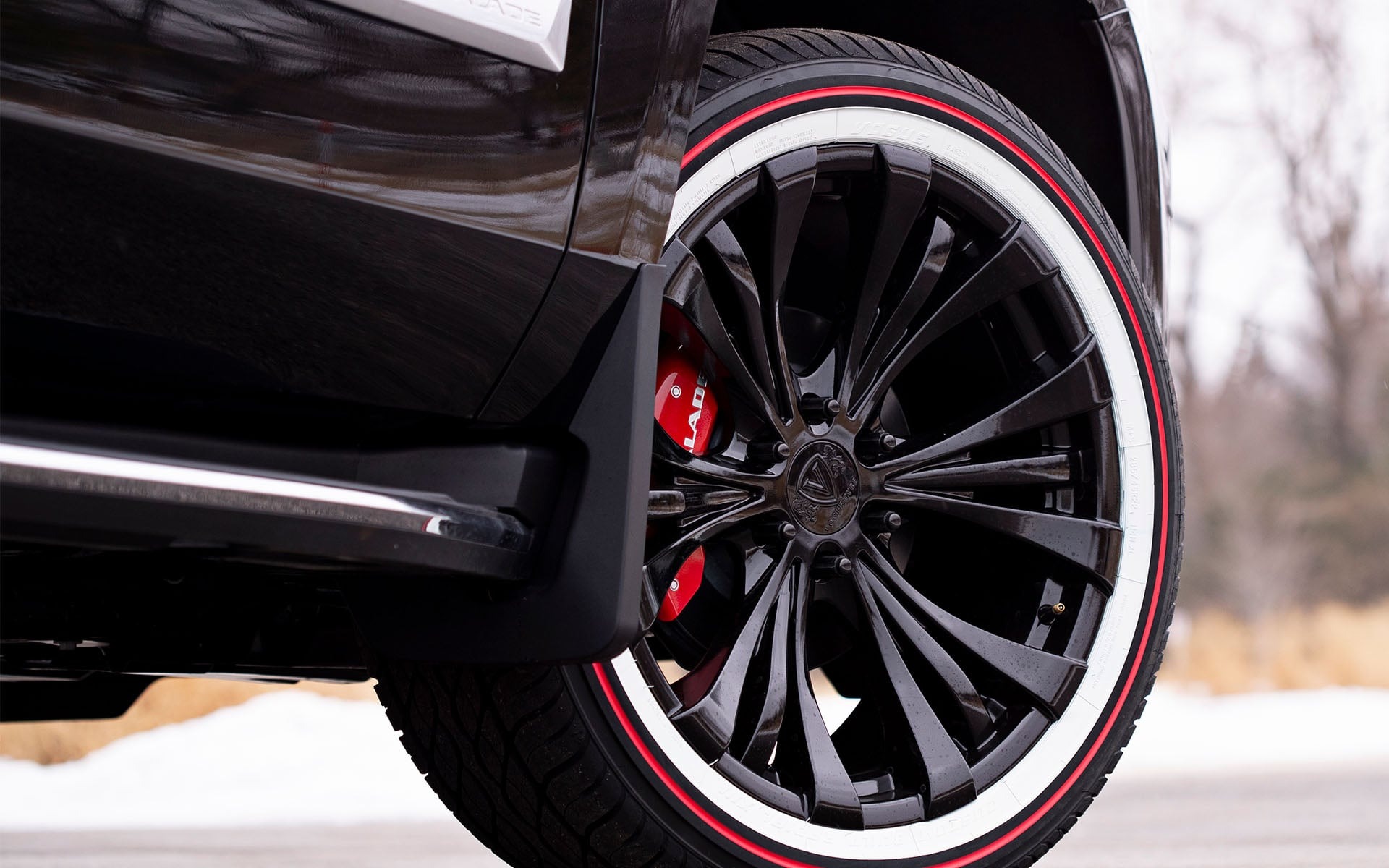
Ultra-luxury vehicles sit at the high end of tire replacement because their wheels can be large, their tires can use specialized compounds, and manufacturers may specify particular versions for ride quality, handling, noise control, or load requirements.
Tire Rack’s current Maybach and Rolls-Royce listings show why this class deserves its own budget. The Mercedes-Maybach S-Class, for example, can use 255/40R20 front and 285/35R20 rear configurations, with some models using 265/40R20 front and 295/35R20 rear sizes.
A Maybach 57 can use 275/50R19 front tires and 275/45R20 rear tires. At the end, Tire Rack lists a Pirelli P Zero in 255/40R23 at $882.27 per tire, or $3,529.08 for four. That price is tied to a specific 23-inch fitment associated with vehicles such as the Rolls-Royce Cullinan and Spectre.
So, $1,000 to $2,000 for four tires is a reasonable planning range for many premium vehicles, while certain ultra-luxury or specialty fitments can exceed $3,000.
Installation is extra in many cases. J.D. Power cites examples of mounting, balancing, and road-hazard charges that can bring installation to around $100 for four tires, while Performance Plus Tire reports complete-set installation commonly ranging from $50 to $300.
The smartest approach is to price the exact factory-approved fitment, then compare the full installed cost rather than judging a tire by its advertised price alone.
Tire Rack’s vehicle-specific listings can help confirm available sizes and original-equipment versions before purchase.
