
Buying a car involves more than agreeing on a vehicle’s selling price. Once financing enters the discussion, a dealership’s worksheet can contain several figures that significantly affect how much a buyer eventually pays.
From inflated interest rates and unexplained dealer fees to unnecessary protection packages, seemingly small entries can add thousands of dollars to a loan. The problem is that buyers often concentrate on the monthly payment instead of examining the complete financing breakdown.
Understanding how these worksheets work, recognizing questionable charges, and knowing which figures deserve closer attention can help American car buyers avoid expensive mistakes before signing.
1. An Unexplained Increase in the Vehicle’s Selling Price
One of the first figures worth checking on a dealer’s financing worksheet is the vehicle’s selling price. This amount should match the price negotiated with the dealership before discussions about loan terms, interest rates, or monthly payments began.
If the figure suddenly increases when the finance department prepares the paperwork, buyers should stop and ask what changed.
Consider a customer who negotiates a vehicle for $32,000 before taxes and applicable fees. The financing worksheet later lists its selling price as $34,200. That additional $2,200 could represent dealer-installed accessories, a market adjustment, protection products, or other charges.
However, these expenses should not be silently incorporated into the agreed vehicle price. Each item needs to be identified and explained.
The Federal Trade Commission (FTC), in its consumer guidance titled Financing or Leasing a Car, recommends obtaining the out-the-door price in writing before discussing financing. This figure includes the vehicle’s price, taxes, and fees, making it easier to identify unexpected charges and compare dealership offers.
Another useful resource is the Consumer Financial Protection Bureau’s (CFPB) auto loan shopping sheet. It separates the vehicle price, optional add-ons, government charges, and negotiable fees, helping buyers understand how the final purchase amount is calculated.
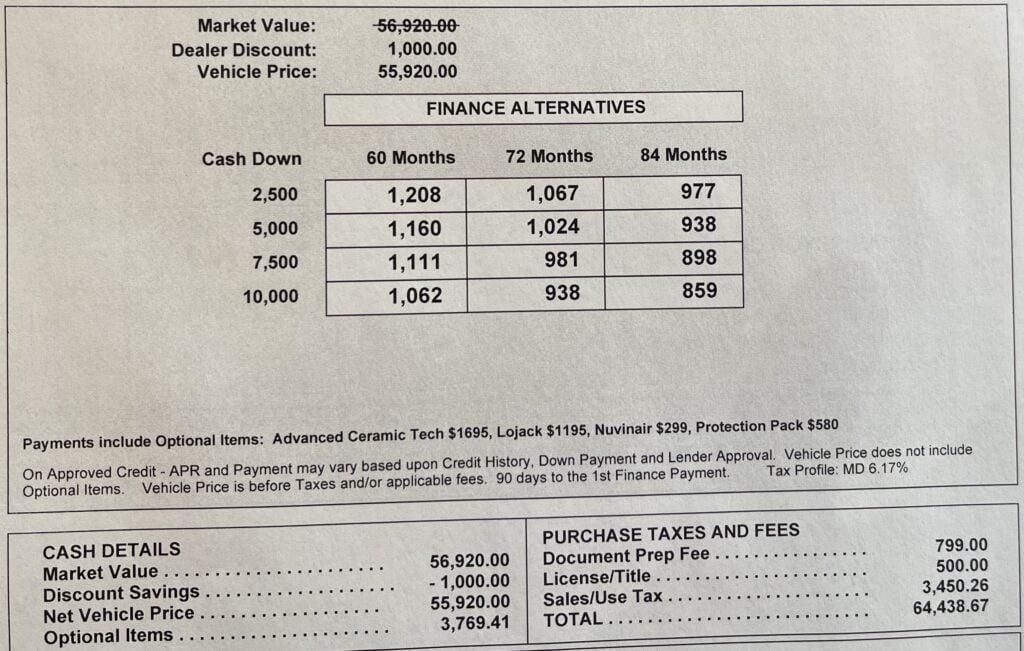
What to check: Compare the selling price on the financing worksheet with your original written offer. Request an itemized explanation for every additional charge and make sure optional accessories or packages have not been included without your approval. Do not move forward until the revised price is clearly documented.
2. A Low Monthly Payment Hides an Expensive Loan
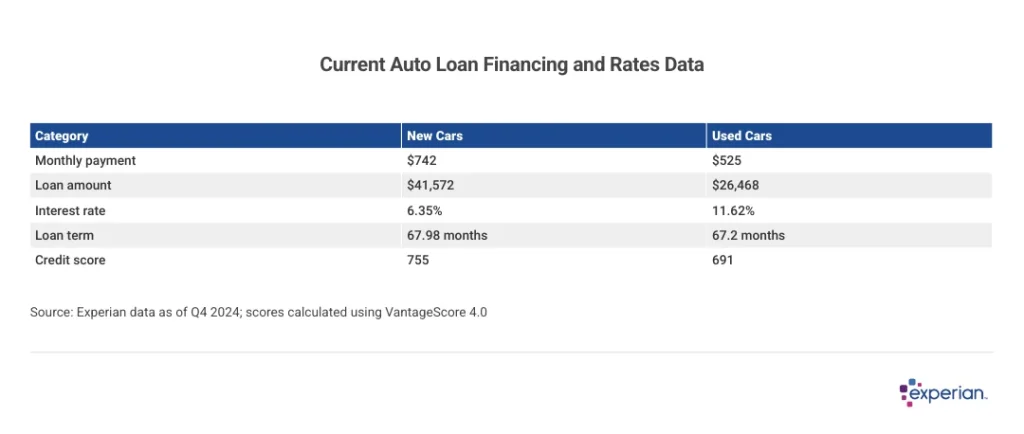
A dealership advertising an affordable monthly payment can make an expensive vehicle appear easier to purchase. However, the payment figure alone reveals very little about the actual cost of financing.
One way dealerships can reduce the displayed amount is by extending the repayment period, allowing customers to pay less each month while remaining in debt for longer.
Take a hypothetical $30,000 loan with a fixed 7% APR and no additional financed charges. Over 60 months, the monthly payment would be approximately $594. Extending the same loan to 72 months reduces it to approximately $511.
That is a difference of around $83 per month, which might sound attractive to someone working with a tight budget. However, the longer loan increases the total interest paid by approximately $1,365.
The problem becomes more noticeable when a salesperson repeatedly discusses what a buyer can afford monthly without explaining the complete financing arrangement. Customers might agree to a longer loan simply to reach a particular payment target, without realizing how much additional interest they will pay.
The FTC addresses this issue in its car financing guidance, recommending that consumers obtain the full out-the-door price before discussing financing. The CFPB also explains that Truth in Lending disclosures show the APR, finance charge, amount financed, and total payments required under the loan.

What to check: Look beyond the monthly payment. Examine the number of installments, APR, total finance charge, and total of payments.
Ask the dealership to calculate alternative loan terms using the same selling price and down payment. A lower monthly payment is not necessarily a better financing arrangement if it substantially increases the amount paid over time.
3. The APR Is Higher Than Your Preapproved Interest Rate
The annual percentage rate (APR) deserves particular attention because even a relatively small difference can affect the amount of interest paid over several years. When arranging financing through a dealership, customers are not necessarily receiving the same interest rate that the lending institution originally offered to the dealer.
The CFPB explains that dealer-arranged financing involves the dealership sending a customer’s application to potential lenders. If a lender approves the application, it provides a rate known as the buy rate. The dealership may then present a higher rate to the customer, with the difference potentially providing additional compensation to the dealer.
For example, imagine a lender offers a buyer a 6.5% rate, but the dealership presents an 8% APR. On a hypothetical $30,000 loan over 60 months, the higher rate would increase the monthly payment by approximately $21 and add roughly $1,260 in interest over the repayment period.
The exact difference depends on the loan amount, repayment schedule, and other charges. However, a higher dealership quote does not automatically indicate improper conduct. Credit history, vehicle age, loan duration, lender requirements, and other underwriting factors can influence the financing offer.
Buyers should therefore compare actual written offers rather than assume that every difference represents dealer markup.
Another important detail is the distinction between the interest rate and APR. According to the CFPB’s Truth in Lending guidance, APR reflects the cost of credit expressed as a yearly rate and can include certain mandatory fees beyond the stated interest rate.

What to check: Obtain preapproval from a bank or credit union before visiting the dealership. Compare its APR with the dealership’s final offer using the same loan amount and term.
Ask whether the dealership’s quoted rate includes a markup and whether a better lender offer is available. Do not judge financing solely by the salesperson’s claim that the rate is competitive.
4. Negative Equity From Your Previous Vehicle Is Rolled Into the New Loan
Trading in an existing vehicle can reduce the amount needed to purchase another one, but the arrangement becomes more complicated when the old vehicle is worth less than the remaining loan balance. This situation is called negative equity, and it can quietly increase the amount financed on the replacement vehicle.
For instance, suppose a customer still owes $18,000 on an existing vehicle, but the dealership offers only $14,000 as its trade-in value. The customer has $4,000 in negative equity. If that difference is added to the financing for another vehicle, the new loan starts with an additional $4,000 in debt before considering taxes, fees, and other expenses.
The arrangement can be particularly problematic when the dealership combines the negative equity with a longer repayment period. The buyer may receive a manageable monthly payment, but the new loan balance could be considerably higher than the replacement vehicle’s actual selling price.
The CFPB specifically warns consumers about rolling an outstanding auto loan balance into a new vehicle loan. Its guidance on negotiating car purchases recommends understanding the existing payoff amount and trade-in value before agreeing to the replacement vehicle’s financing.

One important point to consider is that the trade-in value and remaining loan balance should be listed separately. Showing only a high trade-in allowance without disclosing the outstanding debt can obscure whether the customer has positive equity or is rolling an unpaid balance into the next loan.
What to check: Obtain the current payoff statement directly from your existing lender and compare it with the dealership’s written trade-in offer.
Ask the finance manager to show exactly how much negative equity is being included in the new loan. If possible, consider paying down the difference before purchasing another vehicle.
5. Optional Protection Products Appear Without Your Clear Approval
A financing worksheet can contain several products that have nothing to do with the vehicle’s original selling price. Extended warranties, GAP coverage, tire and wheel protection, paint protection, window etching, and credit insurance are examples of products dealerships may offer during the finance and insurance process.
These products are not automatically bad purchases. Some customers may benefit from additional coverage, depending on their vehicle, existing insurance, financial situation, and the product’s terms. The concern arises when a buyer discovers that products they never requested have already been included in the amount financed.
Imagine agreeing to finance $28,000, only to discover that the worksheet now shows $30,500. The additional $2,500 might include several protection packages. If those products are financed, the customer also pays interest on their cost throughout the loan.
The CFPB clearly explains that extended warranties, GAP insurance, and credit insurance are generally optional and cannot ordinarily be required to obtain an auto loan. Its guidance also notes that buyers can negotiate the price of optional products and may have cancellation rights.

The FTC provides similar advice in its consumer information about car add-ons. It recommends checking that the final contract contains only the products the customer actually agreed to purchase, at the prices originally quoted.
GAP coverage, for example, may help cover the difference between an eligible vehicle’s insurance settlement and outstanding loan balance after a covered total loss. However, exclusions and eligibility conditions matter.
What to check: Request a separate itemized list of every additional product, its price, and its coverage conditions. Remove anything you did not authorize. If the finance manager claims a particular product is mandatory, ask for written confirmation from the lender rather than accepting a verbal explanation.
6. Dealer Fees Are Bundled Under Vague Descriptions
A financing worksheet should make it possible to understand where the money is going. When several charges appear under vague headings such as dealer fees, processing expenses, miscellaneous costs, or vehicle preparation, buyers may struggle to determine what they are actually paying for.
Consider a worksheet containing a $1,250 dealership fee without explaining its purpose. It might include documentation, preparation, delivery, or other dealership-related expenses. Some of these charges may be legitimate, but that does not mean customers should accept an unexplained amount without asking questions.
The CFPB identifies document fees, preparation fees, origination charges, delivery expenses, and market adjustments as examples of costs buyers should examine when negotiating a vehicle purchase. Its auto loan shopping sheet also distinguishes negotiable dealership fees from taxes, title charges, and other government-imposed expenses.
One particular problem is duplicated charges. For example, a dealership might list a vehicle preparation expense separately while also including a preparation package elsewhere in the purchase agreement. Whether this represents duplication depends on what each charge covers, but customers should not have to guess.
It is also important to understand that dealership fees can vary by state. Documentation fees, for instance, may be subject to different legal requirements and limitations depending on where the vehicle is purchased. A charge that is permitted in one state might be treated differently in another.
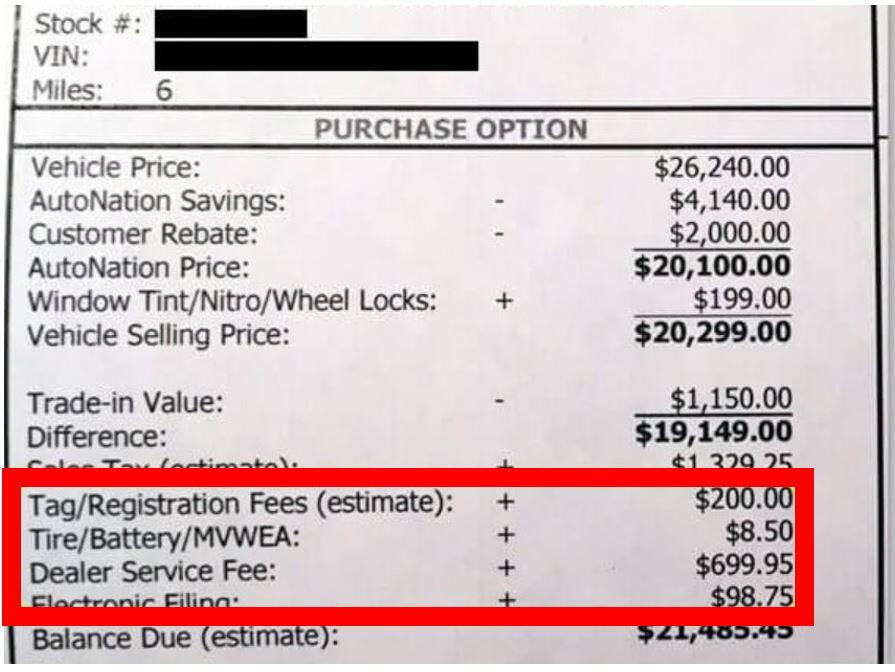
The FTC’s guidance on obtaining an out-the-door price is useful here because it encourages customers to examine the complete purchase amount instead of negotiating individual monthly payments.
What to check: Ask for an itemized breakdown of every dealership fee. Find out what each charge covers, whether it is negotiable, and whether the same service appears elsewhere in the paperwork. Compare the final out-the-door price with competing dealership offers before accepting the agreement.
7. The Down Payment Does Not Match the Agreed Amount
A customer points to a car loan contract while holding a stack of cash. An agent assists with the auto finance agreement in a modern office. Concept of vehicle purchase, insurance, and down payment.
The down payment is another figure that deserves careful attention because it directly affects the amount a customer needs to borrow. A larger down payment generally reduces the loan balance, while a smaller contribution can increase monthly payments and interest expenses.
However, discrepancies between the agreed amount and the figure displayed on the financing worksheet can create confusion about the actual purchase arrangement.
Imagine agreeing to provide $5,000 toward a $32,000 vehicle. When the finance department prepares the paperwork, the worksheet lists a $7,000 down payment. Unless the additional $2,000 represents a clearly identified rebate, trade-in contribution, or another agreed credit, the figures do not accurately reflect the customer’s arrangement.
The opposite situation can also occur. A customer might hand over a substantial deposit, only to find that the financing documents show a smaller amount credited toward the purchase. This is particularly important when money has already changed hands because the buyer needs documentation showing where the payment was applied.
Another detail to watch is the way dealerships combine cash contributions, manufacturer incentives, and trade-in equity. These amounts should be identified separately.

A manufacturer rebate is not the same as money paid directly by the customer, while trade-in equity represents the difference between the vehicle’s value and its outstanding loan payoff.
The CFPB’s auto loan shopping sheet separates down payments, trade-in values, and other purchase credits to help consumers calculate the actual amount they need to finance.
What to check: Compare the worksheet with your deposit receipt, trade-in documents, and any applicable manufacturer incentive. Make sure every contribution is recorded correctly and that the resulting amount financed matches the purchase agreement. Never rely on a verbal promise that a missing payment or credit will be corrected after signing.
8. Important Financing Fields Are Left Blank or Incomplete
An unfinished financing worksheet should never be treated as a harmless administrative detail when important financial terms remain unresolved. Although dealerships may use preliminary worksheets during negotiations, customers should carefully review the completed purchase agreement and loan disclosures before signing them.
Pay particular attention to missing information involving the APR, amount financed, number of payments, monthly installment, finance charge, and additional products. If these figures are absent, it becomes difficult to establish exactly what the dealership is asking the customer to accept.
For example, a finance manager might explain that the lender has not yet confirmed the final interest rate and that the missing figure will be entered later. However, agreeing to a financing contract without knowing the applicable terms creates unnecessary uncertainty. Customers should request completed paperwork instead of relying on verbal assurances.
The CFPB’s guidance on Truth in Lending disclosures explains that lenders and dealers must provide important loan information before the customer signs the contract. These disclosures include the APR, finance charge, amount financed, payment schedule, and total payments.
There is also an important difference between a preliminary worksheet and the final retail installment sales contract. The worksheet may be used to discuss potential financing arrangements, but the signed contract and applicable disclosures establish the actual transaction terms.
Buyers should therefore compare both documents rather than assuming the initial worksheet represents the final agreement.
A signature page without the accompanying completed terms also deserves scrutiny. Customers should have the opportunity to read the entire agreement and retain copies of the documents they sign.
What to check: Do not sign documents containing unexplained blank financial fields or incomplete terms. Ask the dealership to complete the paperwork, verify the APR and repayment schedule, and provide copies of the final signed agreement and Truth in Lending disclosures before you leave.
9. Financing Is Still Conditional After the Dealership Lets You Drive Away
Driving a newly purchased vehicle home can make the transaction feel complete, but that does not necessarily mean the financing has received final approval. Some dealerships allow customers to take possession before a lender has finalized the loan.
This arrangement is commonly known as spot delivery or conditional financing, and buyers should understand its terms before accepting the keys.
The potential problem becomes apparent when the dealership contacts the customer several days later, claiming that the original financing could not be finalized. The customer may then be asked to return and accept a different agreement involving a higher APR, a larger down payment, or a longer repayment period.
This situation is often called yo-yo financing because the customer believes the purchase is complete before being pulled back into negotiations.
The CFPB specifically warns consumers about this practice in its guidance titled Can the Dealer Increase the Interest Rate After I Drive the Vehicle Home? The agency recommends making sure financing is final before taking possession.

Certain financing agreements contain provisions addressing what happens when the dealership cannot obtain lender approval. The consequences depend on the contract language and applicable state law. Therefore, customers should not assume that every conditional agreement gives a dealership unlimited authority to change the original terms.
Pay particular attention to phrases such as subject to lender approval, conditional delivery, and financing pending. These terms indicate that something remains unresolved, although their precise legal effect depends on the agreement.
What to check: Ask the dealership directly whether the lender has approved the financing and whether the contract is final. If approval is pending, obtain written details about cancellation rights, deposit refunds, trade-in arrangements, and vehicle return obligations. Do not agree to replacement financing without comparing the new terms with your original agreement.