
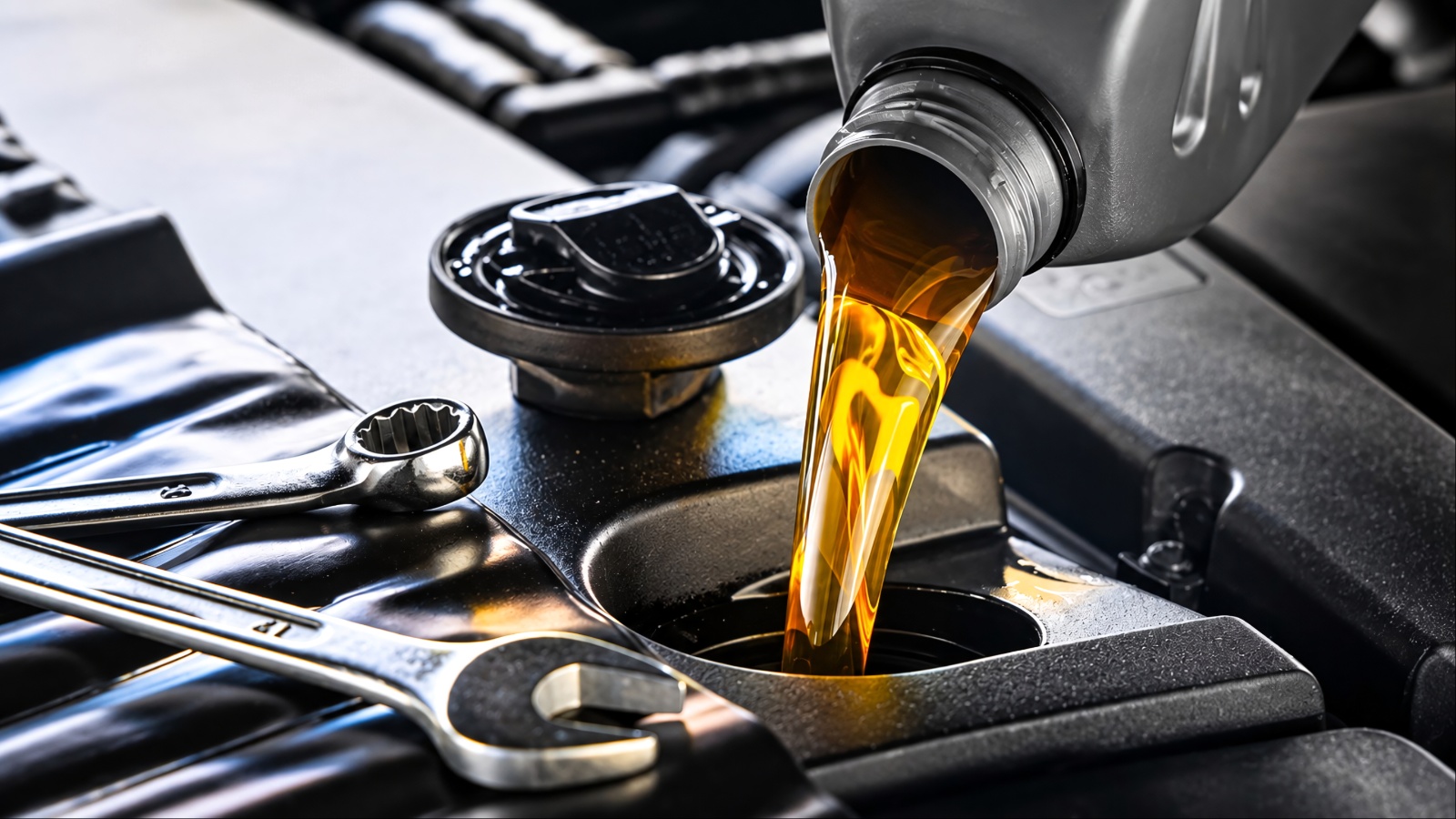
A high-mileage engine does not automatically need a different type of oil just because its odometer has crossed 75,000 or 100,000 miles. What matters more is the engine’s condition, maintenance history, manufacturer specifications, and the conditions in which the vehicle is driven.
Still, aging engines can benefit from carefully selected motor oil. Years of heat cycles, friction, contamination, and normal wear can change how an engine consumes oil and how effectively its lubricant protects internal components. Some engines begin using more oil, while others develop minor leaks around aging seals or accumulate deposits.
This is where modern advanced motor oils, including full-synthetic and high-mileage formulations, can have an advantage.
Today’s lubricants are designed to do much more than simply reduce friction. Their additive packages help control oxidation, deposits, sludge, corrosion, and wear.
The American Petroleum Institute’s current SQ gasoline-engine category and ILSAC GF-7A standard, introduced in March 2025, added stronger requirements for areas including timing-chain wear, high-temperature deposits, sludge and varnish control, and low-speed pre-ignition protection.
That does not mean better oil can reverse mechanical wear. It cannot restore worn piston rings, repair damaged bearings, or permanently fix a deteriorated gasket. Its role is to provide better protection for the components that are still functioning properly.
For owners of aging vehicles, that distinction is critical. The right oil can help preserve an engine, but it cannot rebuild one.
Why Oil Quality Matters More as an Engine Ages
Motor oil performs several jobs simultaneously. It lubricates moving parts, carries heat away from critical components, keeps contaminants suspended, and helps protect metal surfaces against corrosion and deposits.
As an engine gets older, those responsibilities become increasingly important. An engine with significant mileage may have greater internal clearances and more accumulated deposits than it had when new. It may also be subjected to more demanding conditions simply because of its age and the way it is used.
Synthetic formulations can be particularly useful in these circumstances because they are engineered to maintain their properties under demanding temperatures and resist breakdown. However, the advantage should not be exaggerated. Synthetic oil does not automatically mean an engine will last a specific number of additional miles.
The real benefit is improved lubricant performance. Modern engines also place greater demands on oil than many older designs did. Turbochargers, direct injection, variable valve timing, and timing-chain systems can expose lubricant to significant heat and mechanical stress.
The latest API and ILSAC standards reflect those demands. API says GF-7A and API SQ provide improved protection against timing-chain wear, high-temperature deposits on pistons and turbochargers, sludge and varnish, along with protection against low-speed pre-ignition.
That makes current, properly specified oil an important part of long-term engine maintenance.
Temperature is another factor. A vehicle that spends much of its life in stop-and-go traffic, extreme heat, severe cold, or frequent towing places greater demands on its lubricant. AAA notes that driving conditions can affect how quickly oil breaks down and recommends considering climate, driving conditions, and the manufacturer’s requirements when selecting oil.
But there is one mistake high-mileage owners should avoid: assuming that more miles automatically means thicker oil.
If the manufacturer specifies 5W-30, reaching 120,000 miles does not automatically make 10W-40 a better choice. Viscosity is part of the engine’s lubrication design. The owner’s manual should remain the primary authority.
API specifically tells vehicle owners to consult their owner’s manuals when selecting oil viscosity and performance requirements. Its guidance also notes that newer gasoline-engine oil categories generally incorporate the performance properties of earlier categories, allowing newer oils to service older engines where appropriate.
In other words, mileage should influence your maintenance decisions, but it should not override the manufacturer’s specifications.
Where High-Mileage Oil Can Make a Difference
High-mileage oil is different from simply choosing a full-synthetic product. High-mileage formulations are designed with additional additives intended to address conditions commonly associated with aging engines.
AAA says these oils are generally intended for vehicles beyond about 75,000 miles and may contain seal-enhancing additives designed to help reduce leakage. High-mileage products are available in conventional, synthetic-blend, and full-synthetic formulations. That gives owners several options.
An engine with 120,000 miles that is mechanically healthy may have little reason to change from its manufacturer’s recommended oil simply because of mileage. Another engine with 150,000 miles that has developed minor seepage or increased oil consumption could be a reasonable candidate for a high-mileage formulation.
The important word is minor. If an engine is leaking heavily, consuming several quarts between oil changes or producing visible blue exhaust smoke, switching to high-mileage oil is not a substitute for diagnosis and repair.
AAA advises that adding multiple quarts between oil changes should prompt owners to discuss the problem with a trusted mechanic.
High-mileage oil may help manage some age-related symptoms, but it cannot repair worn mechanical components.
The same applies to seals. A seal conditioner may help an aging seal remain flexible and reduce minor seepage, but a severely damaged seal still needs to be replaced.
There is also a long-standing belief that synthetic oil causes leaks in old engines. Modern evidence does not support treating that as a universal rule.
AAA states that older vehicles can switch to full synthetic or synthetic-blend oil without issue when the engine is properly maintained and the oil meets the vehicle’s requirements. It also notes that synthetic oil may reveal existing problems in poorly maintained engines rather than actually causing those problems.
That distinction explains why some owners believe a synthetic oil change “caused” a leak. If a gasket or seal was already deteriorating, changing lubricants may coincide with the moment the problem becomes noticeable.
Maintenance history matters enormously here. A 150,000-mile engine that received regular oil changes and was never allowed to run low on oil can be in excellent condition. A 90,000-mile engine that experienced years of neglected maintenance can be far less healthy. That is why the odometer should never be the only factor used to choose lubricant.
The Best Oil Is the One That Matches the Engine
The biggest mistake is thinking that premium oil can compensate for poor maintenance. It cannot.
An engine that repeatedly runs below its recommended oil level can suffer serious wear regardless of whether it contains conventional oil or full synthetic. Similarly, an owner who stretches oil changes far beyond the manufacturer’s recommendation may eventually create problems that a premium lubricant cannot prevent.
AAA recommends checking oil levels regularly, noting that older vehicles can consume some oil between changes. Its guidance suggests checking at least every 1,000 miles and investigating the situation if the engine requires multiple quarts between oil changes.
The oil filter matters too. Clean lubricant cannot provide maximum protection if contaminants are allowed to circulate through the engine.
Owners should therefore start with three questions: What viscosity does the manufacturer specify? What performance standard does the engine require? And what condition is the engine actually in?
Once those questions are answered, the choice becomes much easier. A well-maintained high-mileage engine can benefit from a full-synthetic lubricant if it meets the required specification. An older engine experiencing minor leaks or oil consumption may benefit from a high-mileage formulation.
A simpler engine operating under mild conditions may continue to work perfectly well with a conventional or synthetic-blend lubricant that satisfies its manufacturer’s requirements.
There is also little justification for buying the most expensive oil simply because it carries premium branding. The performance specification is more important than marketing language.
Synthetic oil can be worth the additional cost when its characteristics match the vehicle’s needs. AAA’s research has previously found measurable performance differences between synthetic and conventional lubricants, although those results should not be interpreted as a promise of a specific increase in engine lifespan.
The same principle applies to oil-change intervals. A synthetic formulation may have greater resistance to degradation, but owners should not automatically extend service intervals beyond what the manufacturer recommends.
AAA’s current guidance emphasizes following the vehicle’s factory maintenance schedule and adjusting for severe operating conditions where applicable.
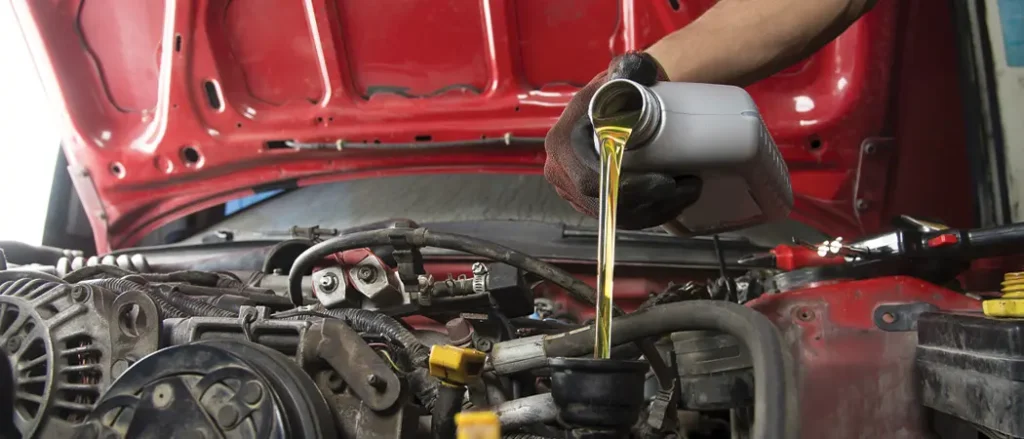
Ultimately, advanced motor oil can be a worthwhile investment in an aging engine, but it should be viewed as preventive protection rather than a repair product.
It can help resist oxidation, control deposits, protect against wear, and maintain lubrication under demanding conditions. High-mileage formulations can additionally address some problems associated with aging seals and oil consumption.
What it cannot do is reverse mechanical damage. A worn piston ring remains worn. A failing oil pump remains a failing oil pump. A damaged gasket still needs repair.
For a fundamentally healthy engine, however, using a quality lubricant with the correct viscosity and current applicable performance specification can help protect the expensive components already inside the engine.
High mileage alone is not a reason to change specifications, but it is a good reason to pay closer attention to oil level, consumption, leaks, and maintenance history.
The smartest strategy is therefore simple: follow the manufacturer’s oil specification, choose a quality formulation suited to the engine, monitor oil levels, and never use premium oil as an excuse to neglect maintenance.
That approach gives an aging engine something far more valuable than a flashy label on an oil bottle: consistent protection for the miles still ahead.
