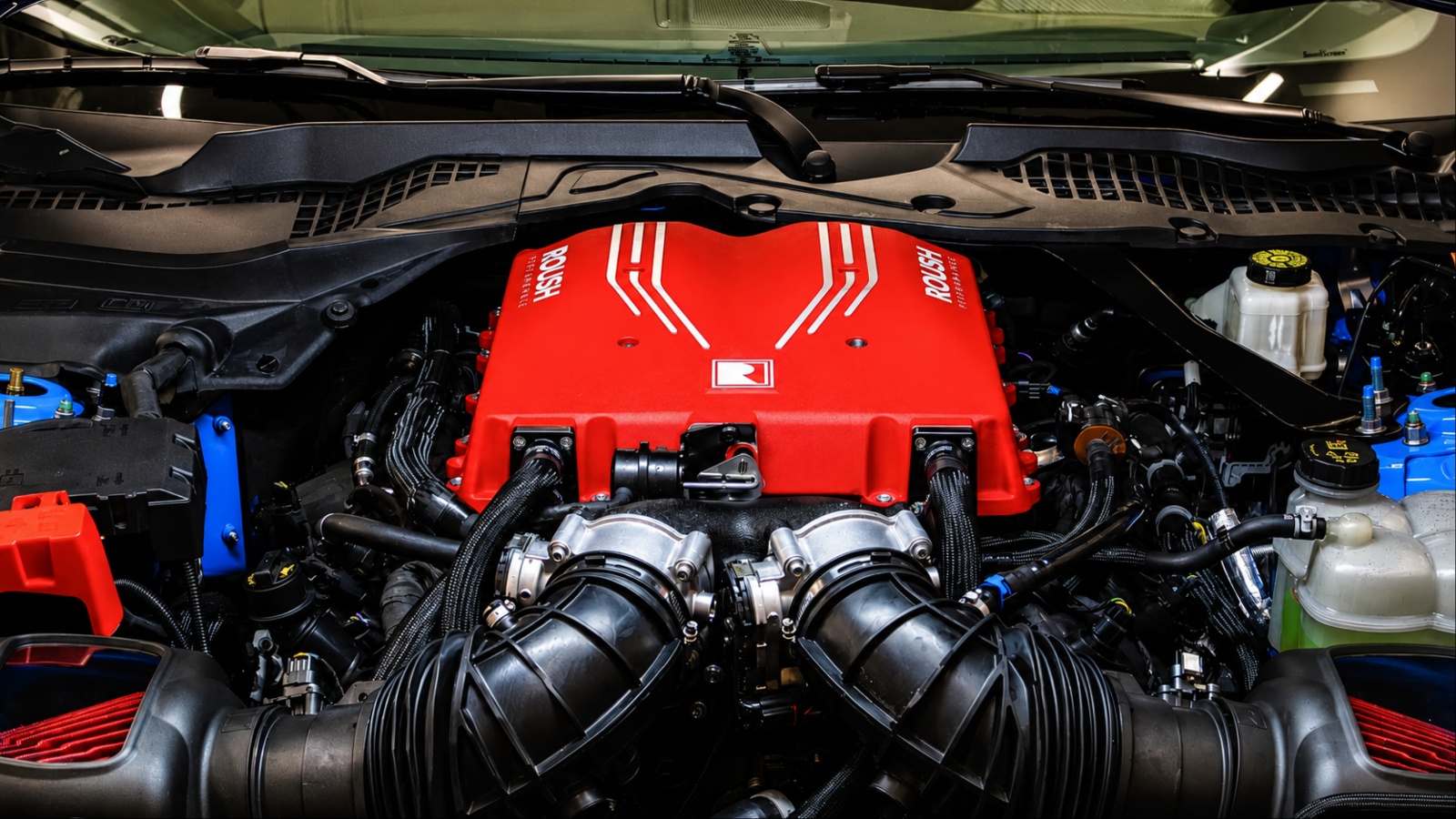
The average new vehicle sold in the United States now produces more than twice as much horsepower as the typical new vehicle did in the early 1980s. According to the latest finalized data from the U.S. Environmental Protection Agency, average horsepower rose from 102 hp in model year 1981 to 258 hp in model year 2024, an increase of roughly 153%.
There is an important correction to the commonly cited figure. The EPA’s 2024 Automotive Trends Report initially listed 267 hp as a preliminary estimate for model year 2024.
The subsequent report, using finalized 2024 data, revised that figure to 258 hp. The EPA now identifies 2024 data as final, making 258 hp the correct figure for the completed model year.
That still represents an extraordinary transformation. The average new vehicle has gained 156 horsepower since 1981, even as federal fuel-economy and emissions requirements have become increasingly demanding.
The change is not simply the result of automakers installing larger engines. Turbocharging, direct injection, hybridization, electrification, improved transmissions, and America’s dramatic shift toward SUVs and pickups have all contributed to the increase.
The EPA’s long-running Automotive Trends database provides one of the clearest pictures of how dramatically American vehicles have changed.
From 102 HP to 258 HP in Four Decades
The EPA has maintained its Automotive Trends database since 1975, collecting information on new light-duty vehicles sold in the United States. The data cover attributes including horsepower, weight, fuel economy, footprint and technology.
According to the agency, information through model year 2024 is now final and is based on data submitted to the EPA and National Highway Traffic Safety Administration. The horsepower story actually begins with a decline.
In model year 1975, the average new vehicle produced 137 hp. By 1981, that number had fallen to just 102 hp. The decline reflected the fuel crisis, changing emissions requirements, and growing emphasis on fuel efficiency. That 1981 figure became the low point.
According to the EPA, horsepower increased in almost every year afterward. By 2023, the average new vehicle produced 266 hp, while the preliminary 2024 estimate was 267 hp. After the data were finalized, however, the EPA recorded the 2024 average at 258 hp.
Even at 258 hp, the increase from 102 hp is enormous. The average new vehicle in 2024 produced approximately 153% more power than the average new vehicle in 1981, or about 2.5 times as much horsepower.
The progression becomes even more striking when compared with 1975. The EPA says the average 2024 vehicle produced 88% more power than the average new vehicle in 1975, despite the substantial decline during the late 1970s and early 1980s.
The change was not uniform across the entire period. During the 1980s and 1990s, horsepower gradually recovered. Electronic engine management, fuel injection, and improved engine designs allowed manufacturers to increase output without returning to the inefficient powertrains associated with earlier performance cars.
The increase accelerated in the 2000s and 2010s. Turbocharged smaller engines became increasingly common, allowing manufacturers to produce more power from relatively small displacements.
Direct injection improved combustion control, while variable valve timing and more advanced transmissions helped engines operate efficiently across a wider range of conditions.
The result was a combination that would have been difficult to imagine in 1981: substantially more horsepower without a corresponding return to the fuel consumption levels associated with the muscle-car era. The EPA’s data show that this trend has affected virtually every major vehicle category.
Between 1975 and 2024, average horsepower increased 54% for sedans and wagons, 118% for car-based SUVs, 77% for truck-based SUVs, 82% for minivans and vans, and 138% for pickups.
Those figures also reveal why the national average has climbed so dramatically: Americans are buying very different vehicles.
SUVs, Pickups, and Electrification Changed the Power Curve
The American vehicle market of 2024 looks very different from the market of 1981. Sedans and station wagons once dominated new-vehicle sales. Today, SUVs and pickups represent a much larger share of production. These vehicles generally require more power because they are larger, heavier, and designed to carry more passengers or cargo.
The EPA identifies the market’s shift toward SUVs as an important factor behind increases in average vehicle weight and horsepower. At the same time, improvements in technology have allowed manufacturers to increase power while improving fuel economy.
Pickups provide one of the clearest examples. The EPA reports that average horsepower for pickups increased 138% between 1975 and 2024, the largest percentage increase among the major vehicle categories listed in its report.
Modern full-size pickups are also expected to perform a wider range of tasks than many trucks of previous generations. Buyers want strong acceleration, towing capability, highway performance, and substantial payload capacity.
That has encouraged manufacturers to offer engines producing power figures that once would have been reserved for high-performance cars.
The same trend has affected SUVs. As crossovers became America’s dominant vehicle format, automakers began offering them increasingly powerful turbocharged four-cylinders, six-cylinders, V8s, and hybrid powertrains. Electrification has added another dimension.
Electric motors can produce substantial power without requiring the same mechanical architecture as an internal-combustion engine. The EPA notes that many battery-electric vehicles have high horsepower ratings because electric motors can generate large amounts of power.
However, calculating total horsepower for vehicles with multiple electric motors can be complicated because adding individual motor ratings does not necessarily represent the vehicle’s usable system output.
The EPA’s 2025 report says vehicles producing more than 250 hp accounted for half of new-vehicle production in model year 2024. In the early 1980s, by contrast, relatively few new vehicles produced more than 200 hp.
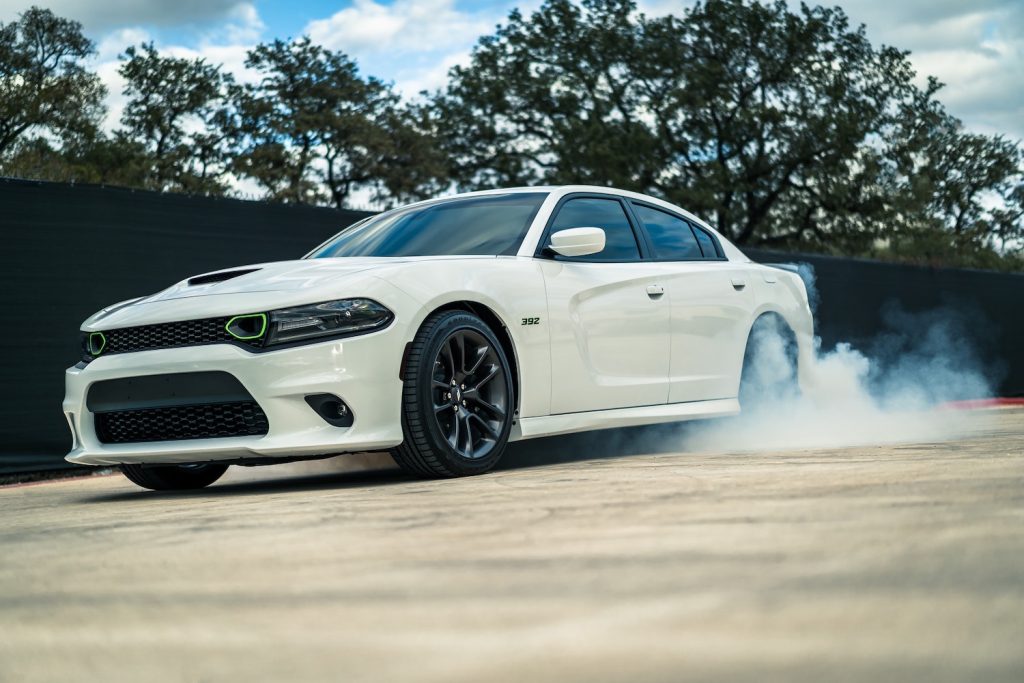
That may be more revealing than the fleetwide average. A vehicle producing 250 hp was once considered genuinely powerful. Today, that figure sits close to the middle of the mainstream new-vehicle market.
The upper end has moved much further. The EPA’s database includes an individual vehicle with a maximum horsepower rating of 1,600 hp, showing how dramatically the performance ceiling has expanded. Yet horsepower has not increased in isolation.
The EPA says horsepower, vehicle weight, and footprint have generally increased together in recent decades. Since 2004, fuel economy has also generally improved alongside those metrics, a combination that would have been difficult to achieve with older powertrain technology.
More Power Does Not Necessarily Mean Worse Fuel Economy
The conventional assumption is simple: more horsepower should mean worse fuel economy. Historically, there was considerable truth to that relationship. The EPA says that from the early 1980s through roughly the early 2000s, average horsepower and vehicle weight increased while fuel economy generally declined.
That relationship has become more complicated. Modern engines can produce considerably more power while using technologies designed to reduce fuel consumption when full power is unnecessary.
Turbocharging allows smaller engines to produce substantial output when needed, while direct injection, variable valve timing, cylinder deactivation, stop-start systems, and improved transmissions help manage fuel consumption.
Hybrid systems take the concept further by allowing electric motors to assist the engine during acceleration and other high-load situations.
Electric vehicles change the equation again because their efficiency is measured differently and their motors can deliver substantial power without producing tailpipe emissions.
The EPA’s finalized 2024 data show that average new-vehicle fuel economy reached a record 27.2 mpg, up 0.1 mpg from 2023. The agency says average fuel economy has improved in 16 of the past 20 years and was 41% higher than in 2004.
That means the industry has accomplished something that would have seemed difficult several decades ago: substantially increasing horsepower while also making the average new vehicle considerably more fuel efficient than previous generations.
There are caveats. The average vehicle is also considerably heavier and larger than it was decades ago. The EPA notes that weight, horsepower, footprint, and fuel economy are interconnected, meaning improvements in one area can affect the others.
Electrification is helping reshape those relationships. The EPA reported that battery-electric vehicles represented 7% of new production in model year 2024, while plug-in hybrids added another share. Because electrified vehicles can deliver high power while maintaining strong efficiency, their growing presence affects fleetwide averages.
The EPA calculated that without battery-electric and plug-in hybrid vehicles, the average 2024 new vehicle would have had 13 fewer horsepower, been 72 pounds lighter, and achieved 1.7 mpg lower fuel economy.

The journey from 102 hp in 1981 to 258 hp in 2024 is therefore about much more than engines becoming stronger. It represents four decades of changes in vehicle design, consumer preferences, emissions technology, transmission engineering, electrification, and the shift toward larger vehicles.
The original claim that average horsepower reached 267 hp in 2024 reflects the EPA’s earlier preliminary estimate, but 258 hp is the finalized figure.
And the trend may not be finished. The EPA’s latest report lists a preliminary 264 hp for model year 2025, although that figure can still change before the data are finalized.
If the preliminary number holds, the average new vehicle sold in America will be producing more than two and a half times the horsepower of the typical new vehicle from 1981.
What once counted as serious performance has gradually become ordinary. Today, 250-plus horsepower is no longer an exotic specification reserved for sports cars. It has become a mainstream characteristic of the American new-vehicle market, and the EPA’s four-decade dataset shows just how dramatic that transformation has been.