
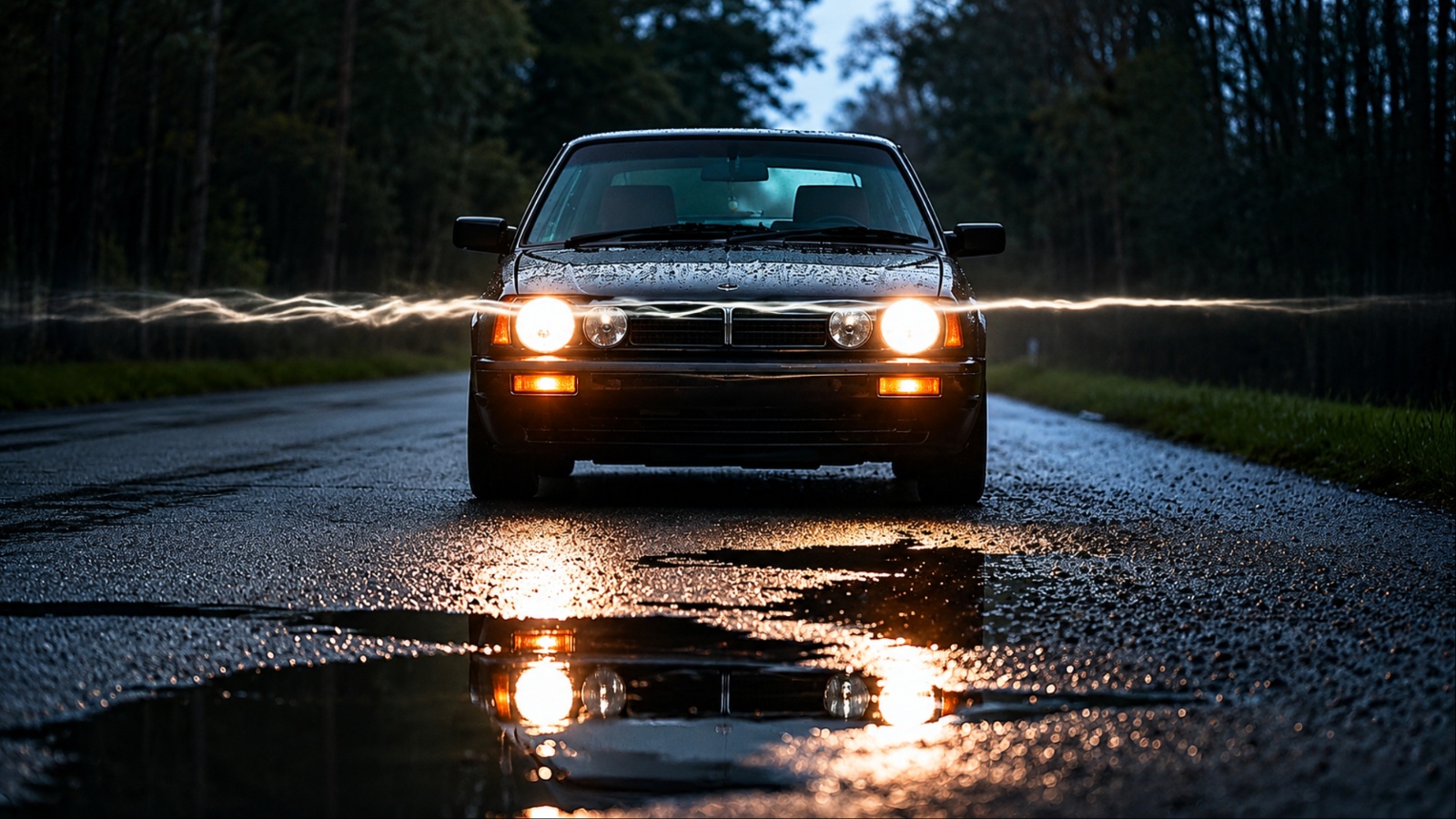
Headlights have improved dramatically over the past decade, but a significant portion of new vehicles still fail to provide what the Insurance Institute for Highway Safety considers strong nighttime illumination.
According to IIHS data for 2025 model-year vehicles, 51% of tested headlight systems earned a Good rating, while about 16% were rated Marginal or Poor. Current IIHS data for 2026 models show 46% rated Good and about 17% rated Marginal or Poor.
The change does not alter the larger trend. Headlight performance has improved enormously since IIHS began independently evaluating headlights in 2016, when only 1% of tested systems received a Good rating and 82% were Marginal or Poor.
Yet installing LED technology does not guarantee good nighttime visibility. IIHS evaluates headlights according to how effectively they illuminate the road and whether they create excessive glare, regardless of whether they use LED, HID, or halogen technology.
Headlights Have Improved, But Poor Systems Remain
IIHS began its headlight rating program in 2016 after research showed that many headlights meeting federal requirements still provided inadequate illumination. The organization evaluates how far headlights illuminate different portions of the road under several conditions.
The system is technology-neutral. A vehicle does not receive a favorable rating simply because it has LEDs, adaptive lighting, or automatic high beams. The actual performance of the complete headlight system determines the rating.
LED headlights have become widespread because they use less energy than older lighting technologies and allow increasingly sophisticated designs. Automatic high beams and other systems are also intended to improve visibility without constantly exposing approaching drivers to intense high-beam light.
Despite those advances, performance still varies significantly. In 2016, only one of more than 80 tested headlight systems received a Good rating. About 62% received poor ratings, another 19% were marginal, and 18% reached acceptable.
By the 2025 model year, 51% were rated Good, 33% Acceptable, 6% Marginal, and 10% Poor. That means 84% of tested systems were Good or Acceptable, compared with only 18% in 2016.
The improvement in glare performance has also been significant. Only 5% of headlight systems tested for the 2026 model year had excessive glare, compared with 21% in 2017.
Both measurements matter because a headlight can provide strong brightness while still creating problems if its beam is aimed too high or sends excessive light toward oncoming drivers.
IIHS therefore considers visibility and glare when determining ratings. Simply producing more light is not enough.
This also means the claim that “a quarter of new cars have bad headlights” needs qualification. The 16% marginal-or-poor figure for 2025 is closer to one in six, while the current 2026 data put the figure at approximately 17%.
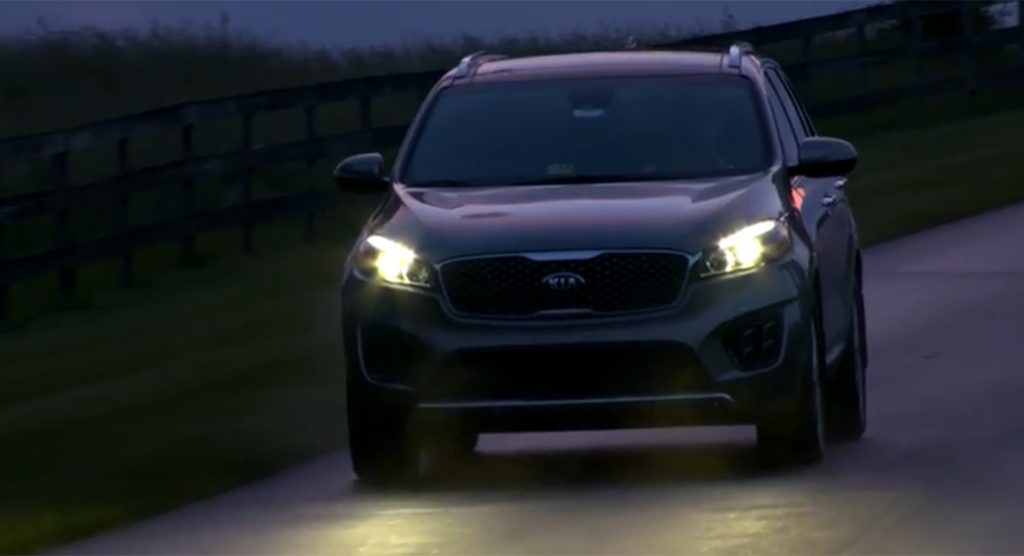
The larger concern remains that millions of new vehicles are still being sold with lighting systems IIHS considers less than satisfactory.
Why Headlight Performance Matters at Night
Headlights are more than a convenience feature. They affect a driver’s ability to identify pedestrians, animals, obstacles, curves, and roadway edges before it is too late to react.
IIHS research has found a measurable connection between headlight performance and nighttime crashes. Vehicles with headlights receiving a good visibility rating were involved in 19% fewer nighttime single-vehicle crashes and 23% fewer nighttime pedestrian crashes than vehicles with poor-rated headlights.
The organization says those findings came from an analysis of police-reported crashes that controlled for differences including miles traveled, driver-related risk factors, and road conditions.
A headlight system that illuminates the road farther ahead can give a driver more time to recognize an animal, object, or pedestrian and react accordingly.
Headlight performance also affects how clearly drivers can see the roadway itself. IIHS testing evaluates illumination on straight roads and curves because some systems perform adequately on straightaways but provide insufficient light around bends.
High-beam performance is another factor. Low beams are designed for normal nighttime driving around other vehicles, while high beams provide substantially greater forward visibility when there is no approaching traffic.
Automatic high beams can encourage more consistent use, but they cannot compensate for fundamental weaknesses in the lighting hardware.
IIHS says its rating program has encouraged manufacturers to pay greater attention to headlight design and aiming. Automakers have increasingly adopted LED headlamps, although the technology itself does not guarantee a good rating.
Federal headlight requirements governing minimum and maximum brightness have not changed since 1997, according to IIHS. Yet the proportion of systems producing excessive glare has fallen substantially as manufacturers have responded to testing and consumer concerns.
That suggests the design of the complete lighting system matters considerably. Headlamp height, beam pattern, aiming, and light distribution can determine whether a headlight is useful or problematic. Two vehicles can both use LED headlights yet receive very different IIHS ratings.
The 2026 Data Show the Progress Has Not Been Completely Linear
The latest data show that safety improvements do not necessarily move upward every year. For 2026 model-year vehicles, IIHS currently reports that 46% have Good-rated headlights, while approximately 17% are Marginal or Poor. Compared with 2025’s 51% Good and about 16% Marginal or Poor, that represents a small deterioration in the distribution of ratings.
However, it does not reverse the long-term improvement. The percentage of good-rated systems has risen from just 1% in 2016 to 46% for 2026 models, while the share of marginal or poor systems has fallen from 82% to about 17%.
The remaining issue is that performance can still vary substantially between vehicles. A buyer comparing two similarly priced models could encounter one with good-rated headlights and another with marginal or poor lighting. That difference may not be obvious during a daytime test drive.
Manufacturer descriptions also do not guarantee performance. Terms such as “LED,” “projector,” “adaptive,” and “automatic high beam” describe technology or features rather than how effectively the complete system illuminates the road.
IIHS ratings provide a more useful performance-based comparison. The organization’s findings also challenge the idea that glare is the dominant nighttime safety problem. Glare is a concern, but IIHS’s crash research indicates that it is implicated in only about one or two out of every 1,000 nighttime crashes.
That makes inadequate visibility a much more significant safety issue. A good headlight must illuminate enough of the roadway for the driver to identify hazards while controlling the beam so other road users are not unnecessarily blinded.
The industry’s progress since 2016 suggests manufacturers have become substantially better at achieving that balance, but the latest numbers show the job is not finished.
For 2025 models, 51% of tested headlights were Good, 33% Acceptable, 6% Marginal, and 10% Poor. For 2026 models, IIHS currently reports 46% Good and approximately 17% Marginal or Poor.
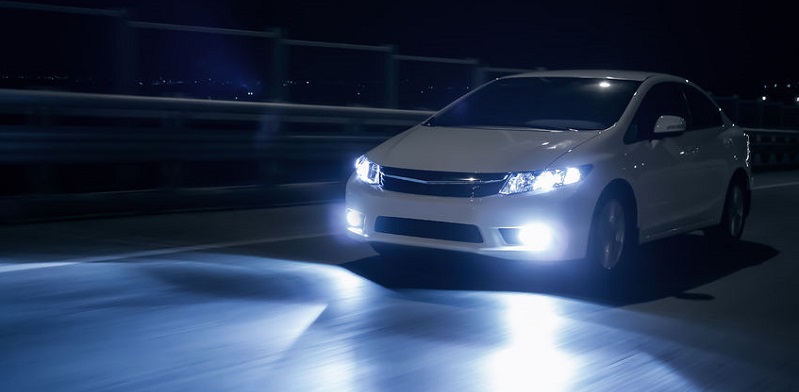
The most accurate takeaway is therefore not that a quarter of new cars have bad headlights. It is that roughly one in six tested 2025 and 2026 headlight systems still falls into the marginal or poor categories, despite a dramatic decade-long improvement.
That matters because nighttime visibility is directly connected to crash risk. IIHS evidence shows that good headlights can reduce certain types of nighttime crashes, while the industry’s movement toward better-performing systems has already produced a substantial improvement from 2016.
For consumers, the lesson is straightforward: do not judge headlights by technology alone. An LED headlight is not automatically a good headlight, and a vehicle with an impressive daytime appearance can still have weak nighttime illumination.
As automakers continue refining adaptive lighting and automatic high beams, the goal should be consistent real-world performance rather than simply brighter headlights. The progress is undeniable, but with approximately 17% of 2026 systems still rated marginal or poor, there remains considerable room for improvement.
