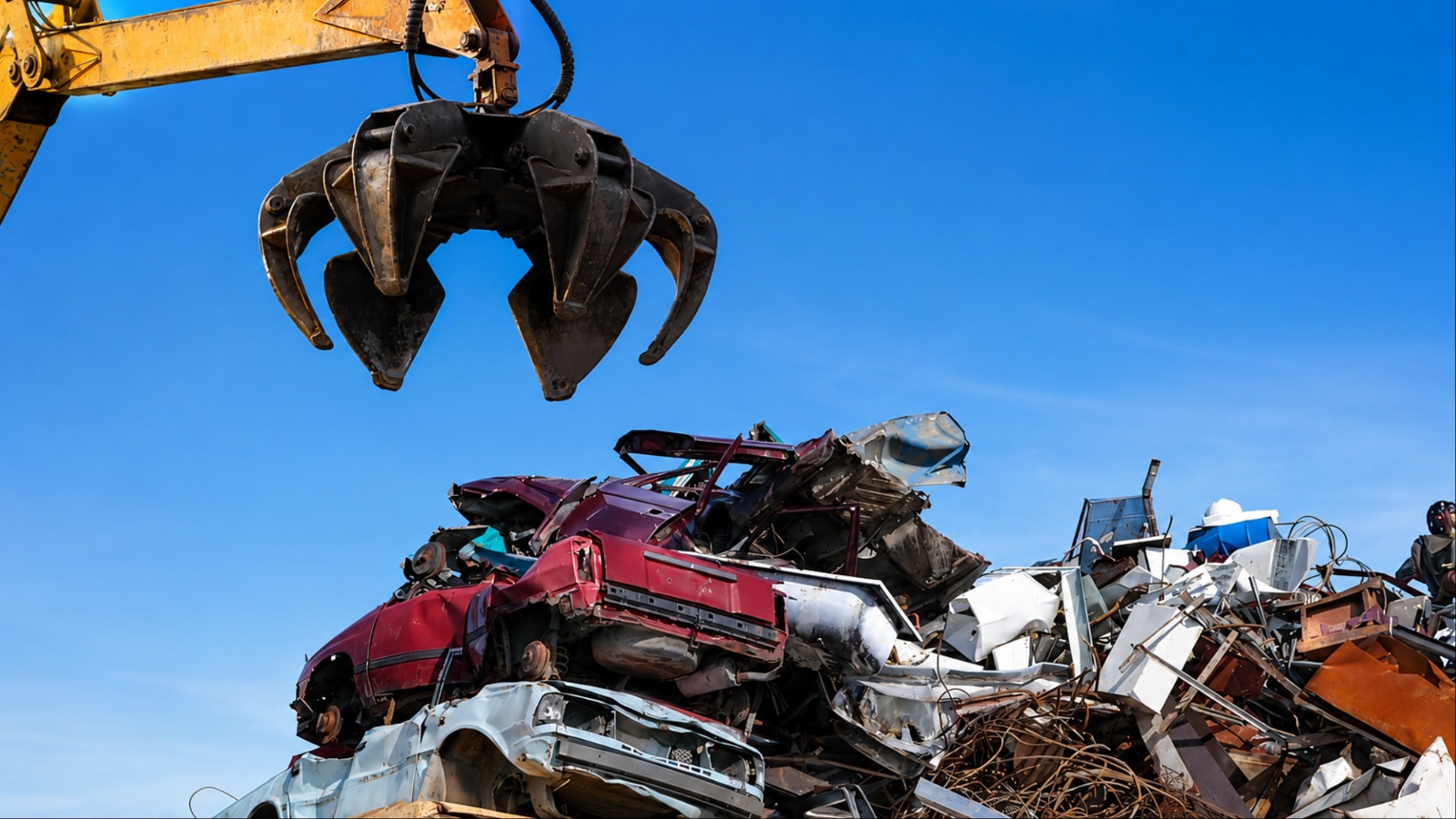
A vehicle may look like a combination of steel, plastic, glass, and rubber, but aluminum can represent a surprisingly large share of its value when it reaches the end of its life. Aluminum makes up less than 10 percent of a typical vehicle by weight, yet it can contribute roughly half of the automobile’s scrap value.
Aluminum stands out because it has a higher value than many recovered materials and can be recycled repeatedly without losing its usefulness.
The U.S. Department of Energy’s Aluminum Industry Roadmap for the Automotive Market reported that aluminum represented less than 10 percent of a typical vehicle’s weight while contributing approximately 35 to 50 percent of the value of scrap recovered from a discarded automobile.
The same report said approximately 85 to 90 percent of post-consumer automotive aluminum scrap was recycled.
More recent research found an even higher recovery figure. A Worcester Polytechnic Institute study found an overall recycling rate of 91 percent for automotive aluminum in the U.S. light-duty vehicle sector.
The research, released through the Aluminum Association, examined how automotive aluminum moves through the recycling system after vehicles reach the end of their useful lives. Those figures explain why aluminum has become so important to automakers and vehicle recyclers.
Why a Small Amount of Aluminum Is Worth So Much
Weight and value are not the same thing when a vehicle reaches a scrapyard. Steel represents a much larger percentage of most vehicles, but aluminum generally commands a higher value per pound. As a result, the relatively small amount of aluminum in a vehicle can contribute disproportionately to its scrap value.
The Department of Energy’s automotive aluminum roadmap noted that aluminum represented less than 10 percent of a typical vehicle’s weight but could account for 35 to 50 percent of its recovered scrap value.
Aluminum is used in numerous vehicle components, including wheels, engine and transmission components, suspension parts, body panels, heat exchangers, and structural pieces. Its use has expanded because automakers want to reduce vehicle weight.
Replacing selected steel components with aluminum can reduce mass while maintaining the strength required for many applications. Lower weight can improve fuel economy, acceleration, braking, and handling.
The trend became particularly visible with the aluminum-bodied Ford F-150 introduced for the 2015 model year. It demonstrated that extensive aluminum use could be incorporated into a high-volume pickup without abandoning the durability expected from a work truck.
The material’s usefulness does not end when the vehicle is scrapped. Aluminum can be melted and processed repeatedly without losing its fundamental properties. That makes recovered automotive aluminum valuable to manufacturers and recyclers.
There is also a major difference between aluminum and many materials that leave a vehicle. Once steel is recovered, it is usually processed into steel scrap, while plastics, rubber, and other materials can be more difficult to recover economically.
Aluminum, by contrast, has an established market and can be separated using specialized equipment. That creates a powerful incentive for dismantlers to identify aluminum components before a vehicle is shredded.
Wheels are a particularly obvious example. Aluminum wheels have meaningful scrap value and can often be removed separately. Other components, including engine parts and certain suspension pieces, can also contain significant amounts of aluminum.
The result is a recycling chain in which aluminum’s value helps finance the effort required to recover it.
Why Around 90 Percent Gets Recovered
The high recovery rate is largely driven by economics. When an end-of-life vehicle enters a recycling facility, reusable parts can be removed before the remaining structure is processed. The vehicle is then shredded and passed through systems that separate steel and other materials from nonferrous metals such as aluminum.
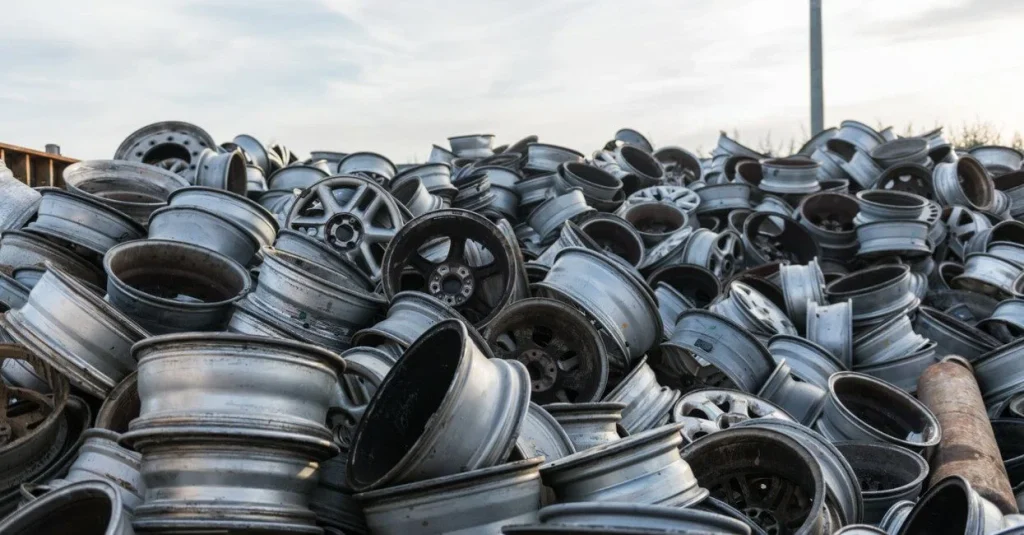
Specialized sorting equipment helps recyclers capture the aluminum rather than allowing valuable material to remain mixed with waste.
A Worcester Polytechnic Institute study found an overall 91 percent recycling rate for automotive aluminum, confirming that the overwhelming majority of the material entering the end-of-life vehicle stream was being recovered. Researchers noted that aluminum’s economic value provides a strong incentive for recyclers to collect it.
The Department of Energy also described automotive shredding and sorting systems capable of capturing approximately 90 percent of the aluminum in vehicles. Recycling aluminum also provides a major energy advantage.
According to Worcester Polytechnic Institute research, producing recycled aluminum requires approximately 95 percent less energy than producing primary aluminum from bauxite. Recycling can also generate substantially lower carbon dioxide emissions than primary production.
That gives recovered automotive aluminum value beyond its scrap price. The recycling process begins before the vehicle reaches the shredder. Dismantlers can remove valuable components and fluids, while parts that remain in the vehicle are separated during shredding and sorting.
The distinction between recycling and recovery is also important. Not every piece of aluminum that is separated from an old vehicle immediately becomes a new car component. Recovered material may be processed into different forms and used in other products depending on its alloy composition and contamination.
Modern vehicles make this challenge more complicated. Automakers use multiple aluminum alloys because different applications require different combinations of strength, weight, and corrosion resistance. Body panels, structural components, and cast engine parts may therefore contain different alloy compositions.
If those materials are mixed, the resulting scrap can be less valuable or require additional processing. Better sorting technology can preserve more of that value.
The Department of Energy has highlighted the importance of separating cast and wrought aluminum alloys and sorting material by alloy family. Cleaner separation makes recovered aluminum more useful for future manufacturing.
This becomes increasingly important as automakers use aluminum in more structural applications.
Aluminum’s Role Is Growing as Vehicles Change
Aluminum’s importance could increase as vehicles become heavier and more complex. Electric vehicles are particularly relevant because battery packs add substantial weight. Automakers can use lightweight materials such as aluminum to offset some of that mass.
A 2023 Ducker Carlisle study cited by the Environmental Integrity Project estimated that an average vehicle contained about 353 pounds of aluminum in 2020, while the average light truck contained around 496 pounds. It projected those amounts could reach approximately 449 pounds for an average car and 564 pounds for a light truck by 2030.
That means future recycling streams could contain considerably more automotive aluminum. The industry already relies heavily on recycled material. The Department of Energy reported that approximately 60 to 70 percent of the aluminum used in vehicles at the time of its automotive roadmap was coming from recycled metal.
The Environmental Integrity Project has also reported that automotive aluminum has a recycling rate above 90 percent while pointing to alloy sorting as an area where the industry can improve.
The growing use of aluminum also changes the economics of vehicle recycling. As more aluminum enters the average vehicle, the potential value available to recyclers increases. At the same time, automakers gain access to a larger domestic supply of secondary aluminum.
That creates a circular relationship between vehicle manufacturing and recycling. Aluminum extracted from older vehicles can eventually become raw material for new products, reducing the need for entirely new primary aluminum.
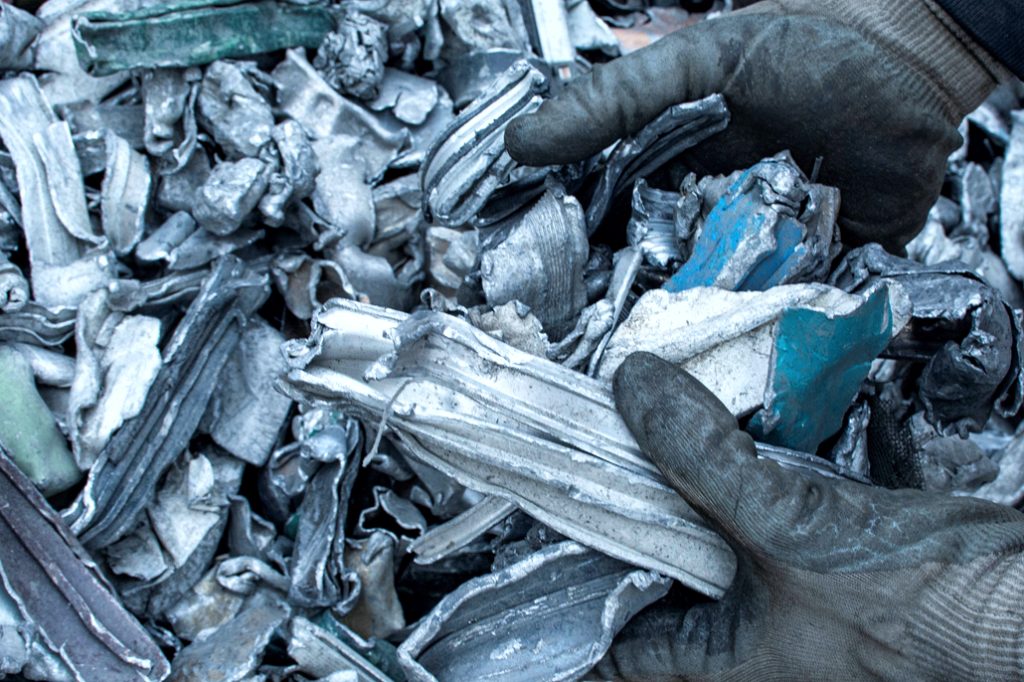
The environmental benefit is particularly significant because primary aluminum production is energy intensive. Recycling allows much of the metal to remain within the industrial system without repeating the full process of extracting and refining ore.
Still, the commonly cited 10 percent and 90 percent figures should not be treated as exact numbers for every vehicle. Aluminum content varies by model, body style, construction method, and powertrain, while recovery rates depend on the recycling process and material being measured.
The broader trend, however, is clear. Aluminum represents less than one-tenth of a typical vehicle’s weight but can account for roughly half of its scrap value, while around 90 percent or more of automotive aluminum can be recovered and recycled.
Its relatively high value gives recyclers a strong financial reason to recover it. Its ability to be recycled repeatedly gives manufacturers a valuable source of secondary material, while the energy savings associated with recycled aluminum make recovery important from an environmental perspective as well.
As automakers continue using aluminum to control vehicle weight, particularly in trucks and electric vehicles, the material could become even more important at the end of a vehicle’s life.
What appears to be a relatively small portion of a car’s mass can therefore become one of its most valuable assets once it reaches the scrapyard.