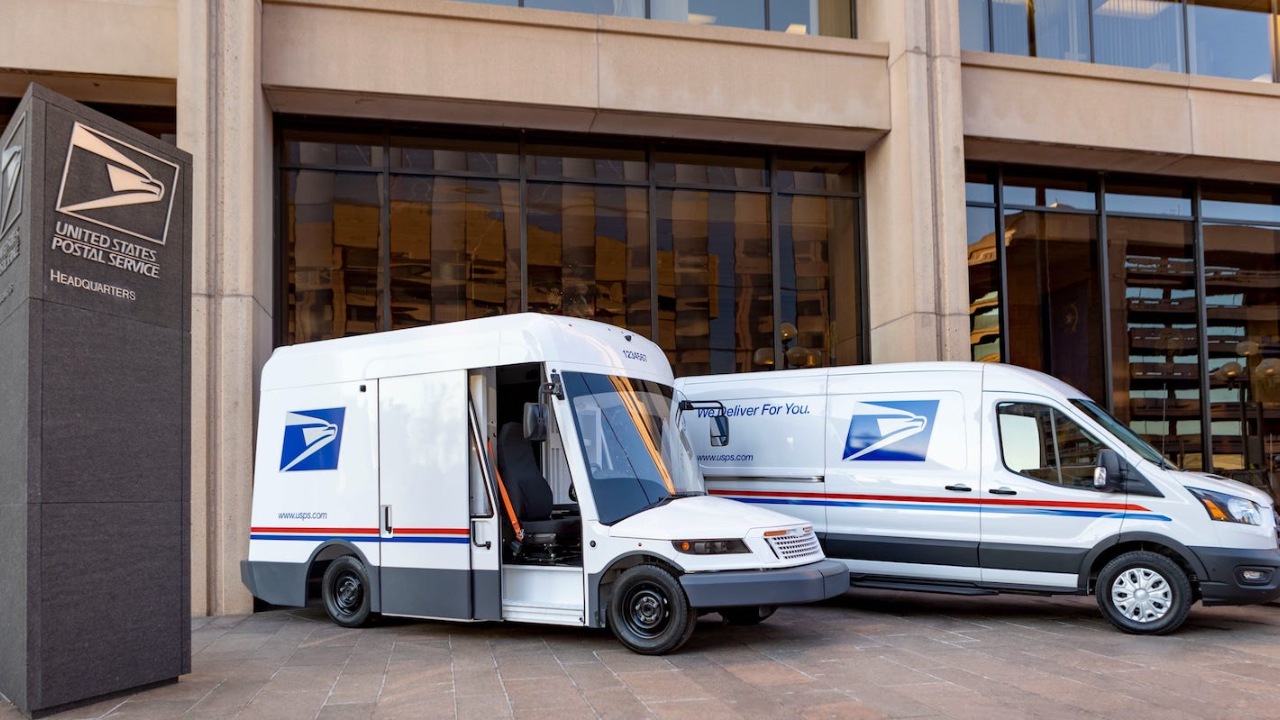
The familiar boxy mail truck that spent decades crawling through American neighborhoods was not adapted from an ordinary delivery van. The United States Postal Service wrote a detailed specification for a purpose-built vehicle, then challenged manufacturers to create something capable of surviving an unusually demanding work schedule.
The specification was issued on March 20, 1984, according to court records from a later case involving Grumman. USPS’s requirements covered performance, equipment, quality assurance, and testing procedures for a new long-life, right-hand-drive delivery vehicle.
Manufacturers were required to submit technical proposals and vehicles for testing against the Postal Service’s requirements.
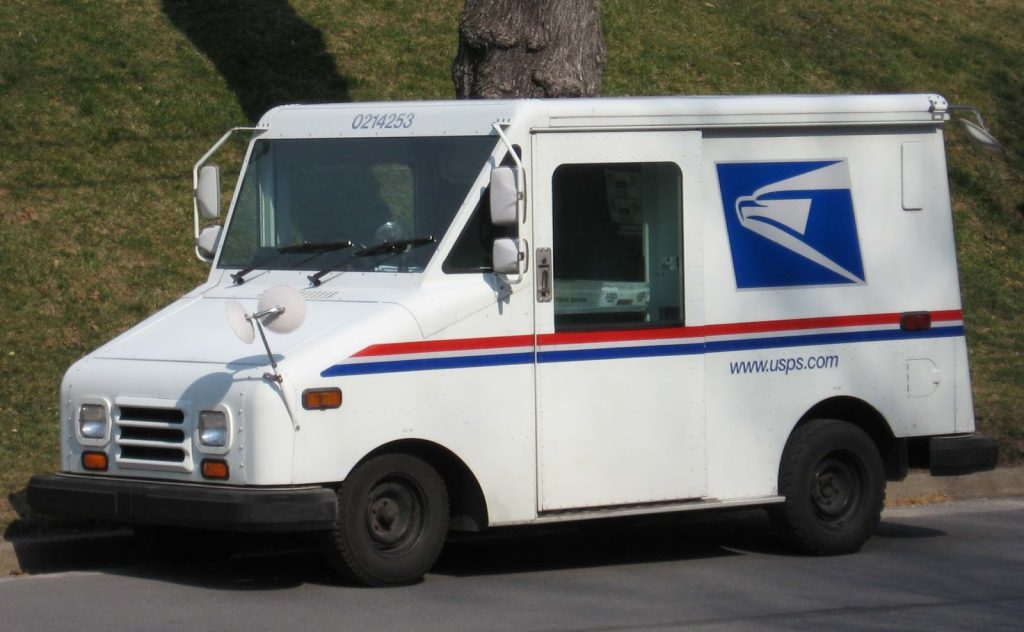
The result was the Long Life Vehicle, or LLV, produced by Grumman with a General Motors chassis. The first LLVs entered postal service in 1986, beginning a production run that ultimately put more than 99,000 vehicles into USPS service.
What made the LLV unusual was not its appearance. It was the fact that virtually every major feature was dictated by the job.
USPS Designed the Vehicle Around the Mail Carrier
Before the LLV was introduced, the Postal Service often relied on modified versions of existing vehicles for mail delivery. During the 1980s, officials chose a new strategy. They would define the requirements in advance and have automakers build a vehicle specifically to meet those needs.
The National Postal Museum says USPS wanted a vehicle capable of lasting more than 20 years, rather than simply modifying an existing commercial model. The requirements included a weather-tight aluminum-alloy body, easy entry and exit, sufficient cargo capacity, and a design suitable for carriers of different sizes.
Right-hand drive was one of the most recognizable requirements. For a conventional American vehicle, the driver normally sits on the left. The LLV placed the driver on the right side, putting the carrier next to curbside mailboxes.
That arrangement allowed carriers to reach mailboxes without repeatedly crossing the vehicle or stepping into traffic.
The National Postal Museum notes that moving the steering wheel to the right could save substantial time during a delivery day because the carrier was positioned on the curbside.
The body was also designed around repetitive delivery work. The vehicle had a low step for frequent entry and exit, a large cargo area, and a tight turning radius for residential streets.
The body itself was made from corrosion-resistant aluminum, helping keep weight down while protecting the vehicle from weather and long-term exposure. The museum says the LLV weighed about 3,000 pounds and could carry 1,000 pounds of mail.
USPS also wanted the vehicle to be unusually durable. The National Postal Museum records a requirement that the vehicle be capable of running up to 20 hours a day, seven days a week, repeatedly and for years.
That is an extraordinary requirement for a vehicle that would spend much of its life accelerating, braking, turning, and stopping rather than simply accumulating highway miles.
The LLV’s purpose was therefore fundamentally different from that of a normal passenger vehicle. It did not need luxury, speed, or long-distance comfort. It needed to survive thousands of repetitive delivery cycles.
The Testing Was Designed to Break the Prototypes
The Postal Service did not simply inspect the prototypes and send them into service. In 1985, three finalist designs were subjected to a 24,000-mile testing program in Laredo, Texas.
The competitors included Grumman and General Motors, Poveco and American Motors. The tests were designed to replicate the conditions encountered by city letter carriers.
The testing was remarkably specific. Each prototype had to complete 5,760 miles on a paved five-mile loop at 50 to 55 mph. Another 11,520 miles had to be completed on gravel at 30 to 45 mph.
That gravel requirement alone represented nearly half of the entire test distance. The prototypes were also subjected to repeated delivery-style stops. They had to travel 2,880 miles on a road with a shoulder, stopping every 250 feet and accelerating back to 15 mph between stops.
Then came the surfaces that made the LLV testing particularly notorious. Each vehicle had to travel 960 miles over cobblestones at approximately 10 to 14 mph and another 960 miles over potholes at similar speeds.
The cobblestones were roughly 3 to 4 inches high, while the pothole testing was designed so that each wheel encountered a pothole thousands of times. The test also included repeated braking.
The vehicles had to make 100 consecutive stops from 15 mph, while payload requirements simulated the weight the vehicle would carry during normal postal operations.
This was not a laboratory test designed to make a vehicle look good on paper. It was an endurance test designed to reproduce the punishment of years of delivery service in a compressed period.
The National Postal Museum describes the Laredo program as a test of both endurance and maneuverability. USPS wanted to know whether the vehicles could survive rough surfaces while repeatedly performing the low-speed starts, stops, and turns that defined urban mail delivery.
The specification even addressed maintainability. A later court record states that the Postal Service issued detailed requirements and testing protocols and that manufacturers could not deviate from the specifications without USPS knowledge and approval.
Grumman’s proposal ultimately became the only candidate vehicle to pass the Postal Service testing procedures described in the case. Grumman won the competition in 1985.
The resulting LLV combined a Grumman-built aluminum body with a General Motors chassis, producing a vehicle unlike virtually anything sold to ordinary American consumers. USPS eventually ordered 99,150 LLVs, with the contract valued at more than $1.1 billion according to the National Postal Museum.
The LLV entered service in 1986 and was designed around a long service life. USPS later listed the original expected service life for LLVs at 24 years, based on the aluminum body and planned mid-life refurbishment program.
That long-life philosophy helps explain why these trucks remained visible for decades after their introduction.
The Design Was Tough, But Not Perfect
The LLV succeeded because it was designed around its mission, but that did not make it flawless.
The National Postal Museum identifies two significant weaknesses that became apparent during actual service. The cargo area had limited visibility, while the vehicle’s relatively low front end could make driving through deep snow difficult.
A bigger problem emerged over the years as the vehicles remained in service much longer than originally intended.
USPS later explained that its LLV design had been intended to support a 20-plus-year life cycle through ruggedized components and maintenance.
In testimony about the replacement program, USPS said the LLV’s specialized requirements produced a vehicle capable of decades of hard daily use, even though that durability came with a higher initial acquisition cost.
That durability became one of the LLV’s defining characteristics. The vehicle was never intended to be fast. It was never designed to compete with passenger cars for refinement.
The three-speed automatic transmission, compact turning radius, right-hand-drive configuration, and straightforward construction were all designed to support the demands of repetitive residential mail delivery while keeping the vehicle practical and durable.
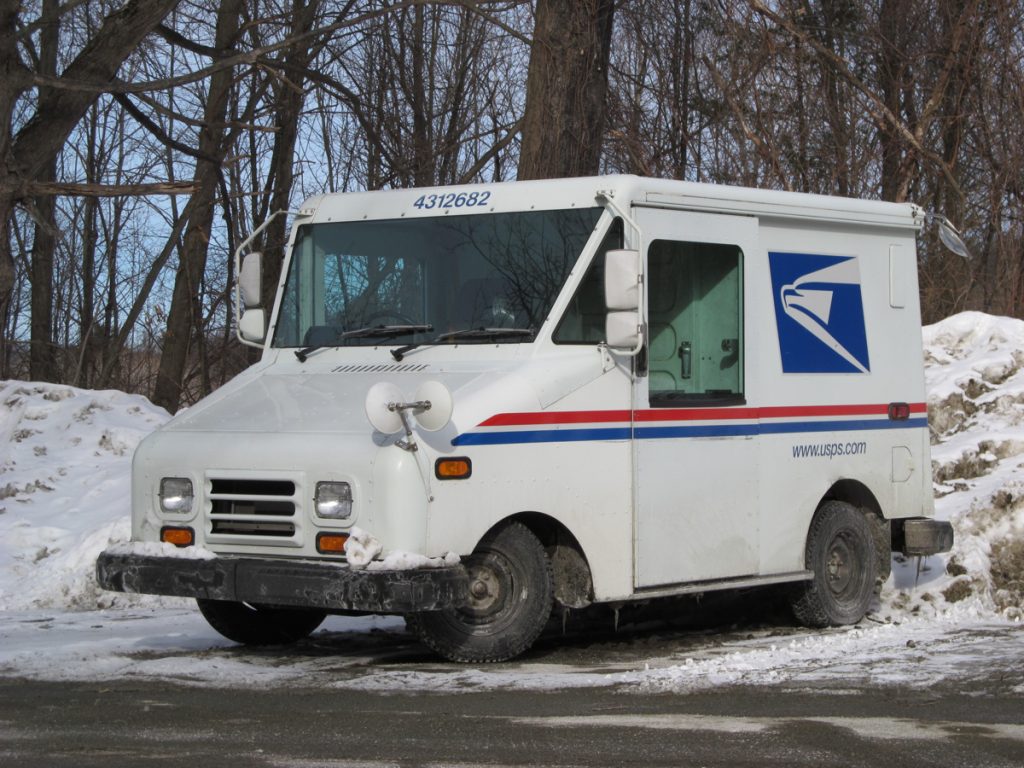
The fact that so many remained in service long after their original expected lifespan demonstrated how different the LLV’s design philosophy was from that of ordinary consumer vehicles. The 1984 USPS specification effectively turned a mail route into an engineering brief.
Right-hand drive addressed curbside delivery. The aluminum body reduced weight and resisted corrosion. The low step accommodated constant entry and exit. The cargo area provided room for mail.
The tight turning radius suited residential streets. And the extraordinary endurance testing attempted to ensure that the vehicle could withstand years of repetitive abuse.
Most importantly, USPS did not simply ask manufacturers for a modified van. It established the requirements and forced competing manufacturers to prove their designs under conditions intended to replicate real postal work.
That approach produced one of the most recognizable commercial vehicles in American history.
The LLV’s boxy shape may have made it look basic, but the engineering behind it was anything but casual. The Postal Service effectively designed a machine around one of the most repetitive driving jobs imaginable, then tested it across gravel, cobblestones, potholes, pavement, and constant stops before allowing it into service.
That is why the LLV became more than just another delivery vehicle. It was a purpose-built tool engineered around the realities of the American mail route.