
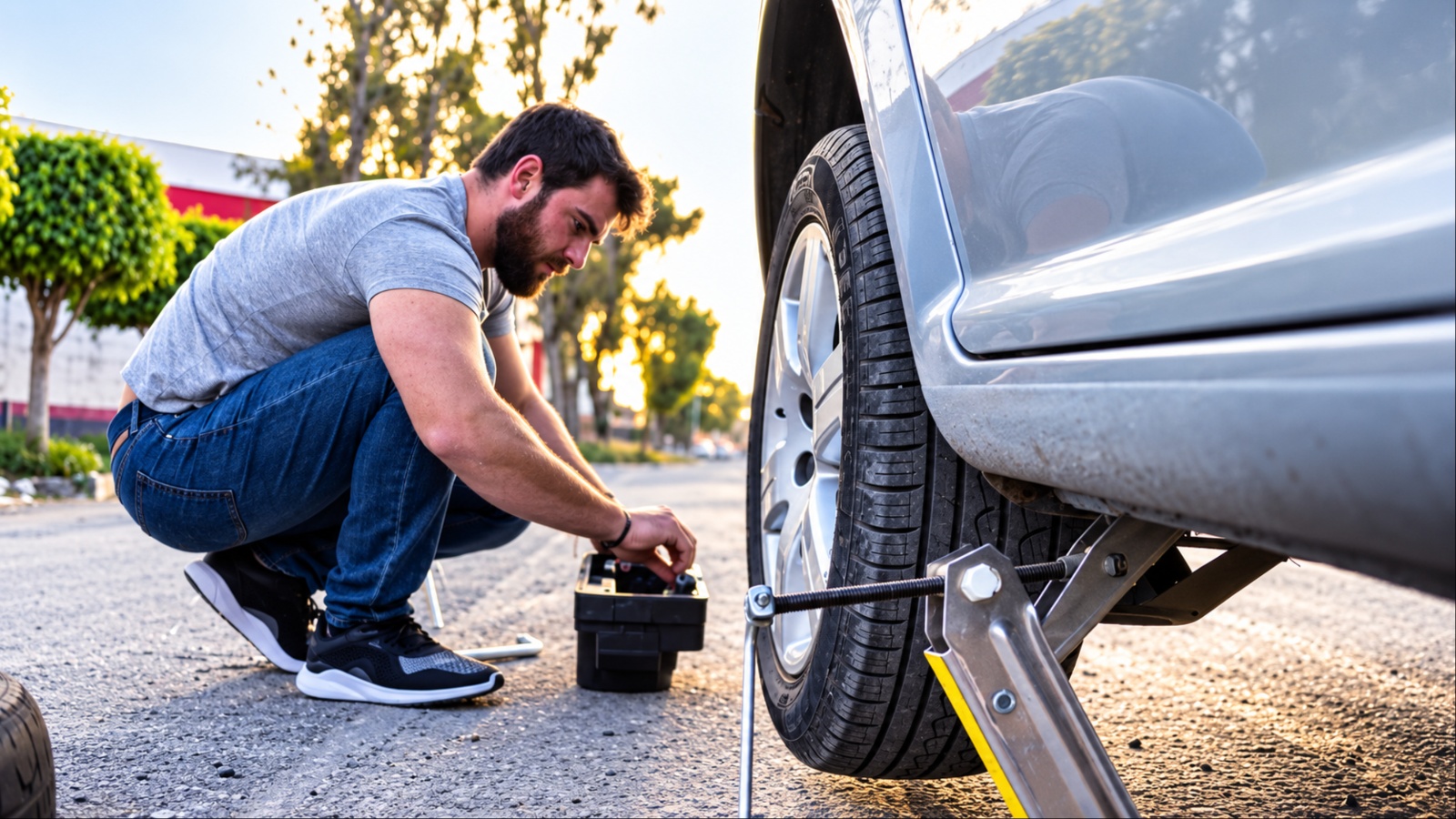
August can be one of the toughest months for a vehicle because long road trips, heavy traffic, and extreme summer heat arrive together.
AAA’s roadside data shows that battery trouble, tire failures, and towing make up a substantial share of emergency calls, while AAA has also identified summer heat as a major stressor on batteries, tires, belts, hoses, and cooling systems.
In Southern California, AAA has historically recorded more than 50,000 tire-related roadside calls during August alone. The latest national data also shows millions of annual roadside events, making August maintenance especially important for drivers planning long-distance trips.
1. Tire Blowouts and Severe Flat Tires
Few road-trip problems turn a relaxed August drive into an immediate emergency as quickly as a tire failure. Tires spend hours rolling across hot pavement, often while carrying several passengers, luggage, and everything else packed into the vehicle.
That combination can expose weaknesses that might remain unnoticed during short trips around town.
AAA has specifically identified August as a particularly dangerous month for tires in Southern California. In August 2013, AAA’s roadside assistance operation in the region responded to 53,680 tire-related calls, and the organization said its August volume had consistently remained above 50,000 calls in previous years.
AAA attributed the increased risk to intense sunlight, heat, and underinflation, which can contribute to overheating, blowouts, and tread separation.
The problem is not limited to old tires. A tire can appear acceptable while having internal damage, uneven wear, or age-related deterioration. Underinflation is particularly troublesome because it increases flexing in the tire, generating additional heat as the vehicle travels.
Heavy loads can make the situation worse, especially when drivers inflate their tires based on appearance rather than the manufacturer’s recommended pressure.
Road-trip preparation should therefore start with all four tires, plus the spare if the vehicle has one. AAA recommends checking pressure according to the vehicle manufacturer’s specification and inspecting tires for cuts, cracks, bulges, and abnormal wear.
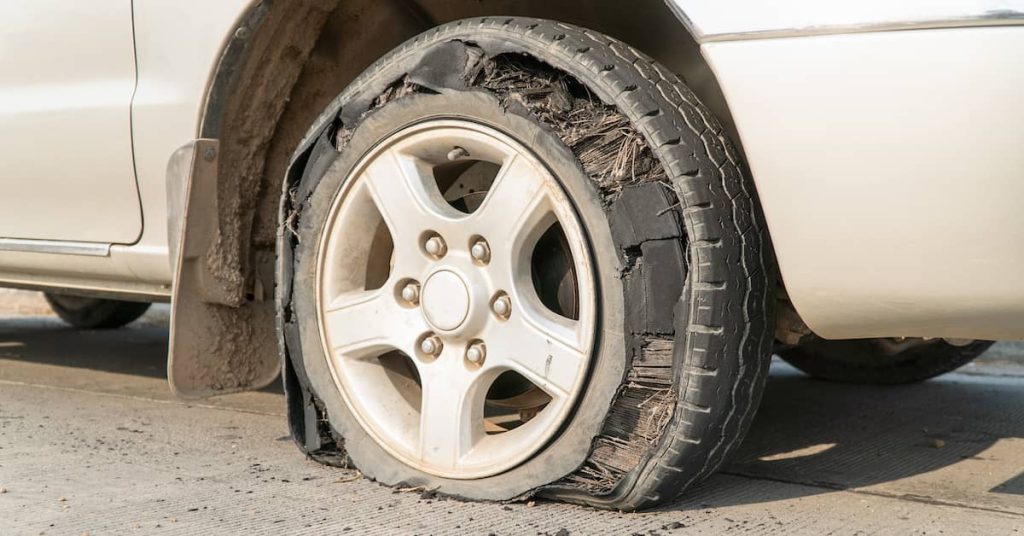
Its summer road-trip checklist also recommends checking tread depth and making sure the spare is properly inflated.
A roadside tire failure can become more than an inconvenience on a busy highway. If the vehicle cannot safely be repaired at the roadside, the driver may need a tow, a replacement tire, or additional assistance. That is why tire inspection before an August road trip can prevent a relatively small maintenance issue from becoming the trip’s biggest problem.
2. Dead or Failing Batteries
A battery failure rarely appears on a road-trip itinerary, yet it remains one of the most common reasons Americans end up waiting for roadside assistance. Summer heat is particularly hard on automotive batteries because high temperatures accelerate chemical reactions inside the battery and can shorten its useful life.
AAA’s 2024 national roadside data illustrates the scale of the problem. The organization received more than 27 million emergency roadside service calls across the United States that year, with approximately 7 million involving battery issues.
Towing accounted for roughly 13 million calls, meaning battery problems alone represented a substantial portion of the country’s roadside workload.
AAA’s 2026 guidance reinforces the connection between summer heat and battery failures. The organization says extreme heat can reduce a typical battery’s expected life from roughly three to five years to as little as two years under severe conditions. Warning signs include slow engine cranking, corrosion around the terminals, unusual smells, and warning lights.
That becomes especially relevant in August because many vehicles are working harder than they do during ordinary commuting. Air conditioning systems run for long periods, electrical accessories remain active, and road trips can involve hours of continuous driving followed by stops in high temperatures.
A battery that was already weak may finally fail when the driver stops for fuel or food and attempts to restart the vehicle.
AAA recommends having a battery tested, particularly when it is more than three years old. Its summer road-trip checklist also calls for checking the battery terminals and ensuring the connections are secure.
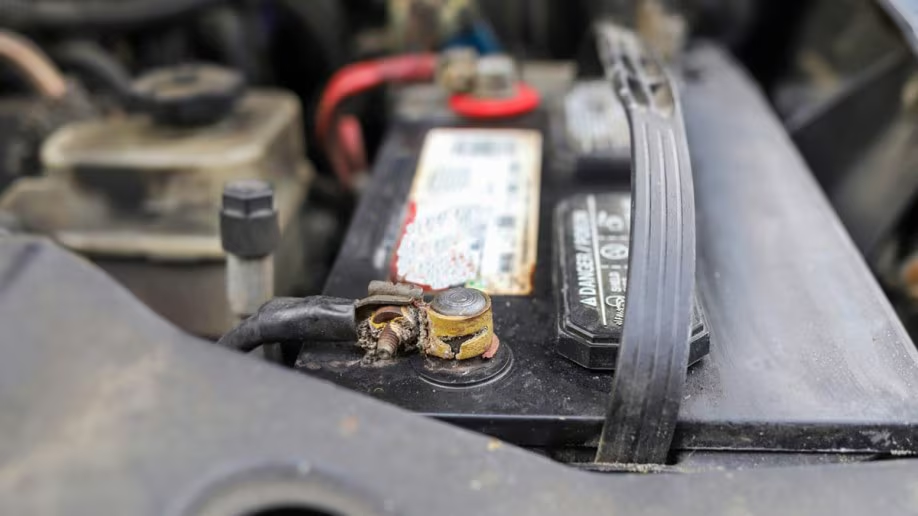
The danger is not limited to being unable to start. A battery problem can sometimes be a symptom of another electrical fault, such as an alternator problem. That is why repeatedly jump-starting a vehicle without determining why the battery went dead can leave a traveler stranded again several miles down the road.
For an August trip, a battery test before departure is one of the simplest checks a driver can make, especially when the battery is already several years old.
3. Cooling-System Failures
August heat can turn a small cooling-system weakness into a roadside emergency. A vehicle may run perfectly during short commutes, yet several hours of highway driving in high temperatures can expose a failing radiator, thermostat, water pump, cooling fan, or hose.
Once coolant is lost, or the engine cannot shed heat effectively, the temperature gauge can climb rapidly, and the driver may have only a short window to pull over safely.
AAA has repeatedly identified engine cooling-system failures among the leading causes of serious summer breakdowns.
Its analysis of roadside data found that cooling-system failures involving components such as radiators, thermostats, and water pumps were particularly prominent among vehicles 10 years and older. AAA also warned that timing-belt failures can become a serious problem in older vehicles.
The age factor is important because rubber hoses, seals, and belts do not last forever. Even if the engine itself remains healthy, a cracked hose can release coolant quickly. A worn water pump can begin leaking or stop circulating coolant properly.
A thermostat can fail in a position that prevents the engine from reaching or maintaining the correct operating temperature.
Long-distance travel increases the consequences because there may be fewer safe places to stop. A driver who continues after an overheating warning risks turning a relatively manageable cooling-system repair into major engine damage.
Before an August road trip, AAA recommends having the engine and cooling system inspected, checking coolant levels and looking underneath the vehicle for signs of leaking fluid.
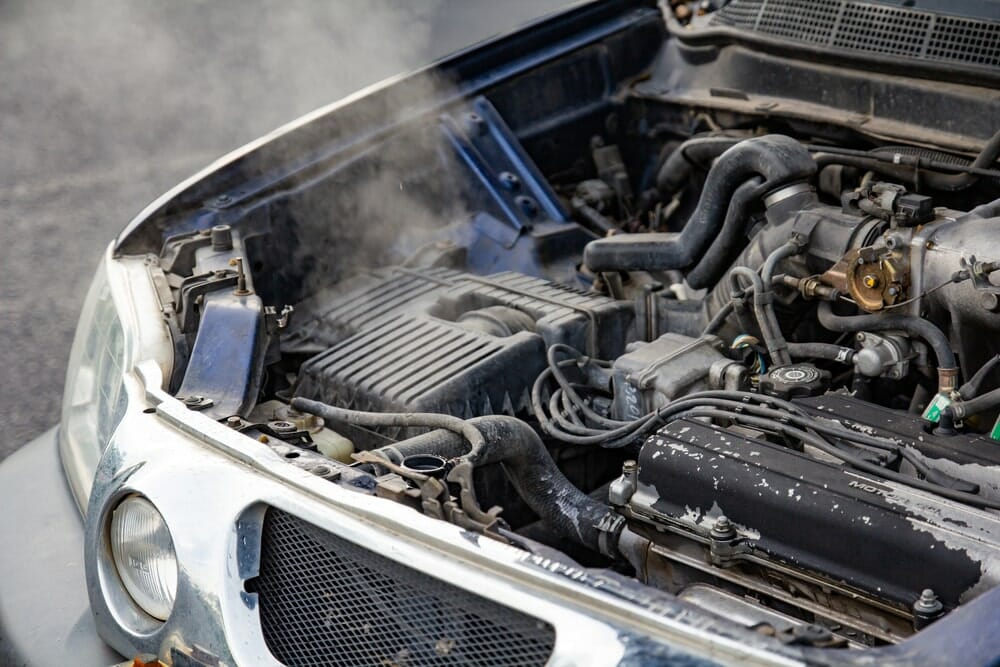
One warning is especially important. Never open a hot cooling system because pressurized coolant can cause severe burns. If the temperature gauge reaches the danger zone, pull over in a safe location, turn off the vehicle, and let it cool completely before attempting to inspect anything.
A few minutes spent checking hoses, coolant, and warning signs before departure can prevent hours beside a highway later.
4. Alternator and Charging-System Failures
A vehicle can have a relatively new battery and still leave its driver stranded because the alternator or charging system has failed.
The battery provides the electrical energy needed to start the vehicle, but once the engine is running, the alternator supplies electrical power and replenishes the battery. If that system stops working, the car may continue running temporarily before electrical power is exhausted.
AAA specifically groups faulty alternators and starters with battery-related roadside problems. Its roadside analysis warns that a battery on the verge of failure may provide little warning, while a simple battery and electrical-system test can reveal potential problems before a trip.
The distinction between a dead battery and a failed charging system is crucial. A jump-start may get a vehicle moving again, but it does not repair an alternator that is no longer charging. Once the stored electrical energy is depleted, the engine can shut down, and the driver may require a tow.
August road trips create an ideal setting for this type of failure to become disruptive. Drivers can spend hours using air conditioning, headlights, navigation equipment, phones, and other electrical accessories.
Modern vehicles also rely on extensive electronic systems, so low system voltage can trigger multiple warning lights or cause various functions to behave abnormally.
AAA’s 2024 roadside figures show the scale of electrical problems in the United States. The organization handled more than 27 million emergency roadside calls, including approximately 7 million battery-related calls.
A charging-system inspection is therefore worthwhile before a long trip, particularly if the vehicle has shown symptoms such as dimming lights, repeated battery failures, slow starting, or a charging warning.
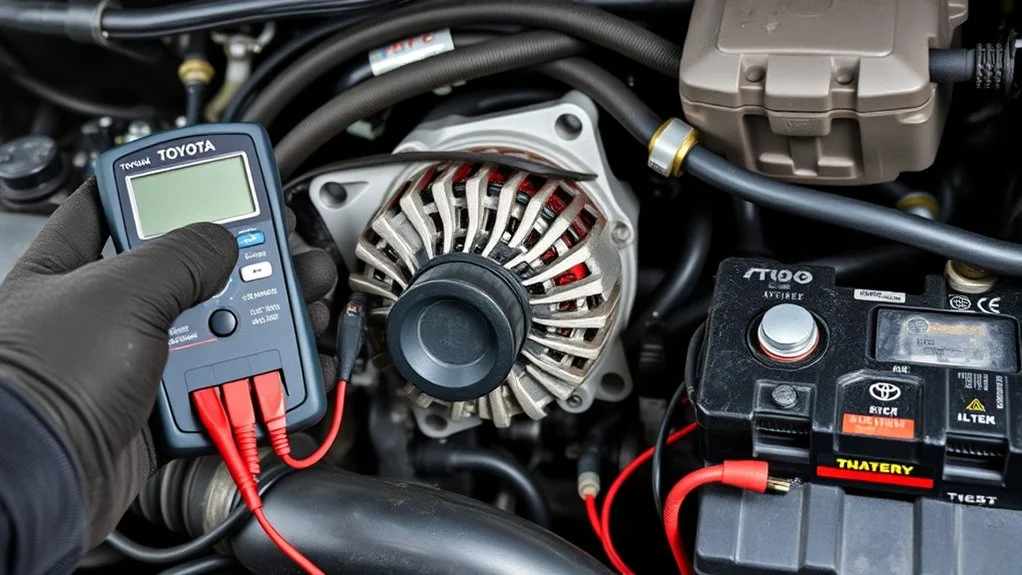
If a battery repeatedly goes flat despite being relatively new, replacing the battery again may simply postpone the real problem. Testing the alternator and charging system can identify whether the vehicle is actually producing the electrical power it needs.
For an August road trip, that distinction can mean the difference between a quick maintenance visit before departure and a tow truck waiting on the shoulder.
5. Brake Problems
Brake trouble is a particularly unpleasant way for an August road trip to end because there is rarely a convenient moment for a serious braking problem to appear. Long highway journeys mean repeated braking for traffic, exits, construction zones, and steep grades.
If pads, rotors, calipers, or brake fluid were already approaching the end of their service life, a long trip can expose the weakness.
AAA specifically recommends checking the brake system before a summer road trip. Its current summer preparation guidance tells drivers to pay attention to grinding noises and vibrations when braking and have the system inspected if either occurs. A professional inspection should include the brake fluid, pads, rotors, shoes, and drums, as applicable.
The warning signs can begin subtly. A driver might notice that the brake pedal feels different, the vehicle pulls to one side, the steering wheel vibrates during braking, or the brakes make unusual sounds. Ignoring those symptoms is particularly risky before a trip because the driver may spend hundreds of miles depending on the same components.
Mountain driving can add another challenge. Continuous braking on long descents creates substantial heat, and a brake system that is already worn or compromised has less margin for demanding conditions.
Drivers should use the vehicle’s appropriate lower gear or downhill-control features where recommended rather than relying exclusively on the brake pedal on prolonged descents.
AAA’s maintenance guidance also recommends having the vehicle inspected before departure, particularly when a trip is long enough to reach a scheduled maintenance interval.
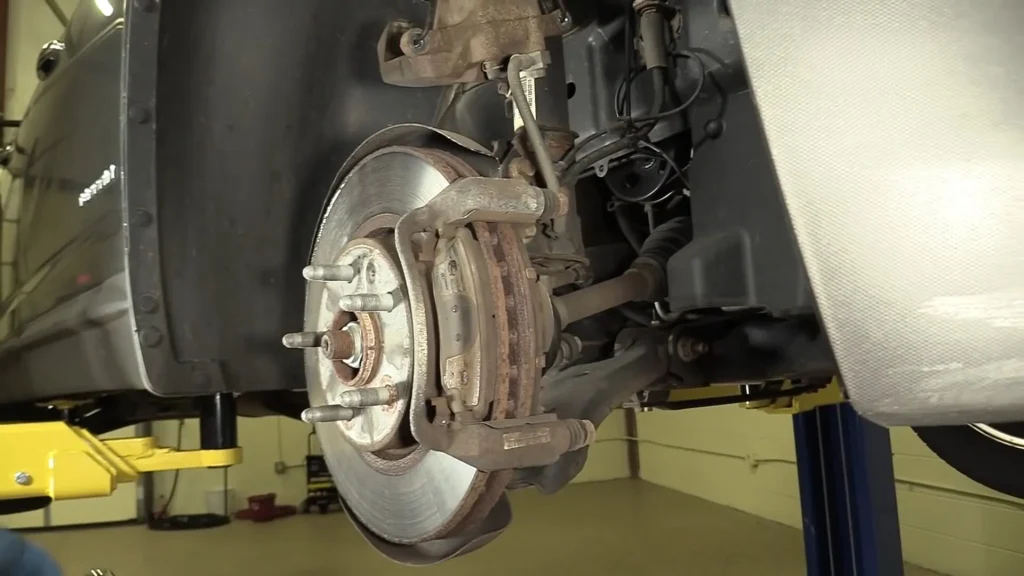
The smartest time to discover worn brake pads is in a repair shop, not halfway through a vacation. If there is grinding, vibration, unusual pedal behavior, or a brake warning light, the vehicle deserves attention before the luggage goes into the trunk.
A brake inspection may cost time before the journey, but discovering that the vehicle needs attention at home is considerably easier than discovering the same problem on an unfamiliar highway.
6. Broken Belts and Radiator Hoses
A serpentine belt or radiator hose can look like an insignificant piece of rubber until it fails while the vehicle is hundreds of miles from home. In August, these components face heat, vibration, and extended operating time, making their condition particularly important before a long road trip.
AAA specifically advises drivers to inspect belts and hoses before summer travel. Its automotive guidance says drive belts should be replaced when cracked, glazed, or frayed, while radiator hoses should be replaced when they become worn, brittle, bulging, or excessively soft.
AAA also recommends checking for leaks around hose clamps, the radiator, and the water pump. The serpentine belt deserves special attention because it can drive several important accessories.
Depending on the vehicle, that may include the alternator, air-conditioning compressor, and water pump. AAA notes that a drive-belt failure can therefore affect multiple systems at once.
A radiator hose has a different job but can create an equally dramatic failure. If it splits and releases coolant, the engine can lose its ability to regulate temperature. The driver may see steam, notice a rising temperature gauge, or smell coolant before being forced to stop.
Age is a major factor. Rubber components gradually deteriorate, and visual inspection can sometimes reveal obvious problems before they become failures. However, AAA also cautions that modern multi-rib belts may not always display obvious wear, meaning mileage and the manufacturer’s maintenance schedule matter as well.
That is why an August inspection should not consist of simply opening the hood and looking for something obviously broken. A technician can check belt condition, tension, hose condition, leaks, and related components.
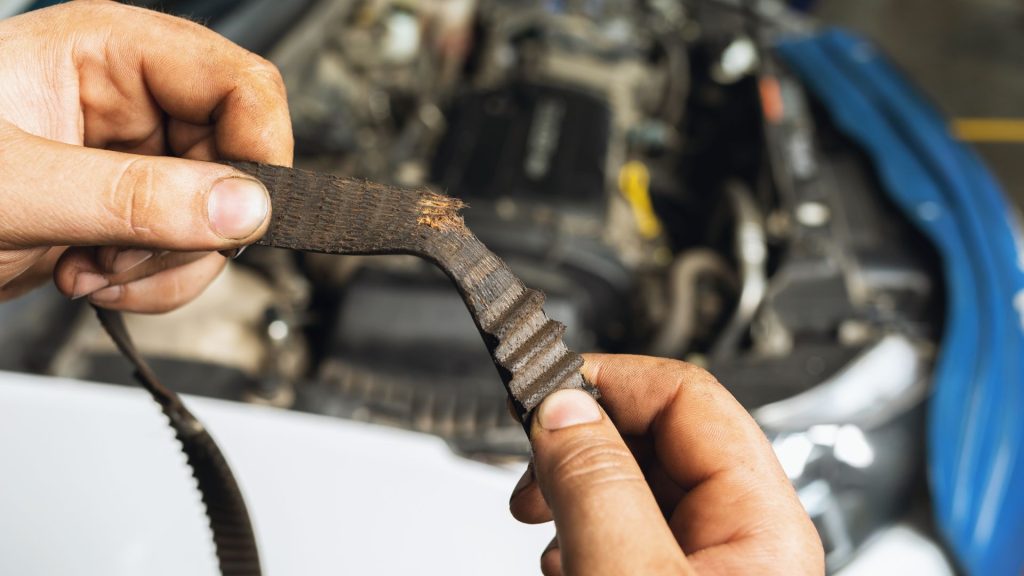
Drivers should also pay attention to any recent warning signs. A squealing belt, coolant smell, unexplained coolant loss, or visible cracking deserves investigation before a long journey.
A $20 or $50 component that fails on a highway can become a much larger roadside problem when towing, labor, and additional repairs enter the picture. Checking these inexpensive parts before departure is therefore one of the simplest ways to reduce the chance of a summer breakdown.
7. Locked-In Keys and Key-Fob Problems
A road trip can come to a complete stop without a mechanical failure at all. Losing the keys, locking them inside the vehicle, or dealing with a dead key-fob battery can leave a driver stranded just as effectively as a failed engine.
The problem becomes especially frustrating during August because travelers are often stopping at unfamiliar gas stations, restaurants, hotels, and roadside attractions where a misplaced key can be difficult to recover.
AAA includes lockouts among the common reasons motorists request roadside assistance. Its roadside assistance services specifically cover vehicle lockouts, including situations involving lost or locked-in keys.
AAA also recommends drivers prepare for electronic-key problems before traveling because modern vehicles increasingly depend on keyless entry and electronic fobs.
Traditional metal keys came with one obvious problem. They could easily be locked inside the car. Modern key fobs have introduced a different concern. A vehicle can have plenty of fuel and a perfectly functioning engine, yet a dead fob battery may prevent normal unlocking or starting procedures, depending on the model.
Drivers should check their owner’s manual before leaving because emergency procedures differ by model. Many vehicles have a hidden mechanical key inside the fob, while others provide a designated location where a weak fob can still be detected.
Knowing that procedure in advance is much easier than trying to find it while standing beside a locked vehicle.
There is also an easy way to reduce the risk at little or no cost. Keep the spare key in a secure but accessible place during the trip. When two adults are traveling together, storing the spare separately from the primary key provides an extra layer of backup.

August travel creates another risk because drivers frequently leave keys in unusual places while unloading luggage or switching between vehicles and accommodations. A rushed stop can become an expensive roadside call surprisingly quickly.
A lockout is rarely the most mechanically serious breakdown on this list, but it can be one of the easiest to prevent. Before leaving home, knowing where the spare is and understanding the vehicle’s emergency key procedure can save considerable time.
8. Running Out of Fuel or Charging Power
The final road-trip breakdown is one that should never happen, yet long-distance travel makes it surprisingly easy to underestimate how far a vehicle can actually go.
A driver may see a fuel gauge showing enough range to reach the next town, only to encounter a closed station, an unexpected detour, heavy traffic, or a longer-than-expected gap between fuel stops.
AAA has long included running out of fuel among the roadside situations it handles. Its roadside assistance operation also deals with electric-vehicle charging-related problems as the U.S. vehicle fleet becomes increasingly electrified.
AAA’s current roadside service information lists fuel delivery and EV charging assistance among services available to stranded motorists.
The risk is particularly relevant during August road trips because drivers may travel through remote areas where the distance between services is much greater than on their normal commute. A vehicle that can comfortably travel 40 miles after the fuel warning appears in a city may not have the same practical margin when the next station is uncertain.
Electric vehicles introduce a related challenge. A displayed range is an estimate rather than a guarantee. Speed, outside temperature, terrain, payload, air-conditioning use, and driving style can affect energy consumption.
AAA’s 2026 research has specifically examined how temperature affects EV and hybrid efficiency and costs, highlighting the relationship between environmental conditions and vehicle energy use.
The safest approach is to treat the vehicle’s remaining range as a planning tool rather than a target. On an unfamiliar route, drivers should identify reliable fuel or charging stops before the gauge becomes critically low.
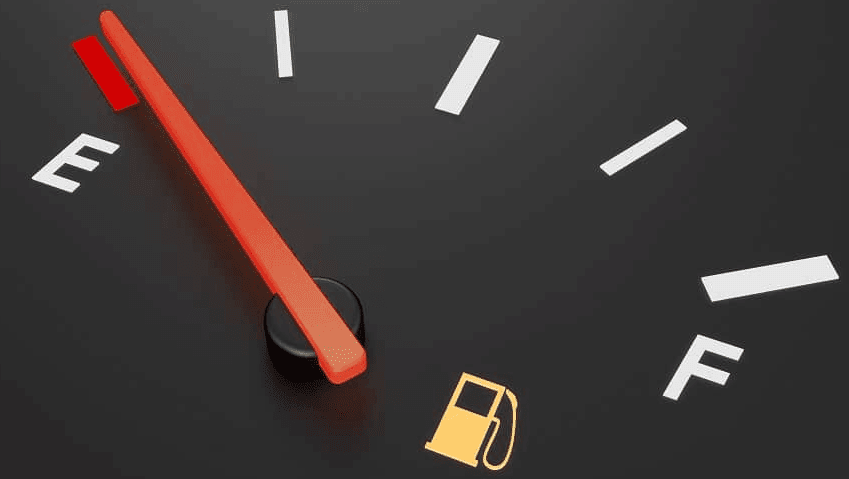
Apps and navigation systems can help, but travelers should also consider whether a station is actually open and accessible at the expected arrival time.
For gasoline vehicles, carrying an approved emergency fuel container can provide another option where legally permitted. For EV drivers, knowing the locations of compatible charging stations is equally important.
A breakdown caused by an empty fuel tank or depleted battery is often avoidable, unlike many mechanical failures. During August road trips, careful planning can make a major difference. Refuel or recharge before the vehicle reaches the point where finding the next stop becomes uncertain.
