
A new year can change the rules of the road without changing a single traffic sign. In 2026, state legislatures and motor vehicle agencies introduced or activated rules affecting distracted driving, speeding, automated enforcement, license points, impaired driving, and other issues that directly affect motorists.
The changes are not uniform across the country, which means a driver crossing a state line can encounter requirements that did not exist in the same form a year earlier.
The National Conference of State Legislatures tracks traffic-safety legislation across all states and updates its database weekly. Here are 10 verified 2026 changes worth knowing.
1. Virginia Added Intelligent Speed Assistance for Serious Speeders
Virginia made one of the most unusual driving-law changes of 2026 when its intelligent speed assistance, or ISA, program became effective July 1. The law targets drivers convicted of certain serious speeding or reckless-driving offenses rather than ordinary motorists.
Under the new rules, a court can require qualifying drivers to participate in the ISA program as an alternative to having their driving privileges suspended.
The threshold that will immediately get many drivers’ attention is 100 mph. Virginia’s updated law provides that when a person is convicted of driving more than 100 mph, the court must either suspend the driver’s license or require participation in the ISA program.
For certain other reckless-driving offenses, including driving more than 20 mph above the speed limit or more than 85 mph over the speed limit, a court can also order ISA participation.
The technology is intended to discourage repeat high-speed behavior. Active ISA systems can use GPS information and digital speed-limit data to determine the applicable speed limit and restrict how far a vehicle can exceed it. NCSL identifies Virginia as the first state to implement this type of offender-focused ISA requirement.
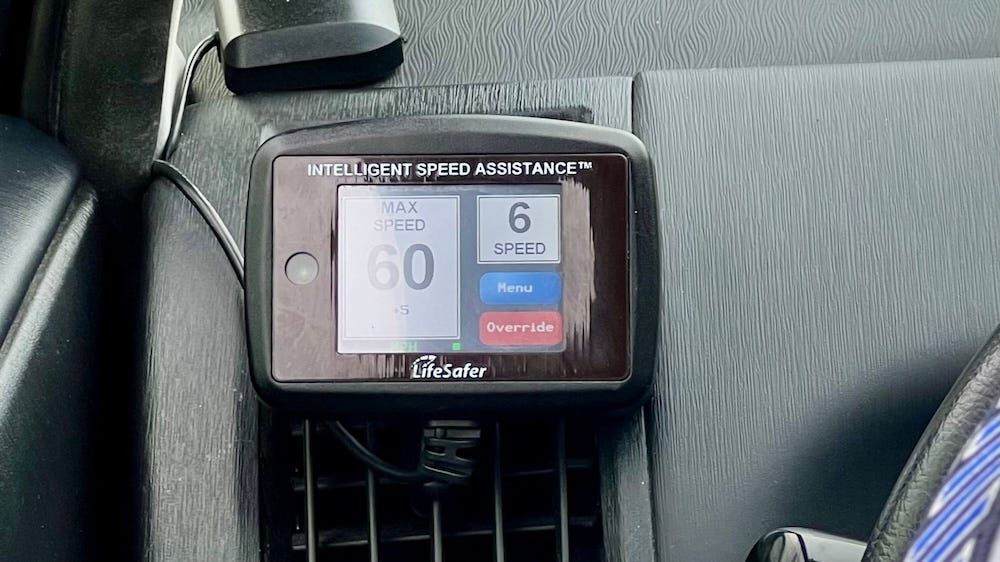
For drivers, the important distinction is that this is not a statewide speed limiter imposed on every vehicle. The requirement is connected to qualifying convictions and judicial or administrative action. A driver who has never committed one of the covered offenses does not simply have an ISA device installed because the law took effect.
That makes Virginia’s 2026 change significant, as it goes beyond traditional fines and license points. For certain serious speeding cases, technology can now become part of the punishment and the path toward retaining driving privileges.
2. Pennsylvania’s Hands-Free Law Became Fully Enforceable
Pennsylvania gave drivers a major change in 2026 by moving from its previous texting-focused restrictions toward a broader prohibition on using interactive mobile devices while driving.
The state’s Paul Miller’s Law became fully enforceable on June 5, 2026, after a one-year warning period. Pennsylvania State Police subsequently launched a statewide enforcement operation specifically targeting handheld-device violations.
The new rule covers much more than traditional texting. Pennsylvania’s statute defines an interactive mobile device broadly enough to include smartphones and other handheld devices capable of activities such as texting, emailing, browsing the internet, playing games, taking or transmitting images, recording or broadcasting video, and exchanging electronic data.
There are important exceptions. A driver may use a device for emergency communication with law enforcement or emergency services when necessary to prevent injury to people or property. Hands-free use is also treated differently from physically handling the device.
The law specifically addresses actions such as holding the device, supporting it with another part of the body, or manipulating it in ways that require more than limited interaction.
The practical rule is straightforward. Pennsylvania drivers cannot use a red light or traffic backup as an opportunity to pick up and use their phones.

The statute’s definition of driving includes periods when the vehicle is temporarily stationary because of traffic, a traffic signal, or another momentary delay. A driver who has safely moved off the highway and stopped is treated differently.
Enforcement data shows the law quickly became more than a theoretical change. During a June 8 to June 10 statewide enforcement initiative, Pennsylvania State Police reported 694 traffic citations and 308 warnings connected to Paul Miller’s Law.
3. New York Changed Point Values for Several Driving Violations
New York changed an important part of its driver-penalty system in 2026 without creating a completely new category of driving offense. Beginning February 16, violations committed on or after that date became subject to revised point values under amendments to the state’s Vehicle and Traffic Law regulations.
The New York Department of Motor Vehicles also increased the look-back period used for persistent-violation administrative action from 18 months to 24 months.
That change matters because points can have consequences far beyond the traffic ticket itself. New York uses its point system when determining whether a driver’s record warrants additional administrative action. By extending the look-back period, the DMV can consider a longer period of driving history when evaluating persistent violations.
The DMV’s January 2026 enforcement memorandum specifically states that point values are assessed according to the date of the violation. That means drivers cannot simply assume that a ticket issued after February 16 will receive the same treatment as an identical violation committed before the change.
For motorists, the most important detail is the effective date. Violations committed on or before February 15, 2026, remain subject to the previous point structure, while violations committed from February 16 onward fall under the amended system. This makes the change particularly relevant when drivers are comparing old and new tickets on the same record.
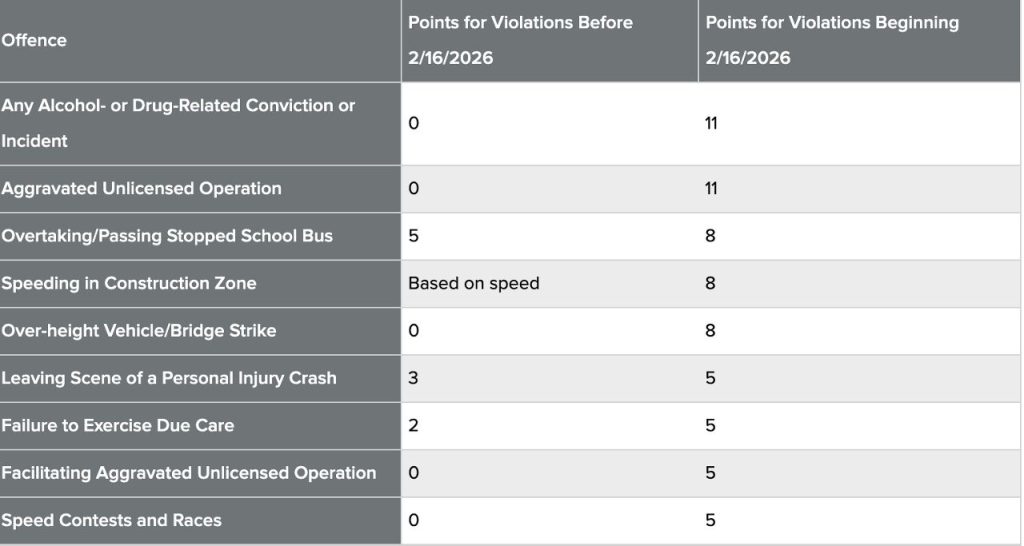
New York’s change illustrates why checking a state’s current penalty schedule matters. Traffic laws do not always change through dramatic new prohibitions. Sometimes the rule that changes is the number of points attached to conduct that was already illegal.
The extended 24-month look-back period is also significant for drivers who accumulate violations over time. A person who previously assumed an older ticket had fallen outside the relevant period may now find that the DMV’s administrative review covers a longer stretch of driving history.
4. Maryland Expanded Automated Traffic Enforcement Rules
Maryland made a significant change involving automated traffic enforcement in 2026. A revised section of state law took effect July 1, 2026, and establishes requirements governing automated enforcement programs operated by state and local agencies.
The statute defines automated enforcement broadly to include cameras, monitoring devices, and other technology that captures recorded images of vehicles being operated in violation of traffic laws.
This matters because automated enforcement is becoming a larger part of the traffic landscape. Instead of relying exclusively on an officer witnessing a violation, jurisdictions can use approved technology to document certain conduct and create an enforcement record.
Maryland’s law also places requirements around how agencies handle information collected through these systems. The statute applies to state police, the State Highway Administration, and local police or other agencies operating automated enforcement programs.
For motorists, the practical lesson is that a violation recorded by an automated system can have consequences even when no police officer pulls the vehicle over at the moment of the offense. Drivers should therefore pay attention to posted restrictions in areas where automated enforcement is authorized.
The change also comes with a defined time period. The particular statutory provisions identified by Maryland’s General Assembly take effect July 1, 2026, and are scheduled to remain in effect until July 1, 2029.
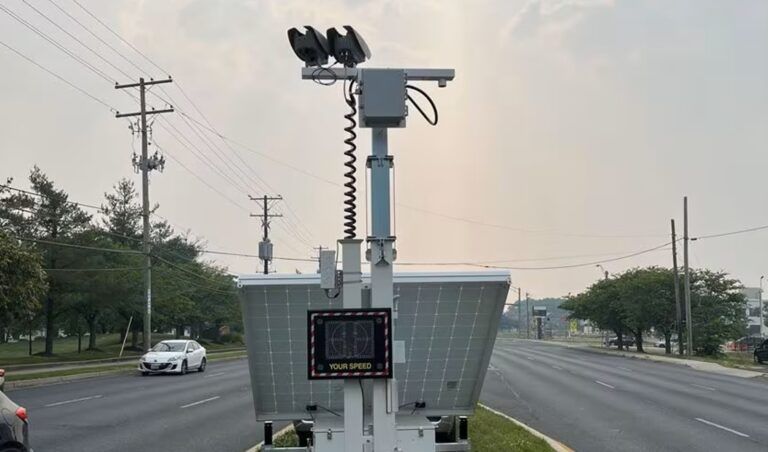
Maryland’s approach fits into a much larger national movement. NCSL reported that, as of May 2026, automated red-light cameras were operating in 355 U.S. communities across 22 states and Washington, D.C. States continue to debate where cameras should be permitted, what violations they should document, and how the resulting information should be handled.
The important point for Maryland drivers is that automated enforcement is not simply about receiving a camera ticket. The 2026 rules also address the technology and agencies responsible for collecting and using the evidence.
5. California Extended Its DUI Ignition-Interlock Program
California’s 2026 driving-law changes included an important DUI-related measure. Assembly Bill 366 extended the state’s statewide ignition interlock device pilot program for specified DUI offenders through January 1, 2033. The California DMV identified the extension among the new laws taking effect January 1, 2026.
An ignition interlock device prevents a vehicle from starting when the driver’s breath sample contains alcohol above the programmed threshold. The purpose is to prevent a driver who has been subject to an ignition-interlock requirement from simply getting behind the wheel after drinking.
The 2026 California change did not suddenly require every California driver to install an interlock. Instead, it extended the existing pilot program for specified DUI offenders. That distinction is important because headlines about ignition interlocks can sometimes make the rules sound broader than they actually are.
California also changed consequences surrounding serious intoxicated-driving cases. The DMV reported that AB 1087 increased the probation term for a person convicted of vehicular manslaughter or gross vehicular manslaughter while intoxicated from two years to between three and five years.
For ordinary drivers, the broader message is that California continues to use vehicle technology and extended supervision as tools in DUI enforcement. The ignition-interlock system is especially important for offenders who are permitted to continue driving under conditions rather than simply losing access to a vehicle.
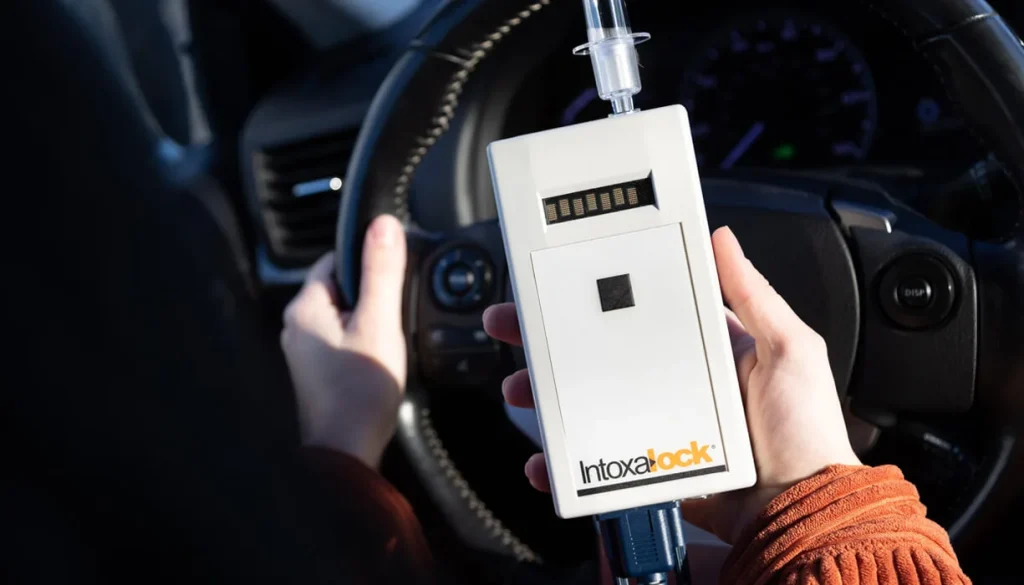
The program’s extension through 2033 also gives California considerably more time to continue evaluating its use. A driver subject to an interlock requirement therefore needs to understand not only the installation requirement but also the monitoring, maintenance, and compliance conditions attached to the device.
California’s 2026 changes demonstrate how driving laws can affect a person’s ability to operate a vehicle long after a DUI arrest or conviction. The consequences are not necessarily limited to the original fine or court proceeding.
6. California Also Changed School-Zone Speed Rules
California’s 2026 traffic changes included another measure aimed at protecting children near schools. The California DMV listed Assembly Bill 382 among the laws taking effect January 1, 2026, under its road-safety changes. The measure addresses school-zone speed limits.
School-zone rules are particularly important because they operate in environments where pedestrians, children, school buses, and turning vehicles can all interact within a relatively small area. A driver who treats the school zone like an ordinary section of roadway can face a very different legal requirement.
The 2026 change is part of California’s broader effort to use lower speeds and targeted enforcement in locations where vulnerable road users are concentrated. Drivers should not assume that the presence of a school alone determines the applicable speed.
Posted signs, roadway markings, and the precise statutory conditions determine when a reduced limit applies.
That distinction becomes increasingly important because California has also been expanding automated enforcement tools. The state’s DMV highlighted several traffic-safety measures in its 2026 new-law announcement, including school-zone speed-limit changes and other measures dealing with road safety.
For parents and commuters, the practical consequence is straightforward: the safest approach is to watch for the posted school-zone limit rather than relying on memory from previous years. A route that has been driven for years can still contain a legally different speed requirement after a legislative change.
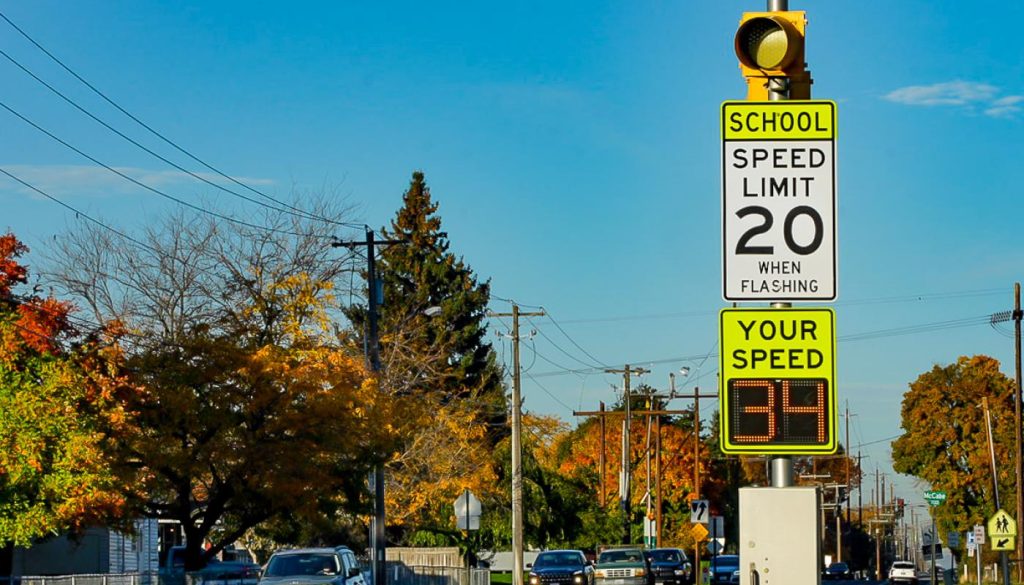
California’s school-zone change is also a reminder that traffic laws can be location-specific. The same vehicle, same driver, and same road can be subject to different requirements depending on whether the vehicle is passing through a designated school zone at the legally specified time.
That makes checking signs especially important in 2026, particularly around schools where children may be entering or leaving campus.
7. Colorado’s Hands-Free Law Showed Measurable Results
Colorado’s hands-free driving rule was already in effect before 2026, but new data released in 2026 gives motorists an important reason to pay attention to the law.
The Colorado Department of Transportation reported that distracted driving declined 4.7% from 2024 to 2025, while the first month after the law took effect saw an 8.3% decline in distracted driving, according to smartphone and sensor data analyzed by Cambridge Mobile Telematics.
Colorado’s law generally prohibits drivers from using a mobile electronic device in a handheld manner. The restrictions apply broadly rather than targeting only one activity such as texting. The Insurance Institute for Highway Safety’s August 2026 state comparison lists Colorado as prohibiting handheld electronic-device use for all drivers.
The law still permits certain hands-free functions. A mounted device can generally be used without holding it, subject to the state’s specific rules concerning activation and interaction. Drivers should therefore distinguish between using voice commands or an approved mounted setup and physically holding the phone.
What makes Colorado especially interesting in 2026 is the availability of early evidence about the law’s effect. CDOT said its analysis covered millions of driving trips and found measurable reductions in distracted driving after implementation.
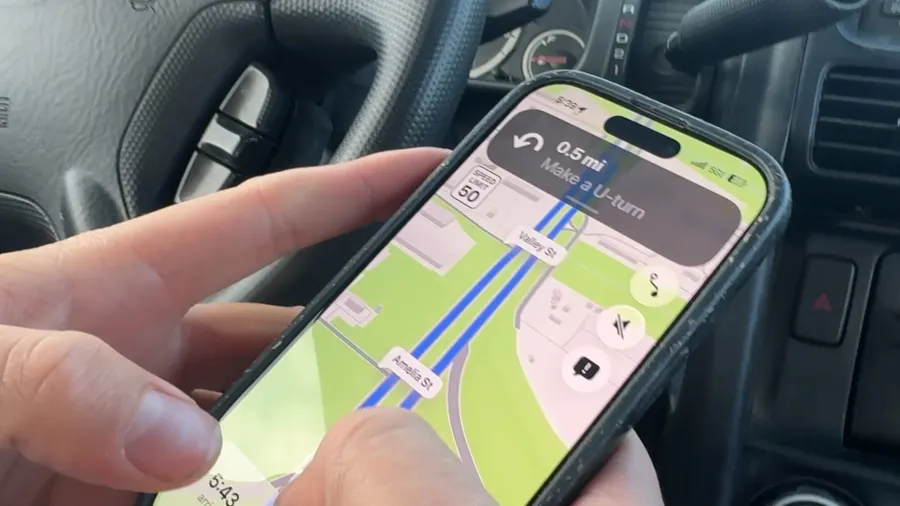
That does not mean every crash involving distraction disappeared, nor does the data prove that every improvement was caused exclusively by the legislation. However, it provides a useful real-world indicator that changes in driver behavior can be measured after a statewide hands-free requirement.
For motorists, the safest interpretation is simple: putting the phone down is not merely a way to avoid a ticket. It is the behavior the law is designed to encourage.
8. Virginia Strengthened Speed-Camera Rules in 2026
Virginia also changed how photo speed monitoring works in 2026. The updated law includes requirements surrounding new photo speed monitoring devices and specifies that, for a new device placed and operated after July 1, 2026, the first 30 days must generally function as a warning period rather than immediately generating a civil penalty by mail.
That requirement creates an important distinction between automated enforcement and surprise enforcement. When a new qualifying camera begins operation, motorists are supposed to receive warnings during the initial 30-day period instead of civil penalties being assessed by mailed summonses for those recorded violations.
The law also addresses signage. Virginia’s updated provisions require conspicuous notification of photo speed monitoring at covered locations, with additional requirements scheduled to change in later years. The statute identifies locations such as school crossing zones, highway work zones, and high-risk intersection segments.
The rules also impose reporting and information requirements on agencies using these systems. Agencies must provide information about contesting alleged violations, paying civil penalties, and changes to camera locations.
For drivers, the practical effect is that automated enforcement should become more visible and structured. A motorist approaching a camera-covered area should be able to identify that enforcement is present rather than encountering an entirely hidden system.
It is important not to confuse this measure with Virginia’s separate intelligent speed-assistance program. The ISA rule targets certain drivers after qualifying serious offenses, while photo speed monitoring concerns automated detection of violations in designated areas.
Together, the two 2026 changes show Virginia using different technologies for different purposes: cameras to identify certain violations and vehicle-based technology to address repeat high-speed behavior.
9. Ohio Changed the Financial Rules Surrounding Traffic-Camera Fines
Ohio made a notable 2026 change involving traffic-law photo-monitoring devices. A revised section of the Ohio Revised Code became effective June 16, 2026, and establishes reporting and financial provisions concerning fines resulting from traffic-law photo-monitoring devices.
The law defines a traffic-law photo-monitoring device within the state’s existing statutory framework and addresses the amount of fines and fees collected by local authorities. It also establishes calculations affecting local government fund payments based on traffic-camera revenue.
For drivers, this may sound less dramatic than a new hands-free prohibition or a higher speeding penalty, but it matters because automated traffic enforcement has become a significant policy issue in Ohio and elsewhere. How camera revenue is collected, reported, and treated can influence the way local governments administer these systems.
The change should not be interpreted as a new statewide rule allowing every local government to issue unlimited automated tickets. Ohio’s traffic-camera framework contains specific requirements governing when and how photo-monitoring devices can be used.
The 2026 amendment is therefore better understood as an adjustment to the legal and financial framework surrounding automated enforcement rather than a blanket expansion of camera enforcement to every roadway.
That distinction is worth emphasizing because traffic-camera laws can be complicated. A driver may receive a notice based on an automated system without being physically stopped by an officer, but the legal process, penalty structure, and authority behind the camera depend on Ohio’s specific statutes.
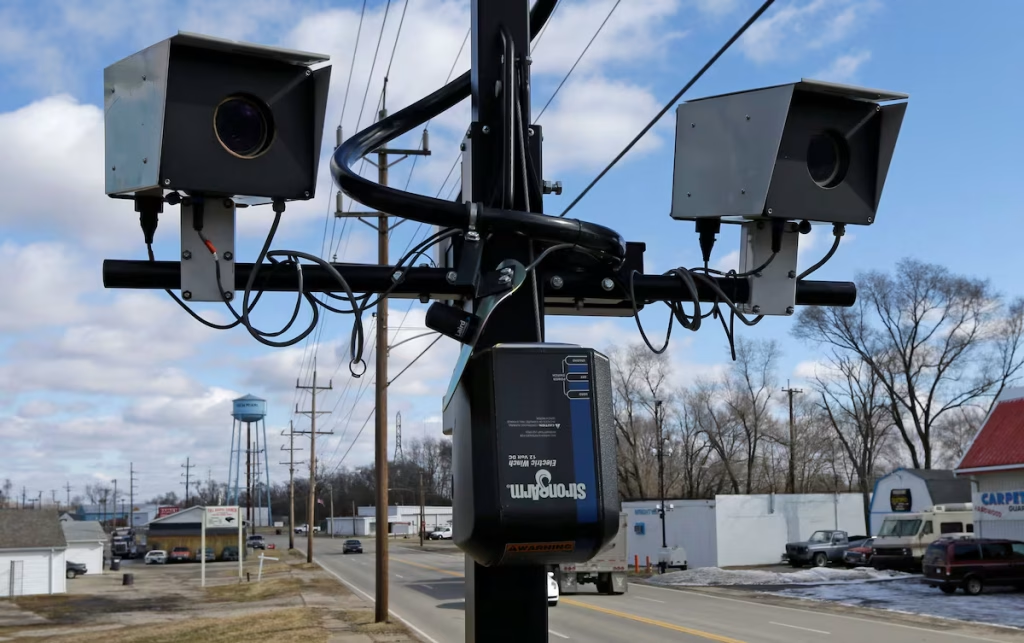
The state’s updated law became effective June 16, 2026, giving the change a clear place in the year’s traffic-law timeline.
For Ohio motorists, the safest approach remains familiar: obey posted speed limits and traffic signals, especially in locations where automated enforcement is legally authorized.
10. Connecticut Expanded Its Impaired-Driving Enforcement Framework
Connecticut added another layer to impaired-driving enforcement in 2026 through legislation addressing advanced roadside impaired-driving enforcement and drug-recognition training. The measure became effective July 1, 2026, and established an impaired-driving enforcement and drug-recognition training account.
The legislation is particularly relevant because impaired driving is no longer limited to the traditional question of alcohol concentration. Law enforcement agencies increasingly deal with cases involving drugs, combinations of substances, and drivers whose impairment may not be obvious from a simple alcohol measurement.
Connecticut’s 2026 legislation specifically references advanced roadside impaired-driving enforcement and Drug Recognition Experts, commonly called DREs. DRE officers receive specialized training designed to help identify signs associated with drug impairment.
The law creates a dedicated account for training purposes, with funds intended to support enforcement and drug-recognition education. That means the change is primarily about strengthening the state’s enforcement capability rather than creating a new speed limit or changing a routine traffic maneuver.
For drivers, the message is significant even though the law may not alter what appears on a typical road sign. A motorist who believes impairment laws apply only to alcohol is misunderstanding the modern enforcement environment.
Driving while impaired by drugs can carry serious consequences, and Connecticut’s 2026 legislation reflects the state’s effort to give officers additional tools and training.
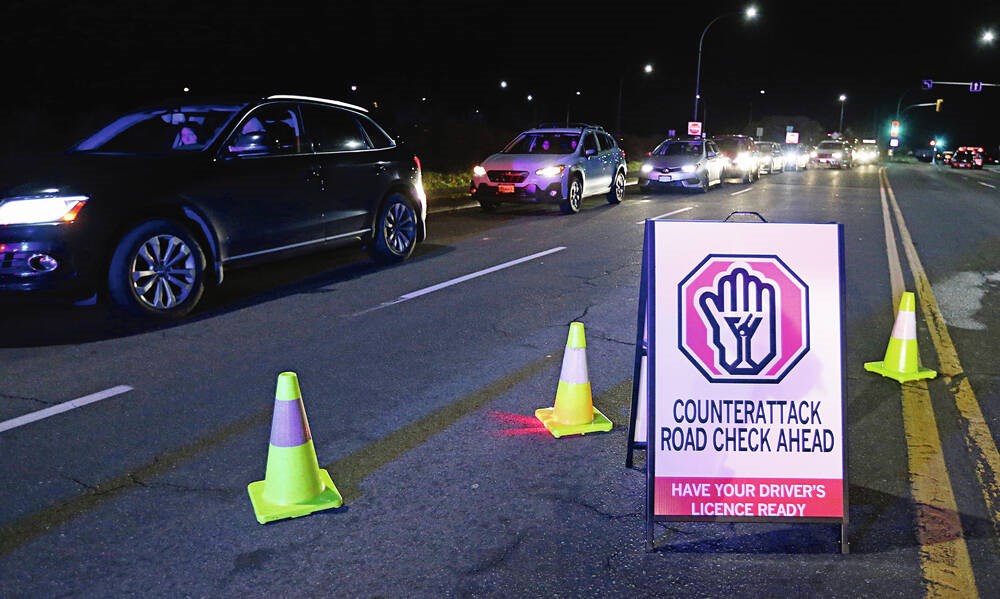
The law’s July 1 effective date also places it among the wave of state traffic-safety changes that took effect during the middle of 2026. NCSL’s nationwide tracking shows that states continue to legislate heavily in areas including impaired driving, driver licensing, speeding, and pedestrian safety.
For Connecticut drivers, the practical rule has not become complicated: operating a vehicle while impaired remains dangerous and unlawful. What changed in 2026 is the state’s investment in the tools and training used to identify that behavior.
