
Premium gasoline is one of those automotive expenses that can leave drivers wondering whether they are buying something their car actually needs. At the pump, the higher price can make premium fuel seem like a performance upgrade, but octane does not work that way.
Higher-octane gasoline is primarily about resisting engine knock, not automatically producing more power.
Whether premium fuel matters depends on the engine’s compression ratio, turbocharging, ignition strategy, and, most importantly, what the vehicle manufacturer specifies. For some engines, premium is essential to achieving the advertised performance. For others, regular gasoline is perfectly acceptable.
The difference can also be surprisingly important for modern turbocharged engines, which can adjust their operation depending on the fuel available.
The U.S. Environmental Protection Agency explains that octane measures a fuel’s resistance to knocking or pinging during combustion. Higher-octane gasoline can withstand greater pressure before uncontrolled combustion occurs. That is why high-performance and highly boosted engines may require or recommend premium fuel.
But a higher octane rating does not mean the fuel contains more energy or that every vehicle will accelerate faster on it.
What Octane Actually Does Inside an Engine
To understand when premium gasoline matters, it helps to separate octane from energy content. During normal combustion, the spark plug ignites the compressed air-fuel mixture at the appropriate point. The flame should travel through the combustion chamber in a controlled manner.
Knock occurs when part of the unburned mixture ignites prematurely or independently because pressure and temperature become high enough. That creates pressure waves that can produce the familiar metallic knocking sound and, under severe conditions, damage engine components.
Higher-octane gasoline is more resistant to this phenomenon. The EPA notes that using gasoline with an octane rating lower than the vehicle manufacturer recommends can cause engine knock and potentially lead to damage.
Modern engines have knock sensors and engine-management systems that can detect the problem and adjust ignition timing, but that does not mean using the wrong fuel is desirable.
This is why manufacturers specify different fuel requirements. An engine designed around regular gasoline has its combustion system calibrated to operate properly on that fuel.
An engine designed to exploit higher octane can use the additional knock resistance to operate with more aggressive ignition timing, higher boost pressure, or other strategies that can improve performance and efficiency.
The important distinction is between premium required and premium recommended. If the owner’s manual says premium fuel is required, using regular gasoline means the driver is operating outside the manufacturer’s specified fuel requirement.
If premium is merely recommended, the situation is different. The engine may continue operating safely on regular fuel, although performance, fuel economy, or towing capability can change depending on the vehicle.
AAA has similarly explained that drivers should follow the manufacturer’s recommendation rather than assuming that premium fuel automatically benefits every engine. Its research found that premium fuel generally provides little benefit in vehicles designed to run on regular gasoline.
Turbocharged Engines Are Where Premium Can Matter Most
Modern turbocharging has made the premium-fuel question more complicated. A turbocharger forces additional air into the engine. More air allows the engine to burn more fuel and produce more power, but it also increases cylinder pressure and combustion temperatures.
That can increase the tendency toward knock. Manufacturers therefore frequently use higher-octane requirements or recommendations on turbocharged engines, particularly when they are tuned for substantial boost and performance.
However, not every turbocharged engine requires premium. Some manufacturers deliberately design turbocharged engines to operate on regular fuel. Engine management can adjust boost, ignition timing, and other parameters to accommodate different fuel qualities.
The owner’s manual and fuel-door label remain the best sources for determining what a particular engine requires.
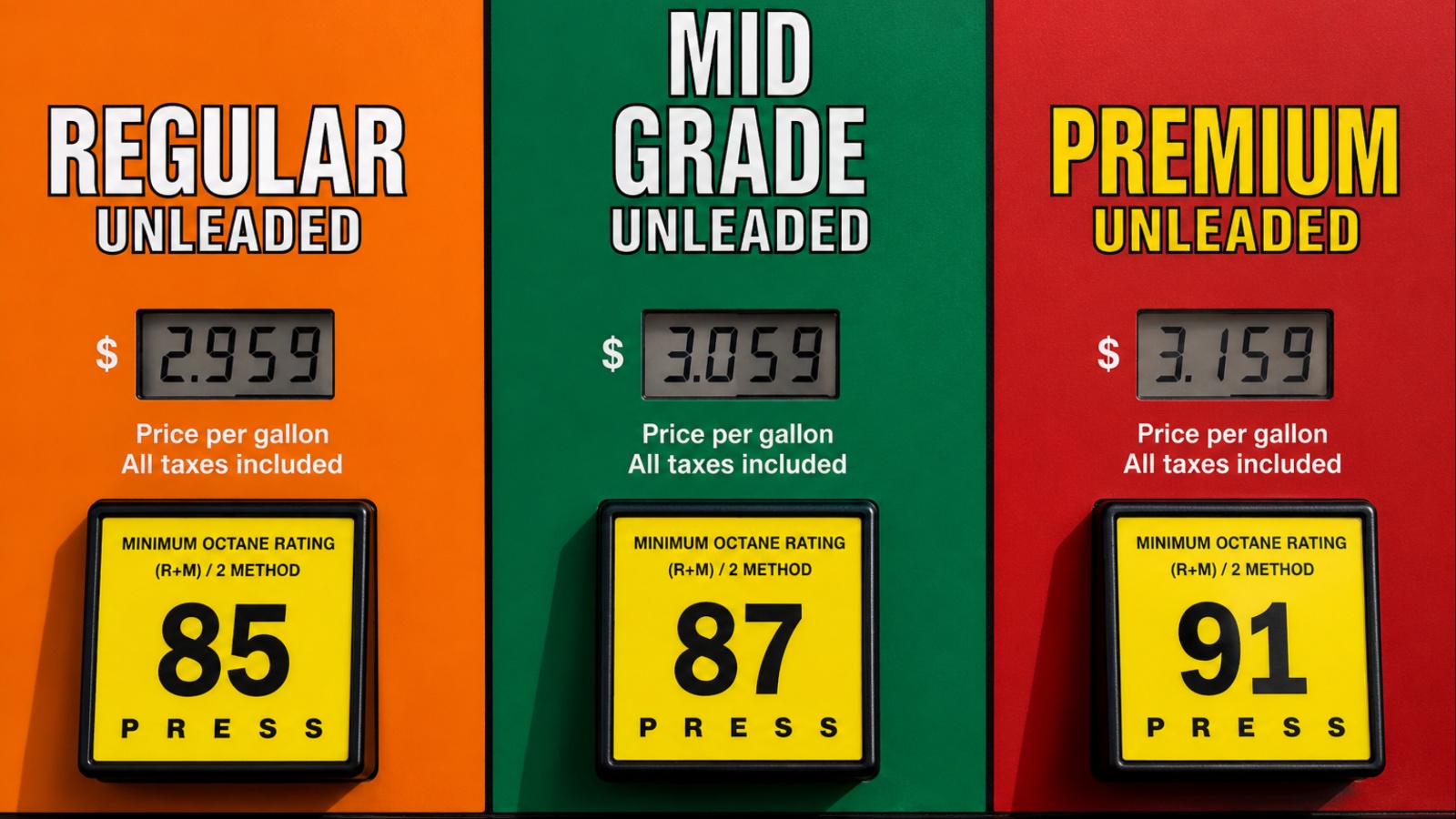
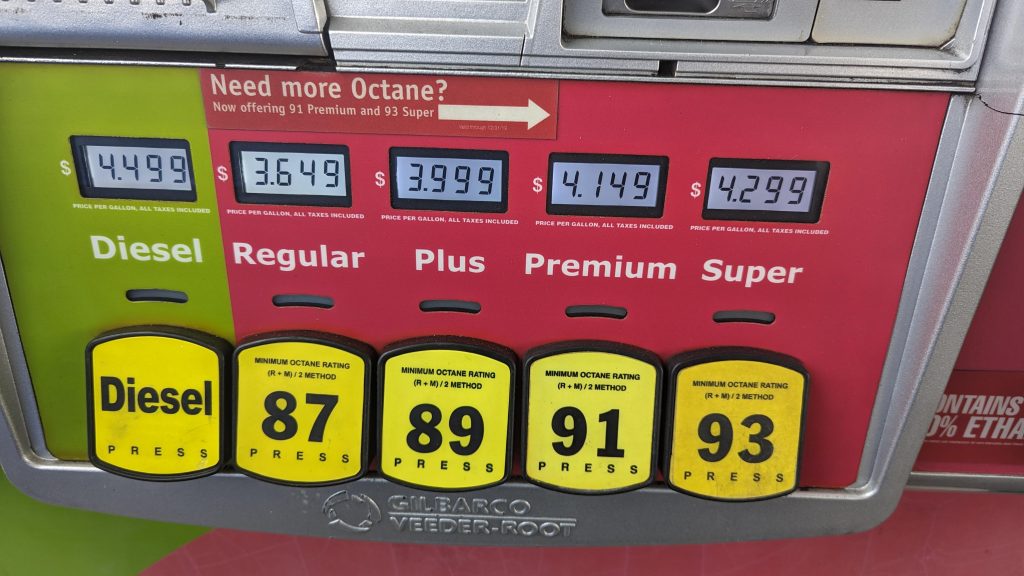
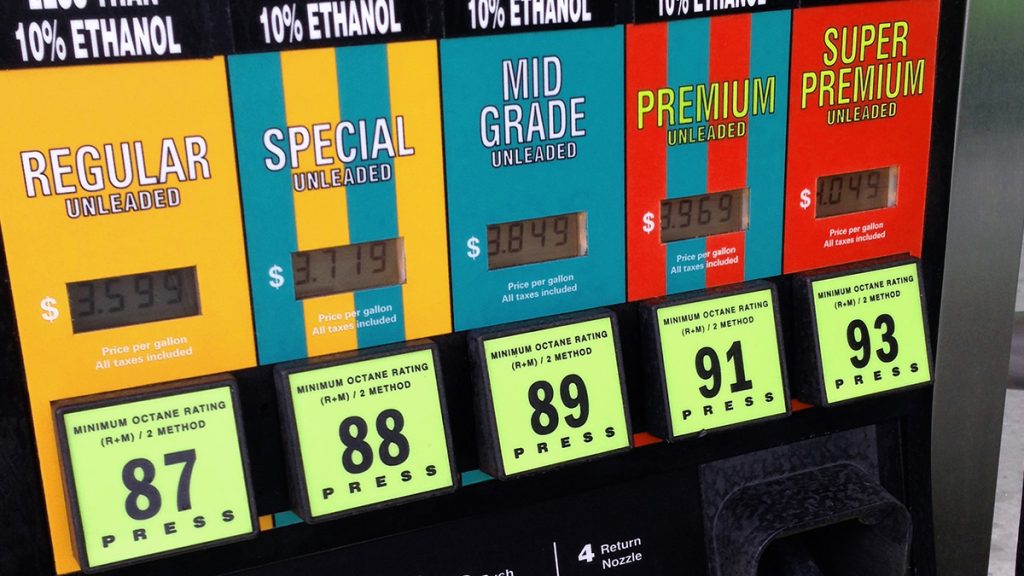
This is especially important because premium gasoline is not defined simply as “better gasoline.” In the United States, regular gasoline is commonly rated at 87 octane, while premium is typically 91 or 93 octane, depending on the market and retailer.
The Federal Trade Commission requires gasoline octane ratings to be posted at the pump so consumers can identify the fuel’s anti-knock rating.
The higher number indicates greater resistance to knock, not greater cleanliness, greater energy density, or a guaranteed horsepower increase.
That means putting 93-octane fuel into an ordinary naturally aspirated engine designed for 87 does not automatically transform its performance. The engine’s calibration determines what it can take advantage of.
Some modern engines can detect fuel quality and optimize operation accordingly. If an engine is capable of taking advantage of higher octane, premium may produce a measurable improvement under certain conditions. But the magnitude varies by vehicle.
AAA’s testing of vehicles that recommended but did not require premium fuel found that the financial return from higher-octane gasoline was generally insufficient to offset its higher cost. The organization concluded that drivers of vehicles designed for regular fuel should not expect meaningful benefits from routinely buying premium.
When Paying for Premium Makes Sense
There are three basic situations in which premium gasoline can genuinely matter. The first is when the manufacturer requires it.
This should be treated as a requirement rather than a suggestion. High-compression engines, powerful turbocharged engines, and certain performance engines may be calibrated specifically around premium fuel’s greater knock resistance.
The second is when premium is recommended. Here, the vehicle can generally operate on regular gasoline, but premium may allow the engine to deliver its full rated performance or achieve its best fuel economy under certain operating conditions.
This can become noticeable during heavy acceleration, towing, high ambient temperatures, or other situations that increase engine load.
The third is when an engine’s control system can exploit higher octane even though premium is not strictly required.
Some modern vehicles can adjust ignition timing and other parameters based on detected knock. In those cases, higher-octane fuel can sometimes provide a modest performance or efficiency benefit. But whether that benefit is large enough to justify the extra cost depends on the individual vehicle.
Another common misconception is that premium fuel cleans an engine simply because it carries a higher octane rating. Octane affects the fuel’s resistance to knocking, not its ability to remove deposits or clean engine components.
Octane and detergent content are separate characteristics. A fuel can have a high octane rating without necessarily providing additional cleaning benefits, while regular gasoline can contain effective detergent additives.
The Federal Trade Commission also notes that gasoline sold in the United States must meet minimum detergent requirements established under federal regulations. For drivers trying to save money, the calculation is therefore relatively simple.
If the manufacturer says 87 octane is acceptable, there is generally little reason to pay more for 91 or 93 unless the vehicle’s documentation specifically says higher octane provides a meaningful benefit.
If the manufacturer says premium is recommended, the driver can consider whether the additional performance or economy justifies the price difference. If premium is required, using the specified fuel is the appropriate choice.
The difference becomes particularly significant when considering long-term fuel costs. A driver who spends an extra 50 cents per gallon on premium and fills a 15-gallon tank every week could spend roughly $390 more per year compared with regular gasoline.
The exact figure obviously depends on local prices and driving habits, but it illustrates why unnecessary premium purchases add up.
At the same time, trying to save money by using significantly lower-octane fuel than recommended is not a sensible strategy for an engine that requires premium.
Modern engine computers can protect against knock by reducing ignition advance and altering other operating parameters, but those safeguards exist to protect the engine, not to make an incorrect fuel choice optimal. The best answer is therefore printed in the owner’s manual and often on the fuel-filler door.
Premium gasoline matters when an engine is designed or calibrated to take advantage of its higher resistance to knock. It does not automatically make every engine more powerful, cleaner, or more efficient.
For a regular-fuel engine, paying extra is usually unnecessary. For a premium-recommended engine, it can provide a measurable but vehicle-dependent benefit. And for a premium-required engine, the higher cost is simply part of what it takes to operate the vehicle as designed.
The smartest approach is not to buy the most expensive gasoline at the pump. Buy the octane your engine actually needs.
