
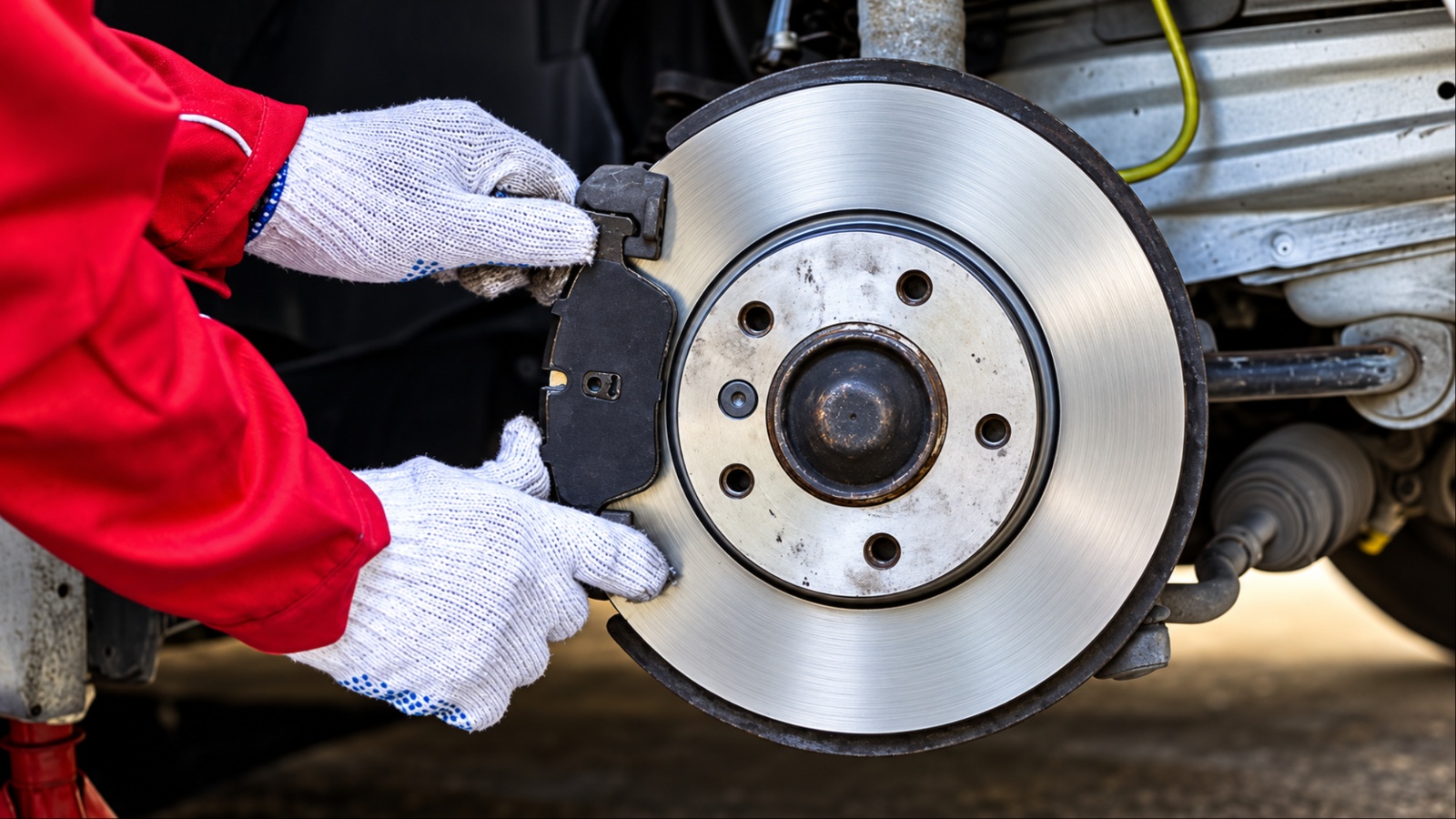
Brake pads are designed to wear, but some driving habits can make them disappear far sooner than expected. There is no universal mileage figure for brake replacement because vehicle weight, brake design, traffic, terrain, driving style, and pad material all influence service life.
AAA notes that brake pads commonly last about 30,000 to 80,000 miles, while other automotive sources cite ranges beginning around 25,000 miles.
That means reaching the 30,000-mile mark with badly worn brakes is possible when the vehicle is subjected to demanding conditions. The good news is that several causes of premature wear come directly from driver behavior.
1. Riding the Brake Pedal
Resting your foot on the brake pedal may seem harmless, especially in slow traffic or while traveling downhill, but it can quietly turn a brake system into a heat generator.
Even light, continuous pedal pressure keeps the brake pads partially engaged with the rotors, creating friction when you are not actually trying to stop. That friction produces heat and consumes friction material unnecessarily.
Firestone Complete Auto Care specifically identifies riding the brakes as a habit that can shorten brake-pad life and contribute to excessive heat. AAA also advises drivers to avoid keeping pressure on the brake pedal unnecessarily because repeated friction accelerates wear.
The problem becomes more serious at higher speeds or on long descents. Brake components need opportunities to shed heat. Holding the pedal down continuously gives them fewer chances to cool, while sustained friction can affect both pads and rotors.
There is another clue that you may be doing this without realizing it. If your brake lights remain illuminated frequently when traffic is moving, your foot may be resting on the pedal. Some drivers develop the habit simply because they are maintaining a small amount of pressure rather than allowing the vehicle to coast naturally.
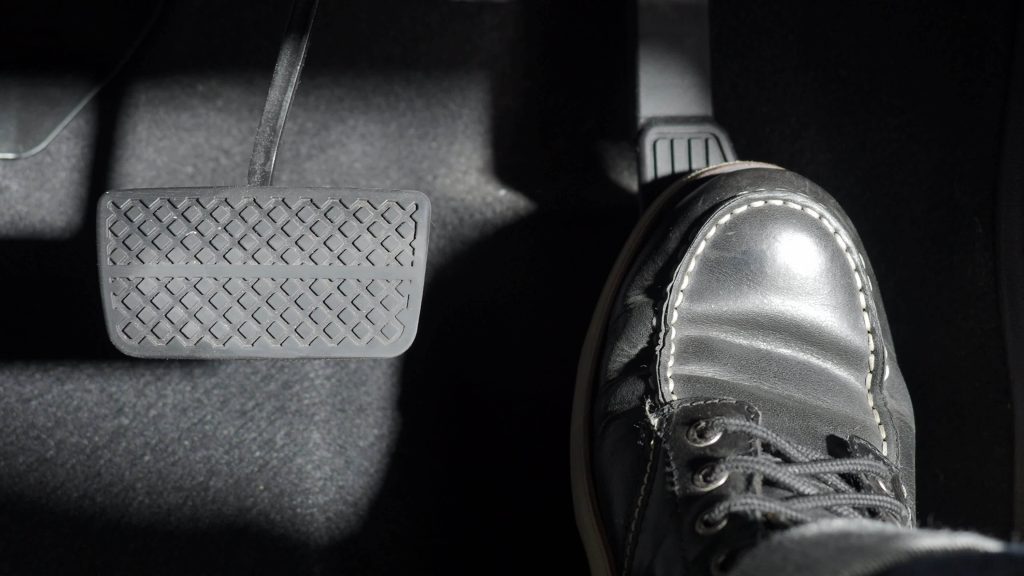
A better technique is to maintain a reasonable following distance and use the accelerator less aggressively. When slowing is necessary, make a deliberate brake application rather than maintaining constant pedal pressure.
On suitable downhill sections, use the vehicle’s appropriate lower gear or engine-braking function rather than relying entirely on the friction brakes.
Brake pads are consumable components, but they should not be treated like a footrest. Eliminating this habit can reduce unnecessary heat and friction, helping the braking system last longer.
2. Waiting Until the Last Second to Brake
Leaving braking until the final moment can turn an ordinary traffic situation into a high-energy stop. The harder and more abruptly a vehicle must decelerate, the greater the demand placed on its braking system.
Repeatedly accelerating toward traffic and then making aggressive stops creates considerably more friction and heat than smoothly adjusting speed well before reaching the vehicle ahead.
AAA identifies fast, hard braking as a habit that puts additional strain on brake pads and can shorten their service life. Firestone similarly notes that aggressive driving and last-minute braking generate excessive heat, while rapid acceleration followed by hard braking can contribute to faster pad and rotor wear.
This habit is especially punishing in congested urban traffic. Instead of making one controlled stop, a driver may repeatedly approach vehicles too quickly, brake hard, accelerate again, and repeat the cycle. Each event demands more work from the friction surfaces.
The solution is less dramatic than the braking itself. Look farther ahead and anticipate what traffic is doing. If vehicles several car lengths ahead are already slowing, gradually releasing the accelerator can reduce speed before the brakes are needed. Maintaining a sensible following distance also creates more room for controlled deceleration.
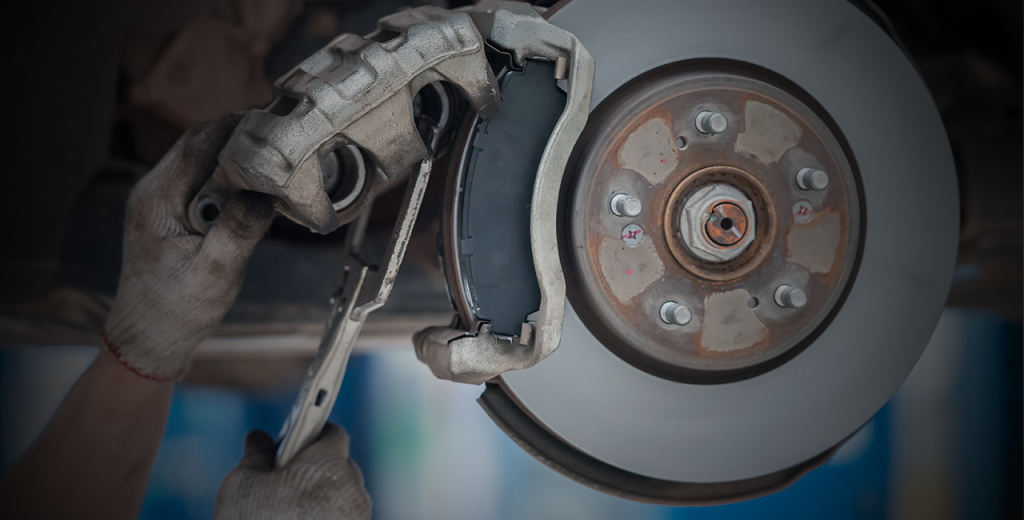
This does not mean avoiding firm braking when an emergency requires it. Modern braking systems are designed for hard stops, and safety always comes first. The problem is making unnecessarily aggressive stops part of everyday driving.
Brake lifespan varies substantially, so no driver can guarantee a particular mileage figure. AAA places typical pad life around 30,000 to 80,000 miles, depending on conditions and habits. Repeated last-second braking can push a vehicle toward the lower end of that range, making smooth anticipation one of the easiest ways to reduce premature wear.
3. Following Too Closely and Braking Repeatedly
Tailgating does more than increase crash risk. It can also turn every traffic change into a brake-wearing event. When a driver follows too closely, there is less time to react to slowing traffic, so the usual result is repeated, sharper braking.
AAA specifically recommends maintaining a safe following distance and anticipating traffic to reduce unnecessary hard stops.
The pattern is easy to recognize. Traffic ahead slows slightly, the tailgating driver hits the brake, the gap becomes larger, and then the accelerator is pressed again. A few seconds later, the process repeats. In heavy traffic, those cycles can happen dozens of times during a commute.
Braking converts the vehicle’s motion into heat through friction at the pads and rotors. Repeated hard applications therefore increase thermal stress as well as friction-material consumption. AAA notes that brake life depends heavily on driving habits and that aggressive braking can shorten service life.
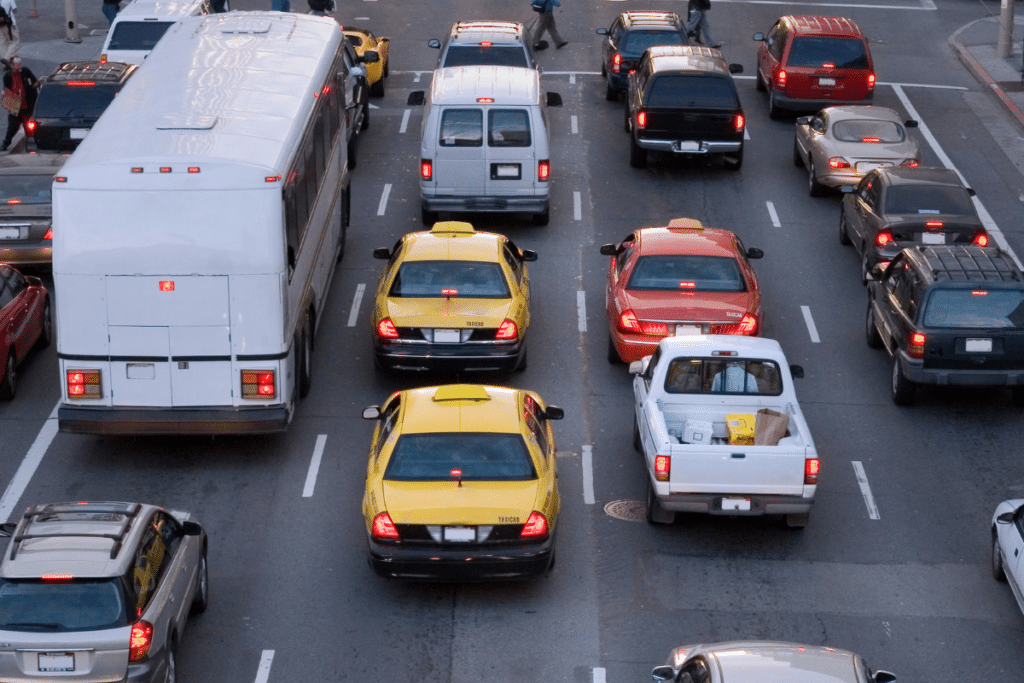
The simple fix is to create more space. AAA’s guidance suggests at least three seconds of following distance in good conditions, with four seconds or more when weather or visibility is poor. That extra space gives the driver time to lift off the accelerator and let the vehicle slow naturally before applying the brakes.
This habit can also make driving less tiring. Instead of constantly responding to the vehicle immediately ahead, you can read traffic several cars forward and adjust speed gradually. Emergency braking should always be used when necessary, but it should not become the normal method of controlling speed.
4. Carrying Excessive Weight All the Time
Extra weight may not seem like a brake problem because the engine is responsible for moving the vehicle, but the braking system must ultimately bring that additional mass to a stop. Keeping unnecessary heavy equipment, tools, cargo, or accessories in a vehicle can therefore increase the workload placed on its brakes.
AAA specifically advises drivers to remove unnecessary cargo because heavier vehicles gain more momentum and require the brakes to work harder to stop. The organization also warns that continuously carrying heavy cargo or towing a trailer or camper adds strain to the braking system.
The effect becomes more noticeable when extra weight is combined with frequent stops, hills, or aggressive driving. A vehicle that spends every day carrying hundreds of unnecessary pounds is repeatedly asking its braking system to dissipate more energy than it would when lightly loaded.
That does not mean drivers should remove essential equipment or avoid using a vehicle for its intended payload. Automakers establish specific payload and towing limits, and staying within those limits is critical. The problem is treating the vehicle like permanent storage and carrying things that are rarely needed.
Consider what is sitting in the trunk, cargo area, or rear seat. Boxes of tools, unused equipment, spare materials, and other heavy objects can accumulate over time. Removing them costs nothing and reduces the amount of mass the brakes have to slow.
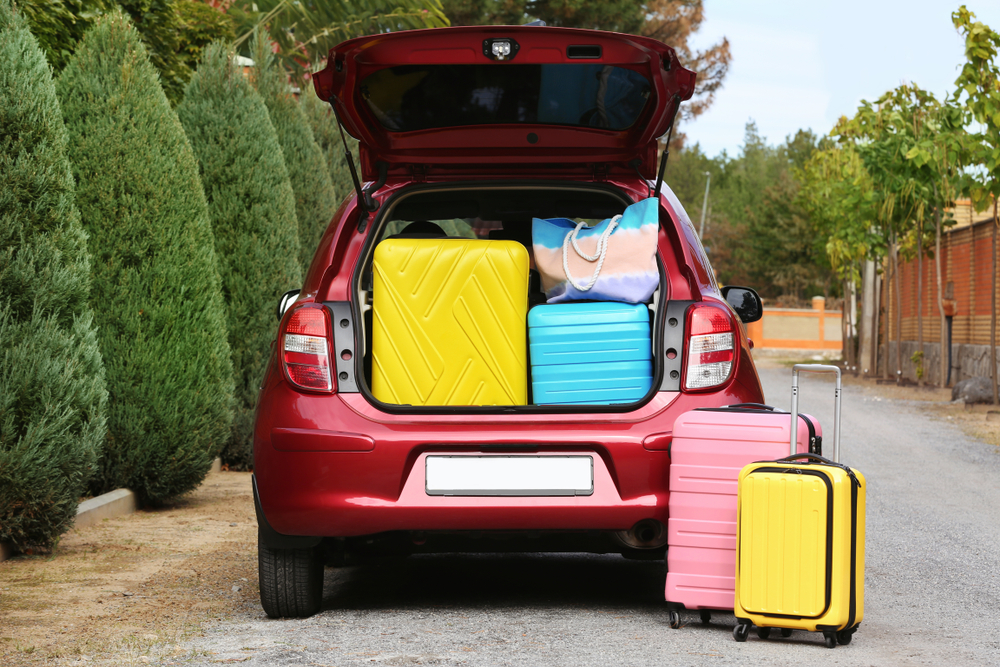
Weight is also relevant during towing. AAA points out that trailer or camper loads add strain to the braking system. Drivers who tow regularly should follow the vehicle manufacturer’s towing and payload limits rather than assuming the vehicle can handle any trailer simply because it can physically move it.
A lighter vehicle is not a substitute for properly maintained brakes, but eliminating unnecessary weight is an easy way to reduce repeated braking demand.
5. Speeding Up Between Every Stop
Constantly accelerating hard only to brake again is one of the easiest ways to put unnecessary work into a vehicle’s braking system. The problem is not acceleration itself. It is the repeated cycle of building speed and then immediately converting that extra speed into heat through the brakes.
AAA recommends anticipating traffic conditions and avoiding unnecessary hard braking because driving habits have a direct effect on brake wear. In stop-and-go traffic, a driver who repeatedly rushes toward the next vehicle before braking is asking the pads and rotors to handle more energy than necessary.
Speed makes an important difference because the kinetic energy that brakes must dissipate increases rapidly as speed rises. Doubling speed does not simply double the energy involved. For a given vehicle mass, kinetic energy increases with the square of speed. That is why reducing speed earlier can make a meaningful difference to braking demand.
A smoother approach is to look beyond the vehicle directly ahead. If a traffic light is red or several vehicles are already slowing, lifting off the accelerator sooner allows the vehicle to lose speed naturally. You can then use the brakes for the remaining deceleration instead of making a hard stop.

This technique also reduces the temperature spikes associated with repeated aggressive braking. Brake components are designed to handle substantial heat, but unnecessary heat adds stress and accelerates wear.
There is no universal mileage at which brakes must be replaced. Driving environment, vehicle weight, brake design, and driving style all influence service life. However, eliminating needless acceleration followed by hard braking removes one avoidable source of wear.
6. Ignoring a Soft or Spongy Brake Pedal
A soft or spongy brake pedal should never be treated as a minor annoyance. It can indicate a problem within the hydraulic braking system, and continuing to drive without investigating it can turn a relatively manageable repair into a serious safety issue.
A healthy hydraulic brake system should provide a consistent pedal response. If the pedal suddenly feels softer than normal, travels farther toward the floor, or requires repeated pumping to achieve the expected braking response, something has changed.
Possible causes include air in the hydraulic system, a fluid leak, worn components, or other brake-system faults.
The National Highway Traffic Safety Administration advises motorists to pay attention to warning signs involving vehicle braking performance and have suspected brake problems inspected promptly. Brake fluid is particularly important because hydraulic pressure is what transfers pedal force to the braking components.
A soft pedal can also cause indirect brake wear. If the driver feels that the vehicle is not stopping normally, they may press harder or repeatedly apply the pedal. That does not fix the underlying problem. Instead, it can increase heat and friction while leaving the actual fault unresolved.
The correct response is inspection, not adaptation. Do not simply become accustomed to a pedal that feels different from when the vehicle was operating normally.
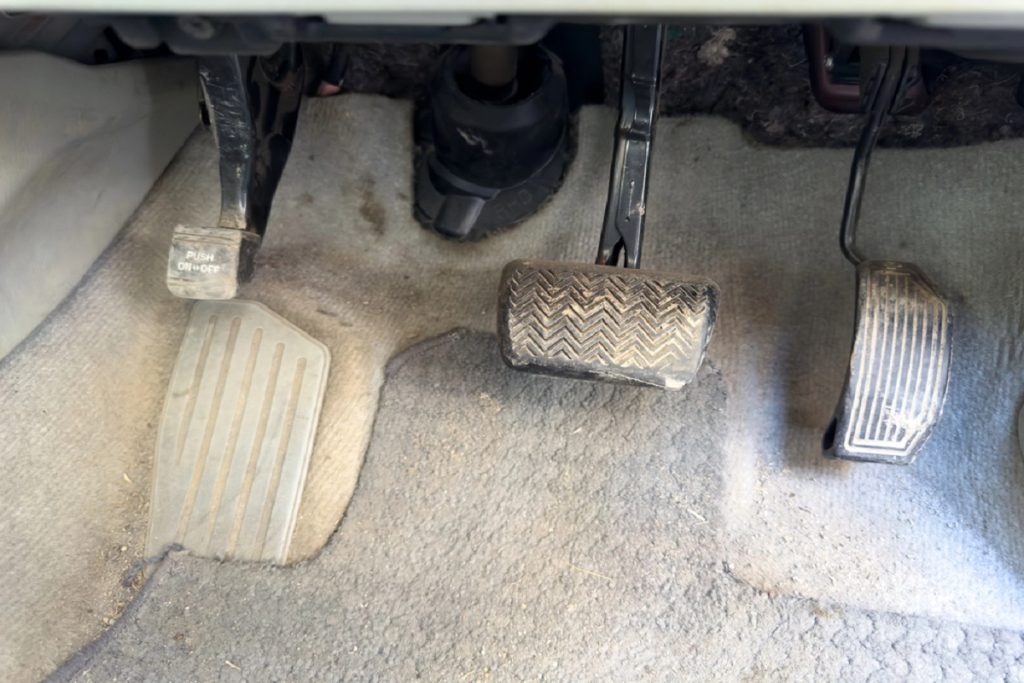
Drivers should also check the brake-fluid level according to the vehicle manufacturer’s instructions and look for signs of leakage. However, topping off fluid should not be considered a repair if the level is unexpectedly low.
Brake components are safety-critical equipment. A change in pedal feel deserves attention before it becomes an emergency, and catching the underlying problem early can prevent additional damage as well as unnecessary wear.
7. Driving Down Long Hills With Constant Brake Pressure
Long downhill stretches can punish brakes even when the vehicle is operating normally. Keeping steady pressure on the brake pedal for an extended descent creates continuous friction between the pads and rotors, allowing heat to build faster than the system can dissipate it.
AAA specifically recommends using lower gears on long or steep downhill sections rather than relying entirely on the brakes.
The smarter approach is to let the vehicle’s drivetrain help control speed. In a manual transmission, selecting an appropriate lower gear can increase engine braking. Many automatic vehicles also provide lower gear selections or other controls that allow drivers to manage speed without keeping the friction brakes continuously engaged.
This does not mean the brake pedal should never be used downhill. Drivers should brake when necessary, particularly if traffic changes or the vehicle begins to exceed a safe speed. The goal is to avoid constant, light pressure for miles at a time.
Heat is the key issue. Brake pads and rotors are designed to operate at elevated temperatures, but excessive heat can accelerate wear and contribute to brake fade. Brake fade occurs when braking performance decreases because the system has become excessively hot.
The risk increases when a vehicle is heavily loaded or towing a trailer. More mass means the braking system has more energy to dissipate during deceleration. Mountain roads can therefore expose poor braking habits much faster than ordinary city driving.
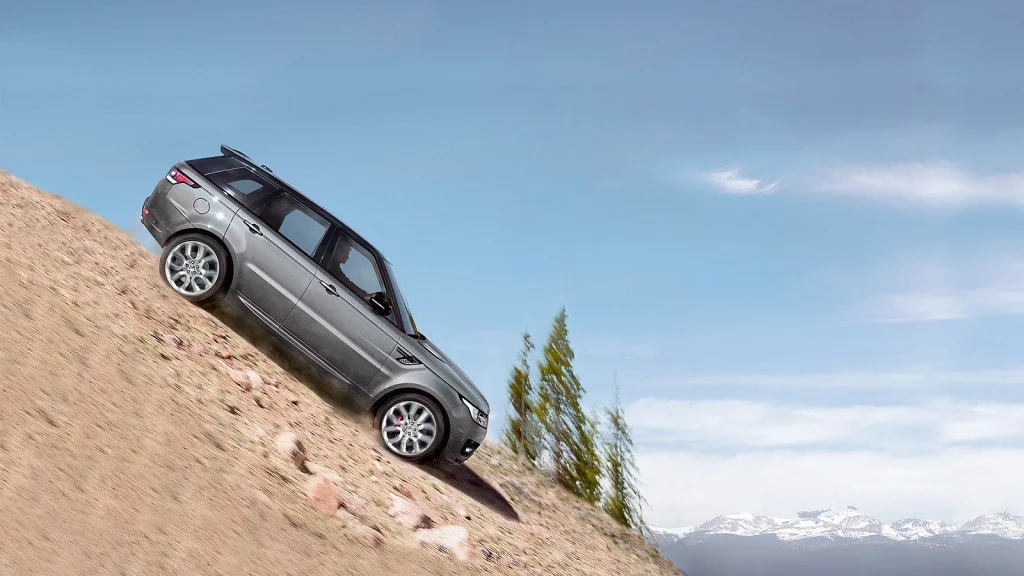
Before a long descent, drivers should reduce speed appropriately and select the correct gear before the steepest section begins. Avoid riding the pedal throughout the descent, and use controlled braking rather than continuous pressure.
A driver who develops this habit may not notice immediate damage, but repeated high-temperature braking can shorten component life. Using engine braking correctly is a simple way to reduce unnecessary friction while maintaining better control on long downhill roads.
8. Braking Hard With Cold Brakes Again and Again
Brakes need to operate within their intended temperature range, and repeatedly demanding maximum stopping performance before the system has had time to stabilize can accelerate wear. This can happen during aggressive driving, repeated high-speed stops, or situations where a driver repeatedly accelerates and then brakes heavily.
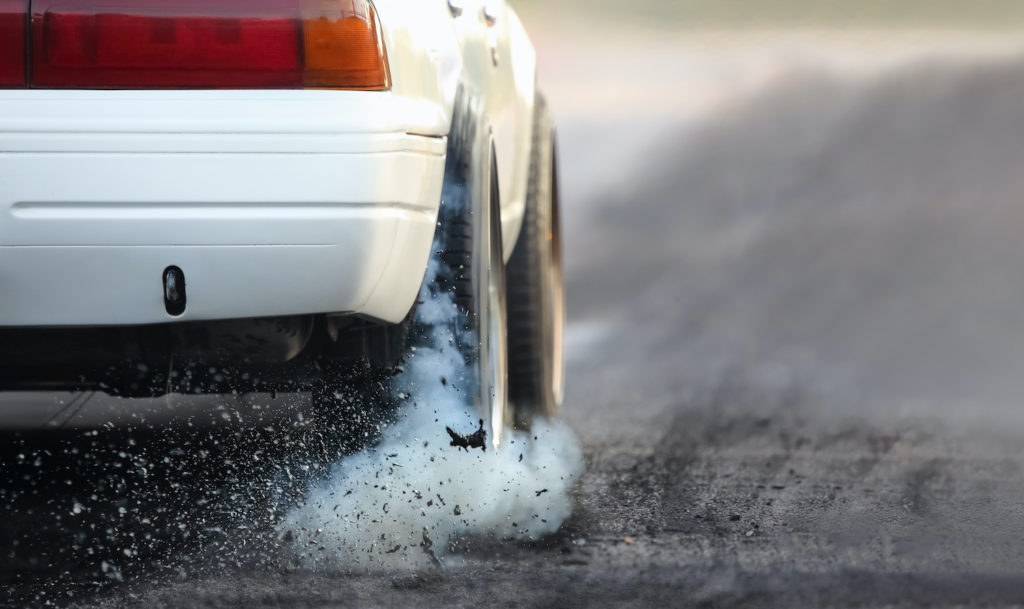
Brake pads work by creating friction against the rotors, converting the vehicle’s kinetic energy into heat. Every stop therefore consumes some friction material. When the stops are particularly hard or frequent, the amount of heat generated rises significantly.
The issue is especially noticeable during spirited driving. A driver may brake heavily for one corner, accelerate hard, then repeat the process at the next corner. Performance brakes can tolerate demanding use, but repeated high-energy stops still create considerably more thermal stress than normal commuting.
AAA identifies aggressive driving and frequent hard braking as factors that can reduce brake-pad life.
Drivers do not need to treat every stop delicately. Emergency braking should always be decisive when avoiding a collision. The problem is unnecessary hard braking when a smoother reduction in speed would have been sufficient.
Maintaining a larger following distance can help eliminate many of these situations. Instead of waiting until the last moment, the driver has room to reduce speed progressively.
Vehicle manufacturers also specify maintenance intervals and inspection procedures for brake components. Following those recommendations is important because a pad or rotor that is already heavily worn has less material available to absorb repeated heat cycles.
For everyday driving, a smoother approach can make a significant difference. Anticipate traffic conditions, begin slowing sooner, and rely on heavy braking only when it is truly necessary. This helps limit the intense heat cycles placed on the braking system and can reduce premature wear before the vehicle reaches 30,000 miles.
9. Riding the Brakes in Heavy Traffic
Keeping your foot lightly pressed against the brake pedal may feel harmless, particularly in congested traffic, but doing it repeatedly can create unnecessary heat and friction. The problem becomes more serious when a driver maintains pedal pressure instead of allowing the vehicle to roll naturally when traffic provides enough space.
Brake pads are designed to contact the rotor when braking is required. If the brakes remain partially engaged, that friction continues while the vehicle is moving. Even light contact can gradually generate heat, especially when repeated throughout a long commute.
AAA recommends avoiding unnecessary braking and anticipating traffic conditions to reduce brake wear. A driver who watches traffic several vehicles ahead can often predict when the flow is slowing and adjust the accelerator instead of constantly touching the brake pedal.
This habit is particularly easy to develop in stop-and-go traffic. Drivers sometimes alternate between accelerator and brake every few seconds, even when traffic is moving steadily. That repeated input creates unnecessary brake applications and can make the commute harder on both the braking system and the driver.
A better technique is to leave enough space for the vehicle to slow naturally when traffic permits. When braking is actually necessary, apply the pedal smoothly and release it once the required speed has been reached.
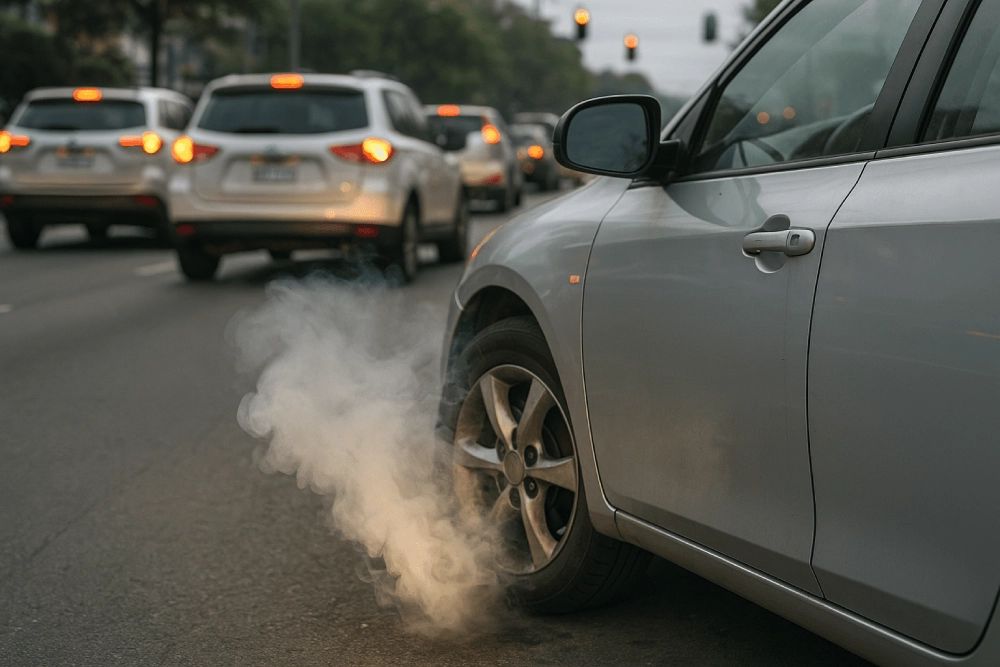
Drivers should also pay attention to unusual sensations. A burning smell or unusual heat from a wheel or a vehicle that seems reluctant to roll can indicate a brake that is dragging rather than simply normal pad wear.
Correcting the habit costs nothing. It requires only greater awareness of pedal position and traffic movement. For drivers covering thousands of miles each year, eliminating unnecessary brake contact can reduce friction, heat, and premature component wear.
10. Delaying Brake Inspections Until Something Breaks
Waiting for a dramatic brake failure before inspecting the system is one of the costliest habits a driver can develop. Brake components wear gradually, and ignoring early warning signs can allow a relatively straightforward service issue to become a larger repair.
Brake pads become thinner as their friction material is consumed. Rotors can also develop wear patterns, corrosion, scoring, or thickness variations. Other components, including calipers and hydraulic parts, can develop problems that affect braking performance.
The National Highway Traffic Safety Administration advises motorists to pay attention to vehicle safety problems and address defects or maintenance concerns rather than continuing to operate a vehicle with known issues. Brake inspections are particularly important because the system directly affects stopping ability.
Warning signs should not be dismissed. Squealing, grinding, pulling to one side, vibration during braking, changes in pedal feel, or a brake warning light can all justify professional inspection. Not every noise means the same problem, but assuming that an unusual symptom will disappear is risky.
There is also no universal 30,000-mile replacement point for brakes. Some vehicles may need brake service much earlier, while others can travel substantially farther depending on driving conditions, vehicle design, and driving habits.
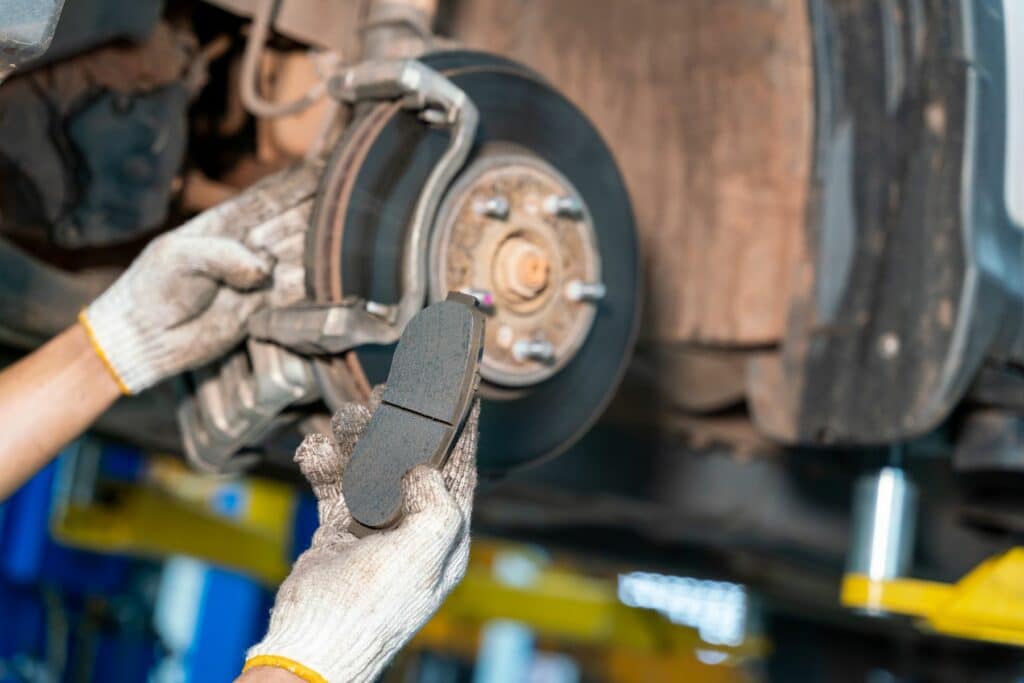
A manufacturer may provide inspection or maintenance guidance, but actual wear should determine whether components require replacement.
Routine inspections provide an opportunity to identify worn pads before they reach the backing plate and begin damaging other components. Catching problems early can also help prevent secondary damage to rotors or calipers.
Good brake maintenance is therefore less about replacing parts at a specific mileage and more about responding to actual condition. Drivers who inspect the system regularly are far less likely to discover a serious brake problem only when they urgently need to stop.
