
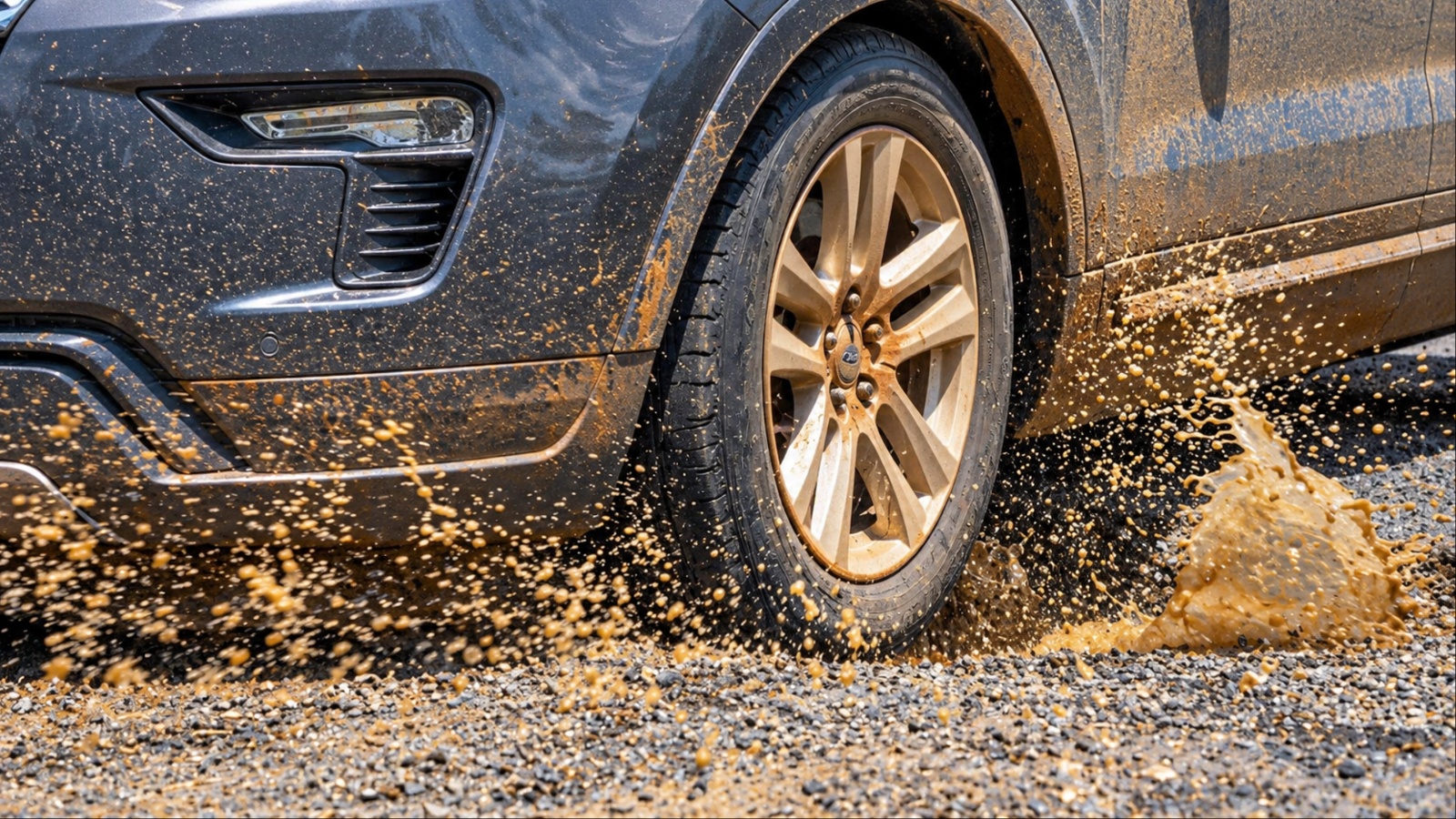
A pothole can look like a minor road defect, but the impact underneath a vehicle can be anything but minor. When a tire drops into a hole and strikes its edge, the resulting force travels through the tire, wheel, suspension, steering, and chassis.
A single severe impact can bend a wheel or damage a tire, while repeated hits can gradually loosen or wear suspension components.
The risk is higher when a driver hits a pothole at speed or cannot slow down beforehand. These are ten vehicle components most likely to suffer when pothole impacts become a regular part of everyday driving.
1. Tires
Tires are the first line of defense when a vehicle encounters a pothole, so they frequently absorb the initial impact. A tire dropping into a deep hole and then striking the far edge can experience a sudden compression force that is far greater than what it encounters on a smooth road.
One of the most common consequences is sidewall damage. The tire can become compressed between the road surface and wheel rim, producing what is often called a pinch impact. In severe cases, the internal cords can be damaged even when the external sidewall initially looks acceptable.
The National Highway Traffic Safety Administration warns that potholes and other road hazards can damage tires and wheels. Tire manufacturers also recommend inspecting tires after severe impacts because internal damage may not always be immediately visible.
A bulge on the sidewall is particularly serious. It can indicate that the internal structure has been damaged, leaving the tire unable to safely contain air pressure. A tire with a significant sidewall bulge should be replaced rather than repaired.
Potholes can also cause cuts, punctures, and tread damage. If the impact is strong enough, the tire can lose pressure immediately. A slower leak may develop instead, leaving the driver with a problem that becomes apparent hours or days later.

Tire pressure makes a difference too. An underinflated tire has less structural support and can be more vulnerable to impact damage. That does not mean overinflating the tire is a solution. The correct pressure is the pressure specified by the vehicle manufacturer on the tire-information placard or in the owner’s manual.
After hitting a particularly severe pothole, check the tire pressure and inspect both sidewalls. If the steering suddenly feels different or the vehicle begins pulling to one side, have the tire and suspension inspected promptly.
2. Wheels
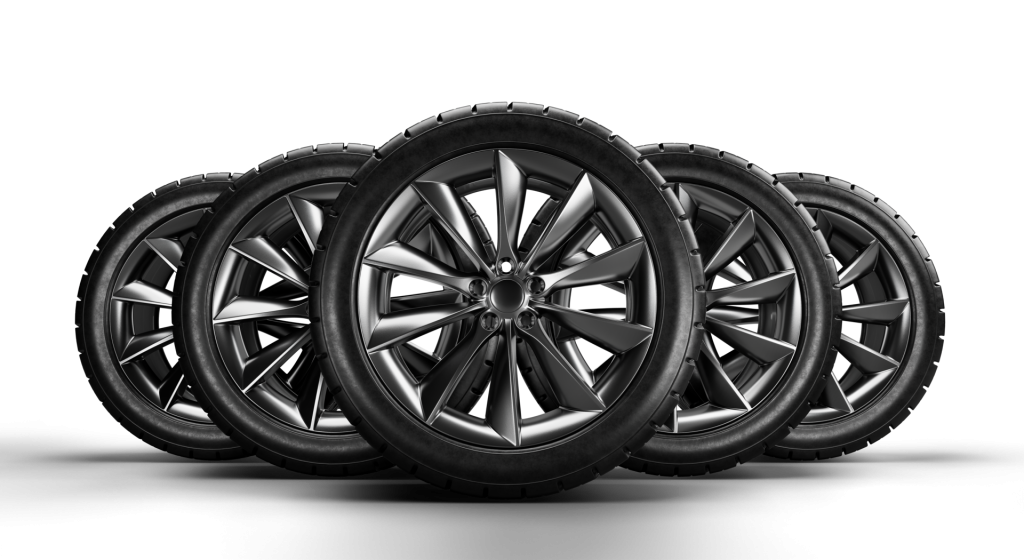
A pothole can damage a wheel even when the tire appears to have survived. The wheel takes the force transmitted through the tire, and a sufficiently severe impact can bend, crack, or deform the rim.
Steel wheels can sometimes tolerate impacts better than lightweight alloy wheels, but neither type is immune. Modern vehicles frequently use aluminum-alloy wheels because they reduce weight and offer styling advantages. Their rigidity and construction characteristics mean a major pothole strike can produce visible deformation or, in severe cases, cracking.
A bent wheel may cause symptoms that are easy to mistake for a tire problem. The steering wheel can develop a vibration, particularly at highway speeds. The vehicle may also lose tire pressure if the wheel no longer provides a proper seal against the tire bead.
The Federal Highway Administration recognizes potholes as a significant road-surface hazard, while vehicle manufacturers routinely advise drivers to inspect wheels and tires after severe impacts.
The most important clue is a change that appears immediately after hitting a hole. If the car was smooth before the impact and develops a vibration afterward, the wheel should be checked rather than assuming the problem will disappear.
A wheel does not necessarily need to be visibly bent to have a problem. Small deformations can affect balance or the tire’s seating surface. Some damage can also occur on the inside of the rim, where it is difficult to see without removing the wheel.
Repairability depends on the type and location of damage. A minor bend may be repairable by a qualified wheel specialist, while a cracked wheel generally requires replacement.
Drivers can reduce the risk by slowing before potholes whenever possible and avoiding hard braking or steering inputs while the wheel is inside the hole. But when an impact does happen, a new vibration or pressure loss deserves attention rather than being treated as normal road wear.
3. Shocks and Struts
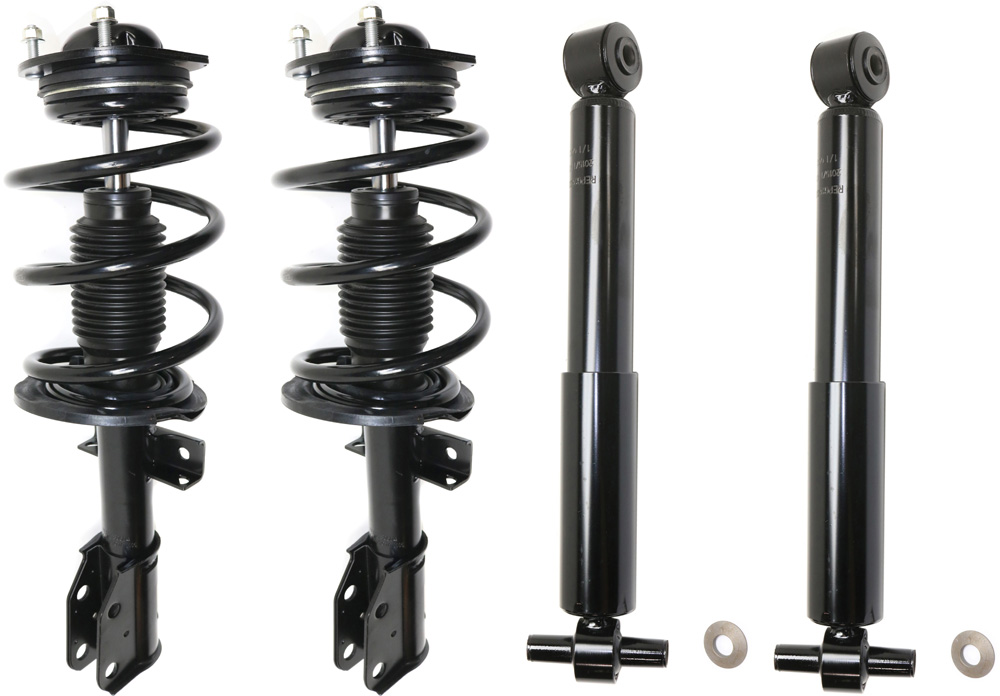
Shocks and struts are designed to control suspension movement, but a pothole produces an unusually sharp compression and rebound. A severe impact can overload these components, while repeated impacts can accelerate wear.
Monroe notes that repeated pothole strikes can cause premature wear in shocks and struts, with symptoms including excessive bouncing, swaying, vibration, and uneven tire wear.
The damage may not be obvious immediately. A tire or wheel problem can usually be spotted quickly, while a weakened strut may simply make the vehicle feel less controlled. You might notice the car bouncing more than usual after a bump, diving excessively under braking, or feeling unsettled through a turn.
Potholes can be particularly hard on strut assemblies because the strut performs both suspension and structural functions in many modern vehicles. A sufficiently hard impact can also affect the alignment associated with the suspension geometry.
Do not assume that a slightly rougher ride is simply the result of aging tires. If the change occurs immediately after a major pothole strike, the timing is important. A professional inspection can determine whether the shock or strut has been damaged or whether another suspension component is responsible.
Replacing worn components promptly also matters because poor damping can allow the wheel to move excessively over subsequent bumps. That can affect handling and contribute to uneven tire wear.
4. Control Arms
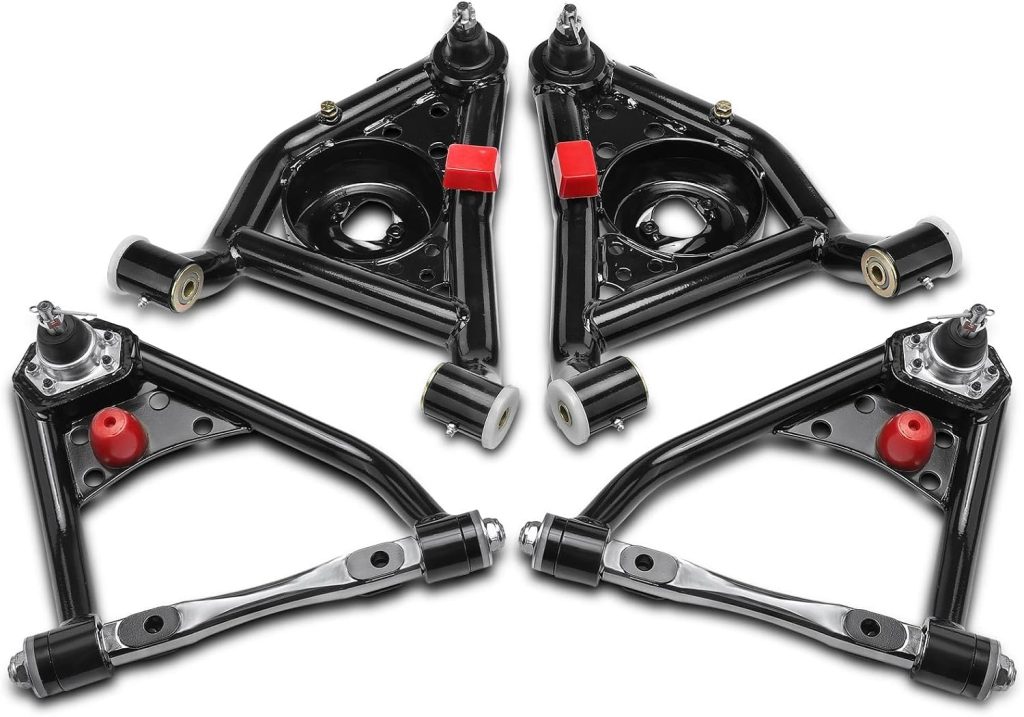
Control arms connect the wheel assembly to the vehicle’s structure while allowing the wheel to move through its suspension travel. They are therefore directly exposed to forces traveling upward from the tire and wheel after a pothole impact.
AAA specifically identifies control arms among the components that can be damaged, bent, or broken by potholes. A damaged control arm can change the position of the wheel and alter suspension geometry.
The first clue may not be a dramatic mechanical failure. Instead, the steering wheel might sit slightly off-center, the vehicle could begin pulling toward one side, or unusual tire wear could develop. A bent arm can change alignment angles even when the rest of the vehicle appears normal.
Repeated pothole impacts can also accelerate wear in the control arm’s bushings. These flexible components allow controlled suspension movement while reducing vibration and noise. When they deteriorate, drivers may notice clunks, looseness, or changes in handling.
The severity depends on the size and speed of the impact. One severe pothole can bend a component, while repeated smaller impacts may contribute to gradual deterioration.
A proper inspection should include the control arm itself and its mounting points. Simply performing an alignment without checking for bent or damaged hardware can leave the underlying problem unresolved.
Drivers should pay particular attention to a vehicle that suddenly feels different after a pothole. Pulling, uneven tire wear, vibration, or a new suspension noise is a reason to have the steering and suspension checked rather than assuming the vehicle merely needs new tires.
5. Tie Rod Ends
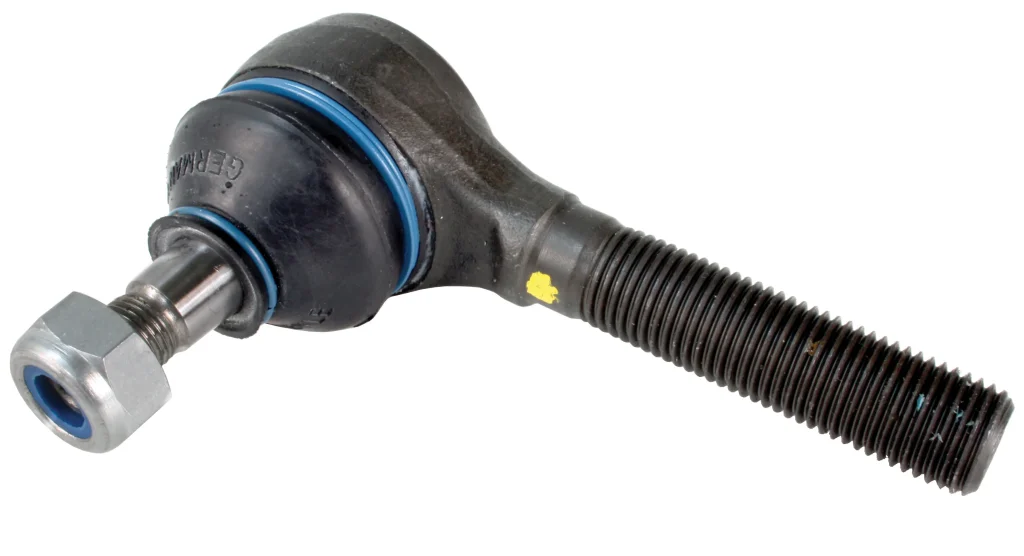
Tie rod ends may be small, but they play a crucial role in steering. They connect the steering linkage to the wheel assembly and transfer the driver’s steering input to the front wheels. As part of the steering and suspension system, they can experience substantial forces when the vehicle hits a pothole hard.
AAA lists tie rods among the steering components that can be affected by pothole impacts. Damage or excessive play can affect steering precision and may contribute to alignment problems.
The warning signs can be subtle at first. A driver might notice that the steering feels less precise, the vehicle wanders slightly, or a clunk occurs when turning or traveling over rough pavement. In more serious cases, excessive looseness in a steering joint can become a safety concern.
A pothole does not necessarily destroy a tie rod immediately. Repeated impacts can contribute to wear in the joint, while one particularly violent strike can bend or damage steering hardware. The effect depends on the vehicle, impact speed, pothole depth, and condition of the existing components.
If steering suddenly feels different after hitting a pothole, an inspection is worthwhile. A technician can check the tie rod ends for looseness and examine related steering components before performing an alignment.
This matters because an alignment can correct certain geometry issues, but it cannot repair a physically damaged steering component. Continuing to drive with excessive steering play can also make the vehicle harder to control.
The best defense is reducing speed before rough pavement whenever possible. If a pothole cannot be avoided, maintaining control and avoiding aggressive steering movements can reduce the severity of the impact.
6. Ball Joints
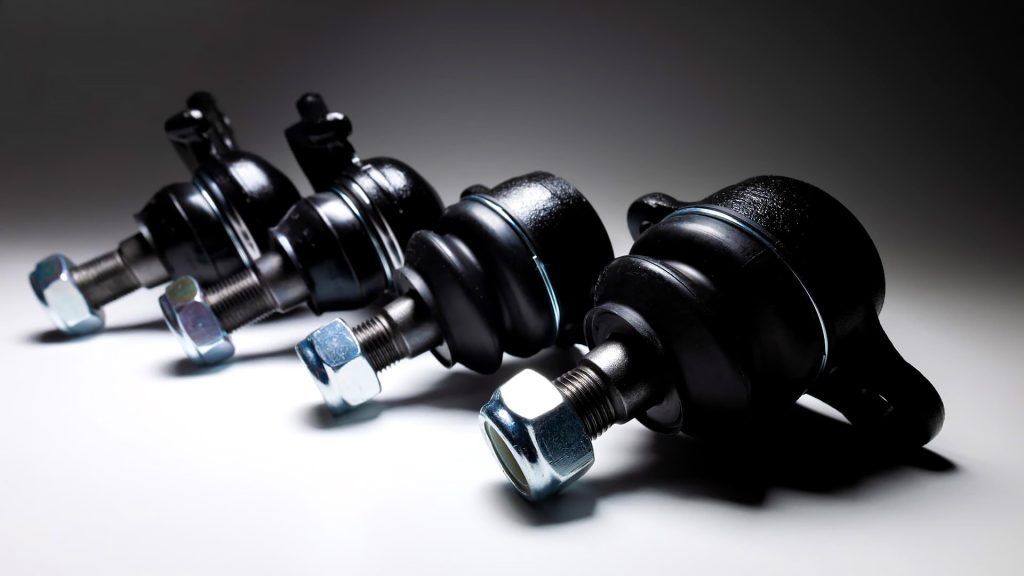
Ball joints allow controlled movement between the suspension and steering components while maintaining the wheel’s proper position. They are subjected to substantial loads during normal driving, and a severe pothole can add a sudden impact that accelerates wear or damages the joint.
AAA identifies ball joints among the suspension components that can suffer damage from pothole impacts.
The difficulty is that ball-joint wear does not always produce an obvious symptom immediately. As clearance develops, drivers may hear a knocking or clunking sound over rough pavement. Steering can also feel less precise, while uneven tire wear may appear as suspension geometry changes.
A severe impact can damage the protective boot surrounding the joint. Once the boot is compromised, grease can escape, and contaminants can enter, potentially accelerating wear.
Not every noise after a pothole means a ball joint has failed. Suspension systems contain numerous moving parts, so diagnosis requires inspecting the complete assembly. A technician can check the joint for excessive movement and determine whether replacement is necessary.
Ball joints are particularly important because they connect steering and suspension functions. A badly worn joint should not be ignored simply because the vehicle remains drivable.
Regular suspension inspections become more valuable as a vehicle accumulates mileage. If a pothole impact is followed by new noises, steering changes, or abnormal tire wear, having the front suspension examined can identify problems before they become more serious.
The key is not treating pothole damage as cosmetic. A wheel may look fine while a suspension joint has been stressed underneath, making post-impact symptoms worth investigating promptly.
7. Wheel Bearings
Wheel bearings allow the wheels to rotate smoothly while supporting the vehicle’s weight. They are built to withstand substantial loads, but a severe pothole impact can transmit a sharp radial or axial force through the wheel and hub assembly.
The National Highway Traffic Safety Administration warns that potholes and other road hazards can damage vehicle components, while suspension specialists note that impact damage can contribute to premature bearing wear. A bearing that was already aging may be particularly vulnerable to a major strike.
The symptoms are usually different from those of a bent wheel. Instead of an immediate steering vibration, a failing bearing can produce a humming, growling, or grinding sound that changes with vehicle speed. The noise may also become more noticeable when the vehicle turns in one direction.
That makes diagnosis important. Tire tread noise can sound surprisingly similar to bearing noise, particularly on vehicles with uneven tire wear. A technician can inspect the hub and bearing for looseness or abnormal noise rather than assuming the pothole damaged only the tire.
One pothole does not automatically ruin a healthy wheel bearing. The risk depends on impact severity, existing wear, vehicle design, and mileage. Repeated impacts can increase stress on the hub and bearing assembly over time.
Drivers should pay attention to a new noise that appears soon after a major pothole. If it becomes progressively louder with speed, an inspection is sensible.
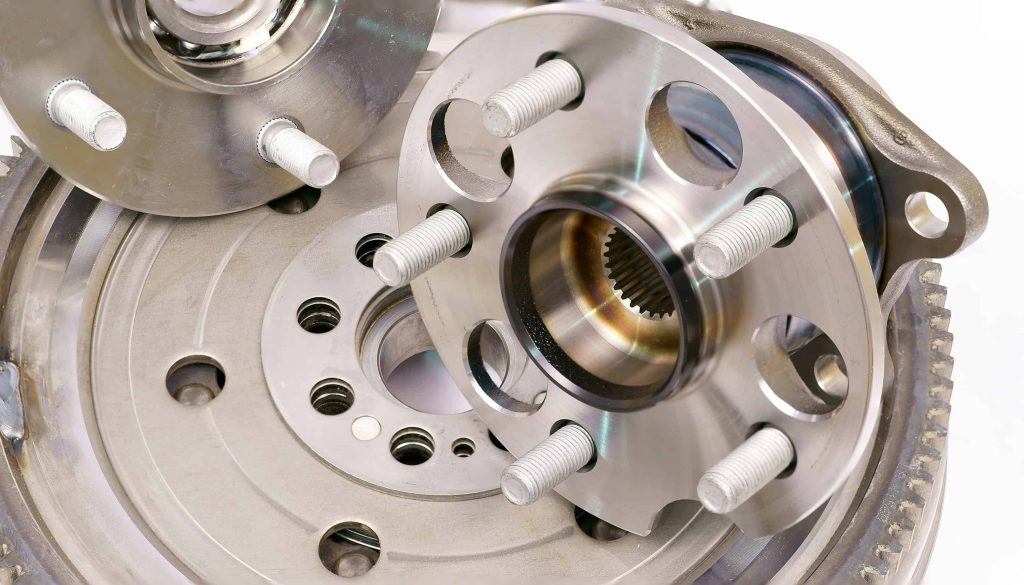
Ignoring a damaged bearing is not advisable because the component plays an important role in maintaining smooth and controlled wheel rotation. The appropriate repair depends on the vehicle’s design, since some models use a serviceable bearing while others use an integrated hub assembly.
8. Exhaust System
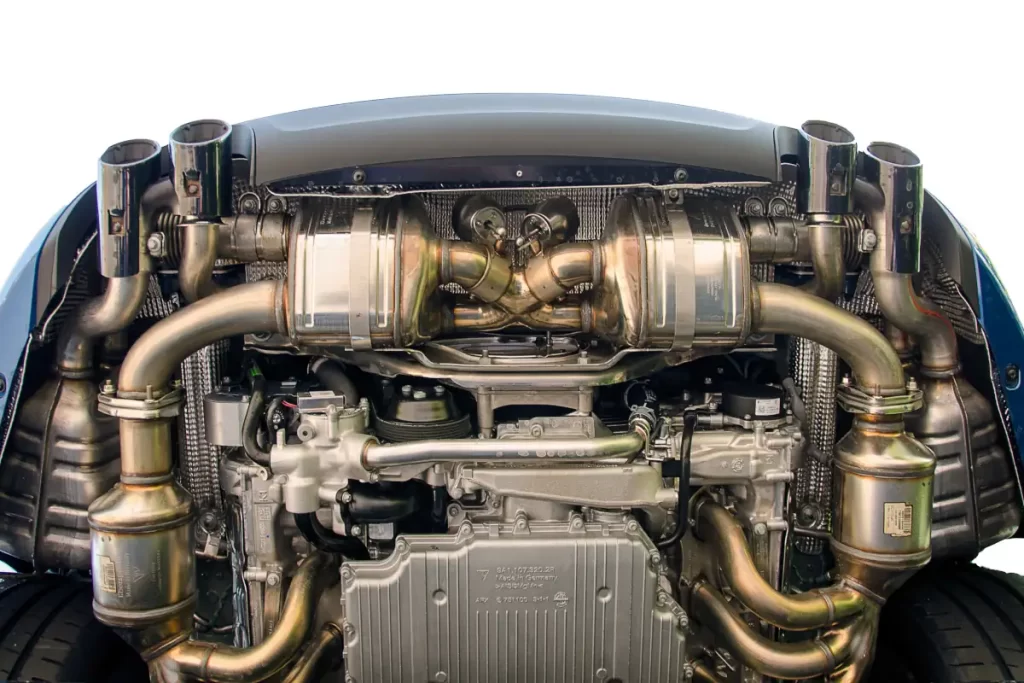
The exhaust system sits underneath the vehicle, making it vulnerable when a pothole is deep enough to cause the vehicle’s underside to strike the road. Unlike tires and suspension components, the exhaust may be damaged because the car physically bottoms out rather than because the wheel takes the impact.
A severe strike can dent exhaust tubing, damage a muffler or catalytic converter housing, or bend brackets and hangers. AAA specifically warns that potholes can damage components underneath the vehicle, including the exhaust system.
The first clue is often a new sound. A damaged exhaust can become noticeably louder, develop a metallic rattle, or produce a buzzing sound as a loosened component vibrates against nearby hardware.
A dented pipe does not necessarily mean the entire exhaust needs replacement. The correct repair depends on whether the damage restricts flow, creates a leak, or has simply altered the shape of a component.
Exhaust leaks deserve particular attention because gases can contain carbon monoxide. The Centers for Disease Control and Prevention warns that carbon monoxide is an odorless, colorless gas that can cause sudden illness and death.
If exhaust fumes are detected inside the passenger compartment, the vehicle should not be treated as safe to drive until the problem is repaired.
A pothole impact can therefore turn a simple road hazard into a mechanical and potentially safety-related problem. After a hard underside strike, listen for new exhaust noises and pay attention to unusual odors.
If something suddenly sounds different, inspection is far cheaper than allowing a damaged exhaust component to deteriorate further.
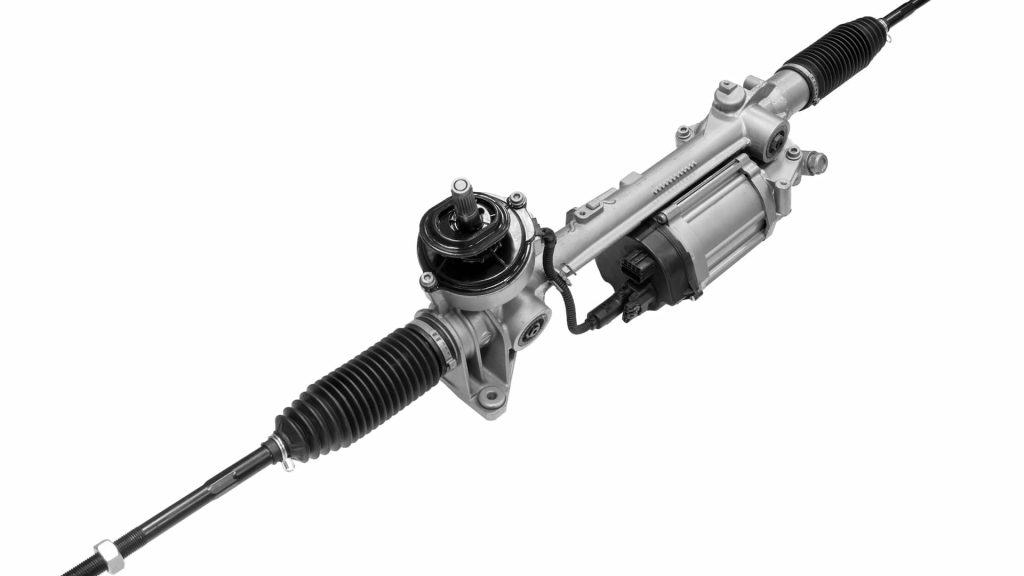
9. Steering Rack
The steering rack is one of the more expensive components that can suffer when repeated pothole impacts are transmitted through the front wheels. It converts steering input into movement at the steering linkage, and it is connected to components that experience substantial forces whenever the wheels strike rough pavement.
A pothole does not automatically destroy a steering rack. In most cases, the tires, wheels, and suspension absorb much of the impact. However, a severe strike can transmit enough force to damage mounting points, seals, or internal components, particularly if the steering system already has wear.
The first signs can be easy to overlook. A driver may notice excessive play in the steering wheel, a new knocking sound, difficulty maintaining a straight line, or a steering response that feels less precise than it did before the impact. Fluid leakage can also indicate a problem on vehicles equipped with hydraulic power steering.
Modern vehicles increasingly use electric power steering, so there may be no hydraulic fluid to leak. Instead, damage can involve the rack assembly, electric motor, or associated sensors.
AAA advises having the steering and suspension inspected when a vehicle develops handling changes after hitting a pothole.
An alignment check can be useful, but it should not be considered a substitute for inspecting the steering hardware. If a steering component is bent or damaged, simply adjusting alignment angles will not correct the mechanical problem.
Because the steering system directly affects vehicle control, new looseness, unusual noises, or changes in steering effort deserve prompt attention.
10. Suspension Bushings
Suspension bushings are easy to forget because they are hidden between larger components, yet they play an important role in controlling suspension movement and isolating vibration. Made from rubber or other engineered materials, they allow controlled movement while helping prevent excessive noise and harshness from reaching the cabin.
Repeated pothole impacts can place additional loads on these flexible components. Over time, an impact can contribute to cracking, tearing, or excessive movement, particularly when the bushings already have significant age or mileage.
The symptoms can vary depending on which bushing is affected. A driver might hear a clunk when going over bumps, feel increased vibration through the steering wheel, or notice that the vehicle does not feel as composed as it once did.
In some cases, alignment can change because worn bushings allow suspension components to move more than intended.
Mevotech notes that pothole impacts can affect suspension components and bushings, with resulting changes in steering feel, handling, and alignment.
Bushings are wear components, so a pothole is not necessarily the sole cause of their failure. Age, mileage, road conditions, and vehicle weight all contribute. A severe impact can simply accelerate a problem that was already developing.
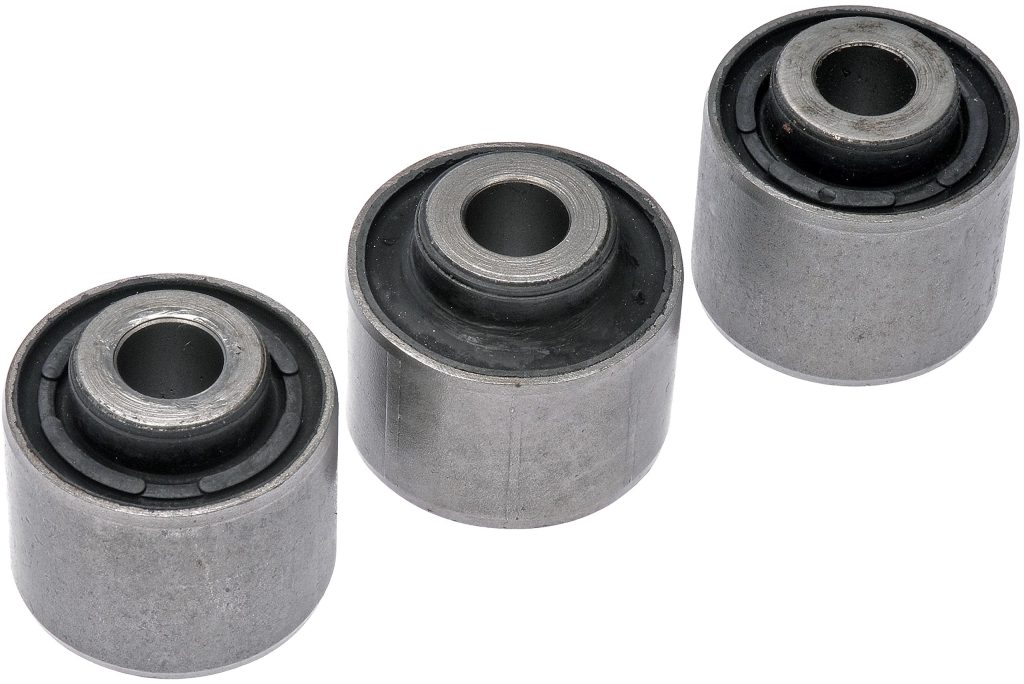
Replacing a worn bushing can restore proper suspension movement and reduce unwanted noise. Depending on the vehicle, technicians may replace an individual bushing or the complete control arm or related assembly.
The best strategy is to pay attention to changes immediately after rough-road impacts. A new clunk or wandering sensation should not be dismissed as normal pothole behavior. Prompt inspection can prevent a relatively small suspension problem from contributing to uneven tire wear, alignment issues, or additional component damage.
