
Not every product marketed as a scratch remover actually removes a scratch. Some simply fill the mark temporarily, add gloss, or hide it beneath wax. The useful products are the ones matched to the depth and type of damage.
A light clear-coat scratch can often be reduced with an abrasive compound or finishing polish, while damage that reaches the color coat requires paint rather than more polishing.
Products such as Meguiar’s ScratchX are specifically designed for light scratches and blemishes, while professional compounds from 3M are intended for progressively deeper defects. The key is diagnosing the damage first, because using an aggressive product on shallow paint damage can remove more finish than necessary.
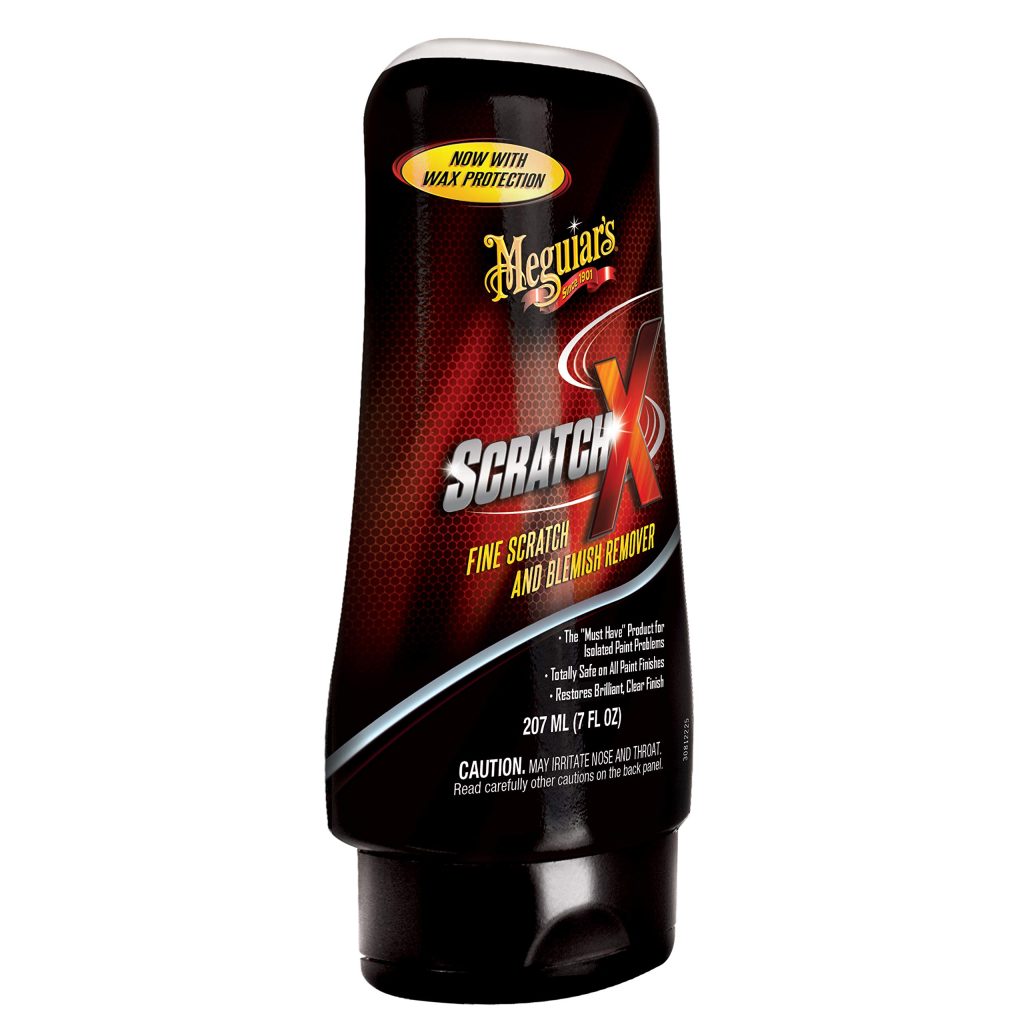
1. Meguiar’s ScratchX 2.0
Meguiar’s ScratchX 2.0 is well suited to the type of scratch many owners encounter. It is designed to address light marks confined to the clear coat, along with minor blemishes, swirls, paint-transfer marks, and other surface imperfections. It is not intended for deeper damage that has penetrated the color coat.
That distinction matters. Automotive paint is generally built in layers, with the clear coat sitting above the colored base coat. If the scratch remains within the clear coat, an abrasive product can remove a very small amount of surrounding material and level the defect so the mark becomes far less visible.
Meguiar’s says ScratchX 2.0 uses micro-abrasive technology and is safe for glossy clear-coat finishes. The company also states that it can be applied either by hand or with a dual-action polisher.
That makes it particularly useful for isolated defects. There is little reason to compound an entire hood because of one shallow scratch near a door handle. Applying the product locally allows the owner to correct the problem without unnecessarily abrading large areas of otherwise healthy paint.
The product is not a miracle repair, though. Meguiar’s specifically positions it for light defects. If a fingernail catches substantially in the scratch or the primer beneath the paint is visible, polishing is unlikely to recreate the missing paint.
For shallow scratches, however, this is exactly the type of product that makes sense. Work on a clean, cool panel, use a suitable applicator, and inspect the result under strong lighting before repeating the process. The goal is correction, not simply making the panel shinier.
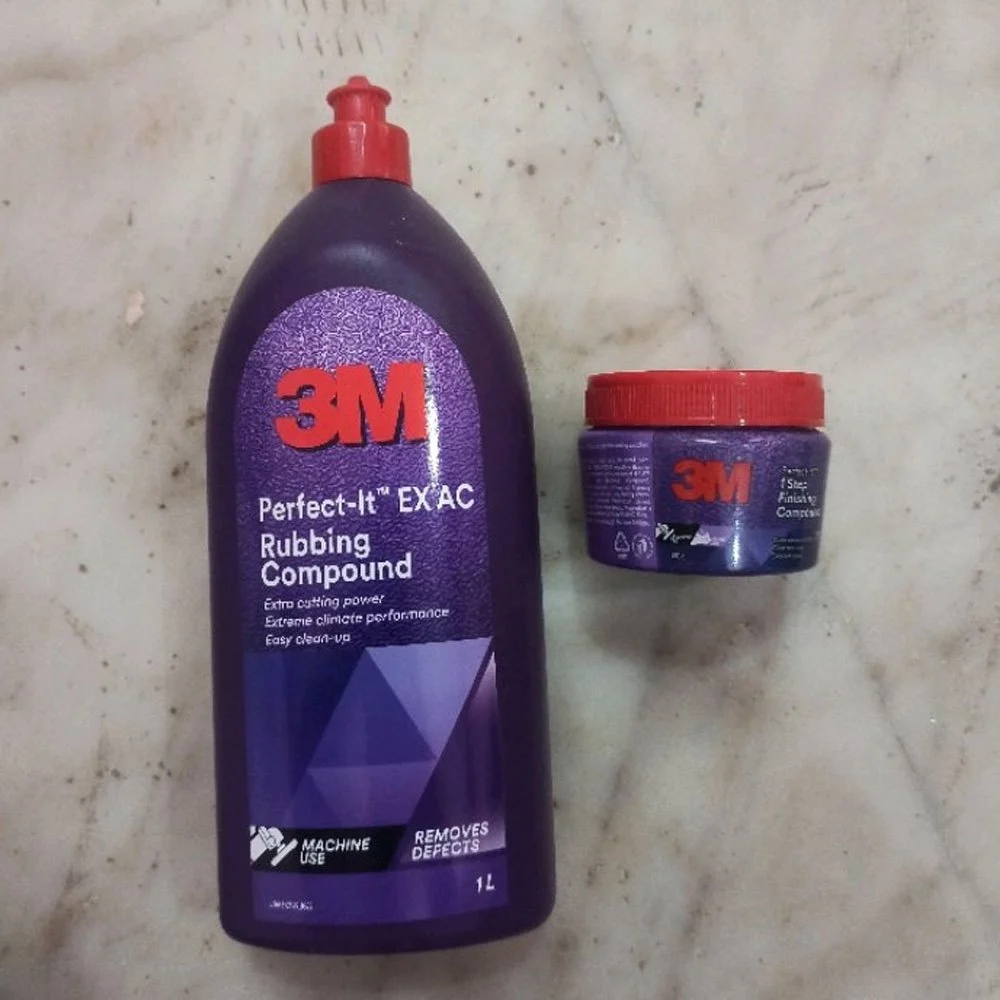
2. 3M Perfect-It EX AC Rubbing Compound
When a scratch is too substantial for a mild hand-applied product, 3M Perfect-It EX AC Rubbing Compound provides a considerably more aggressive approach. It is a professional-grade compound designed for removing P1200 and finer sanding scratches and other surface defects from automotive paint and clear coats.
That specification tells you exactly where this product belongs in the repair process. It is not the first bottle to reach for when a fingernail barely notices a mark. It is intended for more serious paint correction where controlled abrasive cutting is necessary.
3M says the compound works particularly well on newer, harder-to-buff clear coats and is part of its Perfect-It paint-finishing system. The company recommends using the compound after scratch refinement and before subsequent polishing.
The important advantage is controlled correction. Instead of trying to cover the scratch, the compound actually removes material around the defect to level the surface. That is why professional detailers and collision-repair technicians treat compounding as a measured process rather than something to apply repeatedly until the mark disappears.
3M’s technical information specifies use with appropriate wool or foam compounding pads and a machine polisher. That means this product requires substantially more care than a basic consumer scratch remover.
For a DIY owner, the biggest mistake would be assuming stronger automatically means better. Clear coat has finite thickness. Removing unnecessary material to chase a scratch that has penetrated the color layer will not restore the missing paint.
Used at the appropriate stage, however, Perfect-It EX AC can genuinely remove or dramatically reduce sanding scratches and deeper clear-coat defects rather than merely hiding them.
3. Meguiar’s Ultimate Compound
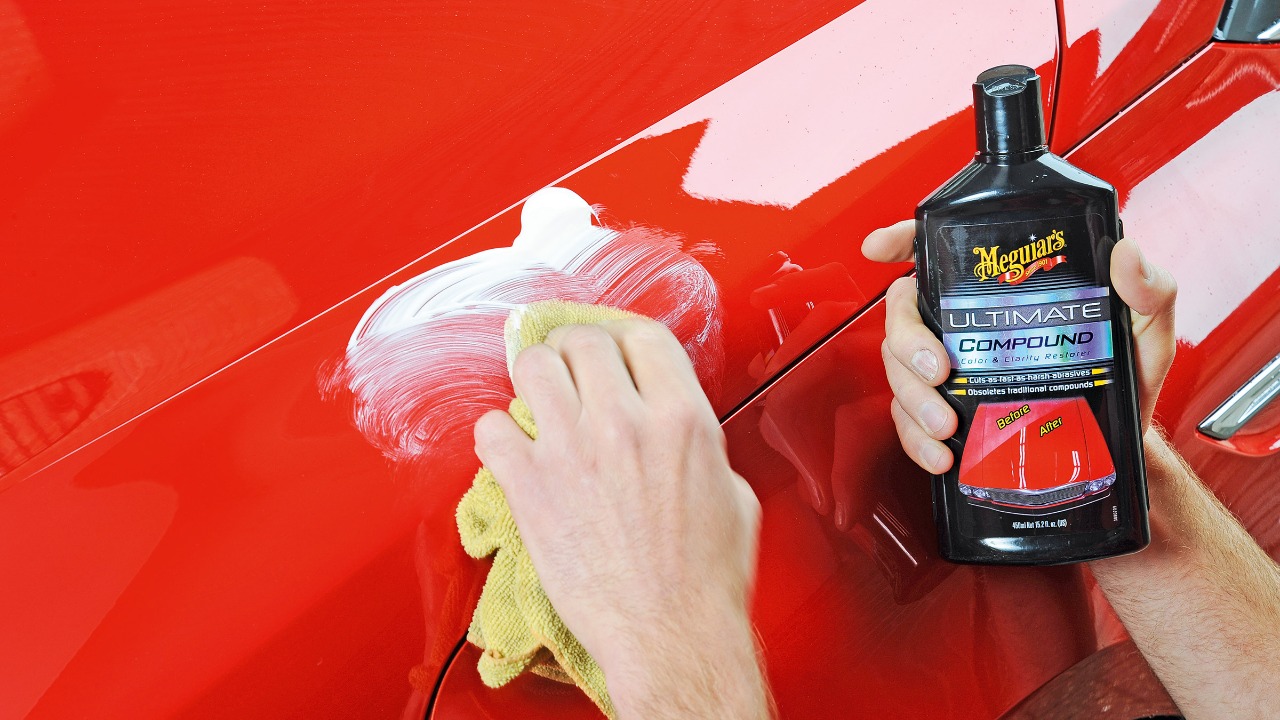
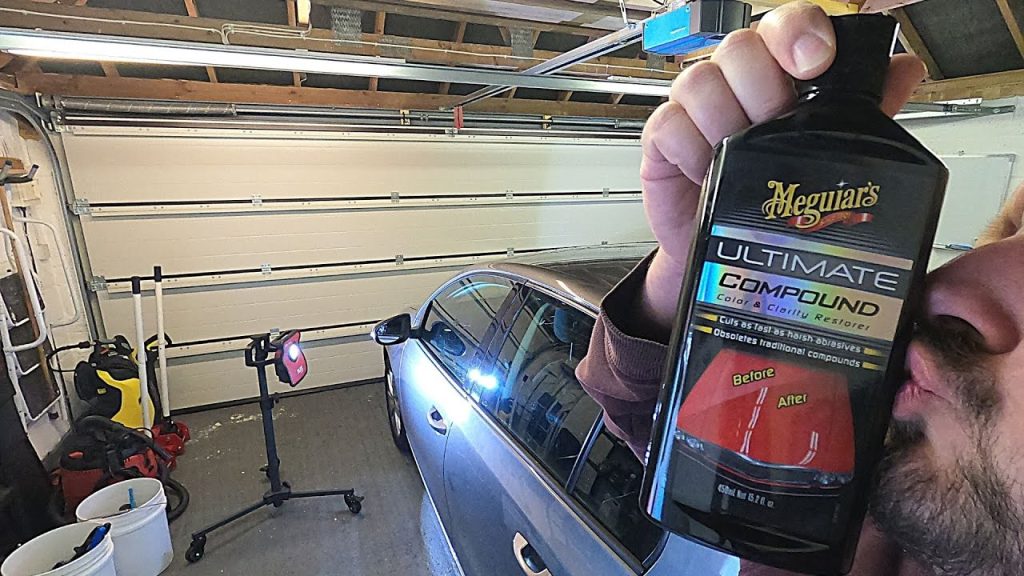
Meguiar’s Ultimate Compound is a stronger choice when a light scratch has progressed beyond what a mild finishing product can comfortably correct. The company specifically describes it as a compound for removing scratches, swirls, oxidation, and water spots, using its micro-abrasive technology to cut below the damaged surface and restore clarity.
Its biggest advantage is versatility. Unlike a product intended only for tiny isolated marks, Ultimate Compound can be used to address a wider area where scratches, oxidation, and other defects have accumulated together.
That makes it useful for an older vehicle whose paint has lost some of its original clarity rather than simply having one parking-lot scratch.
Meguiar’s says the product is safe for clear coats and can be applied by hand or with a dual-action polisher. That makes it considerably more approachable for a DIY owner than a professional body-shop compound requiring specialized equipment.
There is still a limit to what it can accomplish. If the scratch has cut through the clear coat and into the colored paint, removing more surrounding clear coat will not recreate the missing pigment. The product can reduce the visual edge of the defect, but it cannot replace material that is no longer there.
That is why lighting and inspection are important before beginning. Clean the panel thoroughly, examine the scratch from several angles, and start with the least aggressive approach that can reasonably solve the problem.
Used correctly, Ultimate Compound does something more meaningful than simply adding gloss. It physically corrects certain surface defects by controlled abrasion, leaving the actual paint surface smoother rather than relying entirely on a temporary filler.
4. Turtle Wax Scratch Repair & Renew
Turtle Wax Scratch Repair & Renew takes a different approach from traditional heavy rubbing compounds. It uses what Turtle Wax calls precision platelet technology to attack surface imperfections while also leaving a protective sealant on the treated area. The manufacturer says it is designed for light to heavy scratches, swirls, water spots, and paint contamination.
That combination makes it particularly interesting for owners who want correction and protection in one operation. Instead of finishing the scratch-removal process and immediately reaching for another product, the treatment itself is intended to leave protection behind.
The application is also relatively straightforward. Turtle Wax recommends washing and drying the vehicle first, applying a small amount to a clean microfiber towel or polishing pad, working the product into the affected area, wiping it clean, and repeating if necessary.
The key word is still surface. A product cannot restore paint that has physically disappeared. If the scratch exposes primer, bare metal, or a different underlying layer, a compound is no longer a complete repair. At that point, touch-up paint or professional refinishing may be necessary.
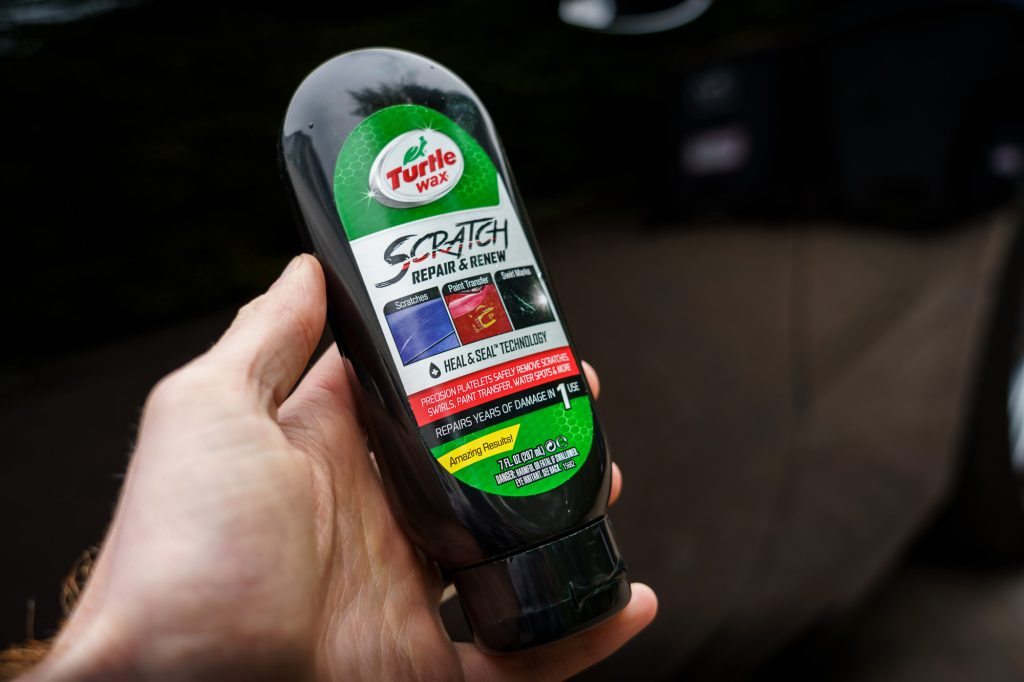
Scratch Repair & Renew makes the most sense for defects that look dramatic under direct lighting but remain within the upper paint layers. Those can include branch marks, shopping-cart scuffs, light scratches around door handles, and accumulated surface imperfections.
It is also useful when several defects are clustered together. Instead of treating one tiny line at a time, the product can be worked across a defined section of the panel.
For a DIY owner, its combination of correction and protection makes it more practical than products that merely disguise scratches temporarily.
5. 3M Perfect-It EX Machine Polish
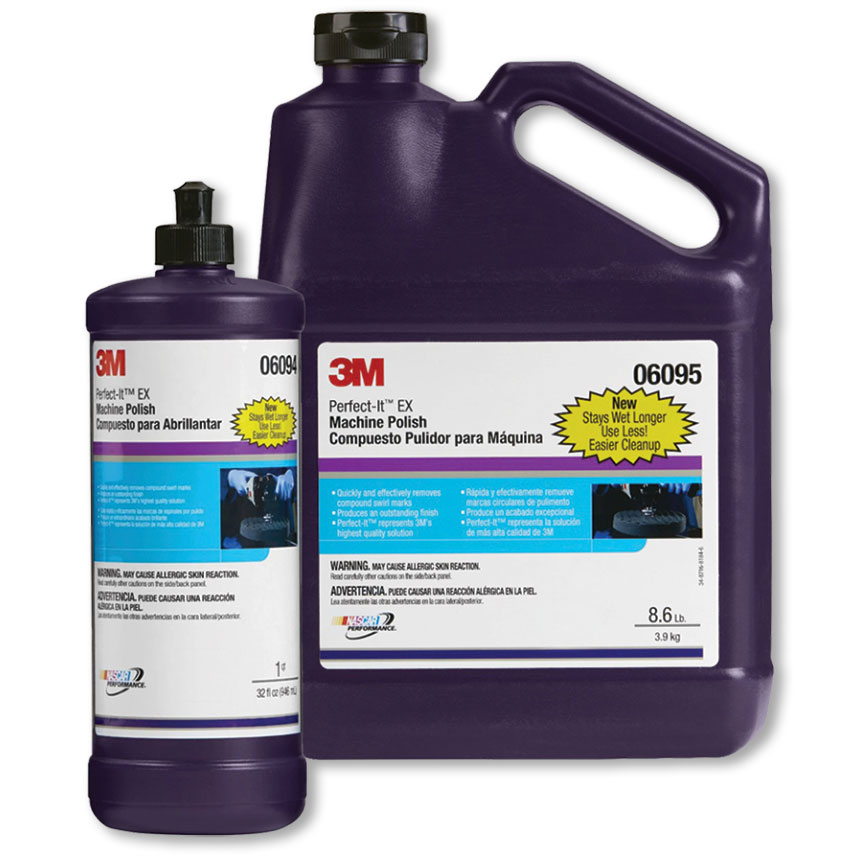
3M Perfect-It EX Machine Polish is useful when the scratch itself has already been reduced, but the paint still looks hazy, dull, or slightly marked from the correction process. It is not primarily a heavy cutting compound. Its purpose is to refine the surface after more aggressive paint correction.
That makes it valuable because scratch removal is rarely just a matter of making a defect disappear. Aggressive abrasives can leave behind microscopic marks or a slight loss of clarity, particularly on dark-colored paint. A finishing polish can restore gloss by refining those remaining imperfections.
3M places Perfect-It EX Machine Polish within its paint-finishing system and describes it as a product for removing fine scratches and swirl marks while producing a high-gloss finish. The company recommends machine application with an appropriate polishing pad.
The important point is that this product is generally better viewed as the finishing stage of scratch correction rather than the first step. If a deep scratch remains visible after polishing, repeatedly using a finishing polish is unlikely to solve it. A more aggressive correction may be necessary, or the damage may have penetrated too deeply for polishing alone.
Its value becomes obvious after compounding. A compound can remove the defect but leave the surface needing refinement. The polish brings back optical clarity and can make the corrected section blend much better with the surrounding paint.
Machine speed, pad selection, and pressure all influence the result, so beginners should work conservatively. A dual-action polisher is generally easier to control than a rotary machine for inexperienced users.
For an enthusiast correcting isolated scratches, the product is particularly useful when the objective is not merely “less visible,” but a finish that looks close to the surrounding factory paint.
6. Chemical Guys VSS Scratch and Swirl Remover
Chemical Guys VSS Scratch and Swirl Remover is designed as a one-step correction product, making it different from aggressive compounds that normally require a separate polishing stage. The manufacturer says VSS can remove light to moderate scratches and swirl marks while leaving a polished finish.
That makes it particularly useful when the paint problem is broader than one obvious scratch. A hood, door, or trunk lid may have dozens of fine defects that collectively make the paint look dull. Treating the entire affected panel with an appropriate one-step product can be more practical than attacking each mark individually.
Chemical Guys describes VSS as containing diminishing abrasives designed to remove defects while refining the finish. The product can be applied by hand or with a machine, although machine polishing generally produces more consistent correction.
There is an important limitation to keep in mind. VSS is not a substitute for paint repair because it only corrects defects on the surface. If a scratch has penetrated the clear coat and reached the base coat, polishing cannot restore the missing paint.
The safest technique is to begin with a small test area. Paint hardness varies considerably between manufacturers and even between different model years, so the same product can behave differently from one vehicle to another. A test spot reveals how much correction is possible before the owner commits to the entire panel.
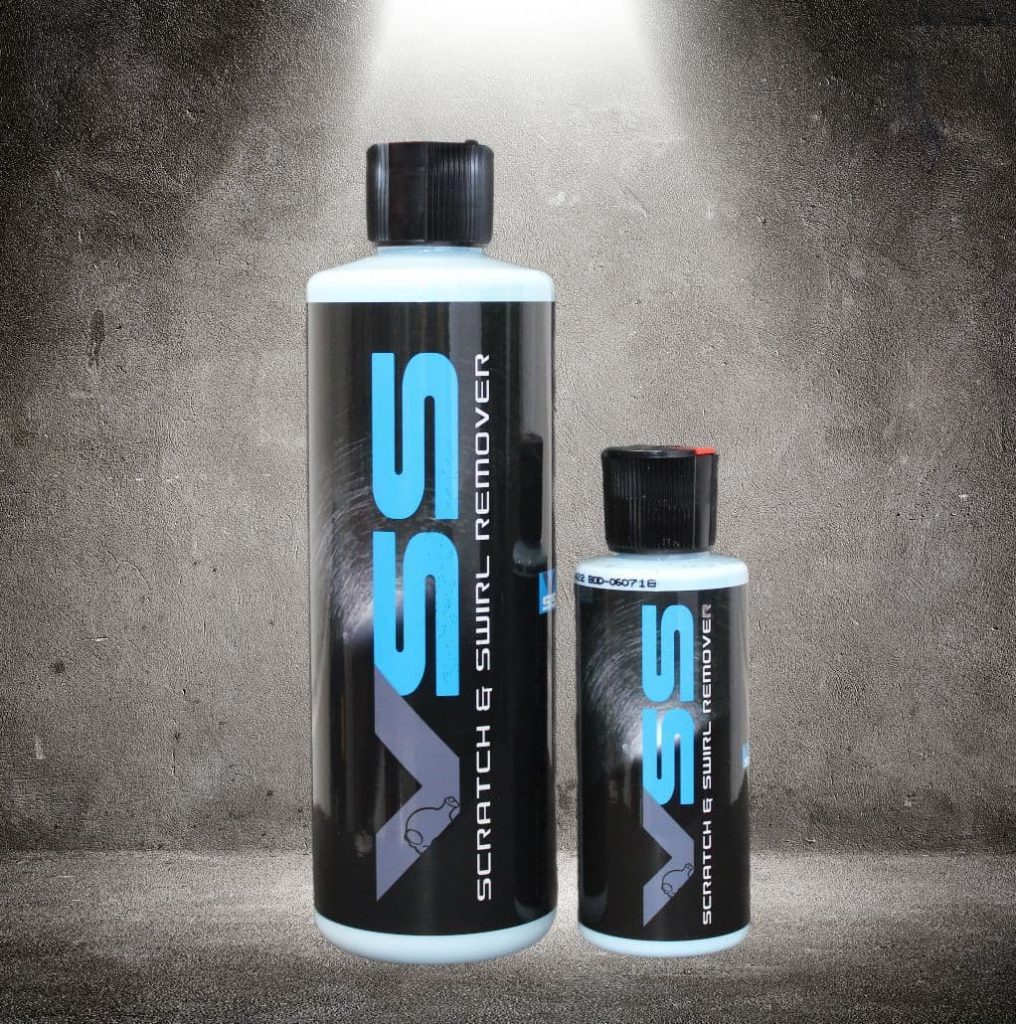
VSS is therefore best for the middle ground: defects too noticeable to ignore but not deep enough to justify repainting.
Its one-step character also makes it attractive to owners who want a relatively straightforward DIY correction without assembling a multi-stage polishing system.
7. 3D One Hybrid Cutting Compound and Finishing Polish
3D One is unusual because it is designed to perform both cutting and finishing duties in one product. That makes it useful when a vehicle has a mixture of defects rather than one uniform type of damage. A detailer can adjust the aggressiveness primarily through pad choice and technique instead of immediately switching between several bottles.
The manufacturer describes 3D One as a hybrid compound and finishing polish capable of removing defects while producing a refined finish. Its diminishing abrasive technology allows the product to cut when paired with an appropriate cutting pad and finish more gently with a softer polishing pad.
That flexibility can be particularly valuable on modern clear coats, where some areas may require more correction than others. A heavily marked door can receive a more aggressive pad, while a nearby section with only fine swirls can be treated with a softer setup.
However, the product’s versatility should not be mistaken for unlimited cutting ability. It cannot repair a scratch that has removed the clear coat and basecoat.
A useful test is to determine whether the defect remains entirely within the paint’s upper layers. If bare metal, primer, or a distinctly different paint layer is visible, polishing is no longer a complete solution.
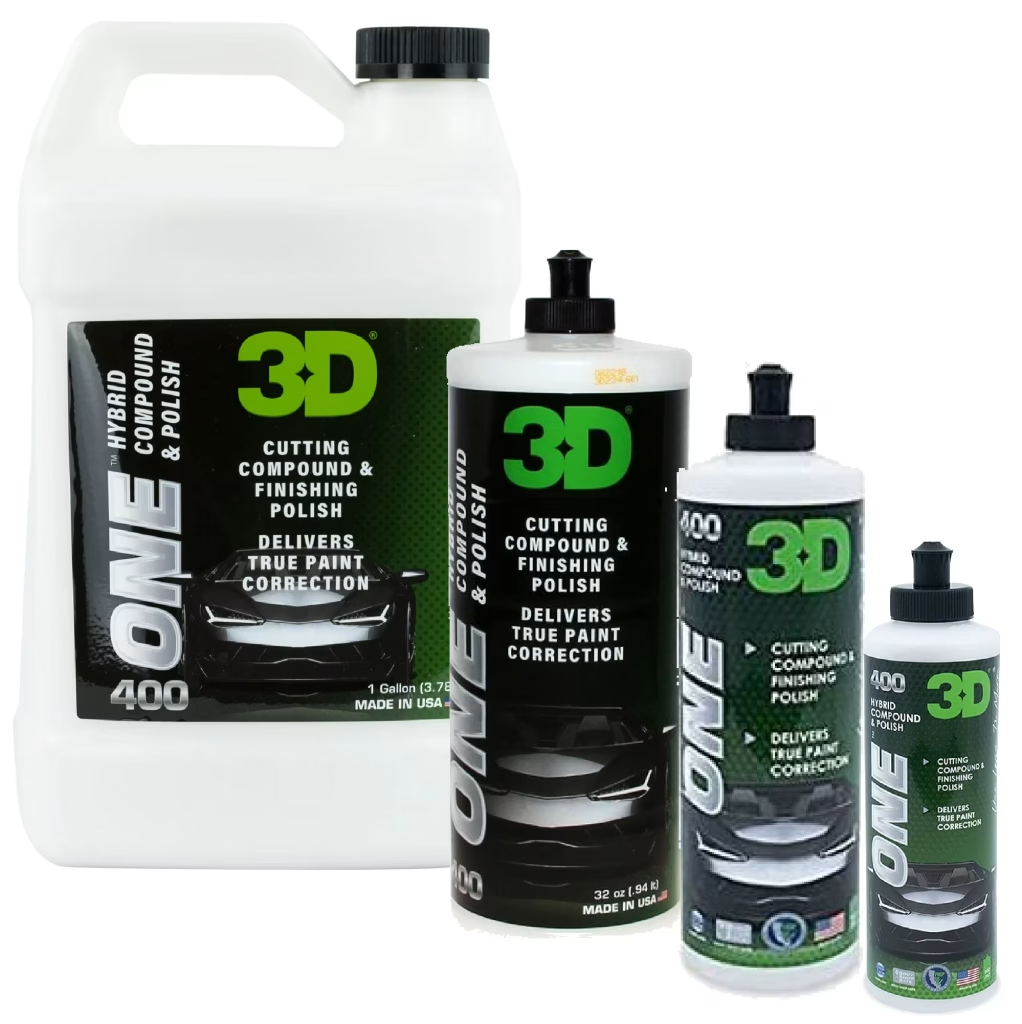
The product also rewards controlled technique. Working a small test area first allows the user to determine whether the chosen pad and number of passes are sufficient. Continuing to polish simply because a scratch remains visible can unnecessarily reduce clear-coat thickness.
For enthusiasts who want a flexible correction product rather than separate cutting and finishing compounds, 3D One has a strong practical advantage. One bottle can cover several stages of a paint-correction job when paired with appropriate pads.
That makes it particularly useful for correcting an entire vehicle where defect severity varies from panel to panel.
8. Dr. ColorChip Paint Repair System
Dr. ColorChip is fundamentally different from the polishing products above because it addresses damage that has actually removed paint. Instead of trying to level the surrounding clear coat until the defect becomes less visible, the system uses color-matched paint to fill small chips and scratches.
That distinction makes it valuable for defects that polishing cannot truly remove. A scratch that reaches the colored layer has lost material. Abrasive compounds can smooth its edges, but they cannot restore the missing pigment.
Dr. ColorChip says its system is designed for stone chips and paint damage and uses custom-matched paint intended to blend with the vehicle’s factory color. The company’s process includes applying paint to the damaged area and using its blending solution to remove excess material around the repair.
The system is particularly useful for small scattered chips on the hood, bumper, and front fenders. Those defects are common on vehicles that spend considerable time on highways, where road debris repeatedly strikes the leading edges.
Color matching is the critical factor. Modern automotive colors can contain metallic or pearl effects, and the same basic color name can vary by paint code. The correct factory paint code should therefore be used rather than choosing a visually similar generic color.
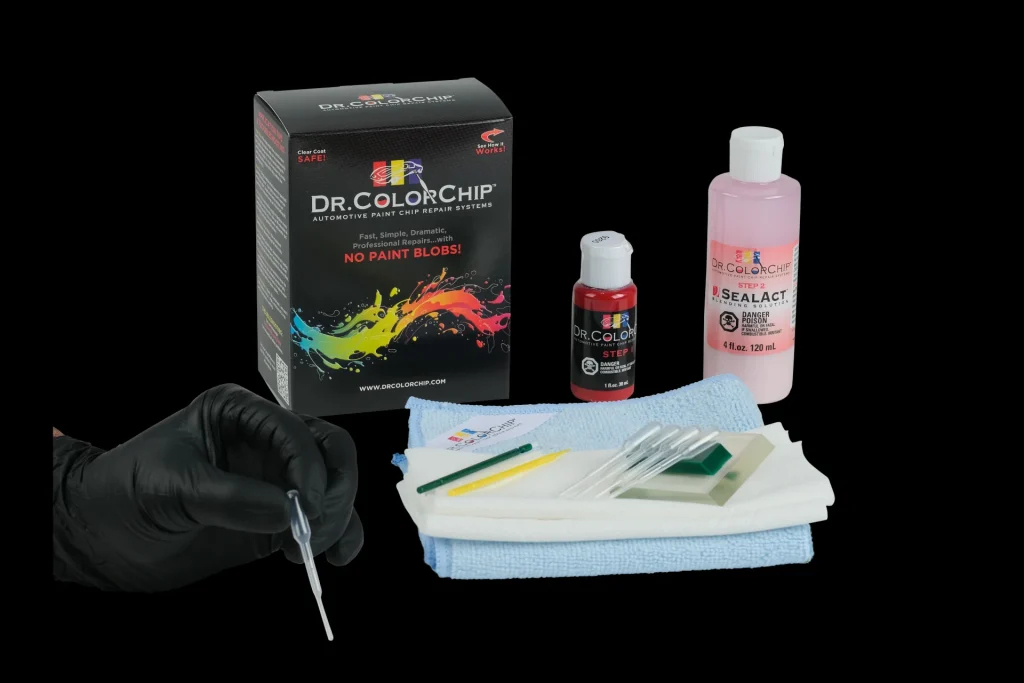
The repair will not become indistinguishable from factory paint in every situation. Large scratches, creases, damaged panels, and extensive clear-coat failure require more comprehensive refinishing.
But for small areas where paint has disappeared, adding matching material is fundamentally more appropriate than continuing to abrade the surrounding surface.
This is why DDrColorChip earns a place near the end of the list. It does not “remove” a scratch through abrasion. Instead, it repairs the type of scratch that abrasive products have reached their physical limit against.
9. Langka Blob Eliminator Paint Repair System
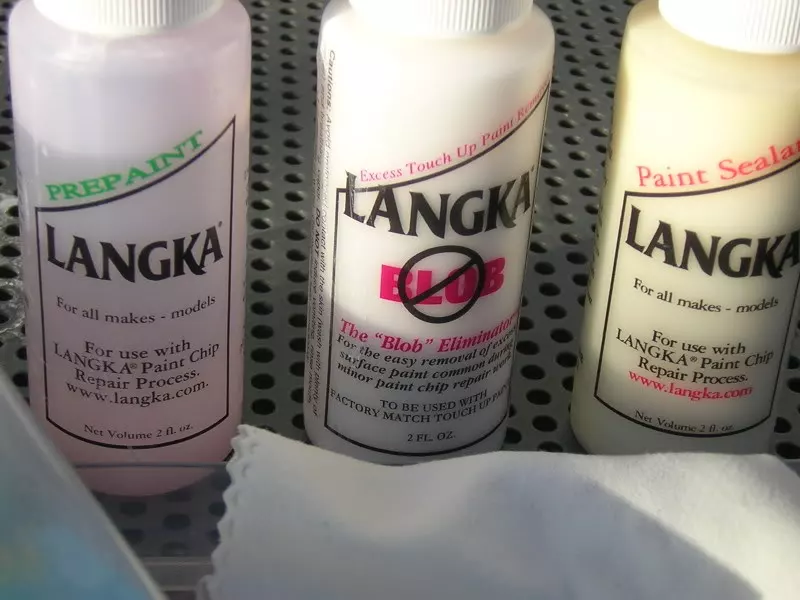
Langka Blob Eliminator is another product aimed at scratches and chips that have progressed beyond the clear coat. Its role is not to polish the scratch away. Instead, it helps level excess touch-up paint after a damaged area has been filled.
That makes it particularly useful because one of the biggest problems with DIY paint repair is the repair itself. A small amount of touch-up paint can leave a raised blob that catches the light and looks more obvious than the original chip.
Langka’s system uses its Blob Eliminator solution with a special cloth to remove excess touch-up paint without sanding the surrounding factory finish. The company specifically markets the product for leveling touch-up paint repairs.
The correct sequence is important. The damaged area must first be cleaned and filled with an appropriate color-matched touch-up paint. The Blob Eliminator is then used to level the repair rather than acting as a conventional scratch remover.
This makes the system particularly useful for isolated chips and narrow scratches where a complete body shop repaint would be excessive. The objective is to repair the blend with the surrounding panel rather than leave a raised spot.
It is also a reminder that not every scratch should be attacked with increasingly aggressive compounds. Once the defect has penetrated the paint layers, the solution changes from surface correction to material replacement.
Color selection remains critical. The touch-up paint should correspond to the vehicle’s paint code, especially on metallic, pearl, or multi-stage finishes.
For owners dealing with a handful of deeper chips, the system can therefore produce a much better result than repeatedly polishing a defect that no longer contains intact paint.
10. 3M Trizact Fine-Finish Abrasive System
3M Trizact is the most specialized option on this list and is better suited to experienced users or professional refinishing work than casual scratch repair. Instead of being a conventional scratch-removing compound, it uses precision finishing abrasives designed to refine paint and sanding marks before polishing.
3M offers Trizact abrasive products in extremely fine grades, including P3000 and P5000 configurations. These are intended to reduce the sanding scratches left by earlier correction stages, making subsequent machine polishing considerably easier.
This approach becomes valuable when a scratch is too deep for conventional polishing but shallow enough that controlled wet sanding can safely level the surrounding clear coat. The process removes a small amount of material around the defect, then progressively refines the surface before compound and polish are applied.
There is an important warning to keep in mind. Sanding automotive paint is much less forgiving than using a mild scratch remover. Because the clear coat has limited thickness, excessive sanding can expose the base coat or leave behind damage that requires professional refinishing.
That is why Trizact belongs at the bottom of this ranking. It can achieve correction that ordinary consumer products cannot, but it requires significantly more knowledge and equipment.
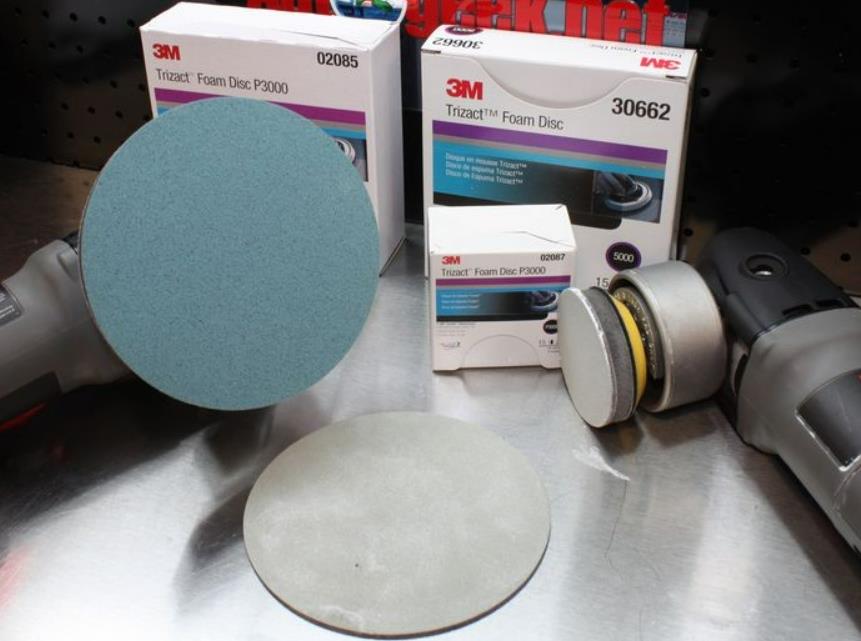
The system is particularly useful in professional body shops where technicians can measure and control the repair process. On an expensive vehicle, inexperienced wet sanding can turn a small scratch into a much larger paint problem.
Used correctly, however, the approach is genuinely corrective rather than cosmetic. The scratch is physically leveled, the surface is refined through progressively finer abrasives, and polishing restores the final gloss.
For deep clear-coat defects, this is about as far as surface correction can go before repainting becomes the appropriate solution.
