
Fuel injectors may be small, but they play a vital role in engine performance. They must deliver the right amount of fuel in a precise spray pattern to ensure efficient combustion. As deposits build up and restrict an injector, the symptoms can begin subtly before becoming more noticeable as fuel delivery worsens.
A rough idle, hesitation, misfire, or declining fuel economy can all point toward an injection problem, although none of these symptoms proves that an injector is clogged by itself.
Research reviewed by the U.S. EPA has found that injector deposits can reduce fuel flow, alter spray characteristics, and increase certain emissions. Knowing the warning signs can help you investigate the problem before drivability gets worse.
1. Rough or Unstable Idle
A healthy engine should be able to maintain a relatively steady idle without constantly shaking, stumbling, or feeling as though it might stall. When a fuel injector becomes restricted, that smoothness can disappear because the affected cylinder may not receive the amount of fuel the engine management system expects.
Delphi notes that restricted fuel delivery can cause the engine RPM to drop at idle, producing rough running and, in more severe cases, stalling.
The reason this symptom can be particularly noticeable at a stop is that the engine is operating with very little fuel demand. A restriction that might be difficult to feel while cruising can become much more obvious when the engine is trying to maintain a stable idle with a small amount of fuel.
If one cylinder receives less fuel than the others, combustion can become uneven, and the driver may feel a vibration through the steering wheel, seat, or floor.
There is an important diagnostic distinction here. A rough idle does not automatically mean the injectors are clogged. Vacuum leaks, ignition problems, incorrect sensor readings, low fuel pressure, and other engine faults can produce similar behavior.
Delphi specifically recommends checking other potential causes when investigating fuel-injection symptoms.
What makes a clogged injector more suspicious is when the rough idle appears alongside other fuel-delivery symptoms, such as hesitation, reduced acceleration, or declining fuel economy.
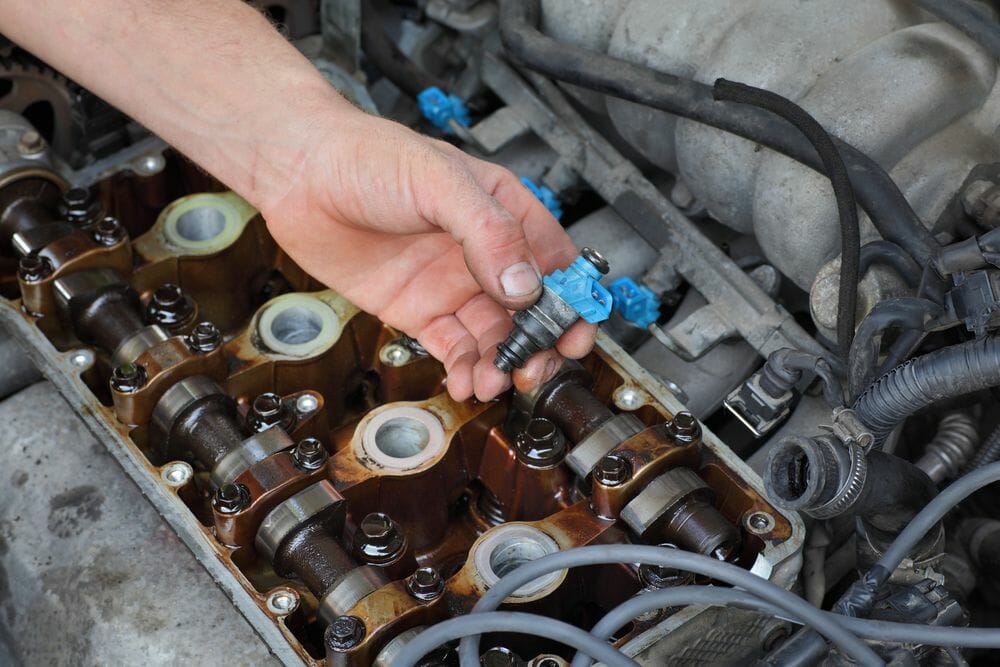
If the condition is becoming progressively worse, a technician can use diagnostic data and fuel-system testing to determine whether an injector is actually delivering less fuel than intended.
The EPA’s technical research also highlights the impact of deposits. Buildup around fuel-injection components can disrupt the balance of fuel delivered to individual cylinders, which may affect engine drivability and increase emissions.
2. Engine Misfires
An engine misfire is one of the more important warnings that fuel delivery may not be occurring correctly. During normal combustion, each cylinder needs the appropriate combination of air, fuel, and ignition at the correct time.
If an injector is sufficiently restricted, the affected cylinder may receive inadequate fuel, leaving combustion weaker or incomplete.
Delphi identifies engine misfires among the symptoms that can accompany fuel-injection faults and explains that insufficient injector fuel delivery can prevent a cylinder from producing its expected power.
A driver may experience the problem as a brief stumble, a noticeable vibration, uneven acceleration, or a feeling that the engine momentarily loses a cylinder. In some cases, the malfunction indicator light can also illuminate because the vehicle’s onboard diagnostic system detects abnormal combustion.
A technician can then use stored diagnostic trouble codes and live data to narrow down the affected system.
A clogged injector should not be assumed simply because a misfire code appears. Spark plugs, ignition coils, compression problems, vacuum leaks, and sensor faults can also create misfires. This is why replacing injectors immediately based only on a fault code can be an expensive mistake.
Injector deposits have a documented connection with combustion problems. Research cataloged by the U.S. EPA found that deposits can reduce injector fuel flow and change the characteristics of the fuel spray. The same research identifies engine misfiring and malfunction among the potential consequences of significant injector fouling.
The pattern of the misfire can provide useful information. If a technician finds evidence that one cylinder is consistently receiving inadequate fuel while ignition and compression tests are satisfactory, injector restriction becomes a stronger possibility.
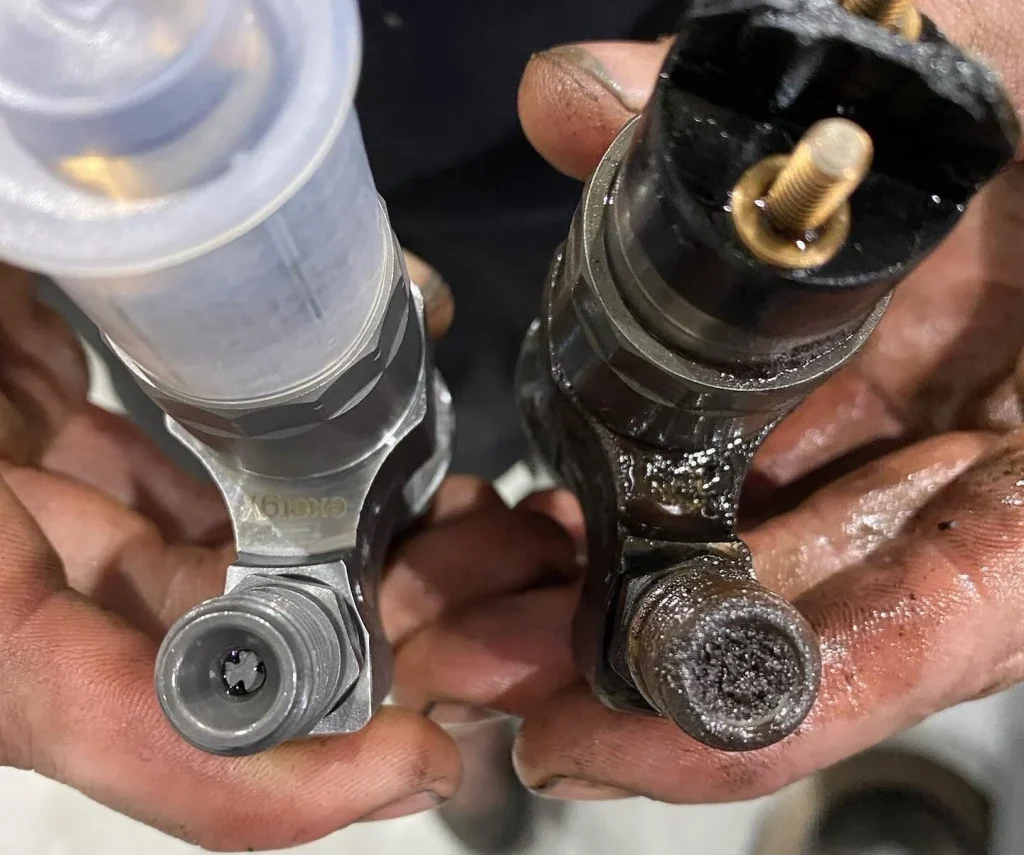
A proper diagnosis may involve injector balance testing, fuel-pressure measurements, electrical checks, and examination of the injector’s spray or flow characteristics.
Ignoring a persistent misfire is also unwise. Besides making the vehicle unpleasant to drive, continued abnormal combustion can contribute to increased emissions and potentially place additional stress on emissions-control components.
The EPA’s research on injector deposits has documented increases in particulate emissions as injector fouling becomes more severe.
3. Hesitation When Accelerating
A car that hesitates when you press the accelerator can feel as though the engine needs a moment to catch up with your right foot. Instead of responding immediately, it may stumble, pause briefly, or deliver power unevenly before acceleration resumes.
A restricted fuel injector can contribute to this behavior because the engine needs additional fuel when the throttle opens and load increases. If an injector cannot deliver its intended quantity, the air-fuel mixture in the affected cylinder can become too lean for normal combustion.
This problem is often easiest to notice when pulling away from a stop, merging onto a highway or accelerating uphill. At those moments, the engine’s fuel demand rises rapidly. A partially restricted injector might still provide enough fuel for light-load cruising but struggle when the engine requires greater flow.
Research on injector deposits has shown that deposits can reduce fuel flow and alter the characteristics of the fuel spray, which can affect combustion quality and vehicle drivability.
The sensation can vary considerably from one vehicle to another. Some drivers notice a brief flat spot immediately after pressing the accelerator, while others experience repeated surging or a series of small hesitations.
Modern engines can compensate for certain changes in fuel delivery through their electronic controls, so a developing injector restriction may initially be subtle.
Hesitation alone is not enough to condemn an injector. A failing mass airflow sensor, throttle-position problem, weak fuel pump, restricted fuel filter, ignition fault, or vacuum leak can create similar acceleration complaints. A proper diagnosis therefore needs to establish whether fuel delivery is actually inadequate.
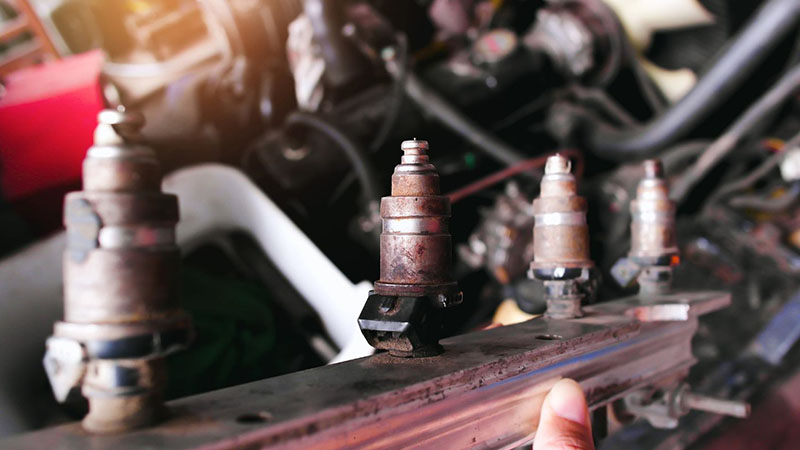
One useful clue is whether the hesitation occurs together with rough idle, misfires, or a measurable reduction in fuel economy. When several fuel-related symptoms appear at the same time, injector restriction becomes more plausible.
A technician can compare injector operation and fuel-trim data and perform appropriate fuel-system tests rather than replacing parts based solely on the driver’s symptoms.
4. Noticeable Loss of Power
A gradual loss of engine power can be easy to dismiss because it rarely arrives with the drama of a complete mechanical failure. The car still starts, moves, and cruises, but it may no longer feel as strong when climbing a hill, passing another vehicle, or accelerating onto a highway.
Restricted fuel injectors are one possible explanation because an engine cannot produce its expected power if one or more cylinders are consistently receiving less fuel than required.
Fuel injectors are designed to meter fuel precisely, and their ability to maintain the intended flow becomes particularly important when engine demand rises.
Deposits can interfere with fuel flow and spray characteristics. U.S. Environmental Protection Agency research has linked injector deposits with changes in fuel delivery and combustion behavior, including effects on engine performance and emissions.
The important word is noticeable. A small restriction does not necessarily make a car dramatically slower. Modern engine-management systems can adjust fuel delivery within certain limits, potentially masking a developing problem during ordinary driving.
The difference may become apparent only when the engine is working harder. You might find that the car needs more throttle to maintain speed on an incline or takes longer to build speed during highway acceleration.
There are many other reasons for reduced power, including ignition problems, low fuel pressure, clogged air filters, exhaust restrictions, turbocharger faults, and mechanical engine issues. For that reason, power loss should be treated as a symptom rather than proof of dirty injectors.
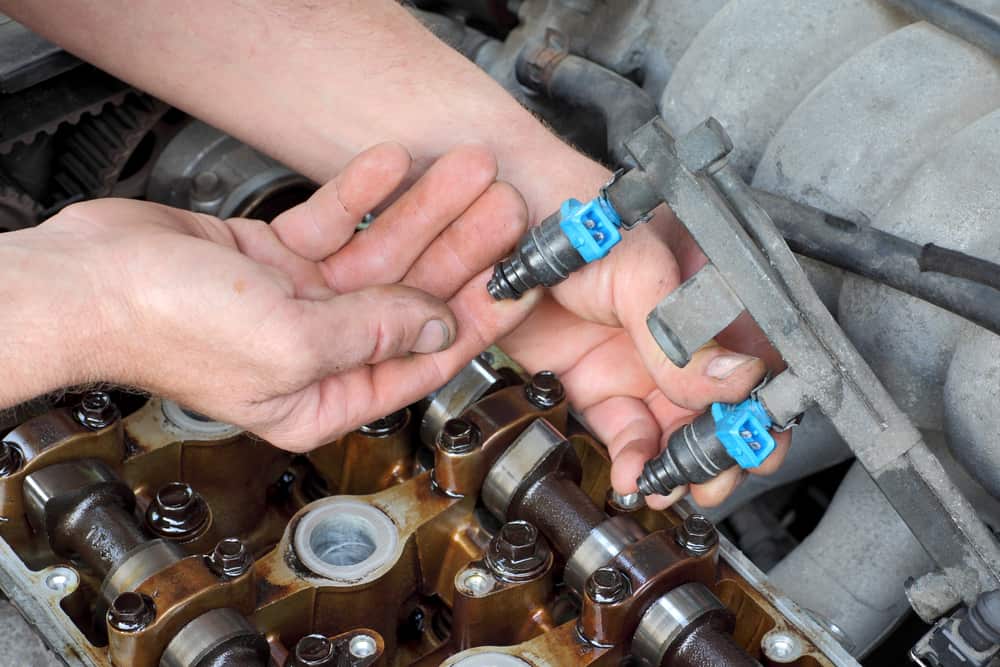
A technician can investigate fuel pressure, injector operation, fuel-trim readings, and misfire information while also checking ignition and air-intake systems. If an injector is flowing substantially less fuel than the others, the evidence becomes much stronger.
This symptom deserves attention when it develops alongside hesitation or misfires. Continuing to drive a vehicle with a persistent combustion problem can increase emissions and may create additional drivability problems.
Finding the cause early is generally more useful than simply treating the loss of power as an aging-car characteristic.
5. Poor Fuel Economy
A sudden drop in fuel economy can sometimes be traced to a fuel-delivery problem, particularly when the change appears alongside other symptoms such as hesitation, rough running, or reduced power.
A partially clogged injector may not deliver fuel with the same consistency or spray quality expected by the engine’s control system. Injector deposits can alter fuel flow and spray patterns, potentially affecting combustion efficiency and emissions.
The important point is that a clogged injector does not always cause the engine to use more fuel dramatically.
In some situations, the restriction can reduce fuel delivery to an affected cylinder, while the engine-management system attempts to compensate for changes in combustion. The result can be poorer drivability and a measurable change in fuel consumption.
Before blaming the injectors, check the simplest variables. Tire pressure, driving speed, traffic, weather, cargo weight, and frequent short trips can all change real-world fuel economy. A failing oxygen sensor, thermostat problem, dragging brake, or underinflated tire can also increase fuel consumption.
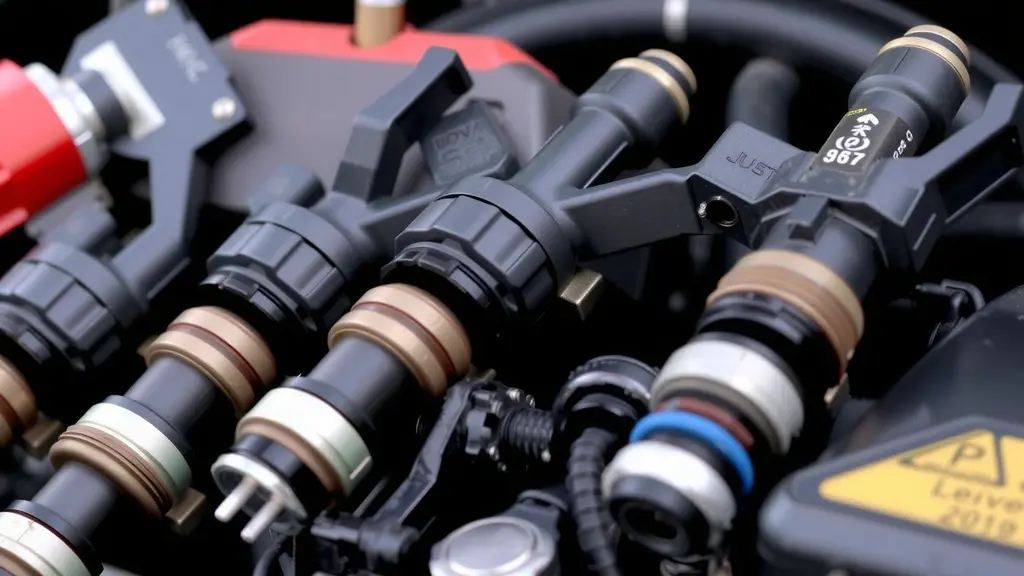
If the decline is persistent and appears together with other injection-related symptoms, professional testing becomes worthwhile. A technician can examine fuel trims, fuel pressure, injector operation, and misfire data to determine whether the injectors are actually contributing to the problem.
The EPA has documented that injector deposits can affect fuel delivery and combustion, making injector cleanliness relevant to both vehicle performance and emissions.
6. Difficulty Starting the Engine
An engine that suddenly takes longer to start can give you an important clue that something in its fuel or ignition system is not working as intended.
A restricted injector can contribute to starting difficulty when it prevents adequate fuel from reaching a cylinder during the starting sequence. The problem may be particularly noticeable after the vehicle has been sitting for several hours.
Instead of firing almost immediately, the starter may need to crank the engine for several seconds before combustion begins. Once the engine starts, it might then run roughly for a short period before settling into a normal idle.
Delphi lists starting difficulties among symptoms that can accompany fuel-injection system problems.
However, this symptom requires careful diagnosis because injectors are far from the only possible cause. A weak battery, failing starter, low fuel pressure, faulty fuel-pump component, ignition problem, or sensor malfunction can produce very similar behavior. Even fuel with contamination can affect starting and running quality.

The pattern matters. If extended cranking is accompanied by rough idle, hesitation, or misfires after startup, a fuel-delivery problem becomes more plausible. A technician can measure fuel pressure and investigate injector performance rather than assuming that cleaning or replacing the injectors will solve the problem.
Modern fuel-injection systems are designed to meter fuel precisely during starting, so persistent changes in starting behavior should not simply be dismissed as normal aging.
If the engine increasingly needs multiple attempts to start, diagnosing the underlying cause promptly can prevent a relatively manageable fuel-system problem from becoming a more serious drivability issue.
7. Check Engine Light
A check engine light can be the first warning that turns a vague drivability problem into something worth investigating. Fuel-injector problems can trigger the light when the engine’s computer detects abnormal combustion, fuel-trim behavior, or other conditions associated with improper fuel delivery.
A clogged injector is therefore a possible cause, but the warning itself does not identify the injector as the culprit.
One common mistake is assuming that every check engine light related to poor running means the injectors need cleaning. Modern vehicles monitor numerous systems, including ignition, emissions, and fuel control.
A misfire caused by a spark plug or ignition coil, for example, can produce symptoms almost identical to those created by inadequate fuel delivery.
The EPA has documented that injector deposits can influence fuel flow and combustion, while modern diagnostic systems can detect resulting changes in engine operation and emissions.
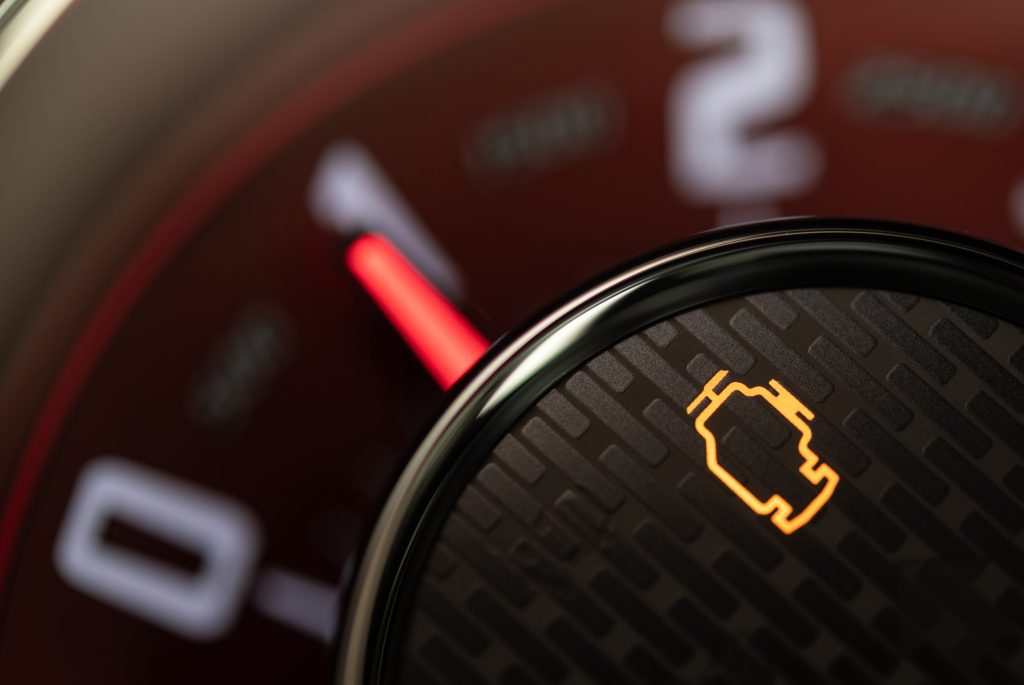
If the light appears together with hesitation, rough idle, or reduced power, reading the vehicle’s diagnostic trouble codes is a sensible first step. The code provides a direction for testing, not necessarily a parts-replacement instruction. A technician may then check injector electrical operation, fuel pressure, fuel trims, and cylinder-specific misfire information.
Pay particular attention if the check engine light is flashing rather than remaining steadily illuminated. A flashing warning can indicate a severe misfire that may damage the catalytic converter. In that situation, continuing to drive the vehicle unnecessarily is not advisable.
8. Engine Surging or Uneven Power Delivery
An engine that repeatedly gains and loses power without a corresponding change in accelerator input can be surprisingly unsettling. Instead of producing steady acceleration, the vehicle may feel as though someone is gently pressing and releasing the throttle.
Uneven fuel delivery is one possible reason, and a restricted injector can contribute when its fuel flow is inconsistent with what the engine requires.
The effect may be more obvious during light acceleration or while maintaining a steady speed. If one injector delivers less fuel than expected, combustion from that cylinder can differ from the others.
The engine computer may respond by adjusting fuel delivery, while changing combustion can make the vehicle feel uneven.
Injector deposits are known to affect fuel flow and spray characteristics. Research summarized by the U.S. EPA has associated injector fouling with changes in engine performance and emissions.
Still, surging is not an injector-only symptom. Problems involving the throttle body, electronic throttle control, mass airflow sensor, oxygen sensors, fuel pump, or ignition system can produce comparable sensations. Even an inconsistent fuel supply can create similar behavior without an individual injector being clogged.
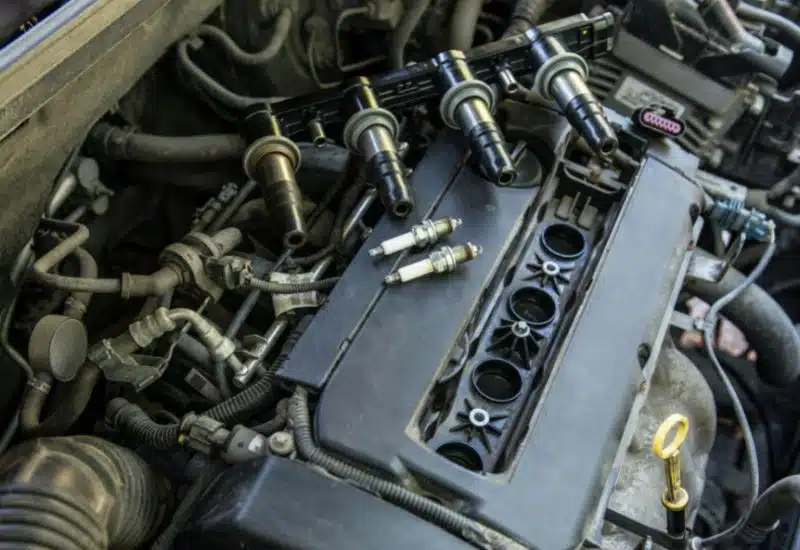
The strongest clue comes from the combination of symptoms. If surging occurs alongside rough idle, hesitation, misfires, or a noticeable change in fuel economy, fuel-injection testing becomes more relevant. A technician can use scan-tool data and fuel-system measurements to determine whether the engine is actually experiencing uneven fuel delivery.
Rather than treating every surge with injector cleaner, identify the cause first. That approach avoids spending money on a treatment that may have no connection to the underlying fault.
9. Increased Exhaust Emissions
A fuel-injector problem can sometimes show up at the tailpipe before the driver notices a major change in performance. When deposits interfere with injector flow or spray quality, the engine may not burn the air-fuel mixture as cleanly as intended. That can alter exhaust emissions and, in some circumstances, cause the vehicle to fail an emissions inspection.
The U.S. Environmental Protection Agency has studied fuel-injector deposits and found that injector fouling can affect fuel flow, spray characteristics, and combustion. Its research also links injector deposits with increases in certain regulated emissions, including particulate emissions.
A driver may notice an unusual exhaust odor, darker-than-normal exhaust on some vehicles, or other changes in tailpipe behavior. These signs are not specific enough to diagnose a clogged injector by themselves. Exhaust-system problems, oil consumption, ignition faults, and other fuel-system issues can produce similar observations.
The vehicle’s onboard diagnostic system can provide more useful evidence. If fuel-control or misfire-related faults are stored, a technician can combine those codes with fuel-trim readings and injector testing to determine whether fuel delivery is actually responsible.
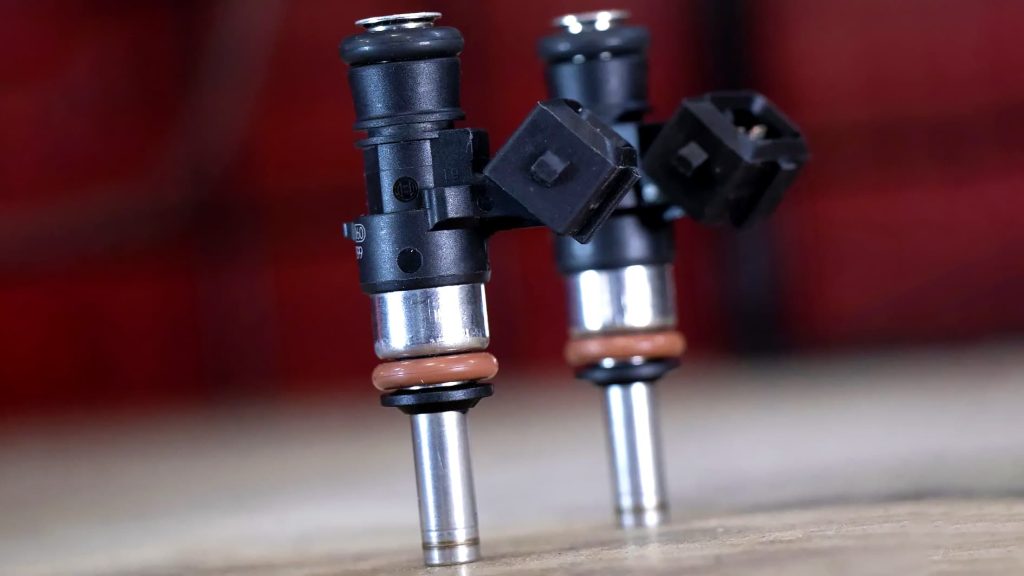
This is also why simply adding a cleaning product to the fuel tank should not be considered a guaranteed solution. A minor deposit problem may respond differently from an injector with a significant mechanical or electrical fault.
If emissions have changed noticeably at the same time as rough running, hesitation, or declining fuel economy, the combination deserves attention. Addressing the underlying cause can restore proper combustion while helping the emissions-control system operate under the conditions for which it was designed.
10. Engine Knock or Combustion Problems
Engine knock is a symptom that should never be automatically blamed on clogged injectors, but abnormal fuel delivery can contribute to poor combustion under certain conditions. Injector deposits can change the quantity and characteristics of fuel entering the combustion chamber, potentially affecting how the mixture burns.
A driver might describe the problem as a metallic rattling or pinging sound, particularly during acceleration or when the engine is under load.
Modern engines use knock sensors and electronic controls to detect abnormal combustion and adjust ignition timing when necessary. That intervention can protect the engine, but it can also reduce performance when the condition persists.
Fuel quality is another major factor. The EPA’s research into injector deposits shows that fuel-system deposits can influence combustion and emissions, but an injector should not be condemned simply because an engine produces a knocking sound.
Low-quality or inappropriate fuel, excessive engine temperature, carbon deposits, ignition problems, and mechanical faults can also be involved.
This symptom calls for diagnosis rather than experimentation. If knocking is accompanied by misfires, hesitation, rough running, or power loss, a technician can inspect fuel delivery alongside ignition and engine-management systems. Injector flow testing can help determine whether a particular injector is restricted.
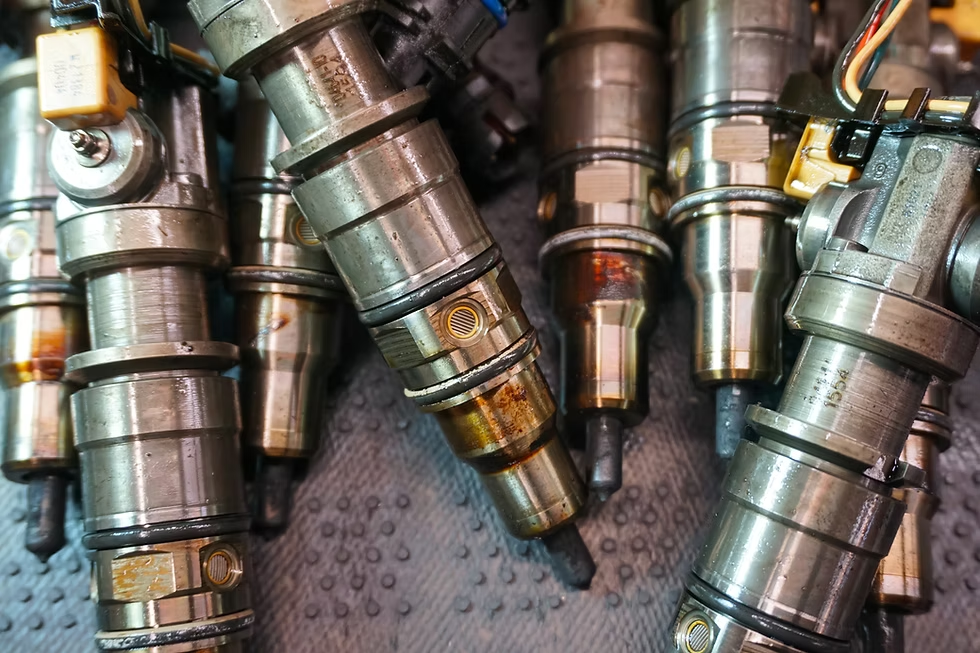
It is especially important not to ignore persistent severe knocking. Abnormal combustion can place substantial stress on engine components, and the sound may have nothing to do with injector deposits at all.
The main takeaway is straightforward. Faulty fuel injectors can cause noticeable drivability issues, but diagnosing the problem requires checking the fuel, ignition, and air systems as a whole. Not every engine problem can be traced back to dirty injectors.