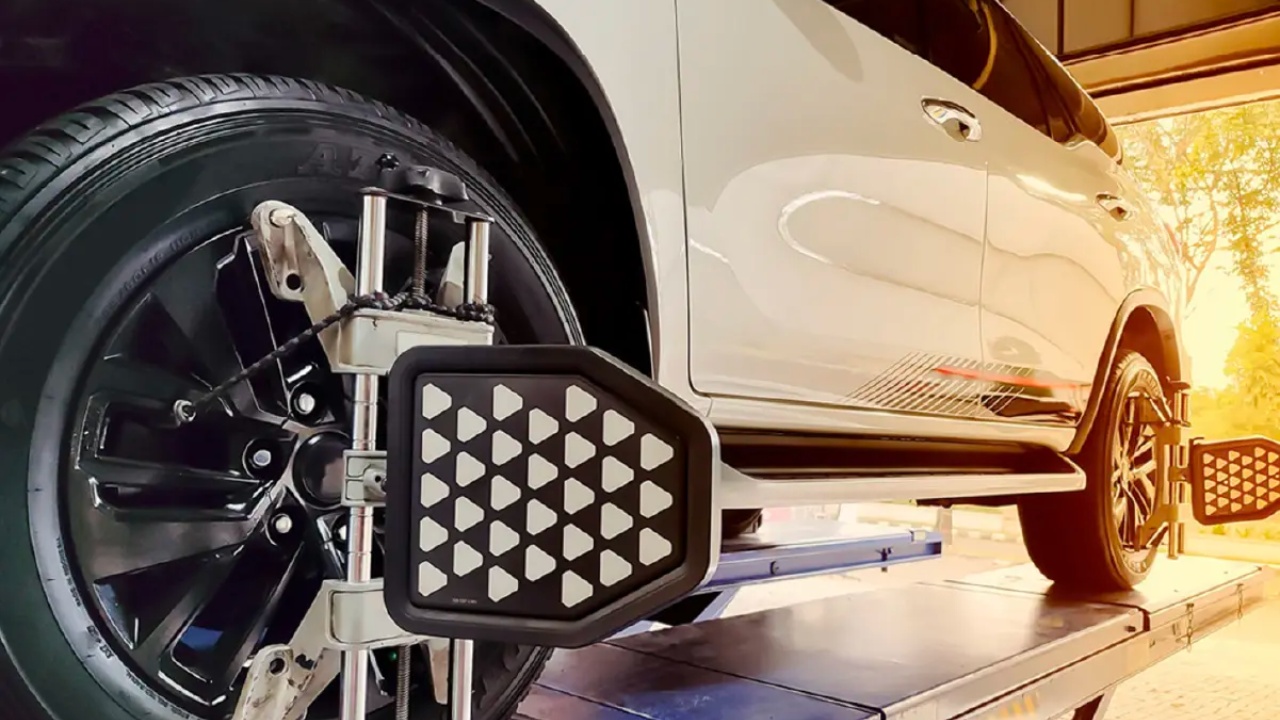
Wheel alignment problems rarely begin with a dramatic failure. More often, your car quietly changes the way it tracks, steers, or wears its tires. A steering wheel that no longer sits straight and a vehicle that drifts toward one lane or tread disappearing faster on one side can all point toward incorrect alignment.
The important detail is that these symptoms do not always prove alignment is the cause. Tire pressure, worn suspension parts, tire construction, and brake problems can create similar behavior. Proper diagnosis, therefore, matters.
Here are eight practical signs worth taking seriously, along with what each symptom can tell you before an alignment check is performed.
1. Your Car Pulls to One Side
One of the clearest clues is a vehicle that consistently wants to move left or right when you are trying to drive straight. You may notice it most easily on a relatively flat, straight road when you briefly relax your steering input. If the car immediately begins drifting toward one side, something deserves investigation.
Alignment can certainly be responsible. Incorrect camber, caster, or toe settings can alter how the tires contact the pavement and how the vehicle tracks. Firestone identifies pulling to one side as a common alignment symptom and explains that proper alignment is intended to keep the vehicle traveling straight with predictable steering response.
But there is an important diagnostic trap to keep in mind. A vehicle pulling to one side does not automatically mean the wheels are misaligned. Tire pressure is one of the easiest things to check first, since a significantly underinflated tire can affect how the vehicle behaves.
Tire wear, tire construction differences, suspension damage, and brake problems can also produce a pull. Firestone specifically notes that a vehicle pulling during braking can indicate uneven brake application rather than an alignment problem.

Road shape can complicate the test as well. Many U.S. roads have a crown or slope intended to move water toward drainage areas, so a slight tendency toward one direction on a particular road is not conclusive evidence.
If your car consistently pulls on different roads, however, the symptom deserves attention. An alignment inspection can measure the actual suspension angles rather than relying on how the steering feels.
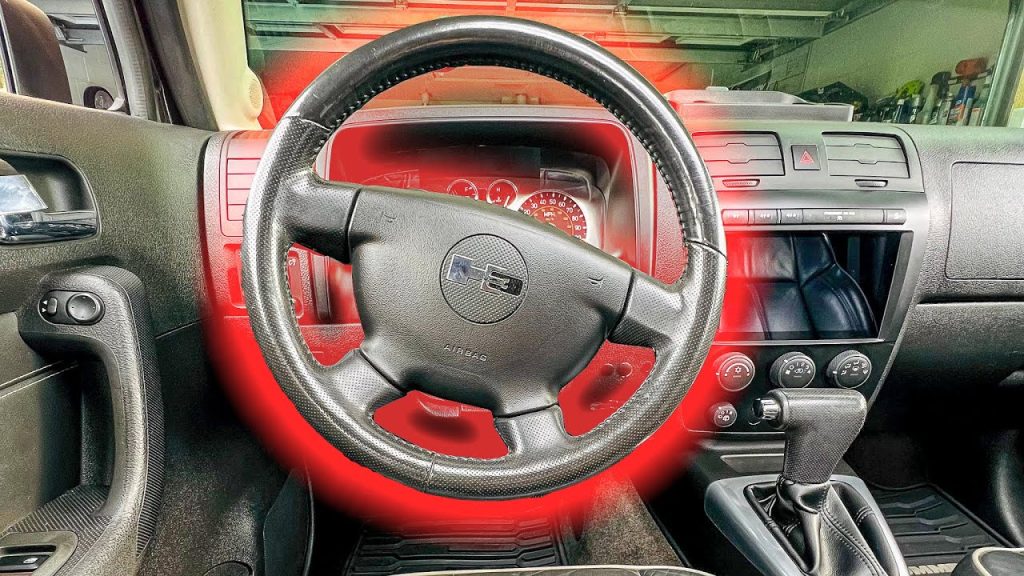
2. The Steering Wheel Sits Crooked
Sometimes the car travels reasonably straight, but the steering wheel is visibly rotated instead of sitting near its normal centered position. That can be an early and surprisingly useful clue.
A properly aligned vehicle should generally allow the steering wheel to remain centered while traveling straight on a suitable road.
If you have to hold the wheel noticeably to one side to maintain your lane, the relationship between the steering system and wheel alignment deserves inspection. Firestone lists an off-center steering wheel among the common indicators of an alignment problem.
The important distinction is between a physically off-center wheel and a car that actually pulls. Those conditions can occur separately.
NHTSA-published service documentation describes an off-center steering condition as one where the steering wheel must be held at an angle while the vehicle travels straight, while also noting that tire characteristics, road crown, worn suspension components, and alignment settings can contribute.
That means simply straightening the steering wheel itself is not necessarily a repair. A technician needs to determine why the steering position changed.
The timing can provide useful information. If the steering wheel suddenly became crooked after hitting a pothole or curb, alignment or suspension damage becomes more suspicious. If it gradually changed while the vehicle accumulated mileage, worn components or gradual changes in alignment may deserve consideration.
It is also worth checking tire pressure before paying for an alignment. Unequal pressure can affect tracking and make the steering feel different.
A crooked wheel should therefore be treated as a diagnostic clue, not a definitive diagnosis. If the steering position has noticeably changed from the way the car normally drives, having the alignment angles measured is a sensible next step.
3. One Tire Is Wearing Faster Than the Others
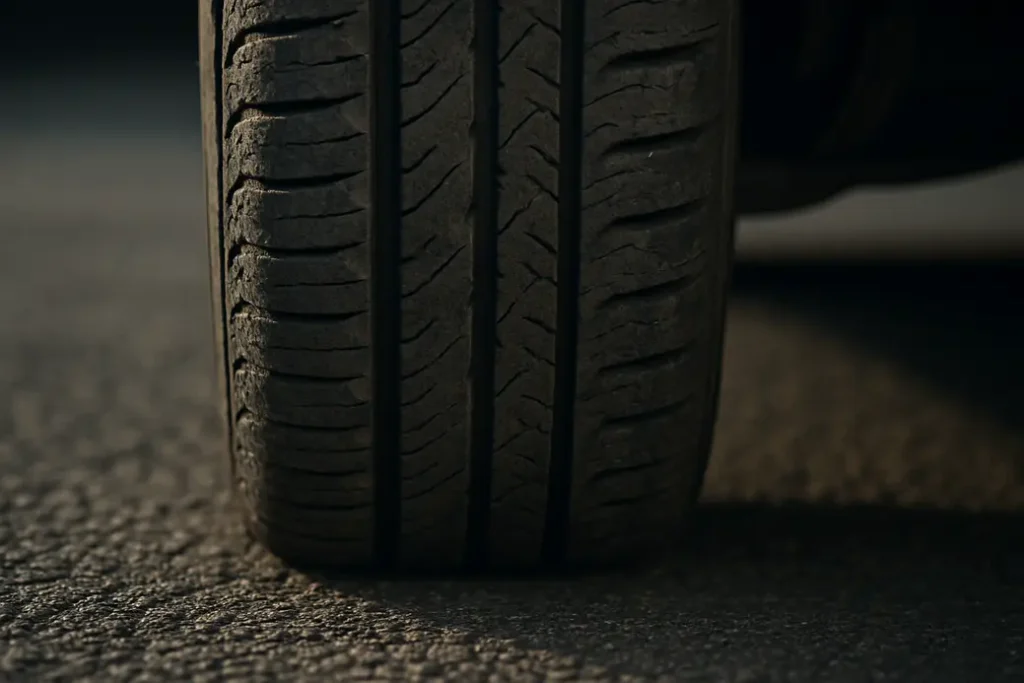
Tires can reveal an alignment problem long before the driver notices a major handling change. If one tire is wearing substantially faster than another, or one portion of the tread is disappearing unusually quickly, the pattern deserves investigation.
Misalignment can change the angle at which a tire meets the road. When that happens, part of the tread can experience more wear than the rest. Firestone specifically lists uneven or premature tread wear among the most common signs of poor alignment.
Look closely at the tread rather than simply checking whether the tire is worn. A tire can appear acceptable from a distance while having a noticeably different pattern across its inner or outer shoulder. Comparing the same axle from side to side can reveal differences that are otherwise easy to miss.
However, tire wear is not an alignment-only diagnosis. Incorrect inflation, tire rotation practices, suspension wear, and tire condition can all contribute to uneven wear.
Firestone notes that worn steering and suspension components can themselves create alignment problems, meaning an alignment machine may identify incorrect angles without identifying the underlying mechanical cause.
This is why an alignment service should involve more than simply adjusting numbers. A technician should inspect relevant steering and suspension components before assuming adjustment alone will solve the problem.
There is also a financial reason to act early. Once a tire develops significant uneven wear, an alignment cannot restore the rubber that has already disappeared. Correcting the underlying issue can help prevent the replacement tire from developing the same pattern.
If you notice one tire looking substantially different from its partner, photograph the tread pattern and have the vehicle inspected. It may be the first physical evidence that something in the steering or suspension geometry has changed.
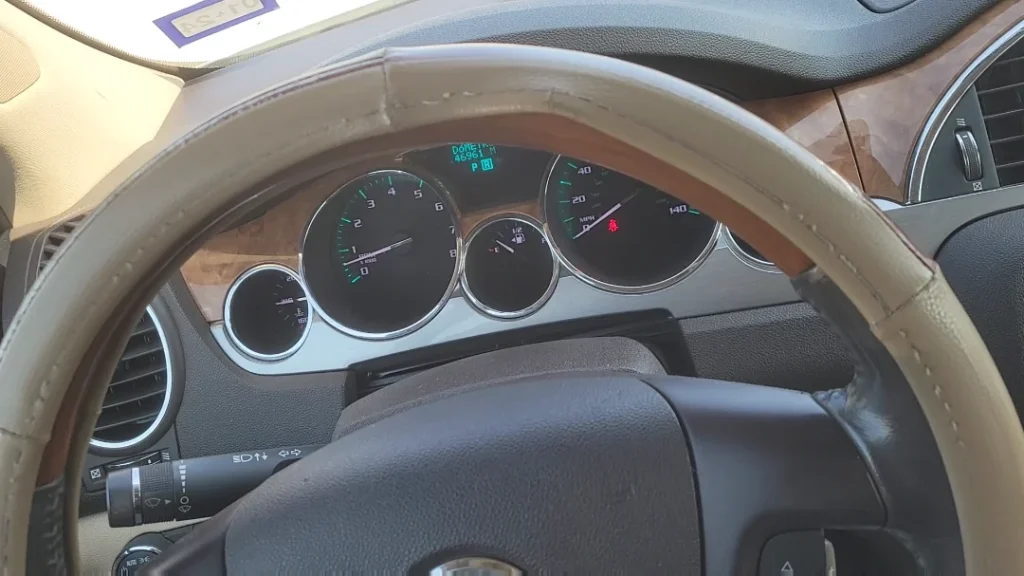
4. The Steering Feels Loose or Requires Constant Correction
A car that wanders within its lane can become tiring to drive even when there is no obvious mechanical noise. You may find yourself making small steering corrections repeatedly, particularly at highway speeds. That sensation can sometimes accompany an alignment problem, but it deserves a broader steering and suspension inspection.
Alignment affects how the wheels track relative to the vehicle, so incorrect settings can make a car wander or feel less predictable. Firestone identifies loose or reduced steering response as a reason to inspect alignment and related components.
Yet there is an important difference between poor alignment and actual mechanical looseness. Alignment does not normally create physical play in a steering wheel by itself.
Worn tie rods, steering components, or suspension joints can allow unwanted movement and simultaneously cause alignment angles to change. Firestone notes that worn tie rods can contribute to an out-of-alignment front end, steering vibration, and excessive steering-wheel play.
That is why a driver should not simply request an alignment and assume the problem will disappear. If components are worn, adjusting alignment before repairing them may provide only a temporary result.
Pay attention to whether the car feels different after bumps, during lane changes, or when traveling over uneven pavement. A vague steering sensation accompanied by clunks, knocks, or obvious play deserves a prompt inspection.
There is also a safety consideration. If the vehicle suddenly becomes difficult to keep in its lane, do not treat the issue as merely a tire-wear problem. Steering and suspension components are directly involved in vehicle control.
A proper diagnosis should determine whether alignment angles, tire condition, steering components, or suspension wear are responsible. The alignment reading is one part of that process, not necessarily the entire answer.
5. Your Tires Squeal During Ordinary Turns
Tire squeal is usually associated with aggressive cornering, but hearing squealing during relatively normal turns can be a useful warning sign. If the tires make noise during a low-speed turn that previously produced little or no sound, alignment or tire-related problems deserve attention.
Firestone lists squealing tires while turning among the symptoms that can accompany an alignment issue. Incorrect wheel angles can affect how the tires track across the pavement, potentially increasing unwanted tire scrub.
Still, the sound itself does not prove that alignment is wrong. Tire compound, pavement type, temperature, inflation pressure, and driving conditions can all affect tire noise. A tire can also squeal because it has uneven or abnormal wear rather than because the alignment angles are currently incorrect.
The useful clue is a behavior change. If the same turn that was previously quiet suddenly produces noticeable squealing, look at the tires afterward. Check whether the tread is wearing differently on one shoulder or whether one tire has an unusual pattern.
It is also worth checking inflation pressures against the vehicle manufacturer’s recommended cold pressures. Pressure should be checked when the tires are cold and should not simply be set according to the maximum pressure printed on the tire sidewall.

If the tires are correctly inflated and the squealing is accompanied by pulling, a crooked steering wheel, or uneven tread wear, the case for an alignment inspection becomes stronger.
A technician can measure camber, caster, and toe and determine whether they fall within the manufacturer’s specifications. Those measurements are much more useful than judging alignment from tire noise alone.
The key point is that squealing is a supporting symptom, not a standalone diagnosis. When it appears together with other steering or tire clues, however, it becomes much harder to dismiss.
6. The Car Feels Different After Hitting a Pothole or Curb
A hard pothole impact can change the way a vehicle drives almost instantly. You might leave the impact thinking the tire survived, only to discover a few miles later that the steering wheel is no longer centered or the vehicle has started drifting.
Potholes and curbs are recognized causes of alignment problems. Firestone specifically lists both among common events that can lead to misalignment.
The reason an inspection matters is that an impact can potentially affect more than alignment angles. A bent wheel, damaged tire, bent suspension component, or worn steering part can create symptoms that resemble misalignment. Simply adjusting the alignment may not correct the underlying problem if something has been physically damaged.
This is particularly important after a severe impact. Inspect the tire sidewall for obvious damage and check whether the wheel has developed a visible deformation. A tire that suddenly loses pressure after striking a pothole should receive immediate attention.
The timing of the symptoms is one of the strongest clues. If the car drove straight before the impact and immediately developed a crooked steering wheel afterward, there is a clear reason to have the steering and suspension checked.
Alignment measurements can establish whether the vehicle’s angles have moved outside manufacturer specifications. A proper inspection should also determine why they changed.

Do not assume that a lack of visible damage means everything is fine. Suspension components can suffer damage without producing an obvious visual clue to an untrained observer.
If the impact was severe enough to make the steering wheel jerk sharply, the tire pressure change or handling behavior noticeable, getting the vehicle inspected promptly is sensible. The earlier a problem is identified, the better the chance of preventing accelerated tire wear or additional damage.
7. Fuel Economy Drops Without an Obvious Reason
Alignment is not usually the first thing people investigate when fuel economy decreases, but rolling resistance can connect the two. If the wheels are not tracking correctly, the tires can experience additional resistance rather than rolling as freely as intended.
Firestone notes that misalignment can increase resistance and contribute to reduced fuel efficiency. It also identifies pulling, off-center steering, and uneven tire wear as accompanying warning signs.
That does not mean every decline in mpg is caused by alignment. Changes in weather, tire pressure, traffic, driving style, fuel formulation, and vehicle load can all affect fuel consumption. A driver should therefore avoid using fuel economy alone as proof that an alignment is wrong.
The clue becomes more meaningful when the mileage change occurs alongside other symptoms. Suppose your vehicle normally tracks straight, then develops a slight pull, begins wearing one front tire differently, and shows a modest decline in fuel economy.
The combination gives you a much stronger reason to have the tires, steering, and alignment inspected.
Start with the simple checks. Verify tire pressures when the tires are cold and compare them with the vehicle manufacturer’s recommended settings. Inspect tread condition and consider whether a recent tire replacement or rotation could have changed the vehicle’s behavior.
If those checks reveal nothing, an alignment inspection can measure the actual geometry. Technicians evaluate angles such as camber, caster, and toe, depending on the vehicle and what adjustments are available.

The important takeaway is that alignment is one possible contributor to increased rolling resistance, not a universal explanation for poor fuel economy.
When reduced mileage appears together with steering or tire symptoms, however, ignoring the alignment becomes harder to justify.
8. The Car Vibrates or Feels Unstable at Speed
A vibration through the steering wheel or vehicle body can make an otherwise healthy car suddenly feel unpleasant at highway speeds. Alignment can contribute to some vibration complaints, but this symptom is particularly important because several other faults can create nearly identical sensations.
Firestone lists steering-wheel vibration among symptoms that can accompany alignment problems. It also notes that suspension or steering problems can produce similar symptoms.
A wheel and tire problem is another major possibility. An imbalance can cause vibration at certain speeds, while a damaged tire or bent wheel can create more serious symptoms. Because of that, simply ordering an alignment without investigating the vibration can miss the actual problem.
Pay attention to when the vibration occurs. If it appears primarily at a particular road speed, a technician will want to inspect the wheels and tires as well as alignment and suspension components. If the steering wheel shakes during braking, the brake system also deserves investigation rather than assuming alignment is responsible.

A vibration accompanied by uneven tire wear, pulling, or an off-center steering wheel provides more evidence that alignment or suspension geometry may be involved.
The safest approach is to describe the symptom as precisely as possible. Note the speed at which it begins, whether it changes during braking, whether the vibration or pull is felt mainly through the steering wheel or seat, and whether it started after an impact or tire service.
That information can help narrow the diagnosis. A vehicle that suddenly feels unstable should not be treated as a minor inconvenience.
If steering becomes difficult, vibration becomes severe, or the vehicle shows signs of suspension damage, have it inspected promptly. Alignment may be the answer, but finding the real cause is more important than simply obtaining an alignment reading.