
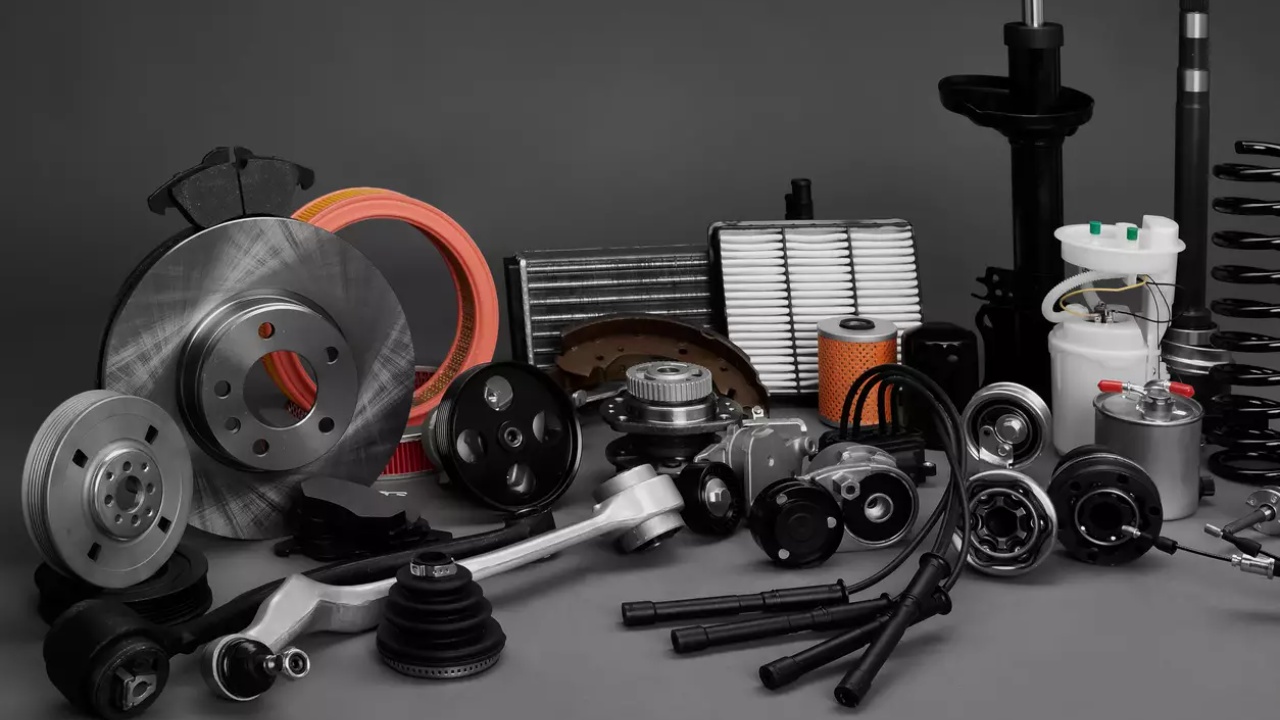
Buying used parts can save a surprising amount of money, but the cheapest component is not always the smartest purchase. Some automotive parts wear internally, lose their safety performance with age, or can hide previous damage that is almost impossible to identify from a photograph.
That makes them very different from items such as body trim or interior panels, where use is often perfectly reasonable. The biggest concern is with components that protect occupants, control the vehicle, or operate under extreme heat, pressure, and load. Here are eight parts where saving money on a used component can create a much larger problem later.
1. Airbags
An airbag is one used automotive part that should make any buyer stop and think before reaching for a bargain. Unlike a wheel, mirror, or body panel, an airbag is a single-use safety device specifically engineered to deploy within milliseconds during a crash.
Once it has deployed, NHTSA recommends replacing it before the vehicle is driven again. The agency also warns that replacement airbags need to be genuine and properly matched to the vehicle.
The danger becomes even clearer when looking at what has happened with questionable replacement inflators in the United States. NHTSA has documented deaths and serious injuries involving substandard aftermarket inflators installed in vehicles after previous crashes. Some defective inflators ruptured during deployment and sent metal fragments toward occupants.
NHTSA’s current warning identifies 14 crashes involving dangerous inflators marked DTN60DB, resulting in 11 deaths and three severe injuries.
That makes a used airbag from an unknown source particularly difficult to justify. You may not know whether it has previously deployed, whether it was stored correctly, whether it was damaged during removal, or whether it is genuine equipment for your exact vehicle.
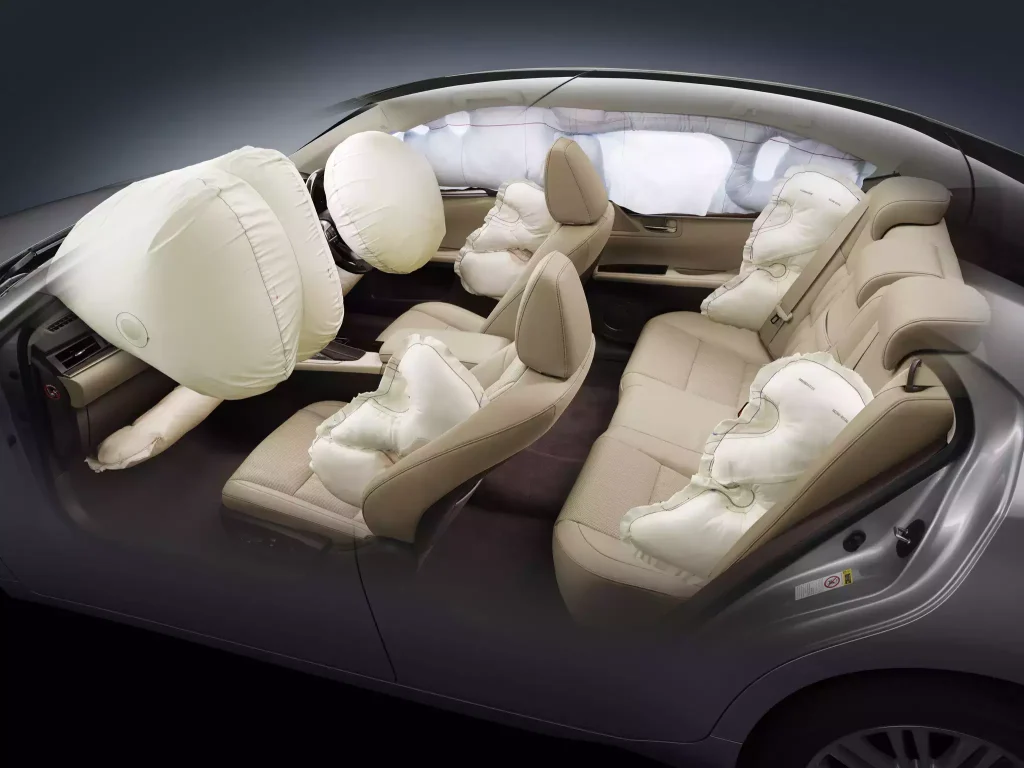
NHTSA specifically recommends that buyers of used vehicles investigate crash history and have previously deployed airbags inspected by a reputable mechanic or dealership. The agency also warns consumers not to dismantle an airbag themselves.
A used airbag may look perfectly normal from the outside. That is exactly the problem. There is no sensible visual inspection that can guarantee it will protect you when you need it.
2. Seat Belts and Pretensioners
Seat belts are designed to look simple, but modern restraint systems are considerably more sophisticated than a strip of fabric attached to a buckle. Many vehicles use pretensioners that rapidly tighten the belt during a collision, while load-limiting systems help control the forces transferred to an occupant. After a serious crash, those components may have been subjected to forces that are not obvious from their appearance.
That makes used seat belts particularly questionable when their history is unknown. NHTSA has long recommended restoring safety systems that may have been damaged during a crash, specifically including safety belts and associated restraint equipment.
A used belt assembly can also come from a vehicle that was involved in a collision without showing obvious exterior damage. The webbing may look clean, the buckle may click normally, and the retractor may still pull the belt in and out. None of those observations proves that the pretensioner or internal mechanism is in proper condition.
The problem becomes even more complicated when the replacement part comes from a different trim level or model year. Restraint systems are calibrated as part of the vehicle’s complete occupant-protection system. NHTSA has emphasized that safety components damaged in crashes may require inspection, repair, or replacement according to the vehicle manufacturer’s procedures.
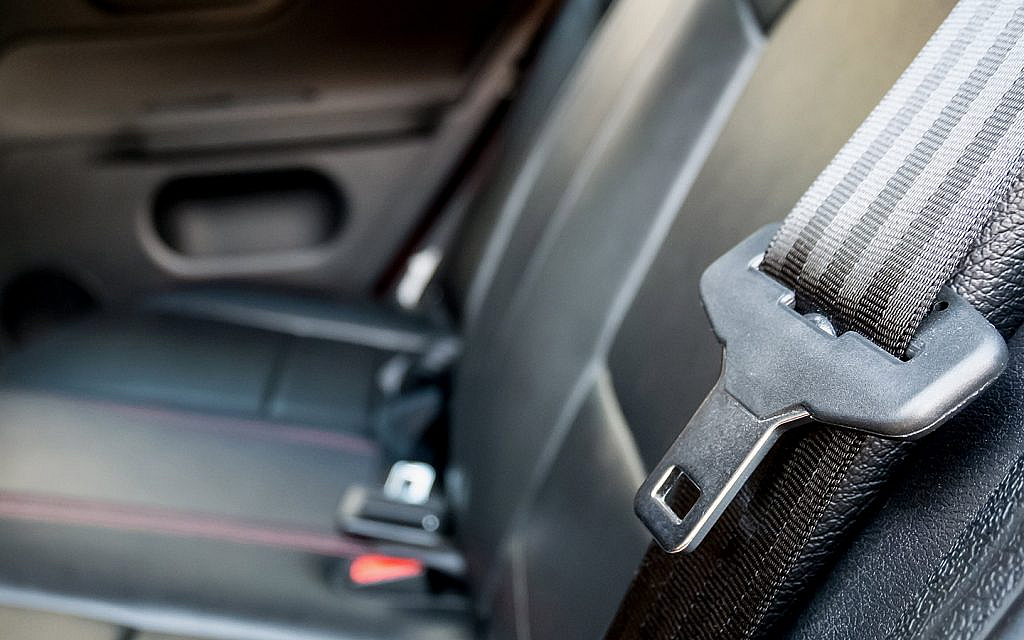
This is not an area where saving $50 or $100 should drive the decision. A new, correct replacement belt assembly provides known provenance and compatibility, whereas a used assembly can carry an invisible history.
If a replacement is necessary, use the exact part specified for the vehicle and have the work performed by a qualified technician. A seat belt is not merely interior hardware. It is one of the primary components responsible for keeping an occupant positioned correctly during a crash.
3. Tires
Used tires can look like an excellent bargain because a tire with plenty of visible tread may appear almost new. The problem is that tread depth tells only part of the story. Rubber changes as a tire ages, and NHTSA warns that aging can increase the likelihood of tire failure.
The agency specifically notes that tire aging can be influenced by service, storage, sunlight, temperature, and maintenance, making a tire’s history difficult to establish when buying it secondhand.
That uncertainty is the biggest reason tires are poor candidates for used-parts shopping. You may know how much tread remains, but you may not know whether the tire spent years sitting outside, was severely underinflated, suffered an impact, or was driven while overloaded. Internal damage from a pothole or curb strike can also be difficult to identify from the outside.
NHTSA says tires should be replaced when tread reaches 2/32 of an inch, but it also warns that tread depth is not the only consideration. Physical damage such as cuts, cracks, bulges, irregular wear, or other deterioration can make a tire unsafe before the tread reaches that limit.

Age creates another problem. The last four digits of the DOT Tire Identification Number indicate the week and year of manufacture. NHTSA notes that some vehicle and tire manufacturers recommend replacement at six to 10 years regardless of treadwear.
There is simply too much hidden history involved with a used tire. Since the tire is the only component directly connecting your vehicle to the road, spending more on a new, correctly sized, and load-rated set is one of the easier safety decisions to justify.
4. Brake Rotors
Brake rotors are tempting used parts because they appear simple, durable, and easy to inspect. A used rotor may look smooth and have plenty of material remaining, but appearance alone cannot tell you everything about its condition. The component has already experienced repeated heating and cooling cycles, and those cycles can affect its surface condition, thickness, and ability to provide consistent braking.
The problem becomes particularly serious when a rotor has been removed from a vehicle without its service history. You may not know whether it was previously overheated, machined multiple times, exposed to severe corrosion, or operated with brake pads that wore unevenly. Even if the rotor looks acceptable, its remaining thickness needs to be compared with the manufacturer’s minimum specification.
Brake components are safety-critical equipment, which is why NHTSA has historically identified brake parts and assemblies among components requiring particular attention in collision repair and used-part applications. Its published material specifically distinguishes brake parts and assemblies from certain electronic ABS components.
Heat is another reason to be cautious. A brake rotor repeatedly exposed to extreme temperatures can develop surface problems that are not necessarily obvious while the part is sitting on a workbench. A rotor can also have corrosion or uneven wear that becomes noticeable only after installation.
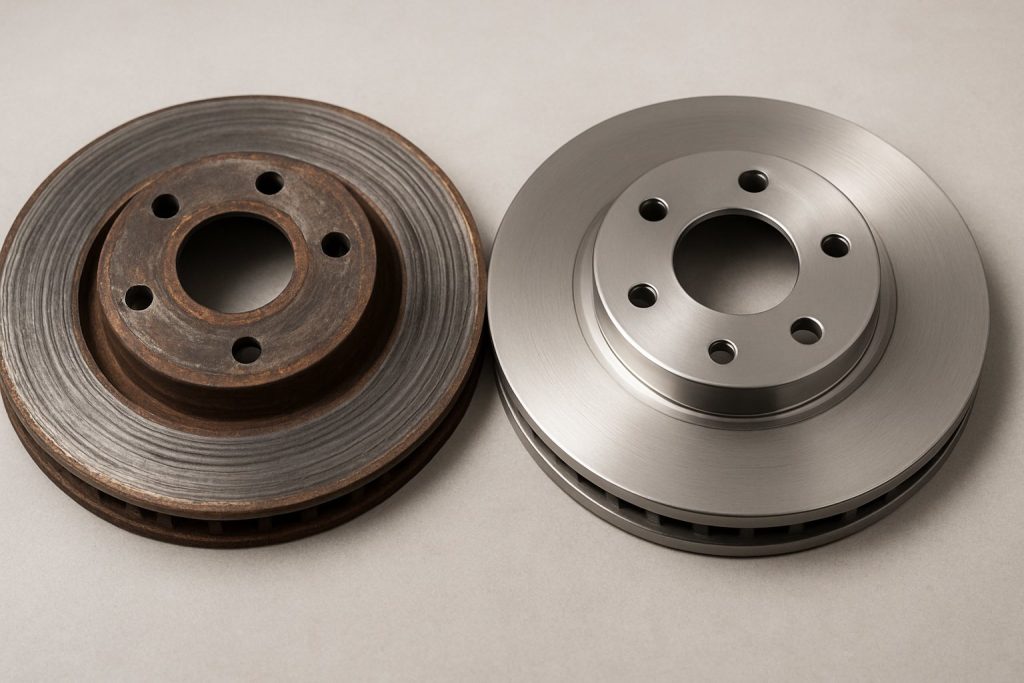
There is also the labor factor. Installing a cheap used rotor only to discover vibration, excessive runout, insufficient thickness, or poor braking performance can mean paying for the same repair twice.
For ordinary maintenance, new rotors from a reputable manufacturer provide known dimensions, known material specifications, and a measurable starting point. Used rotors might save money at the parts counter, but brakes are one area where predictable performance is worth considerably more than a small upfront saving.
5. Steering Components
Steering components are another category where buying used can introduce a risk that is difficult to see before installation. Parts such as steering racks, steering columns, tie rods, and certain steering linkages directly affect the driver’s ability to control the vehicle. A component can look clean and straight in a salvage yard while still having internal wear, impact damage, corrosion, or excessive play.
The concern is particularly strong with parts removed from crash-damaged vehicles. A steering component can experience loads during an accident that are not obvious from a visual inspection.
NHTSA has long advised that safety systems and vehicle systems damaged in a crash should be properly inspected, repaired, restored, or replaced before the vehicle returns to normal road use. Its guidance specifically identifies steering among the systems that may require attention following a collision.
A used steering rack is a good example. The housing may appear perfect, yet the internal seals could be worn, or the rack could have developed excessive play. An electrically assisted steering assembly adds another layer of uncertainty because its electronics, sensors, and motor may have experienced problems that are not immediately visible.
There is also the issue of compatibility. Modern vehicles can have different steering components depending on trim level, engine, drivetrain, suspension package, or model year. Installing a visually similar component does not guarantee that the vehicle will operate as engineered.
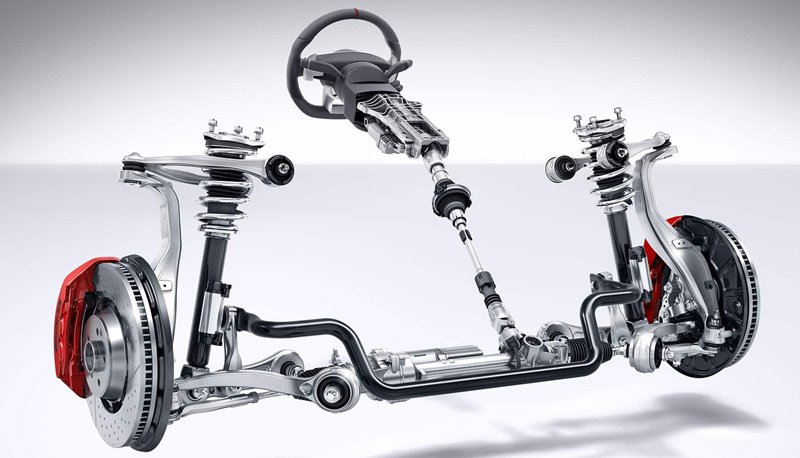
This is one of those situations where the cost of the part should be considered alongside the cost of the consequences. If a used steering component fails, the problem is not simply an inconvenient breakdown. Loss of steering control can immediately create a serious crash hazard.
For critical steering hardware, a new component from a reputable manufacturer or a properly remanufactured unit with documented testing is generally a much safer proposition than an unknown used part.
6. Brake Calipers
Brake calipers might appear to be ideal used parts because they are made primarily from substantial metal components, but their internal condition is what matters. A used caliper can contain worn seals, corrosion around the piston, damaged bleeder threads, contaminated fluid passages, or a piston that no longer moves correctly. None of those problems is guaranteed to be visible when the part is sitting on a shelf.
Braking components are safety-critical enough that NHTSA has specifically included brake parts and assemblies among vehicle components requiring careful consideration when used parts are installed. Its published material identifies brake assemblies, including ABS components with certain exceptions, as safety-related parts.
Corrosion is particularly important in areas where road salt is commonly used. The outside of a caliper can be cleaned and painted, yet corrosion may remain around the piston bore or other critical surfaces. Once hydraulic pressure is applied, a damaged seal can leak brake fluid. A sticking piston can also prevent the brake pad from releasing properly, producing heat and uneven wear.
A used caliper from the same vehicle can also have a completely different service history. One might have spent 80,000 miles in a dry climate, while another may have spent years exposed to road salt, repeated overheating, or neglected brake fluid. The odometer of the donor vehicle does not tell you which one you are getting.
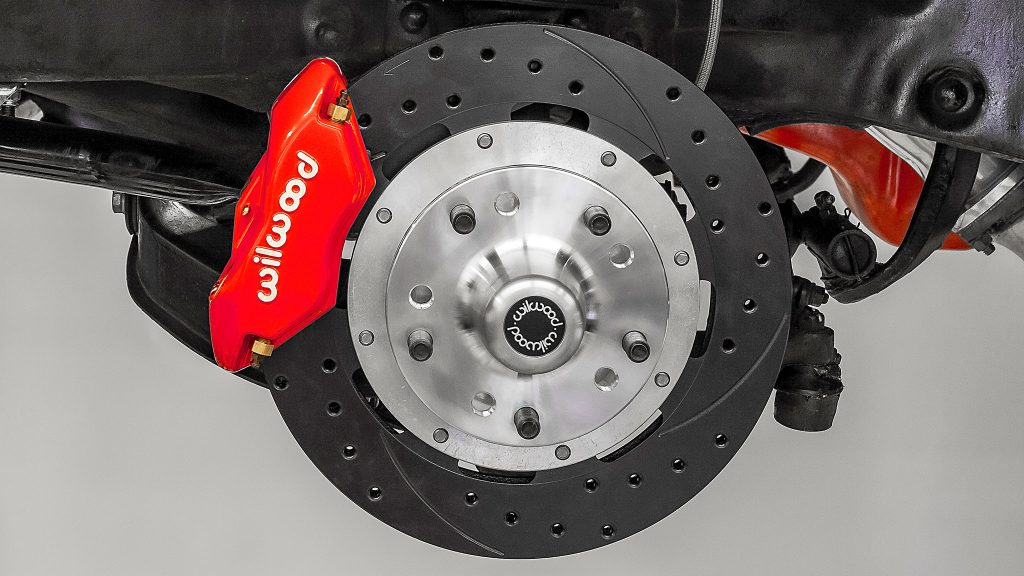
A properly remanufactured caliper is a different proposition because the unit is disassembled, inspected, cleaned, and fitted with replacement components according to the remanufacturer’s process. That gives the buyer substantially more information than simply purchasing a random used caliper from a salvage vehicle.
For an inexpensive cosmetic component, it is often smart to use. For the part responsible for clamping the brake rotor when you need to stop, predictable conditions matter far more than the initial saving.
7. Wheel Hub Assemblies
Wheel hub assemblies are easy to underestimate because they are hidden behind the wheel and brake rotor. Yet the hub is responsible for supporting the wheel and, on many modern vehicles, housing the wheel bearing and wheel-speed sensor. Depending on the vehicle, the assembly can therefore have mechanical and electronic responsibilities at the same time.
A used hub can be difficult to evaluate because bearing wear is not always obvious while the component is off the vehicle. A bearing might feel acceptable when spun by hand but develop noise, play, or roughness under the actual load of a moving vehicle. If the donor vehicle suffered an impact, the hub or bearing may also have been subjected to forces that are not apparent from a casual inspection.
Wheel-speed sensors add another concern. Modern anti-lock braking and electronic stability-control systems rely on accurate wheel-speed information. NHTSA describes electronic stability control as a system that uses individual wheel-speed information along with other vehicle data to help maintain directional control during certain situations.
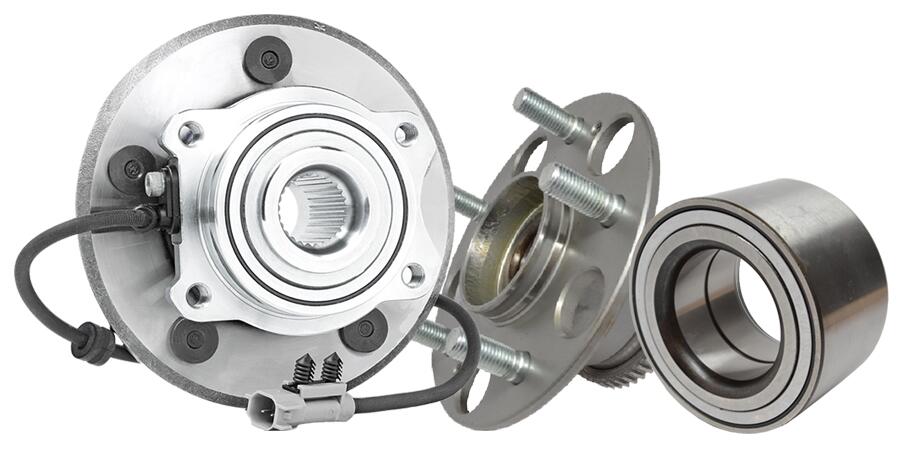
That means a hub assembly is no longer simply a piece of rotating metal. Depending on the design, its condition can influence both wheel support and the electronic systems monitoring wheel behavior.
The consequences of a failed bearing can range from increasing noise to serious mechanical problems. NHTSA has also recognized wheel-end and hub-related failures as potential safety concerns in specific vehicle investigations and recalls.
Buying a used hub can introduce several uncertainties at the same time. You may not know the bearing’s age or mileage, whether it has suffered impact damage, how much corrosion it has developed, the condition of its sensors, or how well it was maintained by the previous owner.
A new hub assembly gives the buyer a known starting point and eliminates much of that uncertainty. Considering the labor involved in replacing a hub, saving money on an unknown used component can easily become a false economy if the bearing fails shortly afterward.
8. Fuel Injectors
Fuel injectors are small components with a surprisingly important job. They must deliver a precise amount of fuel at the correct time and, in many modern engines, operate under substantial pressure. A used injector may look perfectly clean externally while having worn internal components, deposits, poor spray characteristics, or electrical problems that are difficult to identify without proper testing.
The issue is especially relevant to direct-injection engines. In these systems, fuel is injected directly into the combustion chamber at much higher pressures than traditional port fuel injection. The injector therefore operates in a demanding environment where precise control is critical to combustion performance.
A malfunctioning injector can produce symptoms ranging from rough running and poor fuel economy to misfires and increased emissions. In severe circumstances, an injector that does not meter fuel correctly can contribute to engine damage.
The Environmental Protection Agency’s emissions requirements for modern vehicles are one reason fuel delivery systems must maintain precise operation throughout the vehicle’s useful life.
Used injectors also have an especially uncertain history. An injector removed from a salvage vehicle could have spent years exposed to contaminated fuel, deposits, heat, or electrical stress. External cleaning does not necessarily restore its original flow characteristics.
When replacement costs are a concern, professionally tested and remanufactured injectors from a reputable supplier can be a more practical option. These injectors are typically flow tested and matched to specific performance standards before they are sold, giving buyers greater confidence in their condition and performance.
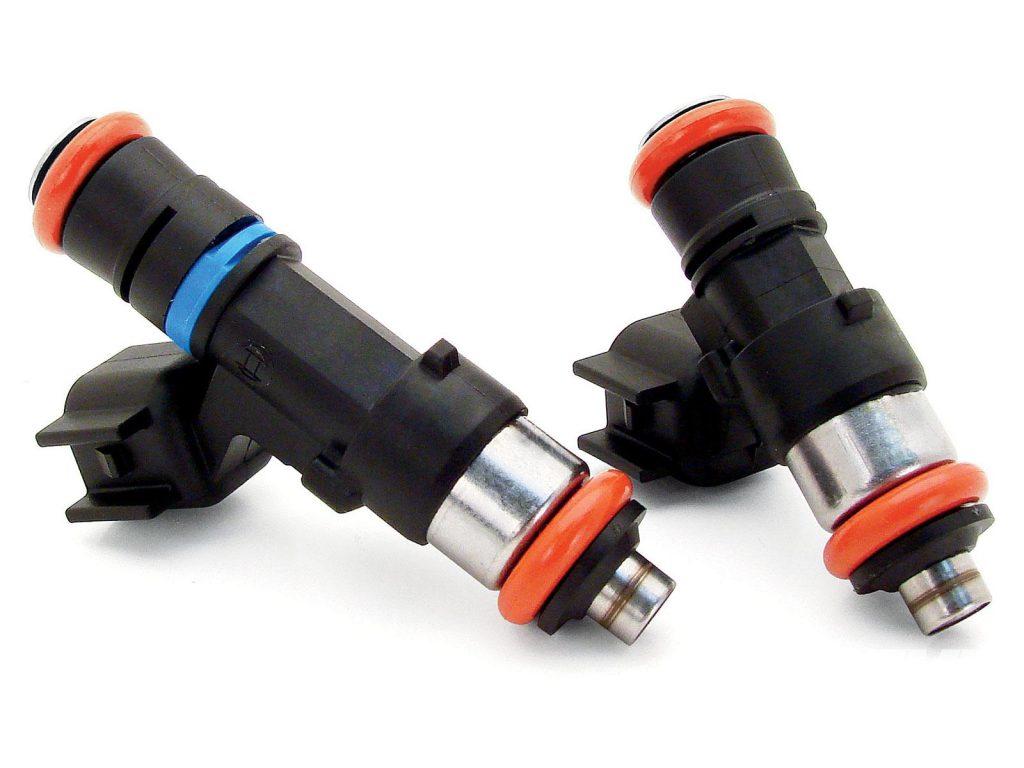
A random used injector, by comparison, gives you little assurance about flow rate, response time, spray pattern, or internal condition. Since modern engine management systems depend on accurate fuel delivery, a cheap injector can create expensive diagnostic work later.
For a component this precise, known condition is worth paying for. A new or professionally remanufactured injector may cost more initially, but it gives the engine a much more predictable foundation than an unknown part pulled from another vehicle.
