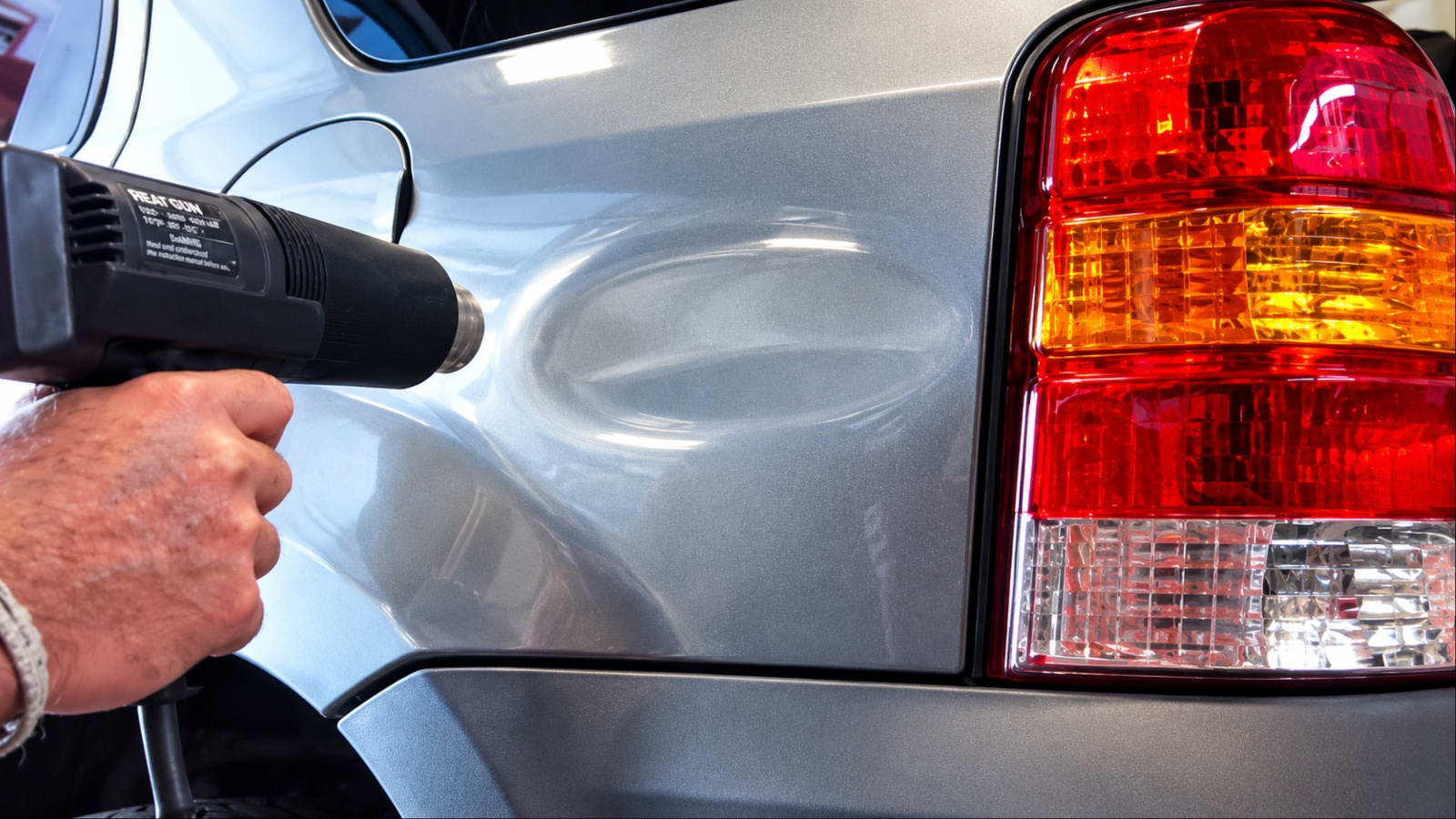
A shallow door ding can be small enough to ignore, yet annoying enough to catch your eye every time sunlight hits the panel. The good news is that some dents can be corrected without sanding, filler, or repainting, provided the paint remains intact and the metal has not developed a sharp crease.
The important part is choosing a puller that matches the damage. Suction cups can work on broad, shallow depressions, while glue-tab systems offer more control over smaller dings that a cup cannot seal against.
Slide-hammer designs can provide greater pulling force, but they also demand more care. Here are eight options worth knowing before you attack that annoying little dent.
1. HORFUTY 3-Pack Suction Cup Dent Pullers
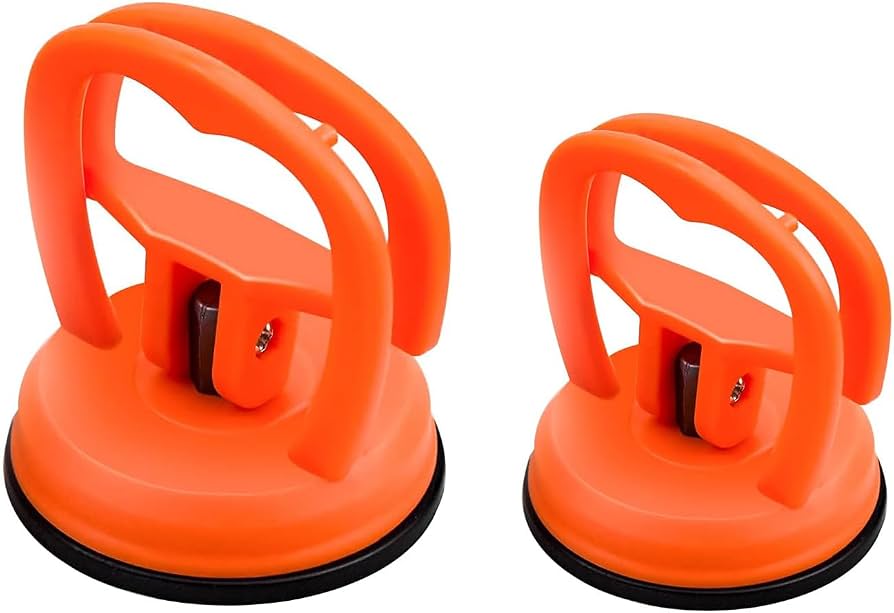
A suction cup is probably the first dent puller most people think about, but its usefulness depends heavily on the shape of the damage. The HORFUTY 3-Pack is interesting because it provides different cup sizes rather than asking one tool to handle every situation.
The set includes a larger 4.5-inch puller and two smaller 2.2-inch pullers, giving you more flexibility when dealing with shallow damage on relatively smooth panels.
The larger cup is the one that makes the most sense for a broad, soft depression. According to product specifications reported by current automotive tool guides, it is rated for up to 130 pounds of horizontal pulling force and 80 pounds vertically.
Those figures should not be interpreted as a guarantee that it will remove a 130-pound dent. Suction performance depends heavily on the surface, seal, panel shape, and direction of the pull.
That limitation is important. A suction puller needs a sufficiently smooth surface to establish its seal. A small, sharply defined door ding may not provide enough area for the cup to grip effectively. The same problem appears when the damage sits across a body crease or near a panel edge.
For a shallow ding in the middle of a relatively flat door panel, however, this style of puller can be a sensible first attempt. Clean the panel thoroughly before attaching the cup and make sure the rubber is seated evenly. Pull steadily rather than violently. If the panel does not respond, increasing force is not necessarily the answer.
The appeal here is simplicity. There is no hot glue, no curing period, and no adhesive residue to remove. For the right shallow dent, that can make a suction-cup set one of the quickest tools to try.
2. Tvhori Car Dent Puller
The Tvhori Car Dent Puller takes the same basic suction principle but places more emphasis on a heavy-duty cup and mechanical handle. Current product information lists a pulling capacity of up to 110 pounds horizontally, although actual performance depends on how well the cup seals against the panel and the geometry of the dent.
That distinction is worth understanding before using any suction tool. A published maximum pulling figure does not mean the tool will automatically remove a stubborn automotive dent. The force must first be transferred through the suction seal into the sheet metal.
If the panel is heavily curved, contaminated with dirt, or interrupted by a styling line, the seal can fail long before the tool reaches its advertised maximum.
For the right type of shallow dent, this design offers a useful advantage because it allows you to apply force without drilling, sanding, or permanently attaching anything to the vehicle. That makes it a practical option for repairing paint intact dents on doors, hoods, and other easily accessible body panels.
Preparation matters more than many beginners realize. The panel should be clean and dry, and the rubber contact surface should also be free of debris. Even a small amount of contamination can interfere with the seal.
Position the cup so that its pulling direction is as close as possible to perpendicular to the damaged area. A sideways pull can produce much less useful movement.
This tool is best viewed as a targeted solution rather than a universal dent remover. A shallow, rounded depression has a reasonable chance of responding. A crease, sharp impact, damaged paint surface, or dent positioned directly on a body line is a different problem.
The Tvhori earns consideration because it keeps the process uncomplicated. When the dent is broad enough for the cup to grip, you can attempt a controlled pull without introducing glue or specialized PDR equipment. That makes it one of the more approachable options for a first DIY repair.
3. Bondo Double Handle Locking Suction Cup Dent Puller
The Bondo Double Handle Locking Suction Cup Dent Puller is a particularly sensible choice when the ding is shallow but broad enough to give a suction cup something to grip.
Made by Bondo, a 3M brand, the tool uses a 4-inch rubber suction cup and a double-handle locking mechanism. According to 3M, that locking action produces 300 times more suction than a non-locking suction cup dent puller.
That does not mean it will magically remove every small dent. The shape of the panel still matters. Suction tools perform best when the damaged area is on a smooth, relatively flat, or gently curved section of metal and the factory paint remains intact.
A shallow parking-lot ding in the center of a door is a much better candidate than a dent running directly through a character line.
The locking mechanism is the interesting part here. Instead of simply pressing a cup against the panel and pulling immediately, you lock the handles to create the vacuum seal first.
Once attached, the tool gives you a firm handle from which to apply controlled pulling force. 3M also notes that a little soap and water can help with positioning the locked puller before making the pull.
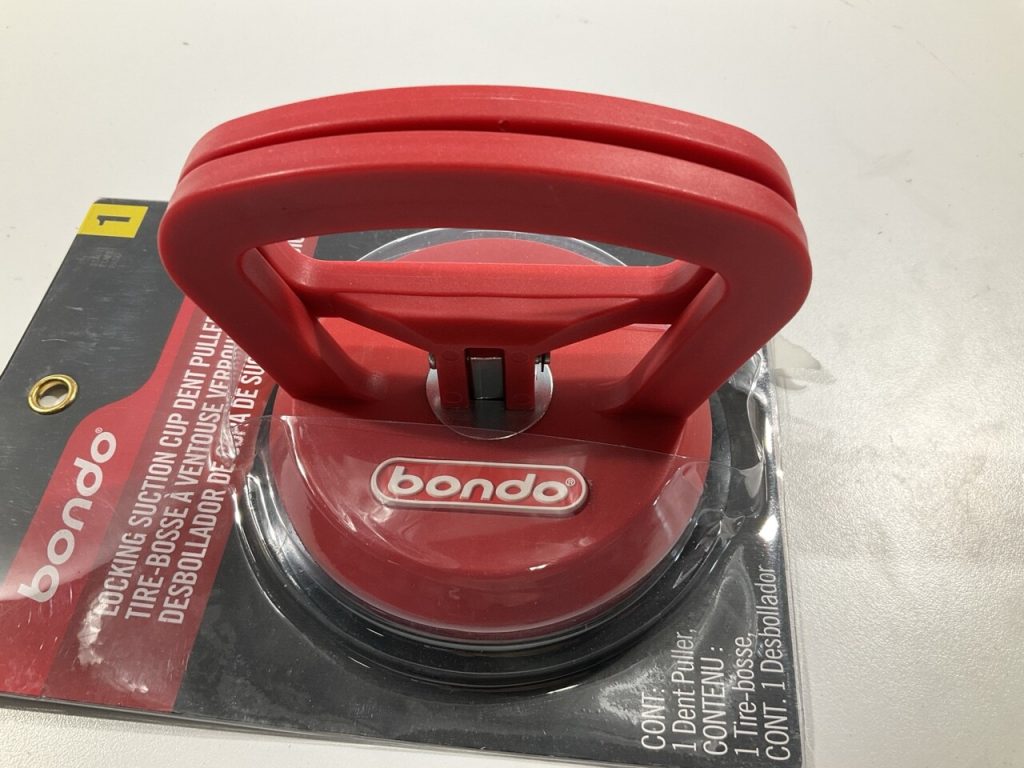
heat, no pulling tab to choose, and no adhesive residue to remove afterward. If the cup cannot create a secure seal, avoid applying more force. The issue is more likely related to the surface condition or the shape of the dent than a lack of pulling power.
For a clean, shallow depression on an accessible body panel, the Bondo puller is one of the simpler options to try before moving into more specialized paintless dent repair equipment. Its compact design also makes it easy to keep in a garage tool drawer.
4. Dentcraft ML-101 Mini Lifter Glue Puller
The Dentcraft ML-101 takes a completely different approach from suction cups. Instead of relying on vacuum pressure against the outside of the panel, it uses a glue tab attached directly to the dent and then applies a controlled lifting force through a compact mechanical lifter.
That makes it particularly interesting when a shallow ding is too small, curved, or awkwardly shaped for a suction cup.
Dentcraft constructs the ML-101 with a solid aluminum body and rubber-coated feet. The feet swivel along one axis, allowing the tool to sit more naturally against curved panels. Its tab adapter is designed to fit roughly 95 percent of PDR glue tabs, according to Dentcraft, while a height adjustment knob allows the user to fine-tune the working position.
That adjustability is important because glue pulling is about controlling where the force goes, not simply producing as much force as possible. A shallow ding often needs a gradual correction rather than one aggressive pull. A tool with adjustable height lets you make smaller changes and observe the panel between attempts.
The ML-101 is also compact enough to make sense for occasional DIY use, although it sits closer to professional PDR equipment than a basic suction cup. Dentcraft specifically lists door dings, hail dents, and finishing pulls among its applications.
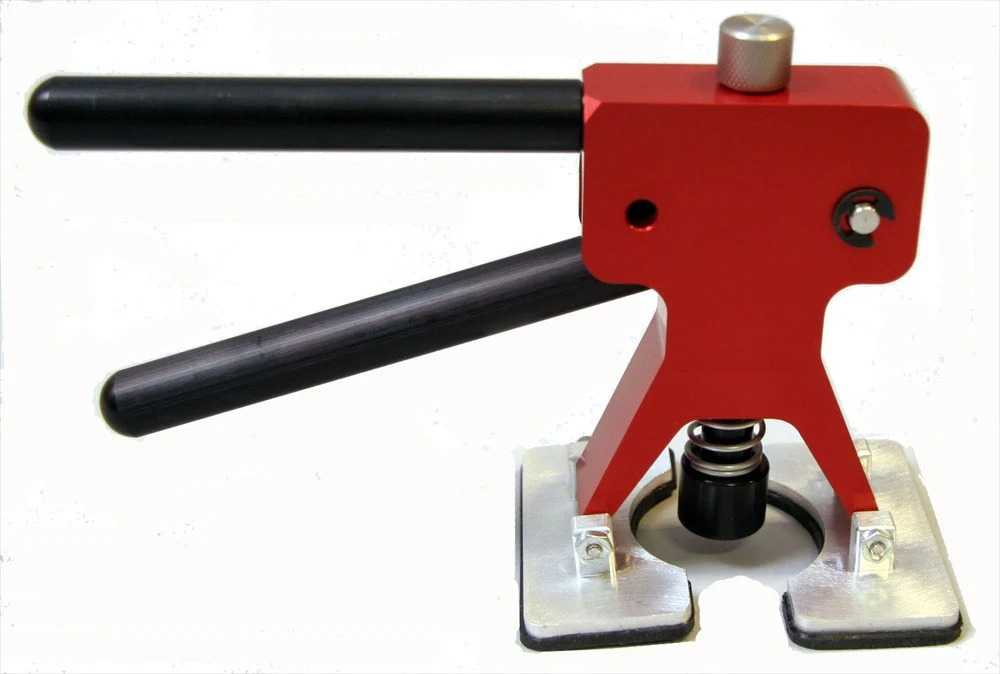
The glue system does require more preparation. The panel needs to be clean, the correct tab must be selected, and the adhesive needs to be applied properly. Once the tab is attached and the glue has set sufficiently, the lifter provides a controlled mechanical pull.
For a shallow ding with intact paint, this can offer considerably more precision than simply yanking on a suction handle. It is not the cheapest or simplest solution on this list, but its adjustable design makes it a serious option when a basic suction puller cannot establish a useful grip.
5. Gliston Paintless Dent Repair Kit
The Gliston Paintless Dent Repair Kit is aimed at the DIY owner who wants several ways to approach a small dent rather than relying on one pulling method.
Its glue-pull setup is particularly relevant to shallow dings because adhesive tabs can attach to areas where a suction cup cannot create a reliable seal. That makes this type of kit useful for small depressions on doors, fenders, hoods, and other accessible metal panels.
The important word here is shallow. Paintless dent repair works by moving the metal back toward its original position while preserving the factory finish.
A kit cannot change the basic limitations of the damage. If the paint is cracked, the metal has been stretched substantially, or the dent contains a severe crease, pulling harder can make the repair worse.
Gliston’s kit uses hot glue and interchangeable pulling tabs. The tabs come in different shapes and sizes, allowing the user to select a contact area that more closely matches the dent.
A smaller tab can concentrate the pulling action around a tight ding, while a larger tab distributes the force across a broader depression. That ability to vary the contact area is more useful than simply having the strongest possible puller.
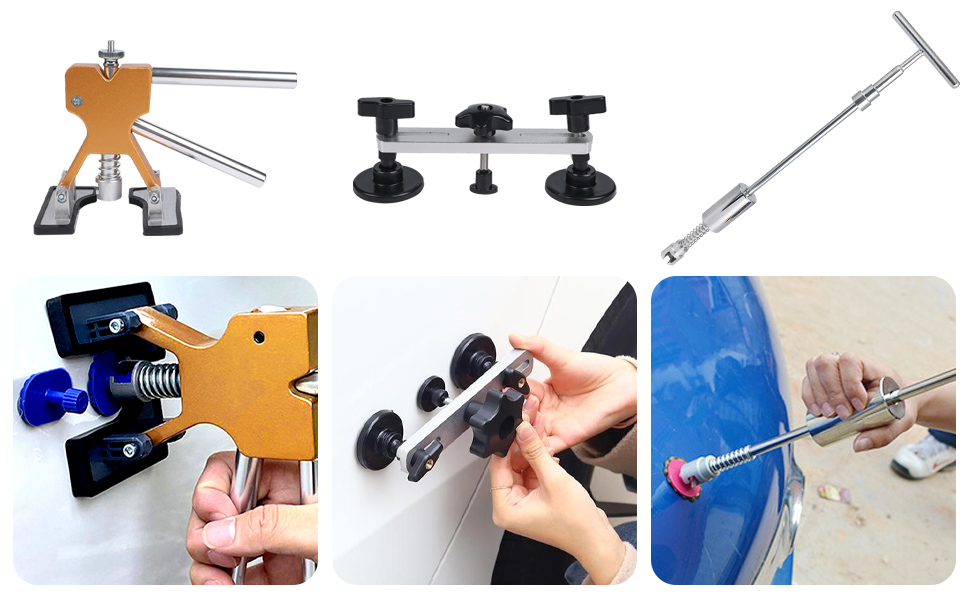
The kit also includes a bridge-style pulling tool, which gives the user a way to apply controlled force rather than grabbing the glued tab and pulling by hand. Controlled movement is important because the objective is to gradually raise the low area rather than create a high spot.
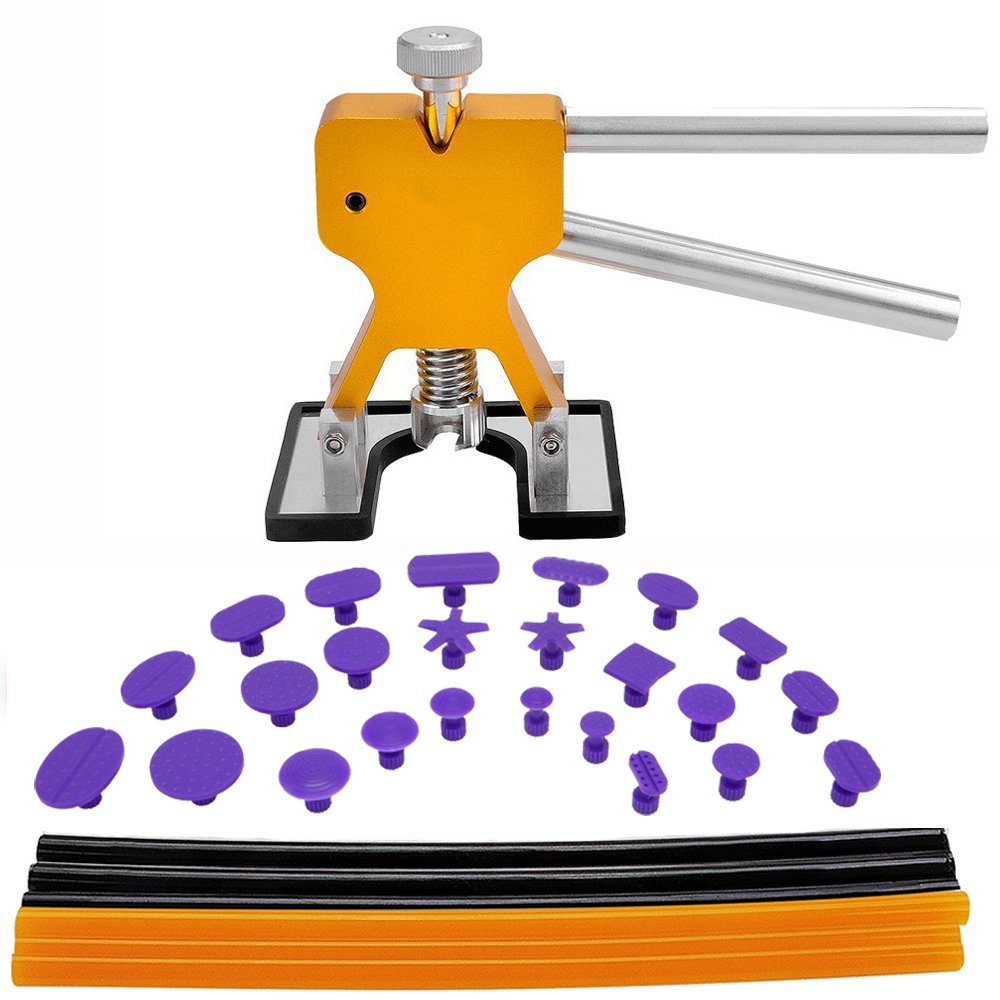
There is a learning curve. Glue pulling requires the adhesive to bond properly, and the tab needs to be positioned close to the center of the damaged area. Pulling from the wrong location can move the panel unevenly.
For DIY users who are willing to practice on an inconspicuous area, this kit provides much more flexibility than a single suction cup. Its biggest advantage is versatility. One shallow dent may respond better to a larger tab, while another may require a smaller attachment to achieve the right amount of pulling force.
6. Super PDR Paintless Dent Repair Lifter
The Super PDR Paintless Dent Repair Lifter is designed for a more controlled style of glue-pull repair. Rather than depending on hand strength to pull an adhesive tab, a bridge-style lifter gives the user a mechanical way to raise the damaged metal gradually.
That difference becomes important when a shallow ding needs several small adjustments rather than one large movement.
The design uses adjustable support feet positioned around the glued tab. By changing the height and position of the tool, you can alter the amount and direction of lifting force applied to the panel. This is useful because automotive body panels are rarely perfectly flat.
A door may look flat from several feet away but have enough curvature to make positioning a basic dent puller difficult.
Glue-pull systems are particularly useful when access behind the panel is limited. Traditional paintless dent repair often involves placing specialized rods behind the panel and pushing the metal outward.
A glue-pull lifter works from the exterior instead, making it possible to address certain dents without removing interior trim or searching for access holes.
The method does demand restraint. The goal is not to lift the lowest point as quickly as possible. Excessive pulling can create a raised area that is harder to correct than the original depression. Experienced technicians generally make controlled pulls and inspect the panel repeatedly under suitable lighting.
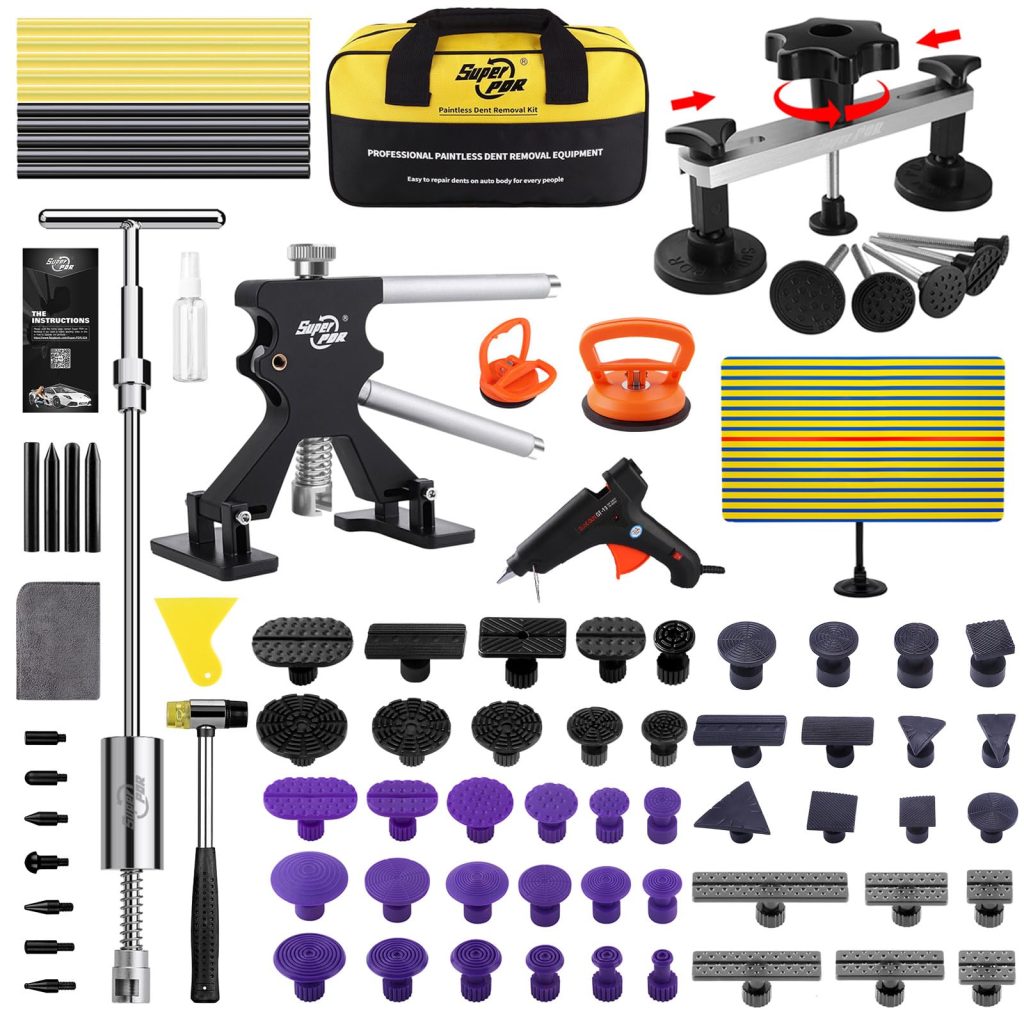
Paint condition also matters. The adhesive needs a clean surface, and there is always a risk that an unsuitable or poorly bonded finish will not tolerate the process. A vehicle with compromised aftermarket paint deserves additional caution.
For a shallow, paint-intact ding, the Super PDR lifter makes sense when precision matters more than raw pulling power. It is more specialized than a suction cup, but that specialization is exactly what can make it useful on small dents that resist simpler tools.
7. Anyyion Paintless Dent Repair Kit
The Anyyion Paintless Dent Repair Kit is built around a glue-pulling method that can be useful when a shallow ding does not give a suction cup enough surface area to grip.
Instead of trying to create a vacuum against the body panel, the system attaches a removable tab to the damaged area and uses a pulling bridge to lift the metal. For small door dings, this can provide a more focused way of moving the panel.
A major advantage of this approach is the selection of glue tabs. Different diameters and shapes allow the user to match the attachment more closely to the size of the damage.
A common mistake with DIY dent repair is assuming that a larger tool is automatically better. For a small ding, concentrating the pull too far outside the deepest portion can move surrounding metal rather than correcting the actual low spot.
The kit’s bridge-style puller also gives you mechanical leverage. Rather than relying entirely on how hard you can pull with your hands, the bridge rests against the surrounding panel while the center mechanism raises the glued tab.
That arrangement makes gradual adjustments possible, which is desirable when working on thin automotive sheet metal.
Any glue pull kit comes with an important consideration. Both the adhesive removal process and paint compatibility need to be taken into account. The panel should be clean before starting, and the glue should be removed carefully once the dent has been pulled. Factory paint is generally more durable than many aftermarket finishes, but glue pulling can still pose a risk to panels that have been repaired or repainted.
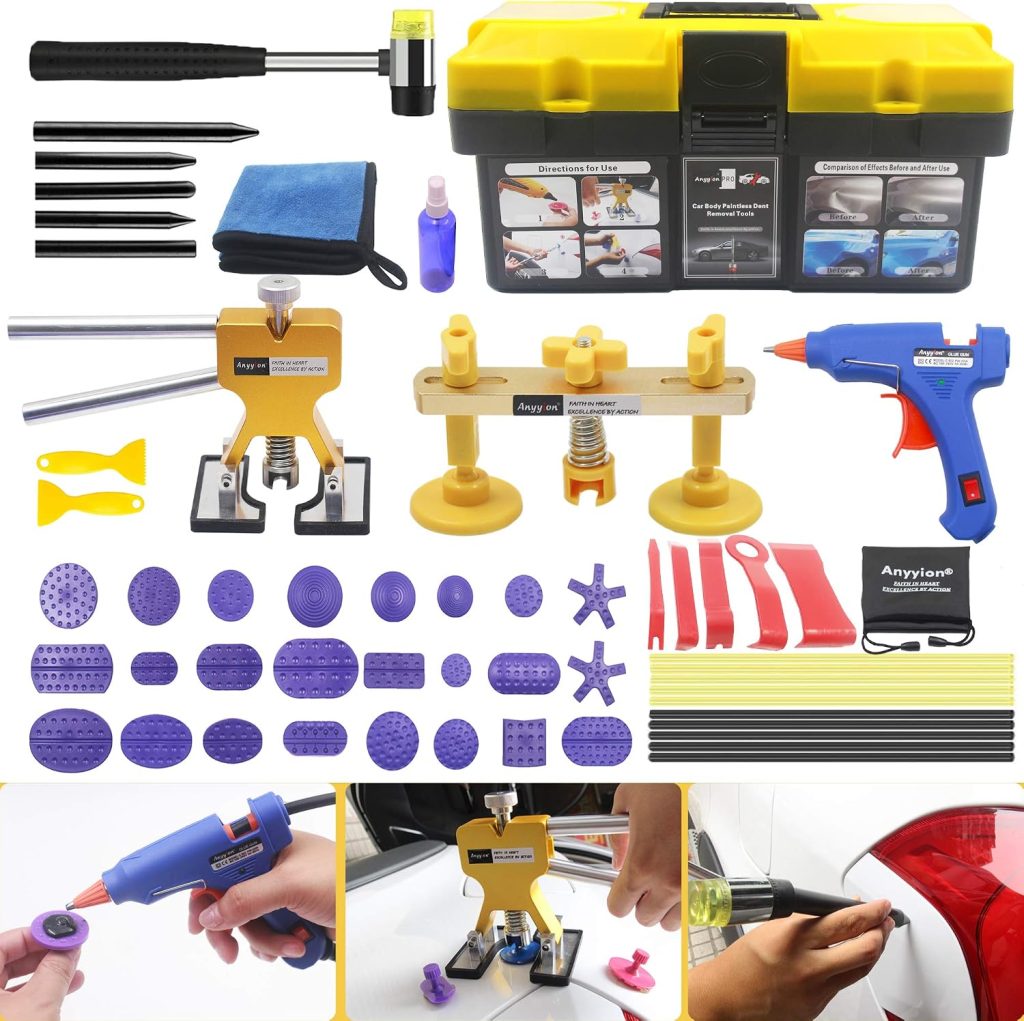
This kit makes the most sense for a shallow dent where the paint is still intact, and the metal has not been sharply creased. It is also better suited to someone willing to make several gentle attempts rather than expecting a single pull to produce a perfect panel.
For DIY owners, the attraction is flexibility. You get an exterior pulling method without needing to dismantle the door, while the assortment of tabs gives you more options for matching the tool to the particular shape of the ding.
8. Manelord Paintless Dent Repair Tool Kit
The Manelord Paintless Dent Repair Tool Kit takes the broad DIY-kit approach, combining glue-pulling equipment with accessories intended to help correct small body-panel damage without conventional bodywork.
Its appeal is less about one exceptionally powerful puller and more about having several attachment options available when a shallow ding refuses to cooperate with the first attempt.
The kit uses adhesive tabs that attach to the damaged area, along with a bridge-style pulling mechanism. Because the tabs come in different shapes and sizes, the user can adjust the contact area to suit the dent. That is particularly useful for shallow damage because the best pulling point is not always obvious from a quick glance.
A small round ding, for example, may respond better to a compact tab placed near its center. A wider depression may require a larger attachment so the force is distributed over a greater area. The objective is controlled movement of the panel, not simply maximizing the force applied to it.
The exterior glue-pull technique also solves an access problem. With some door dings, reaching the rear of the metal requires removing an interior panel or dealing with reinforcement structures. Glue pulling avoids that disassembly because the pulling force is applied from outside the vehicle.
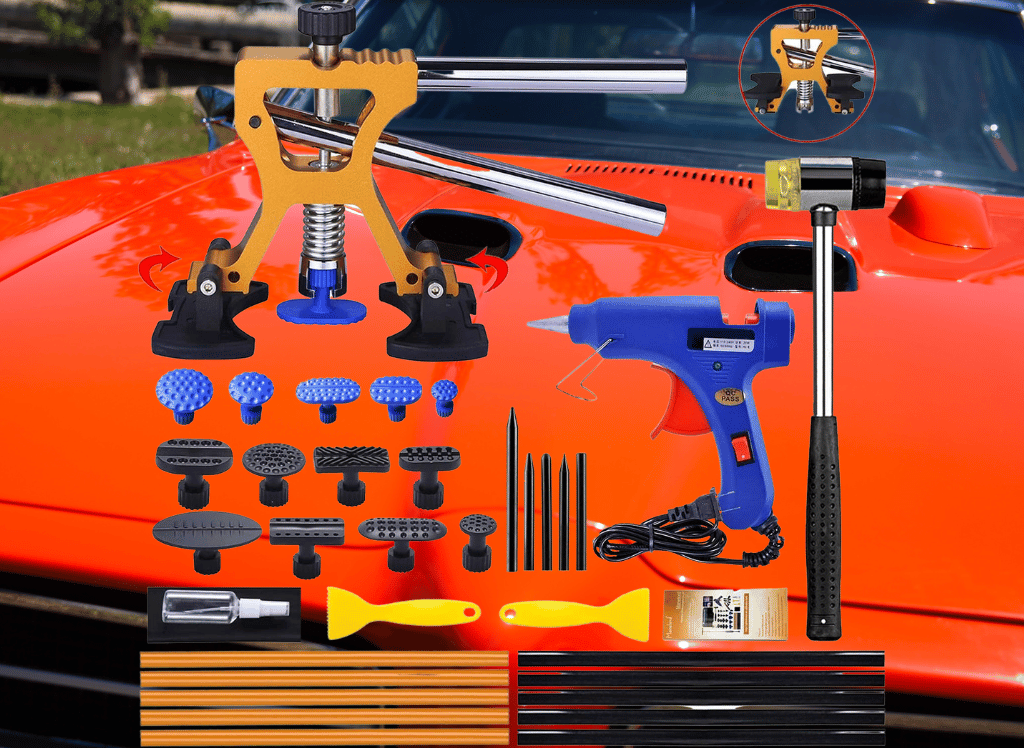
There is still a technique involved. The panel must be thoroughly cleaned, the tab needs to be positioned accurately, and the adhesive must be given enough time to bond. Pulling too aggressively can produce a high spot, while repeated pulls in the wrong location can make the repair more complicated.
This makes the Manelord kit best suited to a patient DIY owner rather than someone looking for an instant fix. It can be particularly useful for shallow, rounded dents where the factory paint remains intact, and the metal has not been sharply folded.
The biggest advantage is accessibility. You do not need specialized body-shop equipment or access behind the panel to attempt a repair. With the right dent and careful technique, a glue-pull kit can turn a minor cosmetic annoyance into a manageable weekend project.