
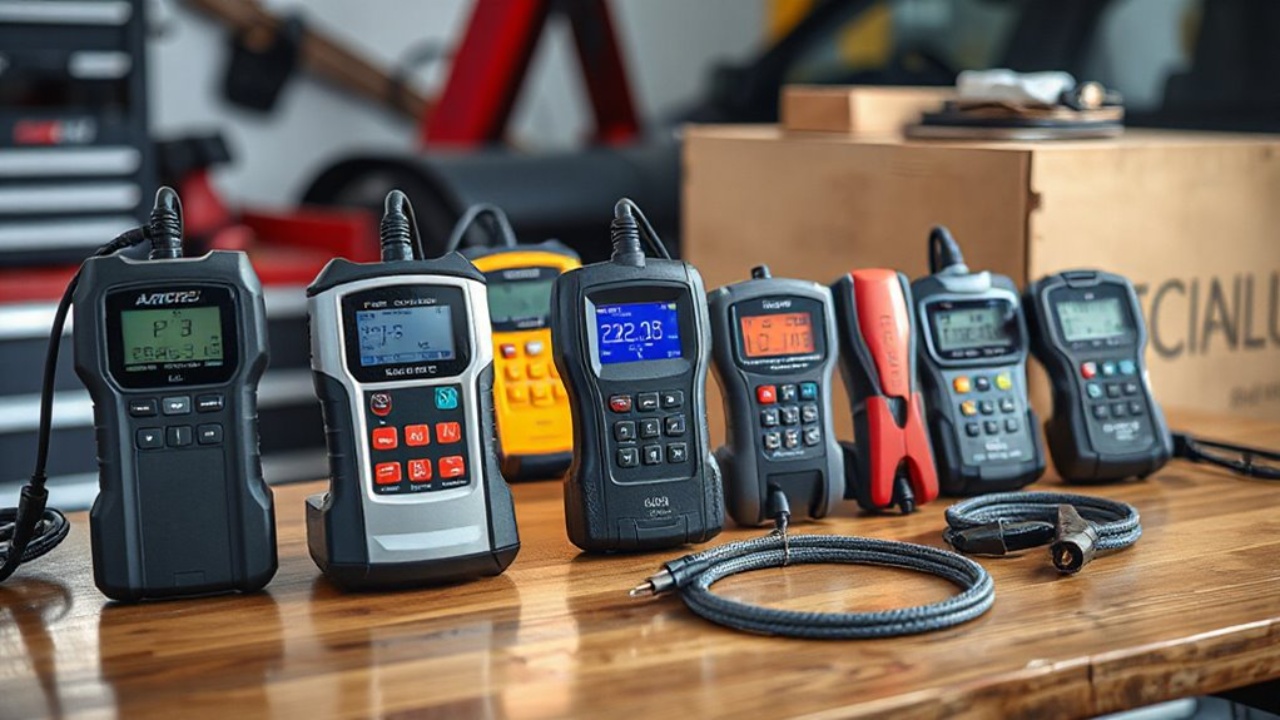
A dead battery rarely gives you a convenient warning before leaving you stranded. One morning the engine fires normally, and the next, the starter barely turns. A compact battery tester can give you useful information before that happens.
Modern testers can do much more than display voltage. Depending on the model, they can estimate cold cranking performance, check battery health, evaluate cranking voltage, and examine the vehicle’s charging system.
That makes a small tester surprisingly useful for road trips, older vehicles, seasonal cars, and everyday drivers. Here are 10 battery testers worth considering for a permanent place in your trunk.
1. ANCEL BA101
The ANCEL BA101 is a good example of why a battery tester can be considerably more useful than a basic voltmeter. It is designed for 12-volt lead-acid batteries and can test batteries across a 100 to 2,000 CCA range. That gives it enough coverage for many passenger cars, SUVs, pickup trucks, and other common 12-volt vehicles in the United States.
Its biggest advantage is the amount of information it provides from a relatively small device. The BA101 can evaluate battery health and charge condition while also measuring internal resistance.
It can perform cranking and charging-system tests, which is important when a vehicle refuses to start repeatedly. A weak battery and a faulty charging system can produce similar symptoms, but they require very different repairs.
The tester supports several battery rating standards, including CCA, BCI, CA, MCA, JIS, DIN, SAE, and IEC. That broad compatibility reduces the chance of being limited by the rating printed on a particular battery. It also supports flooded, AGM, GEL, and EFB battery types.
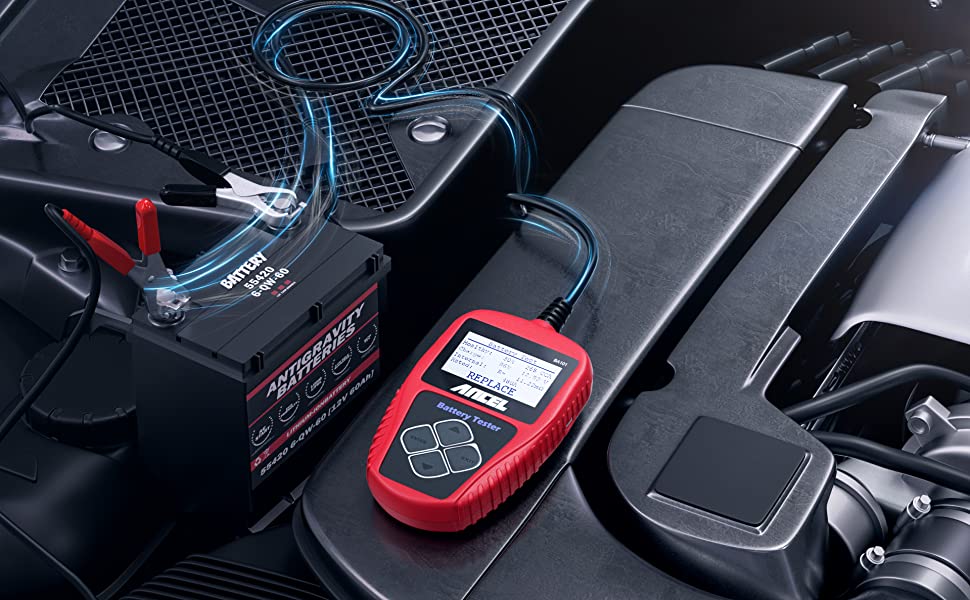
For trunk duty, its simplicity is appealing. You do not need to carry a separate battery or complicated diagnostic equipment. Connect the tester to the battery terminals, enter the appropriate battery information, and the device can provide a health assessment.
That makes it particularly handy before a long road trip or when an aging battery begins producing slower-than-normal starting.
It will not replace a professional electrical diagnostic system, but that is not really its purpose. The BA101 is valuable because it can help answer a much more useful question than “Does this battery have voltage?” It can help determine whether the battery still has enough starting capability to be trusted.
2. TOPDON BT100
The TOPDON BT100 takes a broader approach to battery diagnosis because it does more than simply check the battery itself. Designed for 12-volt lead-acid batteries, the BT100 works with flooded, AGM, GEL, and EFB battery types. It can also test batteries with ratings ranging from 100 to 2,000 CCA.
That range is significant for American drivers because it covers a wide selection of ordinary automotive batteries. More importantly, the tester can perform dedicated battery, cranking, and charging-system tests.
During a starting test, it can examine cranking voltage and cranking time. The charging test can also examine the vehicle’s charging behavior under different conditions.
Those additional measurements can prevent an expensive mistake. Imagine installing a new battery because the old one repeatedly goes flat, only to discover that the alternator is not charging properly.
A battery tester capable of checking the charging system gives you another way to investigate the problem before buying replacement parts.
TOPDON also lists compatibility with numerous battery rating standards, including CCA, CA, BCI, MCA, DIN, IEC, EN, SAE, JIS, and GB. The BT100 uses a backlit 2-inch display, which is useful when testing a vehicle in a dark driveway or garage.
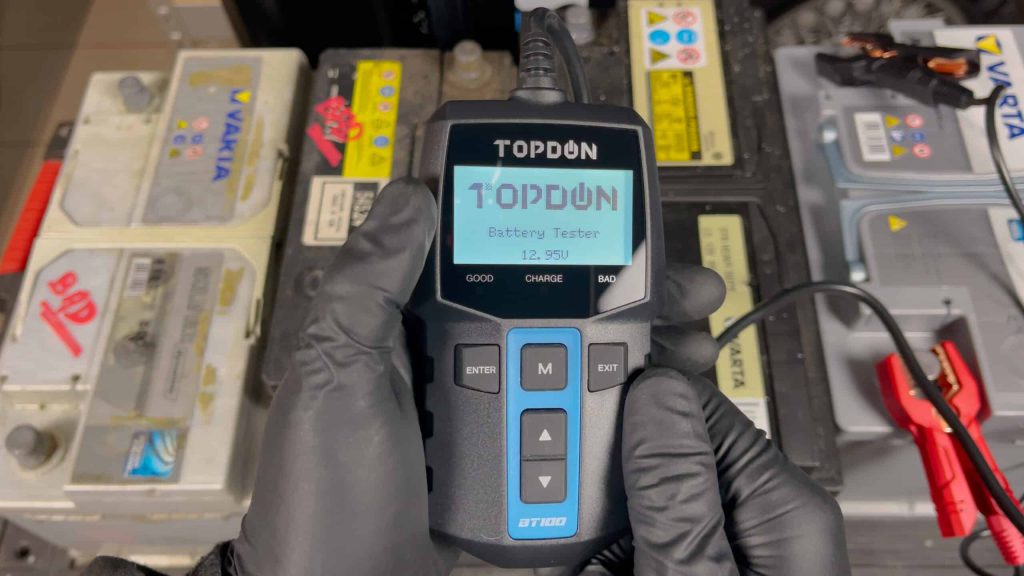
Its physical size is another reason it makes sense as an emergency trunk tool. You can keep it with jumper cables without dedicating much space to electrical equipment. For drivers who want something more capable than a simple digital voltmeter, the BT100 offers a useful collection of tests in a compact package.
It is especially appealing when the goal is not merely to identify a dead battery but to understand why the vehicle’s starting or charging system is behaving badly.
3. FOXWELL BT100
The FOXWELL BT100 is aimed at drivers who want a quick health check without carrying a bulky piece of workshop equipment. It is a 12-volt battery tester designed for common lead-acid automotive batteries, including conventional flooded batteries as well as AGM and GEL designs.
Its testing range extends from 100 to 2,000 CCA, giving it coverage for a broad selection of automotive batteries used in the United States.
What makes this type of tester useful is the difference between measuring voltage and assessing starting capability. A battery can show a reasonable resting voltage while its ability to deliver current has deteriorated.
The BT100 evaluates the battery’s condition using measurements such as state of health, state of charge, and internal resistance. That information can provide a much clearer indication of whether an aging battery is still dependable.
The tester can also perform cranking and charging-system checks. That becomes particularly useful when a vehicle has developed an intermittent starting problem. If the battery tests reasonably well but the vehicle continues to struggle, checking what happens during cranking can help point the investigation toward another part of the electrical system.
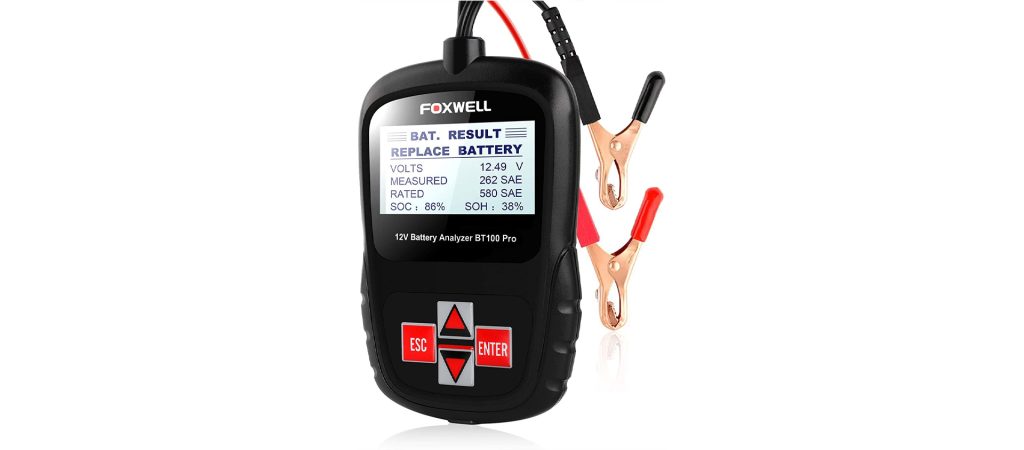
FOXWELL lists support for several battery testing standards, including CCA, CA, MCA, JIS, DIN, SAE, and IEC. The tester operates directly from the vehicle battery, so there is no separate battery pack to keep charged.
For a trunk emergency kit, that simplicity is its strongest quality. You can use it before setting off on a long journey, after noticing increasingly sluggish starting, or when checking a battery that has sat unused for an extended period.
It is not intended to replace professional diagnostic equipment, but it can provide useful evidence before you decide whether a battery deserves replacement.
4. MOTOPOWER MP0514A
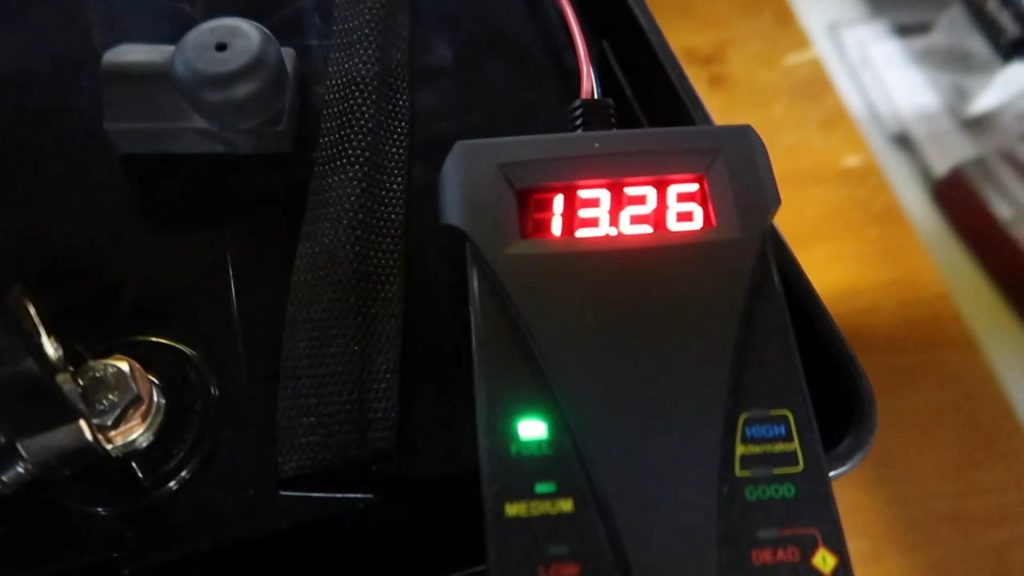
The MOTOPOWER MP0514A takes a simpler route than some of the more feature-heavy testers on this list, which can actually be an advantage when you need a quick answer. It is designed for 12-volt automotive batteries and uses a digital display to provide battery and charging-system information without requiring a complicated setup.
Its testing capability covers several common lead-acid battery types, including regular flooded batteries, AGM batteries, and GEL batteries. MOTOPOWER specifies compatibility with battery ratings such as CCA, BCI, CA, MCA, and JIS, allowing the tester to work with batteries using different labeling systems.
The MP0514A can provide a battery health assessment and perform starting and charging tests. Those functions make it more useful than carrying a conventional voltmeter alone.
A voltage reading can tell you what electrical potential is present at the terminals, but it does not by itself establish whether the battery can reliably deliver the heavy current required by a starter motor.
That distinction becomes especially important during winter. Cold temperatures reduce a lead-acid battery’s available starting performance, while the engine may require more effort to crank. A battery that was marginal during mild weather can therefore become an obvious problem when temperatures fall.
The tester is also small enough to live permanently alongside jumper cables, a tire inflator, and other roadside equipment. You do not have to wait until the vehicle refuses to start before using it. Checking an older battery periodically can give you an indication that its condition is deteriorating before it becomes a roadside emergency.
For drivers who prefer straightforward equipment rather than a highly elaborate diagnostic interface, the MP0514A makes a sensible trunk companion. Its purpose is not to diagnose every electrical fault in a vehicle. Instead, it provides practical battery information when you need to make a quick decision about starting reliability.
5. INNOVA 3721 Battery and Charging System Tester
The INNOVA 3721 is the kind of tester that makes sense for drivers who want a straightforward electrical check without turning a roadside diagnosis into a technical project. It is built around 12-volt automotive electrical systems and combines battery testing with charging-system checks, giving you more useful information than a basic voltage display.
Its analog-style gauge is one of its defining characteristics. Instead of depending on a digital health percentage, the tester presents the electrical reading on a scale that can be interpreted quickly.
That can be useful when you are standing beside a vehicle trying to determine whether its battery has enough charge to attempt another start. INNOVA designed the 3721 for checking battery condition as well as alternator output, making it useful when the symptoms could originate from either side of the starting and charging system.
The tester can be connected directly to the battery terminals, allowing you to observe the electrical system without removing the battery from the vehicle. That is important for trunk use because roadside testing should ideally involve as little disassembly as possible.

It is particularly useful after a vehicle has been sitting for several days or when the headlights have accidentally been left on. Rather than immediately assuming that a battery has failed, you can first check its condition and then determine whether the charging system is producing the expected voltage after the engine starts.
There is also a practical benefit to its uncomplicated design. It does not depend on an app, wireless connection, or a complicated menu system. You connect it, read the gauge, and make a decision. For someone who prefers equipment that can remain in the trunk for years and still be ready when needed, that simplicity has real value.
6. Schumacher BT-100
The Schumacher BT-100 is designed for a simple but useful task that can help prevent unnecessary parts replacement. Its primary purpose is to determine whether a 12-volt battery still has enough starting power to crank the engine reliably.
Schumacher has been producing battery and charging equipment for decades, and the BT-100 follows the company’s traditional focus on practical automotive electrical maintenance.
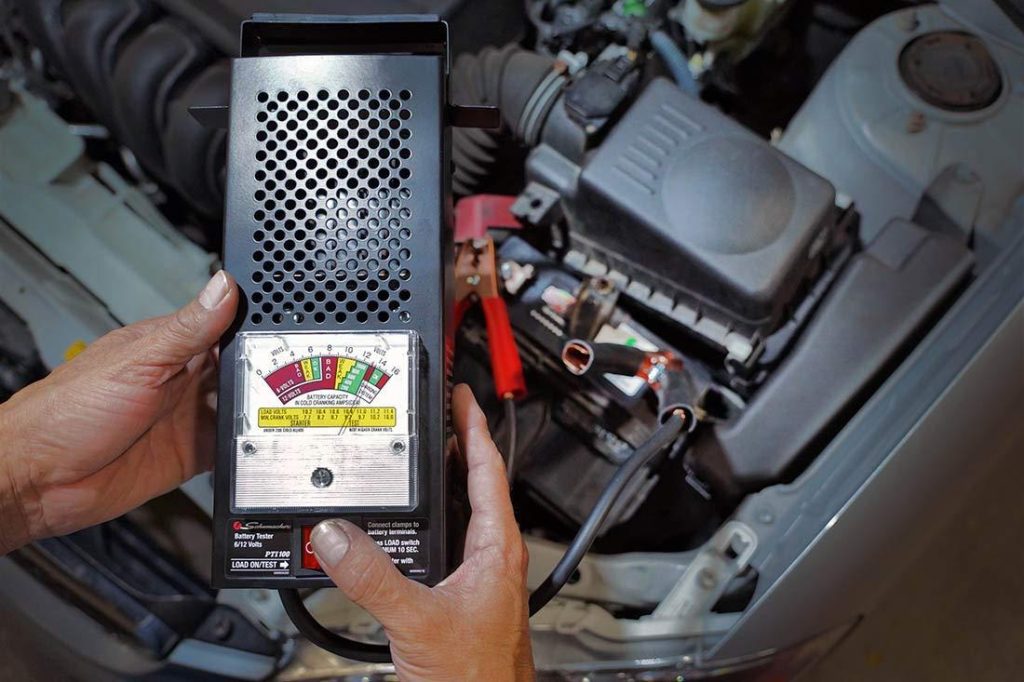
Rather than functioning solely as a voltmeter, the tester applies a load to the battery and provides an indication of how the battery responds. The BT-100 is designed for testing 6-volt and 12-volt batteries, giving it broader usefulness than many compact testers that are restricted to one electrical system.
Its 12-volt capability makes it relevant to ordinary passenger vehicles, while the 6-volt function can be useful for certain classic and specialty vehicles.
The tester can handle batteries across a substantial range of capacities, with Schumacher specifying testing capability from 100 to 1,000 CCA for 12-volt batteries. That makes it suitable for many common automotive batteries while keeping the device relatively uncomplicated.
A load test offers an important advantage because it evaluates how the battery performs under electrical demand rather than simply checking its resting voltage. This distinction matters because a battery can show a normal voltage when sitting idle but experience a significant voltage drop when placed under the heavy load required during engine starting.
Its rugged, workshop-oriented design also suits the role of emergency equipment. There is no need to worry about charging an internal battery before taking it on a journey. The tester connects to the battery being checked and performs its job directly.
For a driver who values durability and uncomplicated operation over advanced digital diagnostics, the Schumacher BT-100 is an appealing choice.
It is especially useful for people maintaining older vehicles, where knowing whether a battery can actually withstand a load can be more informative than simply seeing a voltage number on a screen.
7. Clore Automotive Solar BA9
The Clore Automotive Solar BA9 is designed for drivers who want more than a basic indication that a battery has charge. It combines battery testing with starting and charging-system checks, giving it a useful role in a roadside emergency kit.
The tester works with 12-volt batteries and can evaluate several common lead-acid designs, including conventional flooded batteries, AGM batteries, and GEL batteries.
One of its notable advantages is its testing range. The BA9 is designed to evaluate batteries rated from 40 to 1,200 CCA, covering many batteries found in passenger cars, SUVs, and light trucks in the United States. That is a useful spread for a trunk-mounted tester because it does not restrict you to relatively small automotive batteries.
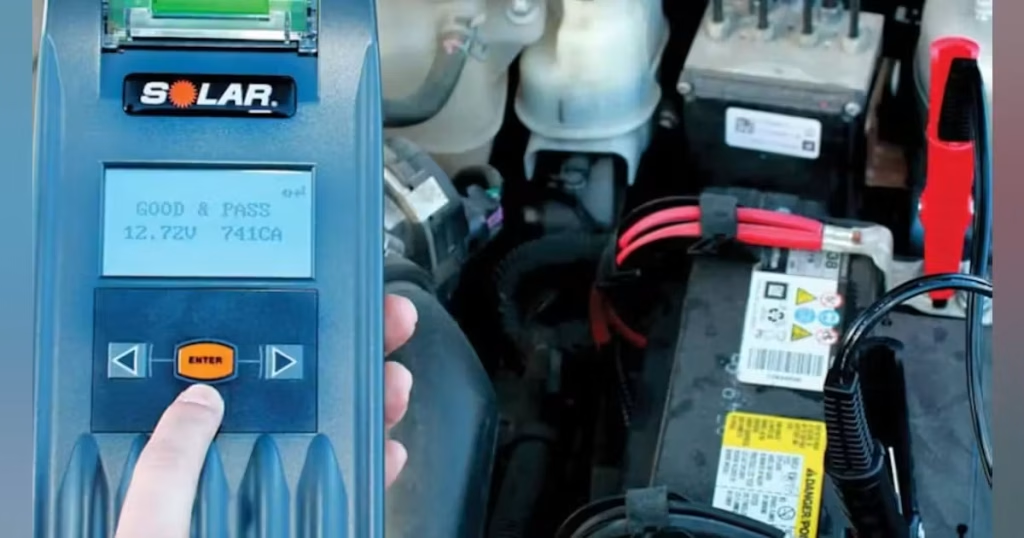
The BA9 also uses conductance testing rather than relying solely on a traditional load test. Conductance technology measures the battery’s electrical characteristics and uses those measurements to assess available starting capability.
This can be particularly useful when you want to test a battery without placing the same type of sustained load associated with conventional load-testing equipment.
The tester can display information such as battery condition and voltage, while its starting and charging-system tests help separate battery problems from faults elsewhere in the vehicle’s electrical system. That distinction can save money.
Replacing a battery will not solve a charging problem, and diagnosing the charging system becomes much easier when you have actual measurements rather than relying on the sound of the starter.
Its compact handheld format makes it suitable for keeping with emergency equipment. You can pull it out when a vehicle begins showing slower starting, after an extended period of storage, or before a major trip.
For drivers who want a capable tester from an established automotive electrical equipment manufacturer, the BA9 is a strong trunk option. Its broad CCA range and ability to assess both battery and vehicle charging performance make it useful well beyond the occasional dead-battery situation.
8. Midtronics MCR500
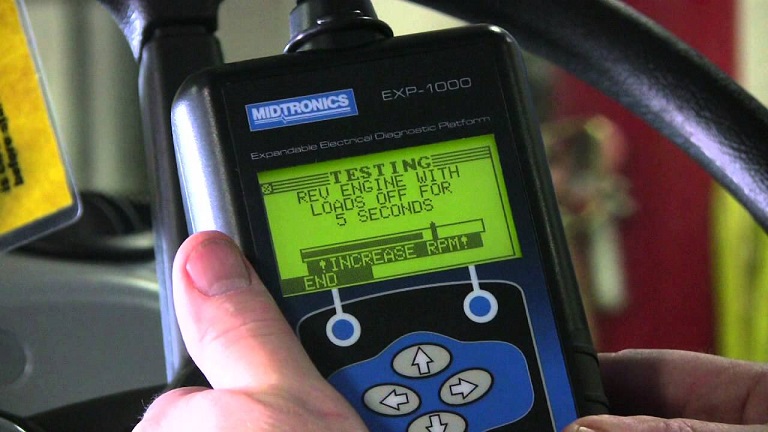
The Midtronics MCR500 brings a different level of battery-testing technology to a category that is often dominated by inexpensive handheld meters. Midtronics is particularly known for battery diagnostic equipment, and the MCR500 is designed around conductance testing rather than simply checking whether voltage is present.
That matters because modern battery diagnosis increasingly depends on understanding the battery’s available starting capability rather than looking at one voltage measurement. The MCR500 can evaluate 12-volt starting batteries and provide information intended to help determine whether a battery should remain in service, be recharged, or be replaced.
The tester is designed for common automotive battery types and can work with batteries using established rating systems such as CCA. Its conductance approach allows the tester to assess the battery without requiring the same heavy discharge used by traditional load testers.
That is convenient when you are checking a battery installed in a vehicle and do not want to perform an extended load test beside the road.
Another useful characteristic is the tester’s ability to support battery and starting-system diagnosis. If the vehicle cranks slowly, the result can help establish whether the battery itself is responsible or whether further investigation is warranted.
This is where having a tester in the trunk becomes more valuable than simply carrying jumper cables. Jumper cables can help you get a vehicle running, but they cannot tell you whether the battery is likely to start the engine again after you switch it off. A battery tester can provide that missing information.
The MCR500 is therefore best suited to drivers who take battery condition seriously, particularly those with older vehicles, multiple vehicles, or cars that spend long periods parked. It offers a more diagnostic approach in a compact package and can turn an uncertain roadside situation into a decision based on actual battery measurements.
9. Clore Automotive Solar BA7
The Clore Automotive Solar BA7 is a useful choice when the goal is to carry a compact tester that can do more than confirm whether a battery has voltage. It is designed for 12-volt automotive batteries and uses conductance technology to assess battery condition without relying exclusively on a conventional high-current load test.
The BA7 can test batteries rated from 100 to 1,200 CCA, which covers a large portion of the batteries used in American passenger cars and light trucks. It supports common battery technologies, including standard flooded batteries, AGM batteries, and GEL batteries. That range makes it practical for a household that has more than one type of vehicle.
One particularly useful feature is its ability to perform separate tests for the battery, starting system, and charging system. That distinction is important because symptoms can overlap.
A vehicle that struggles to start may have a weak battery, excessive voltage drop during cranking, or a charging problem that repeatedly leaves the battery undercharged. Checking these systems separately gives you a better starting point for deciding what needs attention.
The BA7 also provides a battery health assessment based on the measurements it takes. Instead of treating every low-voltage battery as a failed battery, the tester can help distinguish between a battery that needs charging and one whose condition has deteriorated enough to warrant replacement.
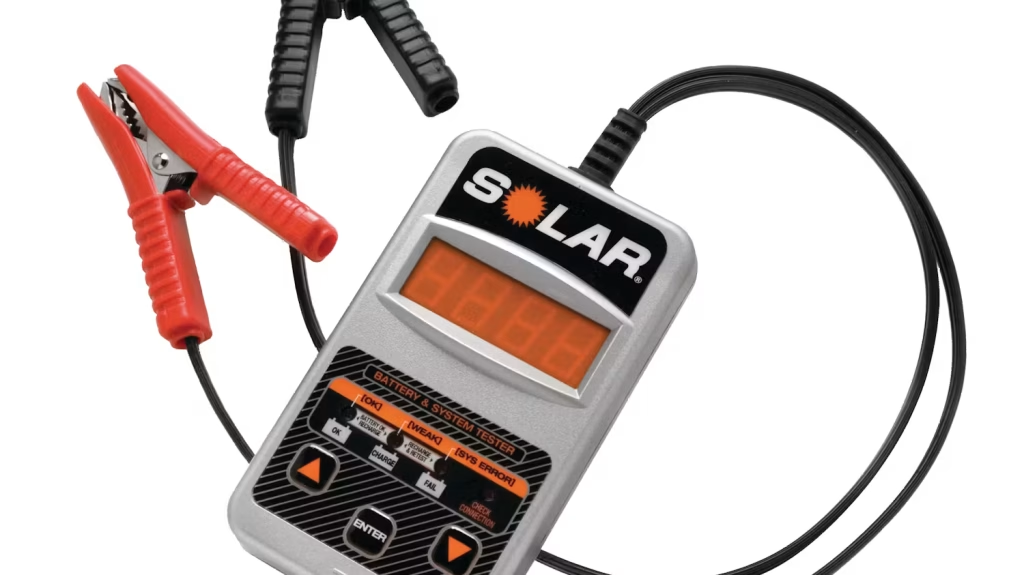
For use in the trunk, a conductance-based tester offers another useful benefit. It can check the battery quickly without applying the prolonged electrical load used by some traditional testing methods. This makes it a convenient tool for checking a vehicle before a long trip or after experiencing repeated starting problems.
The BA7 is not intended to replace a professional technician’s complete electrical diagnostic equipment. Its value is more practical. It gives a driver meaningful battery information in a small handheld device, helping turn a potentially expensive guess into a more informed decision when starting trouble appears.
10. Bosch BAT 110
The Bosch BAT 110 rounds out the list with a compact battery tester designed for 6-volt and 12-volt automotive batteries.
That wider voltage compatibility immediately gives it an advantage for drivers who maintain different types of vehicles, particularly owners of older or specialty vehicles that do not necessarily use the standard 12-volt setup found in most modern cars.
For 12-volt applications, the tester can evaluate common starting batteries using established battery-rating standards. It is designed to assess battery condition and provide information that can help determine whether a battery is capable of continuing in service.
Bosch also designed the BAT 110 to perform starting and charging-system tests, allowing the device to investigate more than the battery alone.
That combination is important when diagnosing a vehicle that repeatedly needs a jump start. A battery may be losing its ability to hold a charge, but the cause could also be inadequate charging from the vehicle or another electrical issue.
Having separate battery and charging checks available can help narrow down the problem before replacement parts are purchased.
The tester’s straightforward handheld format is another reason it works well as permanent trunk equipment. It does not require a large case or external power source to perform basic checks. You can keep it alongside jumper cables and use it whenever a vehicle begins showing warning signs.
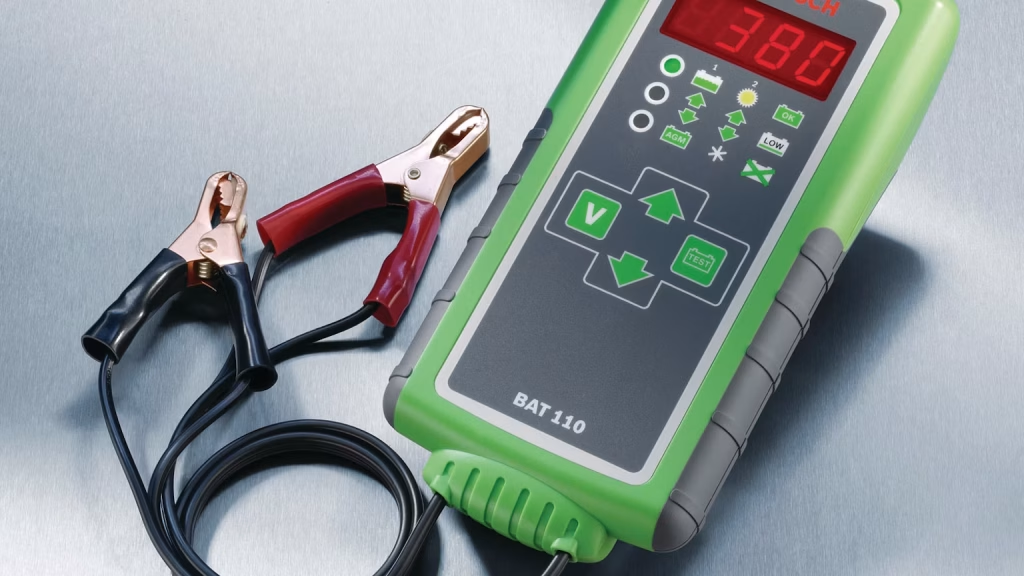
It is especially useful for drivers who want a recognizable automotive equipment brand without moving into a full professional battery analyzer. The BAT 110 is not about filling a screen with unnecessary information.
Its value comes from answering several practical questions. Is the battery properly charged? Does it appear to be in good condition? How does the voltage respond when the engine is cranked? Is the vehicle’s charging system working as it should?
Those answers can be valuable before a road trip, after an extended period of storage, or when an aging battery starts making the starter sound noticeably slower. In a trunk emergency kit, that kind of information can be worth far more than the space the tester occupies.
