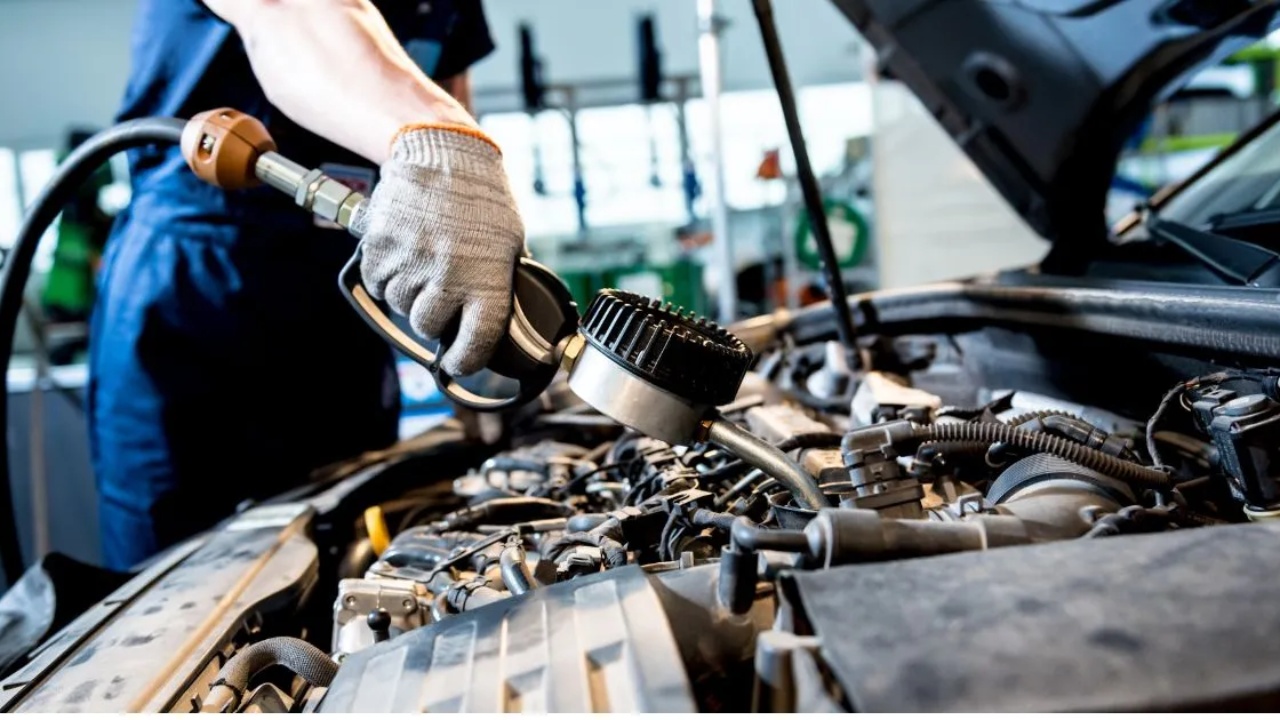
A ten-year-old car doesn’t automatically need every service item on a dealership’s maintenance menu. Some services matter because aging components can affect safety, reliability, or emissions, while others add little value when the vehicle is already well maintained.
The trick is knowing the difference between a manufacturer’s required maintenance item and an optional service sold as preventative care. Age, mileage, driving conditions, vehicle design, and previous maintenance all matter.
Skipping something should never mean ignoring a developing problem. Instead, the goal is to avoid paying for unnecessary inspections, additives, flushes, and replacement services when there is no evidence they are required.
1. Fuel-System Cleaning Service
A dealership may recommend a fuel-system cleaning on an older vehicle because deposits can accumulate over time. That does not mean every ten-year-old car automatically needs a paid fuel-system cleaning service.
Modern gasoline engines already incorporate fuel-system components designed to operate for extended periods, and fuel sold in the United States must meet applicable quality and detergent requirements.
The Environmental Protection Agency requires gasoline sold in the U.S. to contain a minimum level of detergent additives, while automakers can provide additional recommendations for specific vehicles.
The more important question is whether the engine is actually showing symptoms that point toward a fuel-delivery or deposit-related problem.
Rough running, hesitation, poor acceleration, hard starting, reduced fuel economy, or certain diagnostic trouble codes can justify further diagnosis. Without symptoms or manufacturer guidance, an automatic cleaning service can be difficult to justify simply because the odometer has crossed ten years.
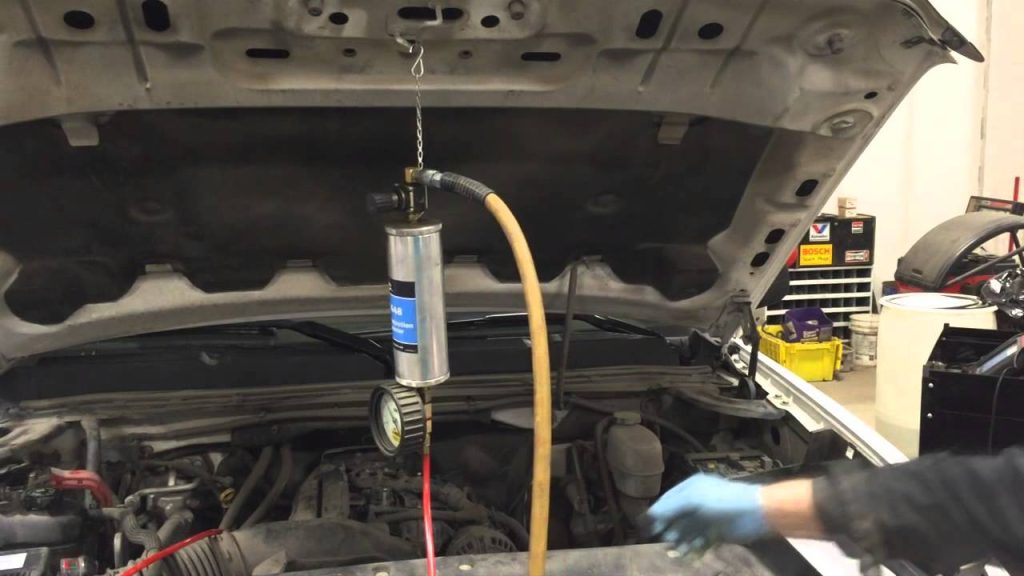
There is also a difference between cleaning an accessible component and paying for a generalized “fuel-system service.” A technician should be able to explain what component is being cleaned, why it needs attention, and what evidence supports the recommendation.
That does not mean fuel-system maintenance should always be ignored. Vehicles with known deposit problems, direct-injection engines, or manufacturer-specific cleaning procedures can have legitimate needs. Some automakers have published procedures for addressing intake-valve deposits or other engine-specific issues.
For a ten-year-old vehicle running smoothly with no relevant symptoms, routine oil changes, filters, spark plugs when specified, and other scheduled maintenance generally deserve higher priority.
If a fuel-system cleaning appears on an inspection sheet, ask what problem it is intended to solve. If there is no symptom, diagnostic finding, or manufacturer recommendation, it may be one service worth postponing.
2. Engine Oil Additives
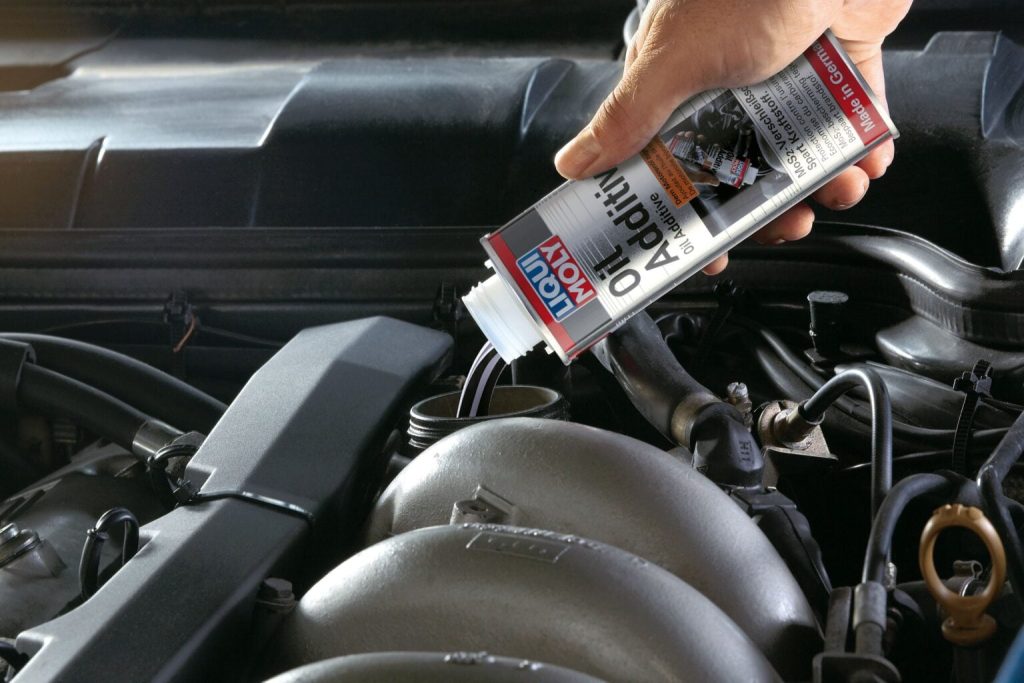
Engine oil additives can sound attractive on an older vehicle. As an engine approaches ten years of age, service advisers may suggest an additive intended to clean internal components, reduce friction, quiet noises, or improve lubrication. But adding an aftermarket chemical to the engine oil is not automatically beneficial.
Modern motor oils are already formulated with carefully engineered additive packages. API develops performance standards for engine oils used in gasoline and diesel applications, while automakers specify particular oil viscosities and performance classifications for individual engines.
That makes the manufacturer’s recommended oil a much more important maintenance decision than adding an extra bottle of chemical at every oil change.
An additive might be appropriate in a specific repair situation if an automaker explicitly recommends it. However, using one simply because a vehicle is ten years old has little justification without a documented reason.
There is another potential issue. Changing the chemistry of an engine’s lubricant can affect the properties the manufacturer intended the oil to have. An additive that claims to solve one problem does not necessarily address the actual cause of a mechanical fault.
If an engine has sludge, excessive consumption, valve-train noise, or low oil pressure, the correct response is diagnosis. An additive should not be used as a substitute for finding out why the problem exists.
Older vehicles do deserve closer attention to oil condition and consumption. Rubber seals can age, engines can develop leaks, and worn components can increase oil consumption. Those issues require inspection rather than automatically reaching for an additive.
For a well-running ten-year-old car, spending money on the correct oil and replacing it at the manufacturer’s recommended interval is generally a more defensible maintenance strategy than routinely buying supplemental oil treatments. The exception is when the vehicle manufacturer specifically approves or requires a particular additive for a known application.
3. Automatic Transmission Flushes Without a Specific Need
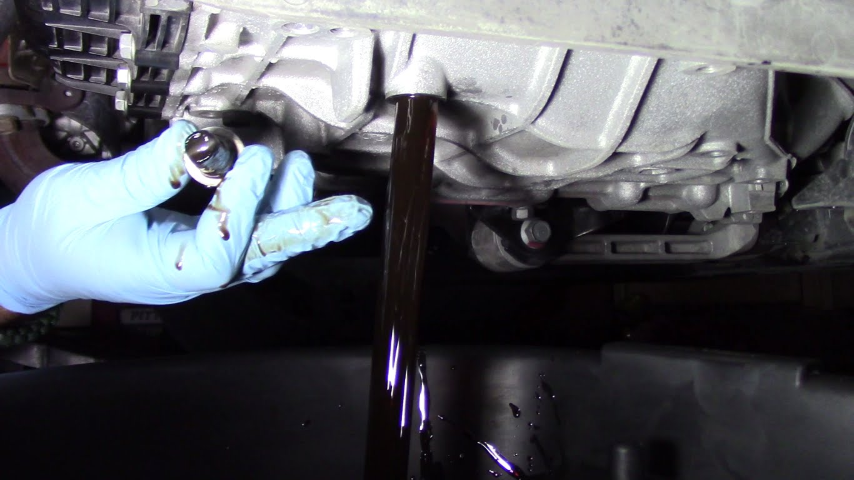
A ten-year-old car can certainly need transmission maintenance, but age alone is not proof that it needs an aggressive transmission flush. This distinction matters because many automakers specify a particular fluid-change procedure, while others have different requirements depending on transmission design and operating conditions.
The better approach is to follow the vehicle manufacturer’s maintenance schedule and service procedure. If the manual calls for replacing transmission fluid at a particular mileage or under specific severe-use conditions, that maintenance should not be skipped.
A scheduled fluid replacement is different from a generic flush sold simply because the car has reached a certain age.
A flush can also be inappropriate for some transmissions if the wrong fluid, procedure, or equipment is used. Modern automatic transmissions can have very specific fluid specifications, and using an incompatible fluid can create expensive problems.
If the transmission is slipping, shifting harshly, overheating, leaking, or producing diagnostic codes, the priority should be diagnosis rather than automatically purchasing a flush. A fluid service may be part of the eventual repair, but it should address an identified need.
For an older vehicle with a documented maintenance history, smooth transmission operation, and no manufacturer requirement for a particular flush, a dealership’s generalized flush recommendation deserves scrutiny.
Ask what procedure is being performed, which fluid specification is being used, and whether the automaker specifically calls for it.
4. Throttle-Body Cleaning on a Smooth-Running Engine
Throttle-body cleaning can be useful when deposits are causing drivability problems, but it is not automatically required simply because an engine has reached ten years of age. A properly running engine does not necessarily benefit from having the throttle body cleaned during every service visit.
A dirty throttle body can contribute to symptoms such as unstable idle, hesitation, or throttle-response problems, depending on the vehicle. However, those symptoms can have many other causes, including vacuum leaks, sensors, ignition problems, or electronic throttle-control faults.
That makes diagnosis more valuable than automatically authorizing a cleaning service. There is also a difference between visible dirt and a condition that actually affects engine operation.
Modern electronic throttle systems are designed to manage airflow precisely, and some vehicles may require an idle relearn or other procedure after the throttle body has been cleaned or replaced.
For a ten-year-old vehicle that starts normally, idles smoothly, responds correctly to the accelerator, and has no relevant diagnostic codes, routine throttle-body cleaning is generally not a mandatory age-based service.
If a technician recommends it, ask what evidence shows the throttle body needs attention. A photograph showing deposits can be useful, but the technician should also explain whether those deposits are causing a measurable drivability problem.
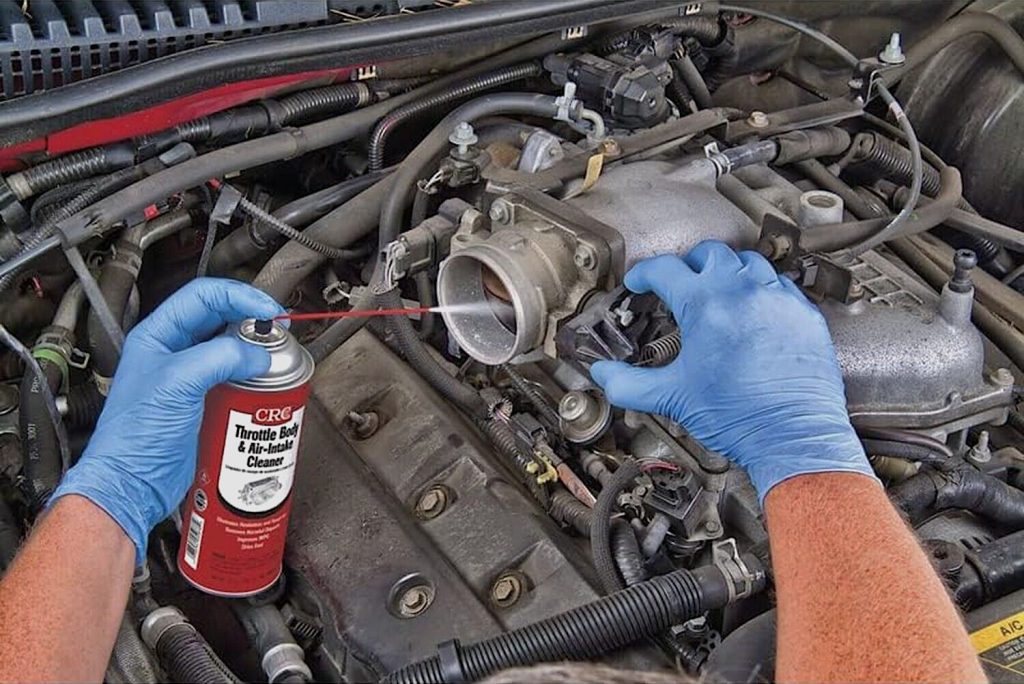
Cleaning may make sense when symptoms or manufacturer-specific service information support it. Otherwise, money may be better spent on scheduled maintenance and repairs addressing actual problems rather than preventive cleaning performed solely because the vehicle is old.
5. Injector Cleaning When the Engine Runs Normally
Fuel-injector cleaning is another service that can sound necessary once a car gets older. Ten years of driving may make it seem logical that the injectors must have accumulated enough deposits to justify a cleaning.
In reality, injector service should be connected to an actual maintenance requirement or diagnostic finding, not simply the vehicle’s age.
A properly running engine with normal starting, acceleration, idle quality, and fuel economy does not automatically need professional injector cleaning. Modern gasoline contains detergent additives, and fuel-system components are designed to operate for long periods under normal conditions.
Cleaning can make sense when testing indicates an injector-related problem. Poor spray patterns, restricted flow, misfires, fuel-trim abnormalities, or other diagnostic evidence can justify removing and testing injectors or carrying out a manufacturer-approved cleaning procedure.
The key is identifying the actual problem before paying for the service. A generic “injector flush” performed during every older-car service may not address anything that is wrong with the engine.
This is especially important because drivability symptoms can originate elsewhere. A misfire, for example, might result from a worn spark plug, ignition coil, vacuum leak, compression problem, or fuel-delivery issue. Cleaning injectors without diagnosis could simply add cost while leaving the real fault untouched.
If a technician recommends injector cleaning, ask whether there is a measured flow problem, relevant diagnostic code, or manufacturer recommendation supporting it.
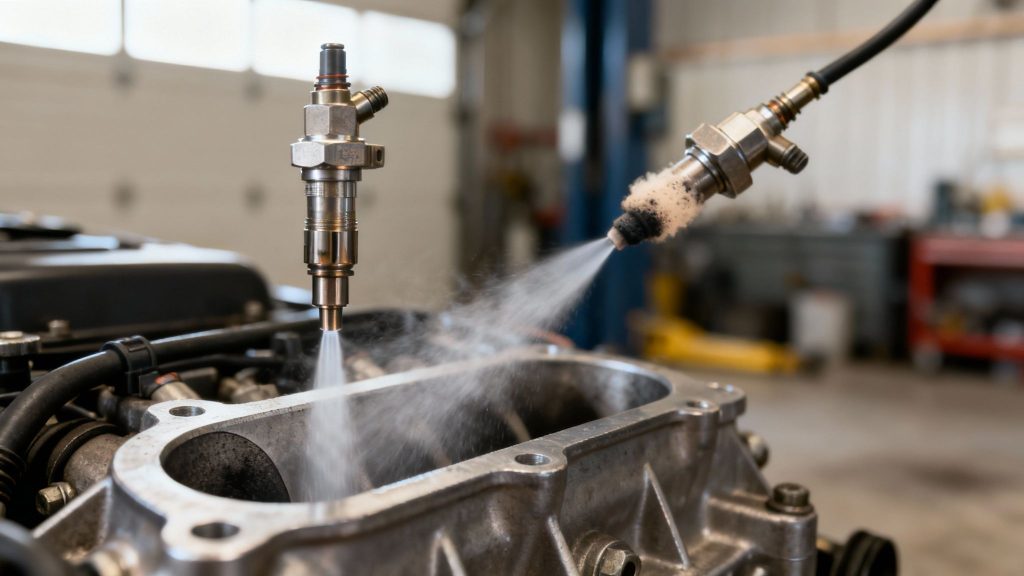
For a ten-year-old car that runs correctly, routine maintenance such as oil changes, air-filter replacement, spark plugs when specified, and inspection of aging components generally deserves priority.
Injector cleaning is a repair or maintenance procedure when there is a reason for it. It should not become an automatic surcharge attached to every service visit simply because the vehicle has accumulated another year of age.
6. Repeated A/C Disinfecting Services Without an Odor Problem
Air-conditioning cleaning can be worthwhile when a vehicle has a persistent musty odor, contaminated evaporator, or other identifiable HVAC problem. But repeatedly paying for an A/C disinfecting service simply because a car is ten years old is not automatically necessary.
A vehicle’s cabin air system can accumulate dust, moisture, and biological contamination, particularly when the HVAC system is used frequently in humid conditions.
A persistent unpleasant smell can indicate an issue that deserves inspection. Replacing a neglected cabin air filter can also be appropriate when the manufacturer specifies replacement or when the filter is visibly dirty.
However, disinfecting the system and diagnosing the cause of an odor are not necessarily the same thing. If moisture is accumulating where it should not, treating the smell without addressing the underlying moisture source may only provide temporary improvement.
The same applies to an older vehicle that has no odor, airflow problem, or HVAC complaint. There is little reason to automatically repeat a chemical cleaning service at every maintenance visit.
The owner’s manual is the first place to check for scheduled cabin-filter replacement and HVAC maintenance. Requirements vary between vehicles, so a ten-year age threshold should not replace the manufacturer’s schedule.

If a service adviser recommends an A/C cleaning, ask what problem was found. If the answer is simply that the vehicle is ten years old, the service may be optional rather than necessary.
For an aging car, spending money on actual HVAC repairs, a required filter replacement, refrigerant-system diagnosis, or fixing water intrusion can provide far more value than repeatedly treating a system that is already functioning normally.
7. Premium Fuel When the Engine Does Not Require It
Putting premium gasoline into a ten-year-old car may feel like a form of preventive maintenance, but fuel with a higher octane rating does not automatically clean the engine or extend its life. Octane measures a fuel’s resistance to knock, not its quality as a lubricant or cleaning treatment.
The Federal Trade Commission explains that using a higher octane fuel than the vehicle manufacturer recommends generally provides no benefit unless the engine is designed to require it. The owner’s manual or fuel-door label should identify the appropriate octane rating.
Some older vehicles do require premium fuel, particularly engines with higher compression ratios or specific turbocharged applications. In those cases, switching to regular gasoline simply to save money can be inappropriate if the manufacturer specifies premium.
The mistake is assuming that every aging engine benefits from upgrading its fuel. If a vehicle is designed for regular gasoline and operates normally on it, buying premium does not become necessary because the odometer has reached ten years.
Fuel quality and detergent content are separate considerations. The EPA requires gasoline sold in the United States to contain detergent additives, and automakers may recommend fuels meeting additional standards.
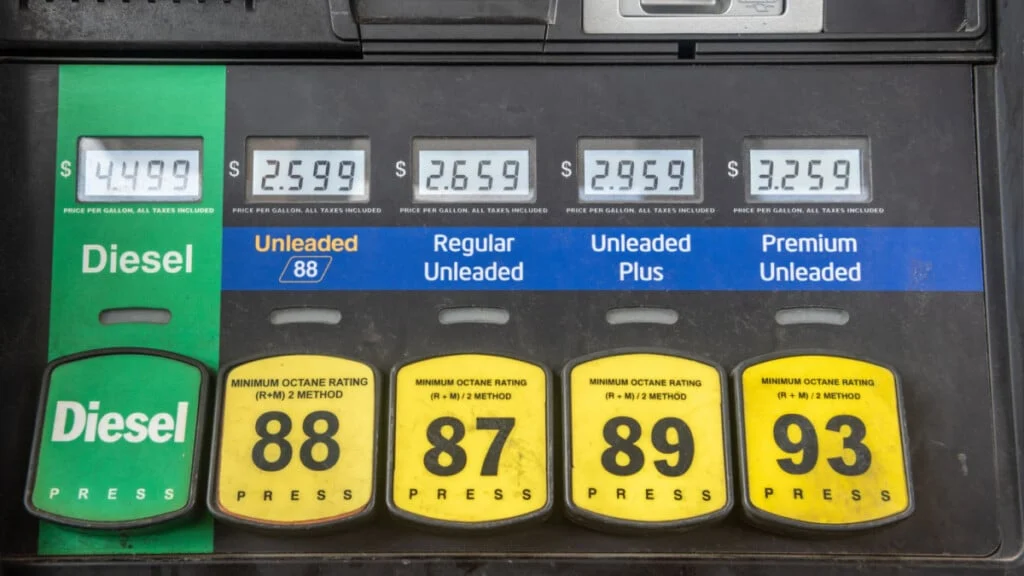
If an engine develops knocking, hesitation, poor performance, or abnormal fuel economy, changing to a more expensive gasoline should not replace diagnosis. Mechanical faults, ignition problems, fuel-system issues, and other causes need to be considered.
For a car that is ten years old, the best approach is straightforward. Use the fuel octane rating recommended by the manufacturer unless a qualified technician determines that a different grade is appropriate for a specific reason.
Premium fuel can be essential for some engines, but it is not a universal anti-aging treatment for vehicles.
8. Engine Oil Flushes on an Internally Clean Engine
An engine oil flush can seem like a smart idea once a car reaches ten years old. The goal is to remove accumulated sludge and deposits from inside the engine. However, age alone does not mean a chemical flush is necessary. An engine that has been properly maintained and is in good condition may not need one at all.
Modern engine oils contain detergent and dispersant additives designed to help manage deposits and contaminants. Following the manufacturer’s oil specification and replacement interval is generally more important than periodically adding a separate flushing chemical.
A flush may sometimes be recommended as part of a specific repair procedure, particularly when an engine has documented sludge or contamination. That is different from performing one automatically during routine maintenance.
If an engine has severe deposits, low oil pressure, unusual noise, or evidence of sludge, the correct response is to determine why the deposits exist. A chemical treatment does not repair worn bearings, damaged seals, restricted oil passages, or other mechanical problems.
There can also be situations where aggressively loosening deposits is undesirable, depending on the engine’s condition and the product being used. That is another reason not to treat an engine flush as a universal ten-year service.
The best evidence is the vehicle’s service history. An engine that has received regular oil changes with the correct specification is a very different maintenance case from one with years of neglected service.
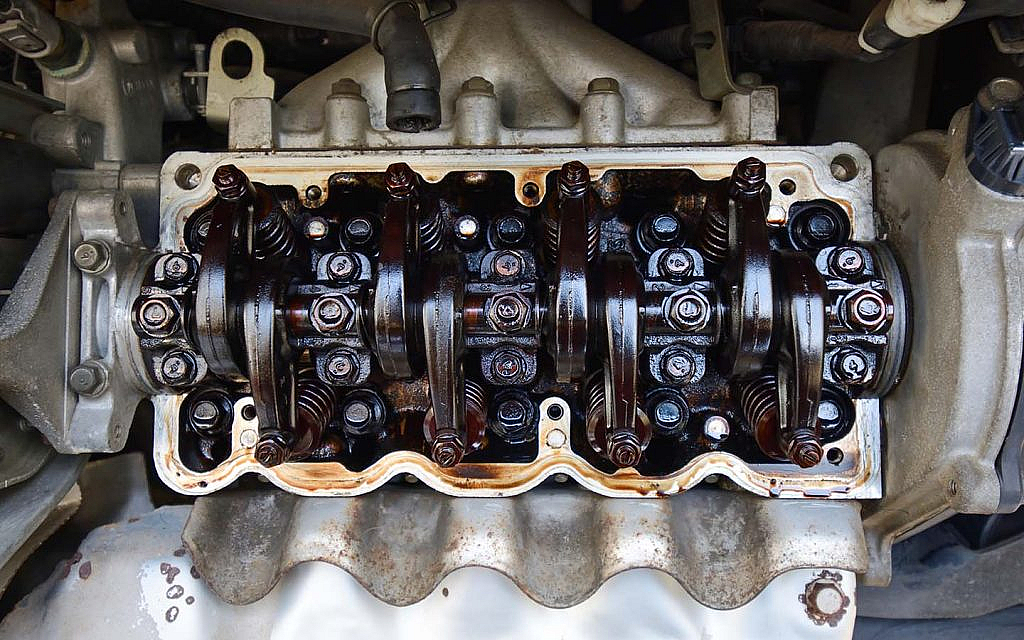
Before approving an oil flush, ask what condition it is intended to correct and whether the vehicle manufacturer recommends the procedure.
For many well-maintained ten-year-old cars, regularly replacing the correct engine oil and filter is the more important investment. A flush should have a specific purpose, rather than becoming an automatic add-on because the vehicle has reached a certain age.
9. Dealer Inspection Packages With No Specific Concern
A ten-year-old car can certainly benefit from a thorough inspection, but that does not mean every dealership inspection package is worth paying for. Some service departments bundle dozens of checks into a package and present them as necessary simply because the vehicle has reached a certain age.
If your car is running normally and already receives regular maintenance, paying for a broad inspection package at every visit may add little value.
The important distinction is between a useful inspection and a paid package of routine visual checks. Checking fluid levels, tire condition, brakes, belts, hoses, lights, leaks, and suspension components can be valuable, especially on an older vehicle.
However, many of these checks are already performed during normal maintenance or can be identified when symptoms appear.
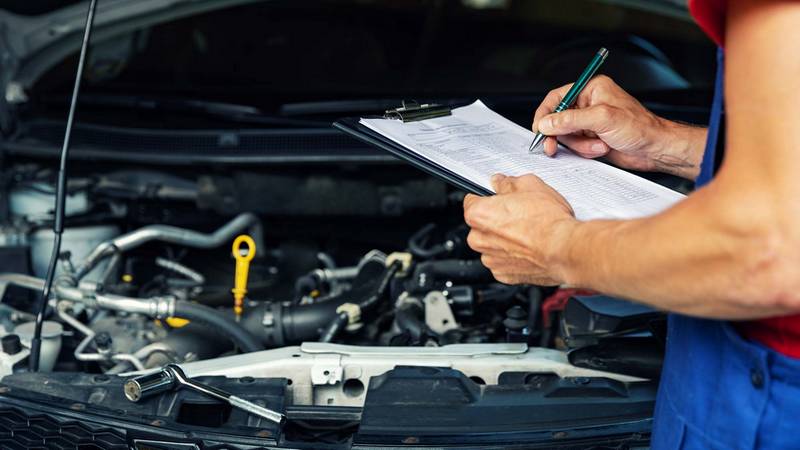
A better approach is to look at what the package actually includes. If it duplicates inspections already covered during an oil change or scheduled service, there may be little reason to purchase it separately. Conversely, a genuine mechanical inspection before a long trip or when buying a used ten-year-old vehicle can be money well spent.
Age alone should not be used as the justification. The car’s condition, mileage, maintenance history, and symptoms should determine what gets inspected.
10. Preventive Replacement of Parts That Are Still in Good Condition
A ten-year-old car does not mean every aging component needs to be replaced simply because it has reached a certain age.
Parts such as hoses, belts, suspension components, motor mounts, and other rubber or mechanical components can deteriorate with time, but replacement should be based on the vehicle manufacturer’s maintenance schedule, inspection results, mileage, and actual condition.
This is particularly important with parts that do not have a universal replacement interval. A technician may recommend replacing a component because it is old, but age alone does not prove that failure is imminent.
If an inspection shows that the part remains in acceptable condition and there is no manufacturer requirement to replace it, immediate replacement may not provide much benefit.
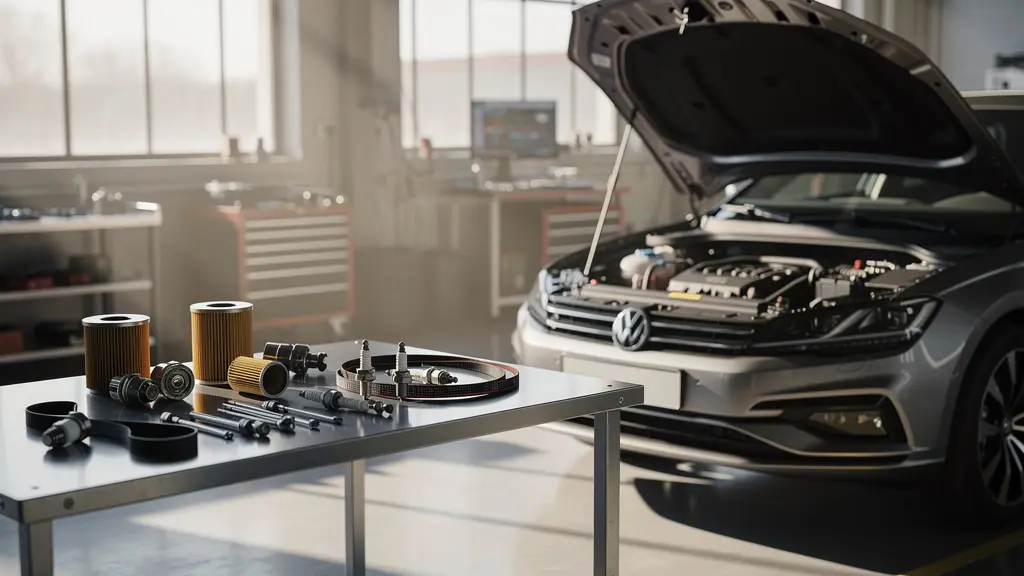
There are exceptions. Timing belts, certain coolant components, spark plugs, fluids, and other maintenance items can have specific replacement intervals established by the manufacturer. Those schedules should not be ignored merely because the vehicle still drives normally.
The smartest strategy is therefore condition-based maintenance combined with the factory schedule. Replace components when they are due, worn, damaged, leaking, cracked, contaminated, or showing measurable deterioration.
Do not confuse a ten-year-old car with a car that automatically needs every aging part replaced. A well-maintained vehicle can continue operating reliably without replacing perfectly serviceable components simply to make the maintenance record look newer.