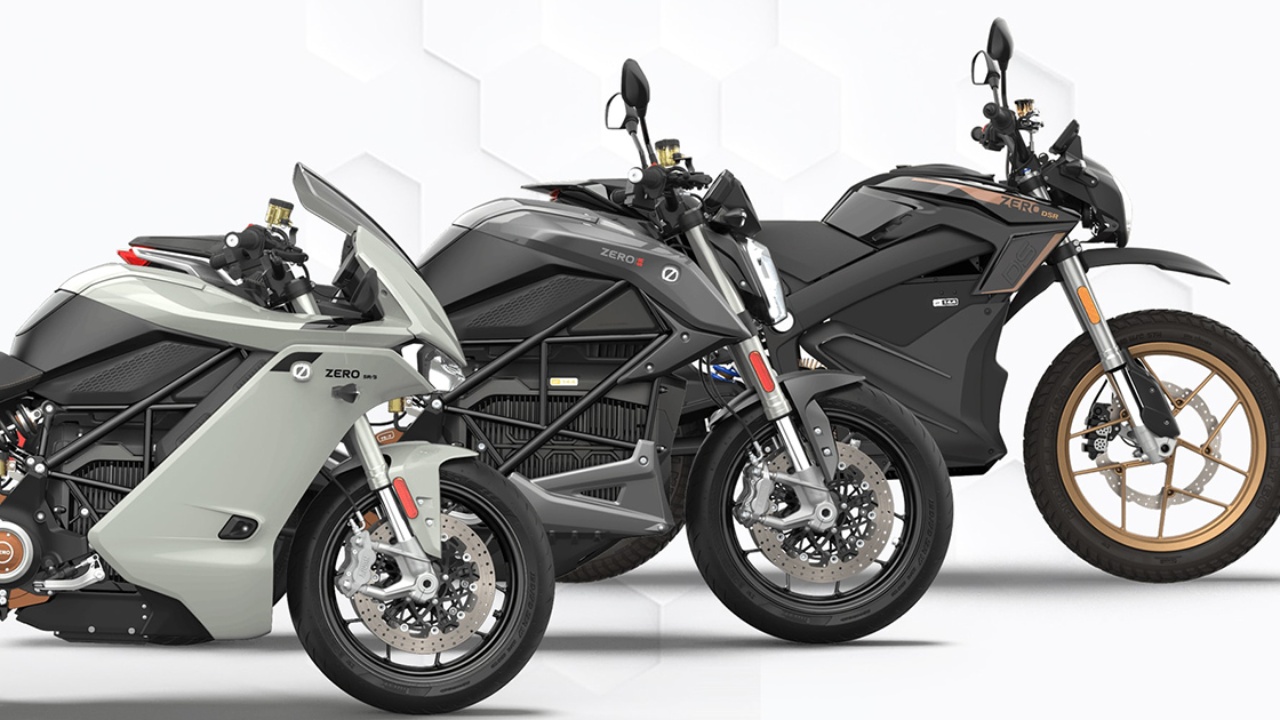
Electric motorcycles have come a long way, but battery technology remains a major hurdle. Unlike cars, motorcycles have limited space for large battery packs, making every added kilogram especially important. Extra weight can affect acceleration, braking, cornering, maneuverability, and the way the motorcycle feels on the road.
That makes battery technology particularly important for two-wheelers. ProLogium, a Taiwanese battery technology company, believes solid-state lithium-ceramic batteries could address several of these limitations.
The company has been developing solid-state battery technology for years and has already explored applications specifically for electric motorcycles.
In 2022, ProLogium and Gogoro demonstrated a solid-state lithium-ceramic battery prototype developed to work with Gogoro’s existing battery-swapping system.
The prototype was developed to work with existing Gogoro vehicles and its swapping infrastructure, showing that solid-state technology could be adapted to the physical requirements of electric two-wheelers. ProLogium’s technology has since advanced significantly.
In September 2026, the company announced mass production of its Gen 3.5 all-solid-state battery. TÜV testing validated an energy density of 381 Wh/kg and 903 Wh/L at the cell level.
For electric motorcycles, developments like these could be more important than simply increasing motor power. A better battery could change the motorcycle itself.
Why Batteries Matter So Much on Motorcycles
Electric motors have a clear advantage over combustion engines because they can produce substantial torque almost instantly. The battery, on the other hand, remains a limiting factor.
A smaller battery keeps a motorcycle lighter, but limits range. A larger battery provides more energy but adds weight and occupies valuable space.
Motorcycles have less room to work with than cars. Their batteries must fit into a compact chassis while leaving space for the motor, electronics, suspension, rider, and other components.
That makes energy density a critical factor. Storing more energy within the same amount of space gives engineers greater flexibility. They could use the extra capacity to extend range, shrink the battery pack, reduce weight, or combine several of these benefits to create a more capable motorcycle.
The weight advantage is particularly significant. A lighter motorcycle can accelerate more easily, brake more efficiently, change direction more quickly, and feel more manageable at low speeds.
That means battery improvements can affect almost every part of the riding experience. ProLogium’s Gen 3.5 cell reaching 381 Wh/kg doesn’t mean an entire motorcycle pack will achieve the same number. Packaging, cooling, electronics, safety equipment, and structural components add weight.
Nevertheless, higher cell-level energy density gives manufacturers more flexibility. And that flexibility is something electric motorcycles desperately need.
What Makes Solid-State Batteries Different?
Conventional lithium-ion batteries generally use a liquid electrolyte to transport ions between the electrodes. Solid-state batteries replace that liquid electrolyte with a solid material.
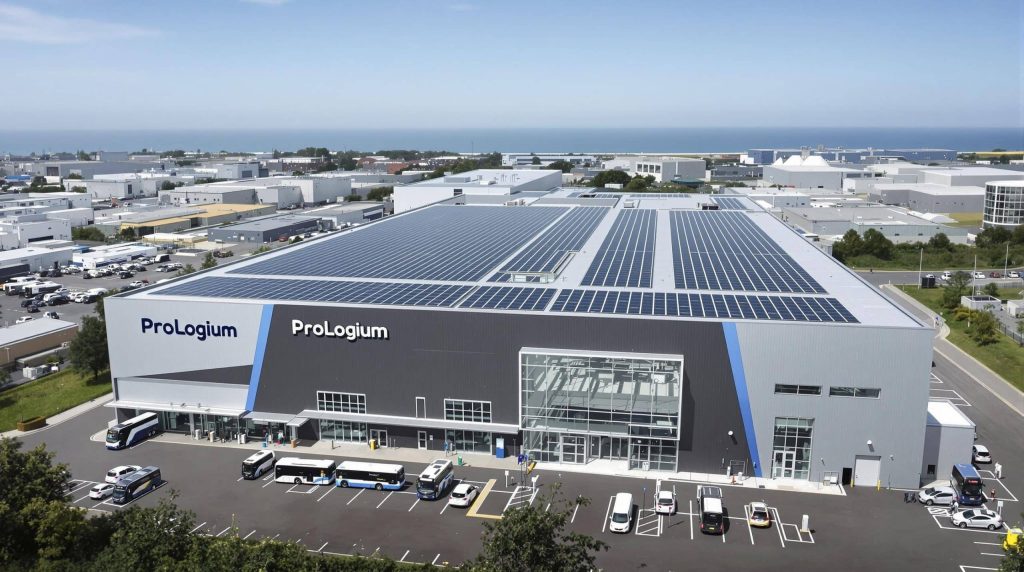
ProLogium’s approach uses lithium-ceramic technology, with an all-inorganic solid-state electrolyte and ceramic separator. The company says its newer battery technology has been designed to address issues such as ionic conductivity, interface stability, safety, and manufacturing efficiency.
The potential benefits are significant. A solid electrolyte can allow batteries to be designed with higher energy density while also reducing reliance on flammable liquid materials.
But chemistry isn’t the only challenge. A battery company also needs to manufacture its cells consistently and economically. That is where ProLogium’s recent progress becomes noteworthy.
The company says it has shipped more than 2.4 million cells since 2013 and operates a GWh-scale facility in Taiwan. It is also developing a manufacturing facility in France.
Moving from laboratory demonstrations toward mass production is essential if solid-state technology is ever going to become a mainstream part of electric mobility.
More Energy Could Mean Lighter Motorcycles
The biggest advantage of a high-energy-density battery may not be additional range. It could be a lighter motorcycle with the same range.
That distinction is important. A manufacturer could use a smaller battery while retaining a similar amount of usable energy. Reducing battery mass could improve acceleration, braking, suspension response, and handling.
Alternatively, manufacturers could maintain the existing battery size and use the additional energy density to increase range.
Touring motorcycles could benefit from the latter approach, while lightweight performance motorcycles might benefit more from the former.
Urban motorcycles could potentially use compact batteries without requiring frequent charging. In every case, the battery becomes less of a packaging compromise.
This is one reason solid-state technology could have an unusually large impact on motorcycles compared with larger vehicles.
A car can absorb hundreds of kilograms of battery weight without fundamentally changing how most drivers perceive it. A motorcycle cannot. A few dozen kilograms can make a noticeable difference.
Rapid Charging Could Change Electric Motorcycle Ownership. Range is only one part of the electric-vehicle equation. Charging time is another.
Even a motorcycle with reasonable range can be inconvenient if riders have to wait a long time before continuing their journey.
ProLogium says its newer battery technology can charge from 5% to 80% in approximately 6.4 minutes under its disclosed testing conditions.
That should not be interpreted as meaning a production motorcycle equipped with the technology will necessarily charge that quickly.
A complete vehicle also depends on charging hardware, battery-management systems, thermal conditions, electrical infrastructure, and safety limitations.
Still, the underlying capability is important. If charging can become significantly faster, electric motorcycles become more practical for long-distance riders and commercial users.
A quick charging stop could become comparable to a normal break rather than a major interruption.
For delivery fleets and other high-use motorcycles, faster charging could also increase the amount of time each vehicle can remain operational.
Solid-State Batteries Could Work With Battery Swapping
Battery swapping could offer electric motorcycles another practical alternative to conventional charging, especially because motorcycle batteries can be designed as removable modules. ProLogium and Gogoro demonstrated this concept in 2022 with a solid-state battery prototype designed to work with Gogoro’s existing swapping system. Higher energy density could make swapping more appealing by allowing each battery to store more energy without becoming excessively heavy.
However, battery swapping requires compatible battery sizes, connectors, communication systems, safety standards, and a large network of swapping stations. It is therefore more likely to complement traditional charging than replace it completely.
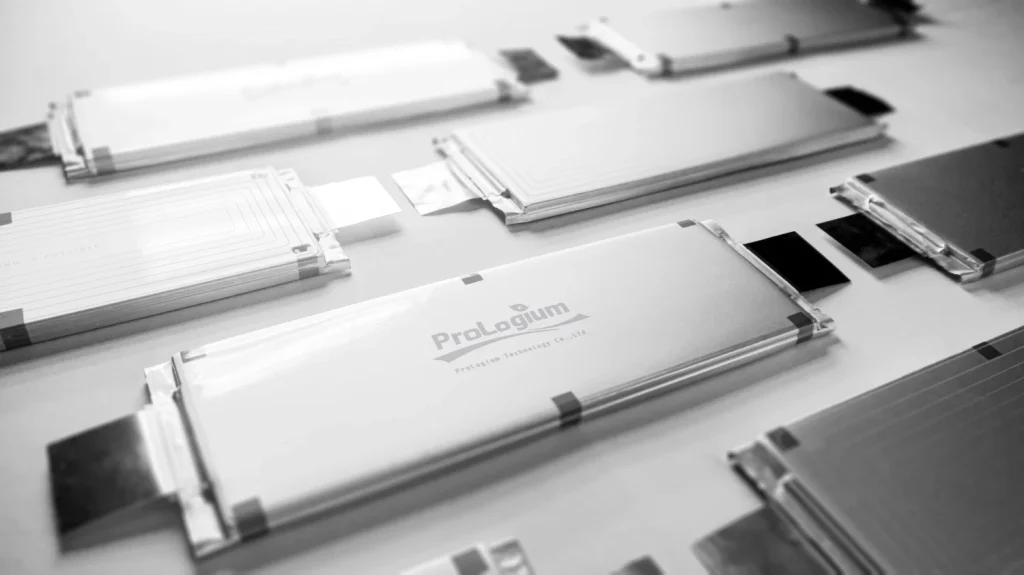
Battery safety is another potential advantage of solid-state technology. Replacing liquid electrolyte with solid materials could reduce certain thermal runaway risks. ProLogium says its all-inorganic solid-state electrolyte is non-flammable and that its ceramic separator helps prevent contact between electrodes. The company also describes a safety mechanism designed to limit thermal reactions under extreme conditions.
Solid-state batteries are not completely risk-free, however. Electric motorcycles still require crash protection, electrical isolation, thermal management, battery management systems, and charging safeguards.
Temperature performance is another important consideration. ProLogium says its technology can maintain more than 95 percent discharge performance at minus 20 degrees Celsius under its testing conditions. Better low-temperature performance could help electric motorcycles deliver more consistent range, power, and charging in colder climates.
ProLogium Is Moving Beyond the Prototype Stage
The biggest reason to pay attention to ProLogium now is that its technology is moving closer to large-scale manufacturing.
The company announced in September 2026 that its Gen 3.5 all-solid-state battery had entered mass production. The 381 Wh/kg and 903 Wh/L figures were validated by TÜV at the cell level.
That doesn’t mean electric motorcycles using these cells will immediately appear in dealerships. There are still several steps between cell production and a finished motorcycle.
Manufacturers need to develop battery packs, cooling systems, electronics, software, charging hardware, crash protection, and manufacturing processes around the cells.
Cost is another major hurdle. Conventional lithium-ion batteries have benefited from enormous production volumes, while solid-state technology must prove that its advantages justify potentially higher manufacturing costs.
The real test, therefore, isn’t whether ProLogium can produce impressive cells. It is whether those cells can become affordable, durable, and reliable components in mass-produced vehicles.
Why This Could Change Motorcycle Design
If solid-state batteries reach commercial production at a competitive price, they could significantly change the future of electric motorcycles. Higher energy density could allow manufacturers to use smaller and lighter battery packs while maintaining or increasing driving range.
Less battery weight could improve handling, while faster charging could make longer journeys more practical. Improved safety could also provide designers with greater freedom when deciding where to position the battery within the chassis.
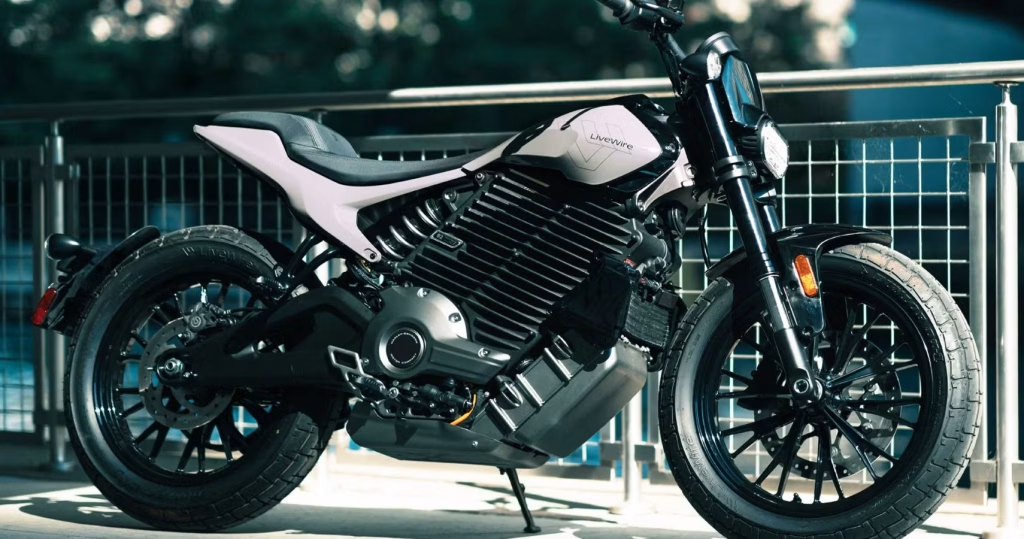
These improvements could address several challenges that currently affect electric motorcycles, including high prices, weight, limited range, long charging times, and everyday practicality. However, promising laboratory results do not guarantee a successful production battery.
Cell-level energy density may differ from pack-level performance, and batteries must withstand years of vibration, temperature changes, charging cycles, and regular use. Cost remains another major hurdle because manufacturers must produce the technology at a price customers are willing to pay.
ProLogium’s work with Gogoro has already demonstrated a potential use for solid-state batteries in two-wheelers, while its manufacturing efforts indicate that the technology is moving toward commercial production.
If development continues, electric motorcycles could eventually use batteries that are smaller, lighter, safer, and faster-charging. Such advances could reduce existing compromises and give manufacturers new opportunities to rethink motorcycle design and performance.