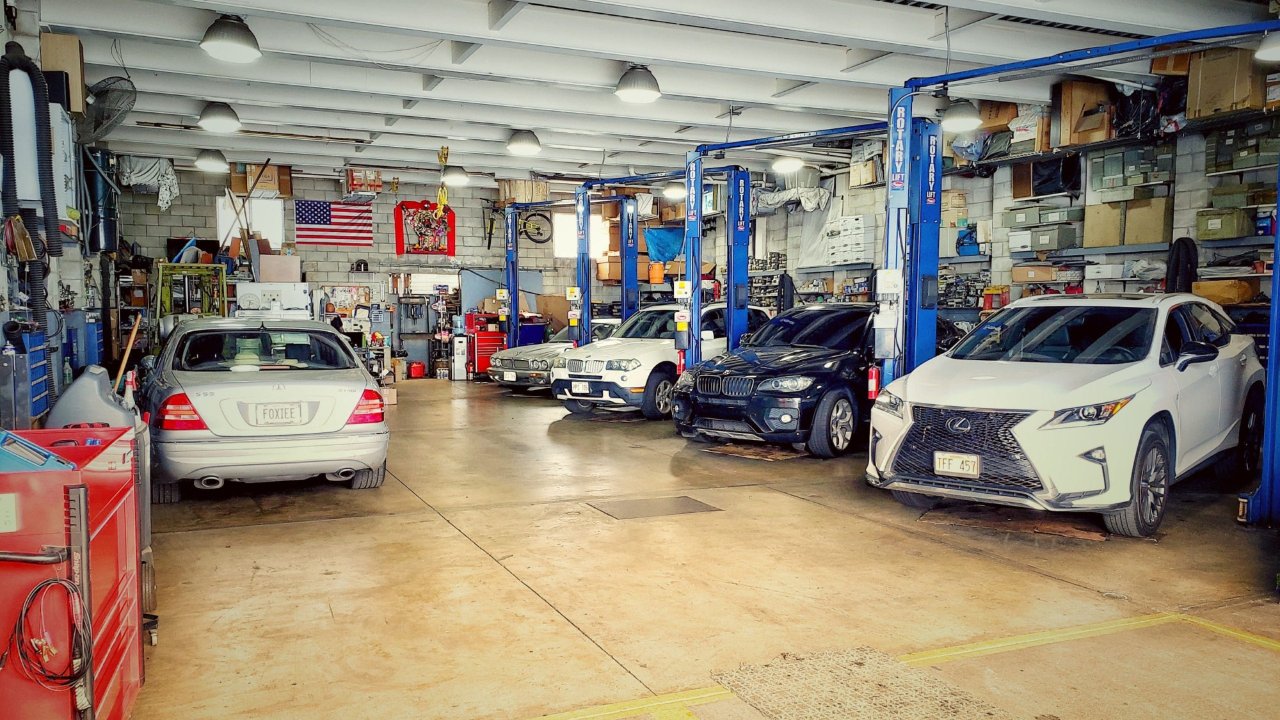
A dealership is not automatically the cheapest place to repair a car once the factory warranty has expired. Independent shops often have lower labor rates, broader freedom in parts selection, and less dealership overhead, which can make certain routine repairs substantially cheaper.
Consumer Reports has found that independent facilities tend to offer lower labor and parts costs than dealerships for many repairs, although prices vary by vehicle, location, and shop.
A claim that every independent shop charges exactly half the dealer rate would be misleading, so the comparisons below focus on repair categories where meaningful savings are commonly possible. The biggest differences usually appear in straightforward mechanical work.
1. Brake Pad and Rotor Replacement
Brake work is one of the clearest examples of a repair where shopping around can make a noticeable difference. Replacing worn pads and rotors does not normally require manufacturer-specific programming, proprietary software, or dealership-only equipment, making it a natural job for a properly equipped independent shop.
Consumer Reports says independent repair facilities can handle most repairs, including routine mechanical work, while generally charging less for labor than dealerships. Its survey of 11,670 repairs also found that independent shops received favorable ratings for reasonable prices and willingness to negotiate.
The exact difference depends heavily on the vehicle. A basic sedan with conventional brakes can be relatively inexpensive, while a luxury SUV with large rotors, electronic parking brakes, or performance-oriented hardware can cost considerably more.
Parts choice also matters. A dealership will typically use manufacturer-recommended parts, while an independent shop may offer reputable aftermarket alternatives alongside original equipment components.
That flexibility can make a major difference in the final invoice. RepairPal explains that repair estimates vary according to parts pricing, labor rates, shop overhead, and the equipment used by the facility.
For example, a customer replacing both pads and rotors on an older mainstream vehicle can ask an independent shop for an itemized quote covering parts, labor, and any additional charges. Comparing that estimate with the dealer’s quote reveals whether the price gap is meaningful.
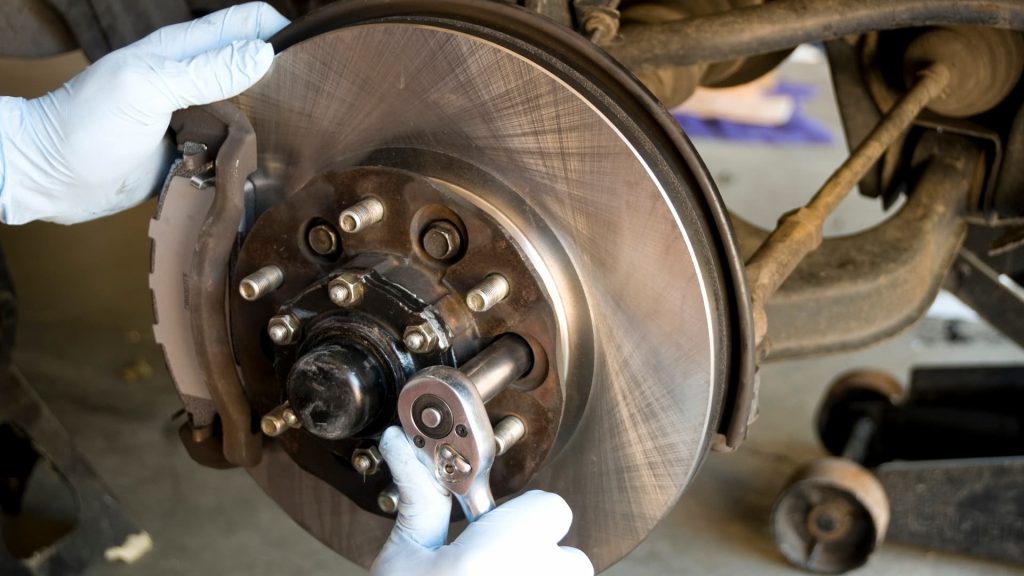
The important point is that cheaper does not automatically mean better. Ask which brake components will be installed, what warranty accompanies them, and whether the shop is including all necessary hardware. A reputable independent facility can potentially save a substantial amount without compromising the repair.
2. Alternator Replacement
When an alternator begins failing, the symptoms can range from a battery warning light to dimming electrical accessories or repeated battery discharge. Replacing the alternator is usually a mechanical repair rather than a dealership-exclusive procedure, which makes it another area where an independent shop can provide a lower-cost alternative.
Kelley Blue Book’s repair information explains that dealerships generally use manufacturer-recommended parts and that their labor rates can reflect their specialized training and equipment. Independent facilities, by contrast, service multiple makes and may use aftermarket parts, which can reduce the parts portion of the bill.
The difference can become significant on vehicles where the dealer uses a relatively expensive original-equipment alternator. An independent technician may be able to source a reputable remanufactured or aftermarket unit while still providing a warranty.
The customer should ask exactly what part is being quoted rather than comparing two dollar figures without checking what is included.
Kelley Blue Book illustrates how substantial alternator bills can become on certain vehicles. For a 2016 Scion FR-S in its example ZIP code, its dealer estimate was $841 to $937, including parts and labor.
A 2018 Hyundai Sonata example showed a dealer estimate of $961 to $1,069. These figures are vehicle- and location-specific, so they should not be treated as national averages.
An independent shop may charge less because it has lower labor rates or access to different parts, but there is no universal rule that it will cost exactly half as much. The savings depend on the vehicle and the quote.
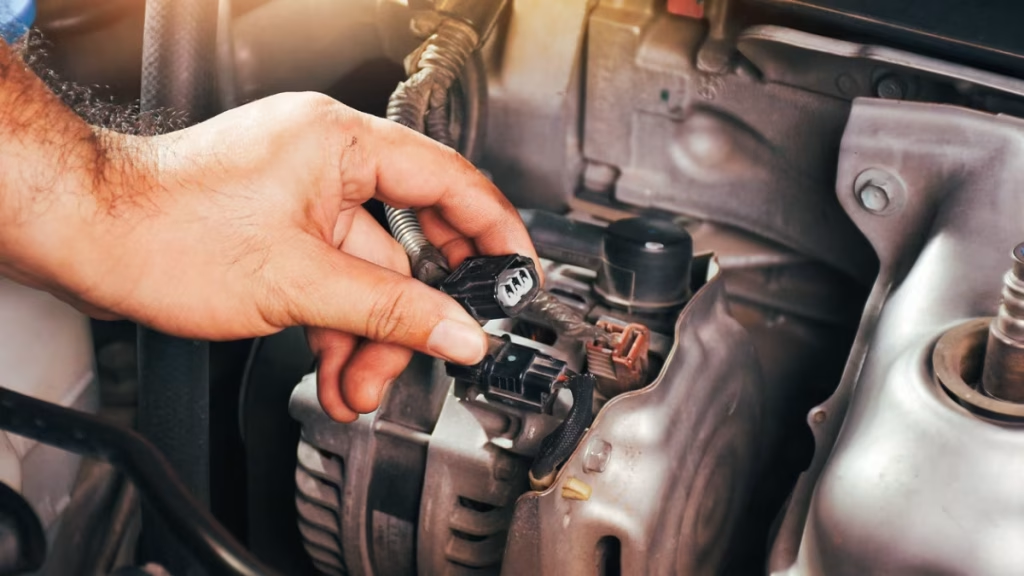
Before approving the work, ask whether the diagnosis confirmed the alternator itself is faulty. A weak battery, wiring problem, or charging-system fault can produce similar symptoms. A good independent shop should establish the cause before selling the replacement.
3. Water Pump Replacement
Water pump replacement is another repair where an independent shop can often undercut a dealership, particularly on vehicles with conventional gasoline engines.
Consumer Reports specifically identifies water pumps as repairs that qualified independent shops can perform, while noting that dealerships tend to be more useful for jobs requiring specialized factory equipment or software.
The price difference can come from both labor and parts. Independent facilities generally have lower labor rates than dealerships, and they may offer customers a choice between original-equipment and reputable aftermarket components.
AAA’s current repair-cost guidance says dealerships generally charge more than independent mechanics, often by 25% or more, because of factors including specialized equipment, factory training, and higher overhead.
Water pump jobs can vary dramatically depending on engine design. A pump mounted in an easily accessible location can be relatively straightforward. On other engines, accessing the pump can require substantial disassembly. Some designs also integrate the water pump with timing-belt service, potentially changing the economics of the repair.
Current U.S. repair estimates illustrate that variation. ConsumerAffairs, citing RepairPal data, lists examples ranging from roughly $814 for a Honda Civic to about $998 for a Ford F-150 and $1,438 for a BMW 740i, with parts and labor both contributing to the final price.
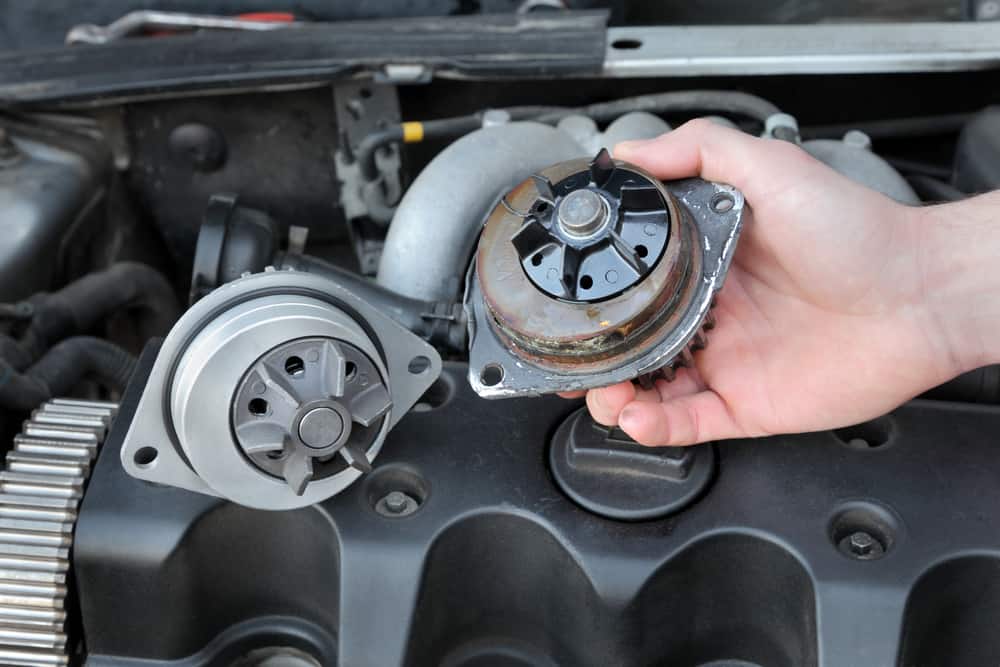
That is why comparing an independent quote with a dealer estimate is more useful than assuming a fixed percentage of savings. Ask whether the estimate includes coolant, gaskets, related belts, and labor for any necessary disassembly.
A reputable independent shop can make sense for this job, but the technician should have experience with the specific engine. Saving money on the initial repair is less attractive if an improperly installed pump creates a second cooling-system problem.
4. Shock and Strut Replacement
Suspension work is another category where an independent shop can frequently provide a less expensive alternative to dealership service.
Shock absorbers and struts are conventional mechanical components, and replacing them generally does not require the manufacturer-specific software associated with certain modern electronic systems.
Consumer Reports specifically lists suspension shocks and struts among the repairs that can usually be handled by a competent independent mechanic. It also notes that independent facilities tend to have lower labor costs than dealerships and can often use aftermarket parts when appropriate.
The potential savings become more interesting because suspension repairs can involve several components. Depending on the vehicle, a shop may recommend replacing strut assemblies, shocks, mounts, bearings, or related hardware. The customer should therefore compare itemized estimates rather than simply asking, “How much for suspension work?”
Parts selection can also change the bill considerably. An independent shop may offer multiple options, while a dealership will generally install manufacturer-supplied components. Consumer Reports notes that aftermarket parts can cost less, although the quality and suitability of the particular component still need to be considered.
Labor rates are another major variable. AAA’s 2026 repair guidance says independent shops typically have lower labor rates than dealerships, although rates vary substantially by location and shop.
One important follow-up to keep in mind is wheel alignment. Certain suspension repairs can change the vehicle’s alignment, especially when parts that affect wheel positioning are replaced. If an alignment may be necessary, confirm that it is included in the estimate or listed as a separate charge.
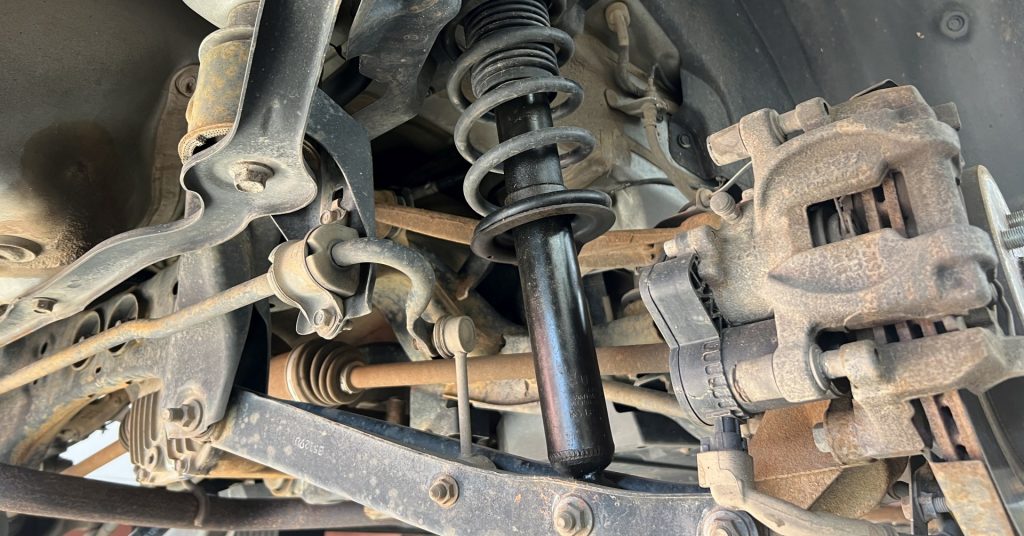
For a vehicle outside its factory warranty, a reputable independent suspension specialist can therefore offer a combination of lower labor costs and broader parts choices. The key is choosing a shop with the correct equipment and experience for the vehicle rather than selecting purely on the lowest quote.
5. Starter Replacement
A failing starter can leave a perfectly healthy engine unable to crank, and replacing it is generally a straightforward mechanical and electrical repair. That makes it one of the jobs where an independent shop can often provide a substantially lower bill than a dealership.
Consumer Reports’ 2026 maintenance guide says independent shops can handle most repairs that do not require specialized factory tools or software, and it specifically notes that independent facilities are generally less expensive than dealerships for service and repairs.
The reason for the price gap is not necessarily that dealerships are charging excessively for the component itself. Their labor rates can be higher because dealerships carry factory-specific equipment, training costs, and larger facility expenses.
AAA’s 2026 analysis says dealerships generally charge higher labor rates than independent shops, often by 25% or more, while independent facilities usually have lower overhead and greater flexibility in sourcing OEM or aftermarket parts.
Starter replacement also demonstrates why comparing itemized estimates matters. Two shops could quote different totals while using different replacement parts or including different diagnostic charges. A customer should ask whether the starter is new or remanufactured, what warranty applies, and whether diagnosis is included in the quoted labor.
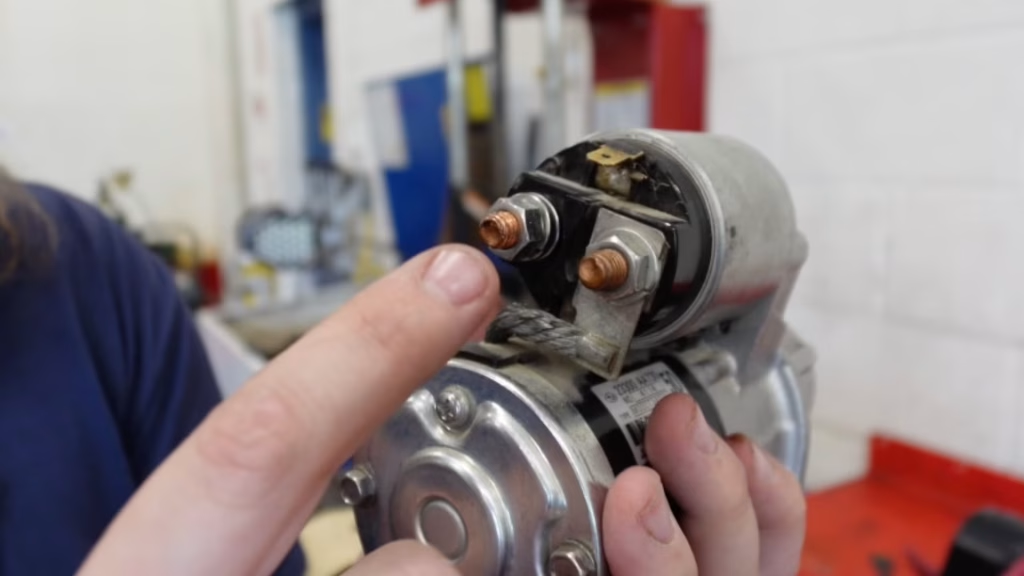
Vehicle design still matters. Some starters are easily accessible, while others are positioned in difficult areas of the engine bay, increasing labor time. AAA explains that repair complexity directly affects labor costs and that shops commonly use flat-rate labor guides to calculate charges.
For an out-of-warranty vehicle, getting an independent estimate before approving a starter replacement can therefore uncover a substantial price difference. The key is to compare the same repair, the same quality of component, and the equivalent warranty rather than simply choosing the lowest number.
6. Fuel Pump Replacement
Fuel pump replacement can become an expensive repair because the component is often buried inside the fuel tank, but it remains a job many experienced independent shops can perform.
Consumer Reports specifically says independent facilities handle most repairs, including major mechanical work, while dealerships have a particular advantage when specialized factory equipment or software is required.
That distinction matters because a conventional fuel pump replacement generally does not require the kind of manufacturer-specific programming associated with certain newer electronic systems. An experienced independent technician can diagnose the fuel delivery problem, access the pump, and install the appropriate replacement component.
However, diagnosis should come before replacement. A no-start condition or engine hesitation can also result from electrical faults, fuel-pressure problems, wiring issues, or other components. Replacing an expensive pump without confirming the cause can turn a cheaper repair into an unnecessary expense.
Parts selection can then influence the final bill. Independent shops may offer OEM and aftermarket alternatives, while dealerships generally follow the manufacturer’s parts ecosystem. AAA notes that independent shops commonly have more flexibility in sourcing parts, while their lower overhead can contribute to lower labor rates.
Consumer Reports has also found that independent repair shops received the strongest ratings for repair price in its survey, while dealerships tended to receive the lowest price ratings. The survey covered 11,670 repairs reported by 10,973 members, making it a useful indicator of consumer experience rather than a universal price guarantee.
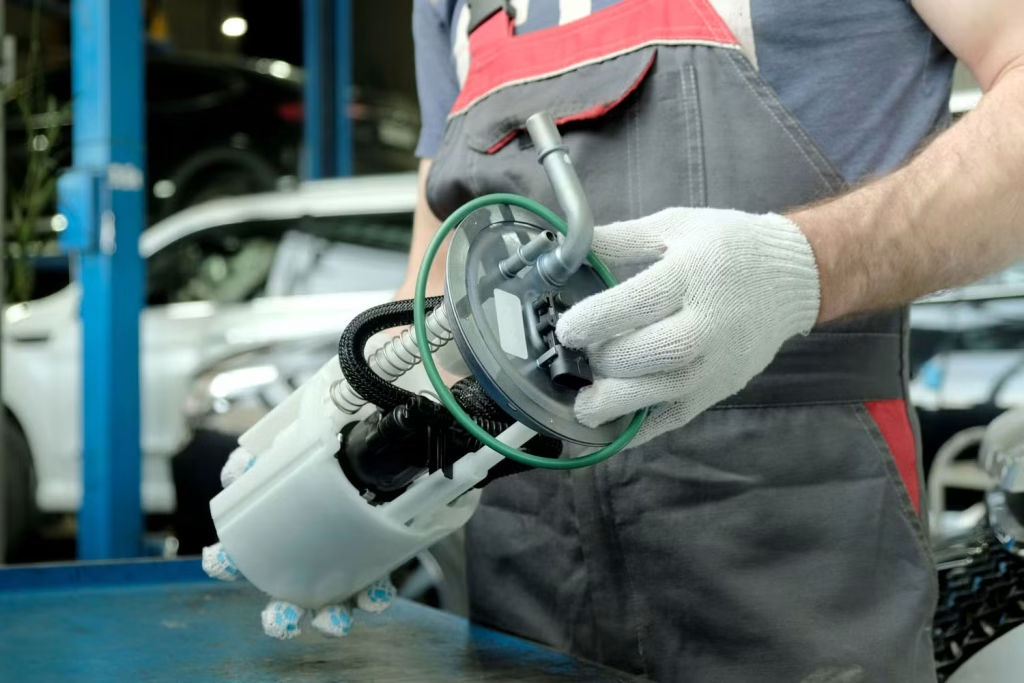
Fuel-pump access can vary enormously by vehicle. Some cars provide relatively convenient access, while others require substantial removal work before the tank or pump assembly can be reached. Ask the shop whether the quote includes diagnosis, labor, the pump module, seals, and any required fuel-system components.
That itemized comparison is the best way to determine whether an independent shop’s quote genuinely represents a major saving.
7. Timing Belt Replacement
Timing belt replacement is one of the more labor-intensive services that can make a large dealership invoice worth comparing with an independent estimate.
Consumer Reports specifically says major engine work such as timing-belt replacement can usually be handled by an independent repair shop, provided the facility has technicians experienced with the vehicle.
The potential savings come largely from labor. AAA’s 2026 repair guidance says dealership mechanics generally cost more than independent mechanics, often by 25% or more, although actual rates vary significantly by location, vehicle, and shop.
AAA also explains that repair facilities commonly use flat-rate labor guides, meaning the quoted labor charge is based on the established repair time multiplied by the shop’s labor rate.
Timing-belt jobs are particularly sensitive to labor because accessing the belt can require removing multiple components. Depending on the engine, the technician may also recommend replacing the tensioner, idler pulleys, and water pump at the same time. That can make the final bill considerably larger than the price of the belt alone.
This is where an independent specialist can be valuable. A shop that regularly works on the specific brand may already know the engine’s service procedure and have the necessary tools. Consumer Reports notes that many independent shops specialize in particular brands or regions of manufacture.
However, customers should compare complete estimates rather than simply asking for the cheapest belt replacement. One quote might include a complete timing-belt kit and water pump, while another covers only the belt and basic labor.
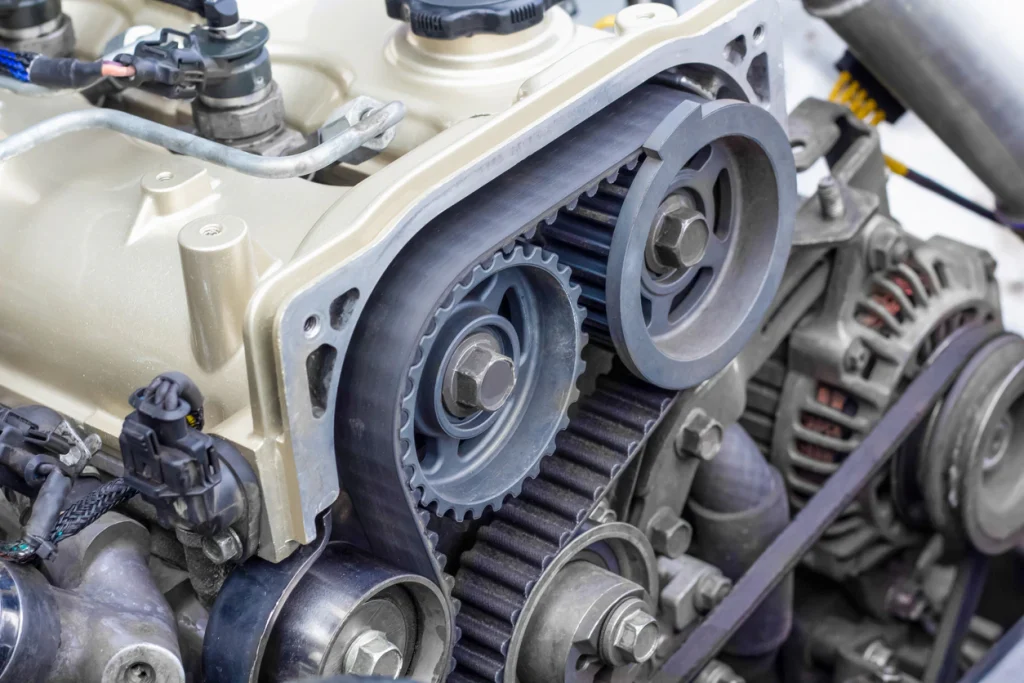
A written estimate should identify the belt, tensioner components, water pump if applicable, coolant, seals, and labor. Warranty coverage matters too. AAA notes that many independent shops provide combined parts-and-labor warranties, so the cheapest estimate is not necessarily the best value.
8. Air-Conditioning Compressor Replacement
Air-conditioning compressor replacement can be an expensive repair, but it is another job that an experienced independent shop can often perform without dealership-only involvement.
The key difference is that the technician needs proper refrigerant-handling equipment and must correctly diagnose the cause of the cooling-system failure before replacing the compressor.
Consumer Reports says independent shops can perform most repairs that do not require special factory tools or software, while dealerships have an advantage when a repair requires proprietary diagnostic equipment.
Compressor replacement can involve considerably more than removing one component and installing another.
Depending on the failure, the system may need to be evacuated, contaminated refrigerant or debris addressed, the compressor replaced, and the system recharged. If the original compressor failed internally, additional components may also require attention.
That complexity makes diagnosis particularly important. AAA explains that diagnostic work is different from many flat-rate repairs because troubleshooting time can vary significantly. Electrical or intermittent faults can sometimes require more diagnostic labor than the eventual physical repair.
An independent shop may also have greater flexibility in parts selection. Consumer Reports notes that independent facilities commonly use aftermarket components, which can cost less than factory parts, while customers can still request factory parts when appropriate.
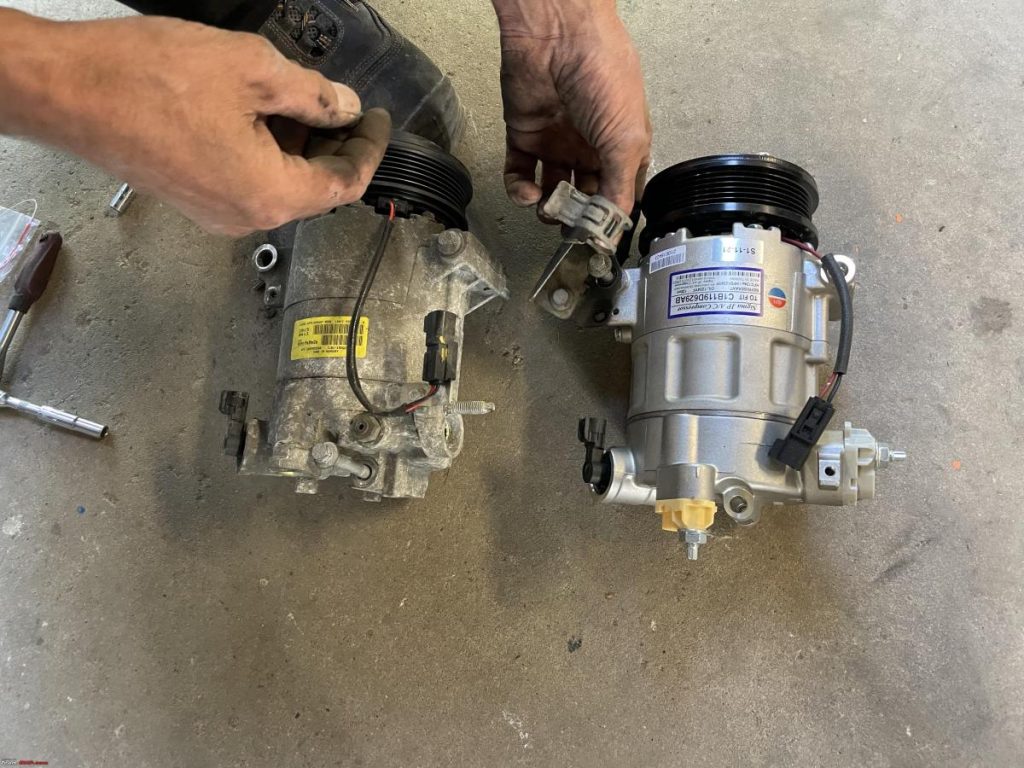
The price difference can become meaningful on luxury vehicles, where air-conditioning components and dealer labor can be particularly expensive. Consumer Reports has documented substantial variation in repair costs between vehicles, reinforcing why a vehicle-specific estimate matters rather than relying on a single national figure.
Before authorizing compressor replacement, ask for confirmation that the compressor is actually the failed component. A qualified independent technician should explain the diagnosis, identify what parts are included, and specify the warranty.
That gives the owner a genuine comparison with the dealer rather than simply choosing whichever shop advertises the lowest starting price.