The biggest fuel savings often come from what happens behind the wheel rather than at the gas station. Speed, acceleration, braking, idling, and trip planning can all change how efficiently a vehicle uses gasoline.
The U.S. Department of Energy and EPA have documented measurable differences from several everyday driving behaviors, including aggressive acceleration, excessive speed, and unnecessary idling.
Some habits can affect fuel consumption by double-digit percentages, although the exact savings depend on the vehicle, traffic, weather, and road conditions. The key is not driving unnaturally slowly but reducing wasted energy while keeping your driving smooth, predictable, and safe.
1. Accelerate Smoothly Instead of Launching From Every Stop
The temptation to press the accelerator hard when a traffic light turns green can be surprisingly expensive over thousands of miles. Rapid acceleration requires the engine to deliver substantially more power in a short period, and that extra demand can increase fuel consumption without getting you to your destination meaningfully sooner.
The U.S. Department of Energy recommends sensible acceleration because aggressive driving can have a measurable effect on fuel economy.
Older EPA testing found that accelerating rapidly from a stop could use up to 15% more fuel than moderate acceleration. EPA continues to list quick acceleration and hard braking among the driving behaviors that can reduce fuel economy.
The useful part is that this habit does not require crawling away from intersections. The objective is a controlled increase in speed that matches traffic. Instead of immediately pushing the accelerator deep into its travel, build speed progressively and allow the transmission to select higher gears naturally.
This becomes especially valuable in city driving because the behavior gets repeated dozens of times during a single trip. If a driver accelerates aggressively from every stop and then brakes hard for the next light, energy is repeatedly being converted into motion and then discarded through braking.
Smooth acceleration also pairs naturally with smoother braking. Looking farther ahead allows you to recognize slowing traffic earlier, reducing the need for sudden throttle changes. The result is a driving pattern with fewer energy-wasting surges.
For someone filling the tank every week, those small improvements can accumulate into a noticeable reduction in fuel consumption without changing the vehicle or the route.
2. Ease Off the Speed on Long Highway Drives
Highway driving feels efficient because the vehicle is moving steadily, but speed itself can become a major fuel penalty once it climbs. Air resistance rises rapidly with increasing speed, forcing the vehicle’s engine to work harder simply to maintain its pace.
The Department of Energy notes that fuel economy generally declines rapidly at speeds above 50 mph. Its guidance specifically points out that each additional 5 mph above 50 mph can have a meaningful fuel-cost effect. EPA testing has likewise demonstrated a clear relationship between higher cruising speeds and reduced fuel economy.
That does not mean drivers should ignore posted speed limits or create unsafe traffic situations by traveling substantially below surrounding traffic. Instead, when conditions and legal limits allow, avoiding unnecessary high-speed cruising can reduce fuel consumption.
The difference becomes particularly noticeable during long highway journeys. A driver traveling hundreds of miles at a consistently high speed gives aerodynamic drag a major influence over the trip’s fuel consumption.
Dropping from an unnecessarily aggressive cruising speed to a more moderate, legal speed can therefore save fuel throughout the entire journey.
The DOE also recommends using cruise control during highway driving because maintaining a steady speed can limit unnecessary changes in throttle input.
Another benefit of moderate speeds and steady cruising is reduced acceleration and braking. Maintaining a consistent pace cannot eliminate all sources of fuel consumption, but it can help avoid the extra fuel used during frequent changes in speed.
For drivers who regularly make long interstate trips, keeping speed under control can therefore be one of the simplest habits to measure at the next few fill-ups.
3. Avoid Unnecessary Idling
A parked vehicle with its engine running is burning fuel without adding a single mile to the trip. For many drivers, idling happens almost automatically while waiting for someone, sitting outside a store, warming up the cabin, or remaining in a drive-through line. Those minutes can quietly add up over the course of a week.
The U.S. Department of Energy says idling can use roughly a quarter to a half gallon of fuel per hour, depending on factors such as engine size and air-conditioning use. More recent DOE guidance for personal vehicles states that idling for more than 10 seconds can use more fuel than stopping and restarting the engine.
That makes unnecessary waiting one of the easiest habits to eliminate. If you are parked while waiting for a passenger, there is usually little reason to keep the engine running unless weather, safety, or another legitimate circumstance requires it.
Consider a driver who spends 10 minutes idling every weekday. At even 0.25 gallons per hour, those 50 minutes represent roughly 0.21 gallons of fuel each week. At 0.5 gallons per hour, the same time would consume about 0.4 gallons.
The actual figure varies by vehicle and conditions, but the important point is that the fuel is being consumed without producing useful travel.
There is also a misconception that every short stop should be avoided because restarting an engine uses excessive fuel. DOE research indicates that modern vehicles can generally save fuel by shutting down rather than idling during stops longer than about 10 seconds.
The practical rule is straightforward. If the vehicle is stopped and you expect to remain there for more than a brief moment, turning off the engine can help avoid unnecessary fuel consumption when it is safe and appropriate.
4. Keep More Distance From Traffic
Following too closely can make fuel economy worse because it forces the driver into a cycle of acceleration and braking. When the vehicle ahead slows, a close-following driver has less time to respond smoothly and may need to hit the brakes. Once traffic opens again, that driver accelerates to regain speed, only to repeat the process moments later.
The Department of Energy specifically recommends anticipating traffic situations and maintaining adequate spacing so unnecessary braking and acceleration can be avoided. Its fuel-economy guidance identifies aggressive acceleration and braking as major sources of wasted fuel.
This does not mean coasting through traffic unpredictably or leaving an excessive gap that creates a safety problem. The useful habit is to look several vehicles ahead and recognize changes in traffic flow before they reach your bumper.
Imagine approaching a line of slowing vehicles on a highway. A driver with sufficient space can gradually release the accelerator and allow the vehicle to lose speed naturally. Another driver traveling only a few car lengths behind the vehicle ahead may have to brake firmly, then accelerate again when traffic begins moving.
Both drivers travel the same stretch of road, but the second driver repeatedly converts fuel energy into speed and then throws that energy away through the brakes.
DOE’s Alternative Fuels Data Center also highlights anticipating stops and minimizing aggressive starts and stops as efficient-driving practices.
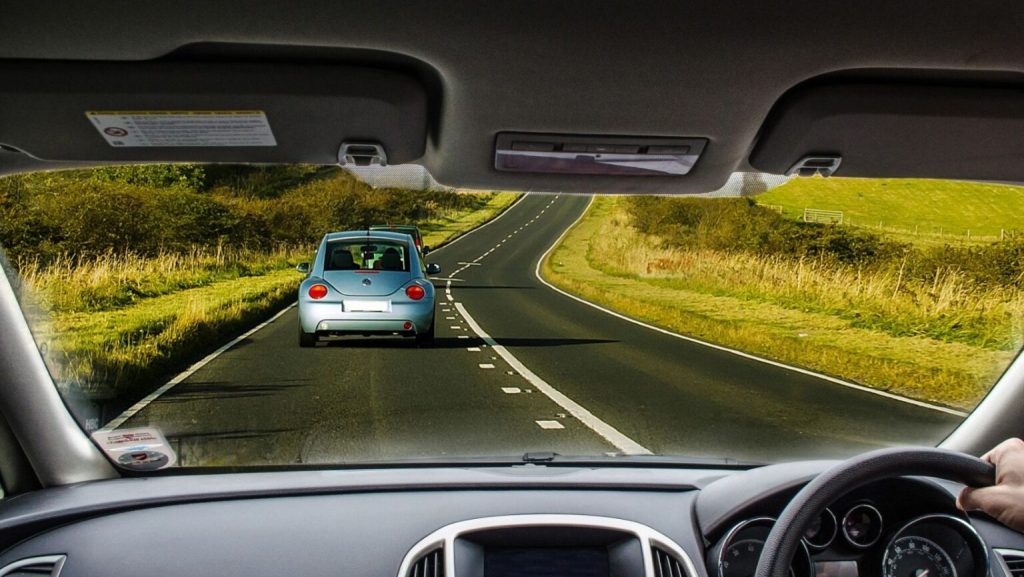
The habit is particularly useful in urban traffic, where stop-and-go conditions already put pressure on fuel economy. Instead of treating every gap as an invitation to accelerate, maintaining a sensible following distance lets traffic dictate your pace more naturally.
That can make driving smoother while reducing the repeated throttle changes that push fuel consumption higher.
5. Combine Several Errands Into One Trip
A surprisingly simple way to reduce fuel spending is to drive fewer separate trips. Instead of making several short journeys throughout the day, grouping errands into one route can reduce the total distance driven and give the engine more opportunities to operate after it has reached normal operating temperature.
The U.S. Department of Energy specifically recommends combining errands into one trip. Its fuel-economy guidance notes that consolidating trips can reduce the distance traveled while allowing more miles to be driven with a warmed-up engine. A warm engine generally operates more efficiently than one repeatedly started for very short journeys.
Consider a Saturday routine involving the grocery store, pharmacy, bank, and another shop. If each destination becomes a separate round trip from home, the same roads may be covered multiple times. Planning the stops into a single circuit can eliminate some of that duplicated mileage.
The effect is even more useful when the alternative involves several very short journeys. Short trips can be inefficient because the vehicle spends part of each journey warming up, while the driver still has to cover the distance to and from every destination.
Route planning can also help. Put stops that are close together into the same outing and avoid repeatedly returning home between them. If one location is near another destination, visiting both during the same drive can make better use of miles already being traveled.

This is different from simply driving faster or trying to squeeze more miles per gallon from the same journey. You are reducing the number of miles that need fuel in the first place.
For households that make frequent small trips, checking the week’s errands before leaving home can therefore become a practical fuel-saving habit. The savings depend on how much unnecessary driving is eliminated, but unlike many driving techniques, the benefit comes directly from reducing vehicle miles traveled.
6. Remove Heavy Items You Do Not Need
The trunk can become a storage area without the driver realizing how much unnecessary weight has accumulated. Tools, sports equipment, old luggage, boxes, and other heavy objects may remain inside for months. Every extra pound has to be accelerated whenever the vehicle pulls away from a stop.
The U.S. Department of Energy estimates that an additional 100 pounds of weight can reduce fuel economy by around 1%. It also notes that the effect depends on the vehicle because 100 pounds represents a larger percentage of the mass of a small car than a large SUV or pickup.
That percentage may sound small, but the principle becomes more useful when combined with repeated driving. Someone carrying 100 pounds of unnecessary equipment on every commute is paying to move that weight every mile. Removing it does not transform a vehicle into a dramatically more efficient machine, but it eliminates an avoidable load.
The key is to distinguish unnecessary weight from equipment that serves a legitimate purpose. Removing emergency supplies, required tools, or other useful equipment simply to chase a tiny fuel saving is not practical. The goal is to clear out things that have accumulated without a reason to remain in the vehicle.
Roof-mounted cargo deserves particular attention because it can affect aerodynamics in addition to adding weight. DOE notes that carrying items on the roof can reduce efficiency because of increased aerodynamic drag, particularly during highway driving.
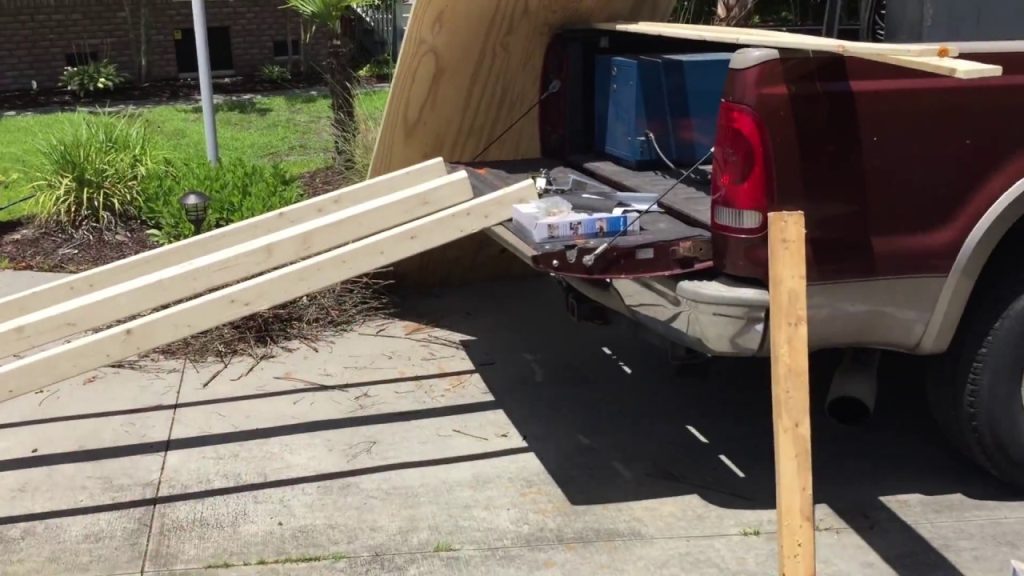
A monthly trunk cleanout can therefore become an easy routine. Before a long trip, remove anything you do not need, and avoid carrying heavy objects simply because there is space for them.
For drivers who frequently carry large loads, the impact can be more noticeable. For everyone else, it is a small but measurable efficiency improvement that costs nothing to implement.
7. Use Cruise Control When Highway Conditions Allow
Cruise control can be useful when a road is relatively open because it prevents the small speed fluctuations that drivers often make without noticing. A vehicle that repeatedly moves from 65 mph to 70 mph and back again is constantly changing its energy demand, even when the driver feels like they are maintaining a steady pace.
The U.S. Department of Energy recommends using cruise control on highways to help maintain a constant speed. Its guidance notes that maintaining a steady speed can improve fuel economy because unnecessary acceleration and deceleration are reduced.
The benefit is not that cruise control somehow makes an engine more efficient mechanically. Instead, it helps eliminate inconsistent throttle inputs. That becomes particularly useful on long stretches of relatively level highway where traffic is moving predictably.
There is an important limitation, however. Cruise control should not be treated as an automatic fuel-saving button in every situation. On steep hills, heavy traffic, winding roads, or slippery surfaces, the driver may need more direct control.
Adaptive cruise control can also behave differently depending on traffic conditions because the system repeatedly adjusts speed to maintain a following distance.
Speed selection still matters. If cruise control is set at a high speed, the vehicle can remain less efficient for the entire journey. DOE notes that fuel economy generally decreases at speeds above 50 mph, with the effect becoming increasingly significant as speed rises.
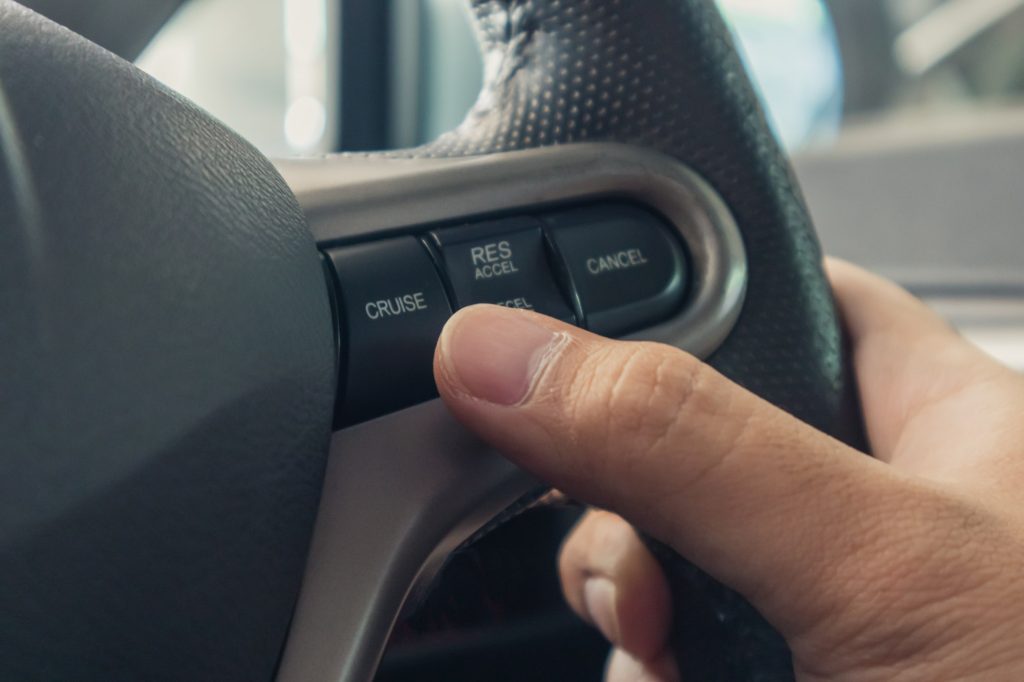
The most useful combination is therefore moderate highway speed plus consistent speed control. Set the system to a legal speed appropriate for traffic and road conditions, then let it prevent unnecessary fluctuations.
For drivers who frequently travel long interstate distances, this habit can make fuel consumption more consistent from one trip to the next. It also works particularly well when combined with the earlier habit of avoiding unnecessary high-speed driving.
8. Anticipate Stops Instead of Racing Toward Red Lights
One of the most wasteful patterns in urban driving is accelerating toward a traffic light only to brake heavily a few seconds later. Once the driver realizes a red light is ahead, much of the energy used to reach that speed has already been created unnecessarily. Anticipating the stop can reduce the amount of acceleration required in the first place.
The Department of Energy recommends anticipating stops and avoiding unnecessary acceleration and braking as part of fuel-efficient driving. Its Alternative Fuels Data Center explains that aggressive driving behavior, including rapid acceleration and hard braking, can reduce fuel economy.
The technique is straightforward. If traffic ahead is already slowing or a signal has turned red, come off the accelerator early and allow the vehicle to decelerate naturally when conditions permit. You may reach the intersection at a lower speed, reducing the amount of braking needed.
That does not mean coasting through intersections or ignoring the flow of traffic. Safety remains the priority. The useful change is simply recognizing that the accelerator does not need to remain pressed until the last possible moment.
The same principle works when approaching congested traffic. Looking beyond the vehicle directly ahead can reveal that traffic is slowing several cars in front. Releasing the accelerator early can prevent the repeated cycle of hard braking followed by rapid acceleration.

This approach can also make city driving less stressful because the vehicle’s speed changes become more gradual. Instead of treating every gap as an opportunity to accelerate, the driver responds to the traffic pattern developing ahead.
The savings from any single red light are tiny, but commuters encounter hundreds of intersections every month. Replacing unnecessary acceleration with anticipation can therefore turn a small improvement into a repeatable fuel-saving habit.
Combined with smoother starts and adequate following distance, it helps reduce the energy repeatedly lost during stop-and-go driving.