
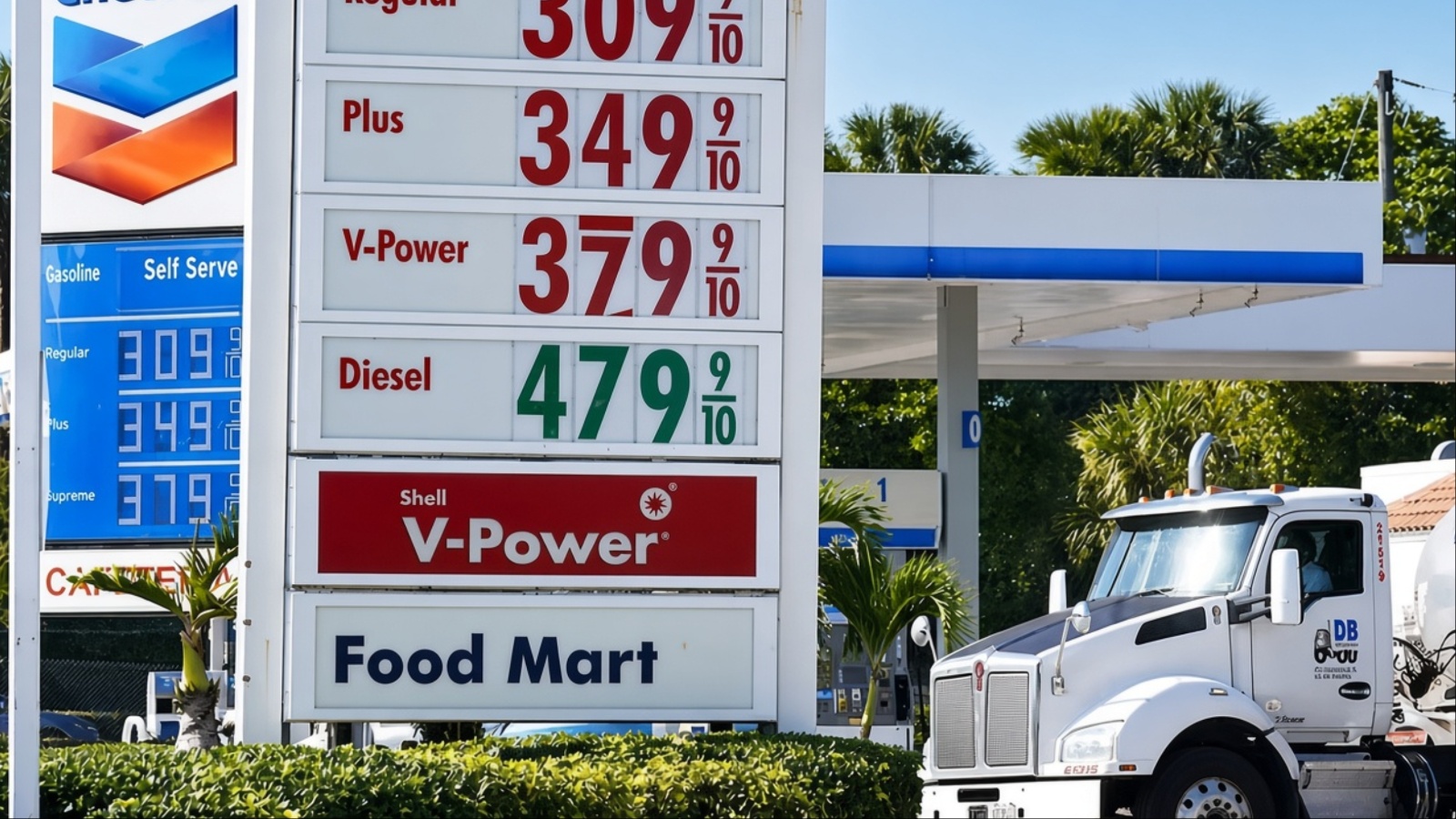
Indiana is currently home to the cheapest gasoline in America, with the state’s average regular gas price sitting at $3.42 per gallon as of September 8, 2026. That was the lowest state average in the country, according to LendingTree’s analysis of AAA data.
The number is notable not only because Indiana is leading the nation on pump prices, but also because its year-over-year increase has been dramatically smaller than almost anywhere else.
Indiana’s average price was $3.16 per gallon on September 8, 2025, meaning the state’s price increased by just 8.3%, or 26 cents per gallon, over the year. By comparison, the national average reached $4.15 per gallon on September 8, 2026, up 29.7% from a year earlier.
There is an important policy factor behind Indiana’s unusually small increase. The state temporarily suspended its gasoline use tax and gasoline excise tax during 2026 as part of an energy emergency declared by Governor Mike Braun.
That raises a broader question for other states. Can a temporary gasoline tax suspension provide meaningful savings for drivers while remaining financially sustainable? The answer involves more than simply measuring the change in pump prices.
Indiana’s Gas Prices Are Much Lower Than the National Average
The difference between Indiana and the national average is substantial. At $3.42 per gallon, Indiana was 73 cents below the U.S. average of $4.15 on September 8. For a driver filling a 15-gallon tank, that difference amounts to roughly $10.95 per fill-up.
A driver who fills that tank twice a month would therefore be paying roughly $263 less per year than if the same amount of gasoline were purchased at the national average, assuming prices remained unchanged.
Indiana was followed by Texas at $3.67 per gallon and Oklahoma at $3.71. California had the highest state average at $5.87, followed by Washington at $5.51 and Hawaii at $5.39. Indiana’s year-over-year performance was even more unusual.
LendingTree’s analysis found that every state experienced higher gasoline prices than a year earlier, but Indiana’s 8.3% increase was by far the smallest. The next-smallest increase was Hawaii at 20.7%, followed by Oregon at 22.9%.
That does not mean Indiana’s gasoline market was isolated from the forces affecting the rest of the country. The state’s prices still rose by 26 cents per gallon over the year.
The difference is that Indiana’s increase was much smaller. The state’s temporary tax suspensions are an important part of that story.
Indiana’s Department of Revenue says the state suspended collection of the Gasoline Use Tax beginning April 8, 2026. The gasoline excise tax was subsequently suspended beginning May 6. The suspensions were extended several times as Indiana responded to elevated gasoline prices.
The state’s gasoline use tax normally operates differently from a conventional retail sales tax. Indiana’s Department of Revenue says it is calculated monthly at 7% of the statewide average retail price of gasoline before tax and is collected at the distributor level rather than directly from consumers at the pump.
The gasoline excise tax is also collected through the distribution system and incorporated into the pump price.
That distinction matters because the tax suspension does not mean drivers receive a separate rebate when they buy gasoline. Instead, suspending the taxes removes certain costs from the fuel supply chain, with the expectation that the savings flow through to retail prices.

Indiana’s Department of Revenue specifically says that suspending these taxes should cause the price to go down accordingly once the fuel reaches the pump.
The Tax Cut Helped, but It Is Not the Only Reason Gas Is Cheap
It would be misleading to say that Indiana’s tax suspension alone created the $3.42 average. Gasoline prices are influenced by crude oil prices, refining costs, transportation expenses, regional fuel markets, inventories, seasonal demand, and competition between retailers. Taxes are only one component of the final price.
Indiana’s geographical position and fuel-market conditions also matter. Still, the timing of the state’s tax suspension and its unusually small year-over-year increase make the policy relevant when examining why Indiana’s prices have diverged so sharply from much of the country.
The state’s government has extended the suspension while attempting to prevent the lost revenue from disrupting transportation spending.
According to the Indiana Department of Revenue, the latest extension covers the Gasoline Use Tax and Gasoline Excise Tax through October 5, 2026.
Governor Braun’s administration has said the state plans to use reserve funds to compensate for the lost transportation revenue. The governor’s office said the state’s reserve balance was projected to exceed $5 billion and that the administration intended to protect state and local infrastructure projects while providing fuel-price relief.
That gets to the difficult part of the debate. Gasoline taxes are not simply another charge collected by a government. They are also an important source of transportation funding.
If a state permanently eliminates or substantially reduces those taxes, it must find another source of money for road construction, maintenance, and other transportation needs.
Indiana is attempting to address that problem through its reserves, but reserves are finite. A temporary suspension can therefore be considerably different from permanently lowering the tax rate.
There is also no guarantee that every dollar of a tax reduction reaches consumers. Retail gasoline prices move constantly, and wholesale costs can change at the same time a tax changes.
That makes it difficult to attribute a specific number of cents of Indiana’s $3.42 average exclusively to the tax suspension.
Should Other States Suspend Their Gas Taxes?
Indiana’s experience provides an interesting case study, but it does not automatically establish that every state should adopt the same policy.
The main argument for a temporary suspension is simple. When gasoline prices increase sharply, reducing or temporarily removing the tax can lower the amount drivers pay at the pump.
For drivers who commute long distances or depend heavily on gasoline, even a modest reduction per gallon can add up. The counterargument involves transportation funding.
States generally collect gasoline taxes specifically to pay for transportation infrastructure. Suspending those taxes therefore creates a budgetary gap that must be covered through reserves, other taxes, borrowing, or spending reductions.
Indiana’s approach depends in part on the state’s ability to draw on reserves while keeping transportation funding intact during the tax suspension. Another important point is that gasoline tax holidays are intended to be temporary measures.
When the suspension ends, some of the taxes will return to the fuel price unless lawmakers or state officials take additional action. That means consumers could see prices rise even if wholesale gasoline costs remain unchanged.
Indiana’s current policy therefore represents more than a simple experiment in lowering fuel prices. It is also a test of whether a state can provide short-term relief while maintaining its transportation budget.
For drivers, the immediate result is clear. Indiana’s $3.42 average was the lowest in America on September 8, and its 8.3% year-over-year increase was the smallest recorded among the states in LendingTree’s analysis. But the bigger lesson requires more caution.
Indiana’s lower gasoline prices coincide with a temporary suspension of two state fuel taxes, but gasoline markets contain many other variables. The policy appears to have contributed to keeping prices lower, yet it cannot by itself explain every difference between Indiana and other states.

For other states considering similar action, the central question is not simply whether drivers would like cheaper gasoline. They almost certainly would.
The more important question is how much relief would reach consumers, how long it would last, and how the state would replace the transportation revenue that normally comes from the tax.
Indiana has provided a real-world example of what happens when a state temporarily removes those taxes during a period of elevated gasoline prices. The $3.42 average shows the potential consumer benefit, while the state’s plans to use reserves highlight the fiscal tradeoff that comes with it.
For now, Indiana drivers are benefiting from both favorable gasoline pricing and an unusual state tax policy. Whether that combination can remain financially sustainable will become clearer when the current suspension expires, and the state decides what comes next.
