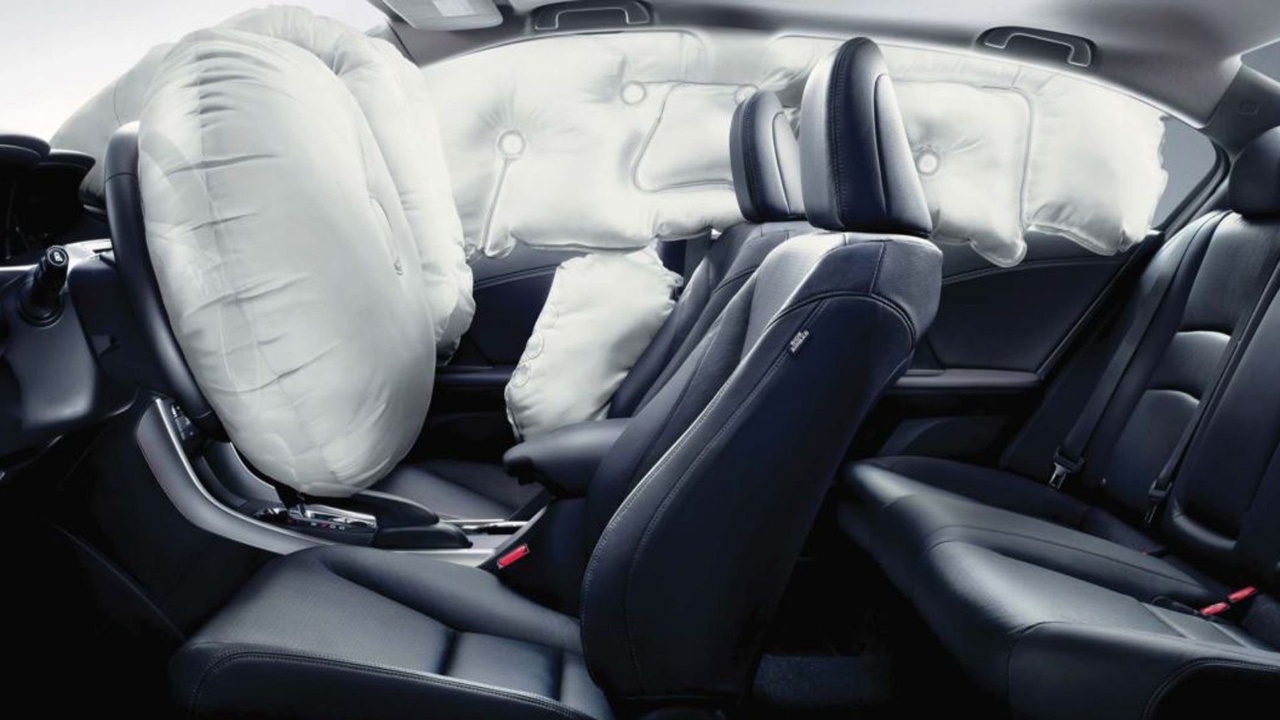
Airbags are designed to reduce serious injuries in crashes, but they are not harmless cushions that can be ignored once installed. NHTSA says frontal airbags have saved more than 50,000 lives over a 30-year period, yet the agency also warns that improper seating can increase the risk of injury when an airbag deploys.
A frontal airbag can inflate in less than 1/20th of a second, leaving very little time for an occupant who is positioned incorrectly to move out of its path. Most airbag-related mistakes involve seating position, restraint use, children, or incorrect repairs. Understanding these errors can make the system work as intended.
1. Sitting Too Close to the Steering Wheel
One of the most common airbag-related mistakes is sitting too close to the steering wheel. NHTSA recommends keeping at least 10 inches between the center of the steering-wheel airbag cover and the driver’s breastbone. This provides more space for the airbag to deploy before the occupant moves into its path.
The reason is speed. NHTSA says a frontal airbag can inflate in less than 1/20th of a second. During that deployment, the airbag rapidly moves toward the occupant before spreading out to provide protection.
A driver sitting unusually close can therefore encounter the airbag during its initial deployment phase, when the forces involved can contribute to serious injury.
Being close to the wheel is sometimes unavoidable for a very short driver, but moving the seat forward is not the only way to reach the pedals. NHTSA guidance recommends moving the seat rearward as far as practical while still allowing comfortable control of the pedals.

Adjusting the steering wheel and seat position can also help create additional space. NHTSA’s guidance specifically notes that drivers should still maintain the 10-inch minimum even with advanced frontal airbag systems.
The key point is that the 10-inch measurement is taken from the breastbone to the center of the airbag cover, not simply from the driver’s knees or the edge of the steering wheel. Proper positioning gives the restraint system the space it was designed to use.
2. Driving Without Wearing the Seat Belt
An airbag is not a replacement for a seat belt. Treating it as one is another mistake that can turn a crash into a more serious injury event. NHTSA describes airbags as supplemental protection and specifically says they are designed to work with seat belts, not replace them.
The two systems perform different jobs. A seat belt helps hold the occupant in the proper seating position and limits how far the body moves during a crash.
The airbag then provides additional protection for the head and upper body. Without the belt, an occupant can move forward or sideways before the airbag has fully deployed, changing the position at which the body encounters the restraint.
NHTSA’s seat-belt data illustrates why this matters. In 2024, 22,713 passenger-vehicle occupants were killed in crashes in the United States, and 48% of those occupants were unrestrained. NHTSA also reports that seat belts saved an estimated 14,955 lives in 2017.
Going unbelted creates another serious risk. An occupant can strike the steering wheel, dashboard, windshield, another person, or other parts of the interior before the airbag can provide its intended protection. NHTSA also warns that occupants who are not wearing seat belts can be thrown against the vehicle interior or ejected from the vehicle.
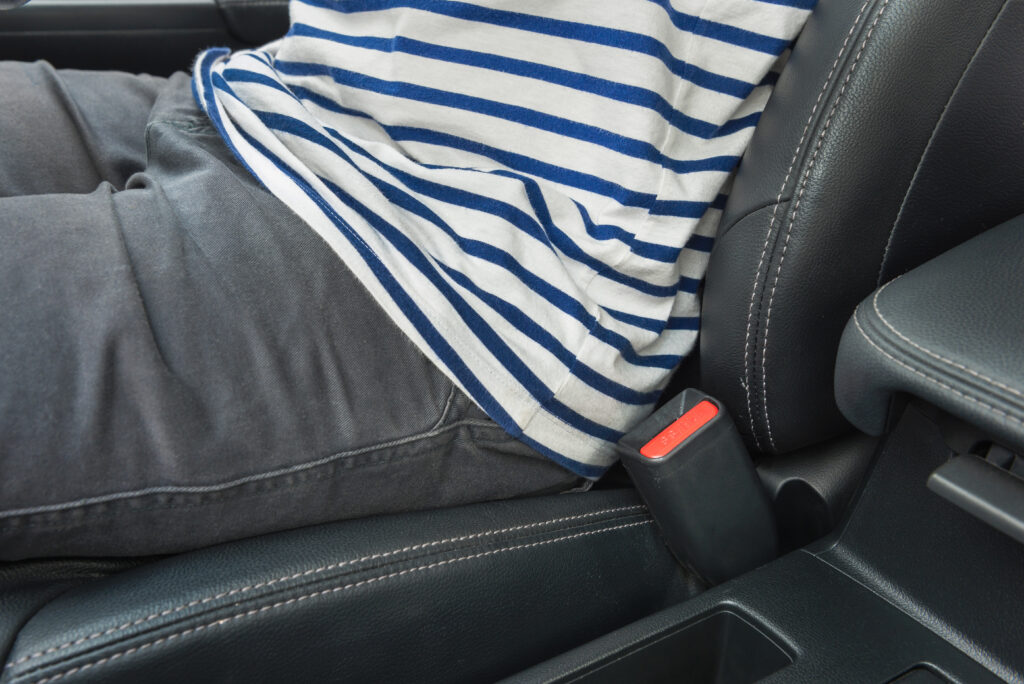
The safest sequence is simple but important. Sit in the proper position, buckle the seat belt correctly, and maintain the recommended distance from the airbag. The airbag and belt are engineered as a combined restraint system, so removing one part of that equation changes the protection available in a crash.
3. Putting a Rear-Facing Child Seat in Front of an Active Airbag
One of the most dangerous airbag mistakes involves a child restraint being placed in the wrong position. NHTSA specifically warns that a rear-facing child seat must never be placed in front of an active frontal airbag.
The reason is straightforward. A rear-facing infant seat is positioned directly in the path of the passenger airbag. When the airbag deploys, it can strike the child restraint with tremendous force, creating a serious hazard instead of providing the protection intended for an adult passenger.
This is why NHTSA recommends that children under 13 ride in the back seat. The agency also says children should be secured in the appropriate restraint for their age and size, including rear-facing seats, forward-facing seats, booster seats, or seat belts as appropriate.
Advanced airbag technology does not change that basic recommendation. NHTSA specifically states that even vehicles with advanced frontal airbags should not be treated as a reason to put children in the front seat.
Parents sometimes move a child seat forward because they want easier access to the child or because the rear seat is occupied. That convenience can create a serious safety problem. The front passenger seat is exposed to an airbag designed to deploy extremely rapidly, with NHTSA stating that deployment occurs in less than 1/20th of a second.
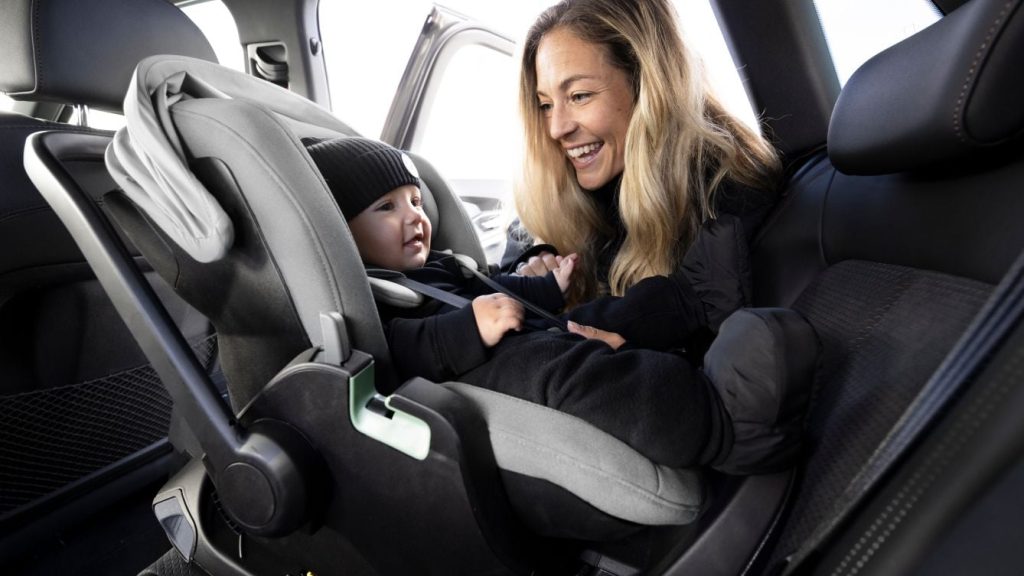
The safer approach is to keep children in the rear seat and install the restraint according to both the vehicle owner’s manual and the child-seat manufacturer’s instructions.
If a child must be transported in the front under a specific circumstance, the vehicle’s instructions should be followed carefully, including any requirements for disabling the passenger airbag.
4. Ignoring the Airbag Warning Light
An illuminated airbag warning light is not a dashboard message that should be treated like a minor convenience-system fault. It can indicate that part of the supplemental restraint system has detected a problem, and ignoring it can leave an occupant without the protection expected from the system during a crash.
NHTSA explains that vehicles equipped with airbag systems have a readiness indicator visible from the driver’s seating position. The purpose of that indicator is to alert occupants to problems with the airbag system.
NHTSA also recommends that safety systems, including airbag systems and related components, be restored or repaired when they are damaged or no longer functional.
The mistake is particularly easy to make after purchasing a used vehicle. A buyer may see the warning light and assume it is simply an old electronic fault, especially if the car drives normally.
But an airbag system can have a problem even when the engine, transmission, brakes, and other major systems appear to work correctly. The restraint system has a separate role that becomes critical only when a crash occurs.
NHTSA also warns that a vehicle’s previous crash history matters. An airbag can deploy only once, and the agency recommends replacing deployed airbags after a crash before the vehicle is driven again. A vehicle that has suffered a previous collision may therefore require inspection of its airbags, sensors, seat belts, and other restraint components.
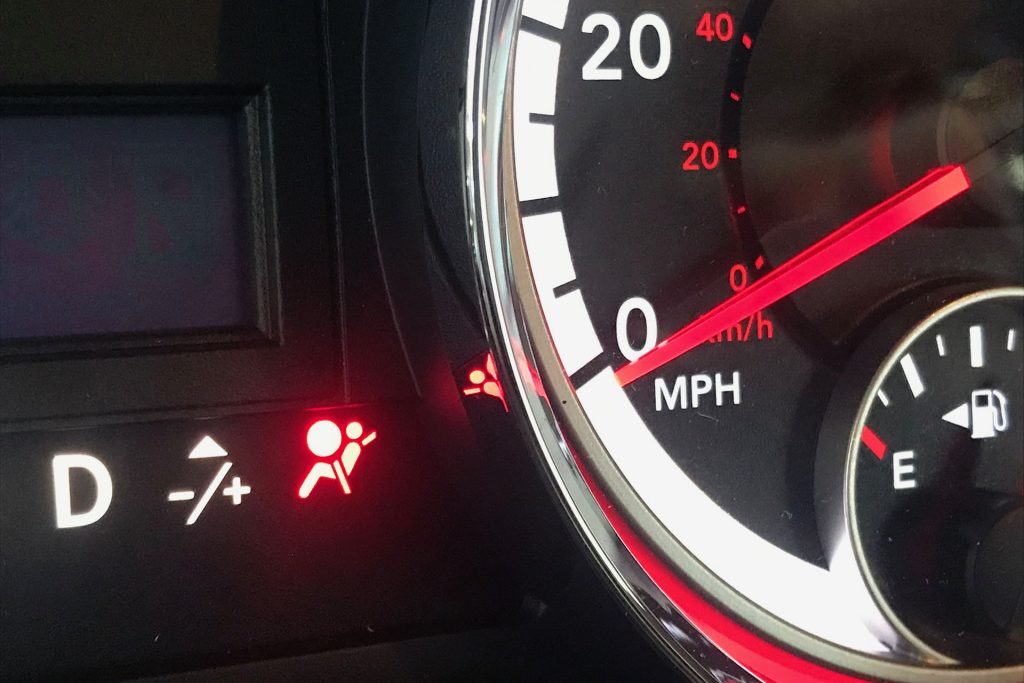
A warning light should never be covered, disconnected, or otherwise ignored to make the dashboard appear normal. If it remains illuminated, the vehicle should be inspected by a qualified technician who can diagnose the restraint system properly.
The goal is not simply to make the warning disappear. The system needs to function when the moment comes when it is actually needed.
5. Placing Your Hands or Arms in the Airbag’s Deployment Path
Where you place your hands on the steering wheel matters when an airbag is present. The steering wheel is not simply a place to rest your hands while driving. It contains a restraint system that can deploy with extraordinary speed during a crash.
NHTSA says a frontal airbag can inflate in less than 1/20th of a second, and serious injuries can occur when a person is too close to the airbag or comes into direct contact with it as deployment begins.
That makes unusual hand positions worth avoiding. A driver who keeps a hand over the center of the steering wheel, for example, places the hand directly over the airbag module. During deployment, that hand can become part of the deployment interaction rather than remaining safely positioned around the steering wheel rim.
The same principle applies to arms and other objects positioned between the occupant and the airbag. The system was engineered around expected occupant positioning, not around hands, accessories, or objects placed over the airbag cover.
NHTSA has also issued a specific warning about aftermarket decorative steering-wheel decals. In one documented case, a metal decorative emblem with rhinestones became dislodged when the airbag deployed and struck the driver’s face and neck.

NHTSA reported another driver suffered a severe eye injury from a similar product. The agency warns that altering the airbag cover can interfere with proper operation and turn an accessory into a dangerous projectile.
Keeping both hands on the steering wheel in a normal driving position and leaving the airbag cover unmodified avoids adding unnecessary hazards to a system already designed to react within milliseconds.
6. Installing a Cheap or Counterfeit Replacement Airbag
Buying a replacement airbag based primarily on price can create a danger that is invisible until the instant of a crash. NHTSA has warned that counterfeit and substandard replacement airbags have appeared in the U.S. market, particularly in vehicles that previously suffered crashes.
Unlike an original airbag system engineered for a particular vehicle, a counterfeit or improperly manufactured replacement may fail to deploy correctly or can release dangerous fragments during deployment.
This issue is especially important when buying a used vehicle with a crash history. An airbag may have already deployed before the vehicle was repaired and returned to the road.
NHTSA advises consumers to investigate vehicle history and ensure that genuine replacement components have been installed. The agency says counterfeit airbags have been shown to malfunction in ways ranging from failing to deploy to ejecting metal shrapnel.
NHTSA’s current warning about certain replacement inflators demonstrates how serious the problem can become. The agency says 14 crashes involving DTN60DB replacement inflators have resulted in 11 deaths and three severe injuries.
These inflators were likely illegally imported and had been installed as replacement equipment, often after an earlier crash or theft. NHTSA specifically tells owners not to attempt to inspect or remove suspicious airbags themselves.
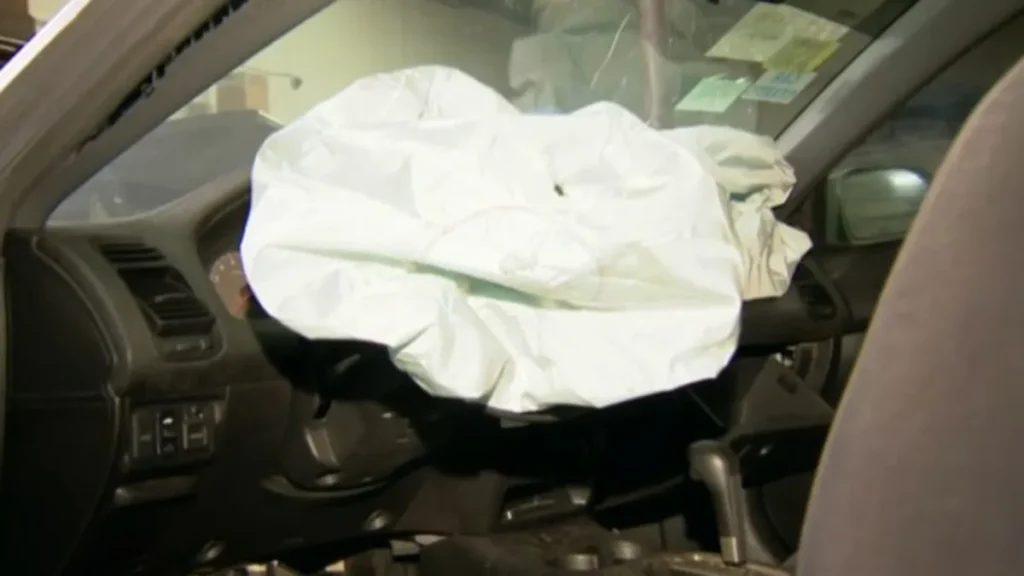
There is also a broader lesson from the Takata recalls. NHTSA says approximately 67 million Takata airbags in the U.S. were recalled because prolonged exposure to heat and humidity could cause inflators to explode during deployment.
A replacement airbag is therefore not a component to source casually. After a crash, the restraint system should be repaired using appropriate parts by a qualified repair facility. A steering wheel that looks normal from the driver’s seat does not prove that the airbag hidden behind it is safe.
7. Leaning Against a Seat-Mounted Side Airbag
A comfortable driving position can become a dangerous one when an occupant leans directly into the area where a side airbag is designed to deploy. Unlike a steering-wheel airbag, a seat-mounted side airbag is typically housed in the outer edge of the seatback.
NHTSA explains that these airbags are designed to inflate when sensors detect a moderate-to-severe side impact and help protect the torso and pelvis.
That location makes body position particularly important. NHTSA specifically advises drivers and front passengers to sit upright rather than leaning into the deployment path of a side airbag.
Leaning against the door or resting the upper body heavily against the seat’s outer bolster can place the occupant closer to the airbag module than the system’s intended seating position.
The risk is not limited to adults. NHTSA has conducted research into side-airbag interactions with occupants who are out of their intended seating positions, including children. The agency’s research has examined how occupant positioning can affect the potential for injury during deployment.
This is also why the shape and position of a vehicle seat matter. Side airbags are integrated into the seat structure, rather than simply attached like an ordinary accessory. NHTSA warns against covering or replacing front seatback covers without consulting the vehicle manufacturer or dealer because an improper cover can interfere with deployment.
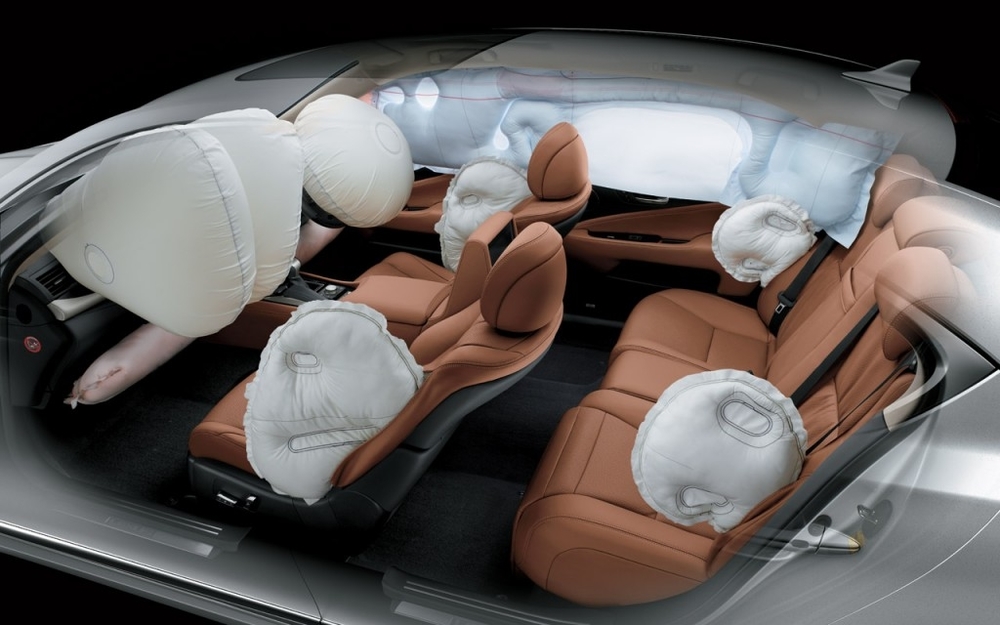
The safest approach is simple. Sit upright with your body centered in the seat, and avoid leaning against the side of the seatback. Side airbags are designed around a specific occupant position, so maintaining that position helps the restraint system work as intended.
8. Covering or Modifying the Area Around a Side Airbag
Adding accessories to a car’s interior can seem harmless when the modification involves something as simple as a seat cover, cushion, organizer, or decorative attachment. The problem is that a side airbag may be hidden inside the very seatback being modified.
NHTSA warns that accessories attached to or near side airbags can interfere with their operation or potentially hurt an occupant when the airbag inflates.
Seat covers deserve particular attention. NHTSA has addressed aftermarket seat covers in connection with seat-mounted side airbags and explains that manufacturers must account for safety-related defects involving such equipment.
The agency has also noted that vehicle manufacturers use seat-mounted airbags as part of the system designed to meet federal side-impact protection requirements.
The problem is easy to miss because a covered seat can look completely normal. A seat cover may fit tightly, feel comfortable, and remain securely attached during everyday driving while still interfering with the opening or deployment path of an airbag.
The same concern applies to cushions, straps, pockets, mounted accessories, or other objects placed around an airbag module.
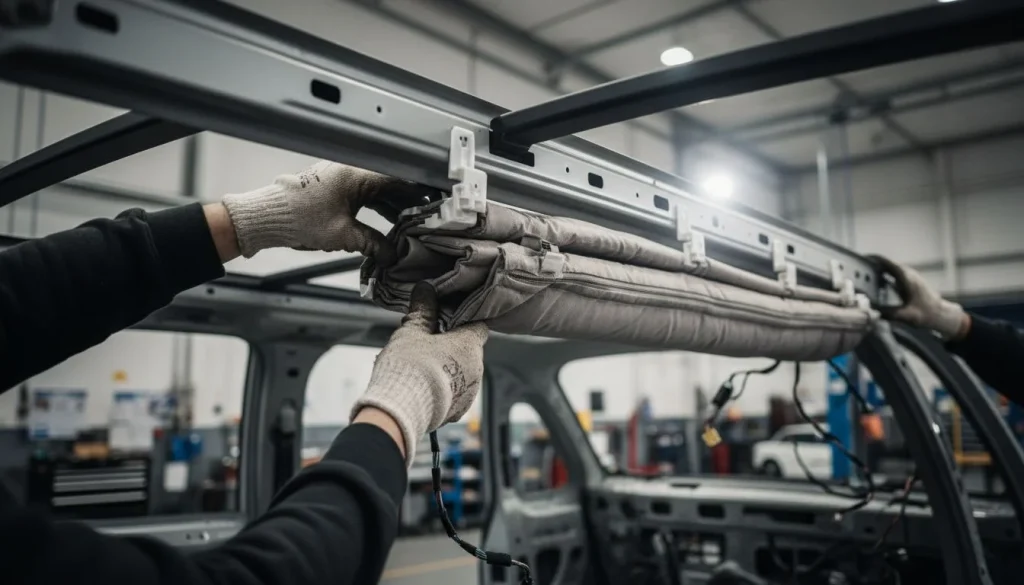
NHTSA’s side-airbag guidance says not to attach accessories on or near these airbags and advises against covering or replacing front seatback covers without consulting the dealer.
This is one area where the owner’s manual matters more than generic aftermarket advice. If the seat carries a side-airbag label, assume that the surrounding upholstery and deployment area have a specific safety purpose. Before installing a seat cover or accessory, verify that it is compatible with the vehicle’s airbag system and that the manufacturer permits its use.
The important distinction is that an accessory does not have to touch the airbag itself to create a problem. Changing the material, attachment method, or deployment opening around an integrated restraint can alter how the system works when milliseconds matter most.