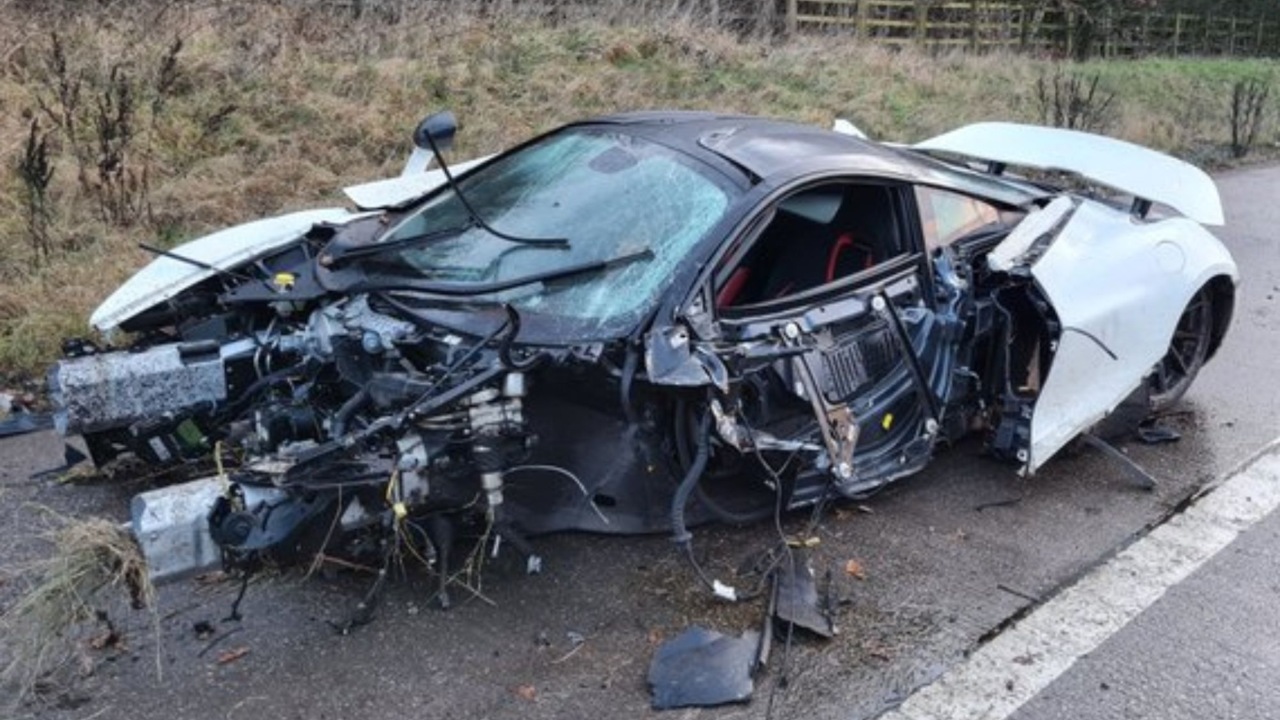
A modern car is not designed to remain intact during a serious crash. Some components are deliberately engineered to deform, tear, compress, or deploy because absorbing crash energy is more important than preserving the vehicle’s appearance.
NHTSA describes crush structures as areas designed to absorb energy during a frontal impact, while occupant-protection systems work to control the forces reaching people inside the cabin.
The surprising part is that many of the components that look “damaged beyond repair” after a severe collision may have performed exactly as engineers intended. From sacrificial front structures to airbags that deploy once and must be replaced, these are some of the most important parts of a car designed to give up their lives for the people inside.
1. Front Crumple Zones
The front end of a modern car is not supposed to behave like an indestructible wall. Much of the structure ahead of the passenger compartment is deliberately engineered to deform during a serious frontal collision.
NHTSA research describes crush structures as components that experience controlled crushing to absorb crash energy before it reaches the occupant compartment.
That means a severely damaged hood, fender, or front structural section does not automatically indicate that the car was poorly built. In a serious collision, visible destruction at the front can be evidence that the vehicle used its available crush distance as intended.
The engineering challenge is enormous. A moving vehicle contains kinetic energy, and that energy has to go somewhere during a collision. Engineers design specific structures to deform progressively so the vehicle can decelerate over a greater distance and time.
NHTSA’s research explains that shorter crush distances can produce greater occupant deceleration, which is why available crush distance is an important consideration in frontal-impact protection.
The passenger compartment is treated differently. Engineers generally seek to maintain enough structural integrity around occupants while allowing designated areas ahead of the cabin to absorb energy.
This creates an unusual visual result after a crash. The front of the vehicle may look dramatically destroyed while the cabin appears comparatively intact. That contrast is not accidental. It represents two different structural objectives.
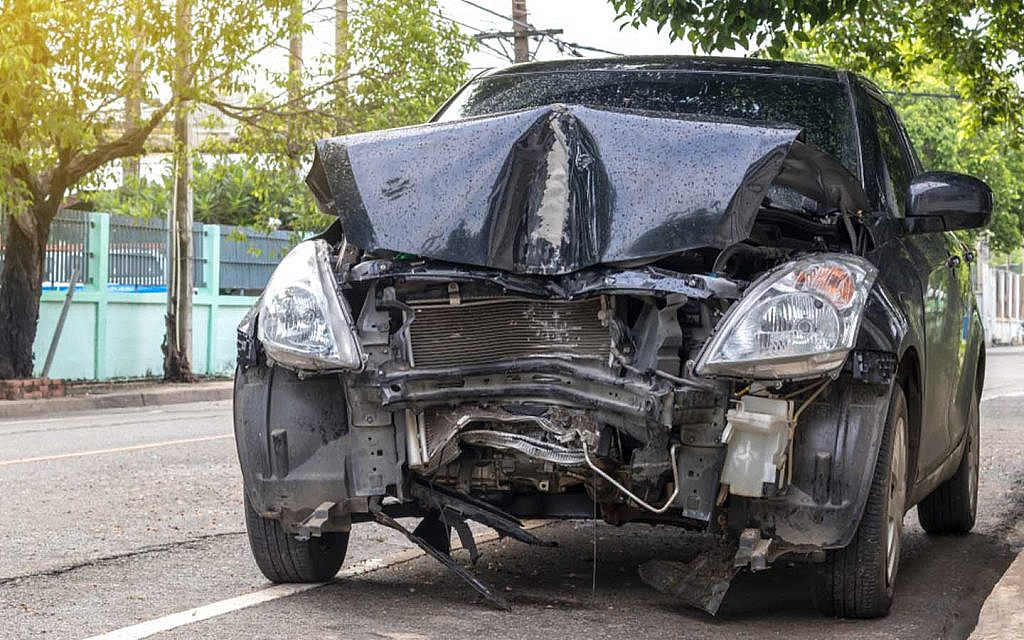
Crumple zones are therefore “destroyed” by design. Their job is not to bounce back into their original shape. Their job is to deform and absorb energy during the crash.
NHTSA’s crashworthiness program specifically focuses on vehicle design and safety countermeasures intended to reduce fatal and serious injuries.
2. Front Bumper Energy-Absorbing Structures
The bumper system is another part of the vehicle that can be sacrificed during an impact. Its purpose is not simply to keep the vehicle looking good after a collision. Components within the bumper assembly can help manage crash energy and protect other vehicle structures during certain impacts.
Modern bumper systems can include an outer cover, reinforcement beam, energy absorber, and various mounting structures. Their construction differs considerably from one vehicle to another, but the basic principle remains the same. Not every component behind the bumper is designed to stay perfectly straight after an impact.
NHTSA’s regulatory framework includes requirements addressing bumper performance, and agency interpretations recognize the importance of energy absorption and controlled deformation in vehicle structures.
NHTSA has explained that energy-absorbing structures can be designed to undergo plastic deformation during a crash rather than simply transferring the impact back into another vehicle.
That distinction matters. A structure that remains extremely rigid is not automatically safer. If it transfers more crash energy directly into other structures, the forces experienced by occupants can increase.
The bumper therefore represents a compromise between low-speed protection, pedestrian considerations, vehicle structure, and crash-energy management.
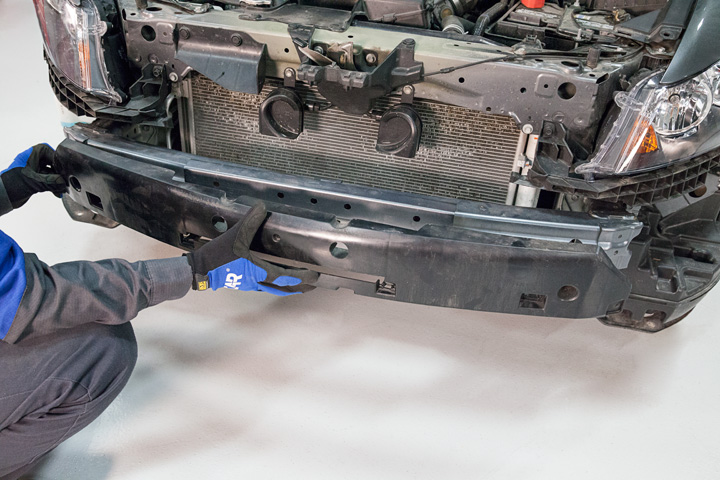
After a collision, the exterior cover may spring back into a seemingly acceptable shape while hidden components behind it have been damaged. The reverse can also happen, with visible damage that does not necessarily mean the primary passenger compartment has been compromised.
This is why collision repair cannot safely be based only on what is visible from outside. Proper inspection can reveal damage to reinforcement members, mounting points, and other components that are not obvious from the exterior.
The bumper is therefore not simply a decorative shield. It is one part of a larger crash-management system designed to control what happens when the vehicle suddenly encounters another object.
3. Seat Belt Pretensioners
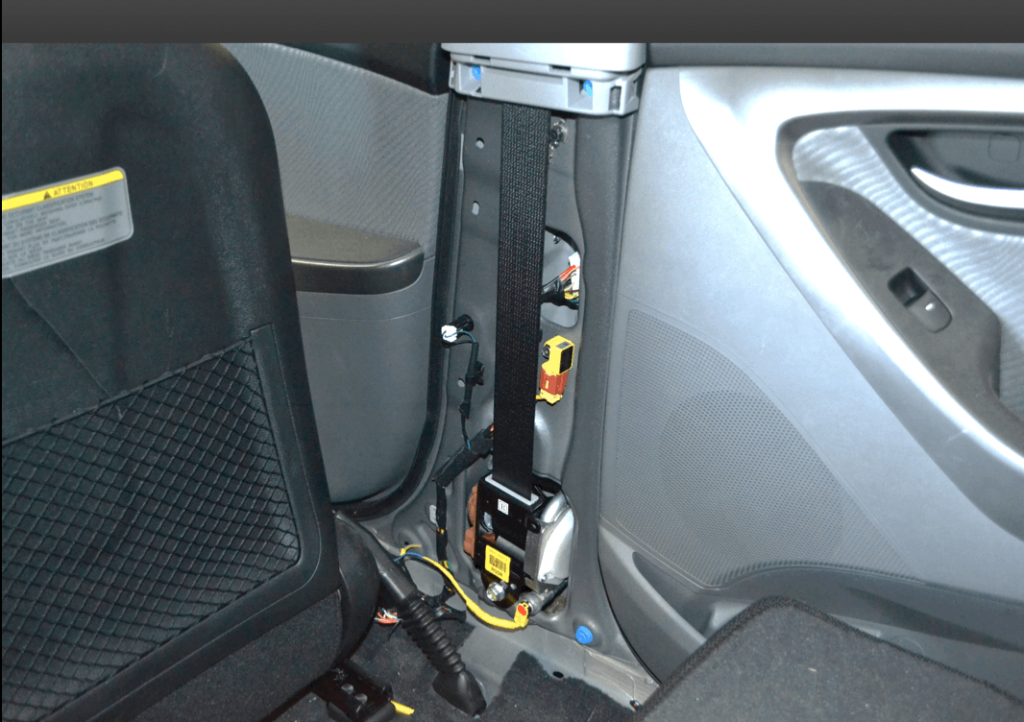
A seat belt may look like one of the least complicated components inside a vehicle, but modern restraint systems contain pyrotechnic devices specifically designed to activate during a crash. Seat belt pretensioners are among the components that are effectively sacrificed when they perform their job.
NHTSA explains that advanced three-point restraint systems can include pretensioners that pull the belt tight and remove excess slack during a crash. The agency describes the three-point belt as one of the most important occupant-protection technologies in automotive history.
The reason pretensioning matters is timing. At the beginning of a crash, the occupant and vehicle do not instantly move at the same rate. A small amount of slack between the person and belt can allow additional forward movement before the restraint fully loads.
A pretensioner acts rapidly to reduce that slack. Depending on the vehicle, the device may be integrated into the buckle, belt retractor, or another part of the restraint assembly.
After deployment, the pretensioner may need replacement even if the belt itself looks perfectly normal. The mechanism is designed for crash operation rather than repeated deployment.
This is one reason a used vehicle that has been involved in a major collision needs more than a visual inspection of the seat belts. A belt can appear clean and functional while a crash-activated component requires replacement.
NHTSA’s safety guidance also stresses that airbags and seat belts are designed to work together rather than independently. In 2024, nearly half of passenger-vehicle occupants killed in crashes were unrestrained, based on known restraint-use information.
The pretensioner therefore represents a fascinating engineering tradeoff. It is a component designed to become unusable when it performs its most important job.
4. Frontal Airbags
A deployed airbag is perhaps the most obvious example of a vehicle component designed to be used once. The fabric cushion inflates extremely rapidly during a qualifying crash, provides a protective surface between the occupant and parts of the vehicle interior, and then remains deflated.
NHTSA states that frontal airbags have saved more than 50,000 lives over 30 years. The agency also explains that airbags are supplemental restraints designed to work together with seat belts.
The deployment process happens extraordinarily quickly. NHTSA says an airbag can inflate in less than 1/20th of a second after the system determines deployment is appropriate.
That speed explains why the airbag itself cannot simply be folded back into its original condition after deployment. The inflator, cushion, and associated components have undergone a one-time crash event.
Airbags also are not designed to deploy in every collision. NHTSA explains that deployment depends on factors including crash characteristics, direction, speed, sensor locations, and the specific vehicle’s airbag strategy.
After a deployment, NHTSA recommends replacing used airbags before driving the vehicle again.
This is important when evaluating a repaired vehicle. A dashboard that looks normal does not prove that the restraint system has been properly restored. A professional repair should address the complete airbag system and associated crash sensors and components as required for that vehicle.
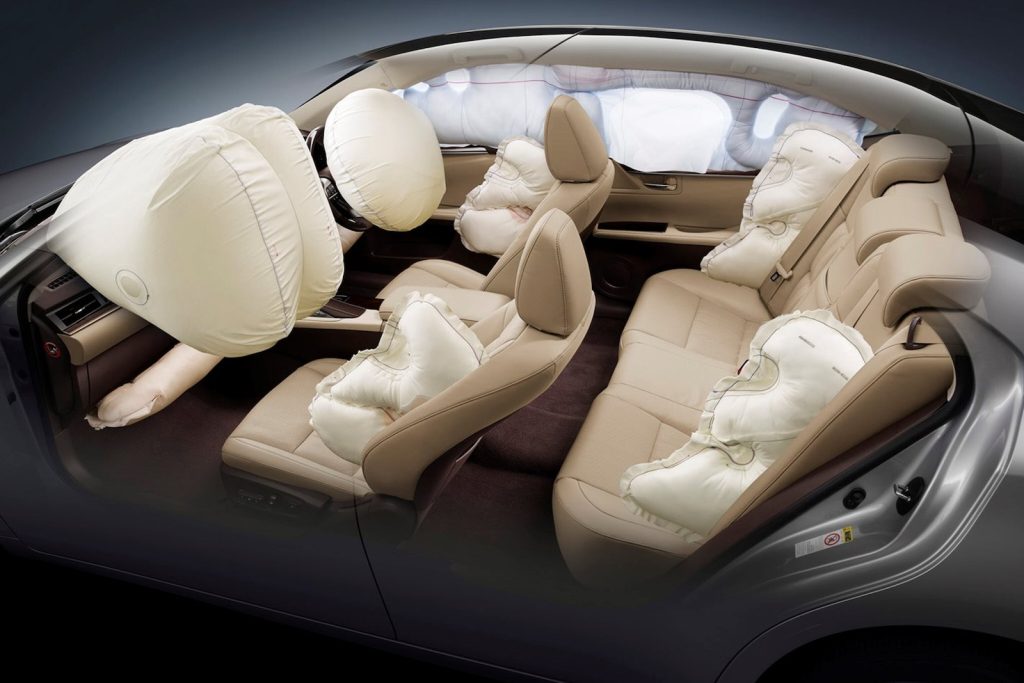
The airbag is therefore not a reusable cushion. It is a deliberately sacrificial safety device that spends its entire useful life in a fraction of a second.
5. Steering Column Energy-Absorbing Components
The steering wheel and column have a basic purpose, allowing the driver to control the vehicle. During a severe frontal crash, however, these components also play an important role in protecting the driver from injury.
NHTSA has long regulated driver protection from the steering control system under FMVSS No. 203. The purpose is not simply to keep the steering wheel attached to the vehicle. The system is designed with occupant protection in mind.
Modern steering columns can incorporate structures intended to deform or collapse in a controlled manner under specific crash loads. The idea is to prevent the steering column from acting as an excessively rigid structure that transfers unnecessary forces toward the driver.
This is another case where “stronger” does not automatically mean “safer.” A steering assembly that never moved during a collision could expose the occupant to a more severe interaction with the steering wheel.
Energy management has therefore become an important part of steering-system engineering. The column has to remain sufficiently rigid for normal steering operation while also providing an appropriate crash response.
The steering wheel itself works with the driver’s airbag and seat belt. NHTSA notes that frontal airbags are designed to reduce the chance of the upper body or head striking the vehicle interior, while proper seat-belt use remains essential.
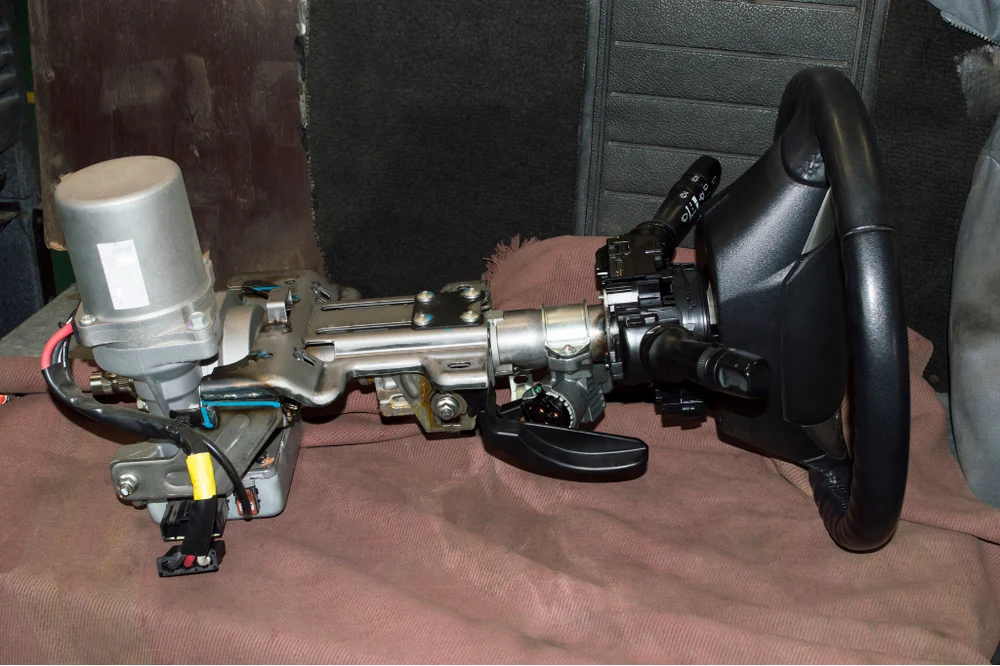
After a significant crash, steering components should therefore never be judged solely by whether the wheel still turns. Deformation can occur inside the column, or its mounting structure, and restraint-system deployment can involve nearby components.
The steering column reflects a basic principle of modern crash engineering. Some components need to be strong enough for normal operation while also being designed to deform in a controlled manner when subjected to extreme forces.
6. Side-Impact Door Structures
A vehicle door looks like a large sheet of metal, but modern doors contain structural components designed to help manage side-impact forces. Unlike a frontal crash, a side collision provides comparatively little space between the outside of the vehicle and the occupants, making structural protection especially challenging.
NHTSA’s crashworthiness program includes side-impact protection, with agency test procedures covering dynamic side-impact performance and rigid-pole impacts.
Inside a modern door, reinforcements can help prevent excessive intrusion into the passenger compartment. These components may deform during a severe collision rather than remaining perfectly straight.
The objective is not to make the door impossible to deform. A completely rigid structure could transmit significant forces directly through the vehicle. Instead, engineers balance strength, controlled deformation, and occupant protection.
The door also works as part of a larger side-impact system. Side airbags can deploy extremely quickly because the available distance between an occupant and an intruding object can be small. NHTSA explains that side airbags inflate even more rapidly than frontal airbags because there is less space between the occupant and the striking object.
That means the door structure and restraint system are working together rather than functioning as isolated safety devices.
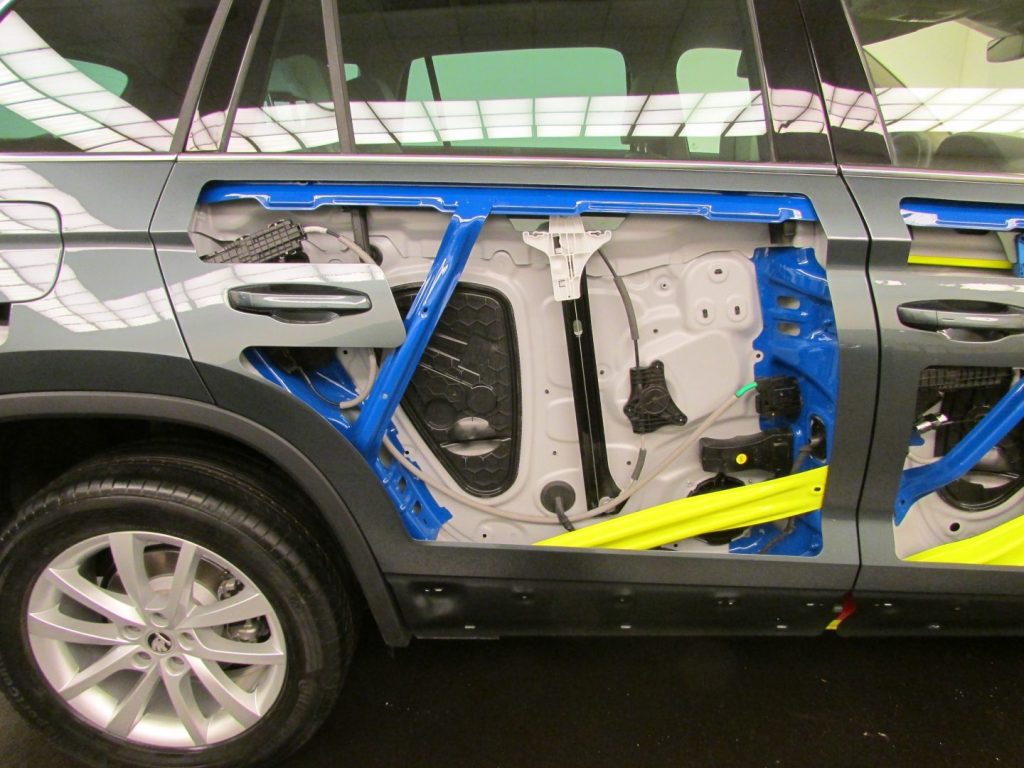
After a side impact, the exterior door may look like the most obvious damaged part, but the structural components inside it can be equally important. Repairing only the outer skin does not necessarily restore the original crashworthiness.
This is why collision repair procedures specify which structural components can be repaired or replaced,d or must not be reused after certain types of damage.
A side-impact door is therefore not merely a movable piece of bodywork. It is a structural part of the vehicle’s occupant-protection strategy, and some of the material inside it may be designed to absorb or redirect crash forces by deforming.
7. Roof Structures and Roof Crush Areas
The roof is not designed to collapse during an ordinary crash, but portions of the roof structure are engineered to manage severe loads. This becomes particularly important during rollover crashes, where the roof and surrounding structure can experience substantial forces.
NHTSA has a dedicated FMVSS 216 roof-crush resistance test procedure, demonstrating that roof strength is an explicit part of federal vehicle safety requirements.
The engineering objective is different from that of a front crumple zone. In a frontal crash, designers deliberately provide crush distance ahead of the cabin. In a rollover, the passenger compartment must retain sufficient structural integrity to protect occupants.
That means the roof cannot simply be made as soft as possible. It has to resist deformation while managing the loads transferred through pillars, roof rails, and other structural members.
A severe rollover can still cause extensive roof deformation. When that happens, some components may bend or permanently deform while other areas are intended to maintain a survivable occupant space.
The roof also interacts with restraint systems. Seat belts help keep occupants positioned within the vehicle, while side-curtain airbags can provide additional protection around the head area during certain crashes.
NHTSA emphasizes that seat belts are essential because they help keep occupants inside the vehicle and properly positioned during a crash.
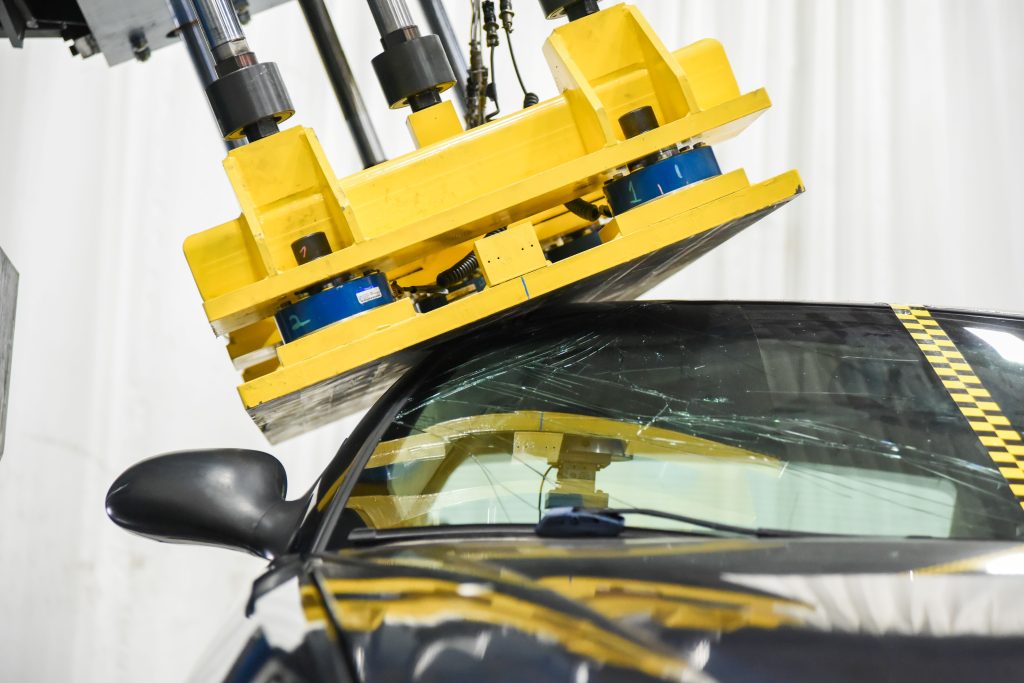
After a rollover, the roof should therefore be considered structural damage rather than merely cosmetic damage. A vehicle that appears to have been straightened externally may still require careful structural inspection.
The roof is an excellent example of the different priorities built into a modern vehicle. The front structure is deliberately designed to crush, while the occupant compartment, including the roof structure, is designed to resist excessive intrusion and preserve space for the people inside.
8. Rear Crash Energy-Absorbing Structures
The rear of a vehicle also contains structures designed to manage crash energy. While the specific architecture differs between vehicles, rear longitudinal members, bumper structures, and other components can deform during an impact to help control the forces transmitted into the passenger compartment and surrounding vehicle structure.
The concept follows the same basic principle used throughout crash engineering. Controlled deformation can help absorb crash energy, and NHTSA research on crush structures explains that components need to deform and crush to dissipate energy during a collision.
The rear structure also serves an important protective function by helping shield the fuel system, battery, suspension, and other critical components. Engineers must balance energy absorption with the need to limit potentially dangerous intrusion into these areas during a crash.
That is particularly important because the severity and direction of rear impacts vary enormously. A low-speed parking collision and a high-energy highway impact can produce completely different damage patterns.
A rear bumper cover can therefore look relatively minor while the structure underneath has absorbed substantial energy. Conversely, visible bumper damage does not necessarily mean the passenger compartment has suffered structural deformation.
The same caution applies when evaluating repaired vehicles. A rear-end collision that appears to have been repaired cosmetically may have involved deformation of structural members that require measurement and proper restoration.
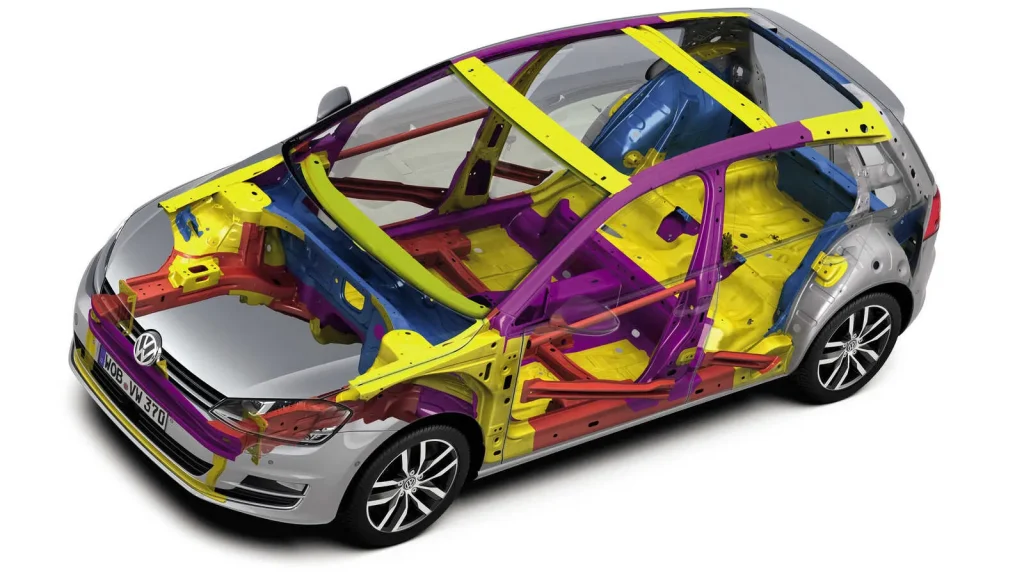
Modern crash design is not about making every part of a vehicle equally rigid. Instead, engineers determine where structures should deform and where they should maintain strength.
The rear crash structure is one more example of that philosophy. Its job is to give up some of its shape and structural capacity during a sufficiently severe impact so that other parts of the vehicle can better perform their protective roles.
9. Seat Belt Load Limiters
Seat belt load limiters are another component that demonstrates how restraint systems are designed to manage energy rather than simply hold occupants rigidly in place. They work alongside pretensioners and the belt itself to control the forces transmitted to an occupant during a crash.
NHTSA describes the three-point seat belt as a fundamental occupant-protection technology and explains that advanced restraint systems can incorporate pretensioners to remove slack during a crash.
A load limiter has a different purpose. Once the belt is engaged and the occupant begins loading the restraint, the system can permit a controlled amount of belt movement under sufficiently high forces. The objective is to manage the force placed on the occupant rather than simply maximizing restraint force.
This illustrates why modern restraint systems are more sophisticated than the basic lap belts found in older vehicles. Engineers are attempting to manage occupant movement through several stages of a crash.
The belt first needs to keep the occupant positioned correctly. Pretensioning can remove slack early in the crash sequence. Load-limiting behavior can then help control belt forces as the occupant interacts with the restraint.
All of these functions work in conjunction with the vehicle’s crash structure and airbags. NHTSA specifically warns that airbags are supplemental restraints and work best when occupants are properly restrained by seat belts.
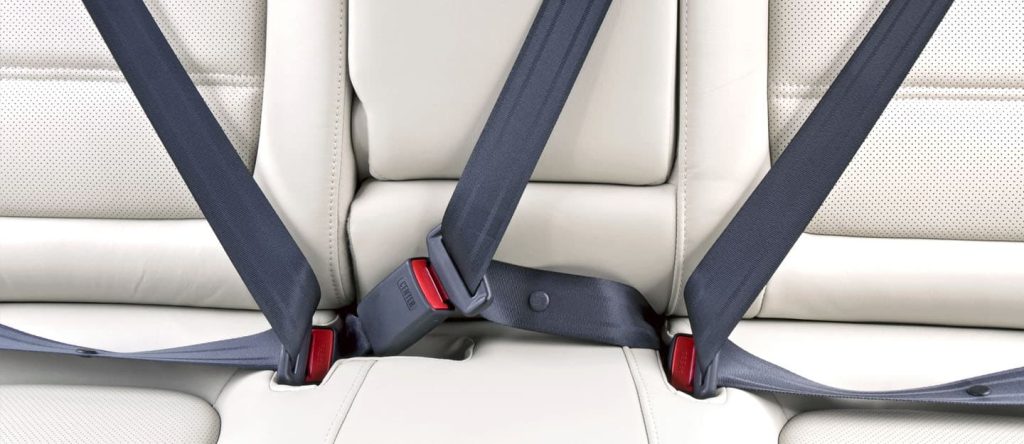
After a significant crash, the restraint system may therefore require replacement even if the belt webbing looks undamaged. Some components may have activated internally without obvious exterior evidence.
The seat belt is consequently not just a strap. It is an engineered crash-management system containing components that may deliberately change, deform, or activate during a collision.
10. Interior Energy-Absorbing Materials
The final category is easy to overlook because these components are not usually visible until a crash occurs. Interior trim, padding, head restraints, seat components, and other occupant-contact surfaces are designed with impact protection in mind.
NHTSA’s FMVSS No. 302 addresses the burn resistance of materials used inside motor-vehicle occupant compartments.
NHTSA documentation specifically identifies items including seat cushions, seat backs, headlining, armrests, trim panels, head restraints, floor coverings, and other interior materials, including crash-deployed elements designed to absorb energy when occupants contact them during a crash.
That last point is important. The interior is not simply decorative. Engineers consider what happens when an occupant moves violently relative to the cabin during a collision.
Head restraints, for example, help limit unwanted head and neck movement in appropriate crash situations. Seat structures also contribute to occupant positioning, while padding and trim can reduce the severity of contact with interior surfaces.
The dashboard and door areas similarly contain materials intended to interact with occupants in a controlled manner. Some components may crack, deform, or become damaged during a severe crash rather than remain rigid.
The interior therefore represents another form of controlled sacrifice. A piece of trim may need to deform or break so that it does not present the same hazard as a rigid structure.
This principle connects directly with NHTSA’s broader crashworthiness program, which focuses on reducing fatal and serious injuries through vehicle design, occupant restraints, and safety countermeasures.
The most important point is that crash damage should not be judged by appearance alone. A vehicle can look badly damaged in areas specifically engineered to absorb energy, while hidden occupant-protection structures may have performed exactly as designed.
Modern crash safety follows a carefully balanced approach. Some vehicle structures are designed to remain intact during a collision, while others are engineered to deform and absorb energy to help protect the occupants.