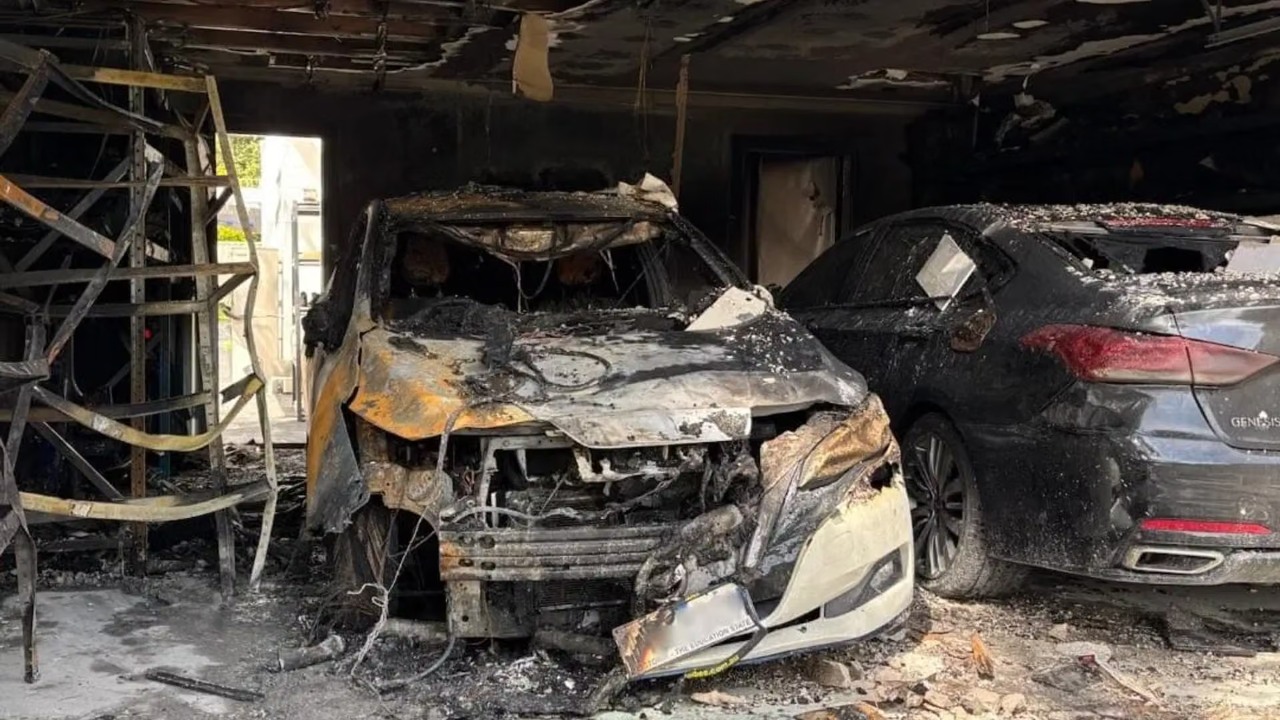
A vehicle fire rarely begins with flames appearing out of nowhere. In many cases, there are warning signs involving wiring, fluids, abnormal temperatures, fuel odors, or electrical components before a fire develops.
The National Fire Protection Association identifies mechanical and electrical problems among the common causes of vehicle fires and specifically warns drivers to pay attention to burning rubber or plastic odors, smoke, fluid leaks, damaged wiring, and unusual changes in engine temperature.
Recognizing these signs does not mean every symptom will lead to a fire, but ignoring several of them can allow a small defect to become a much more dangerous event. Here are ten specific warning signs worth taking seriously.
1. Electrical Wiring That Is Damaged, Loose, or Repeatedly Blowing Fuses
Electrical problems deserve more attention than they often receive because wiring can become an ignition source when insulation is damaged, connections become loose, or circuits are overloaded.
The National Fire Protection Association specifically lists cracked or loose wiring and electrical problems, including a fuse that blows more than once, among the danger signs associated with vehicle fires.
A repeatedly blown fuse is particularly important. Replacing it may restore the affected system temporarily, but the underlying electrical fault remains. Installing a fuse with a higher rating is especially dangerous because the circuit’s wiring may no longer have the intended protection against excessive current.
Look for evidence of overheated wiring around the battery, alternator, fuse boxes, aftermarket accessories, and other electrical connections. Melted insulation, discolored connectors, brittle wiring, or a sharp burnt-plastic odor can indicate that a component has experienced excessive heat.
Aftermarket electrical equipment deserves additional attention. Remote starters, audio amplifiers, auxiliary lighting, winches, and other accessories can introduce additional wiring and connections that were not part of the original vehicle configuration. Poorly installed equipment can create unwanted resistance, short circuits, or inadequate protection.
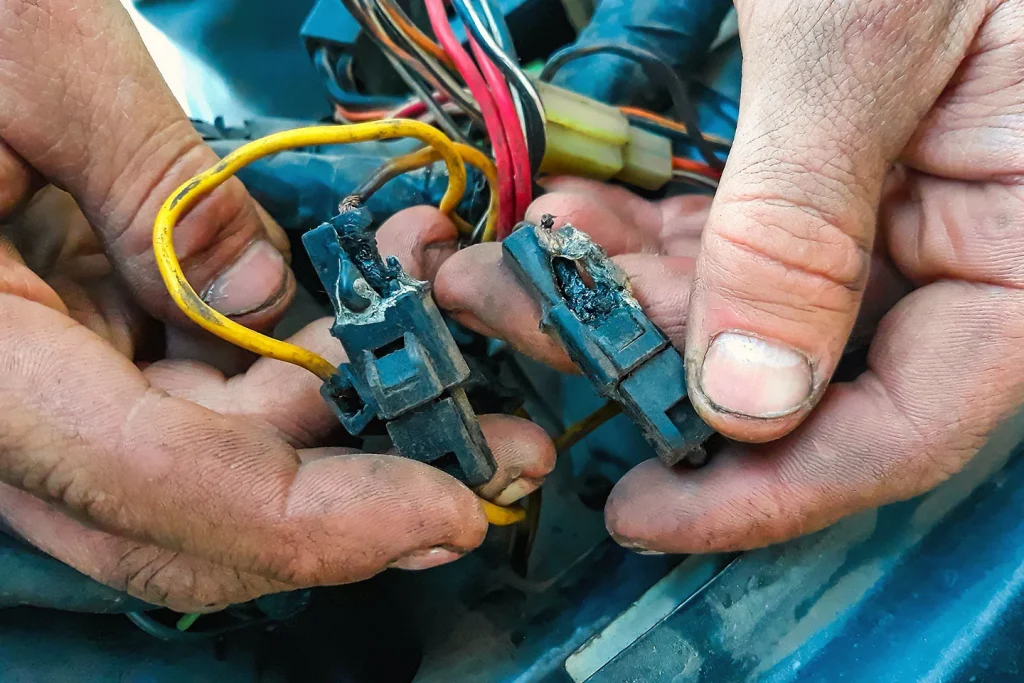
There is an important distinction between a dashboard warning and a physical electrical warning. A battery light or check-engine light does not automatically mean a fire is imminent. But if an electrical warning is accompanied by smoke, burning plastic odor, melted wiring, or repeated fuse failures, continuing to drive is a different matter.
NFPA’s guidance is clear. Electrical problems should not be overlooked, and a vehicle with damaged wiring should be professionally inspected before the issue becomes more serious.
2. A Fuel Odor That Appears When the Engine Is Running or the Car Is Parked
A strong gasoline or diesel odor around a vehicle should never be dismissed as merely an unpleasant smell. Fuel is combustible, and a leak can place liquid or vapor near hot engine components, electrical equipment, or other ignition sources.
NHTSA recall documentation provides real examples of this danger. In one fuel-system recall, the agency documented that owners could notice fuel odor outside the vehicle and, in some circumstances, liquid fuel underneath the rear of the vehicle. The manufacturer noted that leaked fuel could create a fire risk if it encountered an ignition source.
The location of the smell can provide useful information, although it should not be used to diagnose the exact source. A fuel odor near the rear of the vehicle could point toward the fuel tank, fuel lines, or associated components. Odor under the hood could indicate a problem closer to the engine or fuel-delivery system.
Fuel smell can also occur immediately after refueling if fuel has spilled, so context matters. What should concern a driver is a persistent or unexplained smell, especially when there is visible wetness, a drop in fuel level that cannot be explained by driving, or evidence of fuel underneath the vehicle.
Do not crawl underneath a vehicle looking for a leak while it is running, and do not deliberately search for the leak with a flame or other ignition source.

A fuel leak also deserves a recall check. NHTSA maintains a VIN-based recall database, and safety recalls can involve fuel-system defects capable of increasing fire risk.
If the smell is strong and persistent, treat it as a potential safety problem rather than waiting for the next scheduled service.
3. Burning Rubber or Plastic Smell That Keeps Returning
A brief smell after a hard drive does not automatically mean a fire is coming, but a persistent burning-rubber or burning-plastic odor deserves immediate attention. The NFPA specifically identifies the smell of burning rubber or plastic as a warning sign that a vehicle may have a fire-related problem.
The important clue is repetition. If the smell appears repeatedly after the engine reaches operating temperature, particularly when the vehicle is stationary, something may be getting hotter than intended. Possible sources include wiring insulation, belts, hoses, plastic components, or fluid contacting a hot surface.
The smell alone cannot identify the failed component, so trying to diagnose it by opening hot components or touching parts can create additional danger.
A burning-plastic odor can be especially significant around the electrical system. The National Park Service describes a vehicle incident in which a melted fuse and wiring produced a burning odor before the wiring came dangerously close to igniting.
The agency notes that approximately 75% of vehicle fires are associated with mechanical or electrical failures or malfunctions.
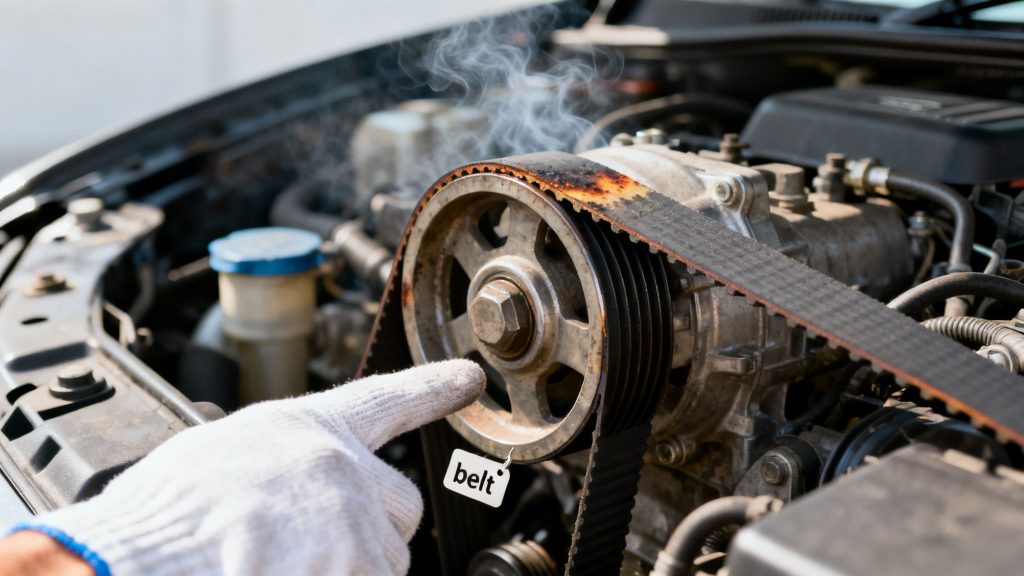
Do not confuse this with the normal smell that can occasionally occur when debris contacts a hot exhaust component. The warning sign is an unexplained, persistent, or increasingly strong odor, especially when combined with smoke, melted insulation, electrical problems, or abnormal temperatures.
If the smell becomes strong while driving, pull over safely and shut the engine off. Do not continue driving simply because there are no visible flames. A fire can develop rapidly after an electrical or mechanical component becomes sufficiently hot.
4. Oil or Other Fluid Is Reaching Hot Engine Components
A fluid leak becomes considerably more serious when the fluid can reach an extremely hot engine or exhaust component. The NFPA specifically lists oil and other fluid leaks among the warning signs that can precede a vehicle fire.
This is not simply about seeing a puddle beneath the car. Some leaks can spread onto components inside the engine compartment without producing a large pool on the ground. Oil that reaches sufficiently hot surfaces can smoke, burn, and potentially ignite.
A recent NHTSA recall illustrates the mechanism. In a 2024 recall involving certain Land Rover vehicles, NHTSA documented an engine oil filter housing that could crack and allow oil to leak onto hot engine-compartment components.
The recall notice specifically identified the possibility of smoke or flames under the hood, oil staining, and an engine-oil warning light as signs associated with the condition.
That example is important because it shows why a small leak should not automatically be treated as a minor maintenance issue. The location of the leak matters just as much as the amount.
Pay attention to fresh oil staining, unexplained drops in fluid levels, smoke from the engine compartment, and new warning lights. An oil cap that is not securely installed is another NFPA-listed danger sign because escaping oil can contaminate surrounding components.
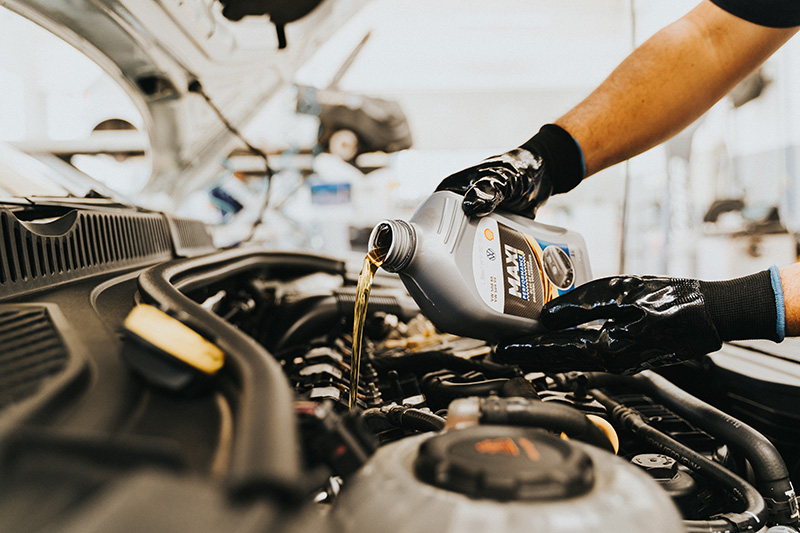
If you discover a significant leak or see smoke coming from under the hood, do not lean over the engine compartment to investigate while the vehicle is hot. Shut the vehicle down safely and have it inspected.
A fluid leak does not guarantee a fire, but allowing an unidentified leak to continue can turn an inexpensive repair into a serious fire hazard.
5. The Engine Temperature Suddenly Climbs Into the Danger Zone
A rapidly rising engine temperature is more than a routine cooling-system complaint. When the temperature gauge moves sharply toward the hot zone, the underlying problem can involve coolant loss, a failed cooling component, a damaged hose, or another fault that allows engine temperatures to rise beyond normal operating conditions.
The NFPA specifically lists a missing oil filler cap, loose oil connections, and other mechanical warning signs among conditions that can contribute to vehicle fires. It also advises motorists to have their vehicles serviced if they notice signs such as fluid leaks, unusual smells, or overheating.
The important detail is the change from normal behavior. If a vehicle normally operates at a stable temperature and suddenly begins running significantly hotter, continuing to drive can make the original failure worse.
A damaged cooling-system component can allow coolant to escape, while a failed water pump, thermostat, or radiator fan can reduce the system’s ability to control temperature.
Steam or smoke from the engine compartment makes the situation more urgent. Drivers should not remove a radiator cap or coolant-system cap while the engine is hot because pressurized coolant can cause severe burns.
NHTSA recall records provide examples of overheating-related fire risks. Certain vehicle recalls have involved cooling-system components that could leak onto hot surfaces, demonstrating how a thermal problem and a fluid leak can combine into a fire hazard.
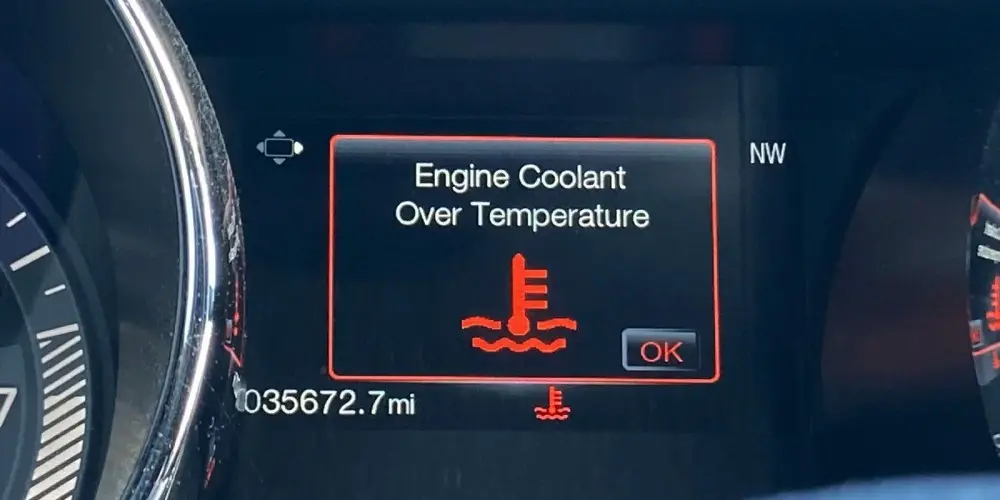
If the temperature warning appears, pull over as soon as it is safe and shut the engine off. Do not continue driving simply because the gauge drops after the vehicle begins moving again.
An overheating engine is not proof that a fire will occur, but a sudden temperature rise is a clear reason to stop treating the problem as routine.
6. Smoke Appears From Under the Hood Before Any Flames Are Visible
Smoke from underneath the hood is one of the most serious warning signs because it can indicate that something is already overheating, burning, or contacting an extremely hot surface. Unlike an unusual smell, visible smoke means the problem has progressed beyond a purely potential failure.
The National Fire Protection Association advises drivers that if a fire starts, they should pull over, turn off the engine, get everyone out, and stay at least 100 feet away. Crucially, NFPA says never to open the hood or trunk to see where the fire is coming from, because opening it can rapidly supply the fire with additional oxygen.
Not every cloud under a hood means the vehicle is burning. Steam from coolant contacting a hot engine can resemble smoke. Oil leaking onto hot exhaust components can also create smoke before flames develop. That distinction, however, is not something a driver should attempt to establish by opening a hot hood and investigating.
The location and behavior of the smoke can provide a mechanic with useful information later. Smoke accompanied by a strong burning-plastic smell may indicate an electrical problem, while smoke associated with an oil leak can point toward fluid contacting hot components.
What matters for the driver is the immediate response. If smoke is increasing or there is any suspicion of fire, stop in a safe location, shut the engine off, evacuate passengers, and move away from the vehicle.
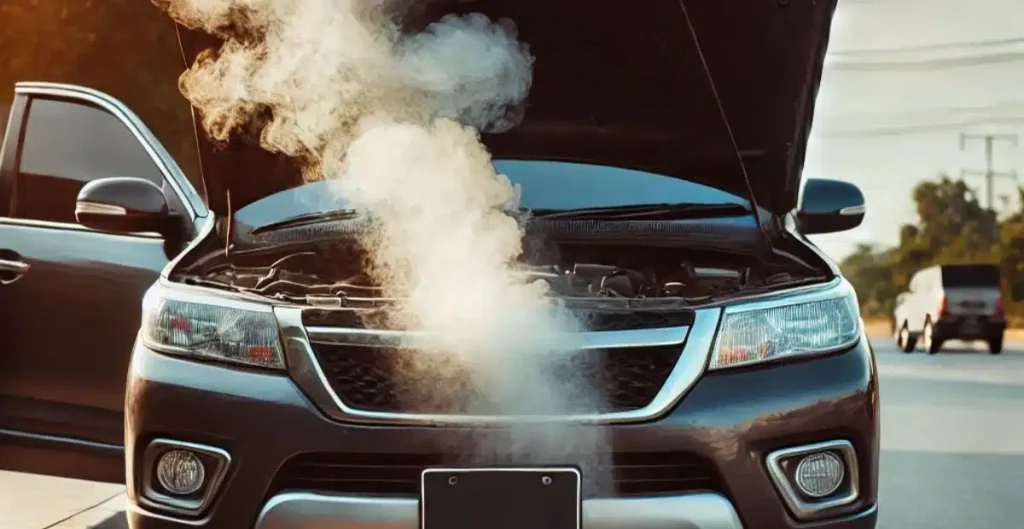
NFPA also advises calling 911 from a safe location and warns motorists not to return to the vehicle for belongings.
A smoking engine compartment is therefore not a situation for roadside diagnosis. Once smoke appears, personal safety takes priority over identifying the failed component.
7. The Battery or Battery Cables Become Unusually Hot
An automotive battery should not normally become hot enough for the driver to notice significant heat coming from the battery area. Excessive heat around the battery, melted insulation, swollen battery cases, damaged terminals, or a strong sulfur-like odor can indicate a serious electrical or charging-system problem.
The concern is particularly relevant with lead-acid batteries. A charging-system fault can cause abnormal electrical conditions, while damaged or improperly connected cables can create resistance and localized heating. The battery itself also contains flammable gases under certain operating conditions, making sparks around the battery particularly dangerous.
The NFPA lists electrical problems and damaged wiring among vehicle-fire warning signs and recommends having electrical issues inspected rather than repeatedly replacing blown fuses or ignoring visible damage.
Look closely at the condition of the battery cables and terminals during routine maintenance, but do not touch a battery that is visibly damaged, smoking, leaking, or extremely hot. Corrosion around a terminal is not automatically a fire warning, but loose connections, melted plastic, or damaged insulation deserve attention.
The alternator is another important part of the equation. It continuously supplies electrical power while the engine runs and charges the battery. A fault in the charging system can therefore expose the electrical system to abnormal conditions.
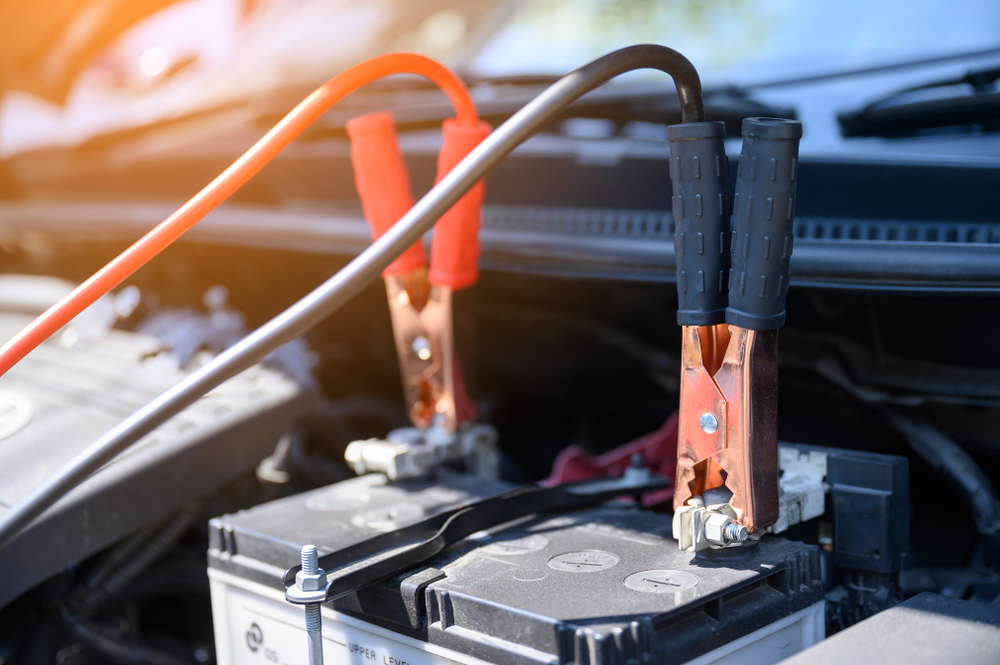
A burning electrical smell near the battery is particularly concerning when combined with heat or visible damage. Do not place a metal tool across the terminals to test anything, and never create a deliberate spark near the battery.
If the battery area is smoking or the vehicle appears to be developing a fire, follow the NFPA emergency procedure rather than attempting to diagnose the electrical system yourself.
8. The Catalytic Converter or Exhaust Area Becomes Extremely Hot
The exhaust system normally becomes extremely hot during operation, but an abnormal heat problem can become a fire hazard when combustible material is nearby. This is particularly important around the catalytic converter, which operates at very high temperatures as it processes exhaust gases.
The National Fire Protection Association identifies mechanical failures and conditions involving hot vehicle components as contributors to vehicle fires. The National Park Service likewise notes that vehicle fires can result from mechanical failures and that combustible materials can become involved when exposed to sufficient heat.
One warning sign is a sudden change in exhaust behavior accompanied by an unusually strong hot or burning smell. Another is visible discoloration or heat damage around components near the exhaust system. A catalytic converter can become substantially hotter than surrounding parts when an engine is experiencing an emissions or combustion problem.
Misfiring is particularly relevant because unburned fuel can enter the exhaust system. The resulting combustion can raise exhaust temperatures dramatically and potentially damage the catalytic converter.
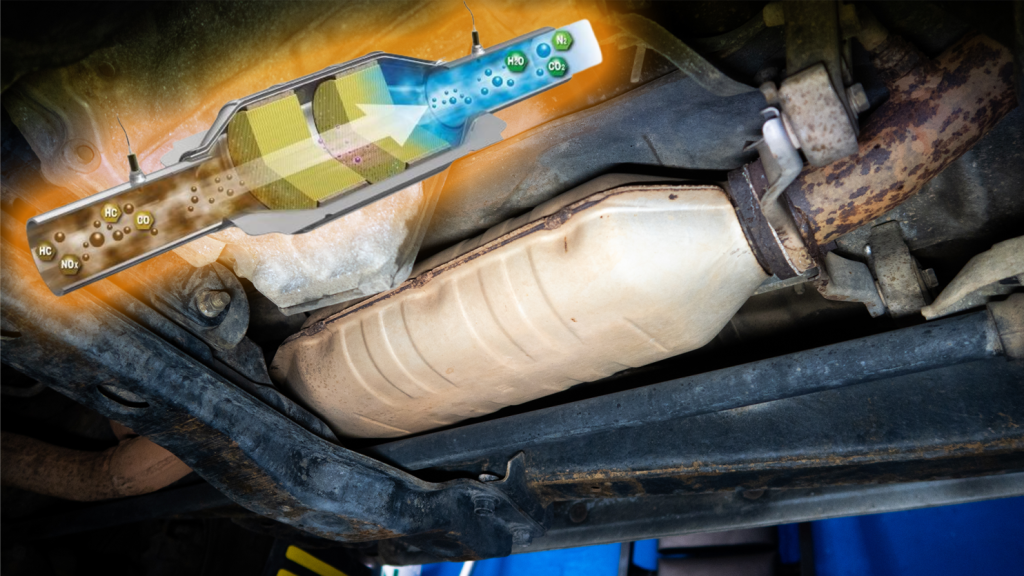
Drivers should also pay attention to where they park. Dry grass, leaves, or other combustible material underneath a vehicle can be dangerous when exposed to a hot exhaust system. The NFPA advises motorists to avoid parking over dry grass or other combustible vegetation.
Never touch the exhaust system to determine how hot it is. If there is smoke, burning material, or evidence that an exhaust component is overheating, stop driving and allow qualified professionals to inspect the vehicle.
9. The Engine Starts Misfiring Along With a Strong Fuel or Burning Odor
A misfire is usually discussed as an engine-performance problem, but a severe or persistent misfire can also create excessive heat in the exhaust system. The situation becomes more concerning when the misfire is accompanied by a strong gasoline smell, unusual exhaust behavior, or a rapidly flashing check-engine light.
The reason is straightforward. When combustion does not occur correctly inside a cylinder, some unburned fuel can pass into the exhaust system. That fuel can ignite farther downstream, potentially producing unusually high temperatures in the catalytic converter and other exhaust components.
This does not mean every misfire will cause a vehicle fire. Misfires have many causes, including ignition, fuel delivery, and sensor problems, and most are addressed without a fire occurring. The concern is the combination of symptoms.
A flashing malfunction indicator lamp is particularly important. EPA and OBD regulations use the malfunction indicator lamp to alert drivers to emissions-related malfunctions, and a flashing light is commonly associated with conditions that can cause catalyst damage.
If the engine begins running violently, loses power, and the check-engine light flashes, continuing to drive can increase the risk of damaging the catalytic converter. The appropriate response is to reduce the vehicle’s operation and have the fault diagnosed rather than repeatedly accelerating through the problem.
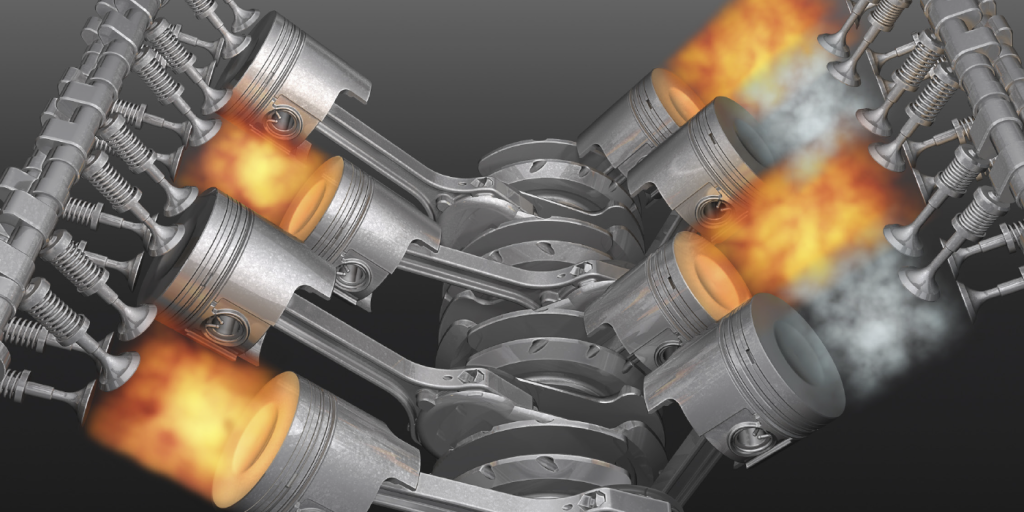
A strong fuel odor makes the situation more urgent because it introduces another combustible material into the equation.
Drivers should not attempt to diagnose a suspected fuel or ignition problem by opening hot engine components or working around the exhaust immediately after driving. Let the vehicle cool and have it inspected safely.
A misfire is therefore not just a performance complaint when several warning signs appear together. It can indicate a combustion problem capable of creating abnormal exhaust temperatures.
10. The Vehicle Has Been Recalled for a Fire Risk, and the Repair Is Still Outstanding
One of the most concrete warning signs is not something the vehicle physically produces at all. It is an unresolved safety recall involving a component that can cause a fire.
NHTSA maintains the federal recall database, allowing owners to search vehicles by VIN for open safety recalls. A recall may involve fuel leakage, electrical wiring, battery components, engine parts, or other systems capable of increasing fire risk.
This matters because some dangerous defects do not produce obvious symptoms before a failure occurs. A manufacturer may identify a problem through warranty data, field reports, testing, or investigations and issue a recall before every affected vehicle develops the problem.
NHTSA recall documents can be remarkably specific. They may identify the affected component, the failure mechanism, the potential consequence, and the repair procedure. Some recall notices explicitly state that a defect can increase the risk of a vehicle fire.
Owners should therefore check their vehicle’s VIN periodically, particularly after purchasing a used vehicle. An outstanding recall does not necessarily mean the vehicle is currently unsafe to drive, because the risk depends on the specific defect and manufacturer instructions. But it does mean the owner should read the recall notice and follow the manufacturer’s recommended action.
If a recall notice instructs owners to park outside, stop driving, or take another immediate precaution, those instructions should be followed.
The important distinction is between a routine service campaign and a safety recall. NHTSA’s recall database identifies safety recalls that manufacturers have reported to the agency.
A recall involving a fire hazard should never be treated as ordinary paperwork. It is a documented warning that a specific vehicle component may create an identifiable safety risk, making the recall repair an important part of preventing a potential vehicle fire.