Electric vehicles have become far easier to find in the United States, yet many shoppers remain unconvinced that an EV fits their daily lives. AAA’s 2025 EV Consumer Survey shows why.
Only 16% of U.S. adults said they were very likely or likely to purchase a fully electric vehicle as their next car, while 63% said they were unlikely or very unlikely to do so.
The biggest objections involve repair costs, purchase prices, charging access, road-trip practicality, range, and safety. These concerns show where electric cars still face resistance from mainstream American buyers.
1. High Battery Repair Costs
The biggest financial worry identified by AAA is the possibility of facing an expensive battery repair. In the 2025 survey, 62% of respondents who were undecided or unlikely to buy an EV cited high battery repair costs, making it the leading barrier to electric-car adoption.
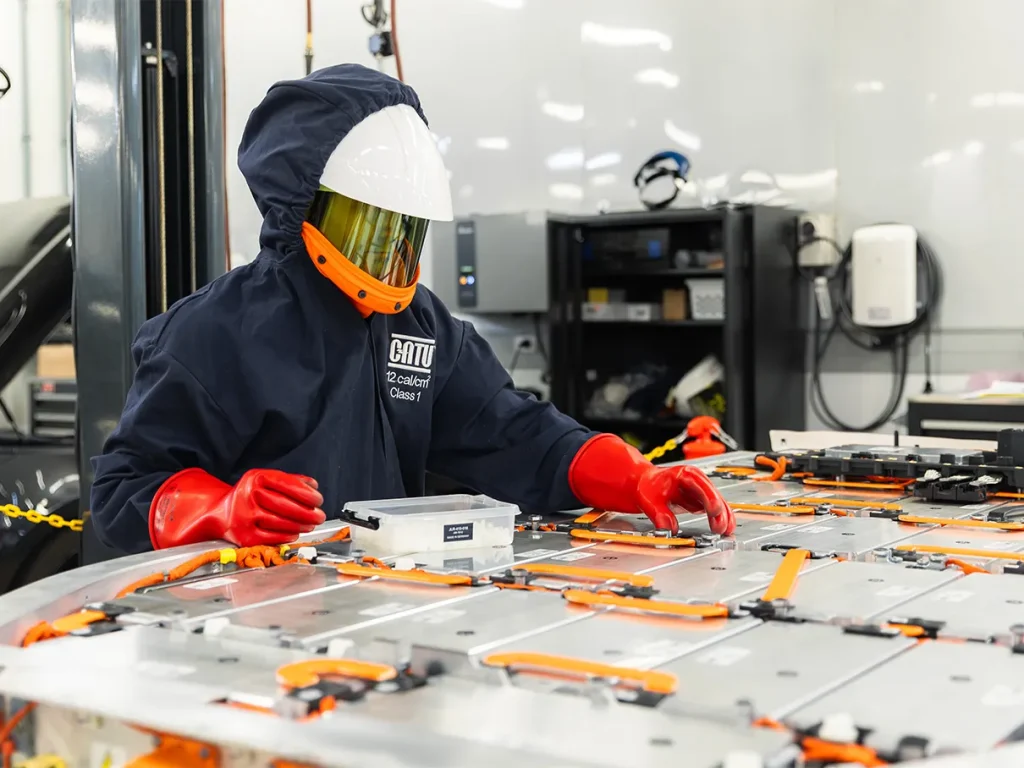
An EV’s traction battery is fundamentally different from the small 12-volt battery found in a conventional gasoline vehicle. The high-voltage battery is one of the most expensive components, and damage outside warranty coverage can create a repair bill that buyers may find difficult to predict.
AAA notes that Consumer Reports has estimated EV battery replacement costs can range from roughly $5,000 to $15,000, although actual costs vary by vehicle and battery design. Many EV batteries are covered by warranties lasting eight to 10 years or 100,000 to 150,000 miles, depending on the manufacturer.
That distinction matters to buyers planning long-term ownership. Someone keeping a vehicle for a decade or longer may wonder what happens after the original battery warranty expires.
Modern EVs are changing the repair equation. Some manufacturers use battery packs made from multiple modules, potentially allowing certain failures to be addressed without replacing the entire pack. However, repair procedures, parts availability, and technician capability vary by model and repair facility.
For shoppers comparing an EV with a gasoline vehicle, even the possibility of a five-figure repair can make electric ownership appear financially riskier. AAA’s research does not suggest every EV owner will face such a bill.
Instead, the 62% figure demonstrates how strongly battery repair costs influence consumer confidence. Until buyers feel more certain about battery durability, warranties, and repair options, this concern will remain a major obstacle.
2. Higher Purchase Prices
The second major obstacle appears before buyers even take a test drive. Fifty-nine percent of consumers surveyed by AAA cited the purchase price of an EV as a reason for hesitation, putting upfront cost just three percentage points behind battery repair concerns.
An EV can make financial sense over years of ownership because electricity and maintenance can cost less than gasoline and conventional service. AAA’s research found EVs had the lowest fuel and maintenance costs among the vehicle types it analyzed. Yet those future savings do not erase the price displayed on the window sticker.
This creates a particular problem for shoppers focused on monthly payments. A buyer may understand that an EV could reduce fuel spending but still decide that a higher purchase price or monthly payment is not worthwhile.
AAA’s 2024 Your Driving Cost analysis also found EVs had the second-highest total ownership costs among the vehicle types it analyzed, with depreciation, purchase prices, and finance charges contributing to the result. Simply comparing gasoline spending with electricity costs therefore does not provide the complete financial picture.
EV prices also vary significantly across the American market. A compact electric vehicle and a luxury electric SUV can have completely different financial profiles, while incentives may vary depending on the buyer, vehicle, and location.
For consumers prioritizing a low purchase price, the EV argument becomes complicated. They may appreciate instant torque, quiet operation, and reduced maintenance, but those advantages compete against the immediate cost of entering the market.
Battery technology and manufacturing economics could gradually change the equation, and automakers continue adding lower-priced models. Still, AAA’s 59% figure shows that purchase price remains a fundamental barrier, particularly for Americans comparing EVs with less expensive gasoline or hybrid alternatives.
3. Unsuitability for Long Trips
For many American drivers, an EV can make sense during the week while creating doubts about the weekend. AAA found that 57% of consumers who were undecided or unlikely to buy an EV considered electric vehicles unsuitable for long-distance travel.
The concern is not necessarily that modern EVs cannot travel long distances. The issue is how a long journey is managed. A gasoline vehicle can typically be refueled in minutes, while an EV driver has to account for charging stops, charger availability, and the time required to add enough energy for the next leg.
That difference becomes more noticeable on interstates and during holiday travel. A driver covering several hundred miles may need to plan charging stops around the vehicle’s usable range rather than simply stopping at the next convenient gas station.
AAA advises EV drivers to plan charging access before longer trips and notes that sustained highway driving can reduce driving range more quickly.
Weather adds another variable. AAA’s 2026 testing found that EVs experienced a 39% reduction in calculated driving range at 20°F compared with 75°F, while the tested EVs showed an 8.5% reduction at 95°F.
Those figures do not mean every EV will experience exactly the same change, but they demonstrate why drivers who regularly encounter extreme temperatures may be cautious about long journeys.
Someone who mostly drives locally may never encounter this limitation in a meaningful way. A family that frequently crosses several states may place greater value on quick refueling and predictable travel times.
That helps explain why the 57% concern is about suitability rather than outright capability. EVs can travel long distances, but the experience may require more planning than some buyers want.
4. Lack of Convenient Public Charging
Charging is one of the most visible differences between owning an EV and owning a gasoline vehicle. Fifty-six percent of AAA respondents who were undecided or unlikely to purchase an EV said a lack of convenient public charging stations was a concern.
The important word is “convenient.” The United States has added many charging locations, but availability alone does not guarantee that an individual driver will find a charger where and when it is needed. Location, connector compatibility, charging speed, reliability, and whether a charger is occupied can all influence the experience.
AAA’s research illustrates why access matters. Its 2023 EV research documented experiences ranging from easy public charging to situations in which drivers struggled with unfamiliar equipment or spent significant time adding a relatively small amount of range.
The problem is particularly relevant to Americans who cannot charge at home. A homeowner with suitable parking can plug in overnight. Someone living in an apartment or condominium may have no dedicated charger and therefore depend on workplace, retail, or public infrastructure.
AAA’s 2026 research said the number of public charging stations had increased from roughly 55,000 in 2022 to about 80,000, showing that infrastructure is expanding. Yet consumer hesitation remains, suggesting that growth has not completely removed accessibility concerns.
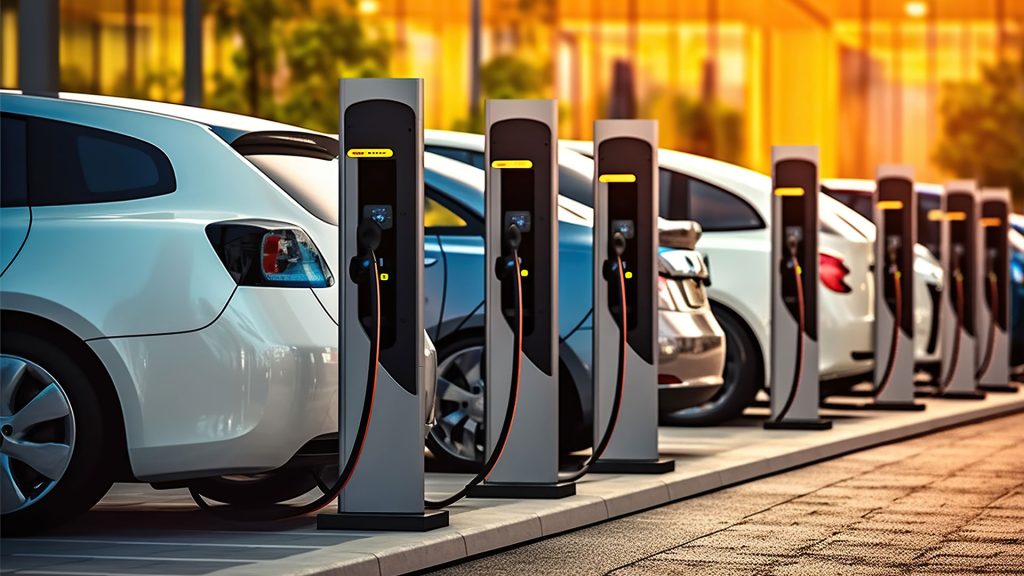
Public charging can also affect operating costs. AAA’s 2026 temperature study found that at 20°F, EV operating costs increased by $76.93 per 1,000 miles when using public charging, compared with a $32.11 increase when charging at home.
For prospective buyers, the question is therefore not simply whether America has enough chargers. It is whether those chargers are accessible along the routes they actually drive. For people without reliable home charging, that difference can determine whether an EV feels convenient every day.
5. Range Anxiety
Range anxiety remains one of the most persistent psychological barriers to EV adoption. AAA found that 55% of consumers who were undecided or unlikely to purchase an EV cited range anxiety as a concern.
The concern is closely connected to how drivers think about gasoline vehicles. A conventional car can often be refueled quickly, and gas stations are familiar sights across American highways. EV drivers have to consider the remaining battery percentage, estimated range, and available charging points.
The estimated range displayed by an EV is not a fixed number. Speed, temperature, terrain, driving style, passenger load, and climate control use can influence energy consumption. AAA’s 2026 research found EVs tested at 20°F experienced an average 39% reduction in calculated range compared with testing at 75°F.
That does not mean an EV suddenly becomes unusable in winter. It means drivers may need a larger buffer when conditions are unfavorable. For someone accustomed to treating a gasoline vehicle’s fuel gauge casually, that additional planning can feel inconvenient.
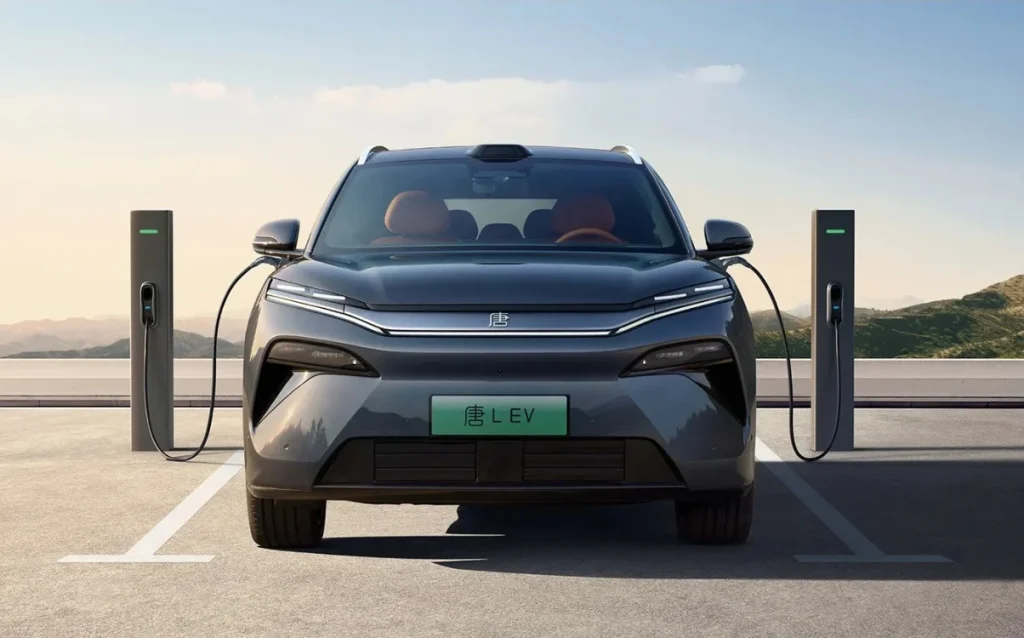
Range anxiety can also affect people who rarely drive long distances. Someone driving only 30 or 40 miles a day may have little practical reason to worry, particularly with home charging. Yet the possibility of an occasional 300-mile trip can still influence the purchasing decision.
As EVs gain longer ranges and charging networks expand, the practical side of the problem should improve. The bigger challenge is convincing buyers that advertised range can translate into predictable real-world travel.
6. Concerns About EV Safety
Safety is a significant issue, although it ranks below cost and charging concerns in AAA’s survey. Thirty-one percent of respondents who were undecided or unlikely to purchase an EV cited safety as a reason for hesitation.
Part of the concern comes from unfamiliarity with high-voltage battery technology. Electric vehicles use large lithium-ion battery packs, and consumers may associate those batteries with overheating, fires, or difficult accident recovery.
However, concern should not automatically be interpreted as evidence that EVs are broadly unsafe. Modern vehicles, regardless of propulsion system, must meet federal safety requirements, and many EVs have performed strongly in independent crash testing.
NHTSA also regulates electric vehicles and their batteries under federal motor vehicle safety standards.
EVs have characteristics that can influence crash behavior. Their heavy battery packs generally give them a low center of gravity, which can help reduce rollover risk. At the same time, additional vehicle mass can affect crash dynamics when an EV collides with another vehicle.
Battery fires represent another area where perception and risk need to be separated. A damaged high-voltage battery can present specialized hazards, which is why emergency responders receive specific guidance for dealing with electric vehicles.
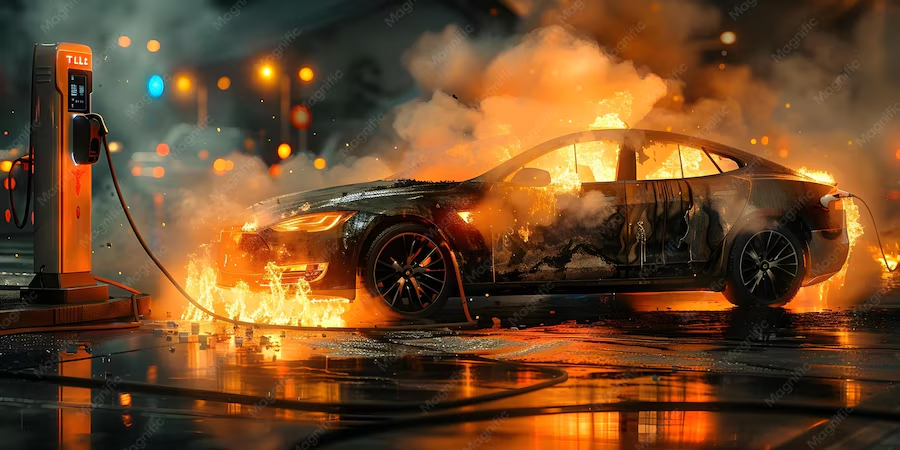
For buyers, uncertainty can matter as much as statistics. Someone unfamiliar with EV technology may wonder what happens after a serious collision, whether the battery remains dangerous and whether repairs require specialized facilities.
The 31% AAA figure therefore represents a meaningful consumer-confidence problem. Automakers can address it through better battery protection, clearer safety information and stronger communication with owners and first responders. Greater familiarity with EV technology may gradually reduce this barrier.
7. Uncertainty About Battery Life
Battery longevity is closely tied to repair expenses, but it also raises a separate concern about long-term performance. How well will the battery continue to function after years of use? AAA’s survey found that battery repair costs were the top concern among respondents, while uncertainty about the battery’s condition over time may add to those concerns.
An EV battery does not simply stop working at a particular mileage. Its ability to store energy generally declines gradually, meaning an older EV may continue operating normally while delivering less range than it did when new. For used-EV shoppers, battery condition can therefore become an important purchasing consideration.
Many EV manufacturers offer high-voltage battery coverage for around eight years or 100,000 miles, although terms vary by automaker and model. Some warranties also specify a minimum level of retained battery capacity during the coverage period.
Battery chemistry and thermal management influence durability as well. Manufacturers use different battery chemistries and cooling systems, so one model cannot automatically represent another. Charging habits, climate, and vehicle use can also influence long-term battery behavior.
For consumers, the uncertainty partly involves resale value. A gasoline car with 100,000 miles has familiar mechanical wear points. With an EV, prospective buyers may wonder how much battery capacity remains and whether a future battery repair could reduce the vehicle’s value.
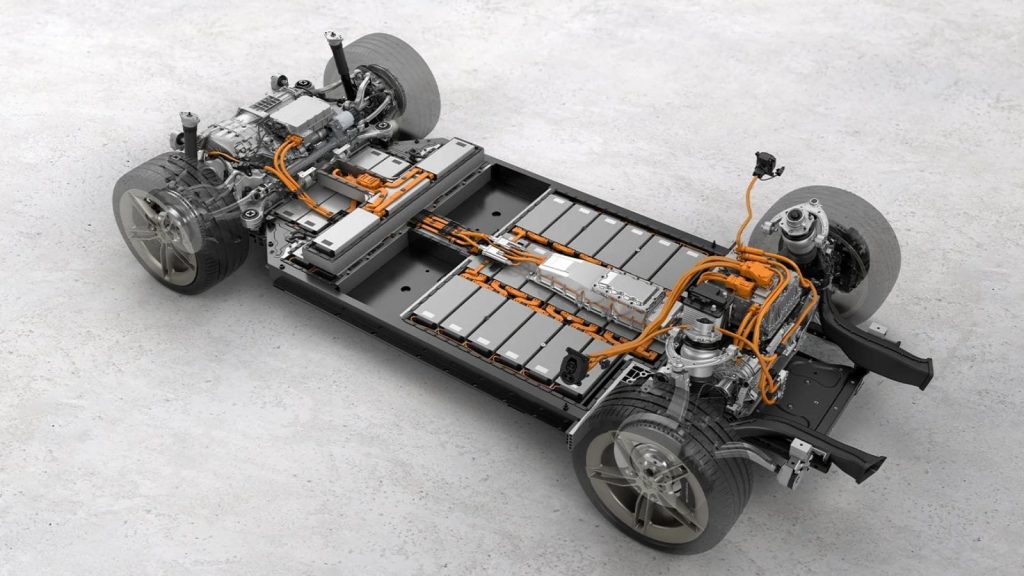
That does not mean EV batteries routinely fail after a few years. The challenge is that many consumers have decades of experience judging gasoline engines but comparatively little experience evaluating high-voltage battery health.
Automakers can reduce this uncertainty by providing clearer battery-health information, longer warranties, and transparent diagnostic reports. As the American used-EV market matures, buyers should have more historical data to judge how different battery systems age.
8. Charging Takes Longer Than Refueling
Charging time is another practical difference that can discourage buyers who value the convenience of gasoline vehicles. Even when an EV has enough range for everyday driving, the prospect of spending longer at a charger than at a gas station can make electric ownership appear less convenient.
The difference becomes particularly noticeable during road trips. A gasoline vehicle can regain substantial range during a short fuel stop. An EV’s charging time depends on the vehicle, charger, battery temperature, state of charge, and infrastructure.
Fast chargers can add meaningful range relatively quickly, but charging generally slows as the battery approaches a high state of charge.
AAA has highlighted charging time as an important part of EV ownership. Its consumer research found that concerns surrounding charging infrastructure and long-distance travel remain major reasons some Americans hesitate to purchase electric vehicles.
For daily drivers charging at home overnight, the issue can be less significant. The vehicle can remain plugged in while parked, meaning the owner does not necessarily spend time waiting beside it. The situation changes for drivers who depend heavily on public charging.
Charging speed also varies between EVs. Some newer models can accept very high charging power under favorable conditions, while others charge more slowly. Even a vehicle capable of rapid charging cannot guarantee a quick session if the available charger has lower output.
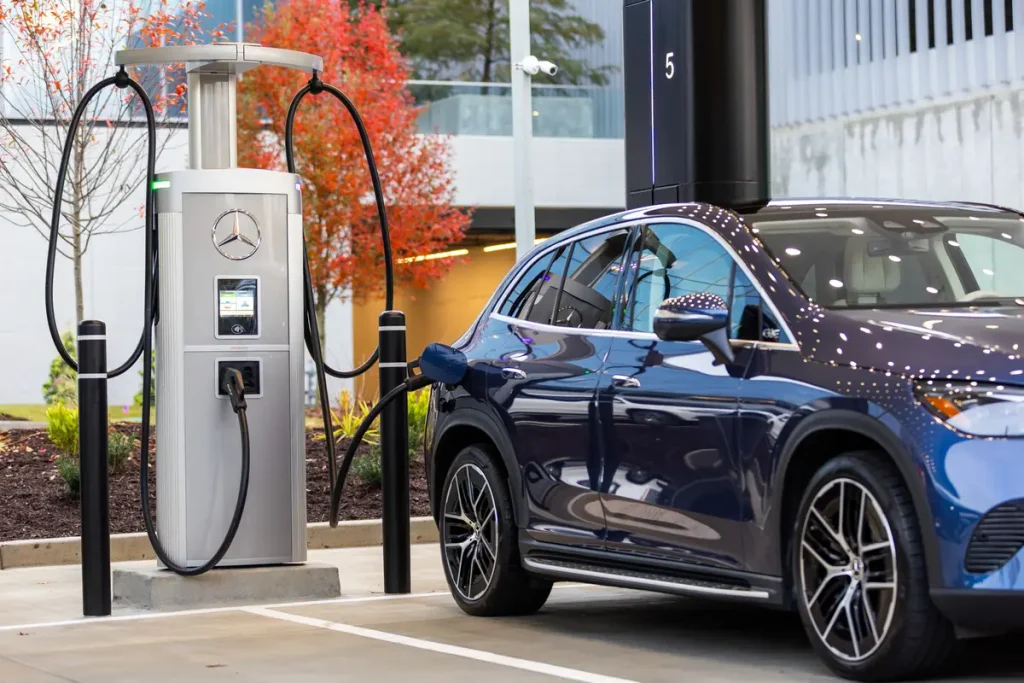
There is also a behavioral adjustment. Gasoline drivers generally think about filling a tank. EV drivers can often add enough energy for several days rather than waiting for a full battery.
As charging technology improves and stations become easier to integrate into shopping, dining, and other activities, the difference may become less noticeable. For now, charging remains a disadvantage for buyers who want the quickest possible refueling experience.
9. Limited Charging Access for Drivers Without Home Charging
For an American homeowner with a garage or dedicated parking space, charging an EV can become part of the normal overnight routine. For people who cannot charge at home, the ownership equation can look very different.
AAA’s 2025 survey found that 56% of respondents who were undecided or unlikely to purchase an EV cited a lack of convenient public charging stations as a concern. The issue is particularly relevant to renters, apartment residents, and drivers who park on the street.
A gasoline vehicle does not require a private refueling location. Its owner can visit a gas station when the fuel level becomes low. An EV owner without home charging has to identify another place where the vehicle can remain plugged in long enough to add the necessary energy.
Workplace charging can help, but it is not available to everyone. Public chargers at shopping centers, parking facilities, and highway locations provide alternatives, yet they introduce variables such as availability, charging speed, and reliability.
AAA’s research shows why having chargers is different from having convenient chargers. A station several miles away may technically solve the problem, but it may not be practical every day.
Apartment living can make matters more complicated. A resident may have a parking space but no electrical outlet nearby, while installing a dedicated charger may require approval from a landlord or homeowners association.
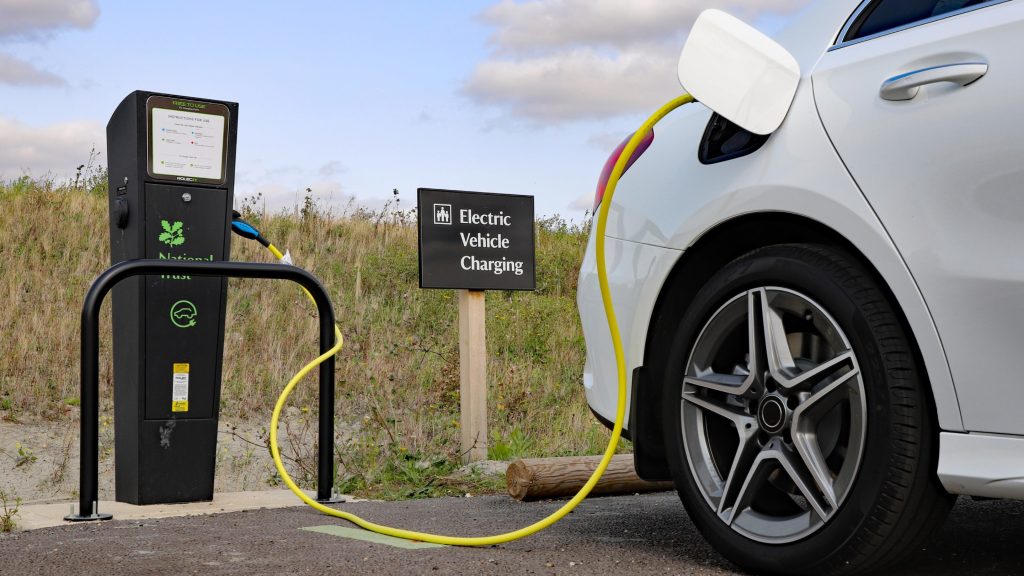
Some drivers successfully rely on workplace or public charging, particularly when their daily mileage is modest. The problem is that this routine requires more planning than simply plugging in at home.
As EV adoption grows, charging providers, property developers, and automakers have an opportunity to make charging easier for people without private parking. Until then, limited home-charging access can keep otherwise interested buyers from making the switch.
10. Uncertainty About Whether an EV Fits Their Lifestyle
The final concern is broader than a single component, price or charging stop. For many Americans, the question is whether an electric vehicle actually fits the way they use a car. AAA’s 2025 survey found that 63% of U.S. adults were unlikely or very unlikely to purchase a fully electric vehicle as their next vehicle, while only 16% were very likely or likely to do so.
That hesitation can combine several concerns. A driver may like electric propulsion but still wonder about long trips, public charging, battery durability, or purchase price. None has to be a deal breaker individually. Together, they can make a gasoline or hybrid vehicle appear like the safer choice.
Usage patterns matter enormously. Someone commuting a short distance each day and charging at home has a very different EV experience from a driver who regularly travels hundreds of miles, lives in an apartment, and has no dedicated charging space.
Household needs matter too. A buyer who needs a vehicle for towing, frequent interstate travel, or long-distance family trips may place greater importance on refueling convenience and established infrastructure. Another driver may prioritize low operating costs and quiet urban transportation.
This helps explain why consumer hesitation does not necessarily mean Americans believe EVs are bad vehicles. AAA’s findings show that many buyers remain interested in electrification while questioning practical ownership issues.
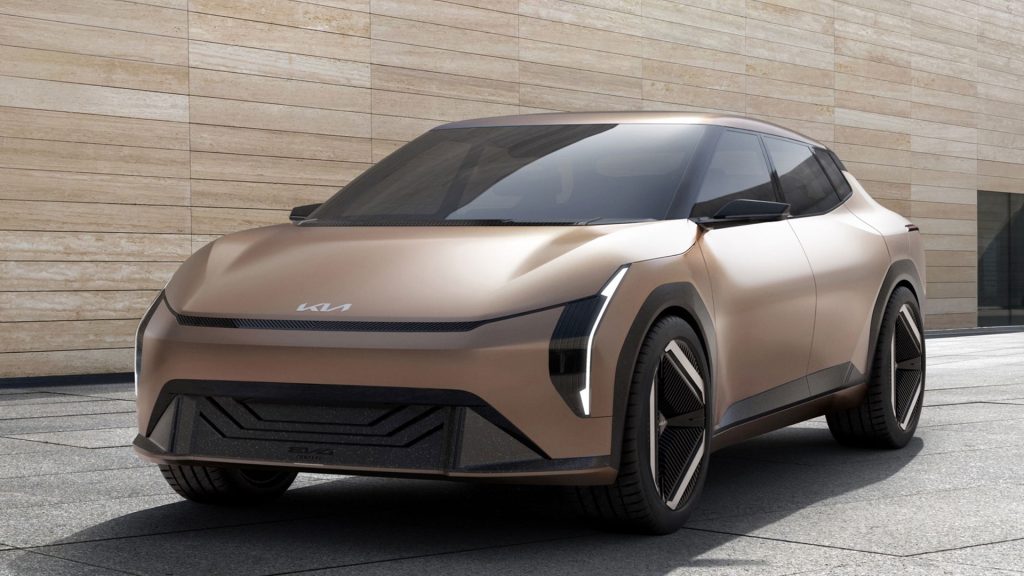
The market is responding with more choices, including hybrids and plug-in hybrids for buyers who want some electrification without completely abandoning gasoline. Automakers are also improving charging capability, increasing range and developing different battery technologies.
For prospective buyers, the most useful question is whether a particular EV matches their driving habits, parking situation, travel requirements and budget. Until those considerations become easier to understand, uncertainty itself will remain a major barrier to wider EV adoption.