
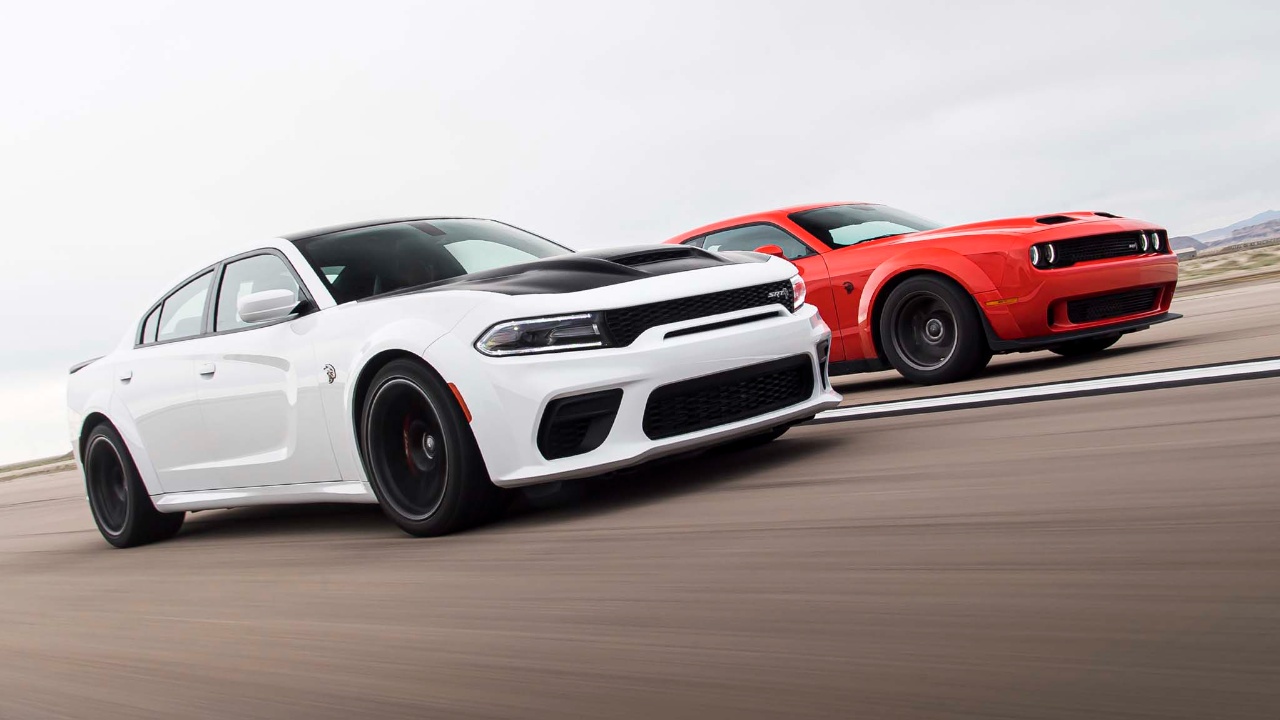
America’s vehicle population is enormous, but it is far from evenly distributed across the country. Federal Highway Administration data for 2024 counted 297,525,836 registered motor vehicles nationwide, including automobiles, buses, trucks, and motorcycles.
A handful of states account for a remarkably large share of that total. California alone had more than 30.9 million registered vehicles, while Texas exceeded 23.6 million. New York and Florida each passed 19 million.
The ranking also reveals how quickly the numbers fall after the four largest states. By the time the list reaches 10th place, North Carolina has fewer than 9 million registered vehicles.
1. California
California stands comfortably at the top of the 2024 registration table with 30,940,652 motor vehicles, according to the Federal Highway Administration’s Highway Statistics 2024 Table MV-1. That is more than 7.3 million vehicles ahead of second-place Texas.
The California figure includes 12,979,522 automobiles, 17,113,763 trucks, 96,229 buses, and 751,138 motorcycles. Trucks form the largest category, accounting for more than half of the state’s registered vehicles under the FHWA classification.
California’s enormous total reflects both its population and the sheer scale of its transportation system. The state contains several major metropolitan areas, including Los Angeles, the San Francisco Bay Area, San Diego, and Sacramento, alongside extensive rural and suburban communities.
The registration count also illustrates why California is so important to the American automotive market. Decisions made by California drivers can influence which vehicles automakers develop, certify, and market nationally. The state’s emissions policies and large consumer base further increase its importance.

There is another useful way to understand the number. California’s 30.94 million registrations represent more than one-tenth of the FHWA’s national total of 297,525,836 vehicles.
That makes California’s lead difficult to challenge. The state has more registered vehicles than the entire totals of many groups of states combined, making its automotive footprint one of the largest anywhere in the country.
2. Texas
Texas ranks second with 23,606,401 registered motor vehicles in 2024. Although it trails California by more than 7.3 million vehicles, Texas is still far ahead of every state below it in the ranking.
The state’s total includes 7,281,613 automobiles, 15,933,517 trucks, 65,085 buses, and 326,186 motorcycles. Trucks therefore make up the largest portion of Texas registrations by a considerable margin.
That truck-heavy registration profile fits Texas’s distinctive transportation landscape. The state has huge distances between population centers, extensive suburban development, and a major agricultural, energy, and commercial economy. Pickup trucks and other truck-class vehicles are deeply integrated into both personal and working transportation.
Texas also has several enormous metropolitan regions, including Houston, Dallas-Fort Worth, San Antonio, and Austin. Those population centers generate substantial passenger-vehicle demand, while rural and industrial areas add another layer of truck registrations.

The state’s 23.6 million vehicles represent nearly 8% of the national registration total. When combined with California, Texas alone accounts for more than 54.5 million registered vehicles.
Texas therefore occupies a unique position in the American automotive market. It has enough vehicles to form a huge market on its own, while its preference for trucks gives manufacturers an important reason to pay close attention to what Texas buyers want.
3. New York
New York ranks third with 20,991,098 registered motor vehicles in 2024. The state is one of only three jurisdictions in the ranking with more than 20 million registrations.
Its registration total consists of 6,474,059 automobiles, 13,526,544 trucks, 195,675 buses, and 794,820 motorcycles. The FHWA data therefore shows trucks as the largest category, despite New York’s reputation for dense urban transportation and public transit.
The number becomes more interesting when considering the state’s geographic diversity. New York includes New York City and its densely developed surroundings, but it also extends across suburban, rural, and upstate communities where private vehicles play a much larger role in daily transportation.
The New York metropolitan area alone contains an enormous population and a massive transportation network. Meanwhile, residents outside the most densely populated areas often depend heavily on personal vehicles.
The state recorded almost 21 million registered vehicles, equal to roughly 7% of all registered motor vehicles counted nationwide by the FHWA.

New York’s position also demonstrates why vehicle registrations should not be interpreted simply as a measure of how many cars are visible on city streets. The FHWA total covers several vehicle categories and includes registrations across the entire state.
With nearly 21 million vehicles, New York remains one of America’s most significant automotive markets even though its transportation patterns differ considerably between New York City, the suburbs, and upstate communities.
4. Florida
Florida takes fourth place with 19,696,080 registered motor vehicles in 2024. It trails New York by roughly 1.3 million vehicles but remains well ahead of Ohio in fifth place.
The state recorded 7,210,114 automobiles, 11,794,134 trucks, 57,468 buses, and 634,364 motorcycles. As in the other leading states, trucks represent the largest individual vehicle category.
Florida’s registration figure reflects the state’s enormous population, sprawling metropolitan areas, and heavy dependence on personal transportation. Major population centers such as Miami, Orlando, Tampa, and Jacksonville are separated by considerable distances, creating strong demand for private vehicles.
Tourism adds another dimension. Florida receives huge numbers of visitors each year, and its transportation network must accommodate both permanent residents and substantial visitor traffic. The registration total itself, however, represents vehicles registered in the state rather than temporary tourist vehicles.
Florida’s 19.7 million registrations account for roughly 6.6% of the national total. The state is also notable for its motorcycle registration count. At 634,364, Florida has more than 600,000 registered motorcycles, placing it among the states with particularly large motorcycle populations.
Its fourth-place position reinforces the concentration of vehicles in the nation’s largest states. California, Texas, New York, and Florida together account for more than 95 million registered motor vehicles, representing roughly one-third of the national total.
5. Ohio
Ohio ranks fifth with 11,366,695 registered motor vehicles in 2024. The jump from fourth-place Florida to Ohio is substantial, with Ohio having more than 8.3 million fewer registrations.
The state’s total includes 3,805,614 automobiles, 7,103,426 trucks, 35,251 buses, and 422,404 motorcycles. Trucks again form the dominant category.
Ohio’s location helps explain its large registration base. It sits within the heavily populated and industrialized Midwest, surrounded by major transportation corridors connecting the Great Lakes region with the Northeast and other parts of the country.
Cities such as Columbus, Cleveland, Cincinnati, Toledo, and Dayton contribute significant vehicle demand. Beyond those urban areas, Ohio has extensive suburban and rural communities where personal vehicles remain central to everyday travel.
The state’s 11.37 million registrations also place it ahead of Pennsylvania and Illinois, although the three states are relatively close compared with the gap separating Ohio from Florida.

Ohio’s motorcycle count is another interesting detail. More than 422,000 motorcycles were registered in the state during 2024, according to FHWA.
The ranking shows that Ohio does not need a population approaching California or Texas to maintain one of the nation’s largest vehicle fleets. Its combination of urban centers, suburbs, industrial activity, and rural communities creates a substantial and diverse vehicle market.
6. Pennsylvania
Pennsylvania occupies sixth place with 10,612,158 registered motor vehicles in 2024. The state sits just behind Ohio, with a difference of approximately 754,500 registrations separating the two.
Pennsylvania recorded 3,371,581 automobiles and 6,844,674 trucks, along with 53,789 buses and 342,114 motorcycles. Trucks again represent the largest category in the state’s registration data.
The state’s transportation needs are shaped by a mixture of major cities, older urban areas, suburbs, and extensive rural territory. Philadelphia and Pittsburgh are its best-known population centers, while cities such as Allentown, Erie, and Harrisburg contribute to the wider transportation network.
Pennsylvania’s location also makes it an important corridor between the Midwest and Northeast. Freight movement and commercial transportation add to the state’s vehicle activity, while millions of residents depend on personal vehicles for commuting and daily tasks.
With more than 10.6 million registered vehicles, Pennsylvania alone accounts for about 3.6% of the national registration total.

Its relatively close competition with Illinois makes the middle of the ranking particularly interesting. The difference between sixth-place Pennsylvania and seventh-place Illinois is only 66,131 vehicles.
That narrow margin demonstrates that rankings can change considerably with relatively small differences when states have similarly large populations and transportation systems.
7. Illinois
Illinois ranks seventh with 10,546,027 registered motor vehicles in 2024, only 66,131 fewer than Pennsylvania.
The state’s registration total includes 3,514,238 automobiles, 6,727,333 trucks, 39,183 buses, and 265,273 motorcycles. Trucks make up the largest portion of the registration base by a substantial margin.
Chicago is the obvious centerpiece of Illinois’s transportation system, but the state’s vehicle market extends far beyond the metropolitan area.
Suburban communities surrounding Chicago have large numbers of commuters, while central and southern Illinois contain agricultural, industrial, and smaller urban communities where private vehicles remain important.
Illinois is also strategically positioned within the national freight network. Chicago is one of America’s most important transportation hubs, connecting highways and rail routes between different regions.
The state therefore combines several types of vehicle demand. Passenger vehicles support enormous metropolitan communities, while trucks serve commercial, industrial, and agricultural activity. At 10.55 million registrations, Illinois represents roughly 3.5% of the national total.

Its seventh-place position is also a reminder that the leading states are not separated by equal gaps. Illinois is extremely close to Pennsylvania but more than 820,000 vehicles ahead of eighth-place Michigan.
That makes Illinois an important part of the group of states where registrations remain above 10 million, a threshold only seven states reached in the 2024 FHWA data.
8. Michigan
Michigan ranks eighth with 9,606,801 registered motor vehicles in 2024. It is the first state on this list to fall below the 10 million mark.
The state recorded 2,494,236 automobiles, 6,860,844 trucks, 2,256 buses and 249,465 motorcycles. Its truck total is particularly large relative to its automobile count.
Michigan’s automotive significance extends far beyond the registration figure. Detroit and the surrounding region have been central to the American automobile industry for more than a century, and vehicle manufacturing remains a major part of the state’s economic identity.
The registration numbers also reflect Michigan’s geography. Outside Detroit and other major cities, many residents live in suburban or rural communities where personal transportation is essential.
The state’s 9.61 million registered vehicles put it more than 740,000 ahead of ninth-place Georgia. That gap is significant, but Michigan is still well below Illinois, which has more than 10.5 million registrations. Michigan’s motorcycle total of 249,465 also represents a substantial registered fleet.
The state’s position is particularly interesting because it combines a relatively large vehicle population with an automotive heritage unlike almost anywhere else in the country. The numbers therefore tell only part of Michigan’s relationship with the automobile.
9. Georgia
Georgia ranks ninth with 9,309,408 registered motor vehicles in 2024. It is one of the final two states in the top 10 with fewer than 10 million registrations.
The total includes 3,206,610 automobiles, 5,842,123 trucks, 39,381 buses, and 221,294 motorcycles.
Atlanta is the state’s dominant metropolitan center and one of the largest urban areas in the Southeast. Its extensive suburban footprint creates significant dependence on automobiles, while Georgia’s smaller cities and rural communities add millions of additional registrations.
The state also occupies an important position in the Southeast’s logistics network. Atlanta’s location and highway connections make Georgia a major transportation and distribution center, increasing the importance of trucks and commercial vehicles.
Truck registrations exceed automobile registrations by more than 2.6 million in the FHWA table. That difference illustrates how the federal classification system captures a vehicle fleet that extends beyond traditional passenger cars.

Georgia’s 9.31 million registrations represent just over 3% of the national total. The state remains relatively close to Michigan but has a larger lead over 10th-place North Carolina. That makes Georgia an important part of the group of fast-growing Southern vehicle markets.
Its ninth-place ranking also shows that the concentration of registered vehicles is not limited to the nation’s largest coastal states. Major Southern states have developed vehicle fleets large enough to compete with much older population centers in the Northeast and Midwest.
10. North Carolina
North Carolina completes the top 10 with 8,862,420 registered motor vehicles in 2024. The state is roughly 447,000 vehicles behind Georgia and about 744,000 behind Michigan.
Its registration total consists of 3,005,649 automobiles, 5,634,554 trucks, 32,483 buses and 189,734 motorcycles.
North Carolina’s large vehicle population reflects its combination of major metropolitan areas, growing suburban communities, and extensive rural territory. Charlotte, Raleigh, Greensboro, Durham, and Winston-Salem are among the state’s major population centers, each contributing to demand for personal and commercial transportation.
The state also has a large geographic area and a substantial network of roads connecting its cities and smaller communities. For many residents outside dense urban centers, private vehicles remain an important part of daily life.

At 8.86 million registrations, North Carolina accounts for nearly 3% of the national total. Its appearance in the top 10 is significant because the ranking changes considerably after the state’s position. Virginia, the next state, had 7,985,530 registered vehicles, meaning North Carolina had nearly 877,000 more registrations.
The complete FHWA data therefore reveals a clear concentration at the top. California leads with more than 30.9 million, while the 10th-ranked North Carolina has 8.86 million. Together, these 10 states account for more than 165 million registered motor vehicles, representing well over half of the national total of 297,525,836.
