Finding a parking space can feel like a minor inconvenience compared with traffic jams, fuel costs, or vehicle maintenance. But an INRIX study found that the time Americans spend circling streets and searching for an open space adds up to a surprisingly large economic burden.
The study found that the average U.S. driver spent 17 hours a year searching for parking, with the wasted time, fuel, and emissions valued at approximately $345 per driver. Across the country, that parking search amounted to an estimated $72.7 billion in annual economic costs.
The figures come from INRIX’s 2017 Parking Pain Study, which combined parking data with responses from nearly 18,000 drivers across 30 cities in the United States, the United Kingdom, and Germany.
In the United States, nearly 6,000 motorists across 10 major cities were included in the research. INRIX used information from its parking database, which at the time covered roughly 100,000 parking locations across 8,700 cities in more than 100 countries.
The study is not a current 2026 measurement, but its findings remain useful for illustrating the scale of a problem that is easy to underestimate.
Parking does not simply consume a few minutes at the end of a journey. In dense urban areas, repeated searches can become a significant source of lost time, fuel consumption, stress, and economic activity.
New York Drivers Faced the Worst Parking Search
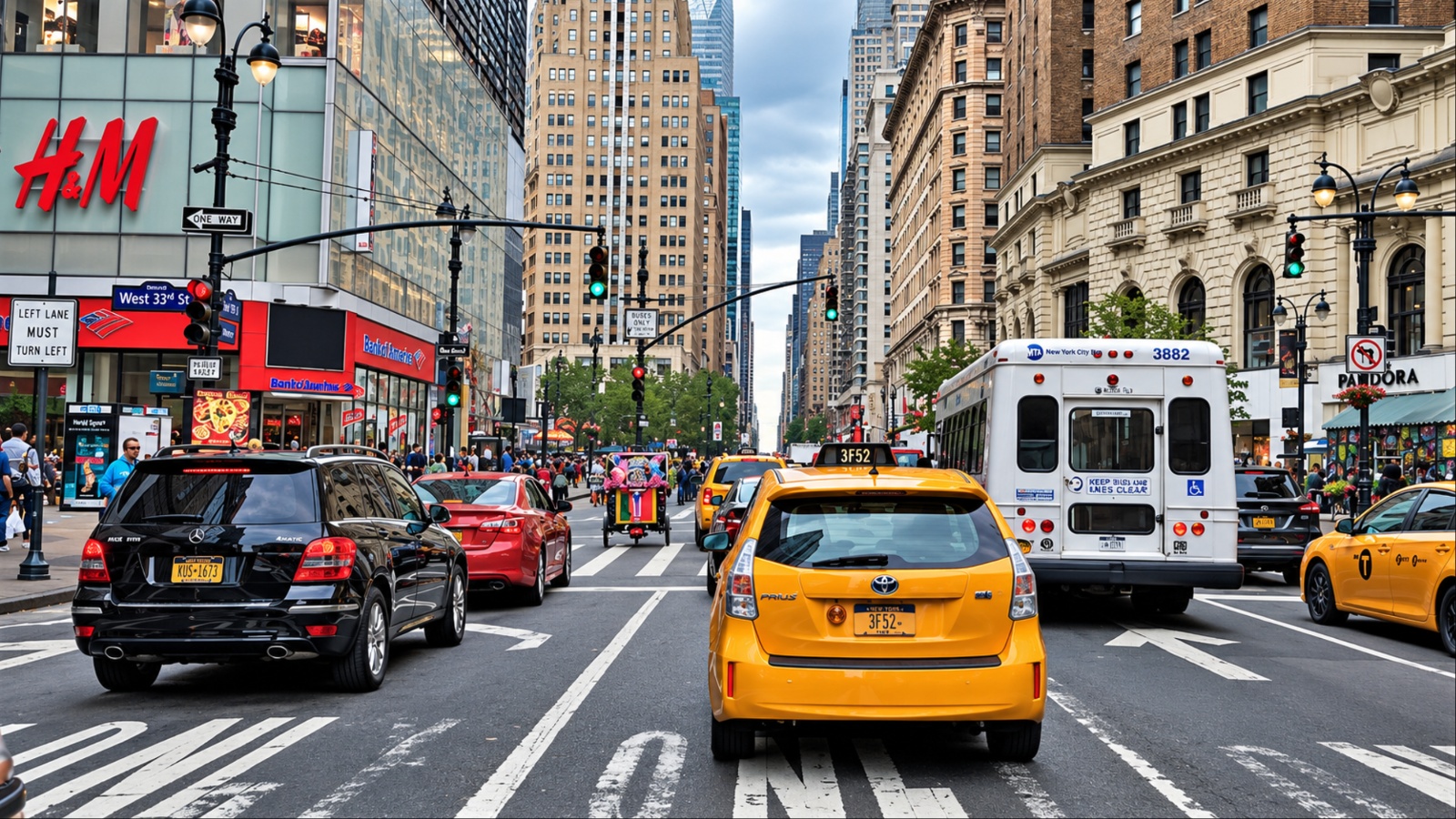
No U.S. city in the INRIX study experienced parking pain on the scale of New York. Drivers in New York City spent an average of 107 hours per year searching for parking, more than six times the national average.
INRIX estimated the resulting cost at $2,243 per driver annually, including wasted time, fuel, and emissions. Across the city, the combined economic cost of searching for parking reached approximately $4.3 billion.
Put into everyday terms, 107 hours is equivalent to more than four full days spent looking for somewhere to leave a vehicle. The problem was not simply that parking was expensive. Drivers were losing substantial amounts of time before they could even begin the activity that had brought them to their destination.
Los Angeles ranked second among the cities studied, with drivers spending approximately 85 hours a year searching for parking. The associated cost was estimated at $1,785 per driver.
San Francisco followed closely, with drivers spending 83 hours searching and losing an estimated $1,735 in time, fuel, and emissions.
Washington, D.C., ranked fourth at 65 hours and $1,367 per driver, followed by Seattle at 58 hours and $1,205. Chicago drivers spent approximately 56 hours searching, with the associated cost estimated at $1,174.
Boston recorded 53 hours and $1,111, while Atlanta reached 50 hours and $1,043. Dallas drivers spent 48 hours and approximately $995, while Detroit had the lowest search time among the 10 cities studied at 35 hours and $731.
The difference between cities demonstrates how strongly parking problems are connected to urban density, parking supply, and the concentration of destinations.
The national average of 17 hours can therefore conceal extremely difficult conditions in particular metropolitan areas.
Parking Search Was Only Part of the Financial Problem
INRIX’s research examined more than simply the time drivers spent looking for a space. It also considered what happened once motorists actually found somewhere to park.
One problem was overpaying for parking. Drivers often paid for more time than they actually needed because they did not want to risk receiving a parking ticket. INRIX estimated that American drivers collectively overpaid for parking by more than $20 billion annually, or approximately $97 per driver.
The study found that U.S. motorists added an average of 13 hours to parking transactions each year in an effort to avoid tickets. In New York, that figure was dramatically higher, at an average of 96 hours.
Parking fines added another financial burden. INRIX estimated that American drivers paid approximately $2.6 billion in parking fines annually. The study found that the average American driver received roughly one parking ticket every five years, while New York and Los Angeles motorists reported considerably higher ticket rates.
INRIX’s analysis combines several costs associated with parking, including overpayment and fines, when describing the broader economic impact. The company estimated that parking-related problems cost the U.S. economy about $96 billion annually. The $72.7 billion figure refers specifically to the economic cost of drivers searching for parking, rather than the total burden associated with parking.
That distinction matters because the headline $72.7 billion figure represents just one component of the problem.
The search itself also creates secondary consequences. A driver circling several blocks is consuming fuel without progressing toward the destination. At the same time, vehicles searching for parking add traffic to streets that may already be congested.
INRIX’s research suggested that parking difficulties could therefore affect other motorists and the wider transportation system, not just the person trying to find a space.
Parking Problems Can Change Where People Go
Perhaps the most important finding from the study was how parking difficulties affected driver behavior.
Among the U.S. respondents, 63% said they had avoided driving to a destination because of parking challenges. That meant parking problems could influence whether people visited businesses, attended activities, or even traveled to important destinations.
Shopping was particularly affected. INRIX found that 39% of respondents had avoided shopping destinations because of parking difficulties.
Another 27% said they had avoided driving to airports, while 26% had skipped leisure or sporting activities. About 21% said parking problems had caused them to avoid commuting to work.
Perhaps more concerning, 20% said they had avoided driving to a doctor’s office or hospital because of parking difficulties.
These findings show why parking is more than a convenience issue for cities and businesses. When motorists decide not to make a trip because they expect parking to be difficult, businesses can lose customers and destinations can lose visitors.
The psychological effect was also significant. INRIX found that 61% of U.S. drivers felt stressed while searching for parking, while 42% reported missing an appointment. About 34% said they had abandoned a trip because of parking problems, and 23% reported experiencing road rage.
For drivers, the frustration is easy to understand. A journey that should take 30 minutes can become much longer when the final portion involves repeatedly circling the same blocks. The driver may arrive late, burn additional fuel, and still have to pay for a parking space.
Technology Could Reduce the Time Spent Searching
INRIX conducted its study at a time when smartphone navigation and connected-car technology were developing rapidly, and the company argued that better information could help reduce parking pain.
Instead of searching blindly after reaching a destination, drivers could potentially use real-time parking information to identify available spaces before arriving.
Navigation systems could incorporate parking availability directly into route planning, allowing motorists to travel toward a known parking location rather than simply reaching the destination and beginning the search.
INRIX later reported that 90% of drivers surveyed wanted the ability to navigate directly to a parking space, while more than 75% wanted parking solutions integrated into navigation systems or navigation applications.
The technology available today has advanced considerably since the original study, with connected vehicles, smartphone parking applications, digital payment systems, and increasingly sophisticated navigation services helping drivers locate and pay for parking.
But technology cannot completely solve the underlying shortage of parking in densely populated areas.
A navigation system can tell a driver where a space is available. It cannot create additional spaces where demand substantially exceeds supply.
That leaves cities with a more complicated challenge involving parking policy, public transportation, land use, pricing, and infrastructure.
The INRIX study ultimately showed that the cost of parking is not limited to the fee displayed on a meter or garage entrance. A driver can pay relatively little for a parking space and still incur a much higher hidden cost through wasted time, fuel, stress, and missed opportunities.
The national figure of 17 hours and $345 per driver provides a useful illustration of that hidden burden, while New York’s 107 hours and $2,243 show how severe the problem can become in a major urban environment.
And with the national search for parking estimated at 3.6 billion hours and 1.7 billion gallons of fuel, the issue extends well beyond individual drivers.
Although the INRIX figures come from 2017 and do not reflect current U.S. conditions, they still illustrate an important point. Parking can create high economic and social costs before a driver even pays to use a parking space.
The challenge for cities and technology companies is to reduce the amount of time motorists spend searching while ensuring that transportation systems remain accessible, efficient, and practical for the people who depend on them.