
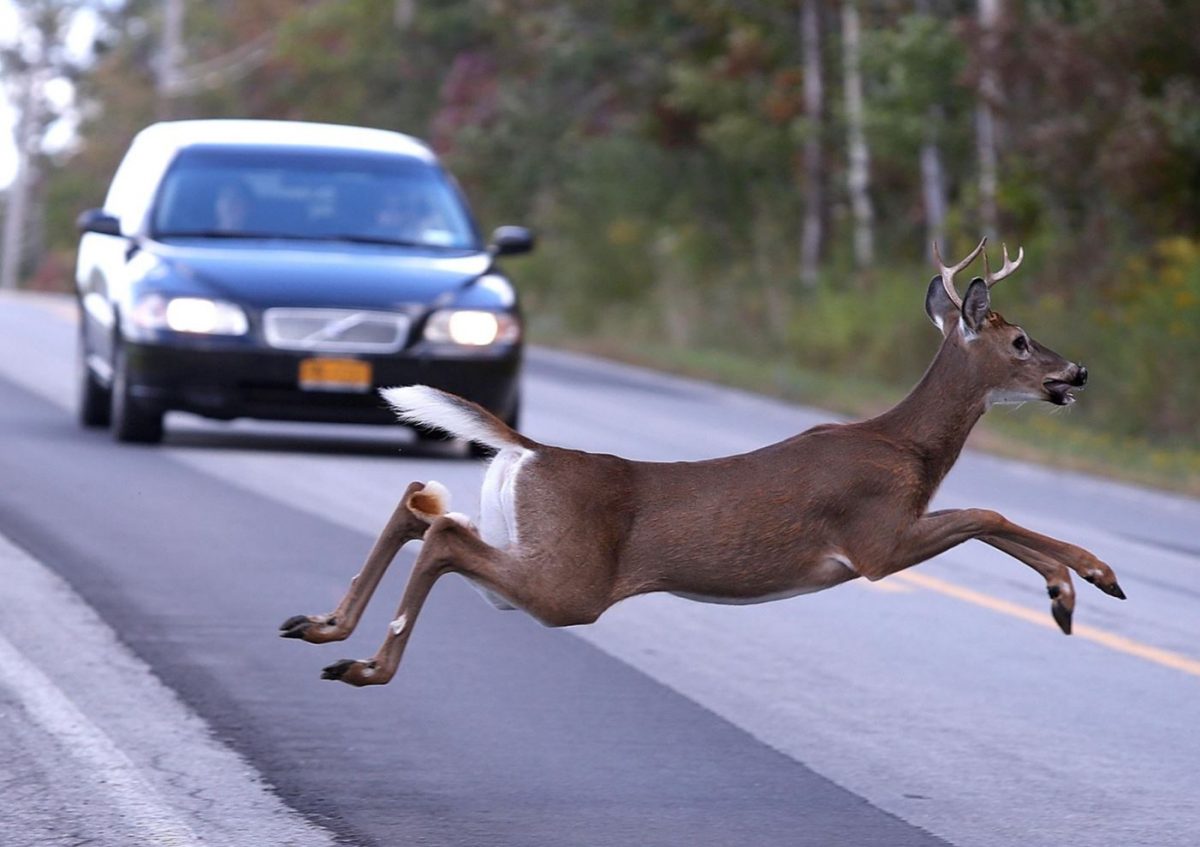
A deer strike can look like a relatively simple accident. The animal hits the front of the vehicle, the bumper breaks, the grille gets pushed in, and the damage may appear to be mostly cosmetic. On a modern vehicle, however, that first impression can be misleading.
The average cost of a deer collision has climbed well beyond what drivers might expect. State Farm has historically put the average deer-collision claim at more than $4,000, while more recent industry data shows that animal-strike claims can run substantially higher depending on the vehicle, location, and severity of the impact.
AAA East Central reported average animal-collision claim costs of $5,620 in high-risk states in 2024.
The reason is not simply that body panels have become more expensive. Modern vehicles increasingly place radar sensors, cameras, parking sensors, and other electronic equipment in or around the front bumper and grille. A deer can damage those components even when the visible body damage appears manageable.
CCC Intelligent Solutions’ latest collision-repair data shows how much vehicle complexity has changed repair economics.
The average total cost of repair across its repairable claims was approaching $4,800 in 2025, while 28.3% of repairable estimates included a calibration operation, up from 21.8% a year earlier. The average calibration fee reached about $486. That makes the type of vehicle you drive a major factor in what a deer strike ultimately costs.
Sedan: The Damage Can Go Beyond the Bumper
A deer strike involving a conventional sedan may be less expensive than the same impact involving a larger SUV or luxury vehicle, but it can still produce a surprisingly large repair bill.
A relatively low-speed impact might damage the bumper cover, grille, hood, and one headlamp. A driver could be looking at several thousand dollars once replacement parts, paint, labor, and associated hardware are included.
The problem becomes more serious when the impact reaches the cooling system. The radiator, condenser, cooling fans, and related components are positioned behind the front bumper on many sedans. A deer that crushes the grille can push debris and broken plastic into those components.
Headlights can also dramatically increase the bill. Modern LED and adaptive headlamp assemblies can contain sophisticated electronics rather than functioning simply as replaceable bulbs. Replacing one can add hundreds or thousands of dollars depending on the vehicle.
Then there is the technology hidden behind the bumper. A sedan equipped with adaptive cruise control or automatic emergency braking may have a radar sensor mounted behind the grille or bumper. If the sensor is damaged, displaced, or removed during repairs, it may require replacement or recalibration.
CCC has documented the growing cost of this work. Its 2026 Crash Course found that calibration appeared in 28.3% of repairable estimates in 2025, while the average calibration fee was approximately $485.56.
So a sedan deer strike that once might have been primarily a bumper-and-grille repair can now become a bumper, headlamp, cooling system, sensor, and calibration job.
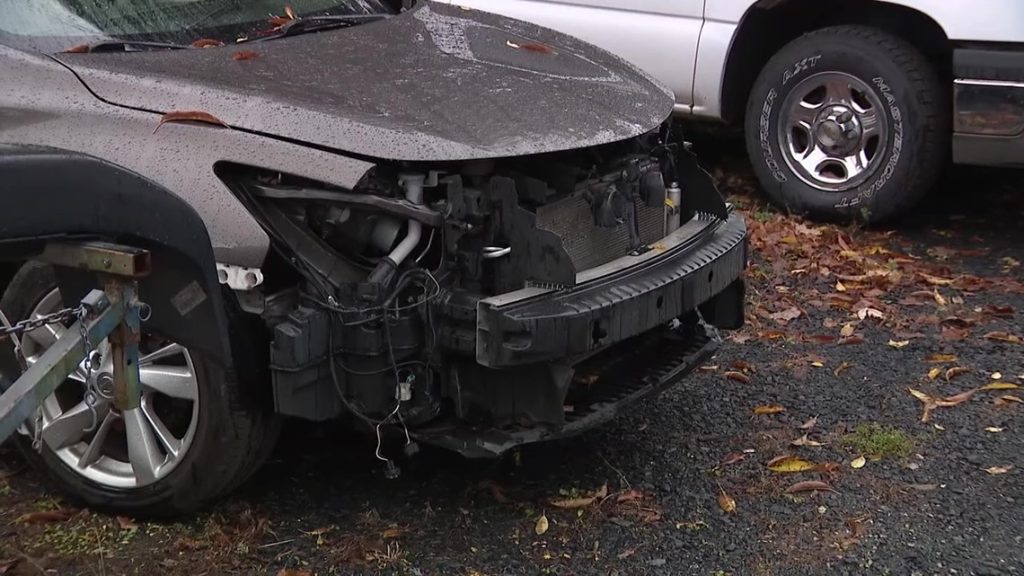
For an older sedan, the cost of the repair can raise another concern. The work may simply not be worth the expense. CCC reported an average repair cost of $3,682 for vehicles seven years and older, compared with $5,721 for vehicles six years old or newer across its broader repairable-claim data.
A deer strike can therefore push an older, lower-value sedan toward a total-loss decision surprisingly quickly.
SUV: More Front-End Equipment Means More Exposure
SUVs present a different repair equation because their larger front ends contain more components and their popularity means manufacturers increasingly equip them with sophisticated driver-assistance systems.
A moderate deer strike can damage the bumper cover, grille, hood, and fenders before reaching mechanical components. If the impact is strong enough, the radiator and air-conditioning condenser can also be damaged.
The front bumper itself may contain multiple ultrasonic parking sensors. Radar units can sit behind the grille, while cameras may be mounted near the windshield or in the front fascia depending on the vehicle. That means replacing a bumper does not necessarily finish the repair.
If a radar sensor survives physically but its mounting position changes, the vehicle may still require calibration. CCC’s data shows that calibration is becoming a routine part of collision repair rather than an unusual add-on.
The company says calibration frequency has increased dramatically as ADAS becomes more common, while average calibration costs have nearly doubled over five years. This is why a modern SUV can produce a repair bill that seems disproportionate to the visible damage.
Consider a hypothetical moderate impact. The bumper and grille might need replacement, one headlamp could be damaged, the hood could require repair and paint, and a radar sensor might need attention. Add cooling-system inspection, diagnostic scanning, calibration, and labor, and a repair estimate can quickly move into the $5,000-to-$8,000 range.
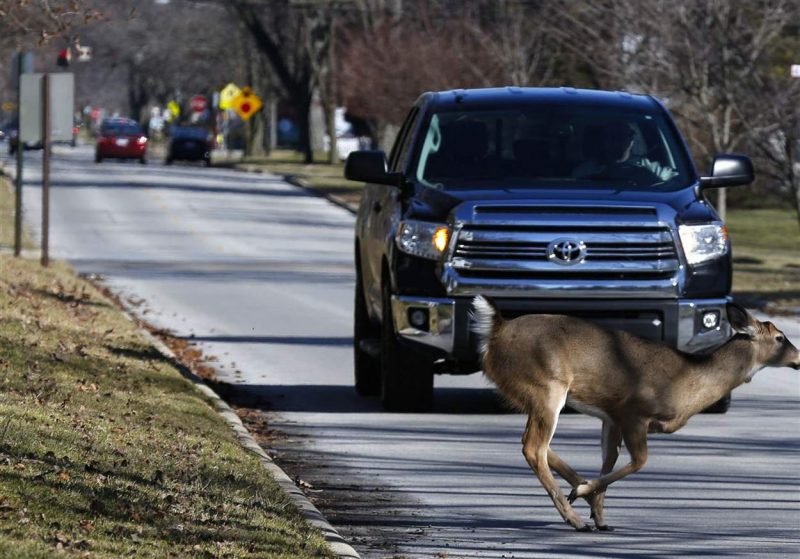
A more severe strike that reaches the radiator, condenser, structural components, or multiple electronic modules can climb into five figures. Repair shops report that severe deer impacts involving major front-end components can exceed $10,000.
The SUV’s higher value can make that repair economically viable compared with an older sedan, but the owner’s deductible still matters. A $500 comprehensive deductible means the driver remains responsible for the first $500 of an eligible claim.
Pickup Truck: Tougher Does Not Mean Cheap
Pickup trucks often have an advantage in deer collisions because their construction and higher ride height can change the way the impact is absorbed. But that does not mean a truck is immune to expensive repairs.
The grille, bumper, and headlights remain vulnerable, and many modern pickups have radar sensors integrated into the front-end design.
A full-size pickup can also have expensive lighting assemblies, large grille components, and extensive painted bodywork. On higher trims, those parts can be substantially more expensive than their counterparts on basic work trucks.
The bigger concern comes when the deer impacts the hood or reaches deeper into the engine compartment.
Radiators, condensers, cooling fans, and other components can be damaged. If the impact affects the truck’s front camera or radar equipment, additional diagnostic and calibration procedures may follow.
The result can be a repair bill several times higher than what a driver might expect from looking only at the damaged bumper.
This is also where the distinction between a simple repair and a modern collision repair becomes important. CCC found that scan and calibration procedures are increasingly common and that diagnostic work is contributing to higher repair costs alongside parts and labor.
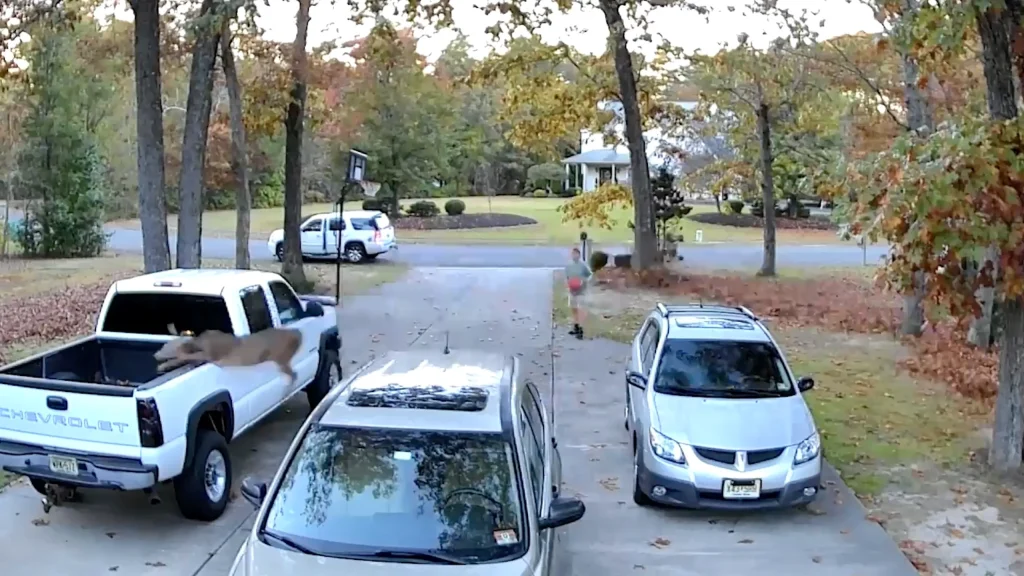
A pickup with a relatively straightforward front-end repair may stay around the lower end of the typical deer-strike range. But a truck with extensive grille damage, LED lighting, radar equipment, and cooling-system damage can quickly move beyond $7,000 or $10,000.
Older trucks can face the opposite problem. Their repair bills may not be extraordinary by modern standards, but their market value may be low enough that a major deer impact pushes the vehicle toward being totaled.
Luxury Car: The Same Deer Can Produce a Much Bigger Bill
Luxury vehicles are where the financial consequences of a deer strike can become especially dramatic.
The damage pattern is usually familiar, starting with the bumper and potentially extending to the grille, hood, headlights, and cooling system. What varies is the cost and complexity of the components involved.
A luxury vehicle may use expensive matrix LED or laser-style lighting, elaborate grille assemblies, multiple cameras, radar sensors, and advanced driver-assistance hardware. Some models also have active aerodynamic components incorporated into the front fascia.
Replacing those parts can quickly push a claim far beyond the national average. A damaged bumper may require more than replacing a plastic cover. The repair can involve sensor brackets, wiring, radar equipment, parking sensors, cameras, and calibration.
If an expensive headlamp is damaged at the same time, the parts bill can become substantial before labor and paint are added.
CCC’s data helps explain why these repairs keep getting more expensive. For vehicles six years old or newer, its 2025 average repair cost was $5,721, 55.4% higher than the $3,682 average for vehicles seven years and older.
Luxury vehicles tend to sit toward the expensive end of the repair spectrum because parts, technology, and labor can all carry higher costs.
That is also why the phrase “the bumper is only slightly damaged” can be misleading. The visible plastic may represent only one part of the repair.
A deer strike can damage the components behind it, and modern safety systems may need to be electronically verified even when they appear untouched.
