The cars Americans buy over the next few years may look familiar, but the features inside them are changing quickly.
Automakers are replacing physical controls with software-driven interfaces, adjusting powertrain lineups, and responding to new safety requirements and shifting customer preferences.
By 2029, some familiar features could become harder to find, disappear from particular models, or survive only on higher trims. However, there is an important distinction between a manufacturer discontinuing a feature and federal regulations requiring a change.
This article examines ten features facing pressure in the U.S. market, separating documented developments from trends that remain uncertain.
1. Manual Transmissions
For American drivers who enjoy changing gears themselves, the six-speed manual transmission is becoming an increasingly rare choice.
The shift away from manual transmissions is no longer just a forecast. Volkswagen has confirmed that its U.S. lineup will drop manual gearboxes after the 2026 model year. The Jetta GLI will be the last model to lose the option, following the Golf GTI and Golf R.
The broader market trend reinforces that change. Manual gearboxes have lost ground to automatic transmissions, which are now widely available across sedans, SUVs, and performance cars. Electric vehicles generally do not offer conventional multi-speed manual gearboxes, further shrinking the number of new vehicles available to enthusiasts.
That does not mean every manual car will disappear by 2029. The Ford Mustang, for example, has continued to offer a manual transmission on certain versions, and other manufacturers may retain the option where demand supports it. Availability depends on model, trim, and model year.
Why are automakers moving away from manuals? Automatic transmissions can deliver competitive fuel economy and acceleration while appealing to drivers who prefer convenience in traffic.
Offering fewer transmission choices can also simplify production and inventory management. Manufacturers increasingly prioritize configurations expected to sell in larger numbers.
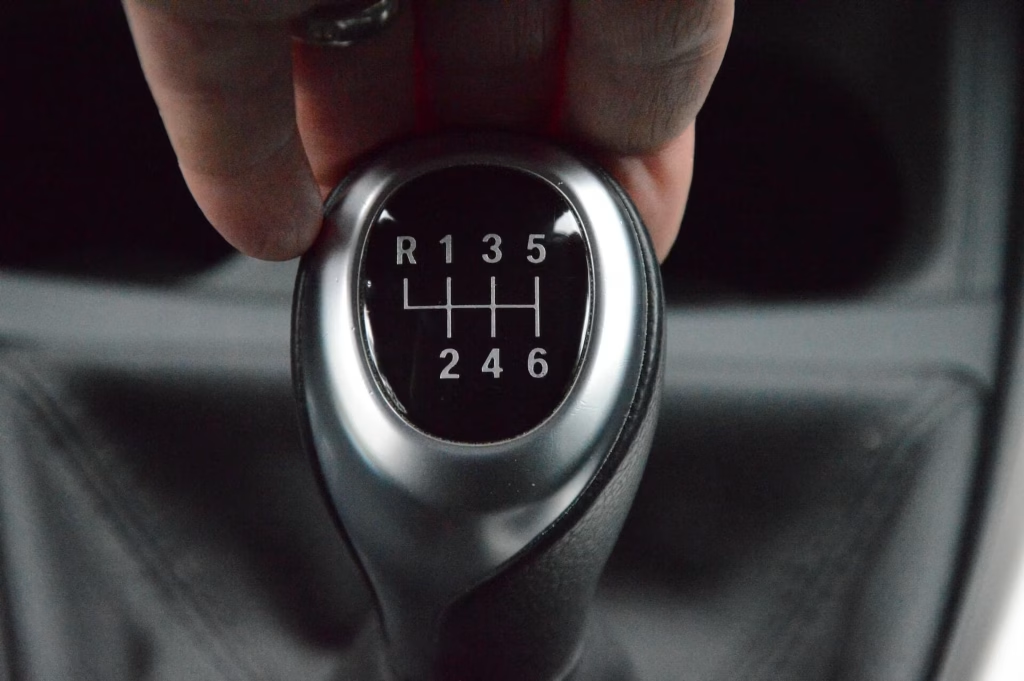
For buyers who want a new manual car, the practical lesson is to check current specifications rather than assume the option will remain available. A vehicle offered with a stick shift today may lose it at its next redesign or model-year update.
By 2029, manual transmissions are likely to be even less common in the U.S. new-car market, although a complete disappearance is not established. Enthusiasts who value the extra driver involvement may need to act sooner when choosing their next vehicle.
2. Physical Climate and Audio Controls
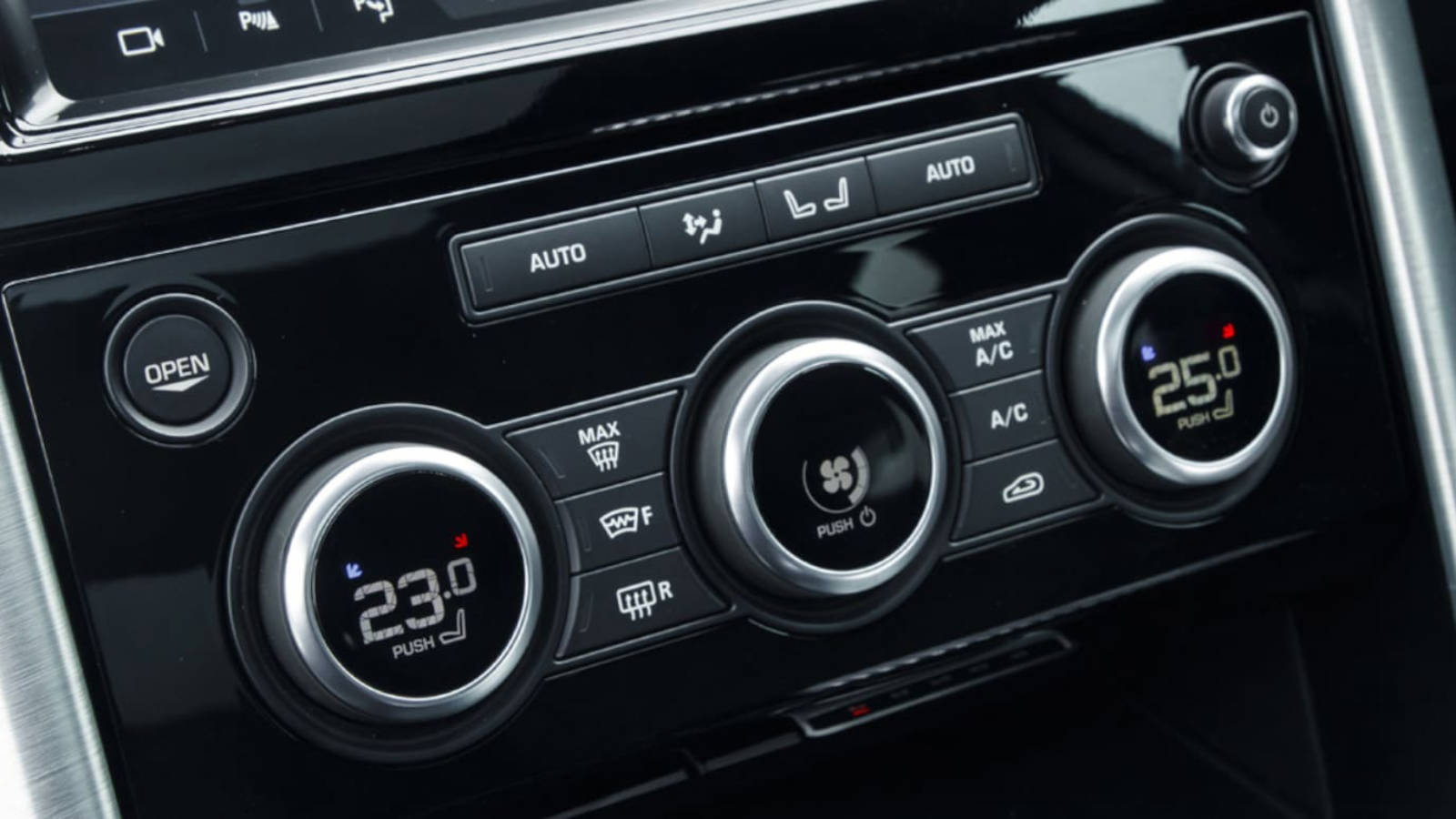
Traditional knobs and buttons for adjusting temperature, fan speed, and audio volume have increasingly been replaced by touchscreen menus and touch-sensitive surfaces. Automakers have pursued cleaner dashboards and larger displays, but the change has attracted criticism from drivers who prefer controls they can operate without looking away from the road.
The trend is visible in several U.S.-market vehicles. Some versions of the Ford Mustang Mach-E and Lincoln Nautilus place numerous functions within a large central display, while other manufacturers have adopted touch-sensitive controls instead of conventional switches.
However, the industry is not following a single trend. In response to customer complaints, some automakers have brought back physical buttons and knobs for commonly used features.
That makes the future less certain than a simple phase-out prediction suggests. By 2029, traditional controls may be harder to find in some models, especially those designed around software-focused interiors.
However, there is no federal rule requiring automakers to eliminate physical climate or audio controls, and several manufacturers continue to offer them.
The distinction matters because a touchscreen is not automatically safer or less safe in every situation. The design, size of on-screen targets, menu layout, voice-control quality, and driver’s familiarity all affect usability.
A dedicated temperature knob can be adjusted by touch, while a deeply buried touchscreen setting may require more attention.
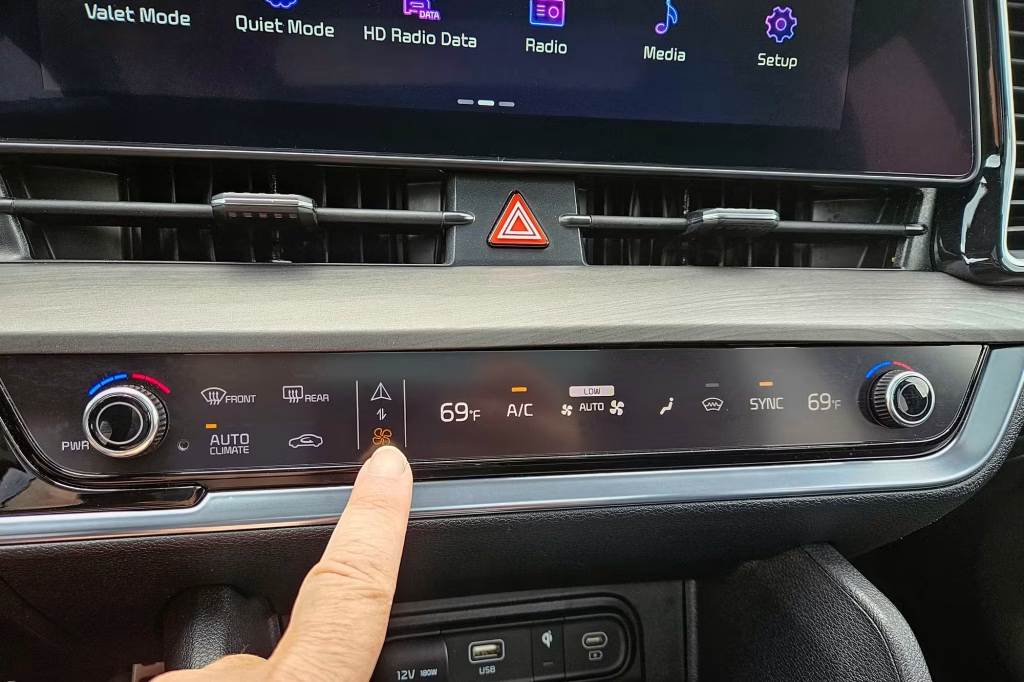
Buyers should test the controls before committing to a vehicle. Try adjusting the temperature, changing audio volume, and switching between common functions while parked. Check whether frequently used features remain accessible without navigating multiple menus.
By 2029, the traditional dashboard may look very different, but physical buttons are unlikely to vanish from every new car. The more realistic forecast is a continuing battle between screen-centered design and a renewed demand for simple, tactile controls.
3. AM Radio in Electric Vehicles
AM radio has become an unexpected point of contention in the electric-vehicle market. Some automakers have removed AM receivers from certain EVs, citing electromagnetic interference from electric powertrains and the engineering work needed to deliver acceptable reception.
That has made a familiar source of news, weather updates, and emergency information less consistently available in new vehicles.
The issue has drawn attention in Washington. The proposed AM Radio for Every Vehicle legislation would require access to AM broadcast stations in new passenger vehicles, addressing manufacturers that have removed or plan to remove the feature.
Congressional Budget Office analyses describe the bill’s intended requirements, including provisions affecting vehicles without standard AM equipment.
The crucial distinction is that a bill’s existence does not by itself establish that it has become an effective federal requirement. Its legislative status and any final implementation dates must be verified before claiming that all new cars will have to retain AM radio by 2029.
For drivers, the concern goes beyond nostalgia. AM stations can provide local reporting, traffic updates, and emergency broadcasts, particularly in areas where other communications are disrupted. Digital streaming and satellite radio offer alternatives, but they may depend on mobile coverage, subscriptions, or working internet connections.
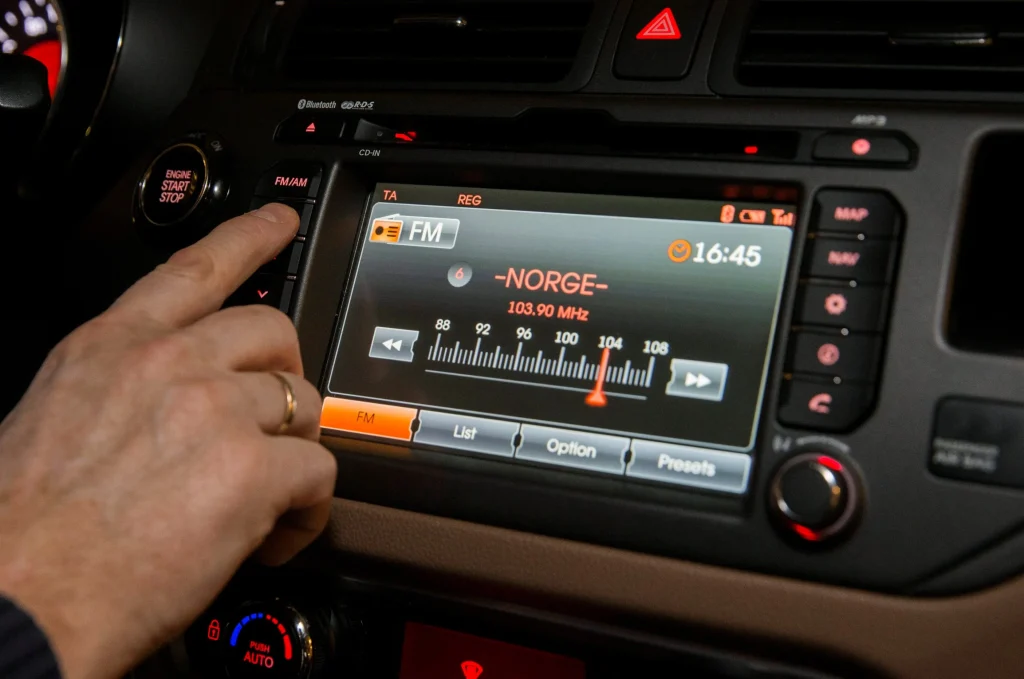
Automakers could respond through improved shielding, redesigned receivers, or other technical solutions. Some vehicles may retain AM radio, while others could use different ways to deliver broadcast content depending on the manufacturer and applicable requirements.
By 2029, AM radio’s availability in new EVs will depend on engineering decisions and the outcome of federal legislation. It is therefore more accurate to describe the feature as being contested than to say it is certain to disappear from all electric vehicles.
4. CD Players
The built-in CD player has become increasingly difficult to find in new American vehicles. For years, drivers could load a disc and listen without relying on a phone, mobile data, or a streaming subscription. Today, automakers increasingly design infotainment systems around Bluetooth, USB connections, smartphone integration, and subscription-based audio services.
This shift reflects changing consumer habits as much as vehicle design. A large touchscreen can combine navigation, music, calls, and vehicle settings, while removing the CD mechanism frees space inside the dashboard. Manufacturers also avoid maintaining hardware that fewer buyers actively request.
However, there is no universal federal deadline requiring CD players to disappear by 2029. The change is a product trend, not a known nationwide regulatory phase-out. Some used vehicles and aftermarket systems will continue to support discs, and drivers can still use external audio devices where compatible.
For people with extensive CD collections, the loss is more practical than sentimental. A driver may want reliable playback in areas with poor cellular coverage or prefer physical ownership of music.
Before buying a new car, check whether the infotainment system accepts discs directly or requires an external player. USB ports do not necessarily support every external audio device, so compatibility should be confirmed.
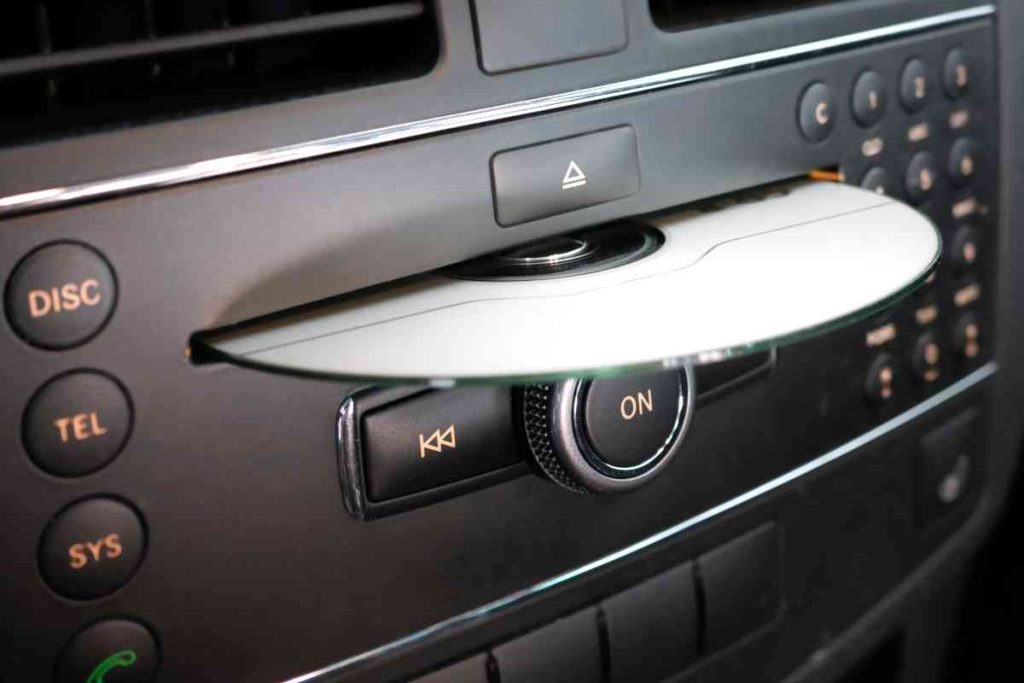
Owners can often keep their music accessible by transferring legally owned recordings to compatible digital formats or using an external player with an appropriate audio connection. The available options depend on the car’s inputs and software.
By 2029, built-in CD players are likely to be even rarer in new vehicles. Buyers who still use physical discs should check the equipment list before purchase rather than assume that a premium audio system includes a disc drive.
5. Traditional Analog Instrument Clusters
The familiar arrangement of physical speedometer and tachometer dials is giving way to digital instrument clusters. Instead of fixed markings and moving needles, drivers increasingly see speed, navigation directions, driver-assistance alerts, and vehicle information displayed on configurable screens behind the steering wheel.
This shift is already visible across the U.S. market. Digital clusters appear in vehicles ranging from mainstream crossovers to luxury sedans, while some models combine a digital display with physical gauges.
Automakers can use software to change the layout, add new information, and integrate navigation prompts without redesigning an entire instrument panel.
The appeal for manufacturers is flexibility. A single display design can support different trim levels and powertrains, while software updates may improve or alter certain functions. Drivers can also benefit from clearer navigation prompts and the ability to prioritize information they use most frequently.
However, digital displays are not universally replacing analog gauges. Some affordable vehicles continue to offer conventional instruments, and there is no federal mandate requiring every new U.S. car to use a fully digital cluster by 2029. The direction varies by brand, vehicle class, and price.
Digital technology also introduces considerations that traditional gauges largely avoid. Screen glare, software faults, distracting layouts, and repair costs can affect the ownership experience. A failed display may require specialist diagnosis or replacement, depending on the vehicle.
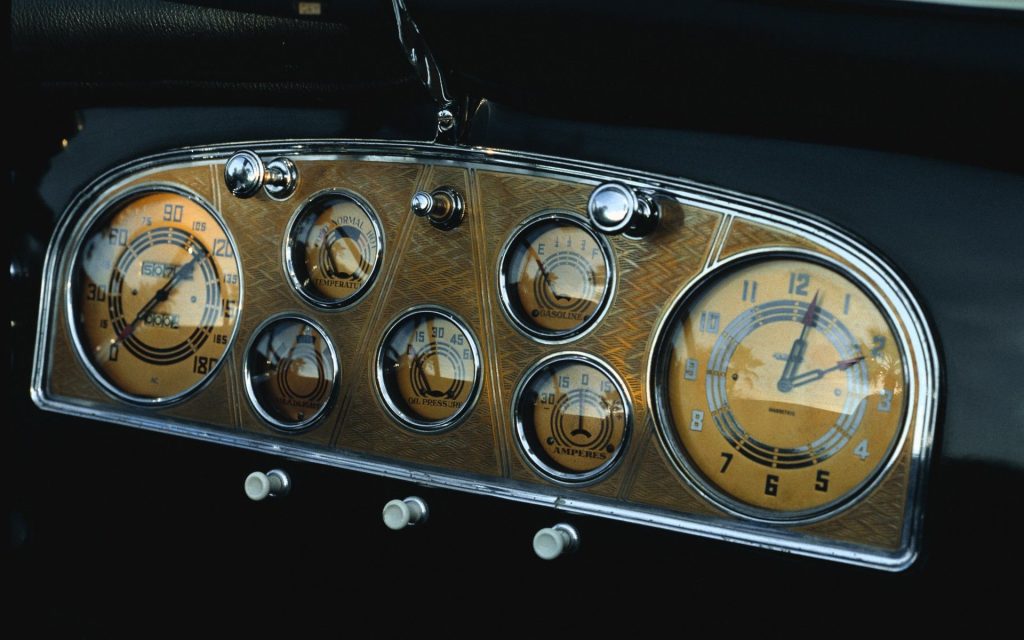
Buyers should assess readability during a test drive, checking the display in bright sunlight and at night. Make sure speed and warning information remain easy to locate, even when navigation or other graphics are active.
By 2029, fully analog instrument panels may be less common, particularly in newer and more expensive models. But a mixed arrangement of digital screens and physical gauges is likely to remain available, giving buyers different levels of technology.
6. Conventional Ignition Keys
The traditional ignition key, inserted and turned to start the engine, has gradually lost ground to push-button ignition systems. Many newer vehicles let drivers start the engine while keeping a key fob in a pocket or bag. Some manufacturers have also introduced smartphone-based digital keys that can unlock or start compatible vehicles.
Convenience is a major reason for the change. Push-button systems reduce the need to insert a physical key, while digital-key technology can let owners share access with other authorized drivers. Depending on the system, a compatible phone may use near-field communication, Bluetooth, or other wireless technology to communicate with the vehicle.
Still, the old-fashioned ignition key is not disappearing from every car by 2029. Some lower-priced vehicles continue to use conventional keys, and manufacturers make equipment decisions based on cost, customer expectations, and model positioning.
There is no general U.S. federal requirement forcing all passenger vehicles to adopt push-button or smartphone ignition.
Electronic access also brings new considerations. Drivers must understand what happens when a key-fob battery dies, a phone loses power, or digital access stops working. Most vehicles with electronic ignition provide backup procedures, but these vary by model and should be checked in the owner’s manual.
Used-car buyers should confirm that all keys and fobs are included in the sale. Replacing a missing smart key can be more expensive than obtaining a conventional mechanical key, and some systems require programming by a dealer or qualified locksmith.
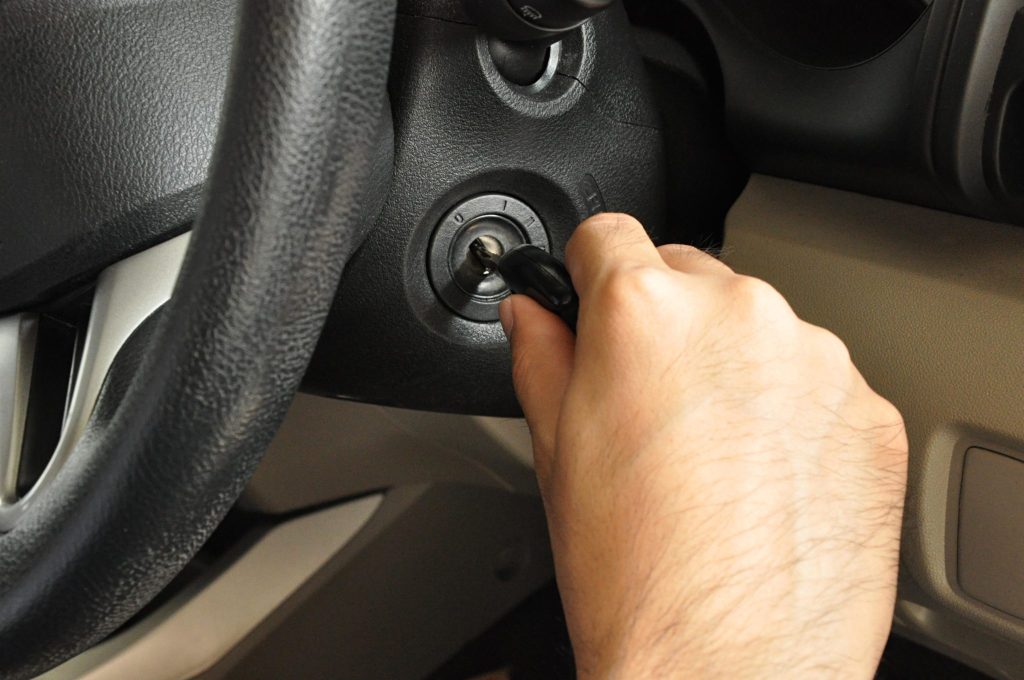
By 2029, push-button ignition and digital access may become more common across new-car lineups, but traditional keys will likely remain in some budget-oriented models. Buyers should judge the system by convenience, reliability, and replacement costs rather than assuming newer technology is automatically better.
7. Full-Size Spare Tires
A full-size spare tire has long been a reassuring feature for drivers who travel long distances or use roads where roadside assistance may take time to arrive.
Yet some modern vehicles are supplied with a compact temporary spare, a tire inflator, or a sealant kit instead. That change saves space and weight, which can help manufacturers package cargo areas and meet efficiency targets.
The trade-off is practical. A temporary spare is generally intended for limited-distance use, while a sealant-and-inflator kit may not work with every puncture. A damaged sidewall, a large tear, or a wheel problem can leave a driver needing a tow rather than a quick roadside repair.
There is no federal rule requiring automakers to remove full-size spare tires by 2029. Their availability depends on the vehicle, trim, wheel-and-tire package, and whether the spare is standard, optional, or omitted. SUVs and pickups may still offer full-size spares, while some cars and crossovers prioritize underfloor storage space.
Weight and packaging are not the only considerations. Run-flat tires can provide another alternative on certain vehicles, allowing limited travel after a loss of air pressure, but they have their own limitations and replacement costs. Buyers should check the manufacturer’s instructions rather than assume any tire can safely be driven while deflated.
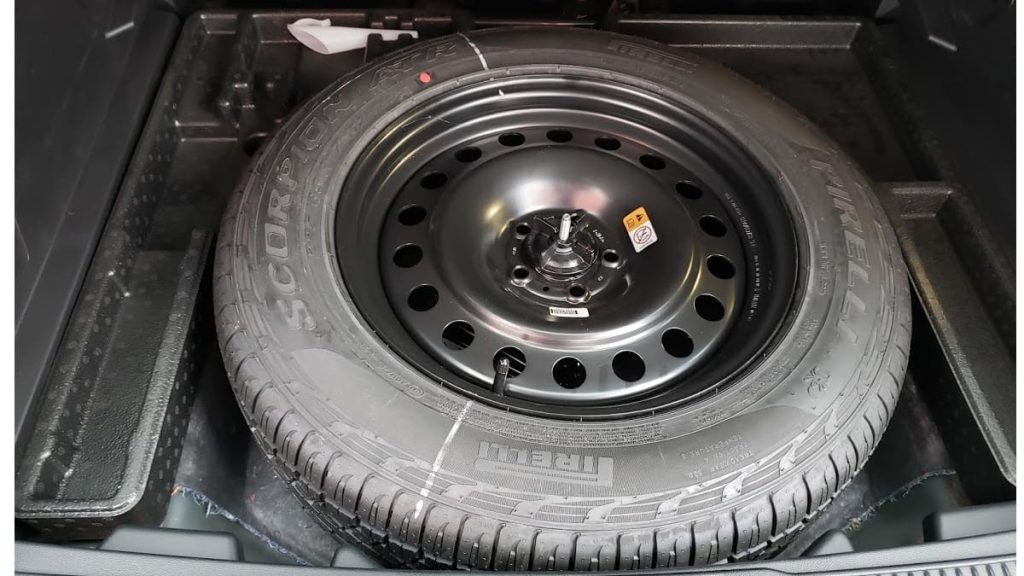
Before purchasing a new vehicle, open the cargo floor and inspect what is actually included. Confirm whether the car has a spare wheel, a jack and tools, a repair kit, or run-flat tires. If the vehicle lacks a spare, ask whether a compatible spare can be purchased and safely stored.
By 2029, repair kits and space-saving alternatives may remain common in certain segments, but full-size spares are not destined to disappear everywhere. Drivers who frequently travel through remote areas should make this detail part of their buying decision.
8. Smartphone Projection
For many drivers, Apple CarPlay and Android Auto are essential because they bring familiar navigation, calls, messages, and music apps onto the car’s infotainment screen. Yet their availability is becoming less predictable as some automakers develop proprietary software platforms and subscription-based connected services.
General Motors has announced plans to remove Apple CarPlay and Android Auto from its future electric vehicles, with its broader strategy shifting toward integrated infotainment and Google-based services. That does not mean every GM vehicle already lacks smartphone projection, or that every automaker will follow the same path.
Manufacturers may prefer their own systems because they can integrate navigation, vehicle settings, voice assistants, and connected services more closely.
They may also gain greater control over software updates and customer relationships. For drivers, however, the change can mean learning a different interface and relying on the carmaker’s software instead of a familiar phone-based experience.
There is no federal regulation requiring smartphone projection to disappear by 2029. Availability will depend on each manufacturer’s product plans, model year, and infotainment system. Some vehicles will continue to offer wired or wireless projection, while others may use proprietary alternatives.
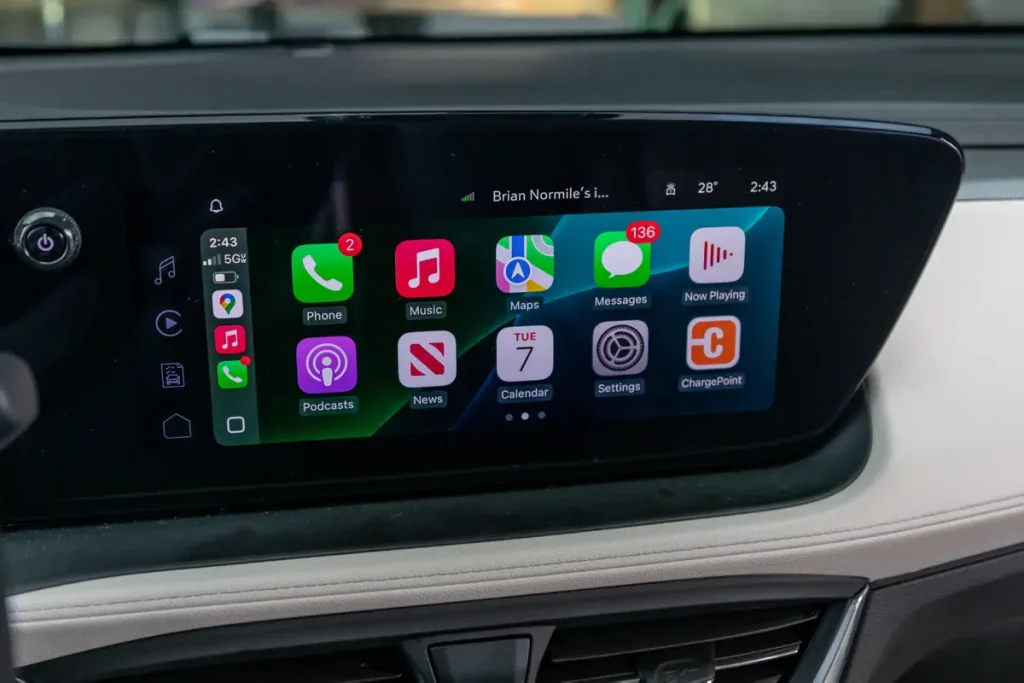
Buyers should verify compatibility before signing a purchase agreement. Check whether Apple CarPlay or Android Auto is included, whether it works wirelessly or through a USB connection, and whether important functions require a paid subscription. A vehicle’s large touchscreen does not automatically mean it supports the phone apps a driver prefers.
By 2029, smartphone projection may be absent from more models as proprietary systems expand, but it will not vanish from the entire U.S. market. Anyone who relies on phone-based navigation should treat this as a feature to verify, not an assumption to make.
9. Mechanical Parking Brakes
The traditional handbrake lever or foot-operated parking brake is becoming less common as automakers adopt electronic parking brakes. Instead of pulling a lever connected mechanically to the braking system, drivers press a switch that activates an electrically controlled mechanism.
This change can free up space around the center console, create room for storage, and allow the parking brake to integrate with other vehicle systems. Some electronic systems automatically engage when the driver shifts into park or switches off the engine, while others can work alongside hill-start assistance and other convenience features.
Electronic parking brakes are already widespread in many newer SUVs, luxury vehicles, and family cars. Nevertheless, conventional hand-operated systems remain available in certain models, particularly vehicles designed around affordability or a more traditional driving experience.
No general U.S. federal rule requires mechanical parking-brake levers to disappear by 2029. The electronic version also has drawbacks worth considering.
A switch or actuator fault may require specialist diagnosis, and releasing the brake during a dead battery or electrical failure can require a model-specific procedure. Owners should consult the vehicle’s manual instead of assuming every system works the same way.
For used-car shoppers, the condition of the parking brake matters regardless of its design. Confirm that it engages and releases correctly, that no warning lights remain illuminated, and that the vehicle stays securely parked on an appropriate incline during a controlled test.
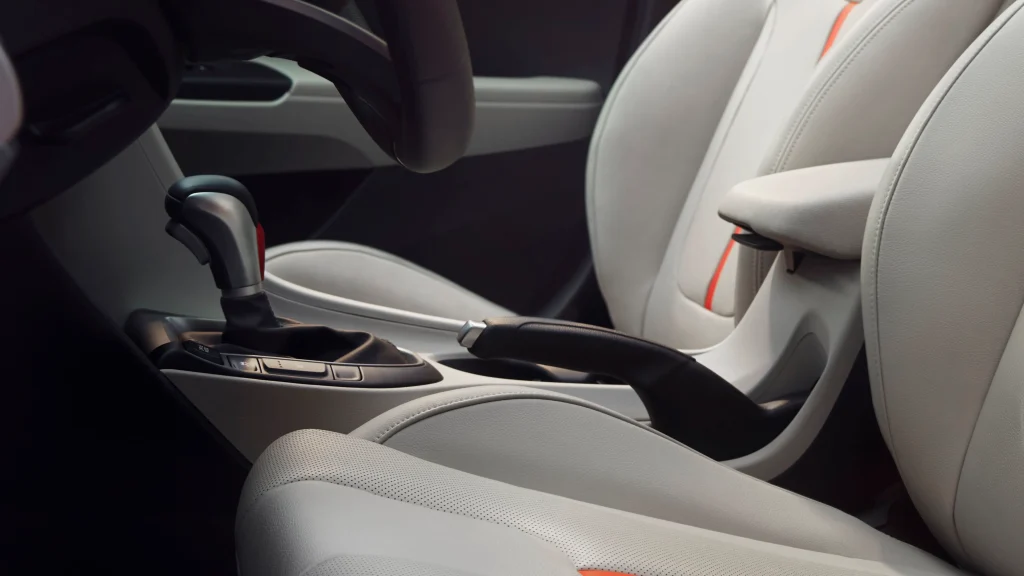
Drivers who prefer a traditional hand lever should check the equipment list before choosing a vehicle. By 2029, electronic parking brakes may become even more common as manufacturers redesign interiors and standardize electronic controls.
However, the conventional lever is not certain to disappear from all new cars, and buyers may still find it on selected models.
10. Naturally Aspirated Engines
The naturally aspirated gasoline engine, which draws air into the cylinders without a turbocharger or supercharger, faces increasing competition from turbocharged engines and hybrid powertrains.
Automakers use these alternatives to balance power, fuel economy, emissions requirements, and customer expectations. As new model generations arrive, some familiar engine choices may disappear from individual lineups.
Turbocharging can help a smaller engine produce strong power, while hybrid systems can improve efficiency in stop-and-go driving.
Electric vehicles eliminate the gasoline engine. These changes give manufacturers more options for meeting performance and regulatory targets, but they also mean buyers may have fewer choices among traditional engines in some segments.
This is a trend, not a confirmed industry-wide deadline. Naturally aspirated engines remain available in many U.S. vehicles, including models that prioritize predictable throttle response, simpler power delivery, or cost-effective everyday transportation. Some manufacturers continue to use them in mainstream cars, SUVs, and performance vehicles.
The distinction between engine types matters to ownership. Turbocharged engines may require particular attention to oil specifications and service intervals, while hybrid vehicles add electric motors and battery systems.
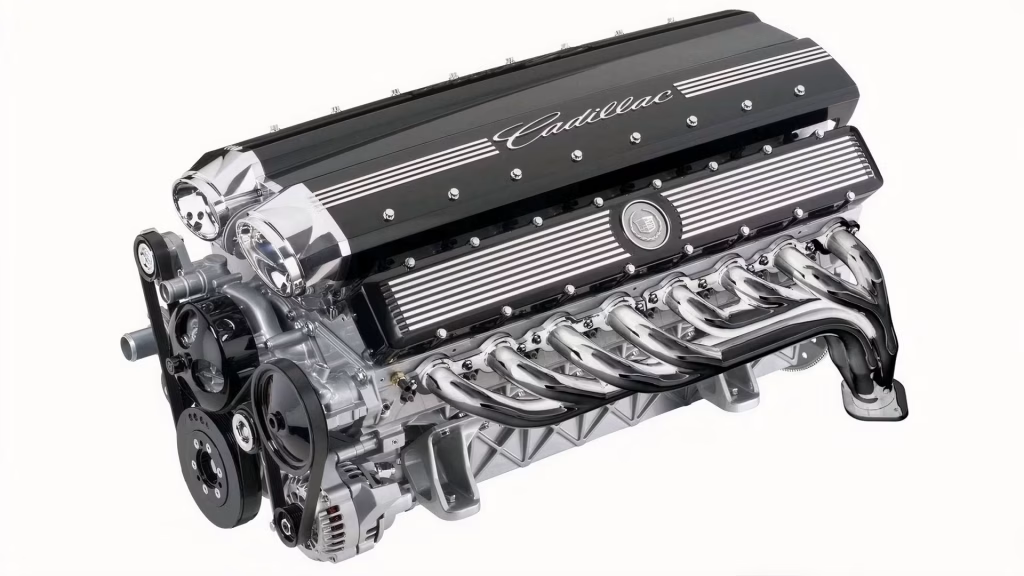
Naturally aspirated engines still need routine maintenance and can also develop expensive faults. No engine design guarantees low repair bills by itself.
Buyers should compare the powertrain offered on the exact model year rather than assume an engine will continue unchanged. Check horsepower, torque, fuel economy, towing limits where relevant, and the manufacturer’s maintenance schedule.
If you value a naturally aspirated engine’s character, availability may be a reason to consider a current model before its next redesign.
By 2029, some naturally aspirated engine options may have disappeared from specific vehicles, particularly where turbocharging or hybridization offers a better fit for the manufacturer’s plans. However, a complete disappearance across the American market is not established.