
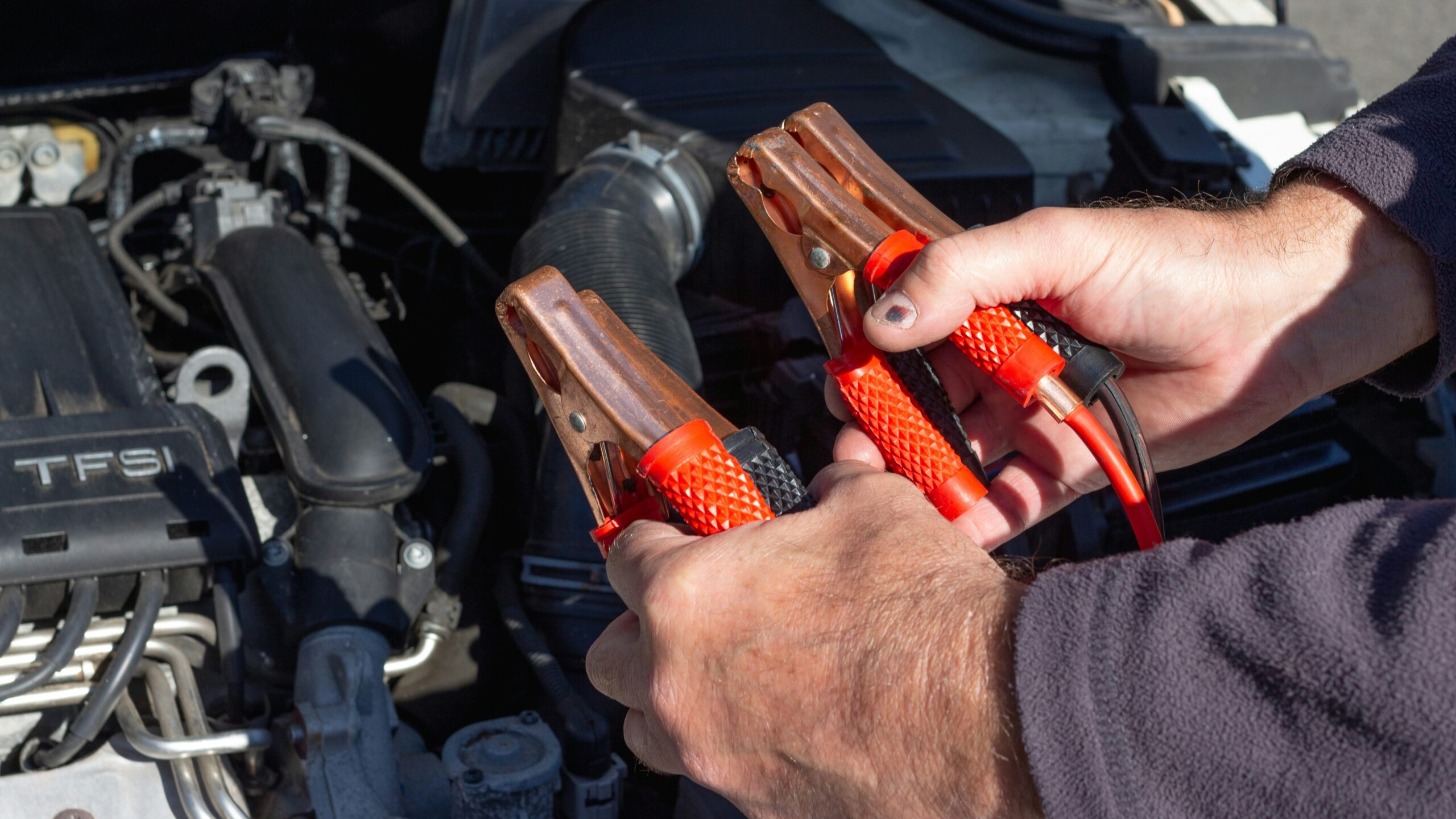
Jump-starting a car can restore power to a dead battery, but connecting jumper cables incorrectly can damage sensitive electrical components. Reversing polarity, allowing clamps to touch, or creating voltage spikes may affect systems ranging from alternators to electronic control modules.
Modern vehicles are particularly dependent on carefully regulated electrical power, and some manufacturers prescribe specific jump-start terminals and procedures. Not every failed component after a jump start was damaged by the procedure itself, however.
An already weak battery, corroded connections, or an underlying charging problem can produce similar symptoms. Understanding the risks helps drivers avoid costly mistakes.
1. Alternator and Voltage Regulator
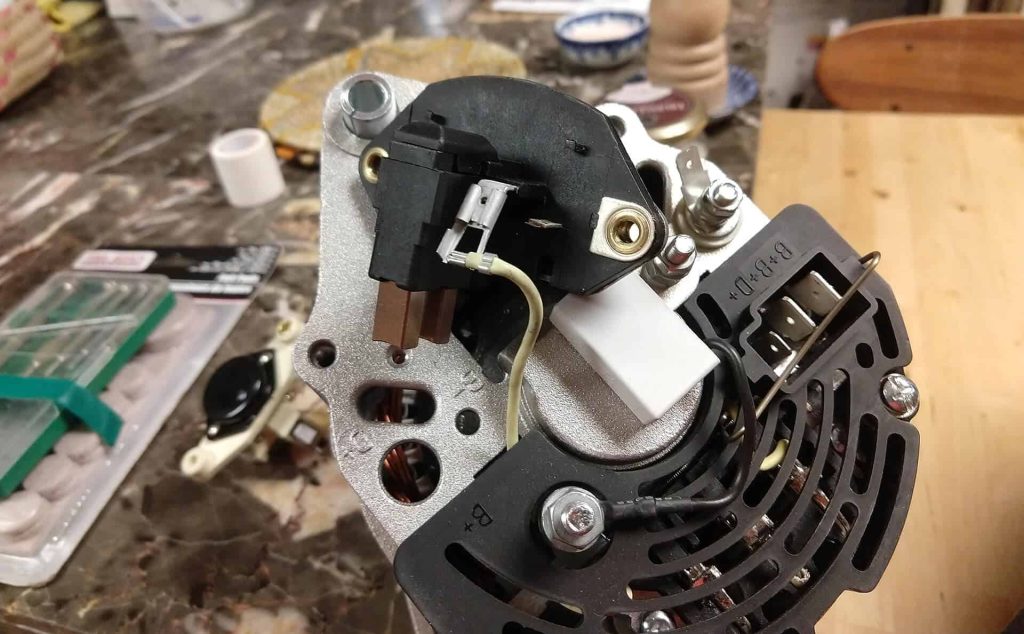
The alternator is one of the components most directly exposed to damage from an incorrectly performed jump start. Its job is to generate electricity while the engine runs and recharge the battery. Inside it, semiconductor diodes convert alternating current into the direct current used by the vehicle, while the voltage regulator helps control electrical output.
Reversing the jumper cables can force current through circuits in directions they were not designed to handle. The resulting electrical stress can damage alternator diodes, regulator circuitry, or internal connections.
HELLA’s technical guidance on alternator damage identifies polarity reversal and short circuits during jump starting as potential causes of diode and solder-joint damage.
A manufacturer bulletin provides a real-world example. Jaguar Land Rover issued service guidance after identifying alternators with internal regulator-chip damage associated with cross-polarity jump starts on certain vehicles.
That bulletin documents a specific failure mechanism, not a claim that every alternator will fail after an incorrect connection.
Drivers may notice a battery warning light, dimming headlights, repeated battery discharge, or a vehicle that runs briefly before losing electrical power. These symptoms can also result from a weak battery, damaged wiring, or another charging-system fault, so testing is essential.
If the vehicle develops electrical problems immediately after a jump start, have the battery and charging system tested before replacing parts.
Avoid disconnecting the battery while the engine is running to test alternator output, since that practice can cause additional electrical damage. Correct polarity and the vehicle manufacturer’s specified connection sequence are the best safeguards.
2. Engine Control Module (ECM)
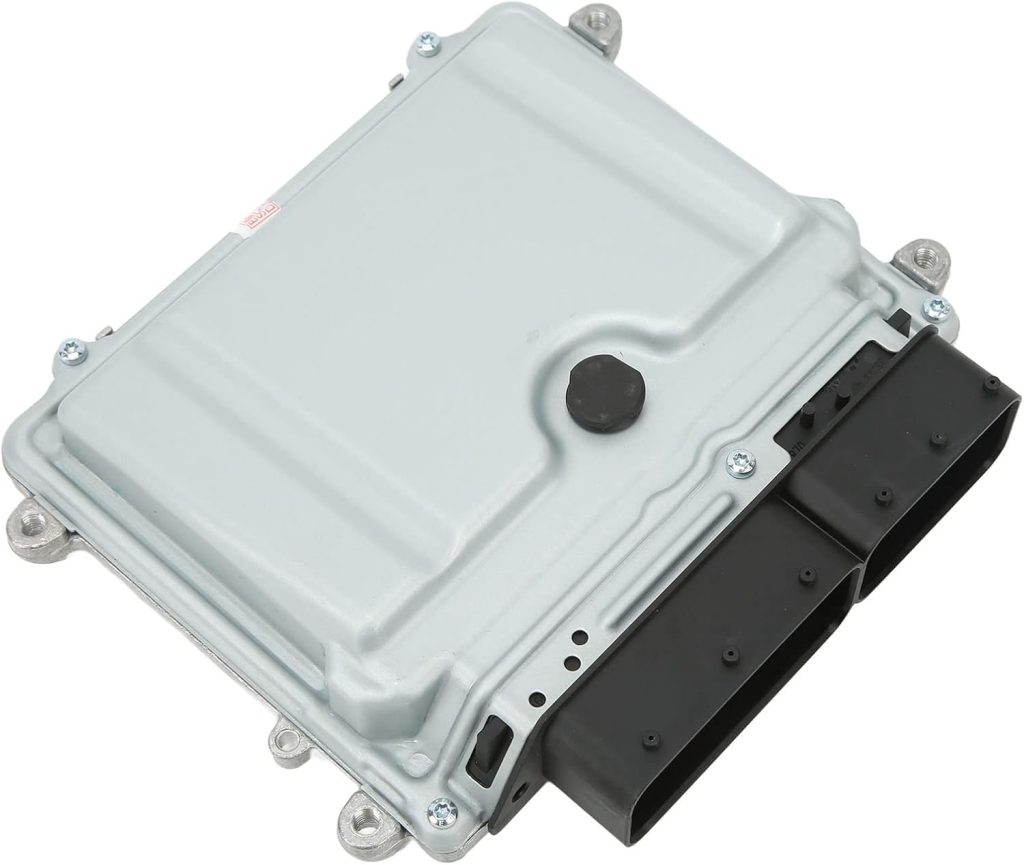
A modern engine depends on an electronic control module to coordinate fuel injection, ignition timing, emissions controls, and other essential functions.
Depending on the manufacturer, this unit may be called the engine control module (ECM) or engine control unit (ECU). Incorrect jump-starting procedures can damage its electronic circuitry, particularly if the cables are connected with reversed polarity or an unsuitable power source is used.
The risk is not simply that a jump starter supplies electricity. Vehicles are designed to operate within a defined electrical range, and their electronic systems depend on correct polarity and stable power.
Connecting the cables incorrectly can expose sensitive components to damaging current. Detroit Diesel’s operator guidance explicitly warns that reversed battery polarity or excessive jump-start voltage can damage its electronic control module.
Although that guidance concerns heavy-duty diesel equipment, it illustrates the underlying electrical risk.
In a passenger car, possible warning signs include a check-engine light, failure to start, unexpected engine stalling, or multiple electronic fault codes appearing after the incident. These symptoms do not prove the ECM has failed.
A blown fuse, discharged battery, damaged ground connection, or temporary low-voltage fault can produce similar behavior.
A technician should first test the battery, inspect the relevant fuses and wiring, and scan the vehicle for diagnostic trouble codes. If the ECM is suspected, additional electrical tests may be necessary before considering replacement. Some modules also require programming or security-system pairing, making an incorrect diagnosis potentially expensive.
To reduce the risk, use only the voltage specified in the owner’s manual and follow the manufacturer’s designated jump-start terminals and connection sequence. Never assume that cable colors alone establish the correct connection points.
If the cables were accidentally reversed, disconnect them safely and have the electrical system inspected before repeatedly attempting to start the vehicle.
3. Main Fuses and Fusible Links
Sometimes the first visible consequence of a bad jump start is not a dead computer or a failed alternator. It is a blown fuse. Fuses are designed to interrupt excessive current before wiring and connected components suffer more serious damage.
Fusible links perform a similar protective role in certain high-current circuits, although their construction and replacement procedures differ from ordinary blade fuses.
If jumper cables are connected with reversed polarity, or the positive cable accidentally contacts ground, current can flow through circuits that were not intended to carry it. A fuse may open and prevent further damage.
That is not necessarily a sign that the fuse has failed to do its job. In some cases, the protective device sacrifices itself to help protect more expensive components.
Ford’s U.S. owner’s manual guidance warns that connecting a jumper cable to an incorrect high-current terminal can damage vehicle fuses. Hyundai’s jump-start instructions likewise emphasize identifying the correct positive and negative terminals and following the specified connection sequence.
Symptoms depend on which circuit is affected. A vehicle might lose its headlights, dashboard display, power windows, fuel-pump operation, or ability to start. Multiple unrelated electrical systems going offline at once can point toward a main fuse or power-distribution issue, although the symptoms alone cannot confirm the cause.
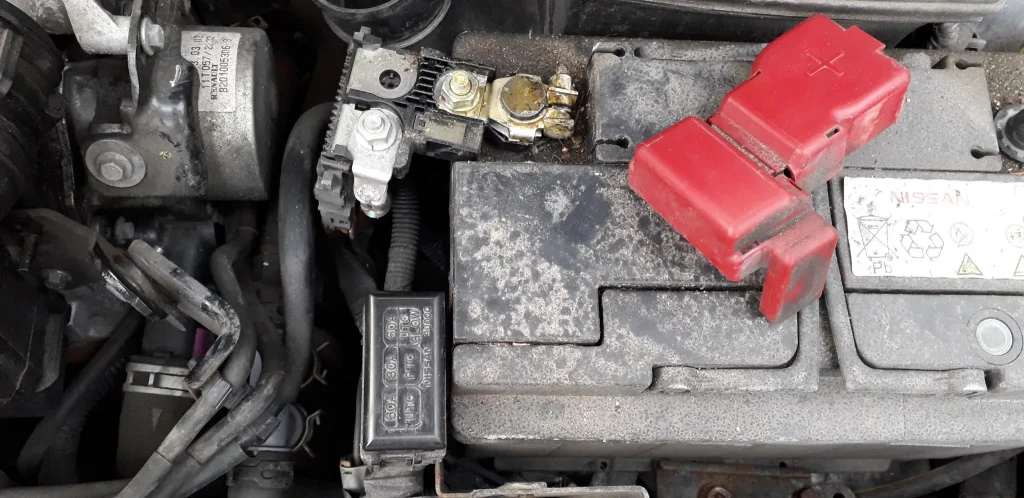
The correct response is to identify the failed circuit using the owner’s manual and have the fuse inspected. Never install a fuse with a higher amperage rating to stop it from blowing. That can allow wiring to overheat and increase the risk of a fire. If a replacement fuse opens immediately, the underlying short or electrical fault needs diagnosis.
A blown fuse is often less expensive than a damaged control module, but repeated replacement without identifying the fault is not a repair. After a questionable jump start, a systematic electrical inspection is safer than guessing which fuse to replace.
4. Transmission Control Module (TCM)
Automatic transmissions increasingly depend on electronic controls to manage gear selection, shift timing, hydraulic pressure, and protective operating modes. The transmission control module, or TCM, communicates with other vehicle systems and processes information from sensors before commanding the transmission to respond.
An incorrect jump start can threaten this electronics network if reversed polarity, a short circuit, or an unsuitable voltage supply damages the module or its power circuit. That does not mean a TCM is likely to fail every time a battery is jump-started incorrectly.
The outcome depends on the vehicle’s electrical protection, the nature of the mistake, and whether current reached the module.
A General Motors service bulletin illustrates one specific electrical hazard. The bulletin for certain 2005 and 2006 Chevrolet Cobalt, 2006 Chevrolet HHR, and related Saturn and Pontiac vehicles described a TCM that could be damaged if it contacted an exposed positive jump-start terminal during service.
The warning concerned a particular design and service situation, not every transmission module in every car.
Possible symptoms of a transmission-control problem include harsh or delayed shifts, a transmission warning, limited gear availability, or the vehicle entering a reduced-performance mode.
Similar symptoms can result from low battery voltage, wiring problems, faulty sensors, or mechanical transmission damage, so a technician should scan the vehicle and test the relevant circuits before condemning the module.
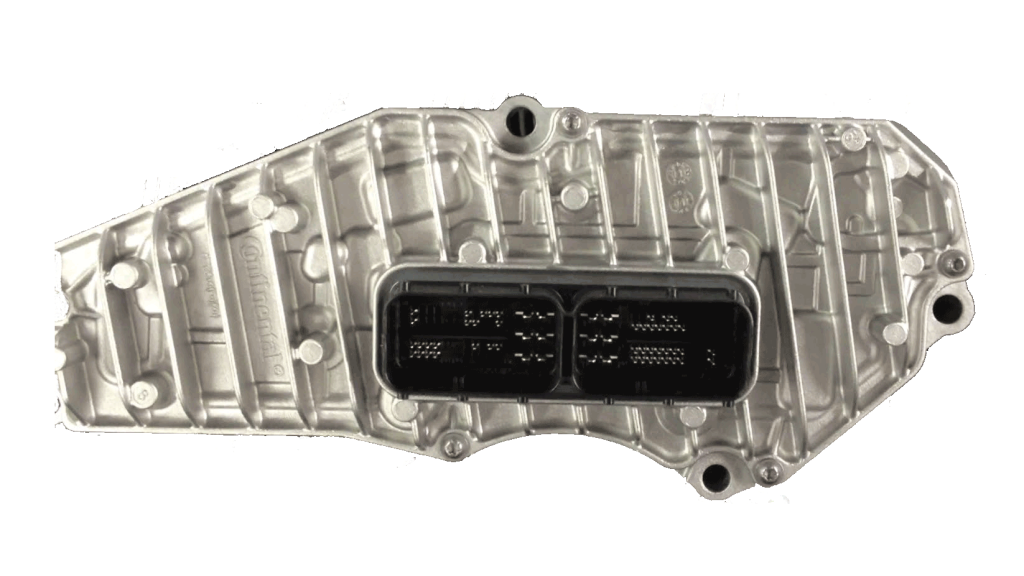
Replacing a TCM can be expensive because some units require programming, configuration, or security pairing. If symptoms begin immediately after a bad jump start, tell the repair shop exactly what happened, including whether the cables were reversed or a clamp touched metal.
The safest prevention is to use the manufacturer’s designated terminals and follow the correct connection sequence. Do not remove protective terminal covers unnecessarily, and never allow a jumper clamp to contact nearby electrical posts or exposed connections.
5. Electric Power Steering System
Electric power steering makes steering assistance available without relying on a conventional engine-driven hydraulic pump. Depending on the vehicle, an electric motor and control unit assist the steering rack or column.
This arrangement can improve efficiency, but it also depends on a reliable electrical supply and properly functioning fuses, wiring, and control electronics.
A jump-starting mistake can affect the system if it blows a power-steering fuse or damages associated electrical components. General Motors documented a specific example in a service bulletin covering certain 2003 to 2007 Saturn Ion and 2006 to 2007 Chevrolet HHR vehicles.
The bulletin described hard steering and a power-steering warning after jump-starting, identifying improper jump-starting as a cause of blown power-steering fuses.
That evidence is important, but it should not be generalized to every modern vehicle. Different models use different steering systems and protective circuits, and a warning after a jump start does not automatically mean the steering motor itself has failed.
Drivers may notice a suddenly heavy steering wheel, an illuminated steering warning, or intermittent loss of assistance. If steering becomes unexpectedly difficult, reduce speed carefully and pull over somewhere safe. Do not continue a normal journey on the assumption that the warning will disappear.
A technician should inspect the relevant fuses and power supply, check for diagnostic trouble codes, and test the steering system according to the manufacturer’s procedure. A blown fuse may be the immediate cause, but if it opens again, the underlying electrical fault must be found. Repeatedly installing new fuses is not a safe solution.
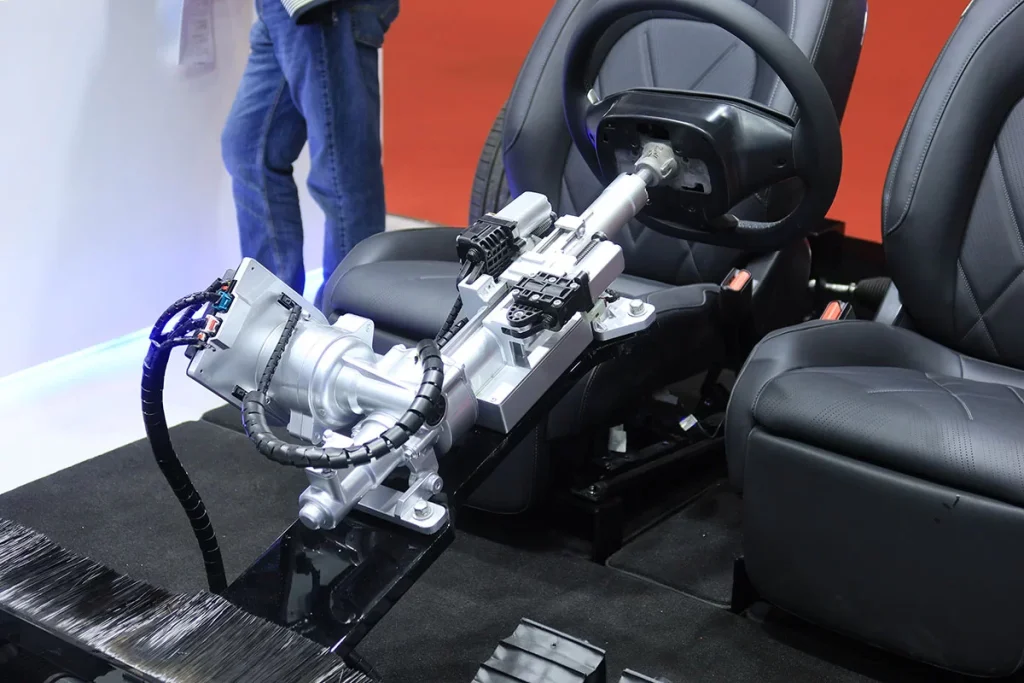
Prevention begins with the owner’s manual. Use the specified jump-start terminals and grounding point, verify polarity before making connections, and never allow clamps to bridge electrical terminals.
The GM bulletin demonstrates that steering-assistance problems can follow an improper jump start in certain vehicles, while also showing why diagnosis should focus on the actual circuit rather than assuming the entire steering assembly needs replacement.
6. Anti-Lock Braking System (ABS) Control Module
The anti-lock braking system helps prevent the wheels from locking during hard braking by monitoring wheel speed and adjusting brake pressure when necessary. Its electronic control module processes signals from wheel-speed sensors and works with hydraulic components to regulate braking.
On vehicles equipped with electronic stability control, related systems may also use ABS data to help manage vehicle stability.
A bad jump start can affect ABS electronics indirectly if it damages a fuse, power supply, ground connection, or shared control circuit. Reversed polarity can also expose electronic components to damaging current.
However, there is not enough evidence to claim that ABS modules routinely fail after jump starts or that they are among the most frequently damaged parts. This is a potential failure pathway, not a universal outcome.
A dashboard ABS warning may appear after the battery has been deeply discharged or the vehicle has experienced a voltage disturbance. That warning does not necessarily mean the module has been destroyed.
Low voltage, a temporary communication error, a blown fuse, or a wheel-speed sensor fault can produce similar alerts. The exact diagnostic trouble codes are important.
Hyundai’s U.S. jump-start guidance warns that incorrect connections can damage the vehicle and instructs owners to use the correct 12-volt supply and designated terminals. That guidance reinforces the importance of following the vehicle-specific procedure rather than experimenting with cable positions.
If the ABS warning remains on after a jump start, arrange a diagnostic scan and inspection. Conventional braking may remain available in some cases, but anti-lock and stability functions can be reduced or disabled.
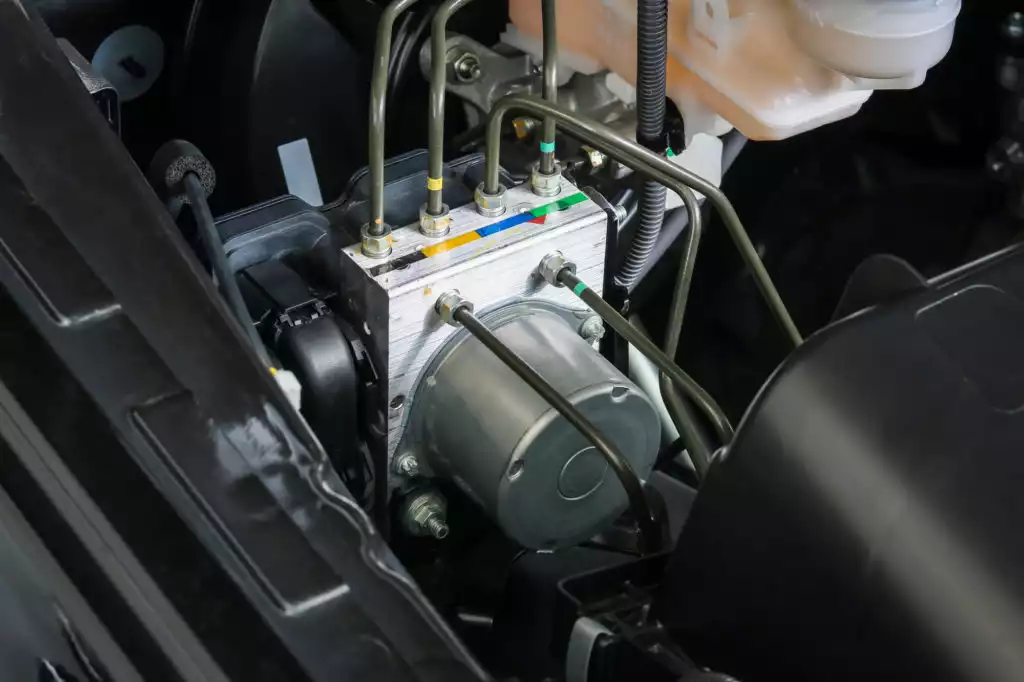
Follow the owner’s manual and seek professional advice before driving, especially if the red brake warning also illuminates or the brake pedal feels abnormal.
Avoid replacing the ABS module based only on a dashboard light. A qualified technician should test the power supply, wiring, sensors, and module communication to establish the actual cause. Correct jump-start technique remains the best first line of defense.
7. The Battery Itself
It may seem surprising that the battery can be damaged during an attempt to rescue it, but jump-starting is not a cure for every battery problem. A battery that is deeply discharged, frozen, internally damaged, or near the end of its service life may not recover simply because another power source is connected.
The greatest risks come from using the wrong voltage, reversing polarity, allowing cables to short together, or attempting to jump-start a battery that is frozen or visibly damaged.
Hyundai’s U.S. owner guidance specifies a 12-volt power source for the relevant vehicles and warns against incorrect connections. Kia’s U.S. owner information also cautions that a frozen battery should not be jump-started because it may rupture or explode.
A battery may be harmed by an improper procedure, but failure immediately after a jump start does not prove that the procedure caused the problem. The battery might already have been defective, or it may simply be unable to hold a charge. Heat, age, repeated deep discharge, and charging-system faults can all shorten battery life.
Warning signs include swelling, cracks, leaking electrolyte, unusual heat, or a battery that repeatedly loses its charge. If the case is damaged or the battery may be frozen, do not attempt to jump it. Arrange professional assistance instead. Battery acid is corrosive, and the gases around a charging battery can ignite if exposed to sparks.
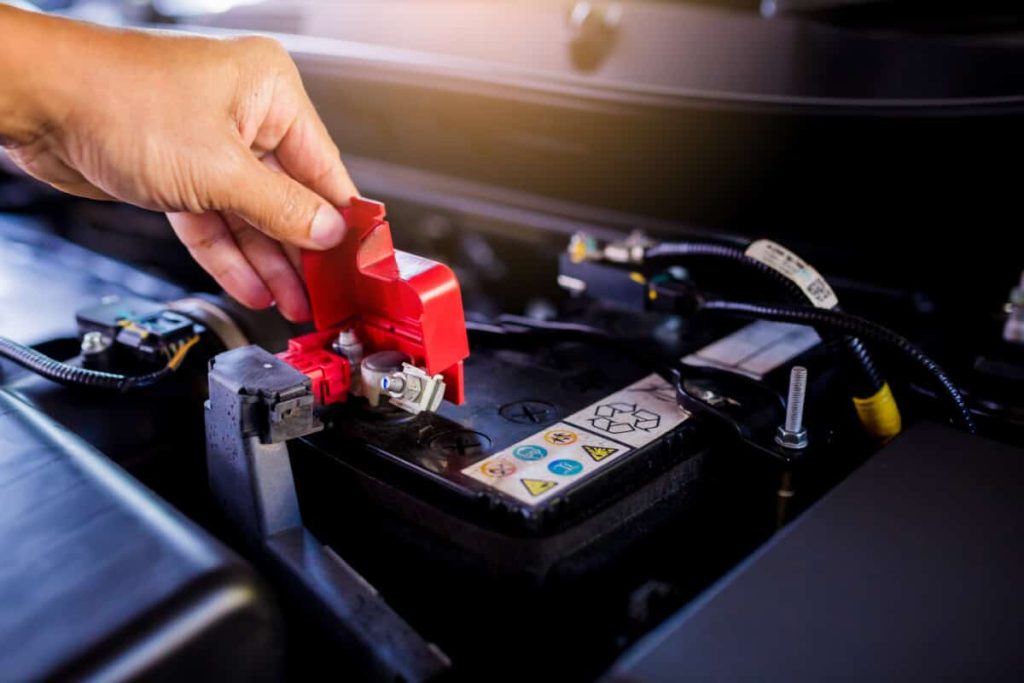
After a successful start, have the battery tested if the original reason for the discharge is unclear. A technician can assess its condition and check whether the alternator is charging correctly. Replacing a battery without addressing a faulty charging system may only postpone the next failure.
Use a compatible 12-volt jump starter, check polarity carefully, and follow the exact instructions for the vehicle. If the car repeatedly needs a boost, investigate the cause rather than treating jump starting as routine maintenance.
8. Starter Motor and Ignition System
The starter motor draws substantial current to turn the engine during startup. The ignition system, meanwhile, provides the spark required to ignite the air-fuel mixture in gasoline engines. Both systems depend on the correct electrical supply, so using an inappropriate voltage or connecting jumper cables incorrectly can create a serious risk.
One particularly serious mistake is using a 24-volt source on a vehicle designed for a 12-volt starting system. Kia’s U.S. owner guidance warns that using a 24-volt supply can damage the starter motor, ignition system, and other electrical parts.
This is a direct manufacturer warning, although it does not mean that every incorrect jump start will damage all those components.
Reversed polarity can also damage electrical circuits associated with starting and engine operation. The specific result depends on the vehicle’s design and protective devices.
A starter that fails to turn the engine after a jump start may have an electrical fault, but the cause could also be a discharged battery, loose connection, corroded terminal, failed starter solenoid, or damaged fuse.
Listen to what happens when you turn the key or press the start button. Rapid clicking can indicate insufficient battery power, while a single click may point to a connection or starter problem.
Silence can have several causes, including an interlock or control-system fault. These clues help a technician narrow the diagnosis but are not definitive proof of a failed component.
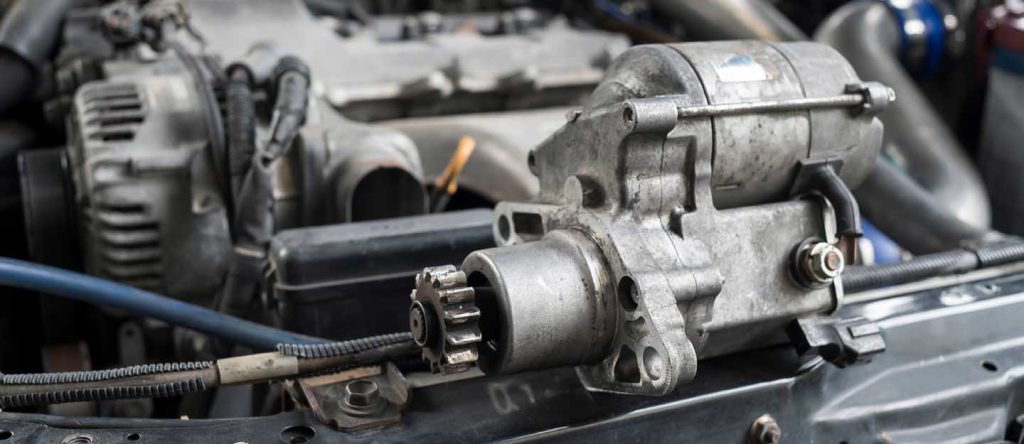
Avoid repeatedly cranking the engine for long periods. Follow the manufacturer’s instructions for starting attempts and allow the system to rest as specified. If the starter becomes unusually hot, produces smoke, or makes a grinding noise, stop trying to start the vehicle.
The safest method is to use the recommended voltage, confirm the positive and negative terminals, and follow the correct connection procedure. A jump start should provide the power the vehicle needs without risking damage to its electrical system.
9. Body Control Module (BCM)
The body control module coordinates many of the functions drivers use without thinking about them, including interior lighting, power locks, windows, keyless-entry functions, and communication between certain electronic systems. Depending on the vehicle, some of these jobs may be handled by separate modules rather than one central unit.
A faulty jump-start procedure can threaten the BCM if it causes reversed polarity, a short circuit, or damage to the module’s power supply. Yet it is important to distinguish a possible failure mechanism from a common outcome.
Manufacturers use different electrical architectures and protective circuits, so a BCM is not automatically damaged when a battery goes flat or needs a boost.
Hyundai’s U.S. owner guidance warns that improper jump-starting can damage the vehicle and instructs drivers to use a 12-volt source, identify the terminals correctly, and follow the prescribed connection sequence.
The guidance supports careful handling of the electrical system, but it does not establish a universal BCM failure rate after jump-starting.
When a BCM-related fault occurs, the symptoms can seem unrelated. Power locks may stop responding, cabin lights may behave unpredictably, windows may not operate, or the vehicle may display communication warnings. However, similar problems can result from blown fuses, low battery voltage, poor grounds, damaged wiring, or a key-fob issue.
A technician should check battery voltage, charging performance, fuses, grounds, and diagnostic trouble codes before recommending module replacement. Some modules require programming or configuration after installation, making a mistaken diagnosis expensive.
If several body functions stop working immediately after an incorrect jump start, tell the technician exactly what happened. That information can help narrow the investigation. Do not repeatedly disconnect the battery in an attempt to reset the system unless the manufacturer’s procedure specifically recommends it.
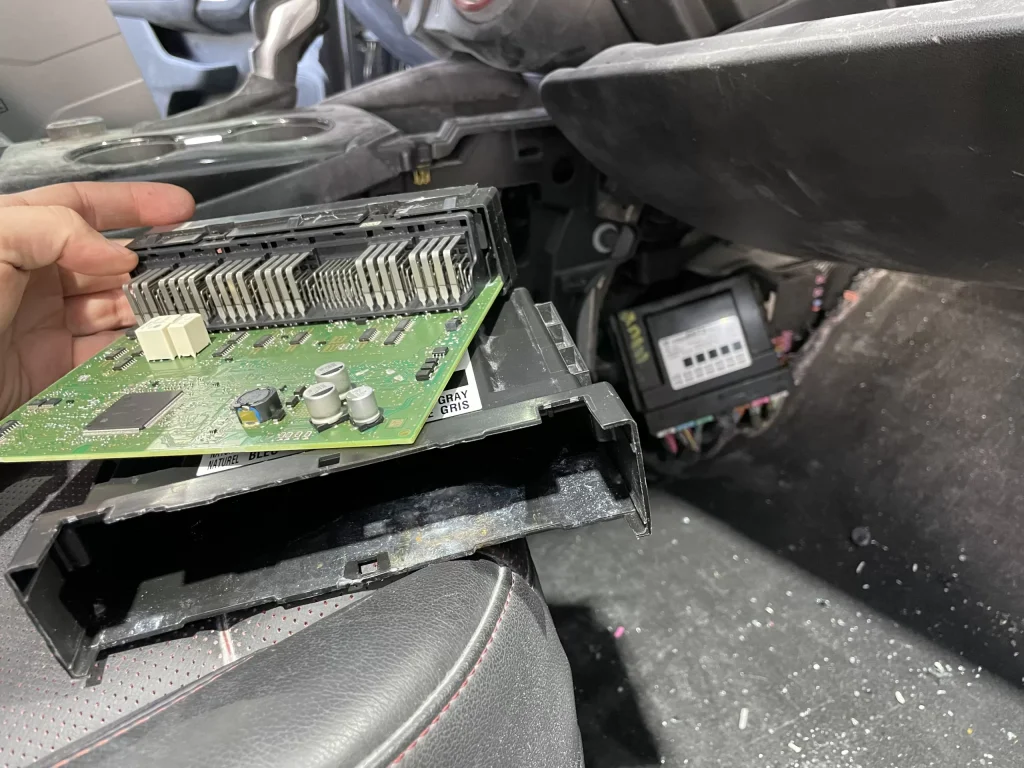
Preventive measures offer the best protection. Always connect the clamps to the correct terminals, ensure they do not touch each other or unintended metal surfaces, and use only the voltage recommended by the vehicle manufacturer.
10. Infotainment System and Instrument Cluster
A modern dashboard contains more electronics than the driver may realize. The infotainment unit manages functions such as audio, navigation, smartphone connectivity, and vehicle settings, while the instrument cluster displays speed, warnings, fuel level, and other operating information.
Depending on the design, these systems may communicate with several control modules across the vehicle’s network.
An incorrect jump start can potentially affect this equipment if it causes an electrical short, damages a fuse, or exposes a module to abnormal voltage.
Nevertheless, a blank display after a jump start does not automatically mean the infotainment unit or instrument cluster has failed. Low battery voltage, a blown fuse, a poor ground, or a temporary software issue can produce similar symptoms.
Hyundai’s U.S. owner guidance emphasizes that improper jump-starting can damage a vehicle and specifies the correct 12-volt supply and connection procedure.
Ford’s owner guidance also warns that connecting to the wrong high-current terminal can damage fuses. These instructions support careful electrical handling, but neither establishes that displays are routinely destroyed by jump starts.
If the screen remains dark, first note whether other electrical systems work normally. Avoid pulling random fuses or disconnecting multiple modules, since that can introduce additional faults or erase useful diagnostic information.
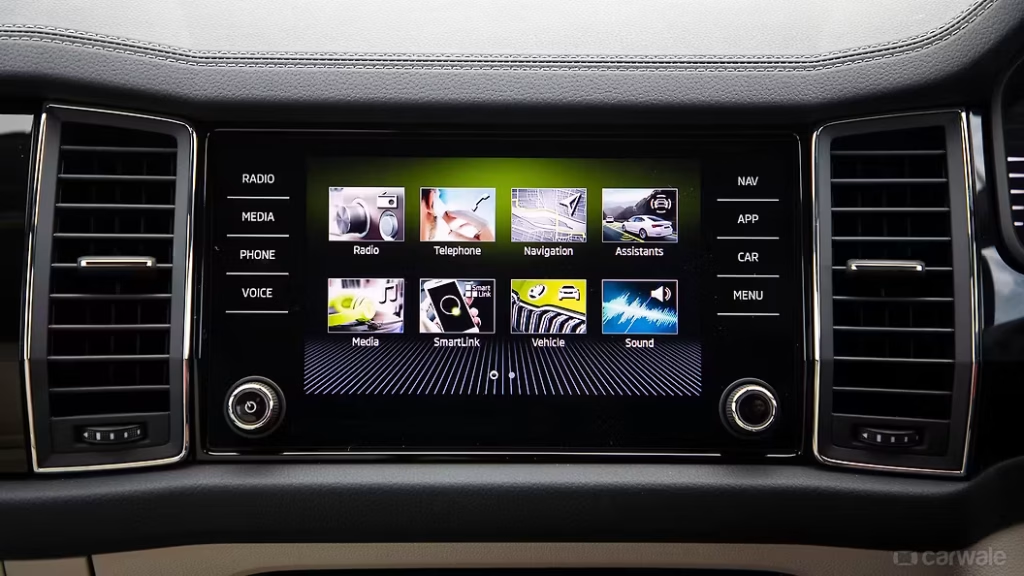
A technician can check the relevant fuses, power and ground circuits, network communication, and stored codes before deciding whether a module needs repair.
The instrument cluster deserves particular attention because it communicates essential information. If critical warnings, speed information, or other required displays are unavailable, consult the owner’s manual and arrange service rather than continuing as though the car were operating normally.
Avoiding these issues mainly requires careful handling. Locate the correct terminals, use the voltage recommended by the manufacturer, and follow the specified sequence when connecting and removing the cables. If an error occurs, stop immediately and consult a qualified professional instead of attempting repeated connection changes.
