
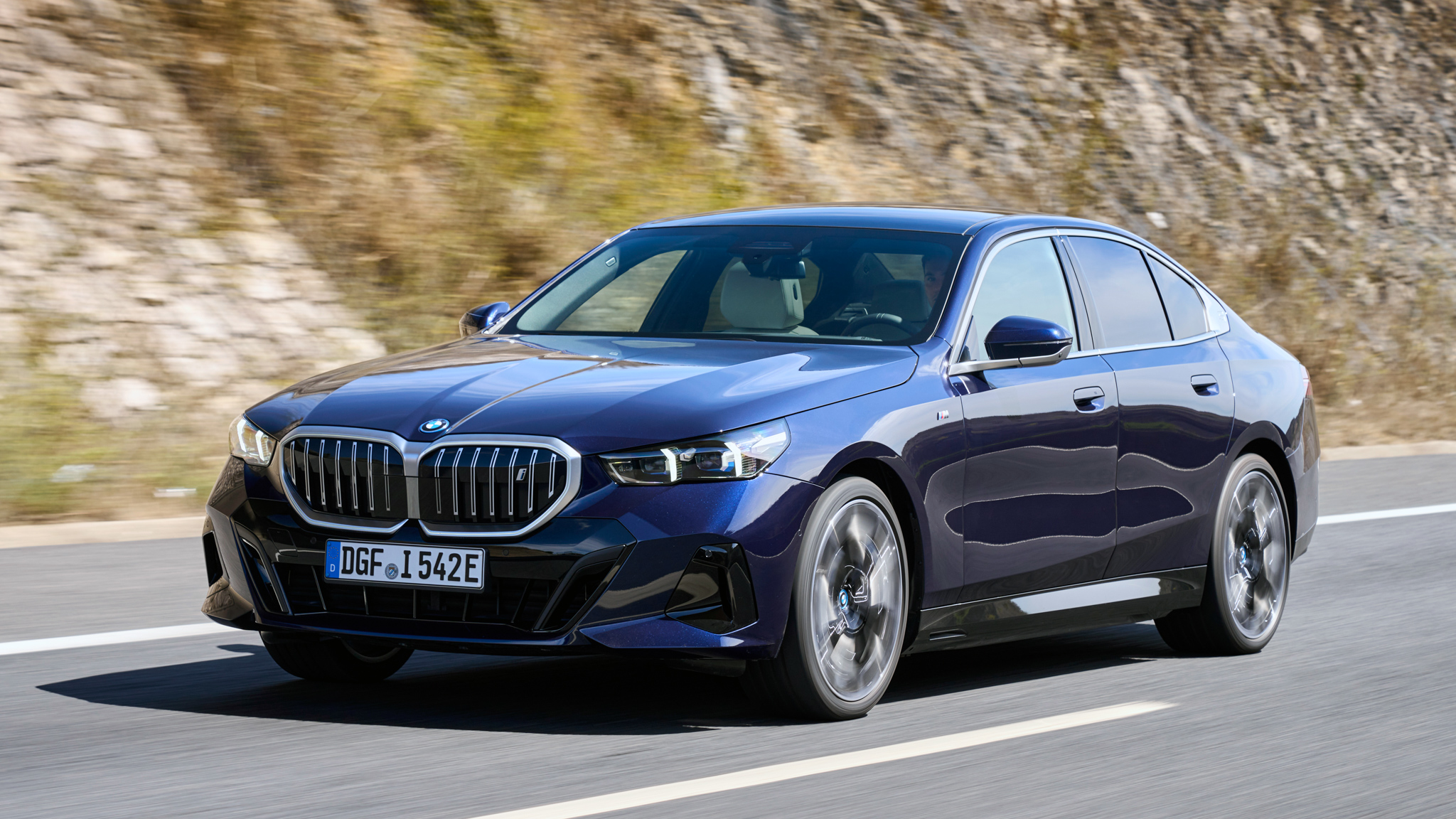
By 2028, car buyers may find more safety technology and convenience equipment included in entry-level vehicles, but not every feature is guaranteed to become standard across every brand and trim.
Federal Motor Vehicle Safety Standards establish requirements for specific equipment, while automakers decide how to package many additional technologies. New regulations, phased implementation dates, and model-year changes can all affect what appears in a showroom.
Understanding those distinctions matters because a feature required on new vehicles is not necessarily a feature every automaker will add in the same way. The following sections separate established federal requirements from broader industry trends and manufacturer-specific equipment decisions.
1. Automatic Emergency Braking
Automatic emergency braking (AEB) is one of the most important technologies moving from an optional upgrade toward broader availability on U.S. vehicles.
The system monitors the road ahead and can apply the brakes when it detects an impending collision and the driver does not respond adequately. Depending on the vehicle, it may use a camera, radar, or a combination of sensors.
The important 2028 distinction is that federal law does not require every new vehicle to comply with the nationwide AEB mandate by that model year.
NHTSA’s Federal Motor Vehicle Safety Standard No. 127 sets a compliance date of September 1, 2029, for most covered vehicles. Smaller manufacturers and certain other vehicle producers receive additional time.
Therefore, AEB may become increasingly common across trim levels before the federal deadline, but it would be inaccurate to claim that every 2028 vehicle must have it.
For shoppers, the difference between trim levels matters. A manufacturer might include AEB on its entry-level model while reserving more advanced functions for expensive packages. Drivers should check whether the system detects vehicles only or also recognizes pedestrians and whether it operates at the speeds and in the conditions relevant to their commute.
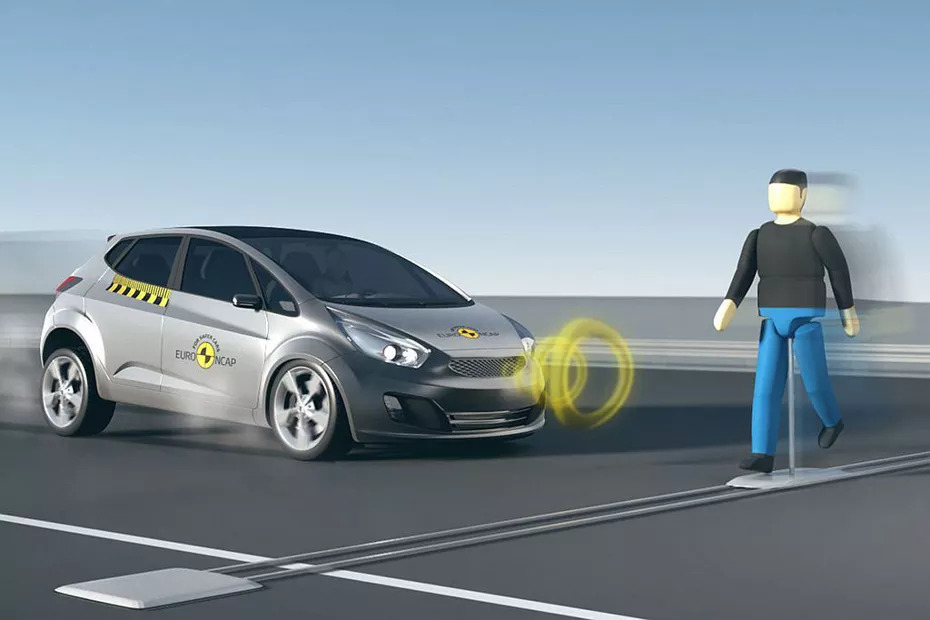
NHTSA estimates that the final rule will save at least 360 lives and prevent 24,000 injuries annually once implemented. Those are agency projections, not a guarantee of results for every vehicle or driver.
When comparing 2028 models, examine the standard-equipment list for each trim rather than relying on a manufacturer’s general description of its safety technology. The feature’s name, operating limits, and included functions can differ significantly between vehicles.
2. Pedestrian Automatic Emergency Braking
Pedestrian automatic emergency braking builds on conventional AEB by detecting people in or near a vehicle’s path and applying the brakes when a collision appears imminent. This function is particularly relevant in American cities, suburban neighborhoods, school zones, and parking areas where pedestrians may enter a vehicle’s path unexpectedly.
The technology is not identical across all manufacturers. Detection performance depends on the sensor arrangement, software, lighting, vehicle speed, and the pedestrian’s position.
A system may perform differently when someone crosses from the side, is partially obscured, or appears in low-light conditions. Drivers must continue watching the road and braking when necessary, even when their vehicle offers pedestrian detection.
NHTSA’s FMVSS No. 127 requires covered vehicles to meet performance requirements for both vehicle-to-vehicle automatic emergency braking and pedestrian automatic emergency braking.
However, the main compliance date is September 1, 2029, rather than the beginning of model year 2028. This means pedestrian braking is a credible feature to watch as automakers expand standard safety equipment, but it is not accurate to promise that every 2028 trim will include it.
Buyers should check the exact wording in manufacturer order guides. A vehicle advertised with pedestrian detection may include a warning-only function, braking intervention, or a broader package combining several driver-assistance systems. Those capabilities are not interchangeable.
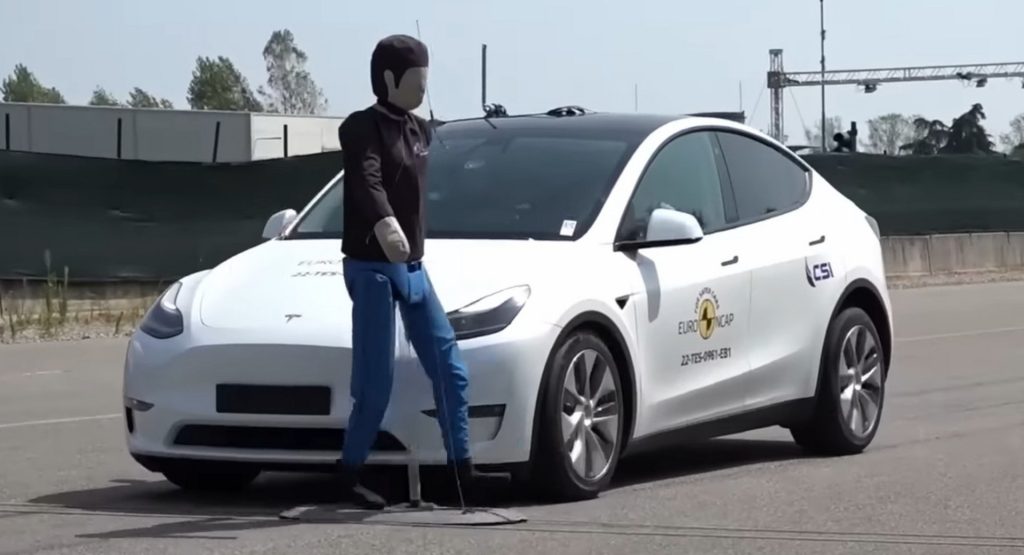
It is also worth checking the conditions in which the system works. Snow, heavy rain, dirt on sensors, glare, and poor visibility can affect camera- or radar-based assistance. Pedestrian braking is an additional layer of protection, not a substitute for careful driving or safe stopping distances.
3. Rear Seat Belt Reminder Systems
Rear passengers have traditionally received less seat belt reminder technology than front occupants. That difference is changing as federal requirements expand to cover additional seating positions, making rear-seat alerts one of the clearest features to watch in 2028 model-year vehicles.
The National Highway Traffic Safety Administration amended Federal Motor Vehicle Safety Standard No. 208 to strengthen front-seat reminders and require warnings for rear seats. However, the agency subsequently revised the implementation schedule.
Under its April 2026 interim final rule, the compliance deadline for the enhanced front and rear seat belt warning requirements is September 1, 2028, with an additional year for certain multistage manufacturers and alterers. Automakers may comply earlier.
A reminder system can use a dashboard indicator, audible alert, or other visual warning to encourage occupants to buckle up. Depending on the design, it may also help the driver identify an unbuckled rear seating position. The exact functionality is important because not every seat belt reminder provides the same information or uses identical warning behavior.
For families, this feature offers a clear safety benefit by alerting drivers when rear-seat passengers need to fasten their seat belts before the vehicle begins moving.
NHTSA reported that rear-seat belt use in 2022 was approximately 81.7%, compared with 91.6% for front-seat occupants. Those figures help explain why regulators have focused on improving rear-seat reminders.
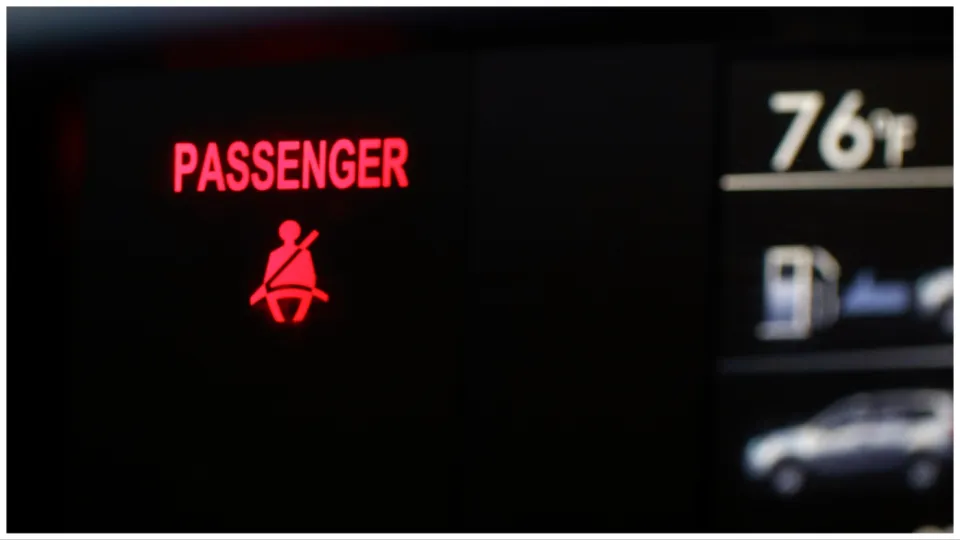
For 2028 shopping, check the model’s production date and compliance information rather than assuming every vehicle sold during the calendar year will have identical equipment. Model years and manufacturing dates do not align perfectly with calendar years, and some manufacturers may introduce compliant systems ahead of the deadline.
4. Rearview Cameras
Rearview cameras are no longer a premium convenience feature in the United States. They have been required on covered new light vehicles for years, so by 2028 the important question is not whether a vehicle has a backup camera, but how useful its camera system is.
Federal requirements for rear visibility technology took effect for covered vehicles manufactured on or after May 1, 2018.
The rule applies to vehicles with a gross vehicle weight rating of 10,000 pounds or less, subject to the regulation’s scope and exceptions. Its purpose is to improve the driver’s view behind the vehicle and reduce backover incidents.
A basic rearview camera provides an image on a dashboard or infotainment display when reverse is selected. More expensive trims may add dynamic guidelines, wider viewing angles, multiple camera perspectives, or a surround-view display.
Those enhancements are not the same as the federally required rear visibility system, and buyers should not assume they are included on every trim.
Camera placement and image quality matter in daily use. A lens covered in mud, rain, road salt, or snow may produce a poor image even when the system itself is functioning correctly. Drivers should clean the camera lens and continue checking mirrors and surroundings before reversing.
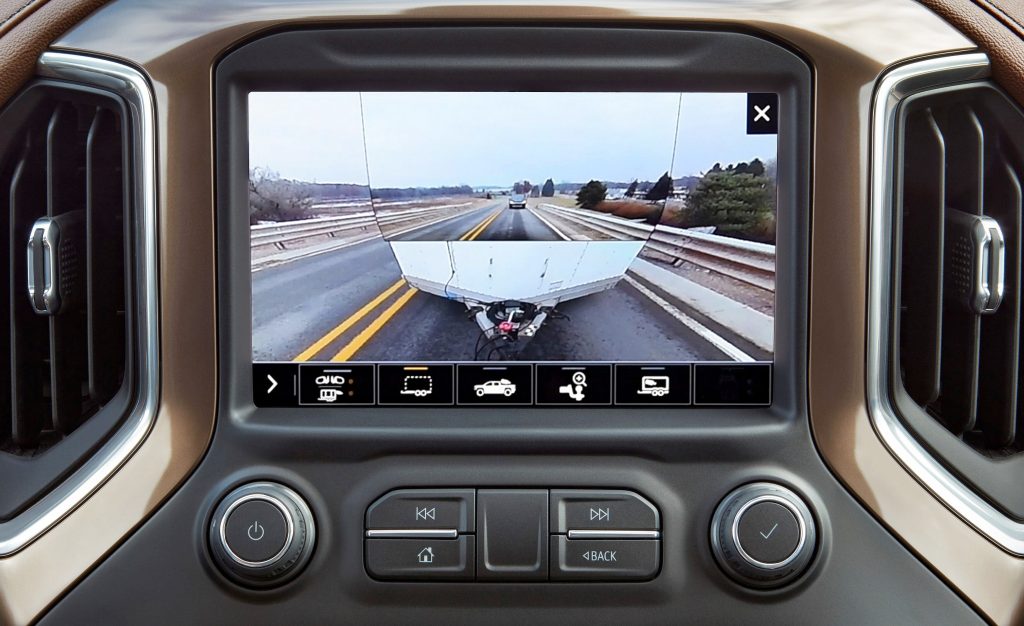
The camera also has limitations. It cannot always show children, pedestrians, or objects approaching from the sides, and the display may not communicate an object’s distance perfectly. A clear image is helpful, but it does not replace looking around the vehicle.
For a 2028 vehicle, compare the standard equipment list to see whether rear cross-traffic alerts, parking sensors, or a surround-view system are included. These additions can improve convenience, but the basic rear visibility requirement has already been in place for years.
5. Electronic Stability Control
Electronic stability control, or ESC, is another feature that will remain standard on mainstream U.S. vehicles in 2028 because it has been federally required on covered light vehicles since the 2012 model year. It is not a new 2028 mandate, but it illustrates how technology once associated with higher-priced vehicles became a baseline safety system.
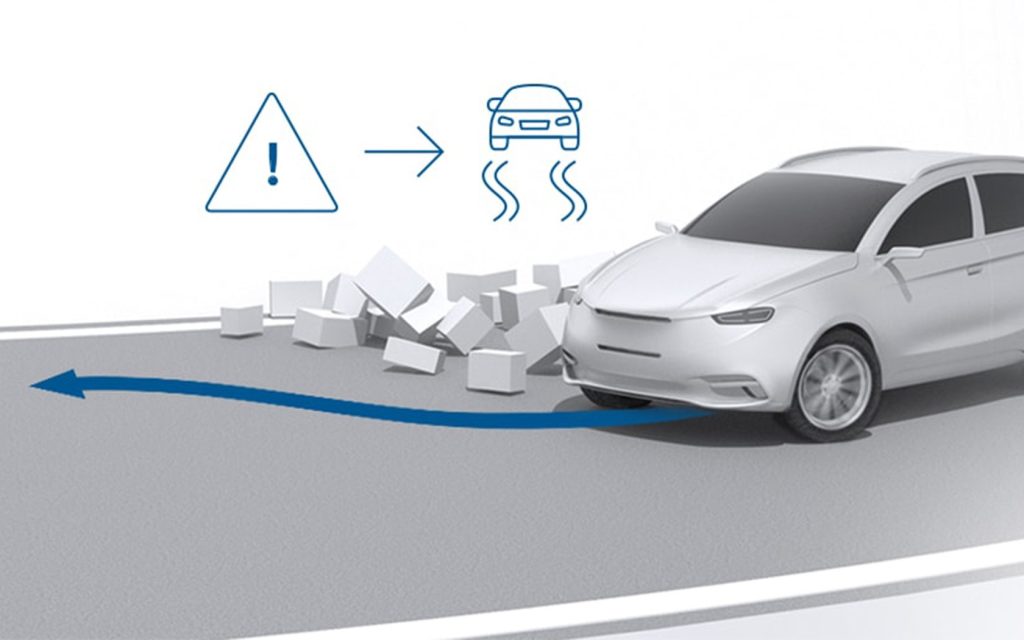
ESC uses sensors to monitor vehicle movement and compares that movement with the driver’s steering input.
If the system detects that the vehicle is beginning to skid or deviate from the intended path, it can brake individual wheels and, in some systems, reduce engine torque to help restore control. Its intervention is most relevant during sudden maneuvers or when traction is uneven.
This can be particularly useful on wet pavement, loose gravel, or slippery roads, although ESC cannot create traction where the tires have little grip. Drivers should not treat it as a substitute for appropriate speed, suitable tires, or smooth steering and braking.
NHTSA’s regulatory analysis estimated that stability control could reduce single-vehicle crashes by 34% for passenger cars and 59% for SUVs. These are agency estimates based on the research supporting the rule, not predictions of the benefit every driver will experience.
ESC works alongside, but is distinct from, anti-lock braking systems and traction control. Anti-lock brakes help prevent wheel lock during hard braking, while traction control limits wheelspin during acceleration. These systems may share sensors and hardware, but they address different driving situations.
When comparing 2028 trims, buyers should focus on the broader capabilities included with the stability system. Some vehicles combine ESC with selectable drive modes or off-road settings that change how traction interventions operate.
The underlying stability technology, however, is already an established requirement rather than a feature that automakers are only beginning to standardize.
6. Tire Pressure Monitoring Systems
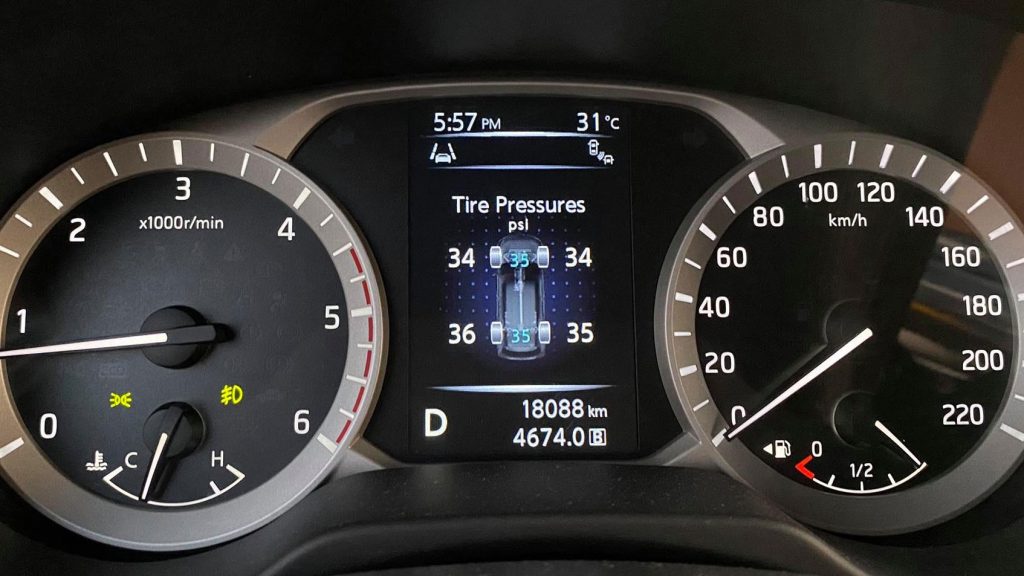
A tire pressure monitoring system, commonly called TPMS, warns drivers when tire pressure falls significantly below the vehicle manufacturer’s specified level.
It has been standard equipment on covered new U.S. light vehicles for roughly two decades, so it is not a feature being introduced specifically for 2028. Its continued presence across trim levels reflects how a once-specialized safety feature became a normal part of vehicle equipment.
Federal Motor Vehicle Safety Standard No. 138 established requirements for TPMS on covered passenger cars, multipurpose passenger vehicles, trucks, and buses with a gross vehicle weight rating of 10,000 pounds or less, subject to specified exceptions. The requirement was phased in for vehicles manufactured beginning in the 2006 model year.
A TPMS warning may appear when one or more tires are substantially underinflated. That matters because low pressure can affect handling, tire wear, and fuel economy. However, the system generally is not intended to replace regular pressure checks, nor does it necessarily identify every puncture or gradual leak immediately.
Two main designs are used. Direct systems measure pressure using sensors associated with the wheels. Indirect systems estimate pressure changes using wheel-speed information and other vehicle data. The method, display, and warning behavior depend on the vehicle.
Drivers should check tire pressure when the tires are cold and use the pressure listed on the driver’s door-frame label or in the owner’s manual. The number printed on the tire sidewall is not necessarily the correct operating pressure for the vehicle.
Cold weather can also reduce tire pressure, so a warning during a winter morning deserves a proper measurement rather than an assumption that the sensor is faulty.
For 2028 buyers, the useful trim-level comparison is whether the vehicle provides individual tire-pressure readings or only a warning light. Both can support safer maintenance, but the amount of information available to the driver differs.
7. Side Curtain Airbags and Ejection Mitigation
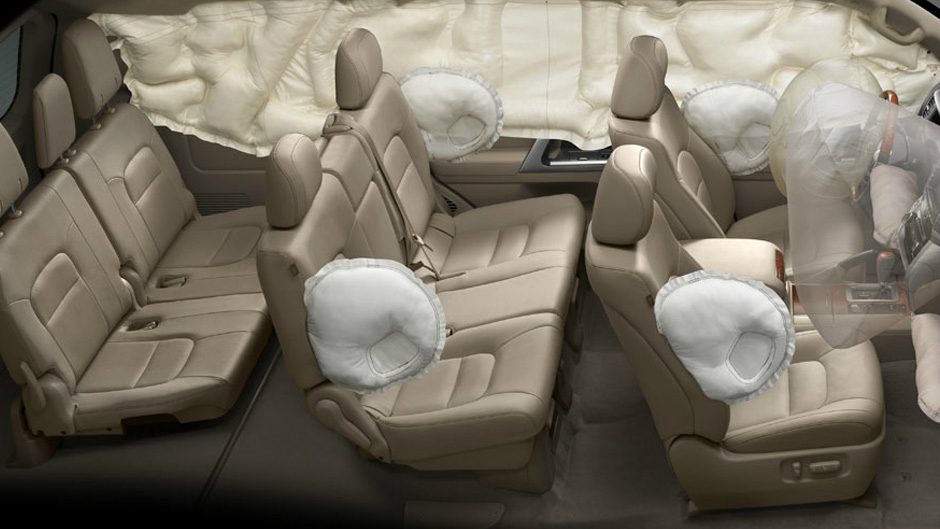
Airbag systems have expanded significantly beyond the original front airbags. Many modern vehicles include side-impact protection and curtain airbags designed to help protect occupants during certain crashes.
By 2028, buyers should pay attention to how many seating rows receive coverage and whether the vehicle’s safety documentation describes protection for the intended seating positions.
Federal Motor Vehicle Safety Standard No. 226 addresses ejection mitigation by limiting the extent to which occupants can be propelled through certain side-window openings during specified crash tests.
Its requirements were phased in, with covered vehicles manufactured on or after September 1, 2017 generally required to comply, subject to the standard’s provisions and exceptions.
Curtain airbags can deploy along the side windows in certain crashes, providing a cushioning surface between occupants and the side of the vehicle. Their precise coverage and deployment strategy depend on the vehicle design.
A curtain airbag does not mean every window or seating position receives identical protection, and not every airbag system is designed to deploy in every collision.
For shoppers, the distinction between a standard airbag and an optional safety package is important. The federally required performance standard does not mean every manufacturer must use the same airbag layout or market it under the same name. Buyers should review the safety equipment list and vehicle documentation for the specific model and trim.
Parents should also follow the vehicle’s instructions about child restraints and seating positions. Airbags are supplemental restraints, and improper seating or child-seat installation can create serious risks.
By 2028, curtain airbags and related occupant-protection systems should be treated as core safety equipment, but the most useful comparison is the vehicle’s actual crash-protection design rather than a broad claim that all trims have identical airbags.
8. Blind-Spot Monitoring
Blind-spot monitoring is increasingly common in newer vehicles because it addresses a limitation that mirrors alone cannot eliminate. The system uses sensors, cameras, or a combination of technologies to monitor areas alongside or just behind the vehicle.
When another vehicle enters a monitored area, a warning may appear in the side mirror, dashboard, or another display.
Despite its growing availability, blind-spot monitoring is not a universal federal requirement for every new U.S. passenger vehicle in 2028. It is a manufacturer equipment decision, and availability can differ between entry-level and premium trims.
A model may include it as standard across the lineup, offer it only in a package, or reserve it for higher grades. NHTSA describes blind-spot warning as an available driver-assistance technology, distinct from features required by federal standards.
That makes the manufacturer’s order guide especially important. Buyers should look for the feature under standard equipment rather than assuming that a general description of the vehicle’s safety suite applies to the base trim.
Some systems provide only a visual warning, while others add an audible alert or steering assistance when the driver begins changing lanes.
The system’s limits also matter. Sensors may not detect every motorcycle, fast-approaching vehicle, or object in all weather conditions. Snow, ice, mud, or road grime can obstruct exterior sensors, and warnings may be limited when the system is unavailable.
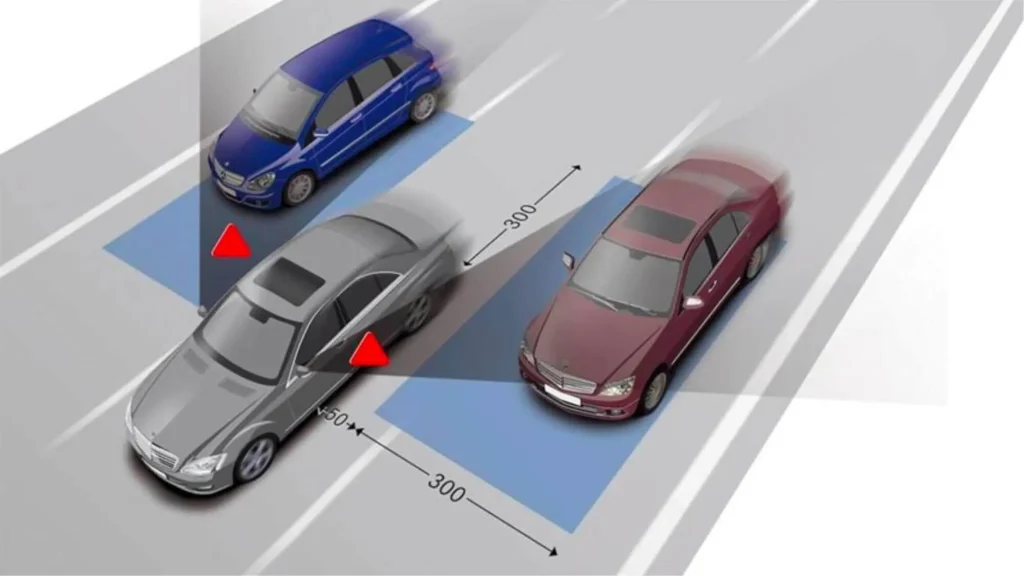
Blind-spot monitoring is best viewed as a second source of information, not permission to change lanes without checking mirrors and looking over the shoulder. For drivers who regularly use busy highways, it can make adjacent traffic easier to notice.
In the 2028 market, the trend to watch is not a nationwide legal deadline but broader inclusion on lower trims. Verify the exact feature name and whether it is standard, optional, or bundled with another package.
9. Lane Departure Warning and Lane-Keeping Assistance
Lane departure warning and lane-keeping assistance are related technologies, but they do different jobs. A departure warning alerts the driver when the vehicle appears to drift out of its lane without signaling. Lane-keeping assistance may apply corrective steering or braking to help the vehicle remain within detected lane markings, depending on the system.
These features have become more common as automakers add driver-assistance technology to mainstream vehicles. However, there is no universal federal requirement making lane departure warning or lane-keeping assistance standard on every trim of every 2028 passenger vehicle.
Their inclusion remains dependent on the manufacturer, vehicle, and equipment package. NHTSA distinguishes such available crash-avoidance technologies from features covered by specific federal mandates.
A camera usually helps identify lane markings, and performance can deteriorate when markings are faded, obscured, or absent.
Construction zones, snow-covered roads, sharp curves, and poor weather can also affect the system’s ability to interpret the road correctly. Some systems may issue warnings or disengage when they cannot reliably identify the lane.
For drivers, the distinction is important because a warning system does not necessarily steer the vehicle, and lane-centering assistance does not make the car autonomous. Drivers must continue to steer, monitor traffic, and follow the manufacturer’s operating instructions.
When checking a 2028 order guide, look for separate entries for lane departure warning, lane-keeping assist, and lane-centering assistance.
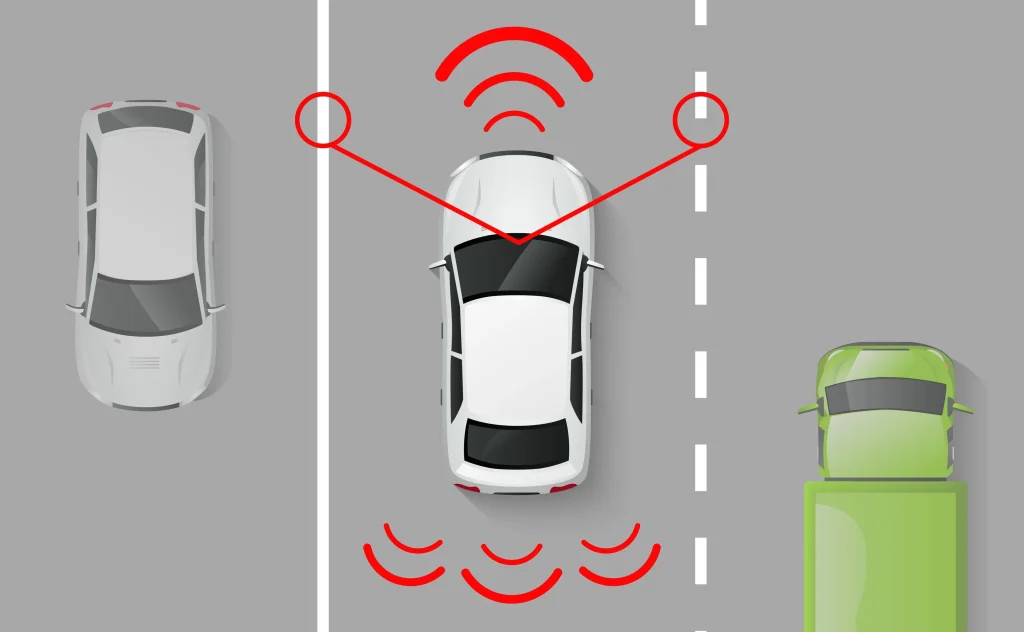
Marketing language can make these sound interchangeable, but their capabilities may differ substantially. Some manufacturers include a basic warning system on every trim while reserving more active assistance for an upgrade.
The most useful development to watch is whether automakers add these technologies to entry-level models without requiring a costly package. That trend is plausible, but it should be verified vehicle by vehicle rather than presented as a guaranteed 2028 industry-wide change.
10. Rear Occupant Alerts and Reminder Technology
Rear occupant alerts are designed to help drivers remember to check the back seat before leaving the vehicle. Depending on the system, an alert may be triggered by a rear door being opened before a trip, detected movement in the cabin, or another vehicle-specific condition.
Some systems provide a dashboard message, while more advanced versions may add audible warnings or connected notifications.
This feature is especially relevant for families with young children, but the systems are not identical. A door-sequence reminder does not necessarily detect a child or pet inside the vehicle.
A system that uses cabin sensors may offer different capabilities, and buyers should check the manufacturer’s description rather than assume every rear-seat alert actively detects occupants.
As of the 2028 model year, rear occupant alerts are not a universal federal requirement across all U.S. passenger vehicles and trims. Their presence and functionality depend on the manufacturer.
They may be standard on some vehicles, included with a safety package on others, or unavailable entirely. The same is true of connected phone notifications, which may require an active service or compatible app.
For shoppers, the order guide should clarify whether the feature is a simple reminder or a more advanced occupant-detection system. The owner’s manual is also important because it explains how the system activates, what conditions can prevent it from working, and whether the driver must enable any settings.
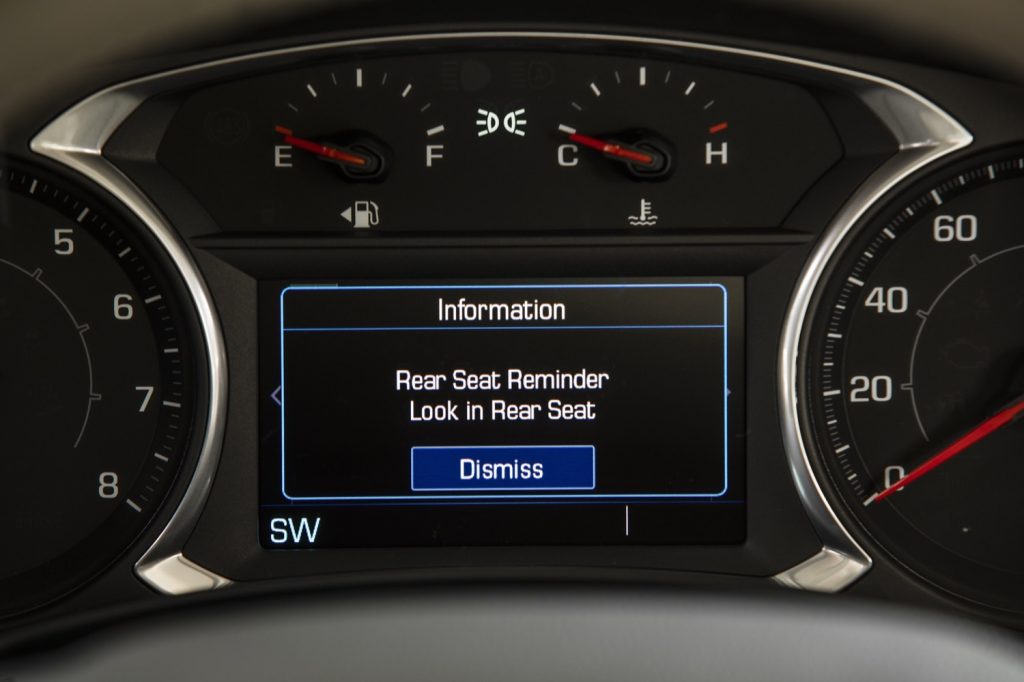
These alerts can support safer routines, but they are not a substitute for physically checking the rear seats. Drivers should never leave a child or vulnerable person unattended in a vehicle, particularly in hot or cold weather.
The likely direction for 2028 is wider availability as automakers add more safety and convenience technology to lower trims. Yet it would be inaccurate to claim that every brand must include rear occupant detection on every vehicle.
