

Some countries have far more passenger cars relative to their populations than others. The difference reflects household income, commuting habits, public transportation, geography, and the cost of owning a vehicle.
To avoid mixing outdated figures with newer statistics, this ranking uses the latest comparable 2025 passenger-car rates published by Eurostat, covering European countries and selected neighboring nations.
The measure counts registered passenger cars per 1,000 inhabitants, not the percentage of people who personally own a car. Monaco is excluded because a comparable 2025 figure could not be verified.
1. Liechtenstein: 769 Passenger Cars per 1,000 Inhabitants
Liechtenstein ranks first in the latest comparable European data, recording 769 passenger cars per 1,000 inhabitants in 2025. In practical terms, that represents nearly 77 registered passenger cars for every 100 residents.
The figure is notably higher than the European Union average of 584 cars per 1,000 inhabitants, illustrating how widespread vehicle ownership is in this small Alpine country.
Its geography offers useful context. Liechtenstein lies between Switzerland and Austria, with towns and villages spread along the Rhine Valley and near the surrounding mountains. Although the country is small, residents travel for work, shopping, education, and cross-border activities.
A private car can provide flexibility for journeys that do not align neatly with public transport schedules.
However, the rate should not be confused with the proportion of residents who own cars. One household may register several vehicles, while another may have none. Business-owned passenger cars are also part of vehicle-registration statistics. The indicator counts registered passenger cars relative to the total population, rather than identifying individual owners.

Liechtenstein’s high ranking also does not mean that every journey is made by car. Public buses connect communities and provide links to neighboring transport networks. Residents can choose different modes according to their destinations and routines.
The key takeaway is the scale of registered passenger-car availability relative to the population. Liechtenstein’s 2025 rate places it ahead of the other countries in Eurostat’s comparable dataset, although it remains important to distinguish a vehicle-per-person measure from actual driving frequency or household ownership.
2. Italy: 709 Passenger Cars per 1,000 Inhabitants
Italy ranks second in the comparable 2025 figures, with 709 passenger cars per 1,000 inhabitants. That is approximately 71 registered cars for every 100 people, substantially above the European Union average of 584.
Italy’s position is particularly notable because the country combines major metropolitan areas with smaller towns, rural communities, and regions where daily travel often depends on private transportation.
The country’s car culture has deep roots, supported by a large domestic automotive industry and a long tradition of personal mobility. For many households, a car provides flexibility for commuting, shopping, family responsibilities, and travel between communities.
Yet the need for a private vehicle varies considerably across Italy. Residents of central urban areas may have access to rail, metro, tram, and bus services, while people living in less densely connected locations can find driving more convenient.
Italy’s high rate also reflects the difference between registering cars and actually using them. The statistic includes passenger cars in the vehicle fleet, so a registered car contributes to the total even if its owner does not drive it every day.
It also does not establish how many households own multiple vehicles or how many people rely exclusively on public transportation.

The contrast between cities and smaller communities makes Italy an interesting case. A high national figure can coexist with extensive public transportation in major urban centers because national averages combine many different lifestyles and settlement patterns.
With 709 passenger cars per 1,000 inhabitants, Italy remains well above the EU average. Its ranking shows how widespread private-car availability can be even in a country where rail and public transportation also play important roles in everyday travel.
3. Finland: 671 Passenger Cars per 1,000 Inhabitants
Finland recorded 671 passenger cars per 1,000 inhabitants in 2025, giving it one of the highest car-ownership rates in Europe. The country sits well above the EU average of 584, despite having a relatively small population spread across a large geographic area.
Geography is an important part of the explanation. Finland has extensive forests, many lakes, and communities separated by substantial distances.
While Helsinki and other urban areas offer public transportation, people living outside major cities may find a car useful for reaching workplaces, shops, healthcare services, and recreational destinations.
Long winters and changing road conditions also make reliable personal transportation valuable for many households.
The national figure, however, does not mean every Finnish resident drives regularly. Passenger-car statistics count registered vehicles, including those owned by households, businesses, and government organizations. They do not measure how frequently cars are used or how many people share each vehicle.

Finland also has public transport options, including commuter rail, buses, and long-distance rail services. In urban areas, these can provide practical alternatives to driving. The balance between private vehicles and public transport varies according to where people live and where they need to travel.
Finland’s high rate is particularly interesting because it reflects the combination of a large land area, dispersed settlement patterns, and widespread vehicle availability. The country’s 671 cars per 1,000 residents place it close to Italy’s rate, showing that high car availability can occur in countries with very different climates and transport systems.
4. Cyprus: 670 Passenger Cars per 1,000 Inhabitants
Cyprus recorded 670 passenger cars per 1,000 inhabitants in 2025, narrowly behind Finland in the latest comparable Eurostat figures. The rate is equivalent to 67 registered passenger cars for every 100 residents and exceeds the EU average of 584.
The island’s transport geography helps explain why private vehicles are important. Cyprus has urban centers such as Nicosia, Limassol, and Larnaca, along with smaller towns and rural communities.
Public buses serve many routes, but the reach and frequency of services can vary, making a car convenient for journeys between communities or destinations outside central urban areas.
Tourism is another relevant factor when interpreting the country’s vehicle fleet. Cyprus registers rental cars alongside privately owned vehicles, and hire cars can contribute to the total number of passenger cars relative to the resident population.
A high motorization rate, therefore, should not be interpreted as a direct measure of how many local households own vehicles.

The statistic also says nothing by itself about congestion, fuel consumption, or how often registered cars are driven. Those questions require separate information about travel behavior, vehicle use, and road conditions. A country can have a high number of registered cars per resident while still having residents who walk, cycle, or use buses for certain journeys.
Cyprus’s result is notable because it ranks among the highest in Europe despite its relatively small population. Its 2025 figure shows how island geography, tourism, and the convenience of private transport can shape the number of passenger cars recorded per inhabitant.
5. Luxembourg: 668 Passenger Cars per 1,000 Inhabitants
Luxembourg recorded 668 passenger cars per 1,000 inhabitants in 2025, placing it among Europe’s most motorized countries. That is around 67 registered cars for every 100 residents, a rate comfortably above the European Union average of 584.
The country’s position is striking given its small size and the availability of extensive public transport.
One factor that makes Luxembourg different is its large cross-border workforce. Many people travel into the country from neighboring France, Belgium, and Germany for employment.
That commuting pattern makes transport demand unusually international, although passenger-car registrations per resident count vehicles registered in Luxembourg rather than every car used by commuters entering the country. The distinction matters when interpreting the figure.
Luxembourg also introduced free public transport nationwide in 2020, covering buses, trams, and second-class train travel. That policy offers residents and visitors an alternative to driving, particularly on journeys served by frequent services.
However, free fares alone do not remove every reason to use a car. Some trips involve destinations that are difficult to reach by transit, irregular working hours, family responsibilities, or travel beyond the main transport corridors.

The country’s high passenger-car rate illustrates why public transport policy and vehicle ownership do not always move in opposite directions. People may keep a car for convenience or cross-border travel while using buses and trains for other journeys.
Luxembourg’s 2025 figure therefore tells a more nuanced story than a simple label of car dependence. It measures the number of registered passenger cars relative to residents, not how often those vehicles are driven or whether public transport is widely used.
6. Iceland: 645 Passenger Cars per 1,000 Inhabitants
Iceland recorded 645 passenger cars per 1,000 inhabitants in 2025, placing it among Europe’s most motorized countries. Its rate is 61 cars per 1,000 residents, above the EU average of 584. The figure reflects the number of registered passenger cars relative to the population, rather than the percentage of Icelanders who personally own a vehicle.
Iceland’s geography makes private transportation useful for many journeys. The population is small and concentrated mainly around the capital region, while communities elsewhere are separated by long distances.
Outside urban areas, residents may need to travel farther to reach workplaces, shops, medical services, and other essential destinations. A car can provide flexibility where public transport routes are less frequent or do not connect conveniently with a person’s destination.
Weather and road conditions also shape travel choices. Iceland experiences strong winds, winter conditions, and rapidly changing weather, particularly outside the capital area. Vehicle suitability and preparation therefore matter, although the car-per-person figure itself does not measure driving conditions or road safety.

The statistic must also be interpreted carefully. It counts passenger cars registered in the country, not every vehicle on Iceland’s roads at any given moment, and it does not include every category of motor vehicle. Nor does it tell us how many cars are driven daily, how many are parked for long periods, or how many households share a vehicle.
Iceland’s 2025 rate illustrates how a relatively small population, dispersed communities, and the practical demands of travel can coincide with high car availability. Its position in the ranking is a useful contrast with densely populated European countries where public transportation can serve a larger share of daily journeys.
7. Poland: 639 Passenger Cars per 1,000 Inhabitants
Poland completes this ranking with 639 passenger cars per 1,000 inhabitants in 2025, according to the comparable Eurostat figures. That is 55 cars per 1,000 residents above the EU average of 584, showing how widespread passenger-car availability has become across the country.
Poland combines large urban centers, smaller industrial towns, agricultural regions, and rural communities. Warsaw, Kraków, and other major cities have public transportation networks, while rail and bus services connect many towns.
Yet the convenience of a private vehicle can vary considerably depending on where people live, where they work, and how frequently they need to travel between communities.
For residents outside major cities, a car can make commuting, shopping, school runs, and family visits easier to organize. Even where public transport is available, a direct journey by car may take less time or require fewer transfers.
These practical considerations help explain why a country can have extensive rail and bus networks while still recording a high number of cars relative to its population.
Poland’s figure should not be read as a claim that 64 percent of its residents own cars. The measure counts registered passenger cars per 1,000 people.
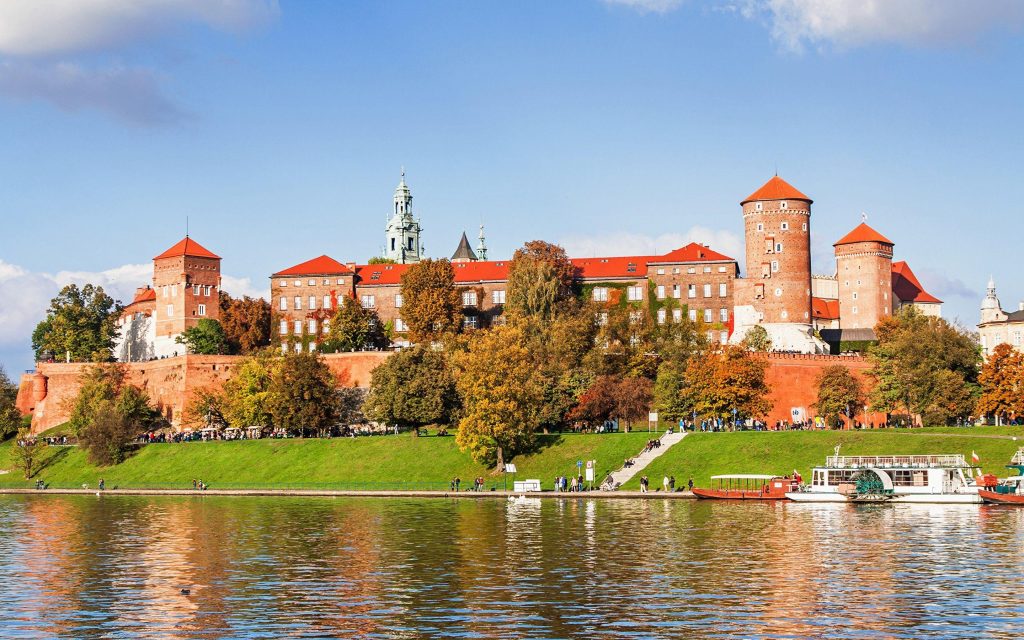
Some households own multiple vehicles, some cars belong to businesses, and some residents do not own or drive a car at all. It also measures vehicle availability rather than the distance driven or the number of journeys made.
Poland’s 2025 result puts it close to Iceland in the ranking. Its position illustrates that high car availability is not limited to small, wealthy countries or places with long distances between communities. It can also be found in larger European nations where private vehicles remain an important part of everyday mobility alongside public transportation.
