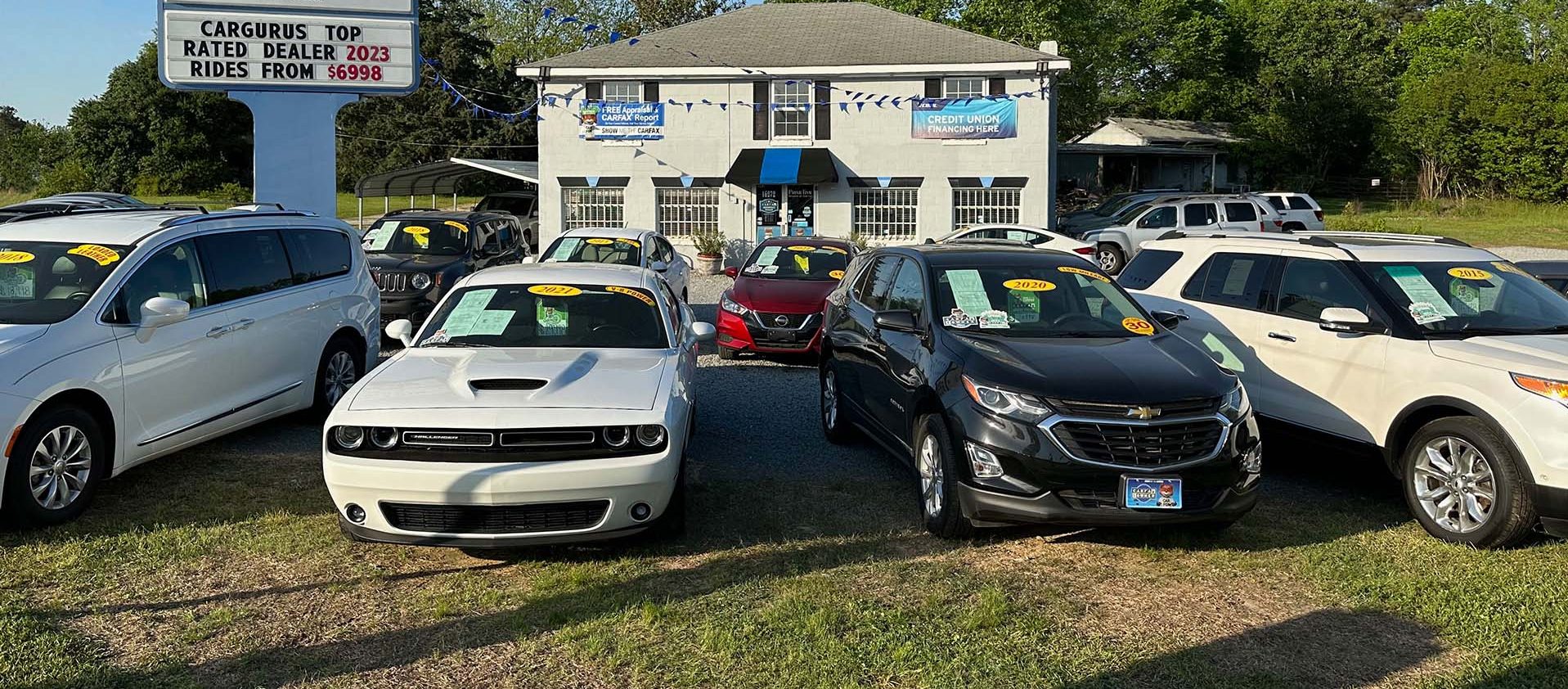
Buying a car can feel like a great deal when the monthly payment fits comfortably within your budget. Yet that attractive number may hide a higher purchase price, extra financing costs, or products you never planned to buy. Some dealerships use payment-focused sales tactics to make an expensive deal appear affordable, leaving buyers with more debt than they expected.
The good news is that you can protect yourself by understanding how auto financing works and knowing which details deserve closer attention. From interest rate markups to hidden charges, these eight practices can help you recognize when a low monthly payment comes with a much higher price tag. Before signing your next car loan, learn what to check so you can make a confident, informed decision.

1. Focusing on Monthly Payments Instead of Total Price
A monthly payment can make an expensive car seem surprisingly affordable. A salesperson might ask how much you can comfortably pay each month, then use that figure to structure a deal around your budget.
Although this approach sounds helpful, it can distract you from the vehicle’s selling price, the amount financed, and the total interest you will pay.
Imagine finding a car advertised for $32,000. You hoped to spend less, but the dealer offers a payment that appears manageable by extending the financing period and adjusting other parts of the deal.
You might leave believing you negotiated successfully, even though the contract includes more debt than you intended to accept.
The problem becomes clearer when you calculate the full cost. A $500 monthly payment for 60 months adds up to $30,000 in payments, while the same payment for 84 months totals $42,000.
These examples exclude down payments, taxes, fees, and other charges, but they demonstrate how a small monthly number can conceal a much larger commitment.
How to protect yourself: Negotiate the vehicle’s out-the-door price before discussing financing. This price should include the vehicle, applicable taxes, title and registration charges, and dealer fees.
Once you agree on that figure, compare financing offers using the annual percentage rate (APR), loan term, and total amount payable.
A payment that fits your budget is useful, but it should never be the only measure of a good deal. Always establish what the car costs before deciding how to pay for it.
2. Marking Up the Interest Rate
The interest rate on your auto loan affects how much you pay to borrow money. Even a modest increase can add hundreds or thousands of dollars to your expenses, depending on the amount financed and the length of the loan.
Some dealerships arrange financing through banks, credit unions, and other lenders. A lender may approve a particular rate, while the dealership presents a higher rate to the customer.
When the financing arrangement permits this practice, the dealer may receive compensation connected to the markup. The exact rules and compensation arrangements vary by lender and jurisdiction.
For example, suppose a lender approves a loan at 6% APR, but the dealer offers you 8%. If you accept without comparing alternatives, the higher rate may increase your monthly payment and the total interest charged.
The difference isn’t always obvious when the salesperson presents the figures alongside the car’s price, your trade-in, and optional products.
Your credit profile, income, debt obligations, down payment, loan term, and the lender’s criteria can all affect the rate you qualify for. Therefore, a higher rate does not automatically prove that a dealer has marked up your financing. The important step is to obtain competing offers and compare the terms.
How to protect yourself: Seek a preapproval from a bank or credit union before visiting the finance office. Ask the dealer what APR is being offered, whether the rate includes dealer compensation, and whether a lower rate is available.
Compare the APR, not merely the interest rate quoted verbally, because APR can include certain financing costs.
You do not have to accept the first financing offer presented to you. If another lender offers better terms, use that offer to negotiate or arrange financing independently.

3. Extending Loan Terms to Lower the Monthly Number
Need the payment lower? Just add months. A dealer may stretch a loan to 72 or 84 months to hit your target number, even though the total interest becomes much higher, according to the supplied sources.
Long terms carry a second risk: negative equity. That means you owe more than the car is worth. Cars lose value fastest in the early years, and with a long loan, the balance falls slowly. For a long stretch, the car may be worth less than the loan.
Why is that dangerous? Suppose you need to sell, or the car is totaled in an accident. Insurance typically pays the car’s current value, not your loan balance, and you may owe the difference.
Or you may want to trade early, and the dealer rolls the shortfall into your next loan. The sources describe this as trapping buyers in future expensive roll-overs.
Picture the cycle. A long loan creates negative equity. Negative equity forces a rollover. The rollover creates a longer, bigger loan. Each round costs more.
How can you break it? Choose the shortest term you can comfortably afford. Make a larger down payment if possible. Consider a less expensive car. If a payment only works at 84 months, the car may be too costly.
A term is a trade-off between today’s payment and tomorrow’s debt.
4. Packing the Loan With Add-Ons
Welcome to the finance office, where the deal can grow a few dollars at a time. The supplied sources say dealers add extended warranties, gap insurance, paint protection, tire packages, and more, framed as “just a few extra dollars per month.”
Here’s the math problem with that phrase. A $10 to $20 monthly add-on sounds harmless. Over an 84-month loan, $20 a month is $1,680, and that’s before interest on the financed amount. Stack three products, and the number gets large fast.
Some add-ons can be useful. Gap insurance, for example, may help if you owe more than the car is worth. But price and need vary, and you may find the same product cheaper through your own insurer or lender.
What should you ask? Which items are optional? What’s each one’s total price, not its monthly cost? Can I decline it? Can I buy it later or elsewhere?
Take the contract home if you can, and read each line. If something isn’t clear, ask the dealer to explain it plainly.
Your best tool is a polite “no, thank you.” You can add products later if you decide you want them.
5. Hiding Negative Equity in the New Loan
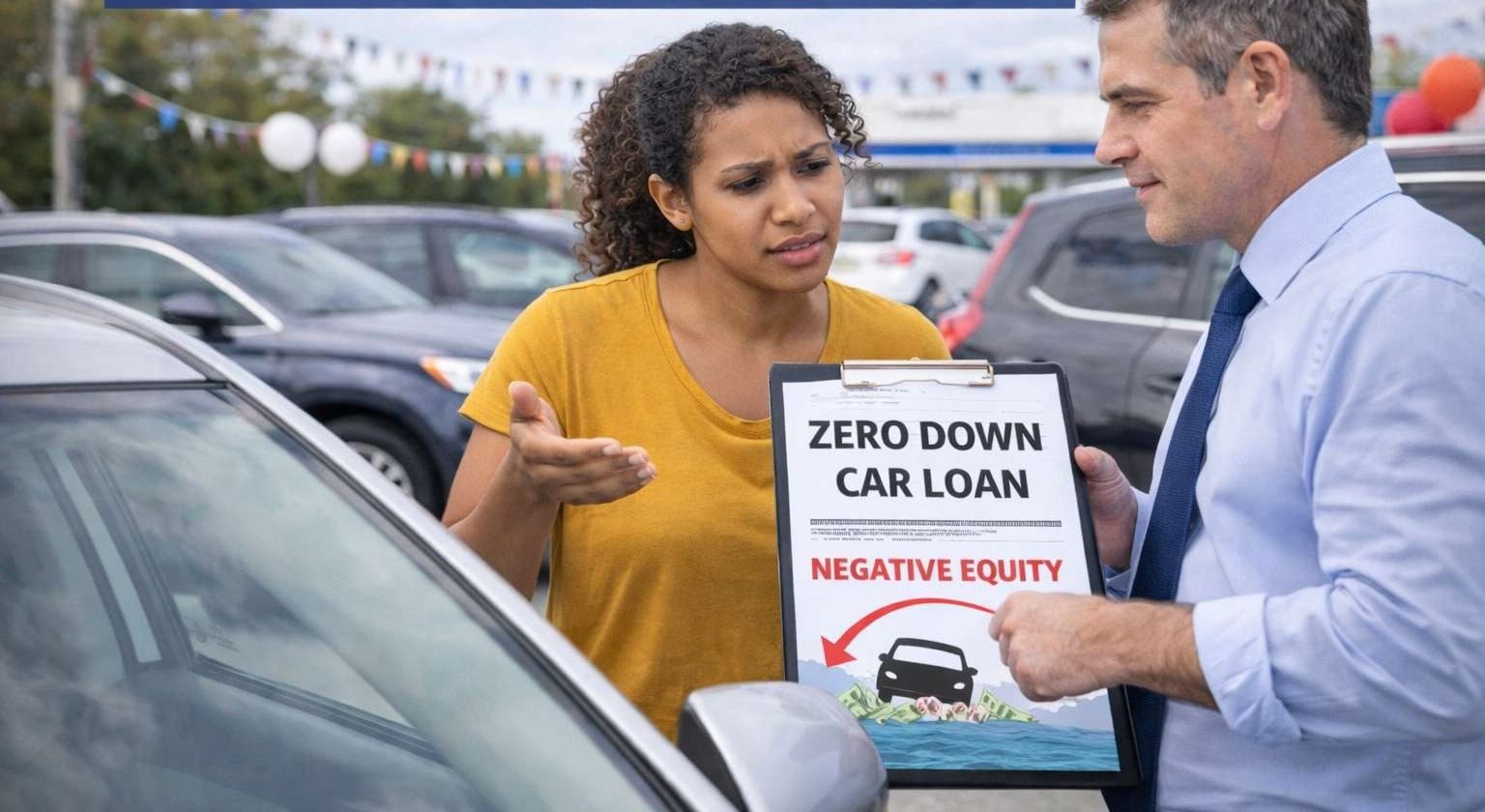
Owe more on your trade-in than it’s worth? Many buyers do. According to the supplied sources, dealers quietly roll that debt into the new loan, which makes the monthly payment seem manageable while increasing the total financed.
Here’s a simple example. Say you owe $18,000 on your current car, and the dealer values it at $14,000. That $4,000 gap is negative equity. If the dealer folds it into your new loan, you’re borrowing for the new car and also paying off the old one.
Two problems follow. First, you start the new loan already underwater, since you owe more than the new car is worth the moment you drive off. Second, you pay interest on the old debt, so the extra $4,000 costs more than $4,000.
The monthly payment may barely change, especially if the term is stretched. That’s how the trick hides.
Protection starts before you shop. Check your payoff amount with your lender and compare it with your car’s value from a few sources. If you’re underwater, consider keeping the car a little longer, paying the loan down, or making a larger down payment.
Ask the dealer to show how the trade-in, payoff, and any negative equity appear on the paperwork. A clear line item should show it.
Knowing your number is half the battle.
6. Yo-Yo Financing (Spot Delivery Tricks)
Imagine driving home in your new car, proud and relieved. A few days later, the phone rings. “Good news and bad news. The financing fell through.
You’ll need to come back and sign a new deal.” That’s the setup the supplied sources call yo-yo financing, or a spot delivery trick. How does it work? The dealer lets you take the car home before the loan is final.
Then it claims the original terms didn’t work out and pushes you into a more expensive loan. By then you’ve shown the car to friends, driven it to work, and gotten attached.
The sources note that this emotional attachment makes buyers accept worse terms, which raises the total cost even if the monthly payment looks similar.
Some real financing issues do happen, so a call isn’t always a trick. But the pattern is worth knowing.
How can you protect yourself? Don’t take the car until the financing is approved and finalized in writing. Ask directly: “Is this loan final and funded?” Bring your own preapproval, so you have a fallback. Read any contract that says delivery is conditional on financing.
If a dealer calls to change the terms, you may not have to agree on the spot. Take time, compare offers, and ask about your rights under your state’s rules and your contract. A consumer protection office can help.
Patience beats pressure.

7. Adding Hidden Fees to the Final Contract
Fees are where the final price quietly grows. Sources say documentation fees, dealer prep, advertising fees, and other “junk fees” may be added at signing, increasing the total financed amount and, therefore, the monthly payment or the interest paid over the life of the loan.
These fees often appear only in the final paperwork. Some fees are normal. Taxes, title, and registration are real government charges.
A documentation fee is common, though amounts differ by state, and some states cap them. The troubling ones are vague items with no clear purpose, such as “dealer prep” for work already built into the price.
Here’s why timing matters. By the time you reach the finance office, you’ve spent hours at the dealership, and walking away feels harder. That’s when surprises are easiest to slip in.
How do you protect yourself? Ask for an out-the-door price in writing before you agree to anything. It should list the vehicle price, taxes, government fees, and every dealer fee. Compare it with the number on your final contract, line by line.
If a fee isn’t explained, ask what it covers and whether it’s optional or negotiable. If the answer is fuzzy, push back, or take your business elsewhere.
Fees add to the loan, and the loan adds interest. Small items grow.
8. Misrepresenting Loan Terms or Balloon Payments
Last on the list is the one that can turn a low payment into a trap. According to the supplied sources, dealers may quote a low monthly payment without saying it’s tied to a very long term or includes a balloon payment at the end.
The payment looks cheap, but the structure makes the loan far more expensive. What’s a balloon payment? It’s a large lump sum due at the end of the loan.
Monthly payments stay low because you haven’t paid off the full balance. When the term ends, you must pay the balloon, refinance it, or sell the car. If the car is worth less than the balloon, you’re in trouble.
Not every balloon loan is deceptive. Some are legitimate products. The problem comes when the final payment isn’t clearly disclosed.
Here’s your checklist. Ask: How many months? What’s the APR? What’s the total of all payments? Is there a final payment larger than the others? Are there prepayment penalties? Get answers in writing, and check them against the contract.
Let’s recap all eight. Monthly-payment focus, rate markups, long terms, add-ons, hidden negative equity, yo-yo financing, junk fees, and balloon payments all make a cheap monthly number cost more. Negotiate the price first, bring your own financing, and read every line.
A low payment isn’t a good deal until the total says so.