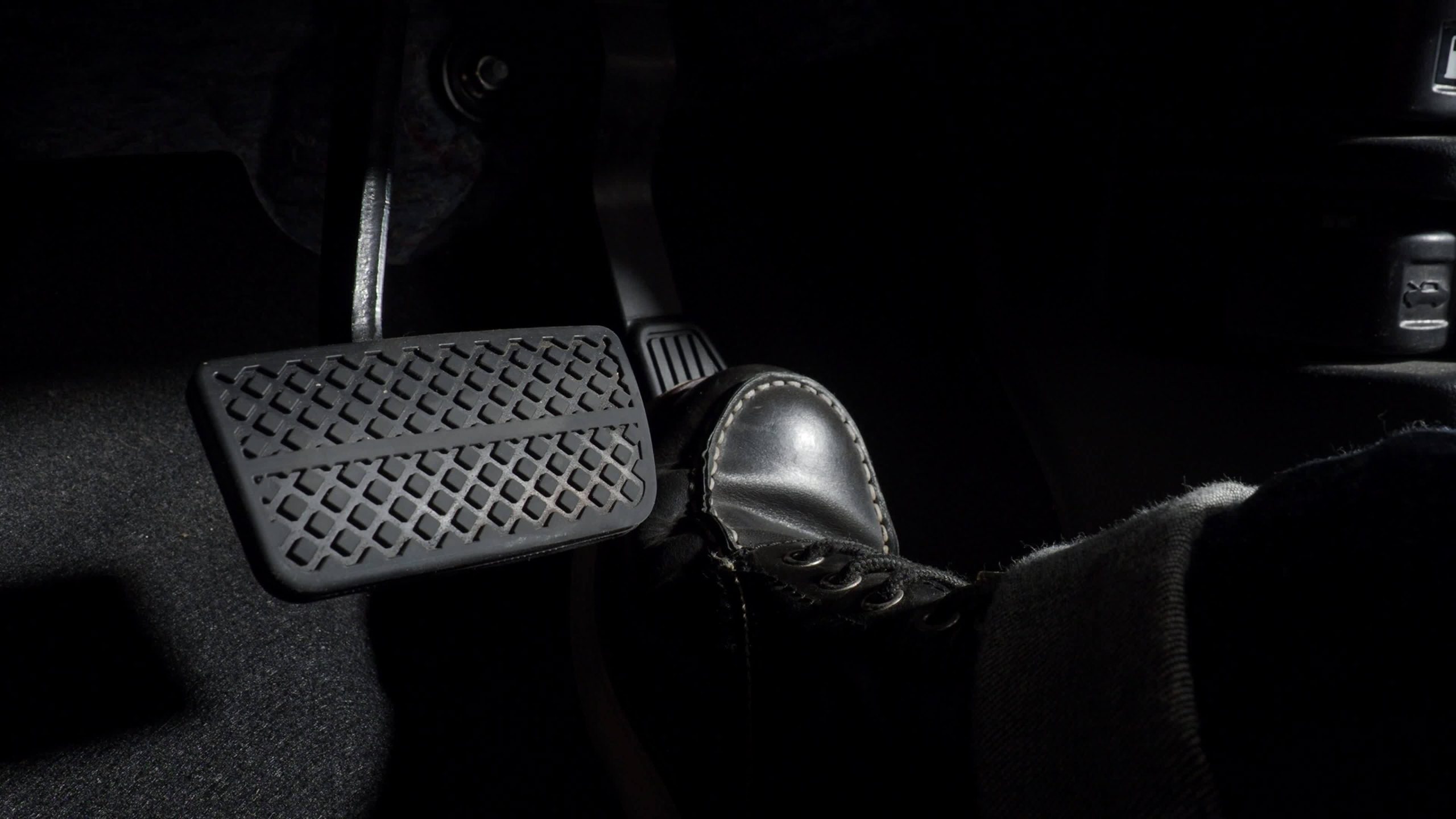
A used car may look clean, have reasonable mileage, and come with a convincing service history, yet its previous working life can tell a different story. Vehicles used for driver training often experience repeated starts, frequent clutch operation, heavy braking, tight parking maneuvers, and constant adjustments by inexperienced drivers.
These conditions can leave recognizable clues in mechanical components, interior controls, and maintenance records. None of these signs proves that a car belonged to a driving school, but several together justify further investigation.
Understanding the differences helps buyers assess potential repair costs before purchasing a used vehicle.
1. Unusually Worn Clutch Components
The clutch is one of the first components worth inspecting when a used manual-transmission car may have served as a training vehicle.
Learner drivers frequently practice moving away from a standstill, changing gears, stopping on inclines, and recovering from stalls. Repeated slipping and prolonged operation near the clutch’s engagement point can increase friction and heat, potentially accelerating wear.
During a test drive, pay attention to how the clutch engages. Shuddering when pulling away, an unusually high engagement point, or engine speed rising without a corresponding increase in road speed can indicate a worn or slipping clutch.
A burning smell after ordinary driving may also warrant investigation. These symptoms are not exclusive to training cars, however, and their significance depends on the vehicle’s design and condition.
The maintenance history can provide stronger evidence than pedal feel alone. An invoice showing an early clutch replacement, followed by another replacement at relatively low mileage, deserves questions about the car’s previous use.
Heavy urban traffic, towing, poor driving habits, and mechanical problems can also cause premature wear, so mileage alone cannot establish the reason.
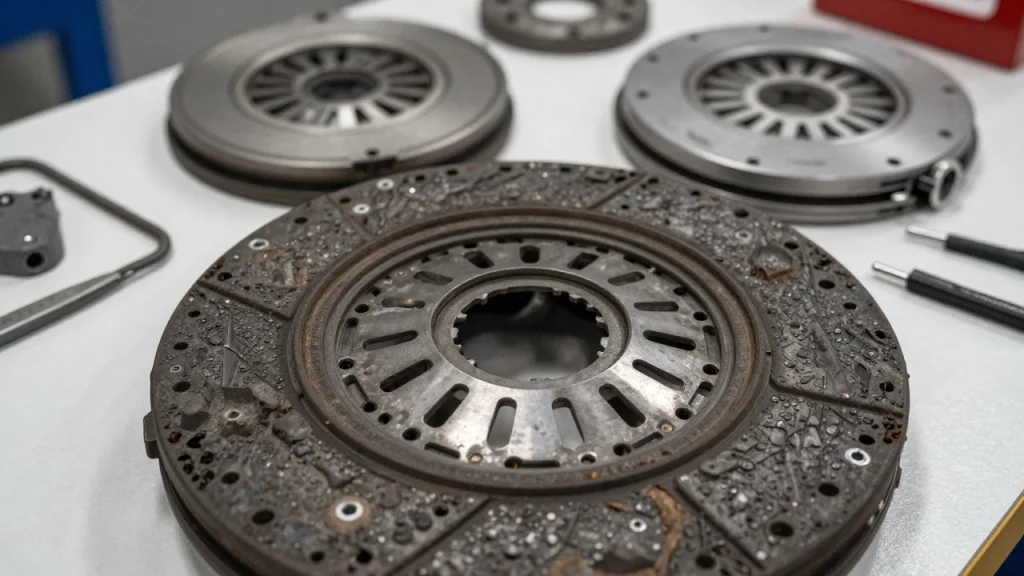
Ask whether the seller has records for clutch repairs, including parts replaced and labor performed. A mechanic can assess the clutch and related components before purchase.
A worn clutch does not prove driving-school use, and a recently replaced clutch does not disprove it. The useful clue is the combination of mechanical condition, service history, and other evidence of repeated learner-driver operation.
2. Brake Wear That Seems Excessive for the Mileage
A car with relatively low mileage but badly worn brakes deserves closer examination. Driving lessons frequently involve repeated stops, traffic-light approaches, parking exercises, and emergency-stop practice.
Learners may brake abruptly or inconsistently, placing greater demands on brake pads and rotors than a vehicle that spends most of its time cruising at steady highway speeds.
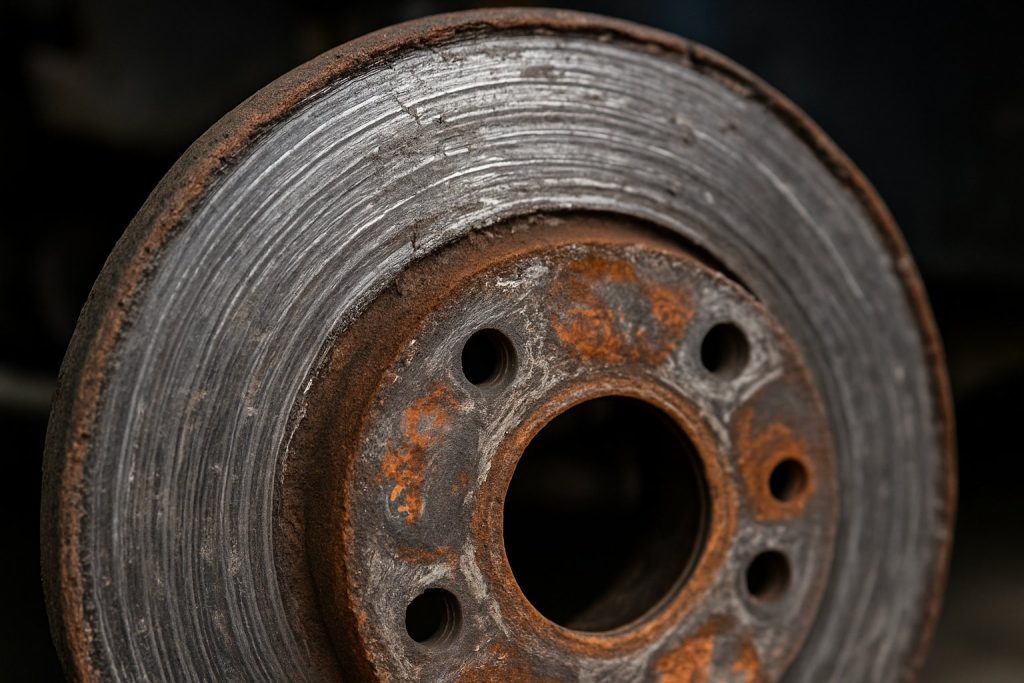
Start by examining the service records. Several brake-pad replacements within a relatively short period could indicate intensive stop-and-go use, although driving conditions and the quality of replacement parts also matter. Ask whether the rotors were replaced or resurfaced and whether the calipers received attention.
During a professional road test, a mechanic can assess brake response, vibration, unusual noises, and whether the vehicle pulls to one side. Visible rotor damage, a brake pedal that feels unusually soft, or warning lights require investigation regardless of the car’s previous use.
The key is comparing the wear with the odometer reading and documented maintenance. A car showing 25,000 miles with extensive brake work might have experienced demanding urban use, but those details alone cannot establish that it was a training vehicle.
Instructors sometimes use passenger-side auxiliary brake controls, allowing them to intervene during a lesson. Previous installation or maintenance records for such equipment can provide more direct evidence than brake wear alone.
Before purchasing, request repair invoices and have the braking system inspected independently. Brake components are normal wear items, but their condition can reveal how intensively a car has been used. Do not assume that fresh pads automatically mean the entire braking system is in good condition.
3. Traces of Removed Dual Controls
A potentially strong clue when combined with supporting evidence. One of the more distinctive signs of former driver-training use is evidence that additional instructor controls were installed and later removed.
Training cars commonly have a secondary brake pedal on the passenger side. Manual-transmission vehicles may also have an additional clutch control, depending on the system and local requirements. These installations can leave physical traces after removal.
Inspect the passenger footwell carefully. Look for unusual mounting holes, covered fasteners, nonfactory brackets, patches in the carpet, or altered trim around the floor and lower dashboard. Some installations attach to structural parts of the vehicle, so evidence may be visible beneath the carpet or from underneath the car.
The quality of any repairs matters as much as the marks themselves. Properly removed equipment should not leave unsafe modifications, exposed wiring, loose components, or openings that allow water into the cabin. A professional inspection can determine whether the vehicle’s original controls and surrounding structures remain sound.
Not every secondary pedal indicates driving-school use. Some vehicles may have been adapted for other purposes, and factory equipment can vary. Similarly, a carefully restored training car might show few obvious traces after its auxiliary controls were removed.
Ask the seller directly whether the car ever had dual controls. If the answer is yes, request installation and removal invoices, along with any relevant inspection records. In the United States, requirements for training vehicles vary by state, so documentation should be assessed under the applicable rules.
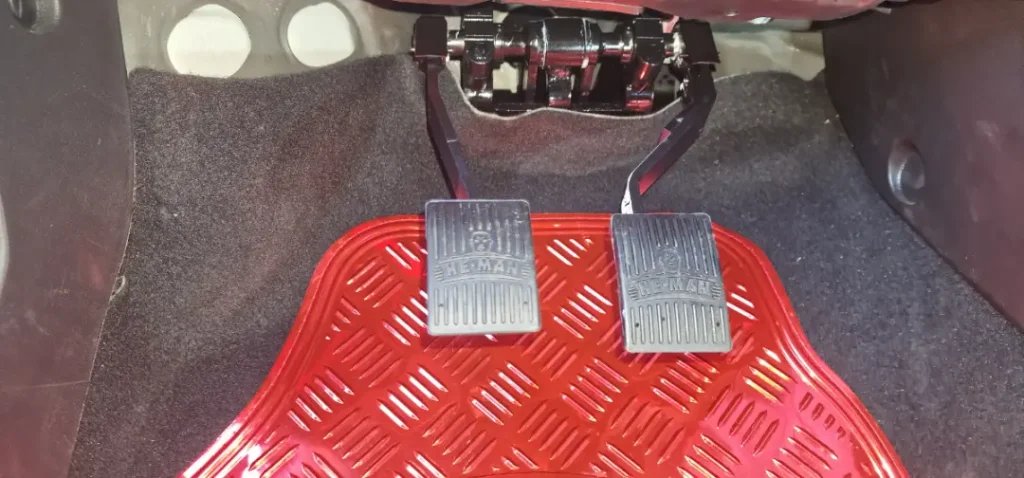
A combination of mounting marks, unusual pedal wear, and a relevant service history is more persuasive than one isolated hole in the carpet. Treat these traces as a reason to investigate, not definitive proof of the vehicle’s past.
4. Heavy Wear on the Driver’s Seat and Pedals
Interior condition can reveal how frequently a car has been entered, adjusted, and driven by different people. A training vehicle may accommodate several students during a single day, each adjusting the seat, operating the pedals, moving the mirrors, and handling the steering wheel and gear selector.
Examine the driver’s seat bolster, cushion, adjustment controls, and seat-belt webbing. Repeated entry and exit can flatten upholstery, wear the outer bolster, and loosen adjustment mechanisms. The pedals may show polished surfaces, worn rubber covers, or unusual looseness from frequent use.
The steering wheel, gear knob, door handles, window switches, and mirror controls deserve attention, too. Heavy wear across several contact points can support the possibility of intensive use. However, sunlight, poor maintenance, body size, cleaning products, and ordinary commuting can produce similar signs.
Mileage provides useful context. If the odometer shows 18,000 miles but the driver’s seat is badly compressed, the pedal rubbers are heavily worn, and the gear knob has lost much of its finish, ask why the condition seems inconsistent. The answer could involve training use, but it could also involve an inaccurate odometer or a different usage pattern.
Check the seat belts for fraying, damage, or failure to retract properly. These are safety components, not merely cosmetic details, and any defect should be addressed before the vehicle is driven.
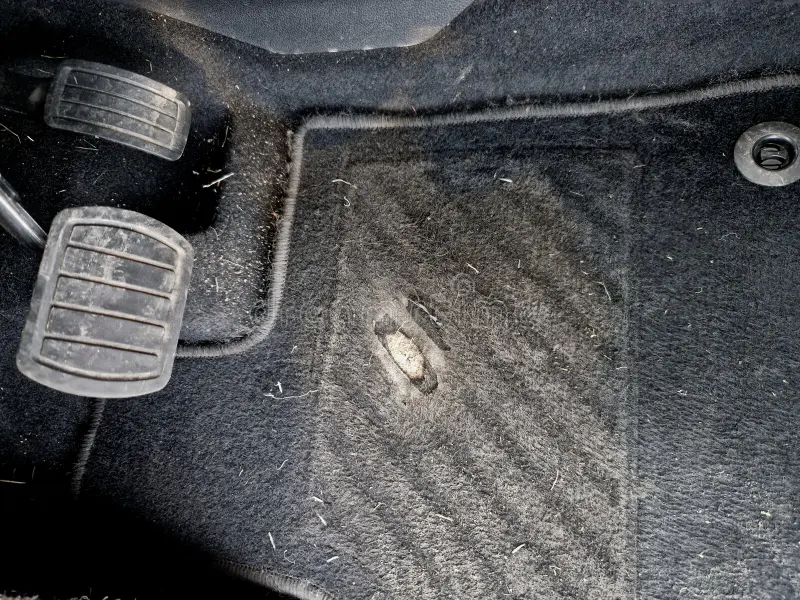
Interior wear becomes more informative when supported by maintenance invoices, former fleet records, or traces of removed dual controls. It should not be used alone to label a car as an ex-driving-school vehicle.
A clean cabin does not rule out training use either. Professional cleaning, replacement seat covers, and interior repairs can conceal years of intensive use.
5. Frequent Gearbox Repairs or a Worn Gear Selector
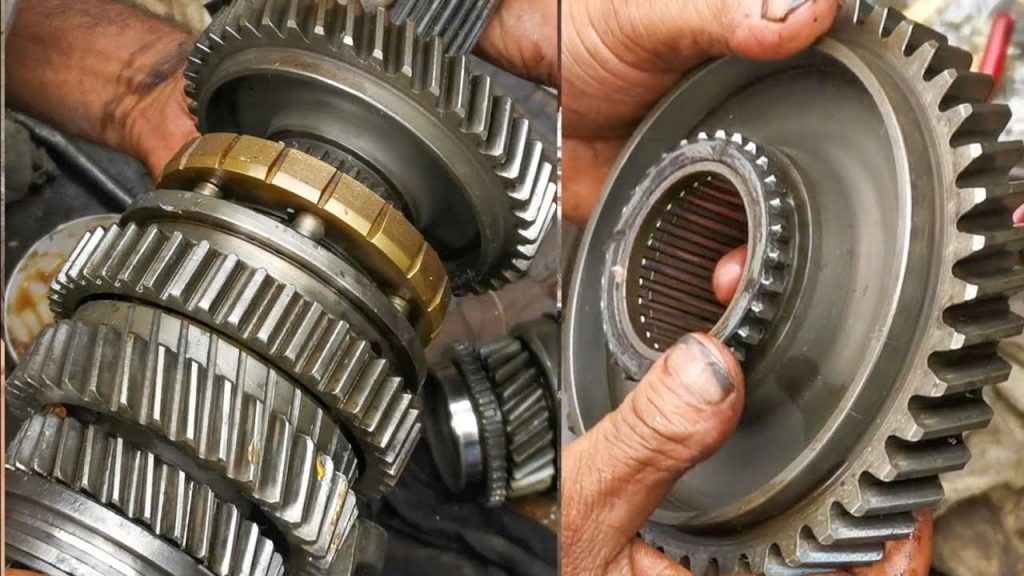
Manual-transmission training cars can accumulate a large number of gear changes without covering exceptionally high mileage. Learners practice selecting first gear, shifting between lower gears, reversing, and recovering after stalls.
Incorrect clutch operation or forcing the gear lever can contribute to wear, although the precise effects depend on the driver and transmission design.
During an inspection, pay attention to how the gearbox behaves when cold and after the vehicle warms up. Difficulty selecting first or reverse, grinding during shifts, excessive gear-lever movement, and unusual noises warrant professional assessment.
None of these symptoms automatically identify a former training car, but they can indicate mechanical wear that deserves investigation.
Maintenance invoices can help establish whether the gearbox has required repeated repairs. Look for documented work on the clutch hydraulics, shift cables, linkage, transmission mounts, or internal gearbox components.
A single repair may simply reflect normal maintenance or an isolated defect. Several related repairs at relatively low mileage deserve more detailed questions.
Also consider the vehicle’s operating environment. A car used for city commuting, delivery work, or frequent short journeys may experience similarly intensive shifting. Driving-school use is only one possible explanation.
Ask the seller about the car’s previous owners and whether it was operated commercially. If the vehicle came from a business, determine what type of work it performed rather than assuming every fleet vehicle was used for instruction.
A qualified mechanic should inspect any suspected transmission problem before purchase. Repair costs can vary substantially between models, particularly when internal gearbox work is necessary.
The strongest indication comes from matching unusual wear with records of repeated clutch or transmission work and evidence of former training equipment. Without supporting information, gearbox wear should be treated as a mechanical concern rather than proof of the car’s history.
6. Steering and Suspension Wear From Repeated Maneuvers
Driving lessons involve more than travelling from one destination to another. Students repeatedly practise parallel parking, reversing, tight turns, three-point turns, and low-speed positioning. These maneuvers place frequent demands on the steering and suspension systems, particularly when the steering wheel is turned while the vehicle is moving slowly.
Inspect the tires for uneven wear and ask a mechanic to examine suspension bushings, tie-rod ends, ball joints, wheel bearings, and shock absorbers. Listen for knocking over bumps or unusual noises while turning. Excessive steering play, persistent pulling, and vibration also warrant investigation.
Repeated maneuvering can contribute to wear, but these symptoms are not unique to training vehicles. Potholes, neglected maintenance, curb impacts, and ordinary urban driving can produce similar problems. A car with worn suspension components may simply have had a difficult life on poorly maintained roads.
Alignment records can provide additional context. Repeated alignments or steering repairs at relatively low mileage may justify questions, especially when combined with unusual tire wear and evidence of other intensive-use patterns. However, alignment work alone is common and cannot establish previous instructional use.
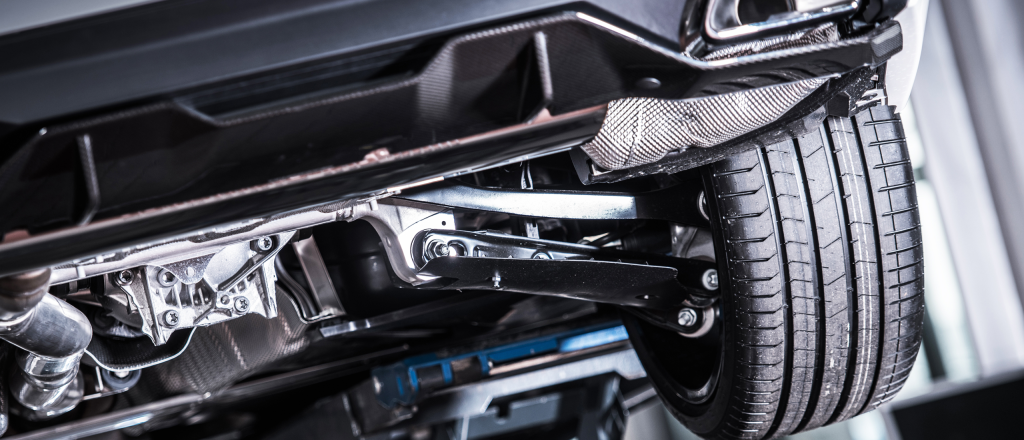
During a pre-purchase inspection, ask the technician to check for looseness, damaged components, leaking dampers, and signs of collision repairs. A recent alignment does not necessarily mean the underlying problem has been corrected if worn components remain.
Steering and suspension condition matters because defects can affect handling, tire life, and braking stability. Buyers should address those concerns regardless of whether the vehicle previously belonged to a driving school.
Treat the findings as one part of a wider assessment. Repeated low-speed maneuvers are consistent with driver training, but they are not exclusive to it.
7. Unusual Service Intervals and Repeated Maintenance Visits
A driving school’s vehicle is a working asset. If it becomes unavailable, lessons may need to be rescheduled, so operators have practical reasons to maintain their cars and repair problems promptly. As a result, former training vehicles can have extensive service histories, sometimes with frequent visits to the same workshop.
Request invoices rather than relying solely on a stamped maintenance booklet. Look for repeated brake work, clutch replacement, steering repairs, tire changes, and maintenance performed at relatively short intervals. The combination may help reveal how the vehicle was used.
Service frequency needs careful interpretation. More frequent maintenance is not necessarily a warning sign. It may demonstrate responsible ownership, and an ex-training car with documented servicing could be in better mechanical condition than a privately owned vehicle with neglected maintenance.
Pay attention to the odometer readings recorded on successive invoices. These can help establish whether mileage is consistent over time and whether maintenance occurred unusually frequently relative to the distance travelled.
The U.S. Department of Justice’s National Motor Vehicle Title Information System provides consumers with information about title history, the latest reported odometer reading, and certain theft or salvage records, although it does not specifically identify every vehicle previously used for driver training.
Ask the seller whether the vehicle was privately owned, commercially operated, or part of a fleet. A business name on an invoice can provide a lead, but it does not establish that the company was a driving school.
Cross-check service documentation against the car’s condition. If the paperwork describes extensive maintenance but the vehicle has obvious unresolved defects, seek an independent inspection.
Frequent workshop visits are best understood as supporting evidence. They become more meaningful when records repeatedly document clutch, brake, and control-related work alongside other signs of instructional use.
8. Evidence of Additional Mirrors or Removed Training Accessories
Driving instructors need to monitor traffic and observe a learner’s actions, so training vehicles may have additional interior mirrors, passenger-side mirrors, or other instructional accessories. Once the car returns to private use, these items may be removed, leaving small but useful clues about its previous role.
Inspect the windshield, dashboard, headliner, and passenger-side door area for unusual mounting marks. Look for nonfactory screw holes, adhesive shadows, replacement trim, or brackets that appear inconsistent with the vehicle’s original equipment.
A former roof-mounted training sign may also leave attachment marks or differences in paint exposure, depending on how it was installed.
The condition of the surrounding trim can help distinguish professional removal from improvised repairs. Missing fasteners, exposed wiring, cracked plastic, or poorly covered holes deserve attention. These findings could indicate that accessories were removed without adequate care, even if they do not prove the car was used for instruction.
Not every additional mirror belongs to a driving school. Owners sometimes install auxiliary mirrors for towing, visibility, or personal preference. Similarly, aftermarket accessories can leave marks that have nothing to do with professional training.
Ask the seller about any nonfactory equipment and request documentation if the car was previously modified. Photographs from an earlier listing or maintenance records may help establish what was installed, although the absence of such evidence proves nothing.
A qualified technician can inspect unusual mounting points and determine whether any modification affected the vehicle’s structure, electrical system, or visibility. Safety matters more than the cosmetic appearance of the repair.
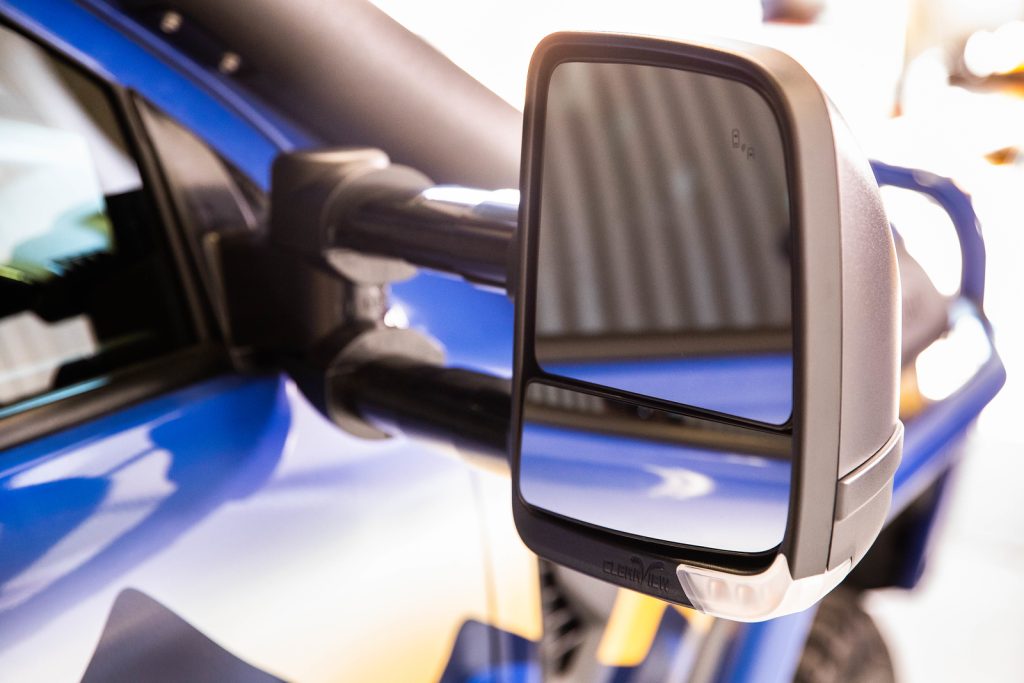
This clue is most useful when combined with dual-control mounting marks, heavy interior wear, or records suggesting fleet operation. An isolated mirror bracket is weak evidence, but several consistent details can justify further questions about the vehicle’s history.
9. Fleet Ownership or Business Records Suggesting Training Use
The paperwork accompanying a used car can sometimes reveal more than its physical condition. A vehicle previously owned by a driving school, instructor, or business associated with driver education may have records that identify its former role directly.
Start by reviewing the title documents, registration history, service invoices, and available vehicle-history reports. Look for previous owners listed as businesses and workshop invoices referencing dual-control installation or removal. An invoice identifying a driving school is more direct evidence than worn pedals or a damaged clutch.
However, business ownership alone proves very little. Rental companies, delivery services, corporate fleets, and other businesses also operate vehicles intensively. A company name should prompt further questions, not an automatic conclusion that the car was used to teach learners.
In the United States, the National Motor Vehicle Title Information System can help buyers check title brands, the latest reported odometer reading, and certain historical theft and salvage information. Its records are useful for assessing vehicle history, but they do not constitute a comprehensive database of driving-school use.
NICB’s VINCheck service can also identify certain participating-insurer records involving unrecovered theft, salvage, or flood damage. A clean result does not guarantee that a vehicle has no undisclosed history, and this service is not designed specifically to identify former training cars.
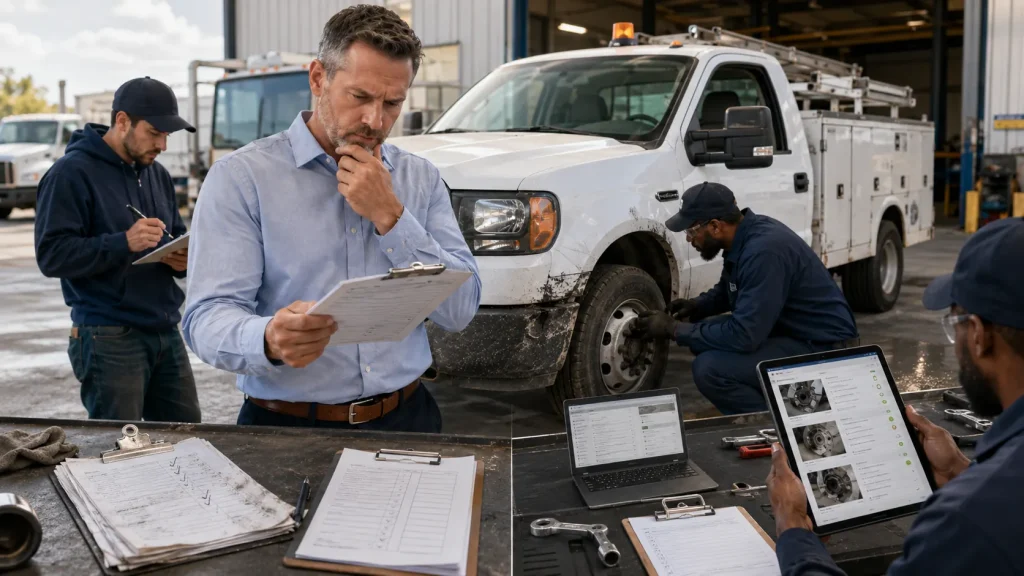
Ask the seller directly about previous commercial use and whether the vehicle ever carried auxiliary pedals. Compare the response with the physical evidence and documents available.
If the seller refuses reasonable questions or the ownership history contains unexplained gaps, arrange an independent inspection before proceeding. Reliable documentation can help establish how a car was used, but no single generic fleet record proves it belonged to a driving school.
10. Low Mileage That Does Not Match the Vehicle’s Condition
A low odometer reading can make a used car attractive, but mileage alone does not tell the whole story. A vehicle used for driver training may spend considerable time practising starts, stops, parking, and short trips without accumulating the distance expected from regular commuting or highway travel.
Imagine a car showing 30,000 miles with a heavily worn clutch, extensive brake work, a compressed driver’s seat, and signs that auxiliary pedals were removed. Those details create a reasonable basis for asking about its former use. They do not establish a specific history without supporting evidence.
Repeated starting and stopping can increase operating cycles relative to distance travelled. That is why the condition of the clutch, brakes, gearbox, tires, steering, and interior should be compared with the odometer reading rather than assessed in isolation.
Mileage discrepancies can also have other explanations, including odometer replacement, inaccurate records, neglected maintenance, or use in heavy urban traffic. Buyers should not label a vehicle as a former training car simply because it appears more worn than expected.
Compare the odometer reading with service invoices, inspection records, and available vehicle-history information. The National Motor Vehicle Title Information System provides the latest reported odometer reading where available, but its records may not contain every event in a vehicle’s life.
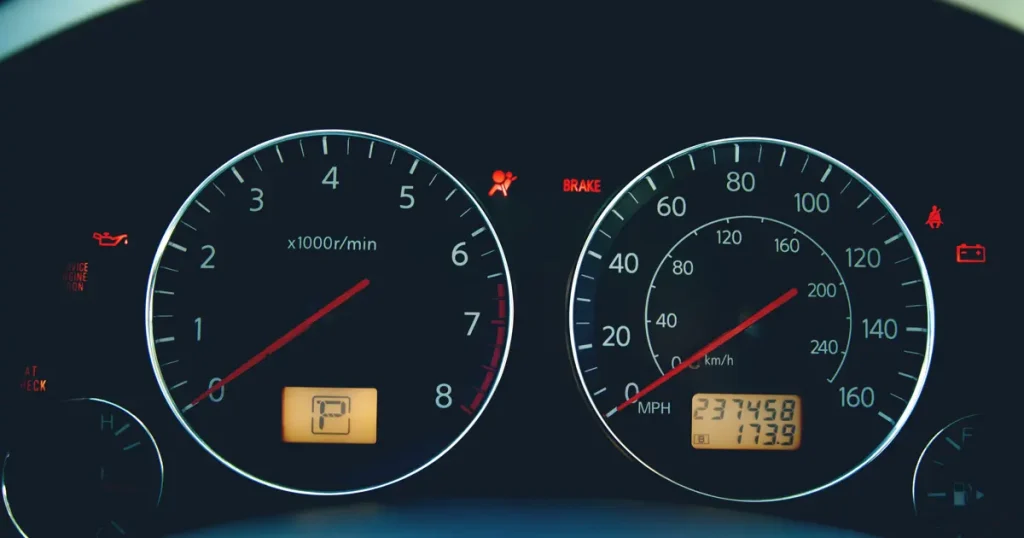
Finally, arrange an independent pre-purchase inspection. A qualified mechanic can estimate the condition of major components and identify repairs that may soon be necessary.
A mismatch between mileage and wear is a warning to investigate, not proof of fraud or driver-training use. The most convincing assessment comes from combining physical evidence, consistent documentation, and the seller’s account of the vehicle’s previous ownership.