Saving money on replacement parts sounds sensible until the cheaper component wears out early, damages another system, or fails when you need it most. Not every aftermarket part is inferior, and a higher price does not automatically guarantee better quality.
Reputable aftermarket manufacturers often produce components that meet original-equipment specifications. The real risk comes from choosing unverified brands, counterfeit products, or parts that do not meet the vehicle’s requirements.
These twelve examples show where cutting the initial price can create larger expenses through repeat labor, premature wear, reduced performance, or safety problems.
1. Airbag Inflators
An airbag inflator is not a component where bargain hunting should take priority over verified quality. It is responsible for generating the gas that rapidly inflates an airbag during a collision.
If the inflator deploys too slowly, fails to deploy, or ruptures violently, the consequences can be catastrophic. A cheap replacement that looks identical to an original part may not provide the same protection.
The National Highway Traffic Safety Administration issued a consumer alert in July 2024 after identifying defective, substandard replacement airbag inflators linked to three deaths and two life-altering injuries in the United States.
In those cases, the vehicles had previously been involved in crashes, and their original airbags had been replaced with dangerous aftermarket inflators. Some of the defective units sent metal fragments into vehicle occupants during deployment.
The financial risk is not limited to the price of replacing the inflator again. A defective unit can cause severe injuries, vehicle damage, and potentially devastating consequences for occupants. NHTSA specifically advises buyers of used vehicles to investigate previous crash repairs and have replacement airbags inspected when their history is uncertain.
This warning does not mean every aftermarket airbag component is unsafe. The concern is counterfeit or unverified equipment sold through questionable supply chains, often at prices far below legitimate alternatives.

NHTSA also warns that these parts may not be identifiable through an ordinary VIN recall search because they were installed as aftermarket replacements.
Ask the repair shop for the manufacturer’s name, part identification, and sourcing information. For an airbag repair, choose a reputable facility and verified replacement equipment. Saving a small amount on a critical restraint component is a risk that simply is not worth taking.
2. Brake Pads
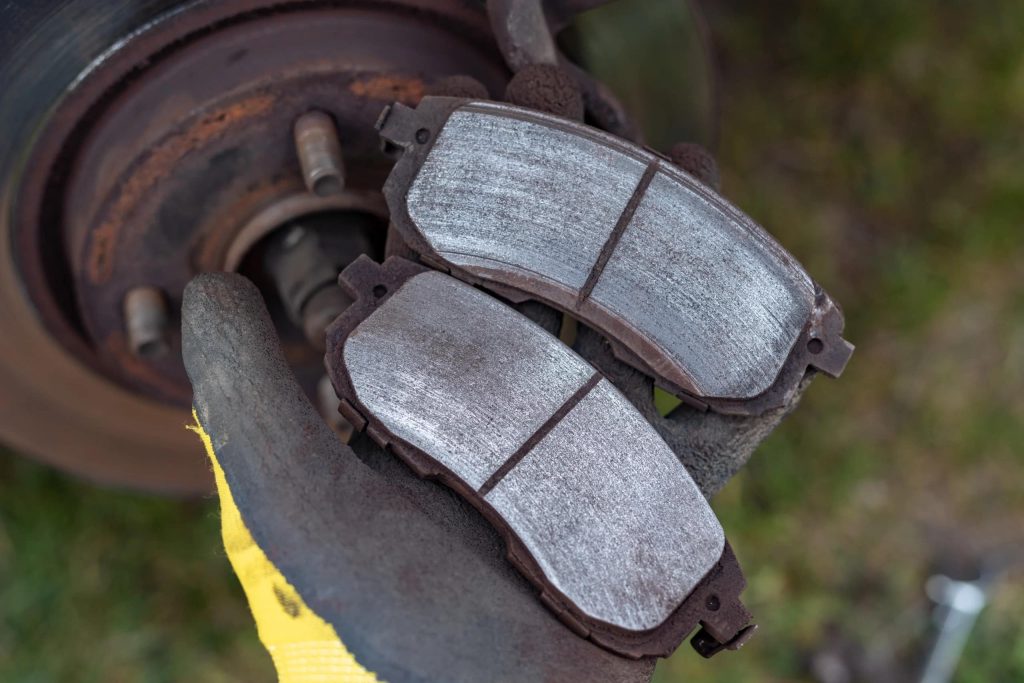
Brake pads are among the most frequently replaced components on a vehicle, which makes them an attractive place for drivers to look for savings. However, choosing solely by the lowest price can be a costly decision.
Pad compounds differ in braking performance, noise characteristics, dust production, heat tolerance, and wear life. A very inexpensive set may not deliver the same consistency or service life as a well-engineered replacement.
Consumer Reports advises drivers to prioritize good-quality brake pads and rotors because poor-quality components can affect braking performance.
Its maintenance guidance gives a typical brake-pad and rotor replacement interval of approximately 25,000 to 50,000 miles, although actual life varies with vehicle design, driving conditions, traffic, and braking habits.
The hidden cost of a cheap pad can appear through faster wear, excessive noise, vibration, or reduced performance under repeated hard braking. If the pads wear down prematurely, the owner may have to pay for another replacement sooner than expected. That means paying labor again, even if the second set of pads is only moderately more expensive.
There is an important distinction between cheap and reputable aftermarket products. AAA explains that quality aftermarket parts can meet or exceed original-equipment specifications and that many established suppliers also manufacture components for automakers. Price alone is therefore not a reliable measure of quality.
When buying pads, match the part to the vehicle and its intended use. Ask about the manufacturer’s specifications, warranty, and suitability for the vehicle’s weight and braking system.
A properly selected, reputable aftermarket pad can be a sensible purchase. An unknown product with no credible manufacturer information is a different proposition.
3. Brake Rotors
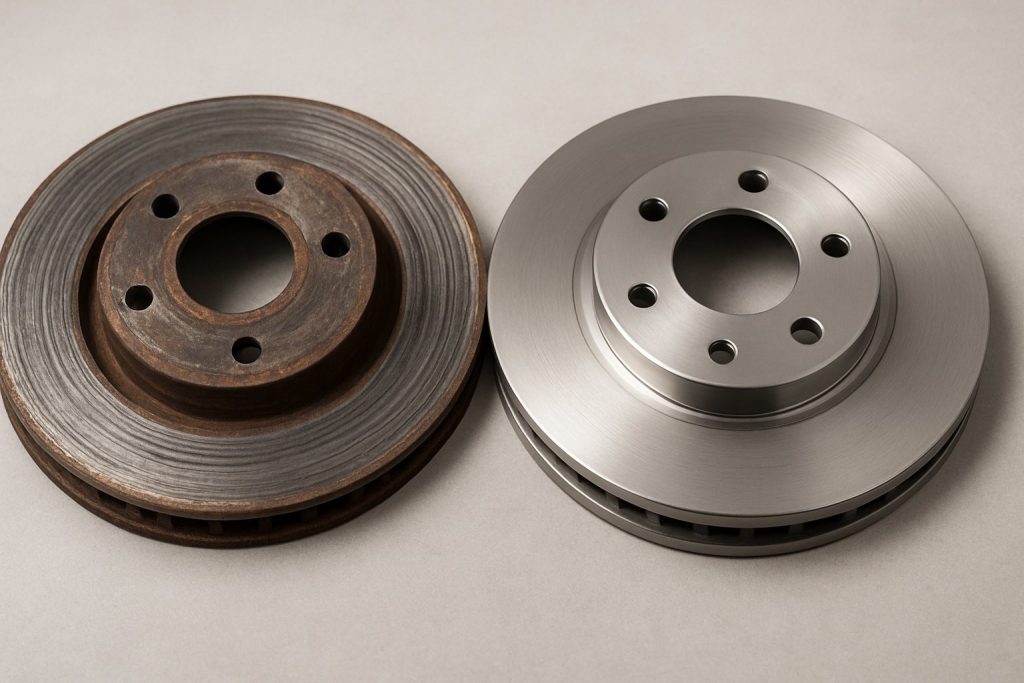
Brake rotors are not components where the lowest price should automatically decide the purchase. They absorb heat every time the brakes are applied, and their ability to remain flat and resist excessive wear depends on the quality of the metal, manufacturing process, and design.
An inexpensive rotor may look almost identical to a more reputable alternative, but differences in metallurgy, machining, and corrosion protection can affect how it performs after thousands of miles.
Poor-quality rotors may develop vibration, uneven wear, or surface problems sooner than expected. That can mean paying for another set of rotors and repeating labor that could have been avoided.
Consumer Reports recommends using good-quality brake replacement parts because poor-quality pads and rotors can affect braking performance. It also notes that replacing pads and rotors together is often advisable, depending on their condition and the vehicle manufacturer’s specifications.
This does not mean every budget rotor is unsuitable. Several aftermarket manufacturers produce dependable parts, including options that meet original-equipment requirements. The important step is checking the manufacturer’s reputation, vehicle fitment, warranty, and specifications rather than choosing solely by price.
Before buying, ask whether the rotor is designed for your vehicle’s weight, braking system, and intended use. A small saving at the parts counter is not worthwhile if the replacement develops problems early and leaves you paying for the same repair twice.
4. Tires
Tires are one of the clearest examples of how a cheap purchase can become an expensive mistake. They influence braking distance, wet-weather grip, steering response, road noise, and the vehicle’s ability to maintain control. A tire that costs considerably less may appear attractive, but its performance and durability deserve careful examination.
The problem is not that every affordable tire is poor. Several budget and mid-priced brands produce capable products. The risk comes from choosing an unfamiliar tire without checking independent testing, appropriate specifications, and its suitability for the vehicle.
A tire with weak wet braking or poor handling can create a safety concern, while a product that wears quickly may need replacing sooner.
The U.S. National Highway Traffic Safety Administration provides Uniform Tire Quality Grading information covering treadwear, traction, and temperature resistance for most passenger-car tires. These grades help with comparisons, although they should not be treated as a complete substitute for independent tire testing.
Consumer Reports also evaluates tires using practical measures such as wet braking, dry braking, handling, hydroplaning resistance, comfort, and tested tread life.
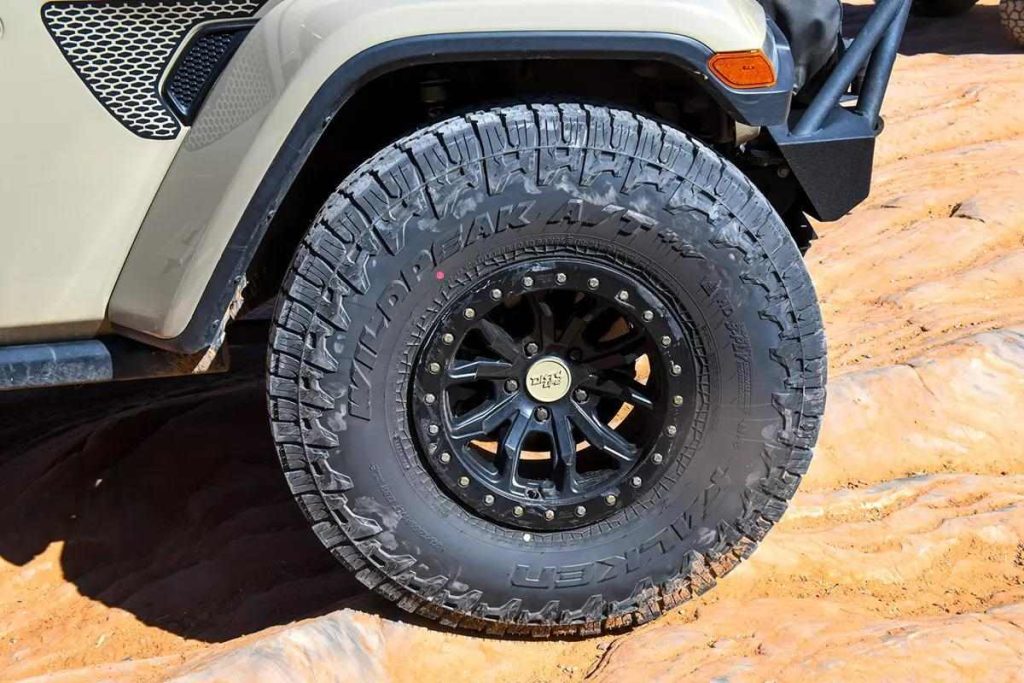
Compare the correct size, load index, and speed rating before purchasing. A slightly more expensive tire with stronger test results and a suitable treadwear warranty may provide better value than a cheaper set that wears out early or performs poorly when the road is wet.
5. Oil Filters
An oil filter is inexpensive compared with the engine it protects, which makes it an especially poor place to chase the lowest possible price. Its job is to remove contaminants from engine oil while maintaining the flow required to lubricate moving components.
A filter’s construction matters more than its external appearance. The filtration material, internal seals, anti-drainback valve, and pressure-operated bypass valve all influence how it works.
If these components are poorly designed or made from unsuitable materials, the filter may allow contaminants to circulate, leak oil, or fail to maintain the intended lubrication conditions.
The bypass valve deserves particular attention. It allows oil to continue circulating when the filter becomes restricted or oil is too thick to pass through the media easily.
This is an important protection mechanism, but its opening pressure must suit the engine. Donaldson explains that bypassing the filter temporarily is preferable to interrupting oil supply, because an engine needs lubrication to prevent severe damage.
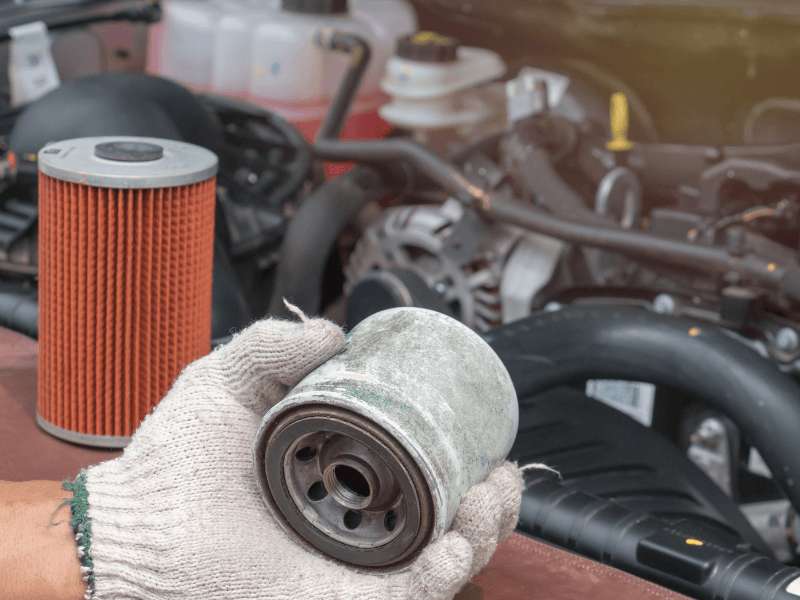
A cheap filter that does not meet the vehicle’s requirements can therefore create consequences far beyond the price difference. That does not mean you must buy a dealership-branded filter. Reputable aftermarket manufacturers produce filters designed for specific applications.
Check the exact part number, manufacturer specifications, and service interval. Avoid unverified products with unclear origins, especially unusually cheap filters sold without reliable packaging or warranty information.
6. Engine Oil
Engine oil is another purchase where selecting the cheapest available option can create unnecessary risk. Modern engines are designed around particular oil viscosity grades and performance standards. Using oil that does not meet the manufacturer’s requirements can affect lubrication, deposits, fuel economy, and long-term engine protection.
The difference between two bottles is not simply the brand name or price. Oil formulations use different base stocks and additive packages to manage heat, friction, oxidation, and contaminants.
An inexpensive product may be perfectly suitable if it carries the required industry certification and manufacturer approval. An expensive oil can still be the wrong choice if its specifications do not match the engine.
The safest approach is to follow the owner’s manual. Check the recommended viscosity, such as 0W-20 or 5W-30, and look for the required API or other specified performance certification. Some vehicles also require a particular manufacturer approval, particularly certain European models and newer engines.
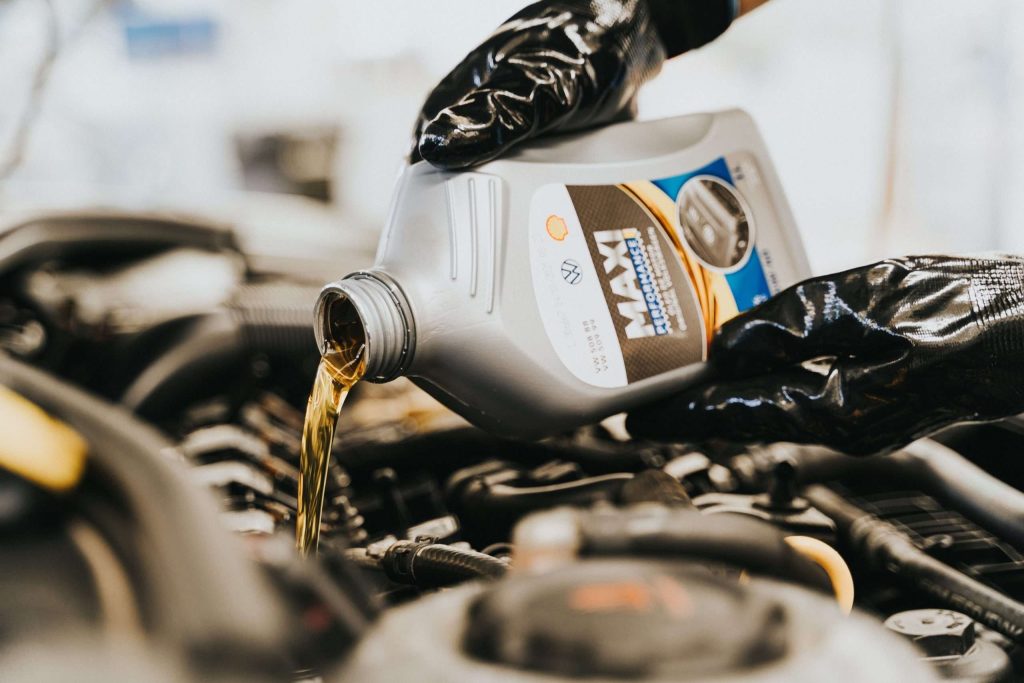
Do not assume that thicker oil offers better protection or that synthetic oil automatically suits every engine. The correct specification matters more than marketing claims.
Saving a few dollars by purchasing an unverified oil can be a false economy, especially when the engine depends on precise lubrication passages and operating clearances.
Choose a reputable brand, buy from a reliable seller, and maintain the correct oil-change interval. That approach protects the engine without requiring you to spend unnecessarily on the most expensive product available.
7. Timing Belt Kits
A timing belt is a relatively inexpensive component compared with the engine damage that can follow its failure. It keeps the crankshaft and camshaft synchronized, allowing the valves and pistons to operate at the correct time. If the belt breaks on an interference engine, the pistons can collide with open valves, potentially causing extensive internal damage.
Replacing only the belt with the cheapest available option may also leave other worn components in service. Tensioners and idler pulleys guide the belt and maintain the correct tension. If one of these parts fails, a new belt may not prevent the same breakdown.
That is why a complete kit from a reputable manufacturer can make more financial sense. Depending on the vehicle, the kit may include the belt, tensioner, idler pulleys, and related hardware. Some kits also include a water pump when it is driven by the timing belt.
Consumer Reports gives a typical replacement interval of 60,000 to 120,000 miles, although the correct schedule depends on the vehicle and its manufacturer’s instructions.
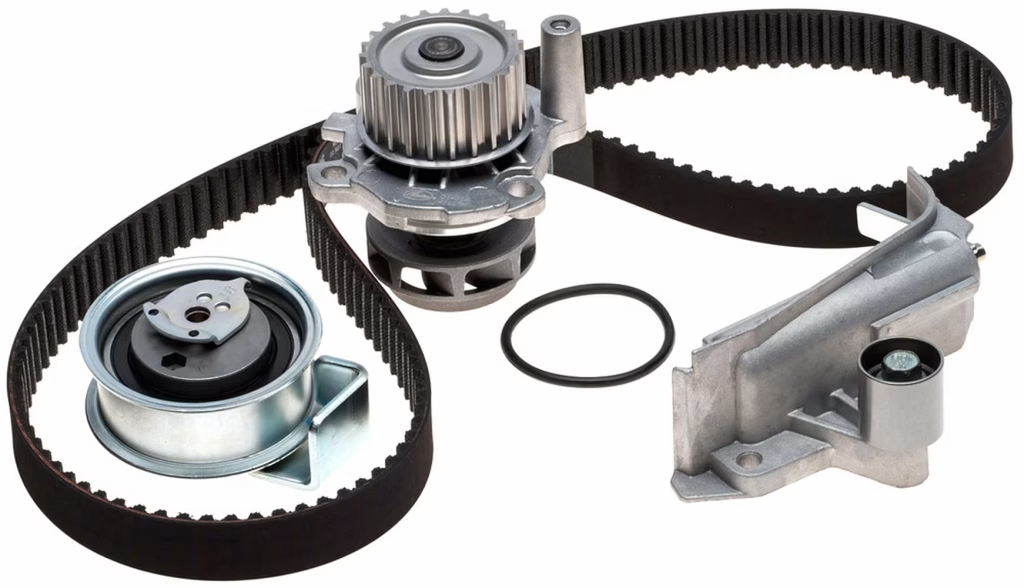
Do not choose a kit simply because it contains the most parts or has the lowest price. Confirm compatibility, component quality, and installation requirements. A properly matched kit installed with the correct tools can prevent repeat labor and reduce the risk of a costly engine failure.
8. Water Pumps
A water pump circulates coolant through the engine and radiator to control operating temperature. If it fails, coolant circulation can be reduced or interrupted, allowing the engine to overheat. Continued driving with serious overheating can turn a relatively straightforward repair into a major engine expense.
The cheapest replacement pump may save money initially, but construction quality matters. The bearing, shaft seal, impeller, and housing must withstand heat, pressure, and continuous operation. A weak seal can leak coolant, while a poor bearing can become noisy or fail prematurely. An unsuitable impeller may also affect coolant circulation.
Installation costs are another reason to avoid questionable parts. On some vehicles, accessing the water pump requires removing several components.
If the pump fails shortly after installation, the owner may have to pay for much of the same labor again. Where the pump is driven by the timing belt, replacing it during scheduled belt service may be sensible if the manufacturer’s procedure supports it.
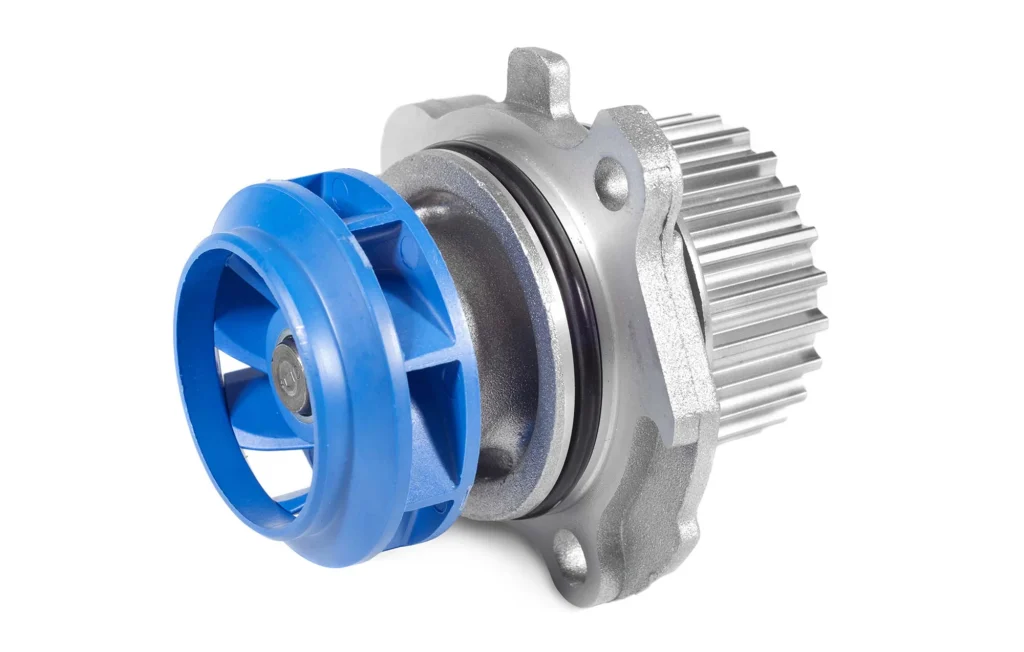
A reputable aftermarket pump can be a good purchase. Manufacturers such as Valeo and SKF offer application-specific pumps and kits designed around original-equipment requirements.
Check whether the replacement includes the required gasket, seals, and hardware. Also confirm whether the manufacturer specifies a particular coolant or installation procedure. A properly fitted pump with a dependable warranty is generally a better investment than an unknown product chosen only for its low price.
9. Shocks and Struts
Shocks and struts do more than make a vehicle comfortable. They help control suspension movement, maintain tire contact with the road, and support predictable handling during braking, cornering, and uneven-road driving.
A very cheap replacement may appear to solve a suspension problem, but poor damping performance can affect how the vehicle behaves. The car may continue bouncing after hitting a bump, feel unsettled through corners, or develop uneven tire wear. If the replacement wears out quickly, the owner faces another parts purchase and another installation bill.
Not every vehicle needs premium performance suspension. A standard replacement that meets the manufacturer’s specifications can be perfectly adequate for ordinary driving. The important distinction is between a correctly engineered budget component and an unverified product with little information about its construction or testing.
Consumer Reports notes that shocks and struts can last 80,000 miles or more, although road conditions and driving habits influence their service life. It also emphasizes choosing quality replacements that meet the vehicle’s requirements.
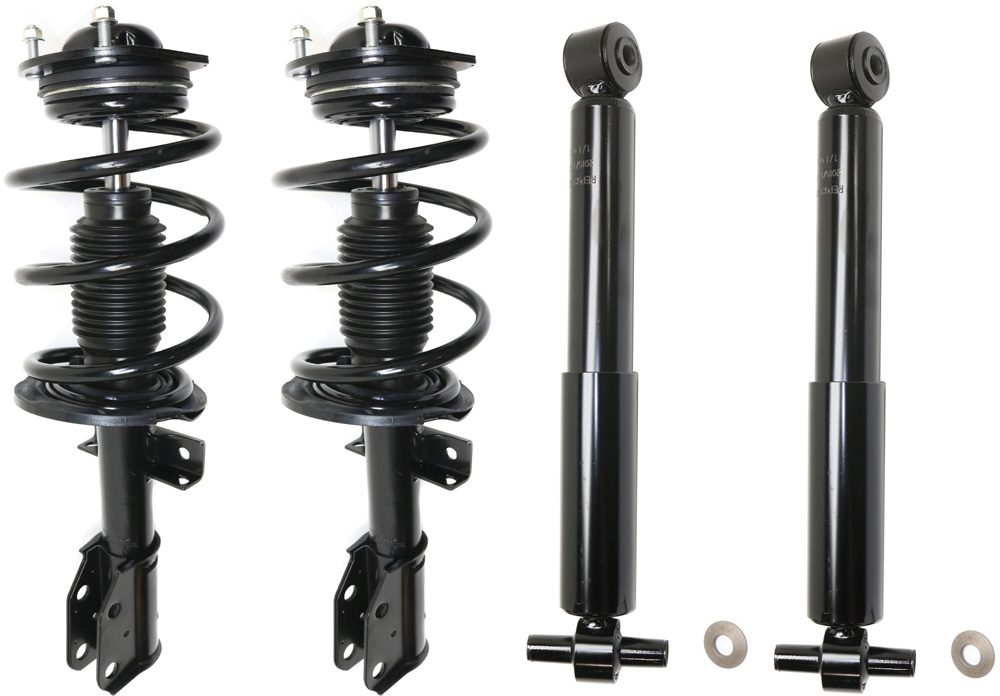
Before buying, confirm whether the vehicle uses conventional shocks, struts, or an electronically controlled suspension system. These components are not interchangeable simply because they look similar. Some vehicles also require additional calibration or procedures after replacement.
Choose a recognized manufacturer, check the warranty, and replace components in accordance with the vehicle’s service requirements. Saving money is reasonable, but compromising suspension control is not a worthwhile trade.
10. Wheel Bearings
Wheel bearings allow the wheels to rotate smoothly while supporting the vehicle’s weight. They operate under constant load and are exposed to heat, road debris, water, and vibration. When a bearing begins to fail, drivers may notice a humming or growling noise that changes with vehicle speed.
A low-quality replacement bearing can become noisy again or develop excessive play sooner than expected. That creates another repair bill, but the consequences can extend beyond inconvenience. A severely damaged bearing can affect wheel stability and, depending on the vehicle, interfere with the operation of the ABS sensor or related components.
The design also matters. Some modern vehicles use sealed hub assemblies that integrate the bearing with other components. Buying a replacement with incorrect dimensions, sensor compatibility, or mounting specifications can create installation problems even if the part appears similar.
A reputable aftermarket bearing is not automatically inferior to an original-equipment part. Established suppliers manufacture components for a wide range of vehicle applications. The key is verifying the exact fitment and purchasing from a seller that provides traceable product information and a meaningful warranty.
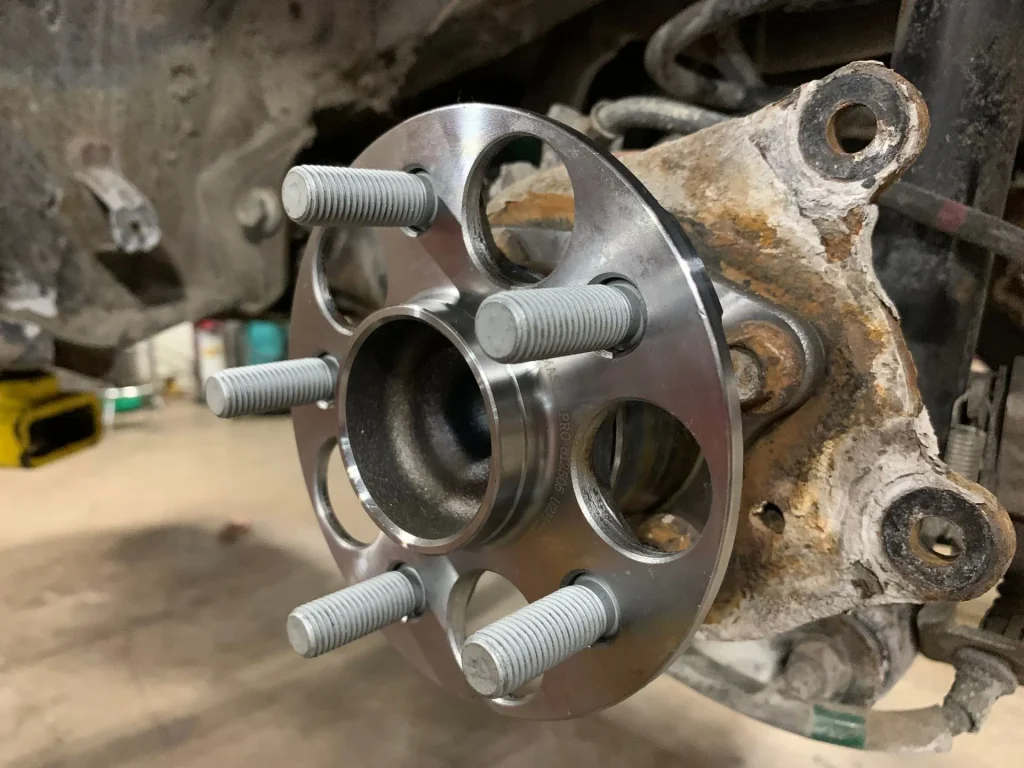
Ask the repair shop whether the replacement includes the complete hub assembly, mounting hardware, and any required sensor components. Also make sure the installation follows the manufacturer’s torque specifications. Incorrect tightening can damage a new bearing.
A slightly higher purchase price is often easier to justify than paying for repeated labor because an inexpensive bearing did not last.
11. Alternators and Starters
Alternators and starters are often available as new, remanufactured, and low-cost replacement units. The cheapest option can look appealing, especially when the vehicle needs to be repaired quickly. However, the quality of internal components and testing can make a substantial difference.
An alternator supplies electrical power while the engine is running and helps recharge the battery. A poorly rebuilt unit may have weak bearings, questionable voltage regulation, or worn internal components. If it fails early, the vehicle may experience charging problems again, potentially leaving the driver stranded.
The starter serves a different purpose by cranking the engine to get it running. A poorly made replacement may cause unreliable starting, produce unusual sounds, or wear out prematurely. Replacing either component can also require considerable labor, depending on how the vehicle’s engine compartment is designed.
Remanufactured parts are not necessarily a bad choice. AAA explains that properly remanufactured components are disassembled, inspected, restored or fitted with replacement components, and tested. It also notes that remanufactured parts can offer meaningful savings compared with new replacements.
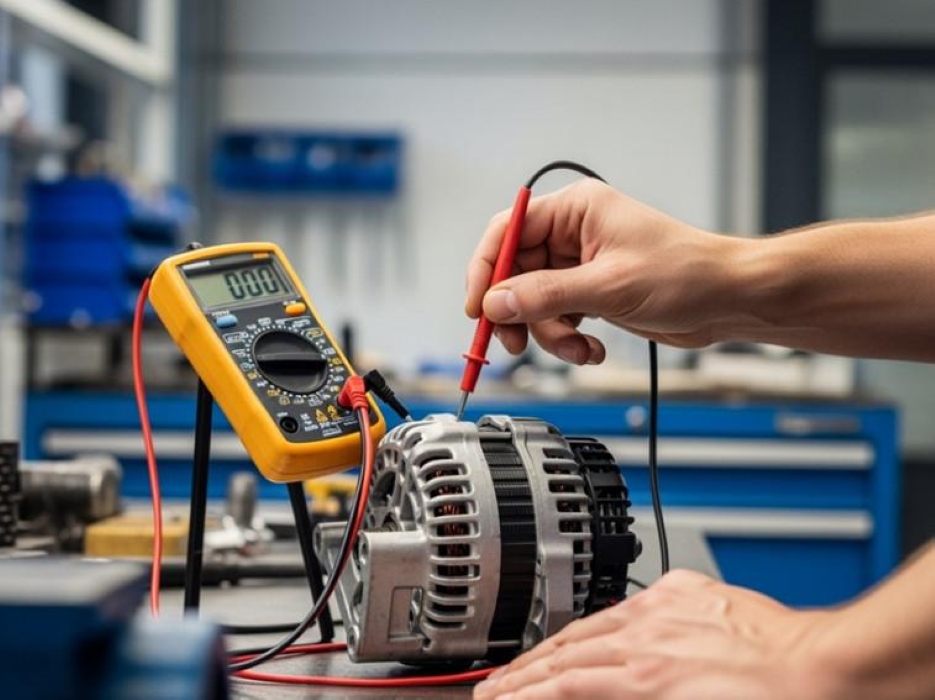
The important word is properly. Ask whether the unit was fully remanufactured or merely repaired, what components were replaced, and whether it was bench-tested. Check the warranty and confirm that the part matches the vehicle’s electrical specifications.
A quality remanufactured alternator or starter can be excellent value. An unknown unit with no clear testing or warranty is a much bigger gamble.
12. Batteries
A car battery may seem like a simple purchase, but choosing the wrong replacement can lead to repeated starting problems and unnecessary expenses.
Batteries differ in size, capacity, reserve capacity, cold-cranking performance, and construction. A cheaper battery that does not meet the vehicle’s requirements may struggle to start the engine, particularly in demanding weather conditions.
The first mistake is buying by price without checking the specification. The replacement must fit the battery tray, use the correct terminal arrangement, and provide the required starting performance.
Some modern vehicles also require battery registration or charging-system configuration after installation. Skipping that procedure can affect charging behavior and battery life.
Technology matters too. Vehicles equipped with start-stop systems may require an AGM or enhanced flooded battery, depending on the manufacturer’s design. Replacing an AGM battery with an unsuitable conventional unit simply because it costs less can result in premature wear or compatibility problems.
Consumer Reports identifies three to five years as a typical battery life range, while noting that heat and periods of inactivity can shorten service life.
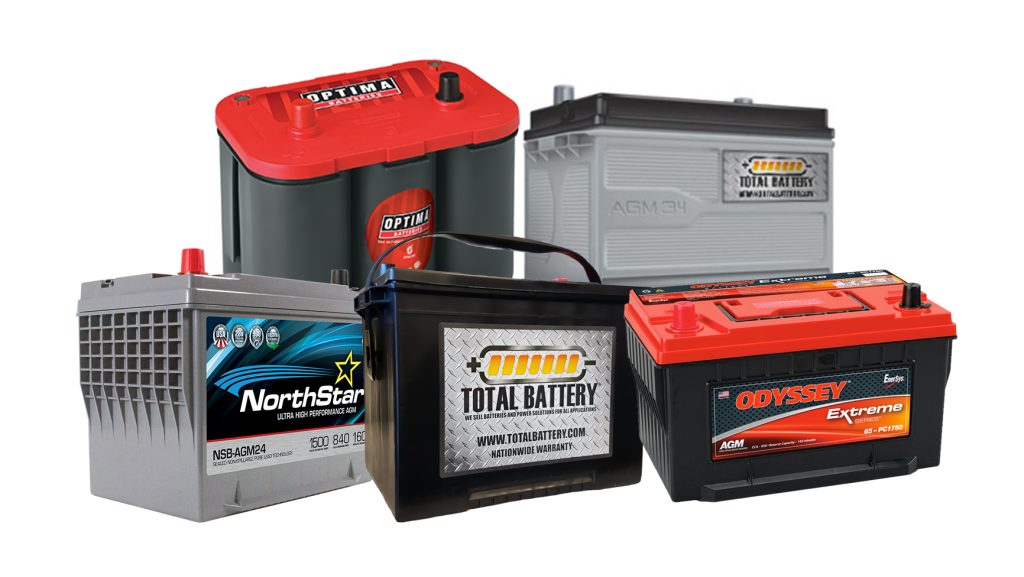
A dependable battery from a recognized manufacturer is not necessarily the most expensive option. Compare the required group size, cold-cranking amps, reserve capacity, warranty length, and technology. Also have the charging system tested if the old battery failed unexpectedly.
Paying a little more for the correct battery can prevent repeated replacements, inconvenient breakdowns, and avoidable electrical problems.