
A repair estimate may look affordable until the final invoice includes charges beyond parts and labor. Some additional fees are legitimate, but their legality depends on the state, the service performed, and whether the shop disclosed the charge properly.
A fee appearing on an invoice does not automatically make it lawful, and a shop cannot use vague wording to bypass consumer-protection rules.
From diagnostic charges to hazardous-waste disposal, drivers should understand what they are paying for before authorizing work. These eight examples explain common repair-shop fees, when they may be permitted, and what customers should check.
1. Diagnostic and Troubleshooting Fee
A diagnostic fee is charged when a shop spends time identifying the cause of a vehicle problem rather than immediately replacing a part.
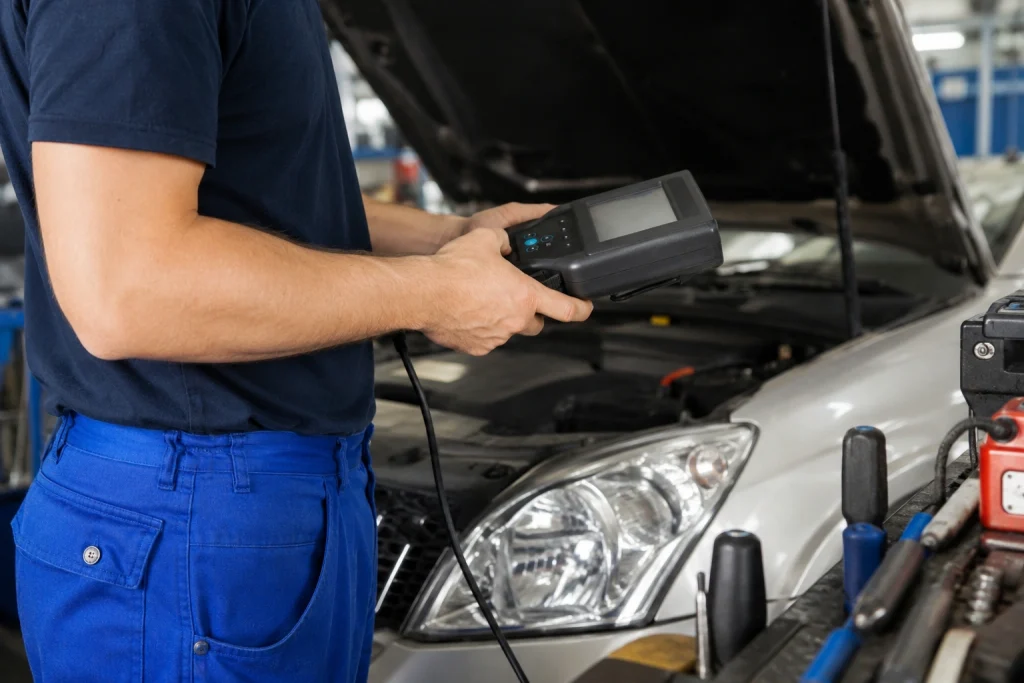
It may cover scanning fault codes, testing electrical circuits, checking fuel pressure, performing compression tests, or tracing an intermittent fault. The charge is particularly common when a warning light appears, but the underlying cause is not obvious.
The Federal Trade Commission advises consumers to ask whether a shop charges for diagnostic time, especially if they might take the vehicle elsewhere for the actual repair.
A diagnostic fee is not automatically improper simply because the customer decides not to authorize the recommended repair. The shop may have performed a separate service that requires technician time and equipment.
State rules determine how the charge must be disclosed. In Minnesota, for example, a shop cannot charge for preparing an estimate, including necessary diagnosis and disassembly, unless it first informs the customer of the fee and how it will be calculated and receives authorization.
Florida requires specified diagnostic charges to be included in the written estimate for covered repairs exceeding $150.
Before handing over the keys, ask whether diagnosis is free, whether the fee is credited toward an approved repair, and what testing it includes. A shop should be able to explain what work the charge covers.
If the invoice contains a diagnostic fee that was never discussed, compare it with the estimate and your state’s authorization requirements before paying.
2. Shop Supplies or Miscellaneous Materials Fee
A shop supplies fee is intended to cover consumable materials used during repair work. Depending on the job, these might include cleaning fluids, lubricants, rags, protective coverings, small quantities of chemicals, or other materials that are not normally itemized as major replacement parts.
Some facilities calculate the charge as a percentage of labor, while others use a fixed amount. Whether a shop can add this fee depends heavily on state law.
Michigan allows charges for certain miscellaneous supplies but requires the actual dollar amount to appear in the written estimate before work begins. A percentage printed on a form is not enough if the estimate fails to state the amount that will be charged.
California takes a stricter approach. Its Bureau of Automotive Repair says customers cannot be charged a generic fee for items generally described as shop supplies or miscellaneous parts.
A customer may be charged for supplies actually used on the vehicle, but their costs must be included in the estimate and the supplies itemized on the invoice.
Florida follows a separate disclosure rule that requires repair estimates to list any shop-supplies fees. The estimate must also include a specific statement clarifying that the fee covers costs and profits incurred by the repair facility.
Do not assume that a shop supplies fee is automatically illegal or automatically acceptable. Ask what materials it covers, whether it is calculated as a percentage, and where it appears on the estimate. A vague line added only after the work is finished deserves scrutiny.
3. Hazardous-Waste Disposal Fee
Repair shops sometimes charge a separate fee for handling and disposing of hazardous materials generated during a service. These materials can include used motor oil, contaminated fluids, solvents, and other regulated waste.
Proper disposal involves more than pouring old fluids into a container and sending them away. Shops may need approved collection, storage, transportation, and disposal arrangements.
California expressly permits automotive repair dealers to charge customers for costs associated with handling, managing, and disposing of toxic waste or hazardous substances directly related to the specific repair.
However, the fee must be separately itemized on both the estimate and invoice. California also requires the shop’s Environmental Protection Agency identification number to appear on those documents.
Florida also requires any hazardous-waste removal charge to be included in the written estimate for covered repairs. Its law requires the estimate to contain a specified disclosure explaining that the charge represents costs and profits to the repair facility.
If a charge is mandated by state or federal law, the estimate must identify the relevant law and specific amount.

The important distinction is that a legitimate disposal charge should relate to waste generated by the work performed. A customer receiving an oil change might reasonably see a charge associated with used-oil handling, depending on the state’s rules and the shop’s pricing policy. That does not mean every repair automatically justifies the same disposal fee.
Check whether the invoice identifies the type of disposal charge and whether it appeared in the estimate. If the shop lists several vague environmental charges, ask whether they represent separate services or duplicate billing. You can also request clarification about the materials being handled.
A disposal fee can be legitimate, but its name alone does not establish that it is properly calculated or legally collectible.
4. Vehicle Storage Fee
A storage fee can appear when a vehicle remains at a repair facility after the shop has completed its work or when the customer declines an estimate and leaves the vehicle behind. This charge is different from labor or parts because it concerns the space occupied by the vehicle and the facility’s responsibility for keeping it there.
The rules vary significantly by state. California allows reasonable storage fees in certain circumstances after the repair lien has arisen.
Its Bureau of Automotive Repair explains that this can occur after authorized repairs are completed and the invoice is provided, or 15 days after completion, whichever happens first. Storage fees generally cannot begin while the authorized repairs are still being performed.
New York requires written notice before a repair shop charges for storage. Its regulations also prohibit storage charges during the period beginning when the customer authorizes repairs and ending one business day after the shop notifies the customer that the vehicle is ready for pickup.
Florida requires repair estimates to disclose the daily storage charge after the customer has been notified that the repair is complete. Its statute provides a three-working-day period after notification before storage charges may accrue.

Drivers should ask about storage rates before leaving a vehicle, particularly when waiting for an insurance decision or considering whether to approve an expensive repair. Keep copies of messages confirming when the vehicle was declared ready. If a storage fee appears unexpectedly, check the written notice, dates, daily rate, and applicable state rules.
A shop may have a legitimate reason to charge for storage, but it cannot ignore the legal conditions governing when that charge begins.
5. Estimate, Inspection, or Teardown Fee
Some repairs cannot be priced accurately until a technician investigates the vehicle. A transmission may need partial disassembly to identify internal damage, while an engine noise might require testing before the shop can determine whether the problem involves a bearing, timing component, or another part.
The shop may therefore charge for an estimate, inspection, or teardown. These are not necessarily the same as ordinary repair labor. An estimate fee covers the work required to determine what the repair will cost.
A teardown charge can involve removing components to inspect damage, while a diagnostic fee may cover electronic or mechanical testing. The customer should know which service is being performed and what it costs.
Minnesota law permits a shop to charge for preparing a written estimate, including necessary disassembly, diagnosis, and reassembly. However, the shop must tell the customer about the charge and how it will be calculated before preparing the estimate, then receive authorization.
North Carolina also requires shops to disclose the amount of an estimate-preparation fee and obtain written authorization before proceeding when such a charge applies. The law prohibits using an excessive estimate fee to pressure customers into giving up their consumer rights.

Before approving this work, ask whether the vehicle will be returned in its original assembled condition if you decline the repair. Confirm whether reassembly is included in the quoted fee or billed separately. This matters because an inspection can become expensive even when you decide not to proceed.
A shop should not surprise you with a teardown charge after disassembling the vehicle without appropriate authorization. Get the scope, price, and reassembly terms in writing before work begins.
6. Core Charge on Exchange Parts
A core charge is a refundable deposit associated with certain replacement components. It is commonly used when a shop installs a remanufactured or exchange part, such as an alternator, starter, or battery.
The supplier wants the old component returned so it can be inspected, rebuilt, or recycled. If the old part meets the supplier’s return requirements, the core deposit may be credited or refunded.
For example, an invoice might list a replacement alternator for $300 and a separate $40 core charge. The customer initially pays both amounts.
The $40 deposit may be refunded once the old alternator is returned and approved by the supplier. However, the deposit amount can vary depending on the part and the supplier’s return policy, as there is no standard core-charge fee across the United States.
California’s Bureau of Automotive Repair specifically addresses core charges. It explains that if a customer requests the replaced core part, such as a battery sold on an exchange basis, the core charge may be included in the invoice. The rules also distinguish exchange parts from warranty replacements that must be returned to the manufacturer.
The key is understanding whether the charge is refundable and what must happen to qualify. Ask whether the shop will return the old component, whether it must meet particular condition requirements, and how long the supplier takes to issue the credit.
Do not confuse a core charge with a disposal fee. A core deposit is tied to the return of a specific old component, while a disposal charge concerns handling waste. If both appear on the invoice, ask the shop to explain each separately.
A properly disclosed core charge can be legitimate, but the refund conditions should be clear before you approve the replacement.
7. Tire Recycling or Waste-Tire Fee
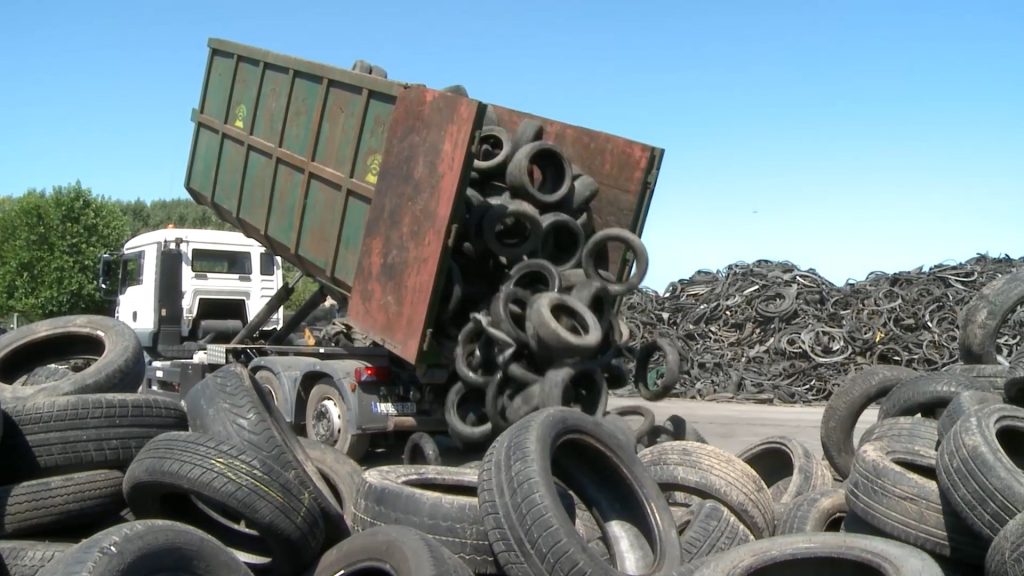
When a shop sells and installs new tires, the invoice may include a tire recycling, waste-tire, or environmental fee. These charges are intended to help fund the handling and management of discarded tires. Unlike a generic shop supplies fee, some tire-related charges are established directly by state law.
New York provides a clear example. Its Department of Taxation and Finance states that a $2.50 waste tire management and recycling fee applies to most new tires sold at retail in the state.
Tire services, including auto repair shops and dealerships, must collect the fee on covered tire sales. If a shop installs new tires that it did not sell, it must also collect the fee unless the customer can show that it was already paid to the seller.
Not every state has the same system. Connecticut’s Department of Energy and Environmental Protection explains that its former $2 tire fee was repealed in 1997. Any additional tire surcharges there are imposed at the retailer’s discretion rather than being required by that state fee.
This difference is important when comparing invoices across state lines. A fee that is mandatory in one state may be optional or structured differently in another. Some retailers may also charge separately for handling old tires, depending on their service terms and local requirements.
When buying tires, ask whether the quoted price includes disposal and recycling charges. If a separate fee appears, ask whether it is a state-mandated assessment or a shop-imposed charge. The invoice should make the distinction understandable.
A tire recycling fee is not automatically suspicious, but the shop should be able to explain its legal basis or the service it covers.
8. Sales Tax on Parts and Repair Charges
Sales tax is another amount that can increase the final bill, although it is not technically a fee retained by the repair shop. The business collects applicable tax and sends it to the relevant tax authority. What is taxable depends on state and local rules, the type of transaction, and how the invoice separates parts from labor.
Ohio provides an example of a state that taxes the total cost of motor vehicle repairs, including parts, labor, and miscellaneous shop expenses included in the price. Its Department of Taxation explains that motor vehicle repairs are treated as taxable transactions under its rules.
Texas handles certain repair invoices differently. When parts and labor are separately itemized, the repairperson generally collects sales tax on the parts but not the separately stated repair labor.
Under a lump-sum contract combining parts and labor, the repairperson generally pays tax on the materials purchased and does not separately collect sales tax from the customer on the combined charge.
Colorado also generally taxes parts and accessories installed in vehicles, while separately stated service or labor charges are treated differently under its guidance.
This is why two shops in different states may calculate tax on the same repair differently without either necessarily making a mistake. Local tax rates can also affect the final amount.
Check the invoice to see what amount was taxed and which rate was applied. If the shop charges tax on a category you believe is exempt, ask for an explanation and consult your state revenue department’s guidance. A repair shop should not invent a tax rate or collect a tax that does not apply to the transaction.