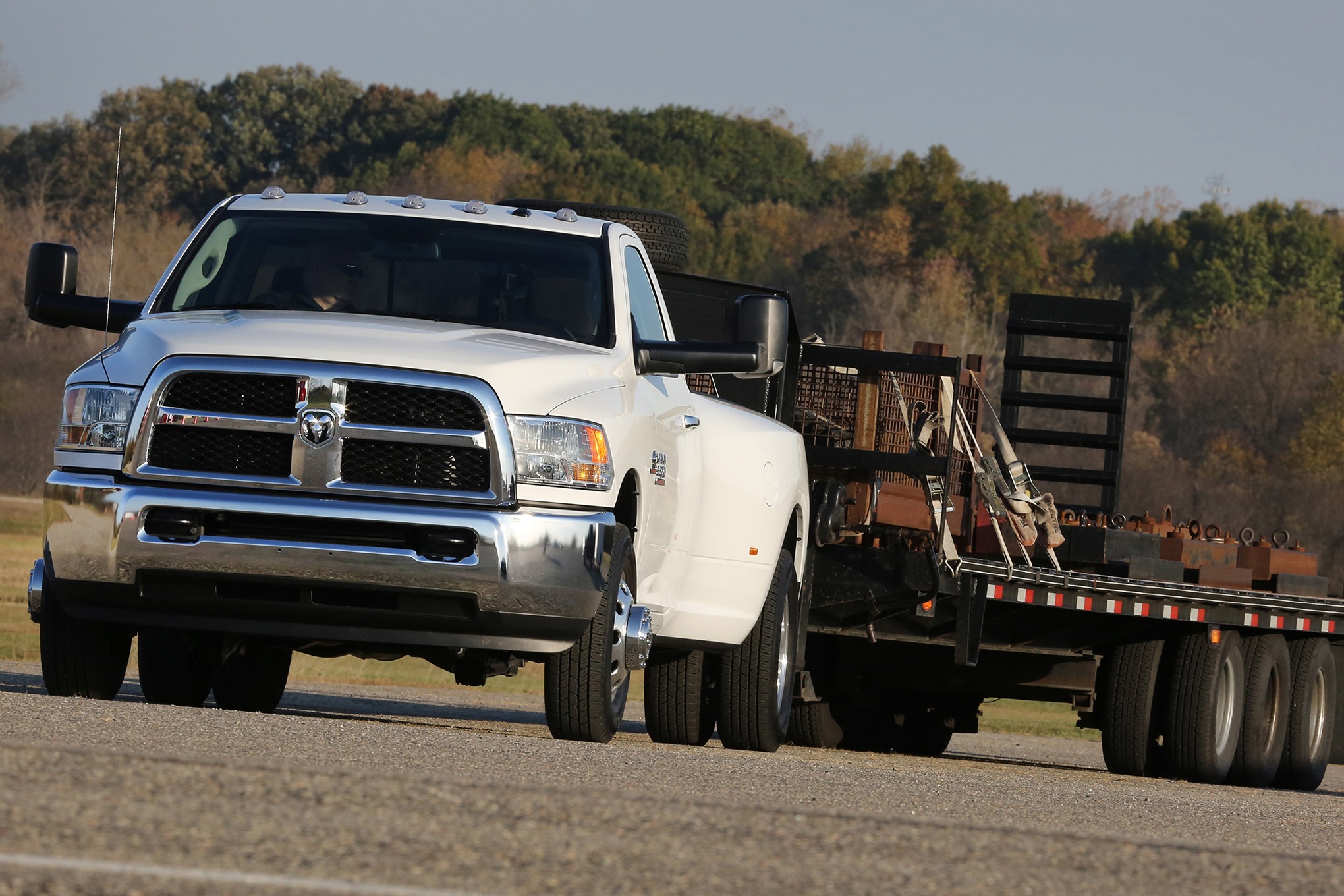
Your truck can pull the load, your hitch looks solid, and the trailer feels steady on the highway. So you are legal, right? Not always. Towing laws differ from state to state, and a rig that passes in one place can earn a ticket in the next. Weight thresholds, brake rules, safety chains, mirror requirements, and even license classes all change at the state line.
Ten common setups break typical state vehicle codes, and many drivers do not realize it until flashing lights appear behind them. Whether you tow a camper, a boat, or a trailer full of tools, this guide can save you fines, delays, and real danger. Let’s start with the oldest shortcut on the list.
1. The “Chain-Only” Connection
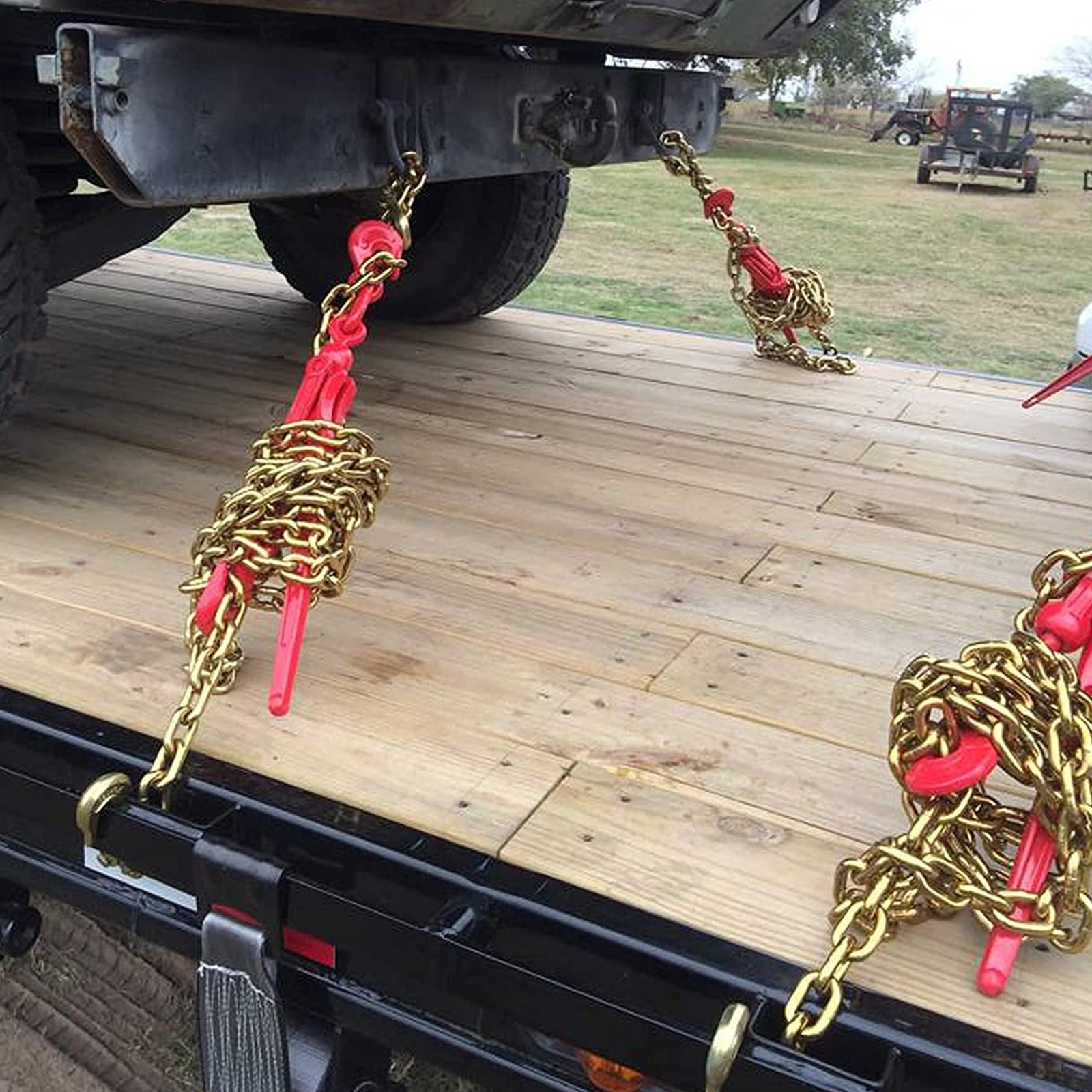
Using a chain, rope, or strap as the primary connection between two vehicles may seem like a convenient way to move a disabled car or trailer. However, this arrangement can violate towing regulations in many states, particularly when used on public highways.
Most standard towing arrangements require an approved structural connection, such as a tow bar, ball hitch, or fifth-wheel coupling.
These systems are designed to maintain a controlled connection between the towing vehicle and the load. A loose chain or ordinary rope does not provide the same level of stability or steering control.
Safety chains serve a different purpose. They act as secondary restraints that help prevent a trailer from completely separating from the towing vehicle if the primary coupling fails. They are not generally intended to replace the main hitch connection.
For example, pulling a disabled vehicle using a long chain can create problems when the vehicle being towed brakes suddenly or moves unexpectedly. The connection may become slack, causing the two vehicles to move unpredictably.
Before towing another vehicle or trailer, check the applicable state requirements and use an approved towing arrangement. If the vehicle is inoperable, a properly equipped tow truck or suitable towing equipment may be necessary.
A connection that looks strong is not automatically legal or safe for highway use.
2. Triple-Towing (The “Double-Play” Rig)
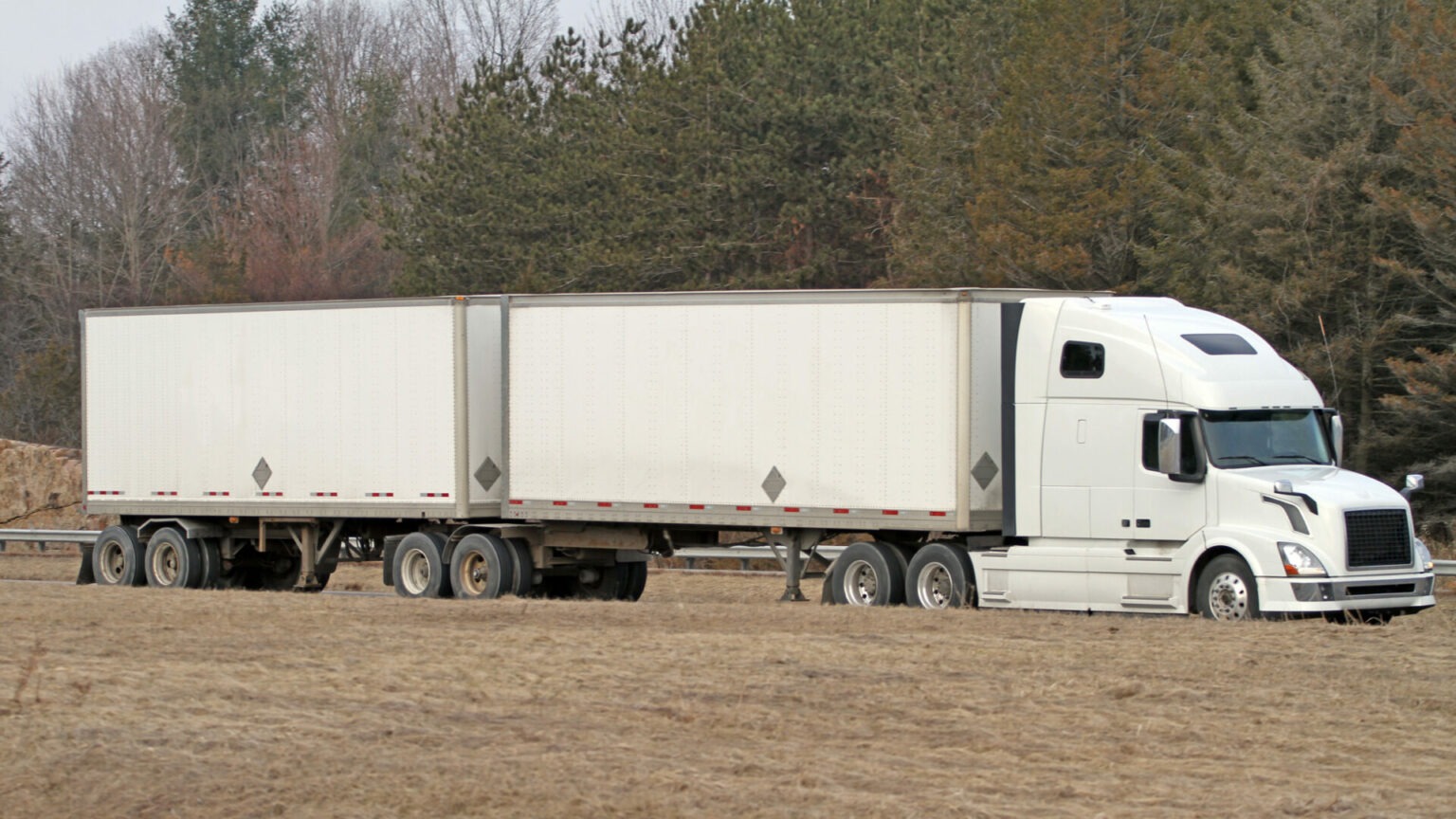
Triple-towing involves connecting two trailers behind a single towing vehicle. A common example is a pickup truck pulling a travel trailer that also carries a second trailer, such as a small boat or utility trailer.
Although this arrangement may appear practical for people transporting multiple recreational vehicles, it is restricted or prohibited in several states. Some jurisdictions allow triple-towing only under specific conditions, while others prohibit certain non-commercial combinations entirely.
The main concern is the additional length and handling difficulty created by having two trailers behind one vehicle.
Making turns, reversing, changing lanes, and maintaining stability can become much harder. The second trailer may also respond differently to braking and steering movements, creating additional risks.
States that permit triple-towing often impose strict requirements concerning total vehicle length, trailer configuration, braking equipment, and hitch arrangements.
Some require the first trailer to use a fifth-wheel or gooseneck connection rather than a conventional bumper hitch. For drivers planning long recreational trips, these restrictions deserve attention before connecting the second trailer.
California, New York, and Florida are examples of states with restrictions that can affect triple-towing arrangements.
Check the rules in every state along your intended route. Confirm the maximum permitted length, approved trailer combinations, and any licensing requirements.
Never assume that because your truck has enough power to pull two trailers, the entire combination is legally permitted on public roads.
3. The Un-Braked Heavyweight
A trailer carrying several thousand pounds needs more than a strong towing vehicle to stop safely. Its own braking system may be legally required, depending on its weight and the regulations in the state where it operates.
One common mistake is towing a heavy trailer that relies entirely on the truck’s brakes. For example, a trailer weighing 4,000 pounds without an independent braking system may violate applicable state requirements.
Trailer brake thresholds differ across the United States. Some states require brakes once a trailer exceeds 3,000 pounds, while others set lower limits.
Certain jurisdictions have requirements beginning at 1,500 pounds, and New York has a threshold that can be as low as 1,000 pounds under applicable rules.
Drivers must also understand the difference between actual loaded weight and Gross Vehicle Weight Rating (GVWR). Depending on the law, brake requirements may be based on the trailer’s rated capacity rather than simply its empty weight.
Without suitable trailer brakes, the towing vehicle must handle more of the stopping force. This can increase stopping distances, place additional strain on the truck’s braking system, and make emergency stops harder to manage.
Before towing, check your trailer’s weight rating and the brake requirements for your state. If independent brakes are required, ensure they are correctly installed, connected, and functioning.
A trailer that can be pulled by your truck is not necessarily equipped to be stopped safely by it alone.
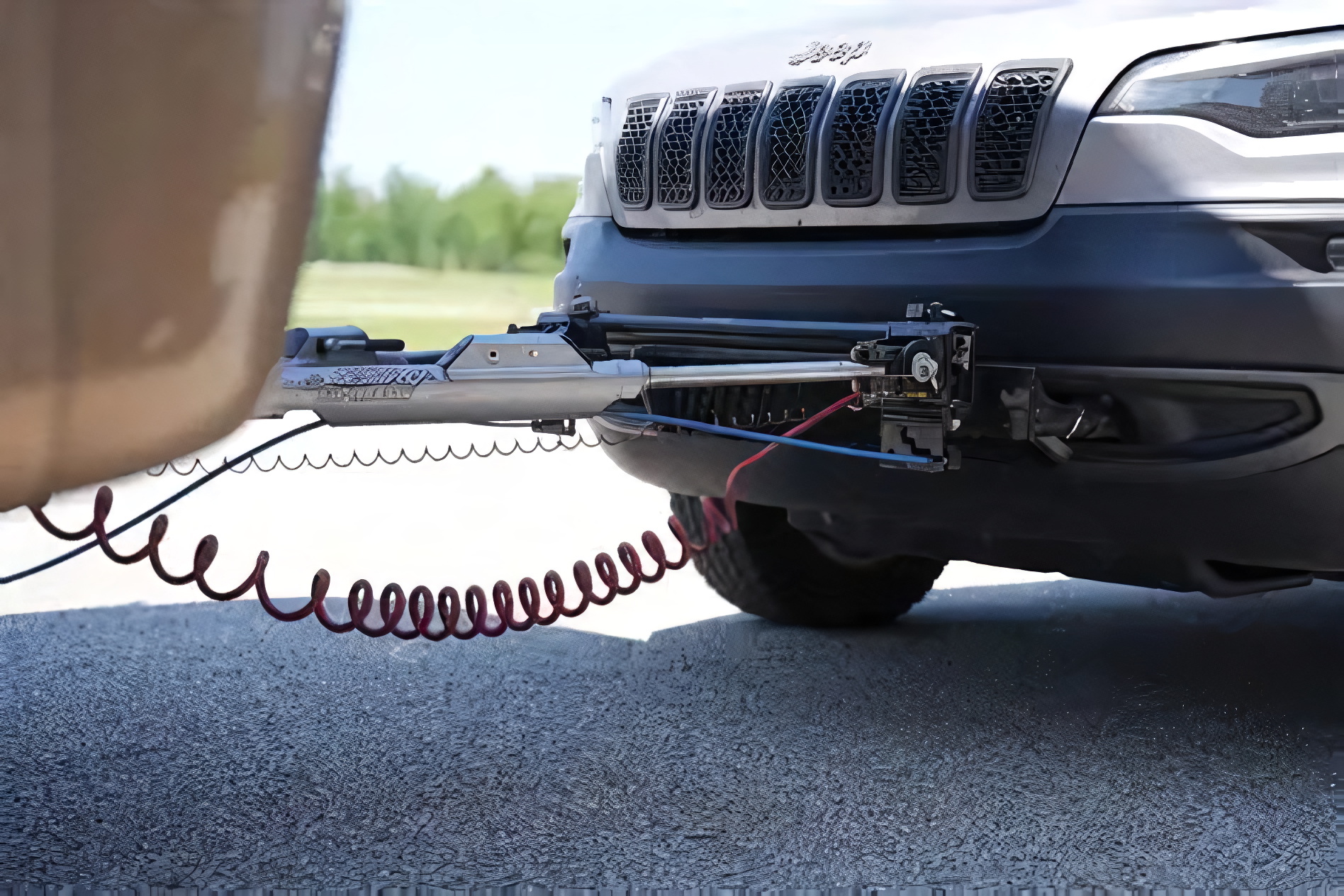
4. Direct-to-Hitch Breakaway Cables
This one sounds like a small detail. It is not. Threading the loop of a trailer’s emergency breakaway cable directly over the hitch ball, or clipping it to the safety chains, is a setup many drivers use without a second thought.
The problem shows up in the worst moment. If the entire hitch assembly fails or detaches from the vehicle frame, the cable travels with the trailer and never pulls tight. The trailer’s emergency brakes stay off, and a runaway trailer rolls on.
State laws require the breakaway system to be mechanically fastened directly to a secure part of the tow vehicle’s permanent frame or bumper structure. The goal is simple. The cable must stay with the truck, so the trailer pulls it tight as it separates.
Here is a quick way to check yours. Look at where the cable ends. Is it attached to a solid frame point, such as a tow hook or a dedicated anchor? If it loops around the ball or clips to a chain, change it.
Use a rated connector, and leave enough slack for turns but not so much that the cable drags. Test the breakaway switch and its battery as part of your regular maintenance.
A three-minute fix can prevent a disaster.
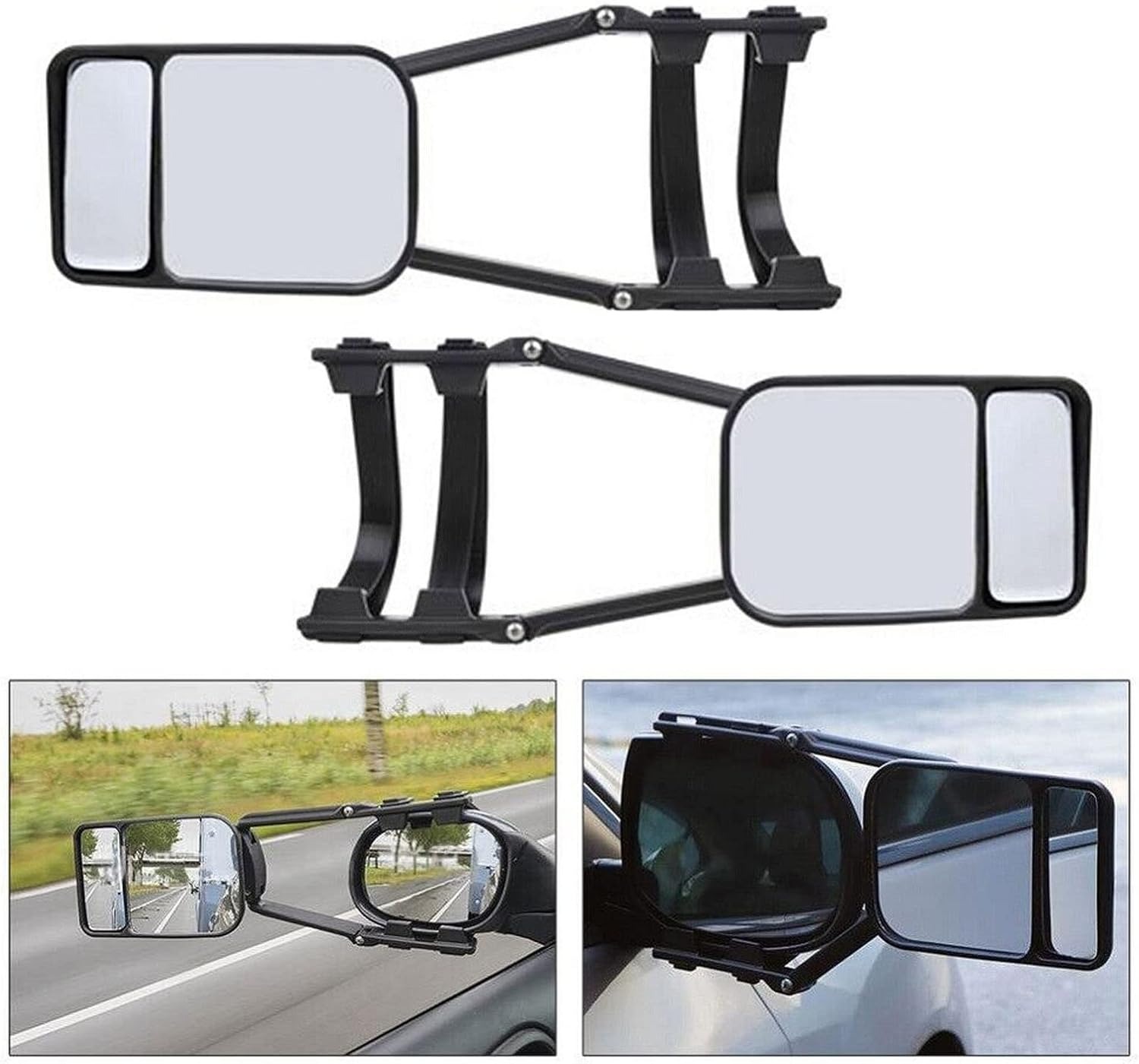
5. Blindside Extension (Standard Mirrors)
Ever tried to change lanes while a camper blocks half your view? That is the blindside problem. Towing a wide camper or enclosed cargo trailer that blocks the driver’s direct rearward line of sight, while using only the stock factory side mirrors, is a frequent violation.
State vehicle codes require that side mirrors give a clear view of the road behind the trailer. If the trailer is wider than the rear body of the tow vehicle, failing to mount wider, extended towing mirrors is a citable offense.
The logic is easy to see. A driver who cannot see traffic cannot merge safely, and a trailer can hide a car riding right beside it. Extended mirrors push your view past the trailer’s edge so you can see the lane next to you.
Fortunately, the solution is affordable and easy to install. Clip-on or bolt-on towing mirrors are compatible with many vehicles and can be fitted in just minutes. Choose a pair that offers a wide range of adjustment, stays secure at highway speeds, and provides a clear view along the entire length of the trailer.
Test them in a parking lot with a helper walking alongside. If you can see the person at every point along the trailer, you are in good shape.
A clear view costs less than a ticket, and far less than a sideswipe.
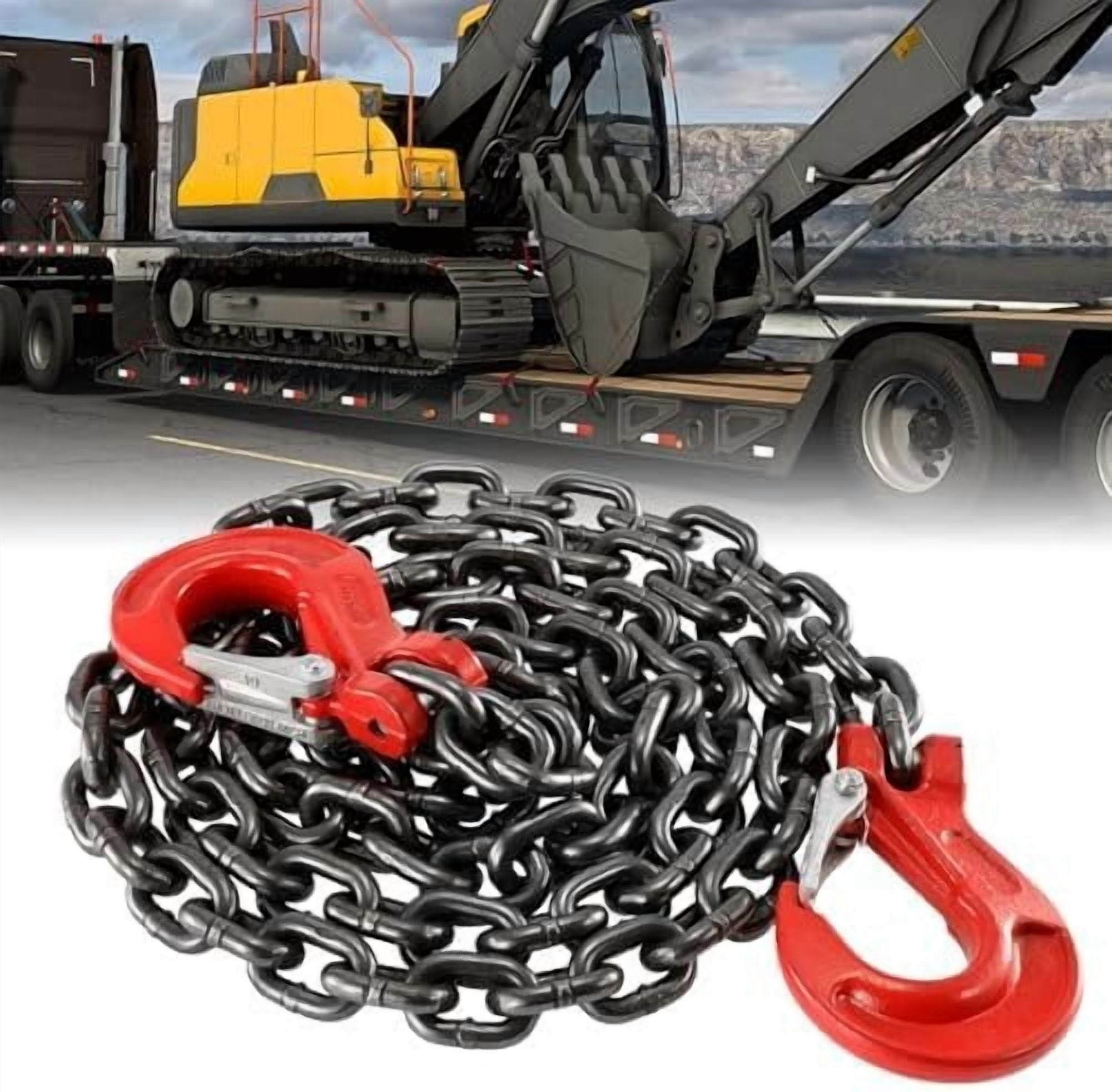
6. Parallel Safety Chains
Safety chains are designed to provide a backup connection between a trailer and the towing vehicle if the primary hitch coupling becomes disconnected. However, simply attaching two chains is not enough. Their arrangement also matters.
A common mistake is connecting both chains straight from the trailer tongue to the towing vehicle without crossing them underneath the coupler. Some drivers do this because it appears quicker and easier during setup.
Many towing safety standards and state requirements call for safety chains to be crossed beneath the trailer tongue. This creates an X-shaped arrangement that can help catch and support the tongue if the primary hitch connection fails.
Why is this important? Without the crossed arrangement, a detached trailer tongue may drop toward the pavement. This can cause the trailer to dig into the road surface, potentially resulting in sudden movement or loss of control.
Crossed chains create a supporting cradle beneath the coupler, helping limit how far the tongue can fall. They may also help keep the trailer aligned behind the towing vehicle while the driver brings the combination to a safe stop.
When installing safety chains, make sure they are attached to approved connection points on the towing vehicle. They should have enough slack to accommodate normal turns without dragging on the road.
Inspect the chains for rust, damaged links, and excessive wear before every trip. Also, confirm that their strength and attachment method meet the applicable requirements.
A small adjustment during hitching can make a major difference if the primary coupling ever fails.
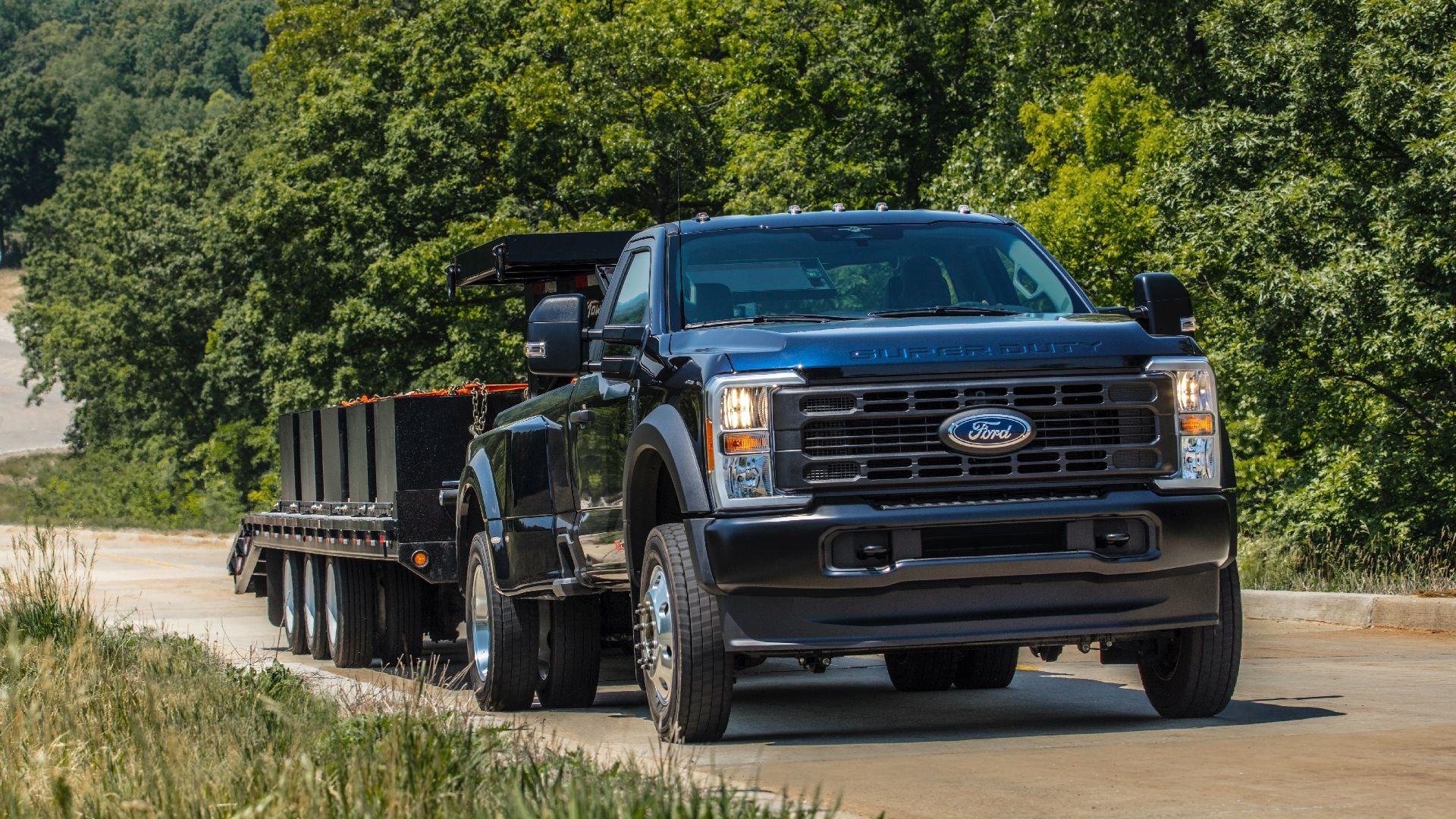
7. Over-Length Rigid Ensembles
A powerful truck may be capable of pulling a very large trailer, but that does not mean the complete towing combination is legal on every public road.
States establish maximum length limits for different vehicle combinations, and exceeding those limits can require special authorization.
Consider a long crew-cab dually pickup connected to a large custom trailer. If the combined length reaches 70 feet from the front bumper to the rear of the trailer, the setup may exceed the permitted limit for ordinary non-commercial towing in certain states.
Many states impose maximum combined lengths that fall within the 60-to-65-foot range for particular configurations. However, these limits are not universal.
The permitted length may depend on the type of towing vehicle, trailer classification, and whether the combination is commercial or recreational.
An oversized towing combination can create practical problems on public roads. Turning through intersections, entering fuel stations, changing lanes, and passing through narrow road sections may become difficult.
Drivers who exceed ordinary length restrictions may need an oversize vehicle permit. Such permits can include approved routes, travel-time restrictions, warning signs, or other conditions.
Before purchasing or connecting an unusually long trailer, measure the entire combination according to the applicable state measurement rules. Check the maximum permitted length in every jurisdiction along your route.
Your truck’s towing capacity does not determine the legal length of the complete rig. Both measurements must meet the relevant requirements before you travel.
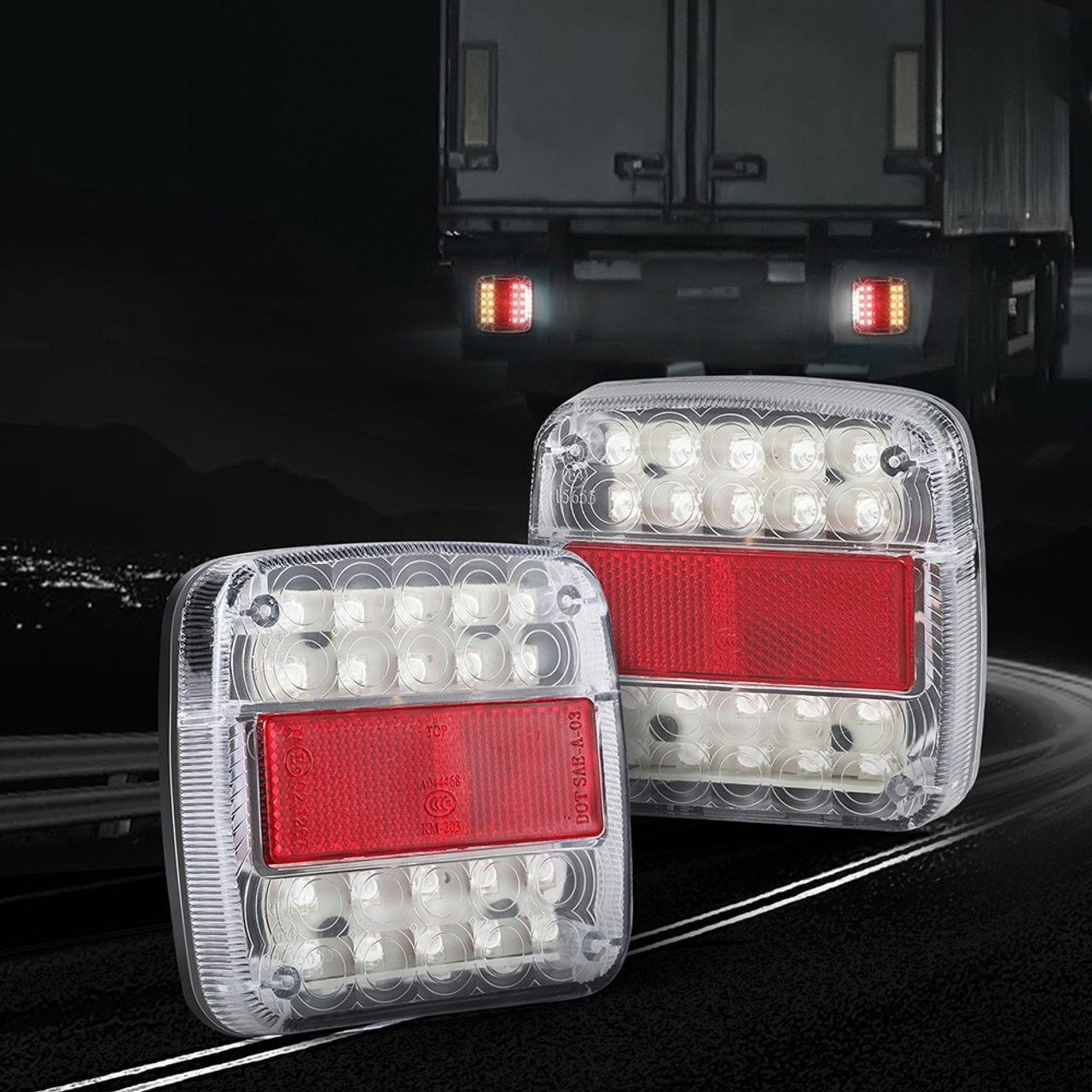
8. Hidden Tail Lights and Indicators
Loading a trailer with tall machinery, stacked materials, or bulky cargo can create a lighting problem that drivers sometimes overlook.
Even when the trailer’s brake lights, taillights, and turn signals are working correctly, they may become useless if the cargo blocks them from view.
State and federal vehicle equipment regulations generally require essential lighting to remain visible to other motorists. Drivers approaching from behind must be able to recognize when the towing vehicle is braking, turning, or traveling at night.
Imagine a utility trailer carrying a tall piece of equipment that completely covers its rear light assembly. The trailer may be properly connected and the cargo securely fastened, but following drivers cannot see the signals.
This can create confusion during braking and lane changes, increasing the possibility of a collision.
The appropriate solution may involve installing auxiliary lighting in a position where it remains visible. Depending on the cargo and applicable regulations, additional light bars or approved temporary lighting arrangements may be necessary.
Drivers should check lighting visibility after loading rather than relying solely on a test performed before cargo is added. Walk behind the trailer and confirm that the lights can be seen clearly.
Pay attention to brake lights, turn signals, taillights, and required reflectors. Also, make sure wiring connections remain secure, and that cargo cannot damage the lighting equipment during transportation.
A working light that cannot be seen by other motorists does not provide the protection it is intended to offer.
9. Passive Braking on Steep Descents (The Missing Controller)
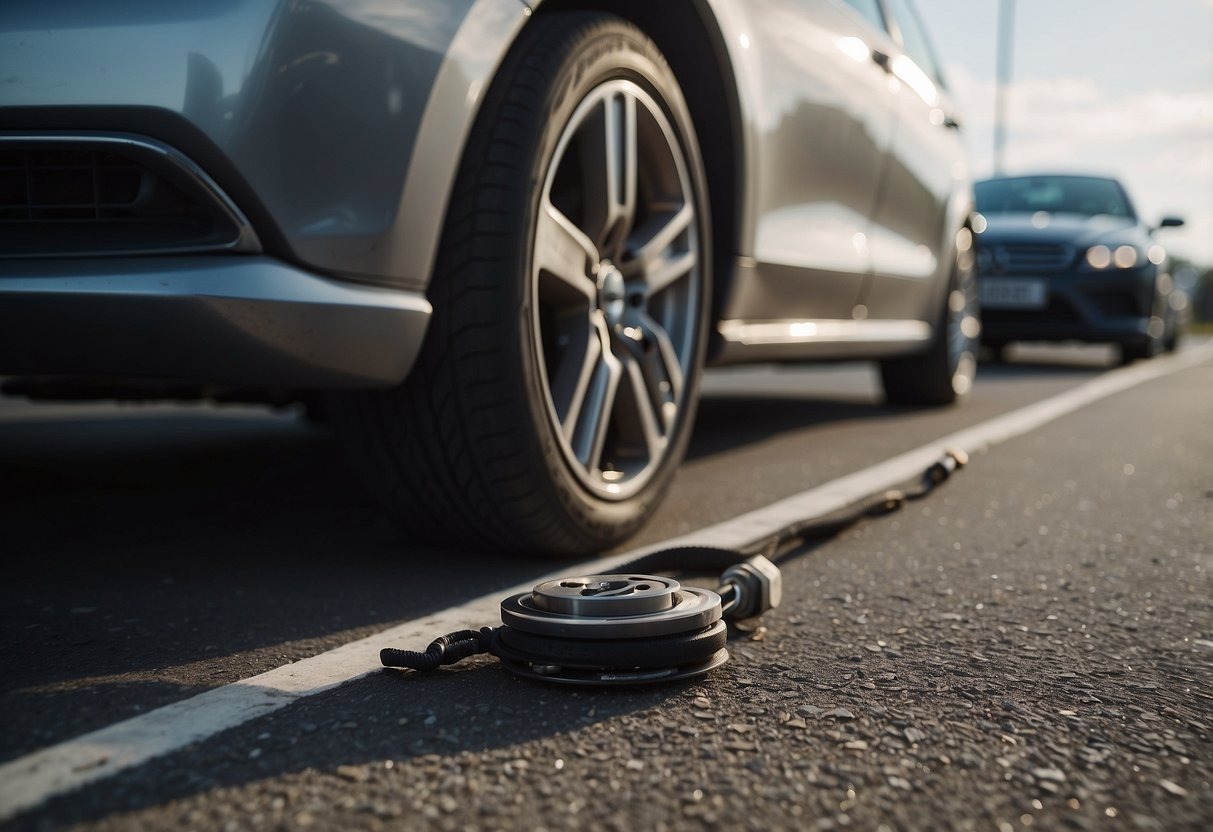
Steep mountain roads test every part of a tow rig. Now imagine heading downhill with a heavy trailer that has electric brakes, hooked to a truck that has no in-cab controller. The hardware is there, yet the driver cannot use it.
In states where trailer brakes are required by weight, the system must be fully operational from the driver’s seat.
Having electric brake hardware on the trailer axles does not satisfy the law if the driver cannot manually adjust or automatically activate it through an in-cab controller.
The controller is the brain of the setup. It tells the trailer how hard to brake, and it lets you add extra braking on your own when the trailer starts to push. Without one, the brakes are just parts.
If you tow regularly, install a quality controller and learn how to set the gain, which controls how much braking the trailer provides. Test it in a safe place before you hit the road, and recheck the setting when your load changes.
Use the manual lever sparingly on descents, and downshift to let the engine share the work.
A trailer with brakes and no controller is like a car with a brake pedal wired to nothing. Connect the system, and it can do its job.
10. The Standard License Heavyweight
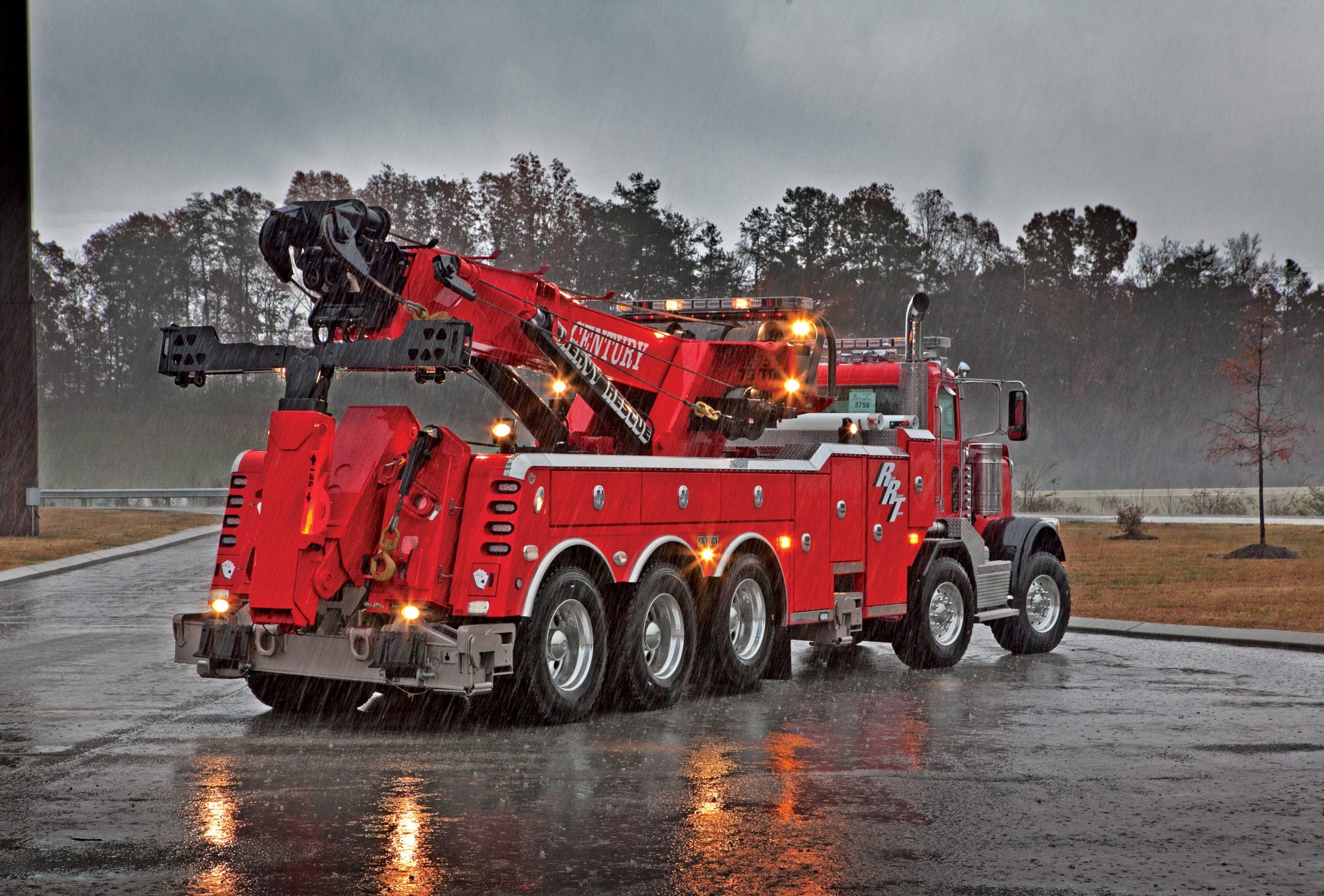
The rig is beautiful. A heavy-duty truck pulls a massive luxury fifth-wheel RV with a trailer GVWR of 16,000 pounds. The driver holds a standard Class C license and feels ready for the open road. That is where the problem starts.
Certain states place limits on ordinary driver’s licenses based on weight class. In California, for example, towing a conventional travel trailer rated over 10,000 pounds requires a non-commercial Class A license, and a fifth-wheel rated over 15,000 pounds requires a specific license endorsement.
Driving without the right classification counts as operating a vehicle without a valid license. Why do these rules exist? Heavier rigs behave differently.
They stop slowly, sway more, and demand more skill to control. Licensing is a way to make sure drivers have the training. Before you buy a large RV, look up the licensing rules in your home state and in any state where you plan to drive.
Some states have exemptions for recreational use, and some do not, so details matter. Ask your motor vehicle agency, not just the dealer.
Insurance can also depend on a valid license, so a mistake here may leave you without coverage after a crash.
Check the paperwork first, and the road will be much friendlier.